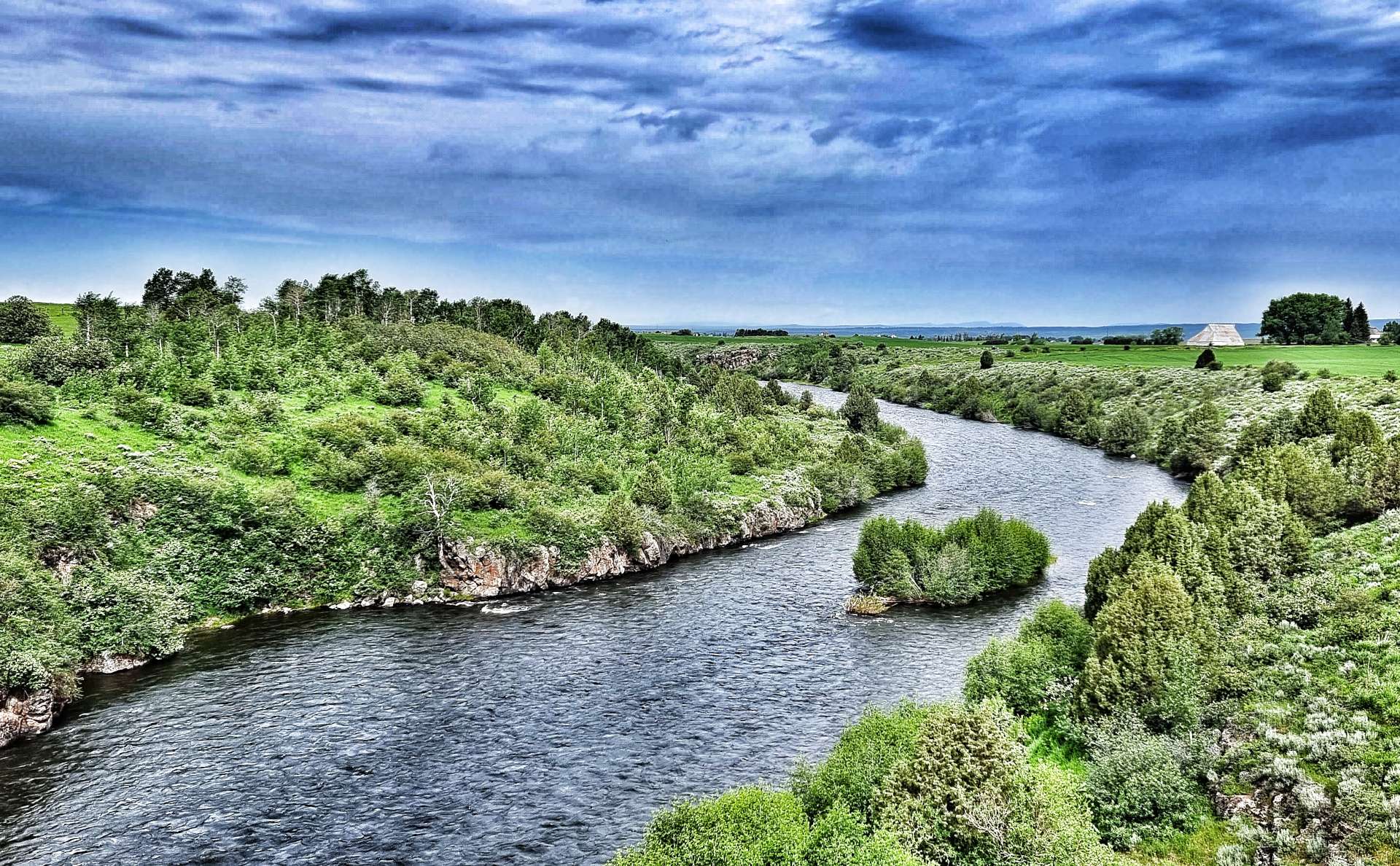
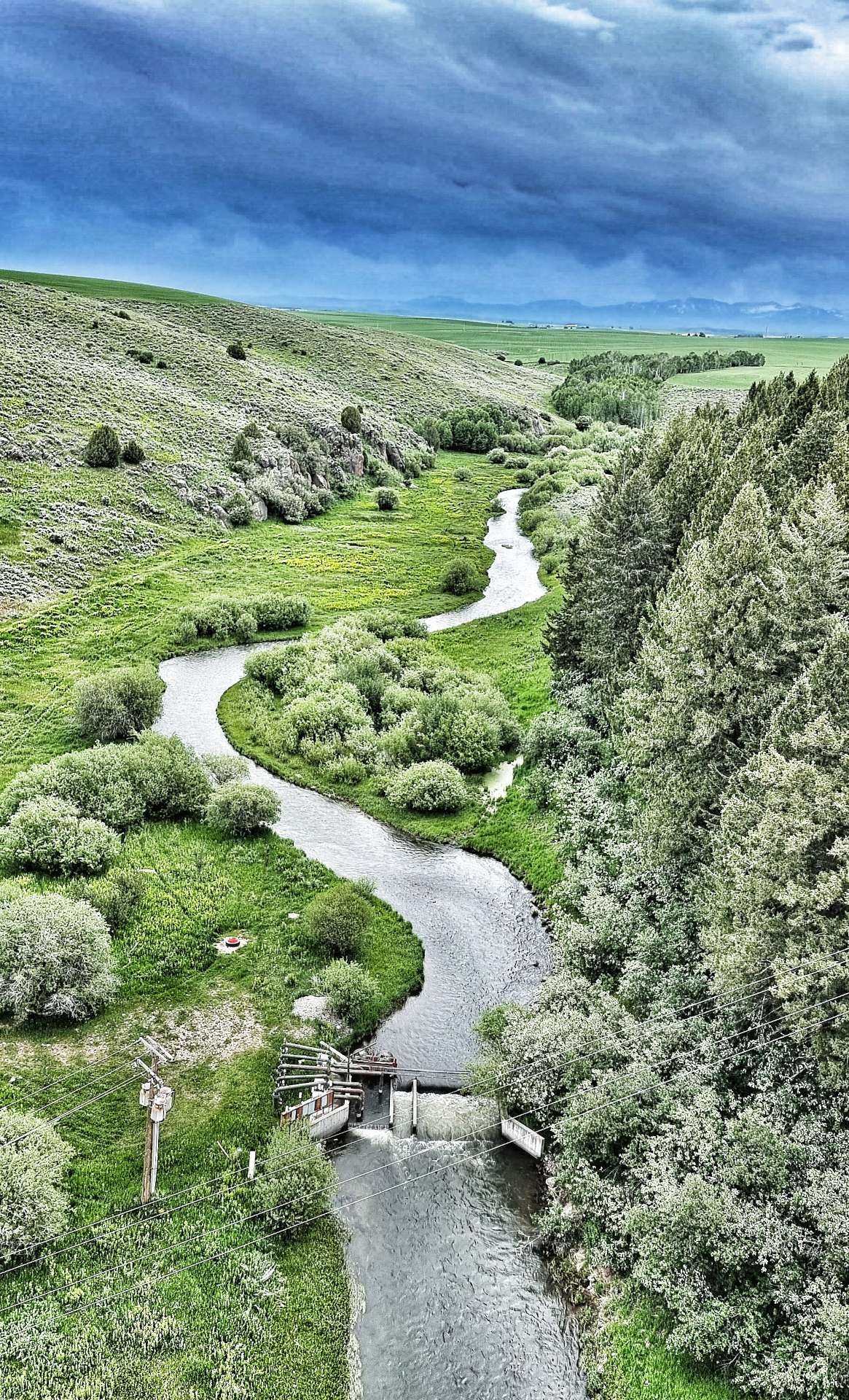
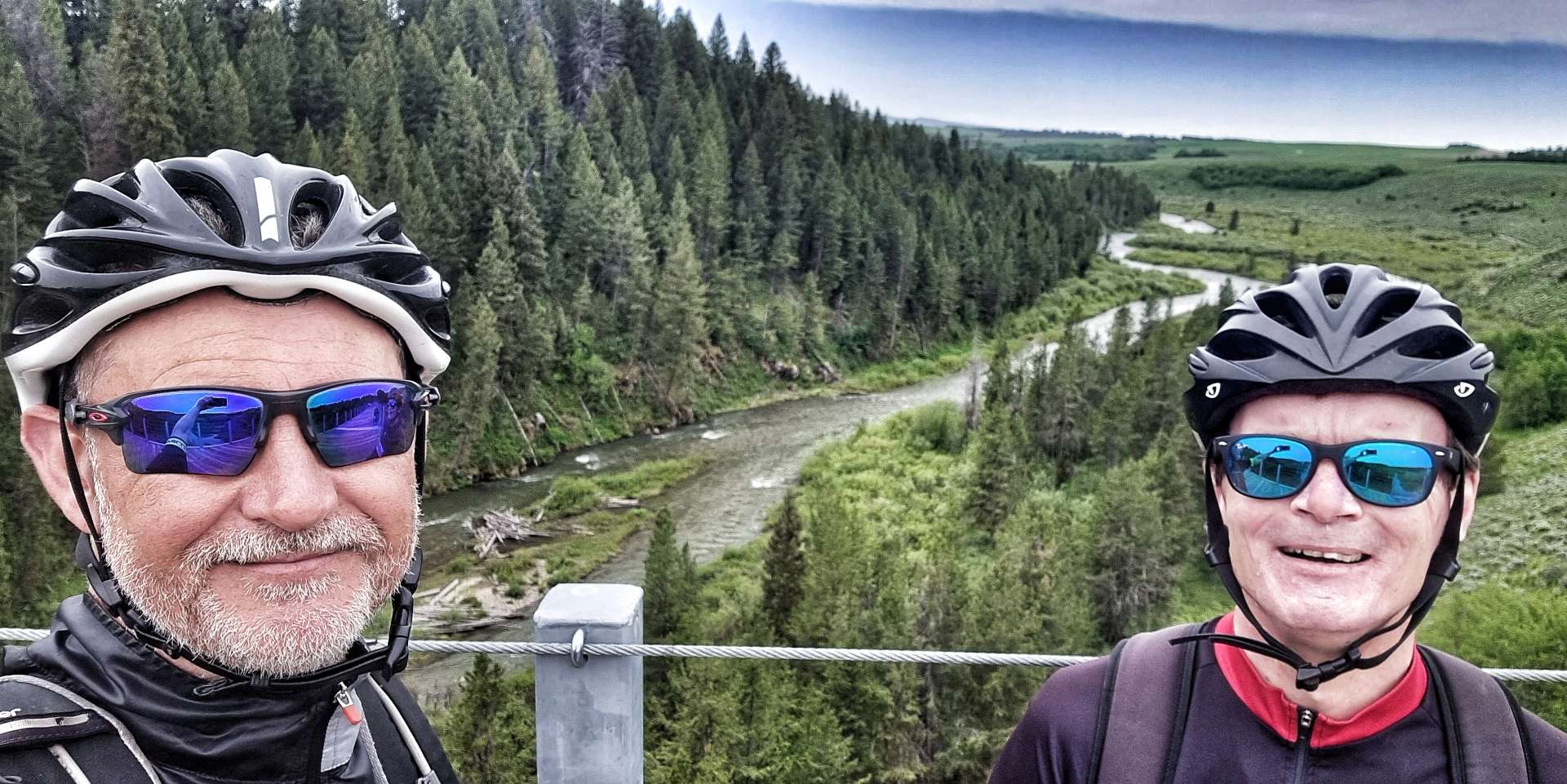
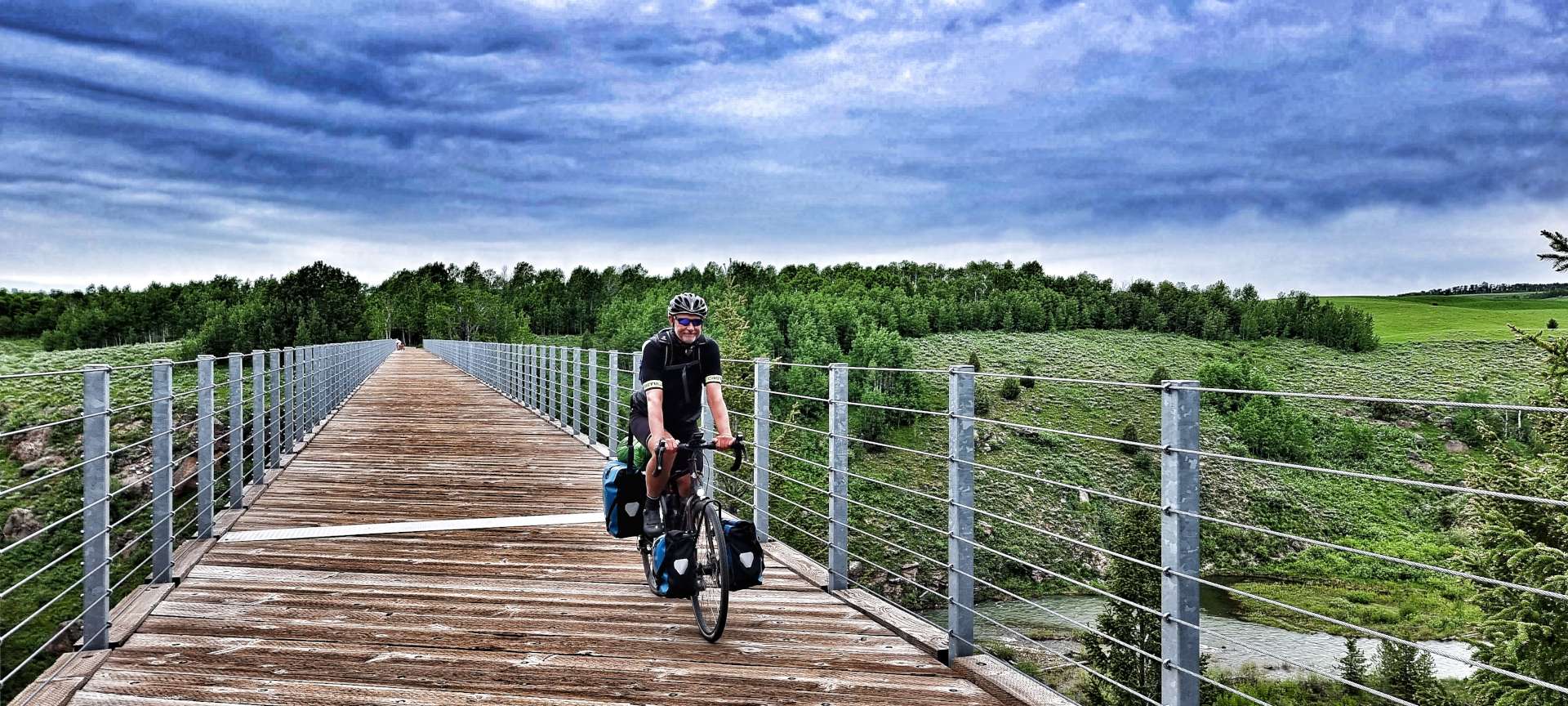
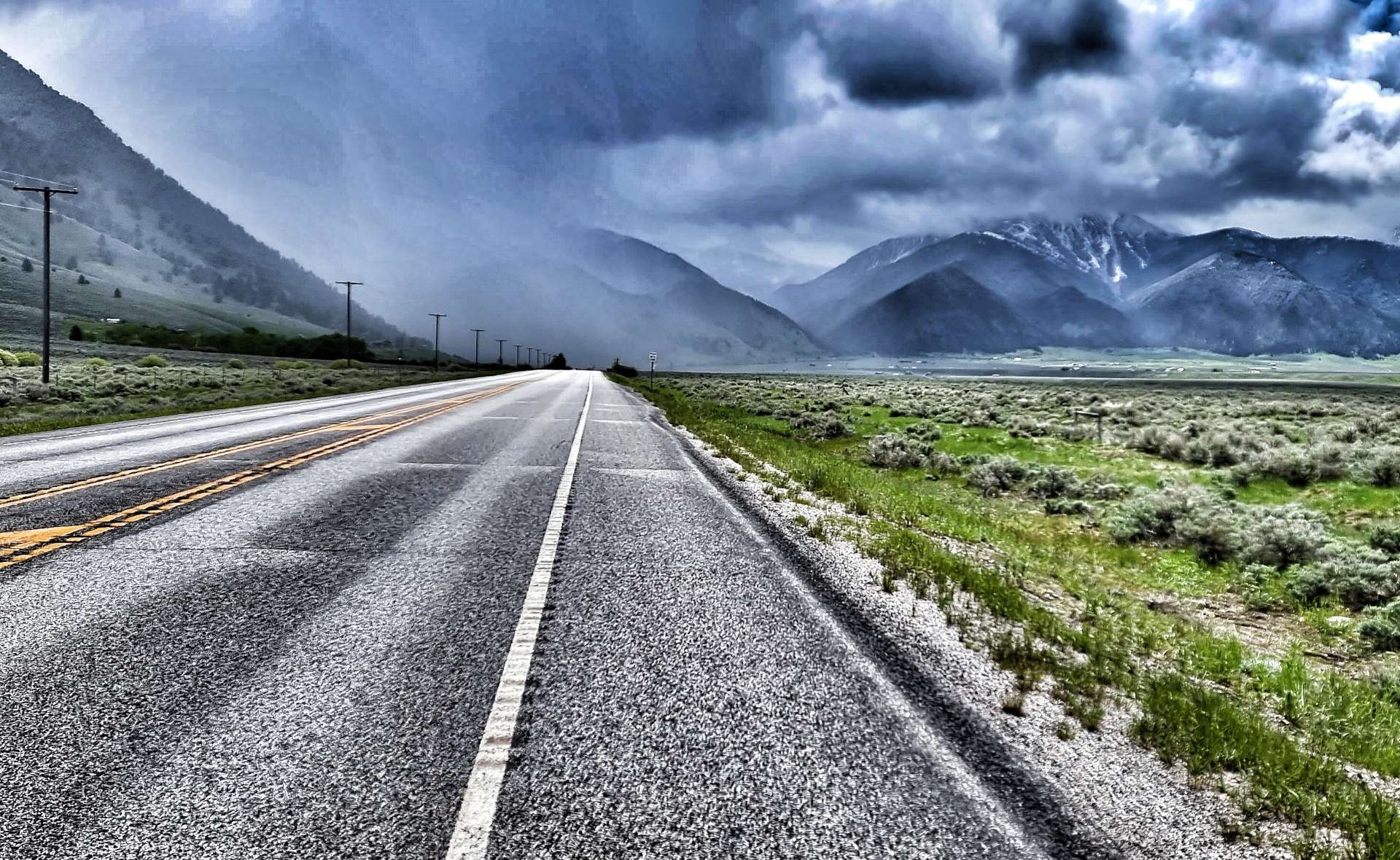
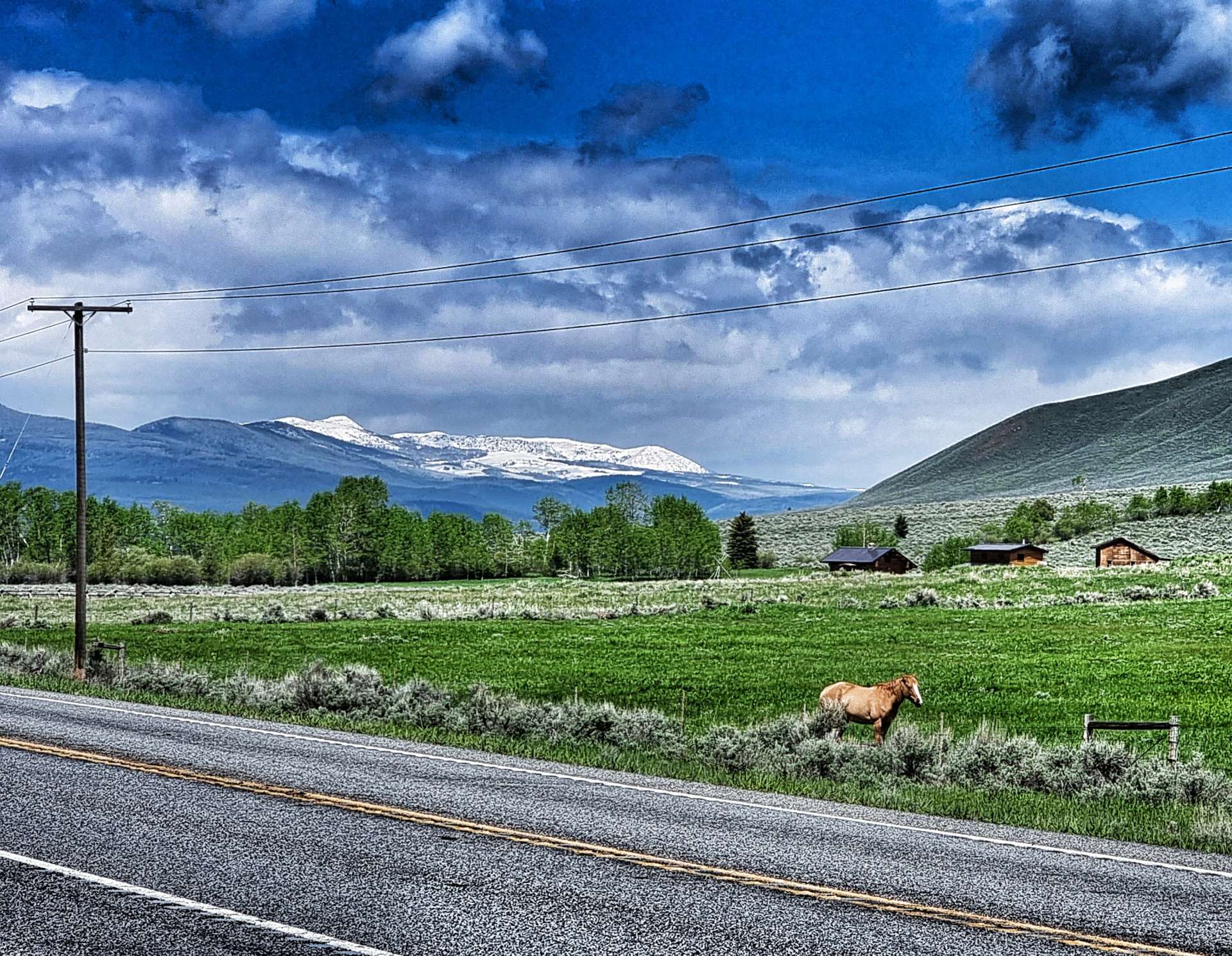
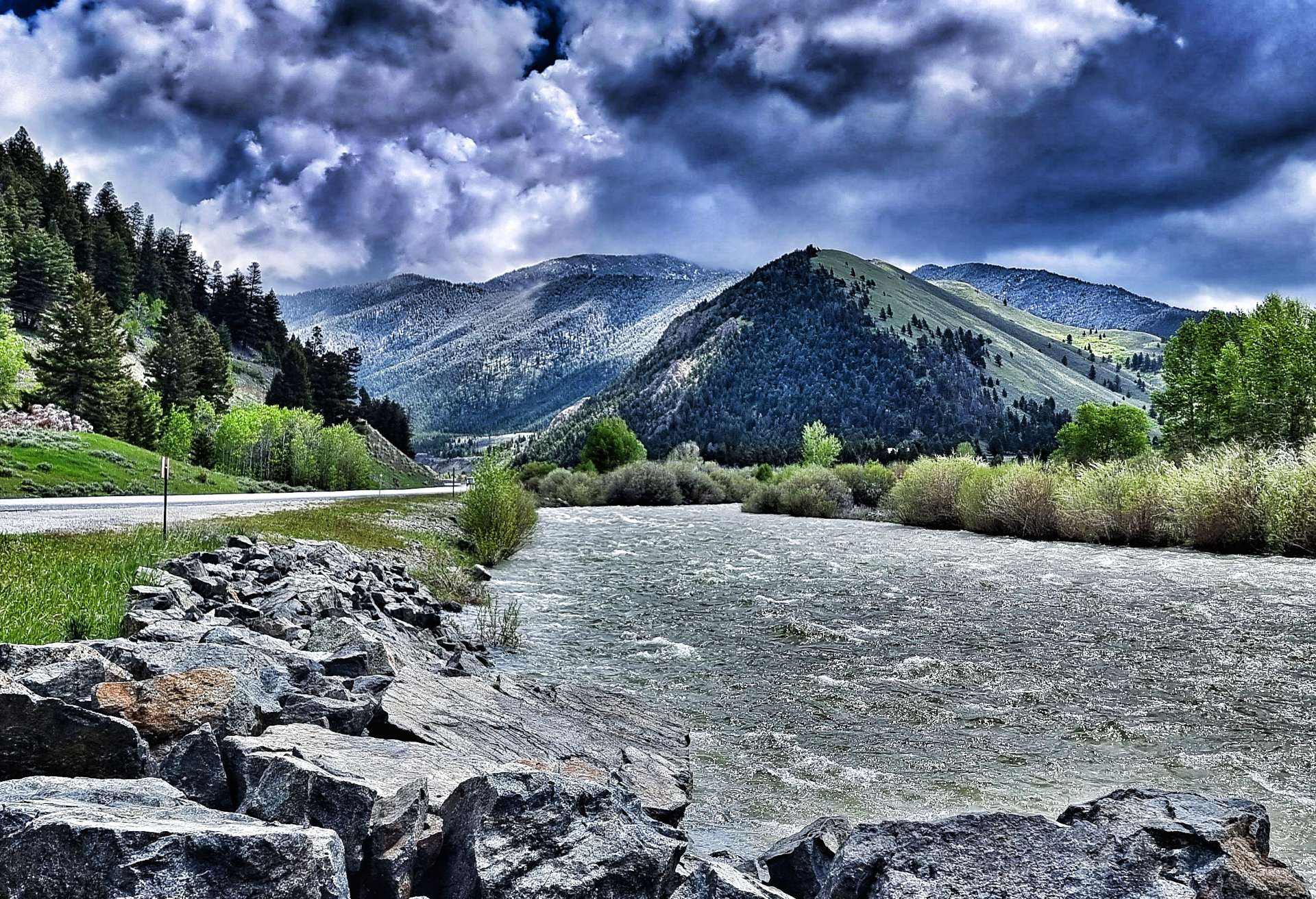
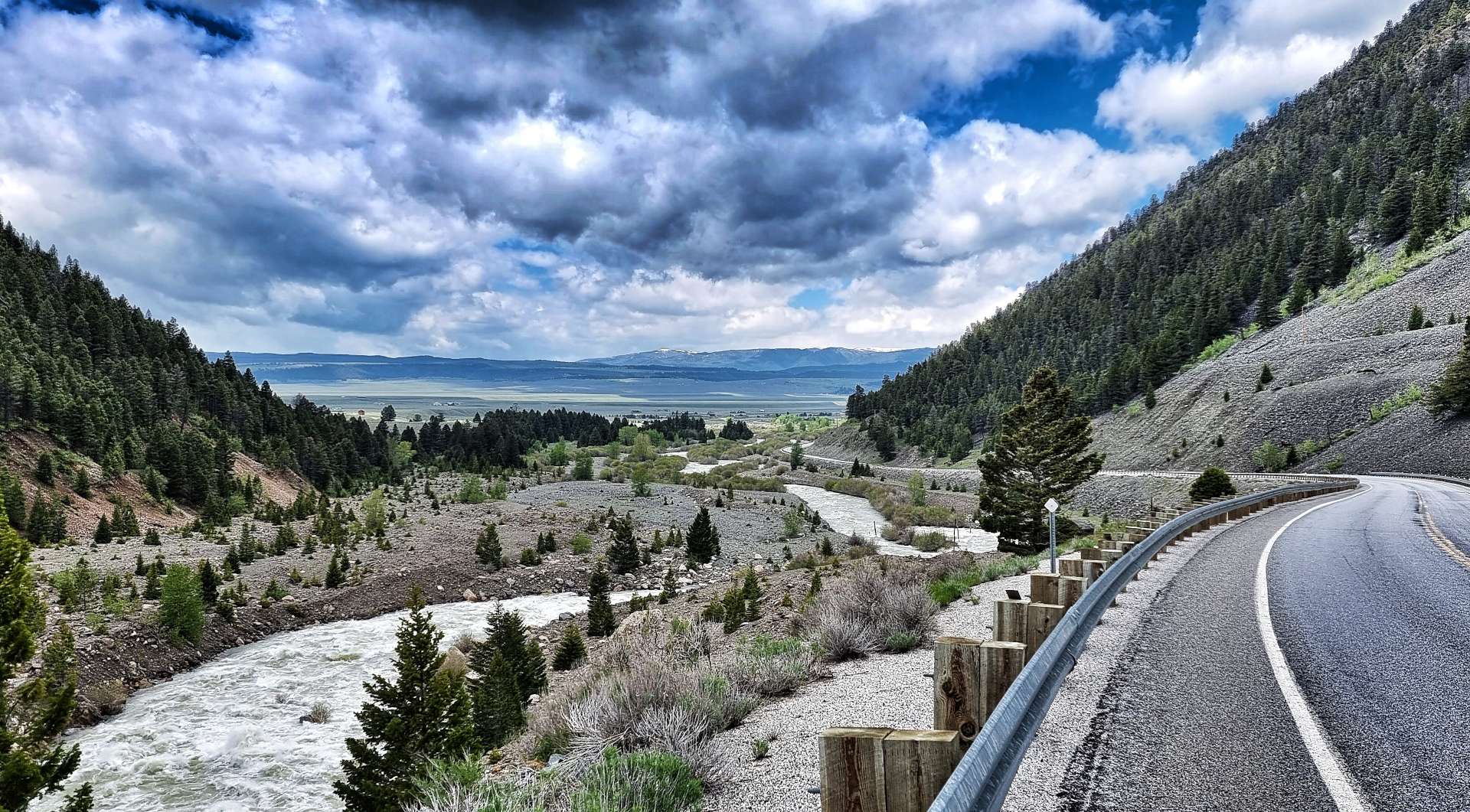
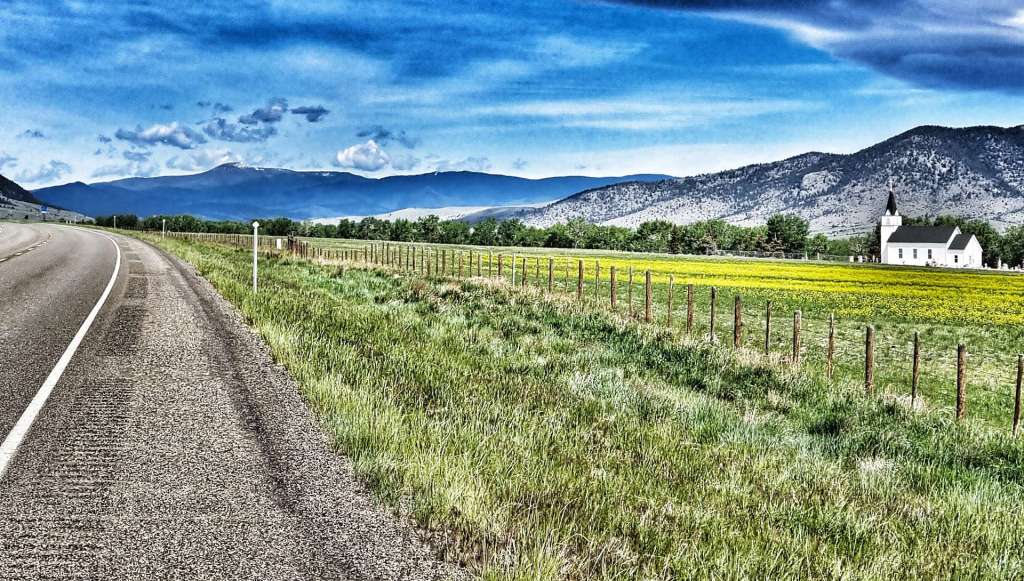
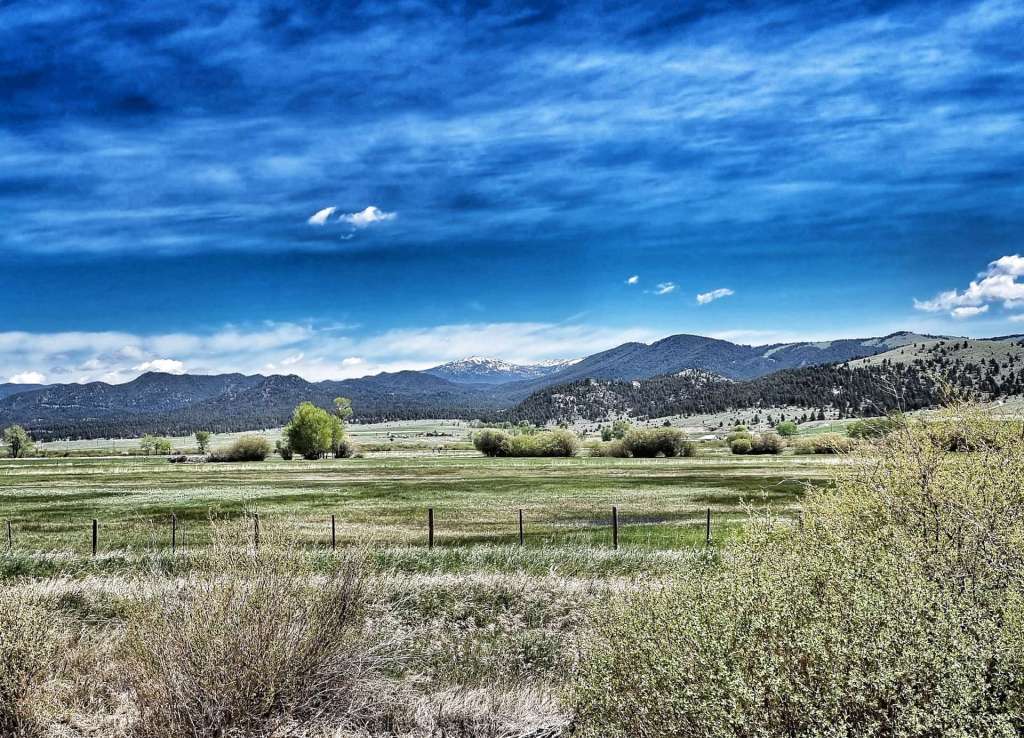
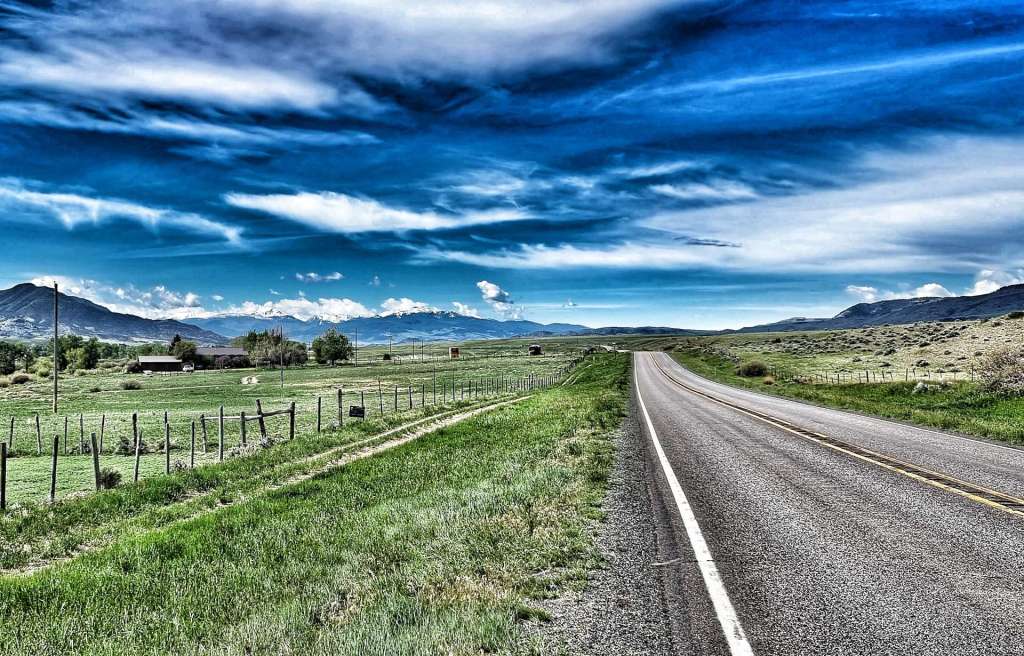
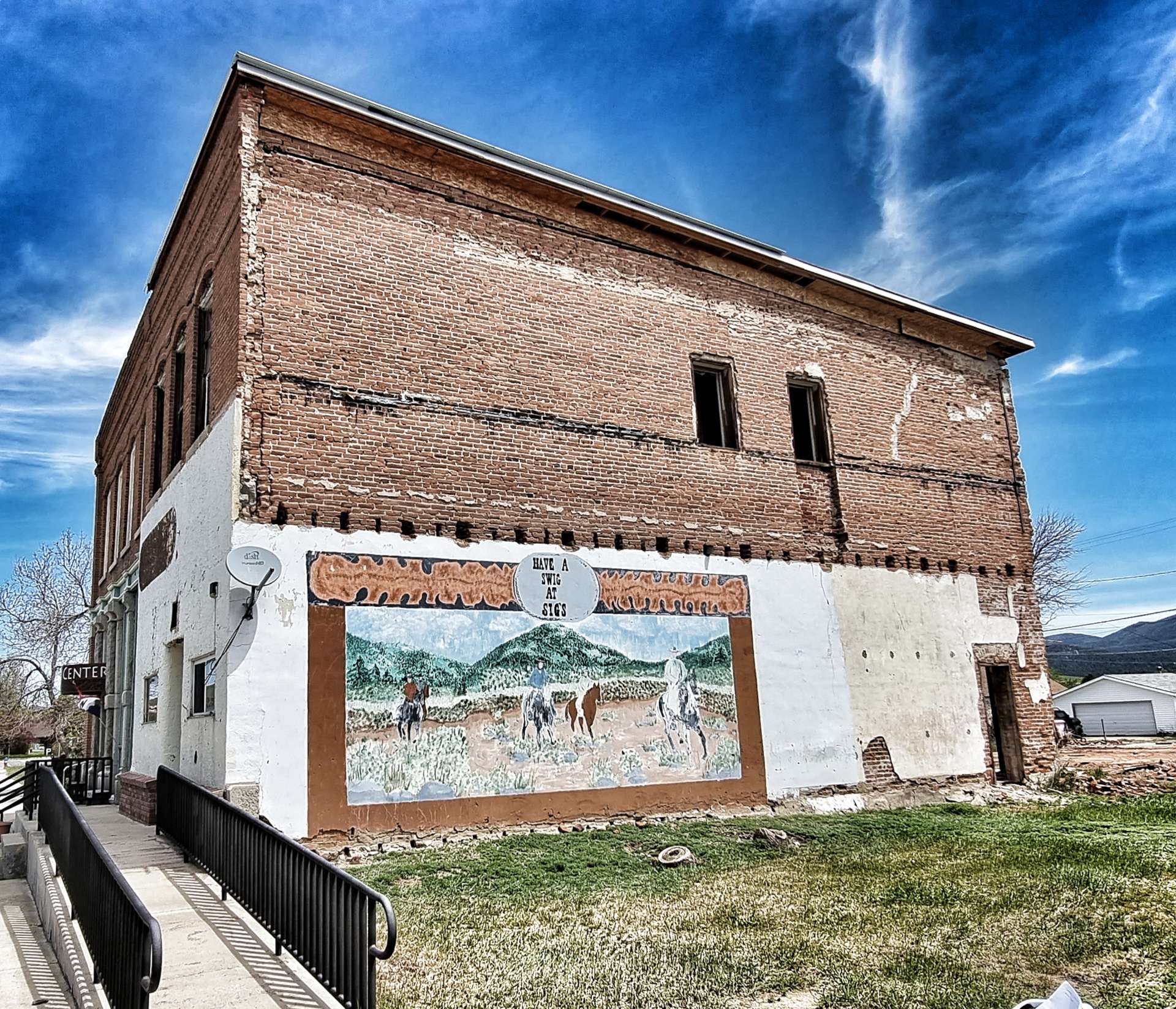
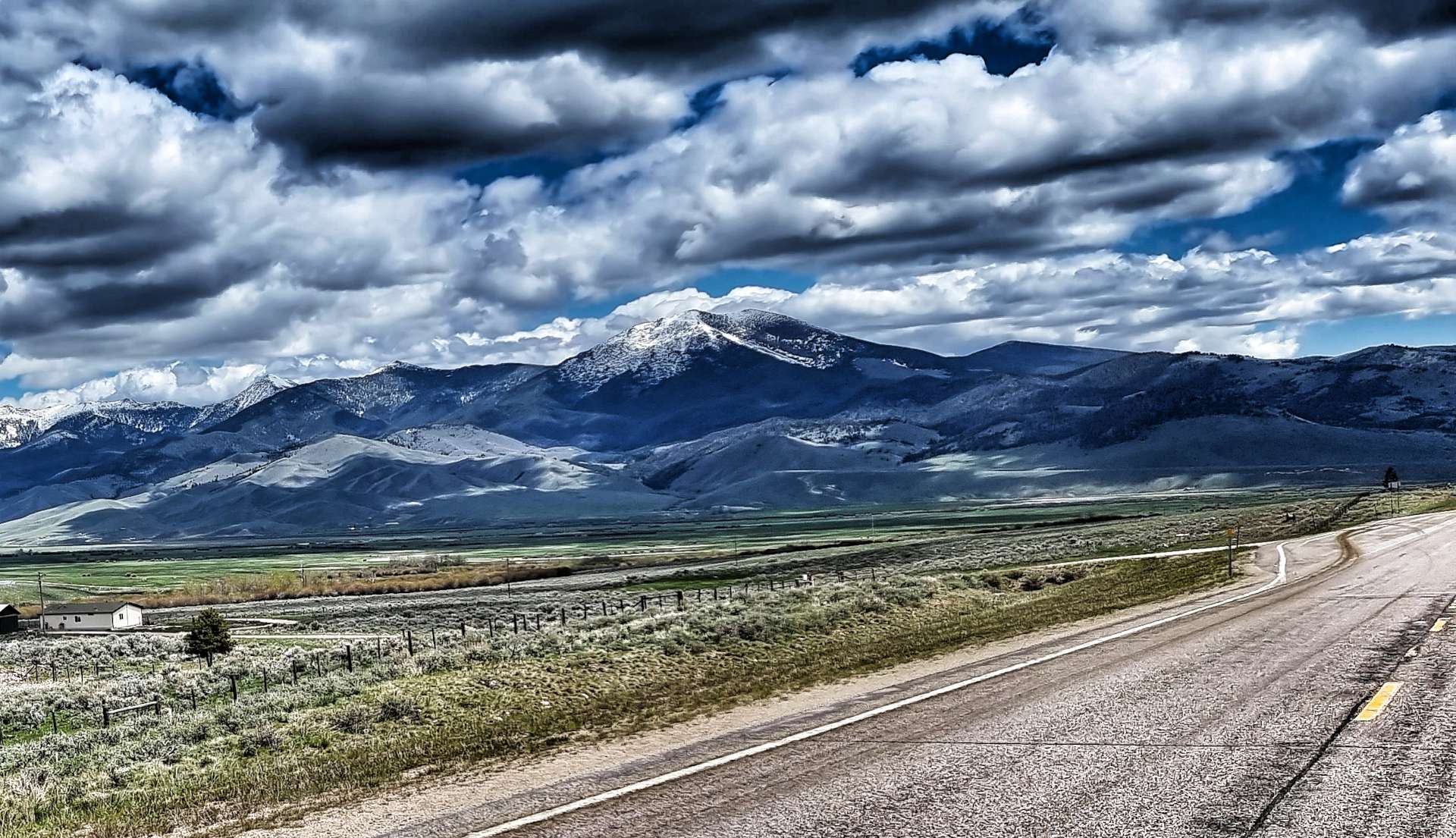
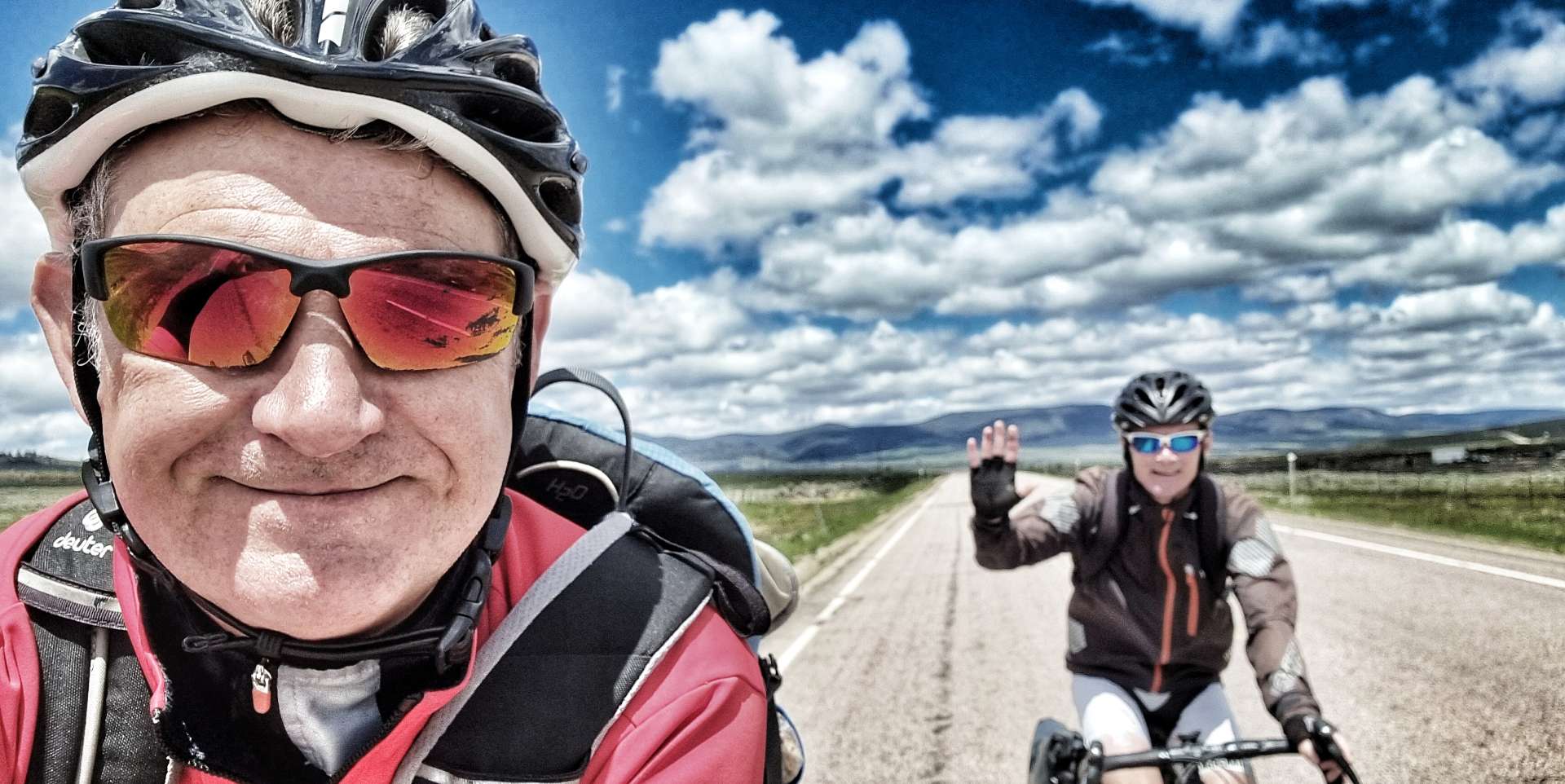
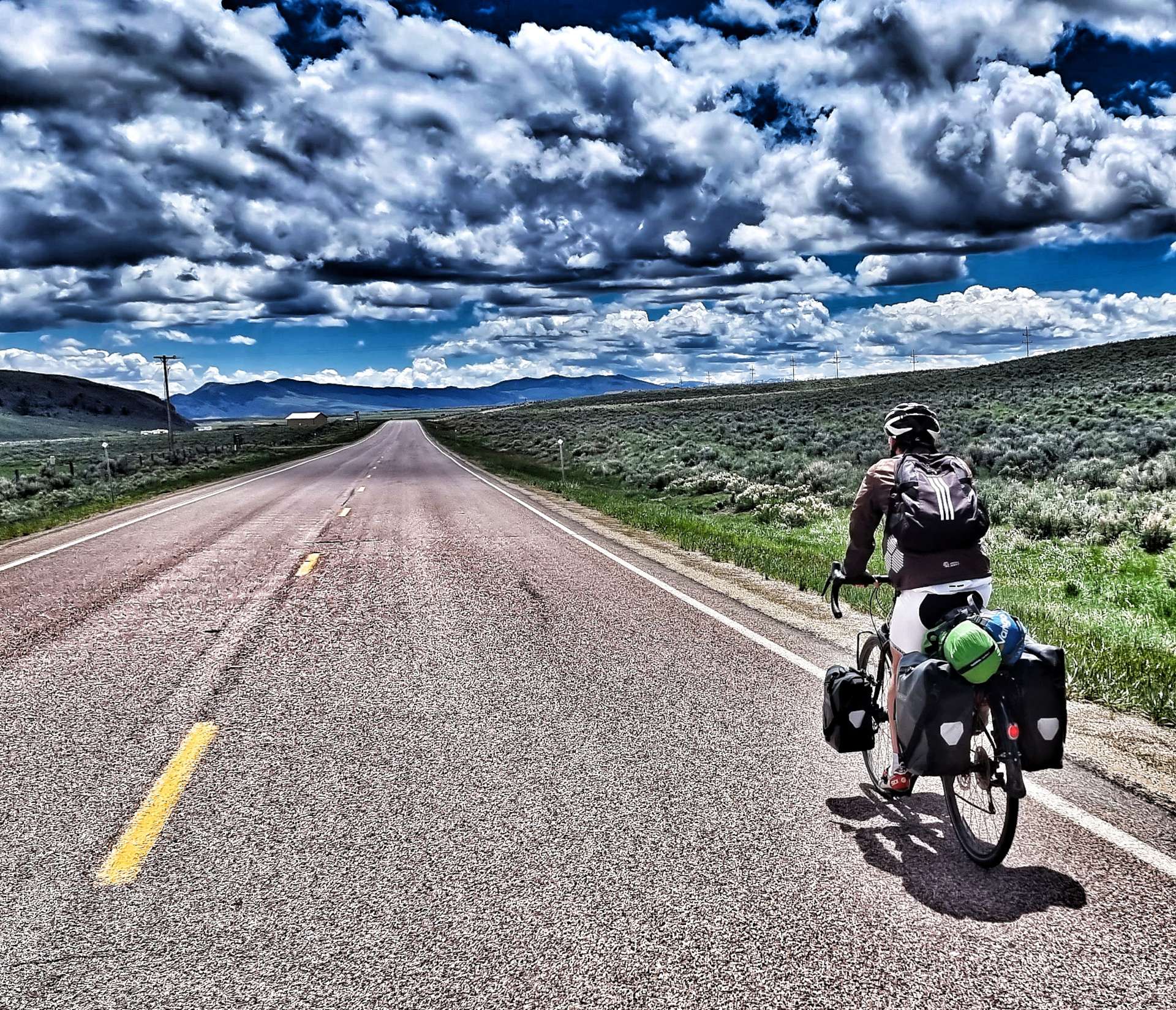
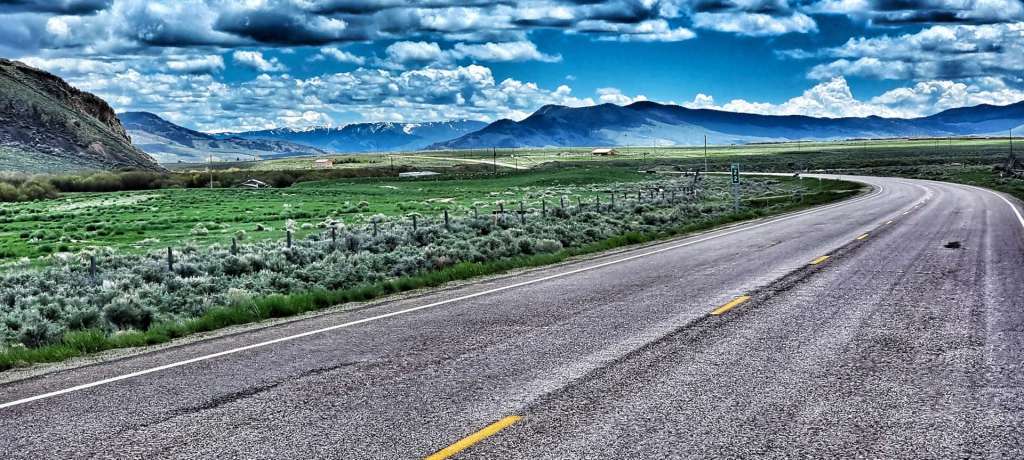
Driggs to Yellowstone, via Grand Teton National Park

The Long Way Round (Part Two) – Monday 20th to Wednesday 22nd June.

Monday 20th June – Driggs to Jackson (Stage 40).

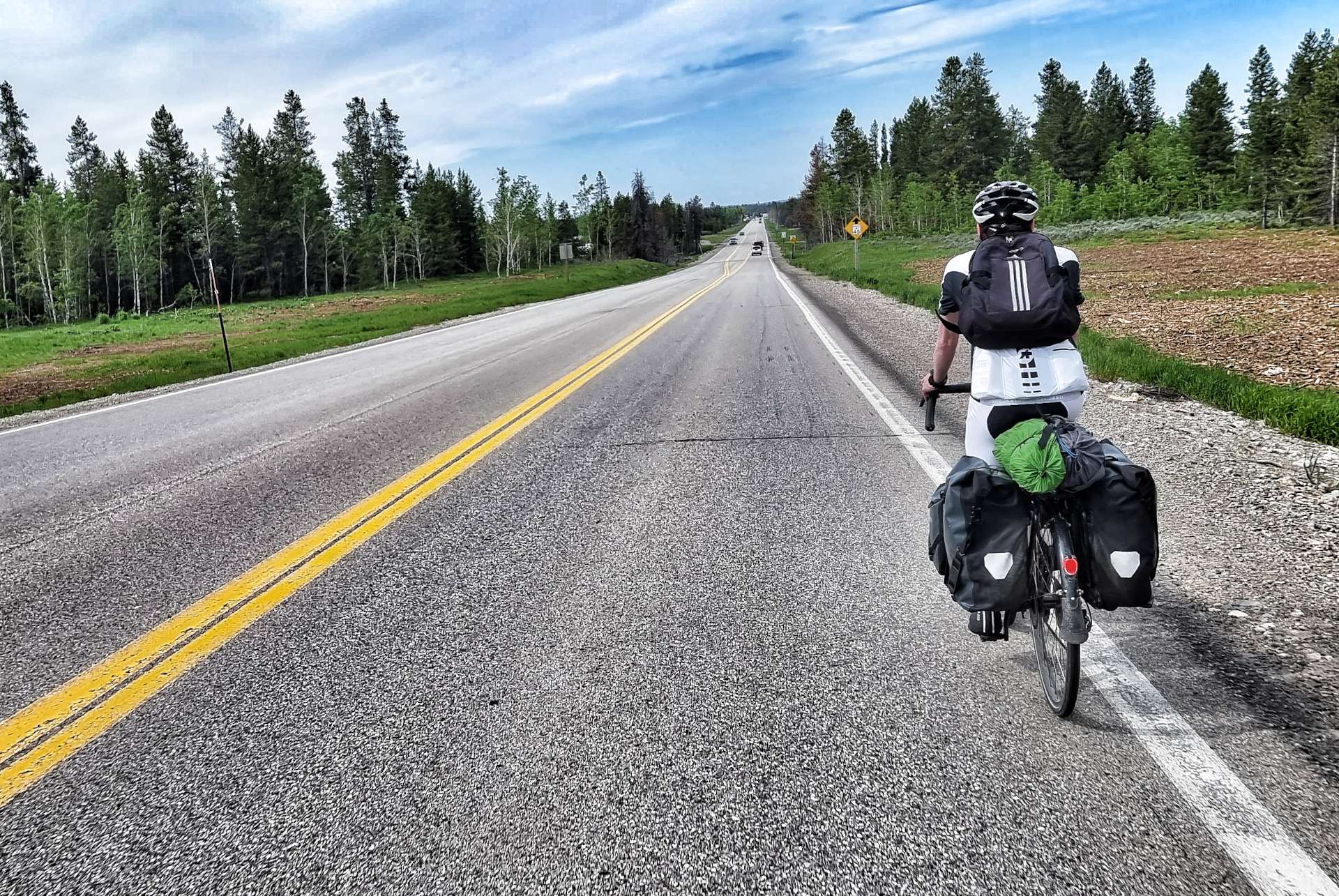
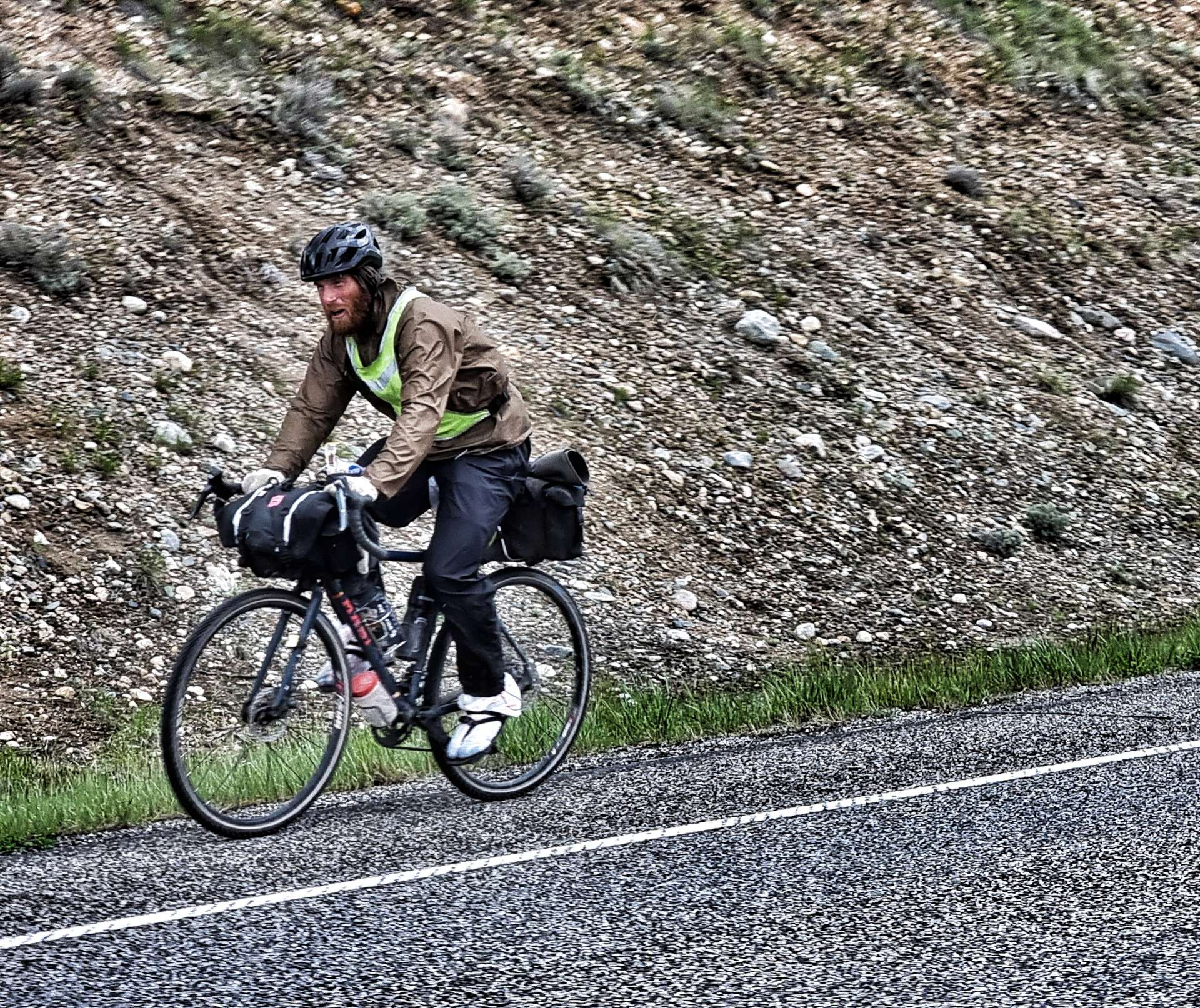
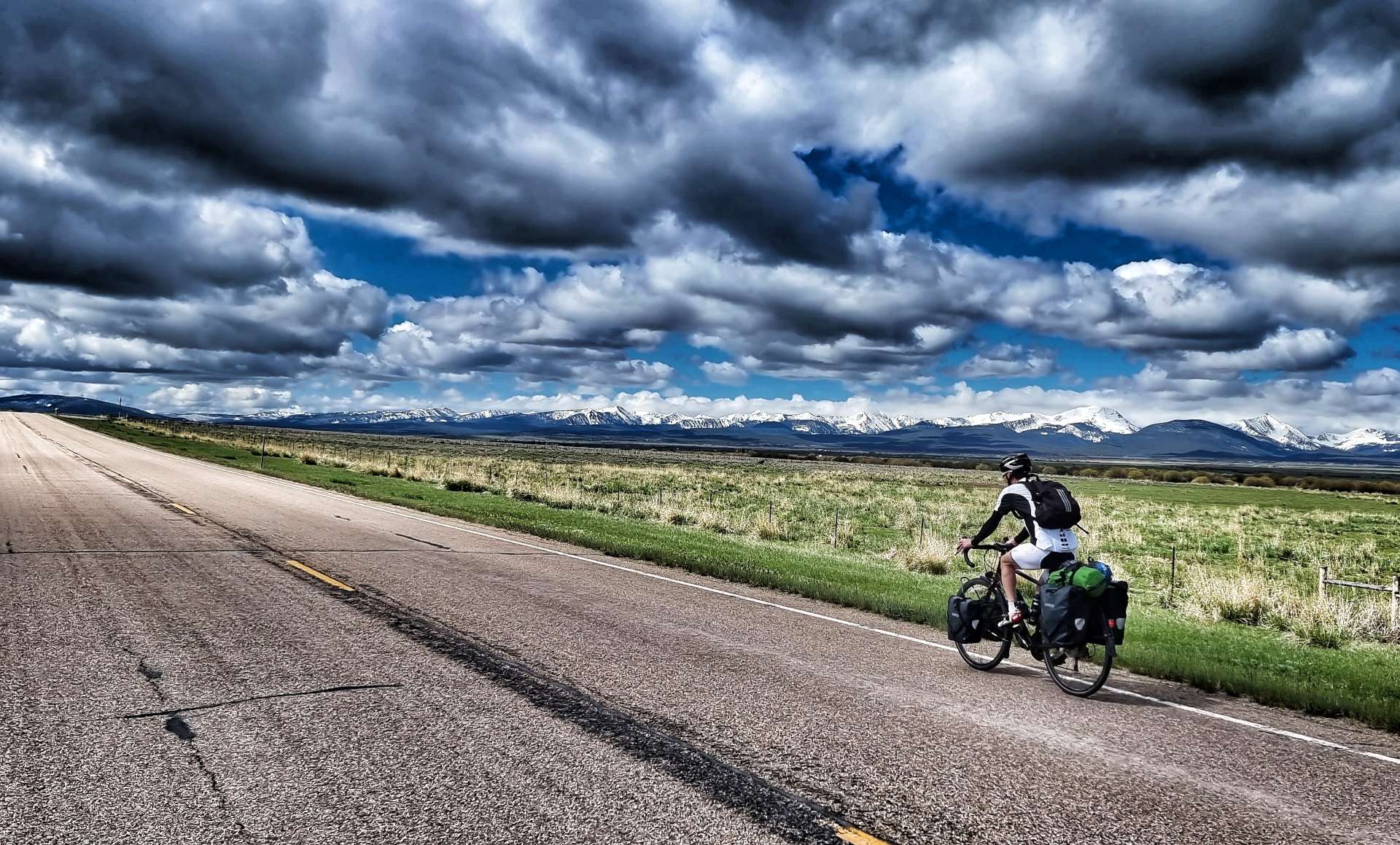
Rain was forecast from 10am in both Driggs & Jackson, so we took the decision to get up a bit earlier & be ready to leave by 9am, so at least we would start riding in the dry. There was another long distance cyclist from the UK staying in our motel & we set off almost together, however, he was soon a long way up the road!

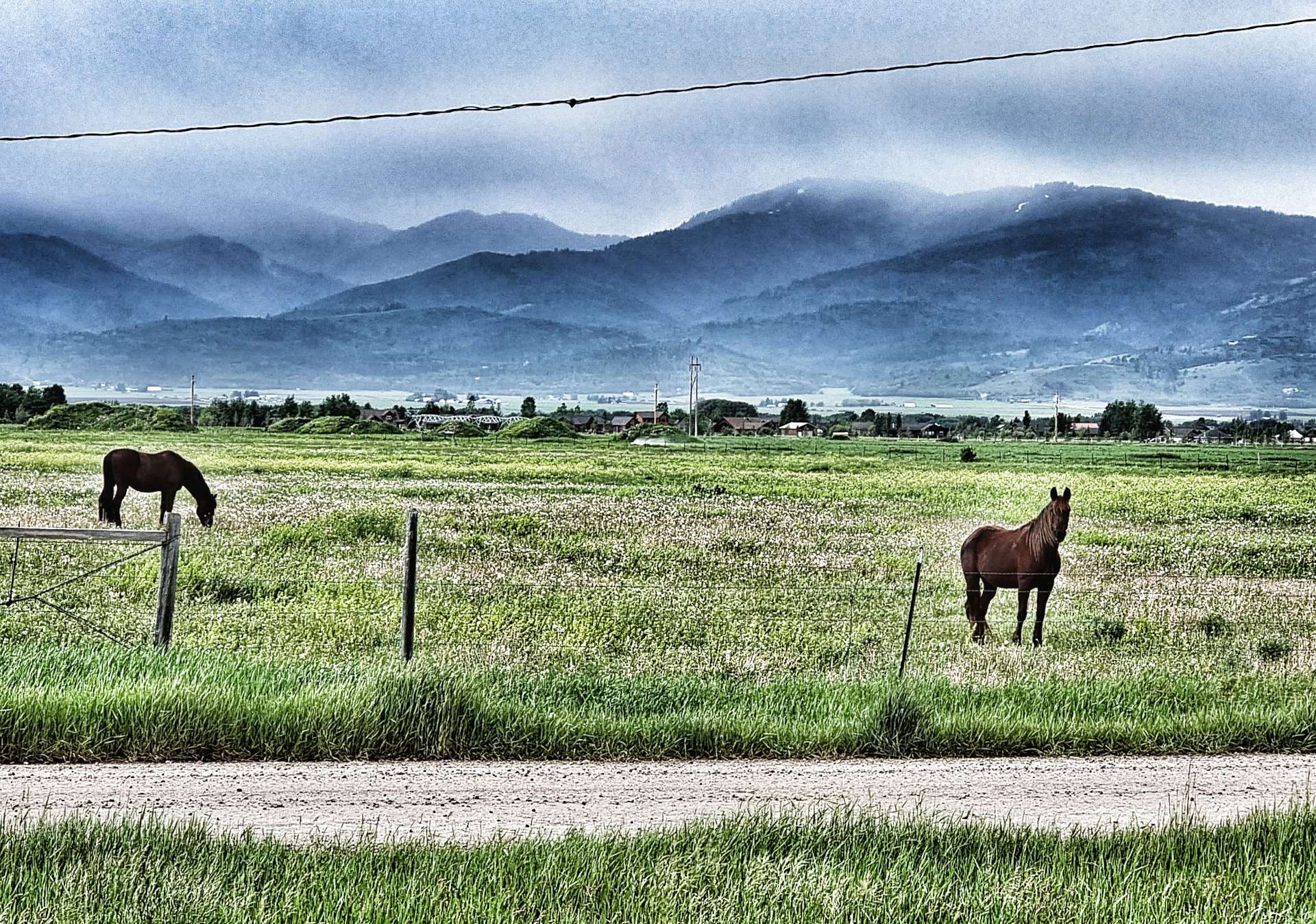
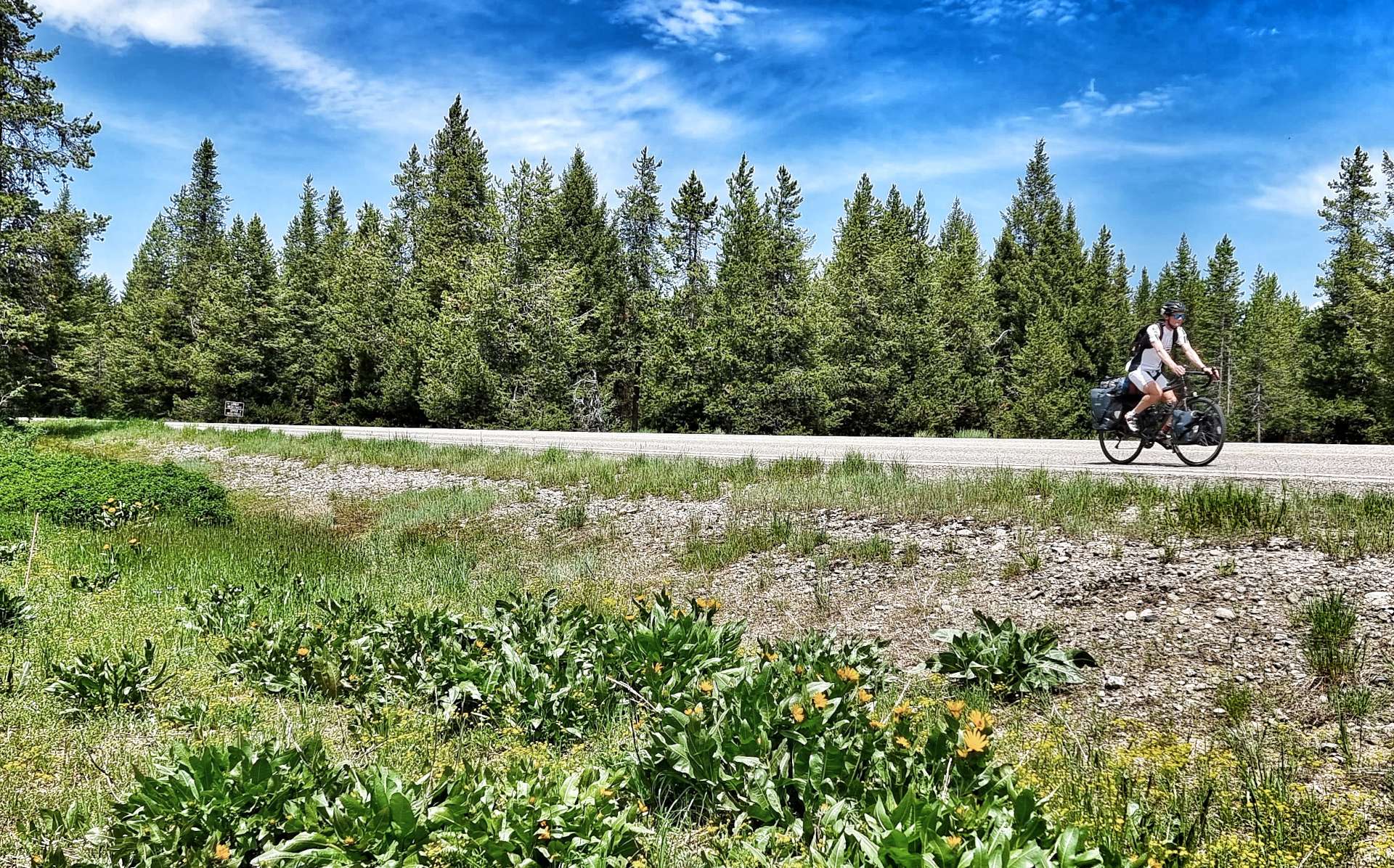
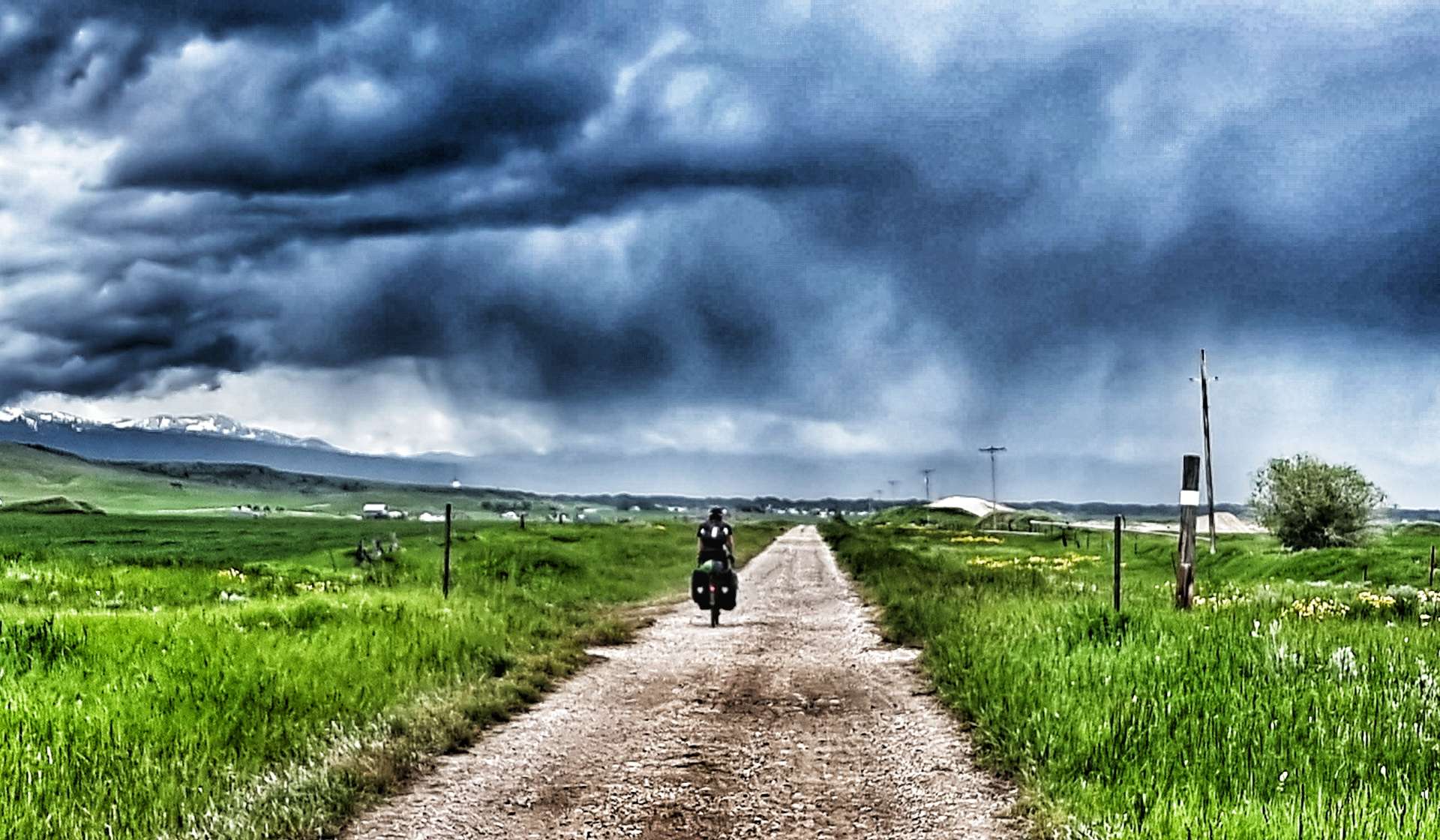
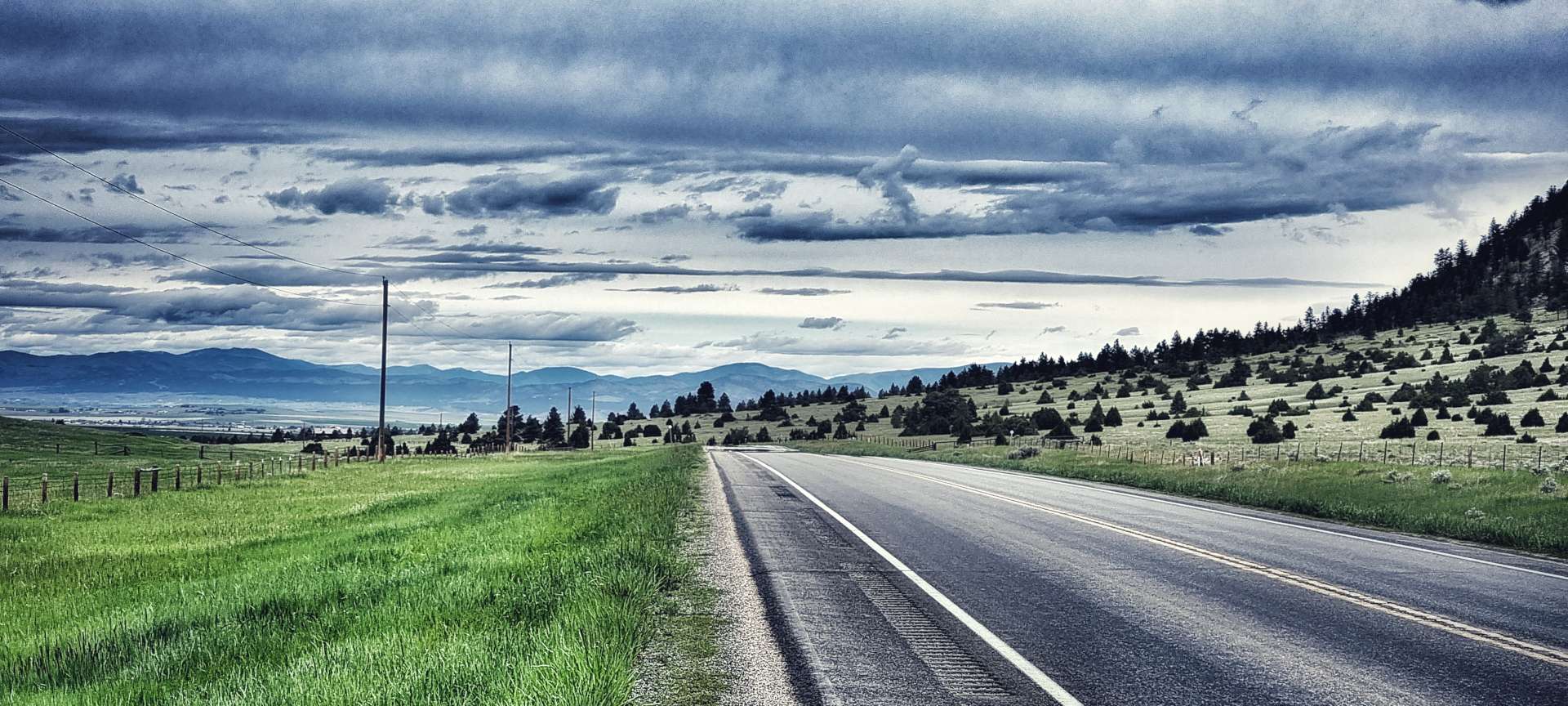
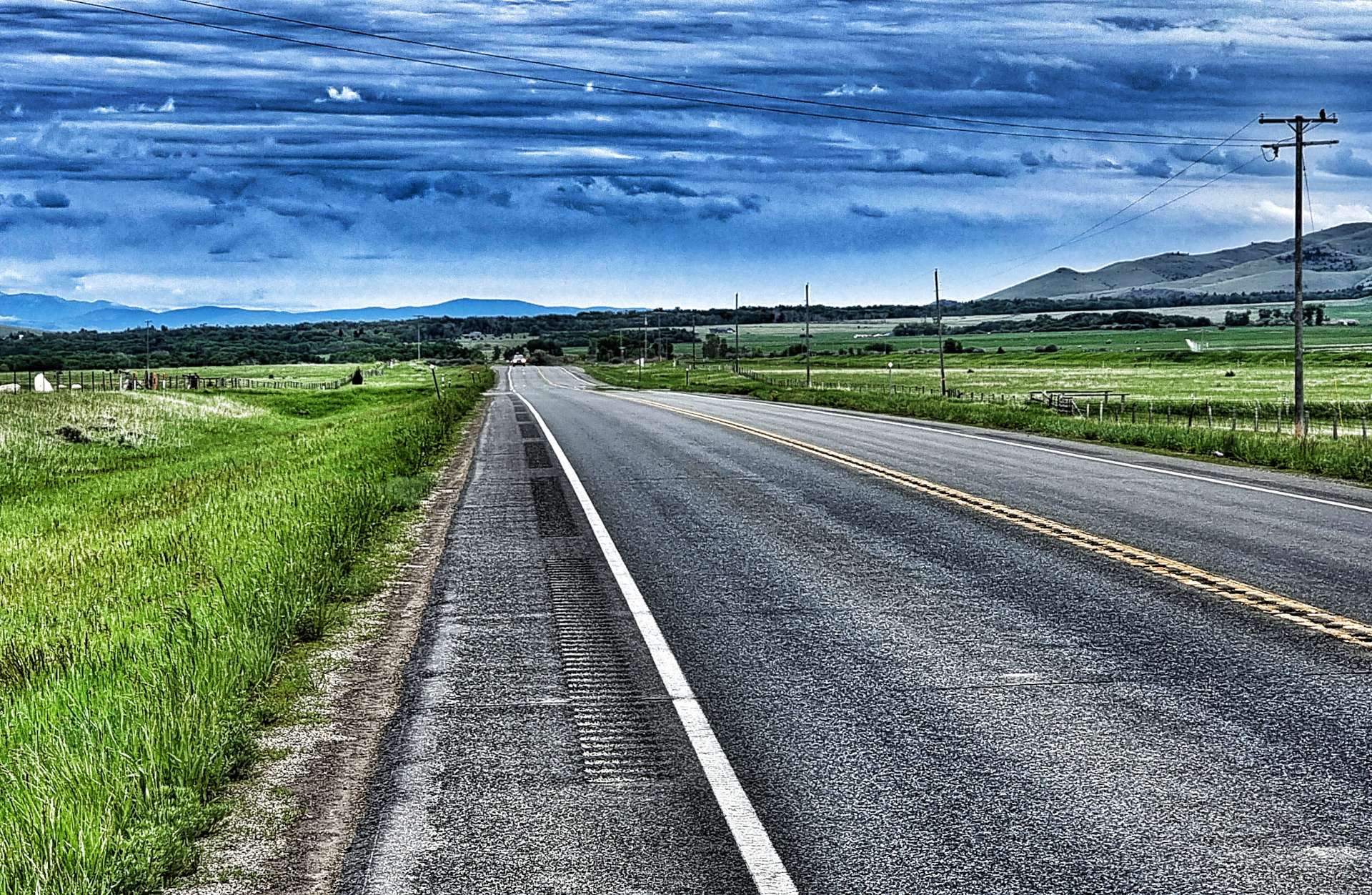
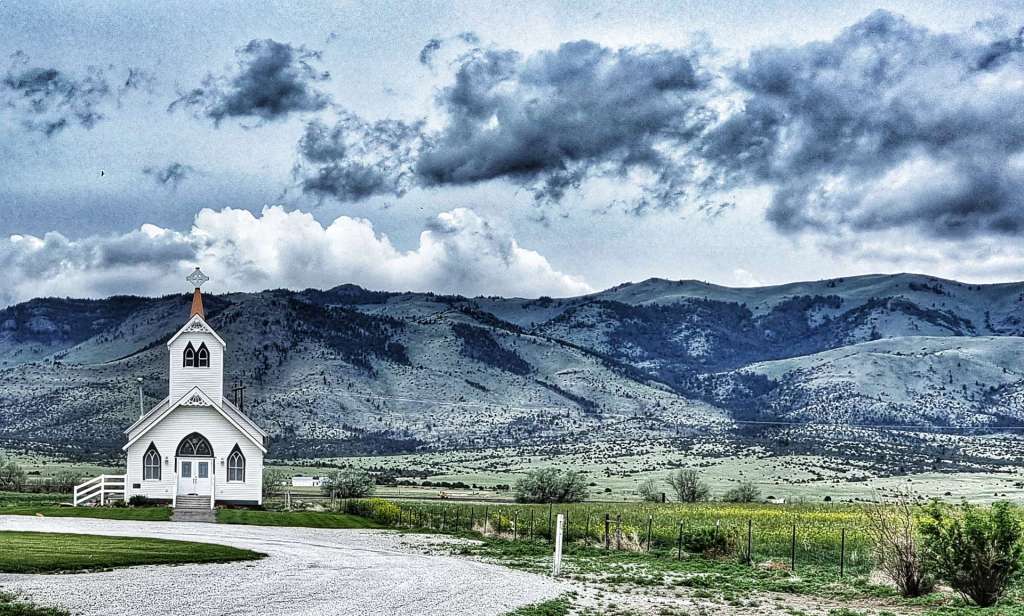
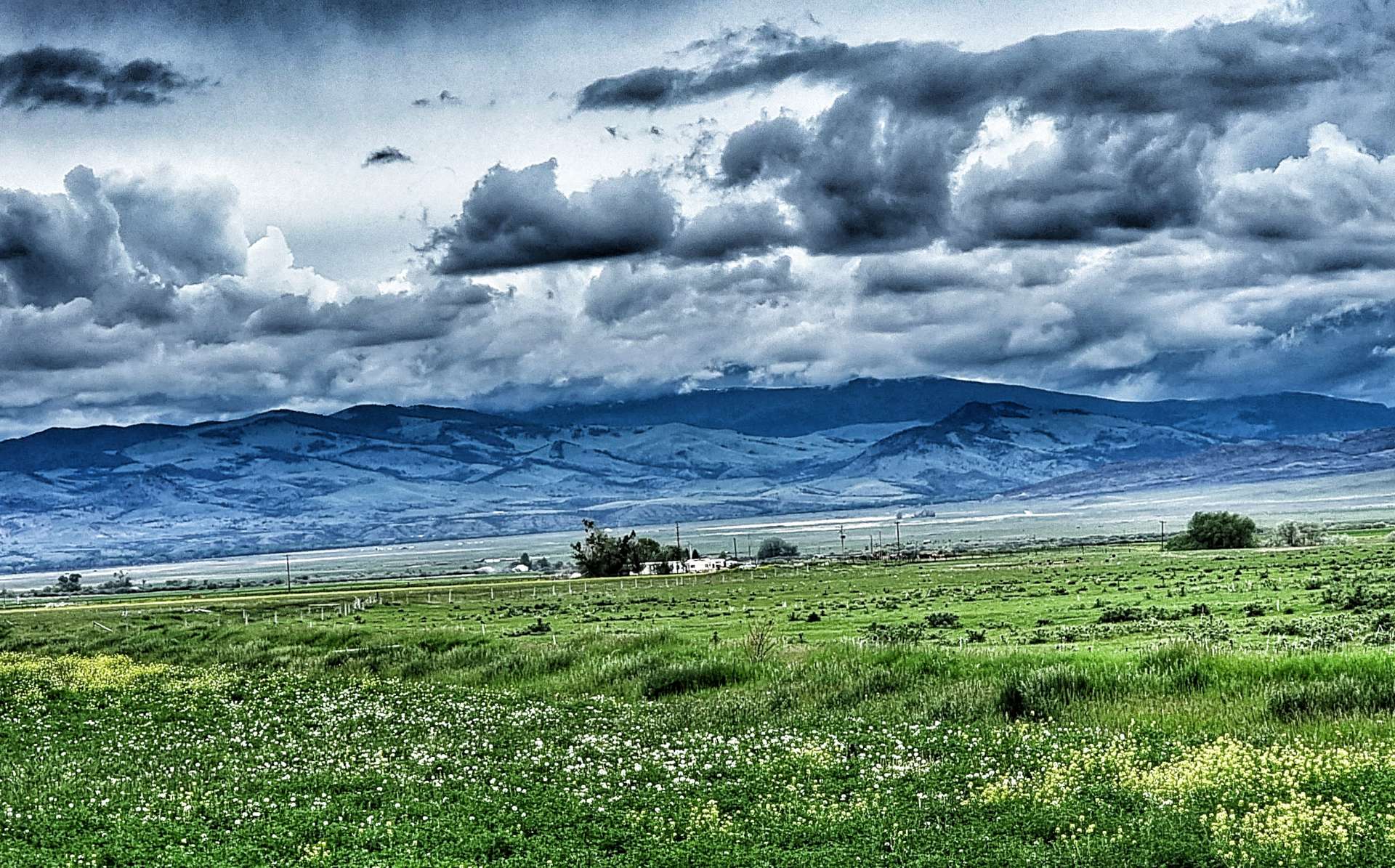
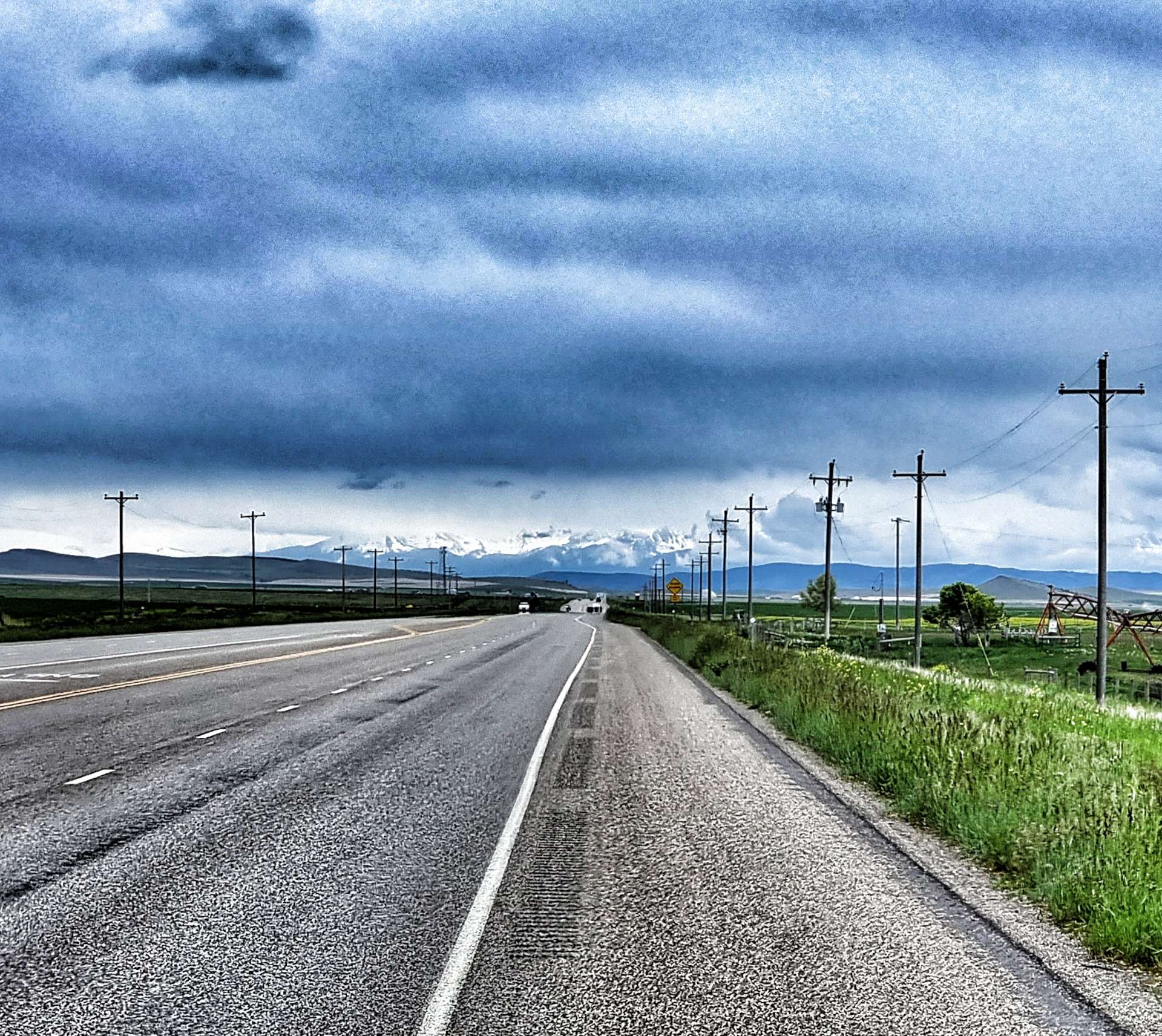
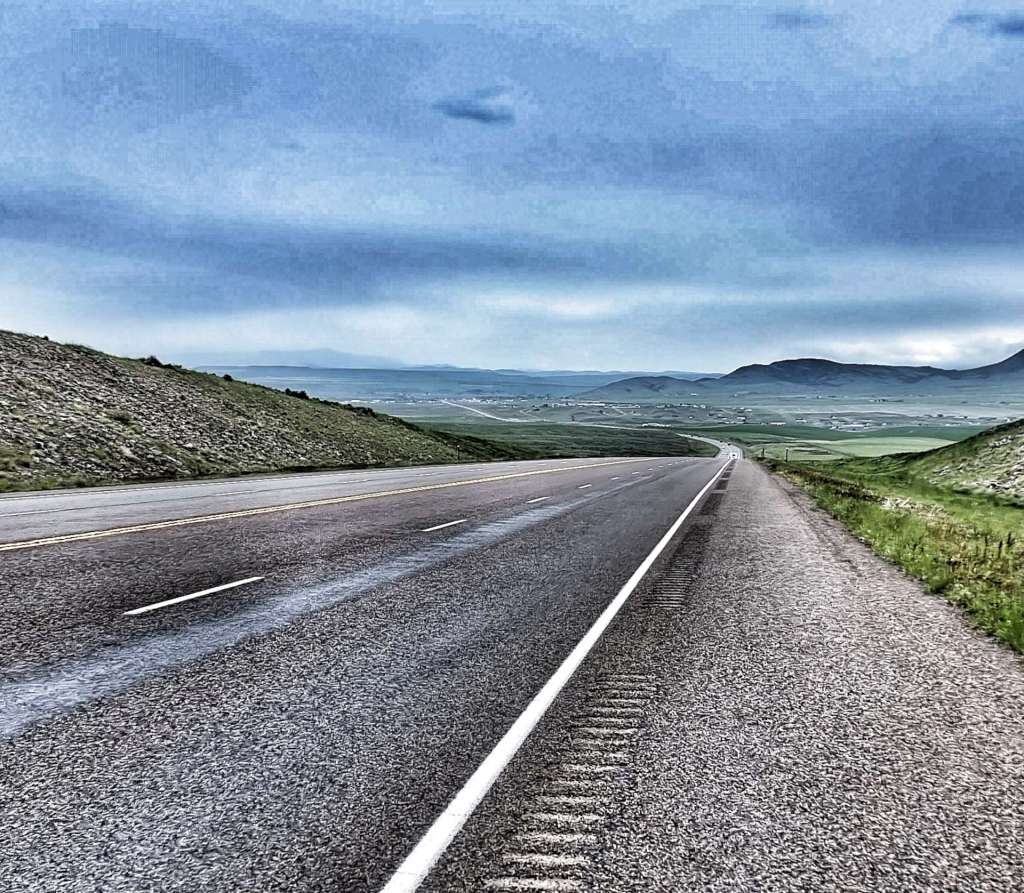
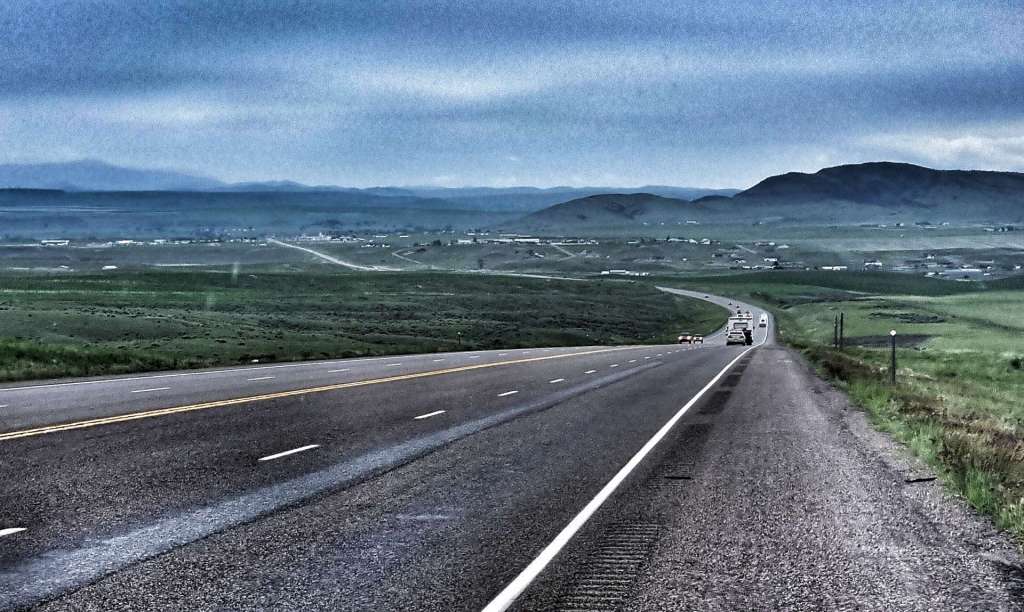
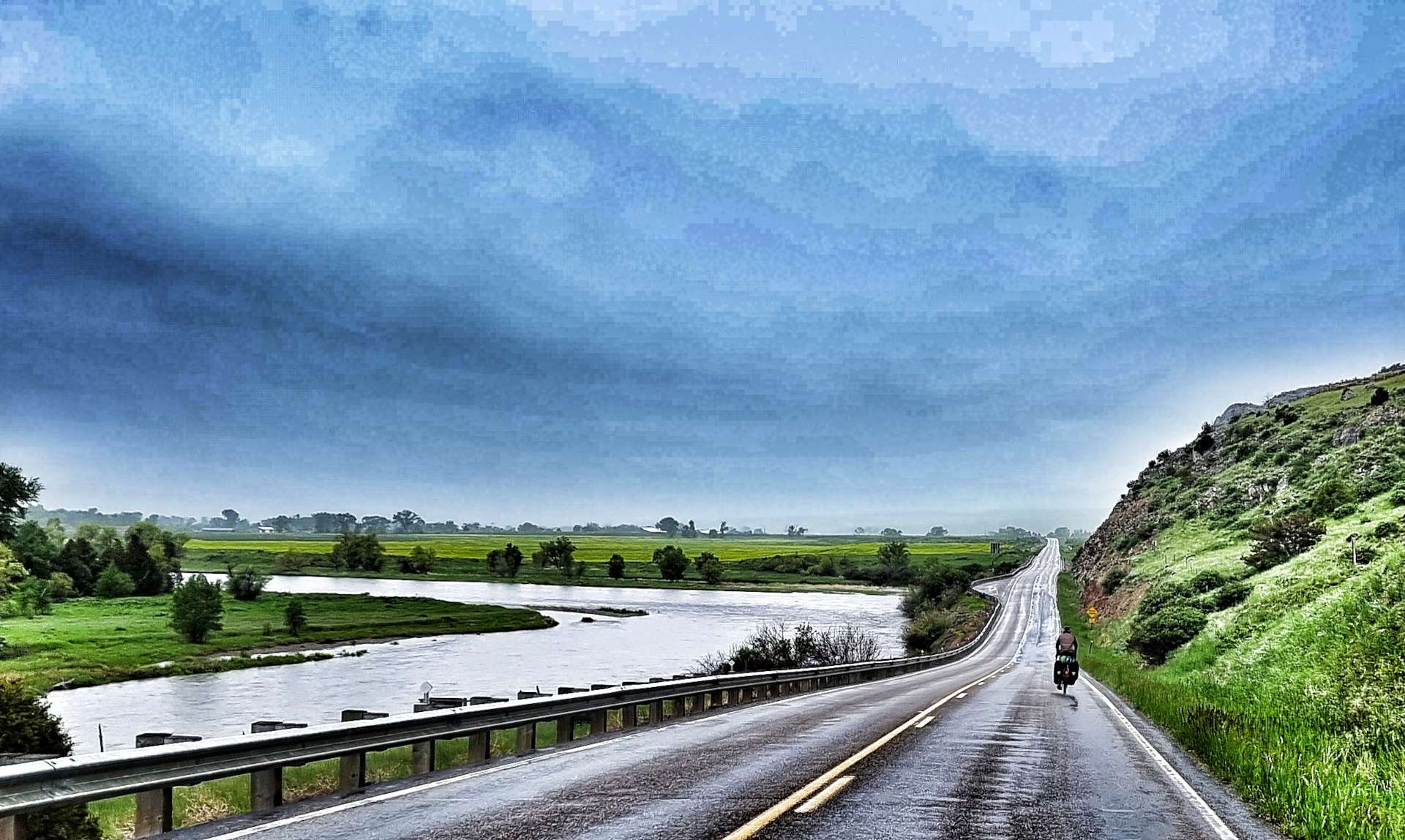
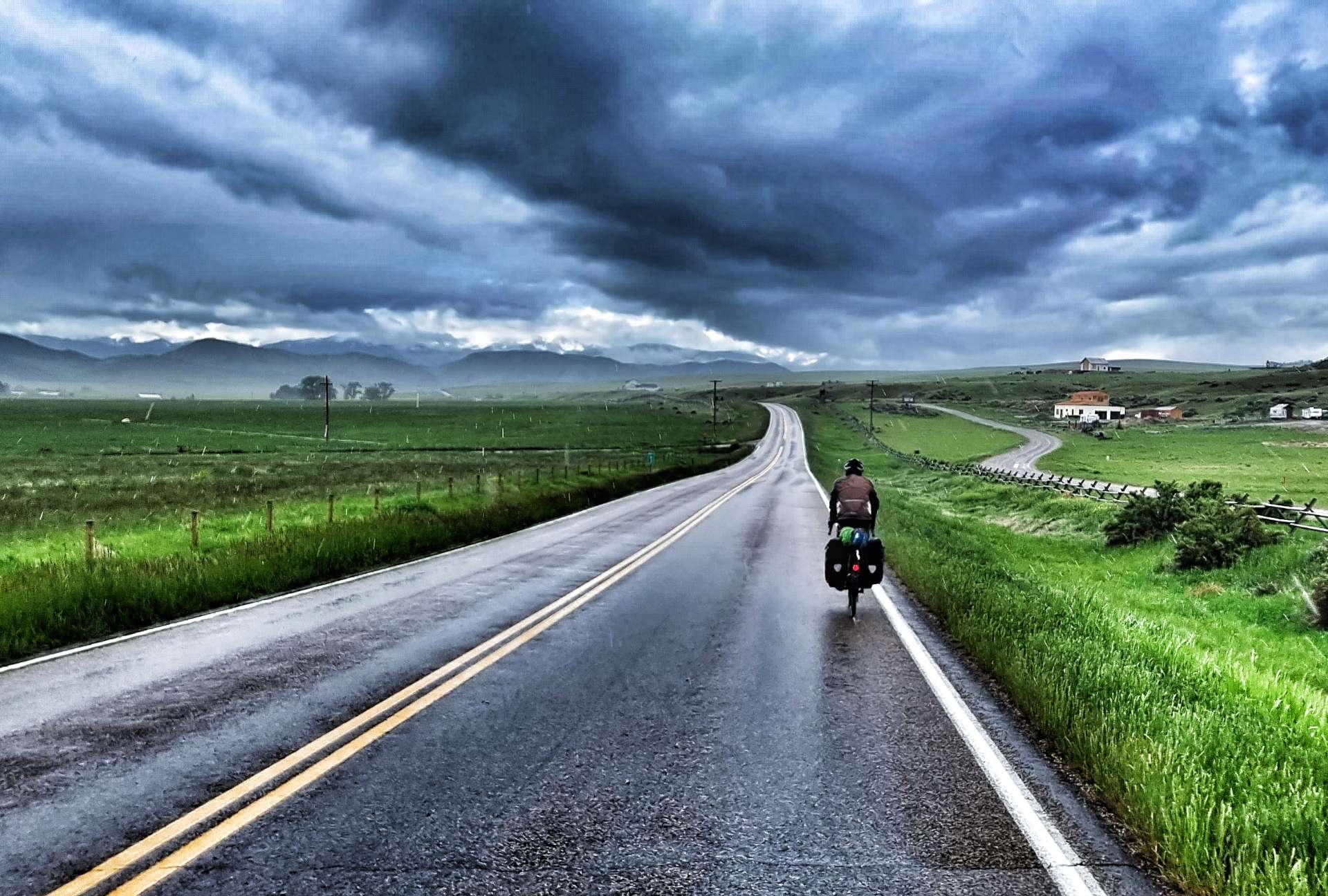
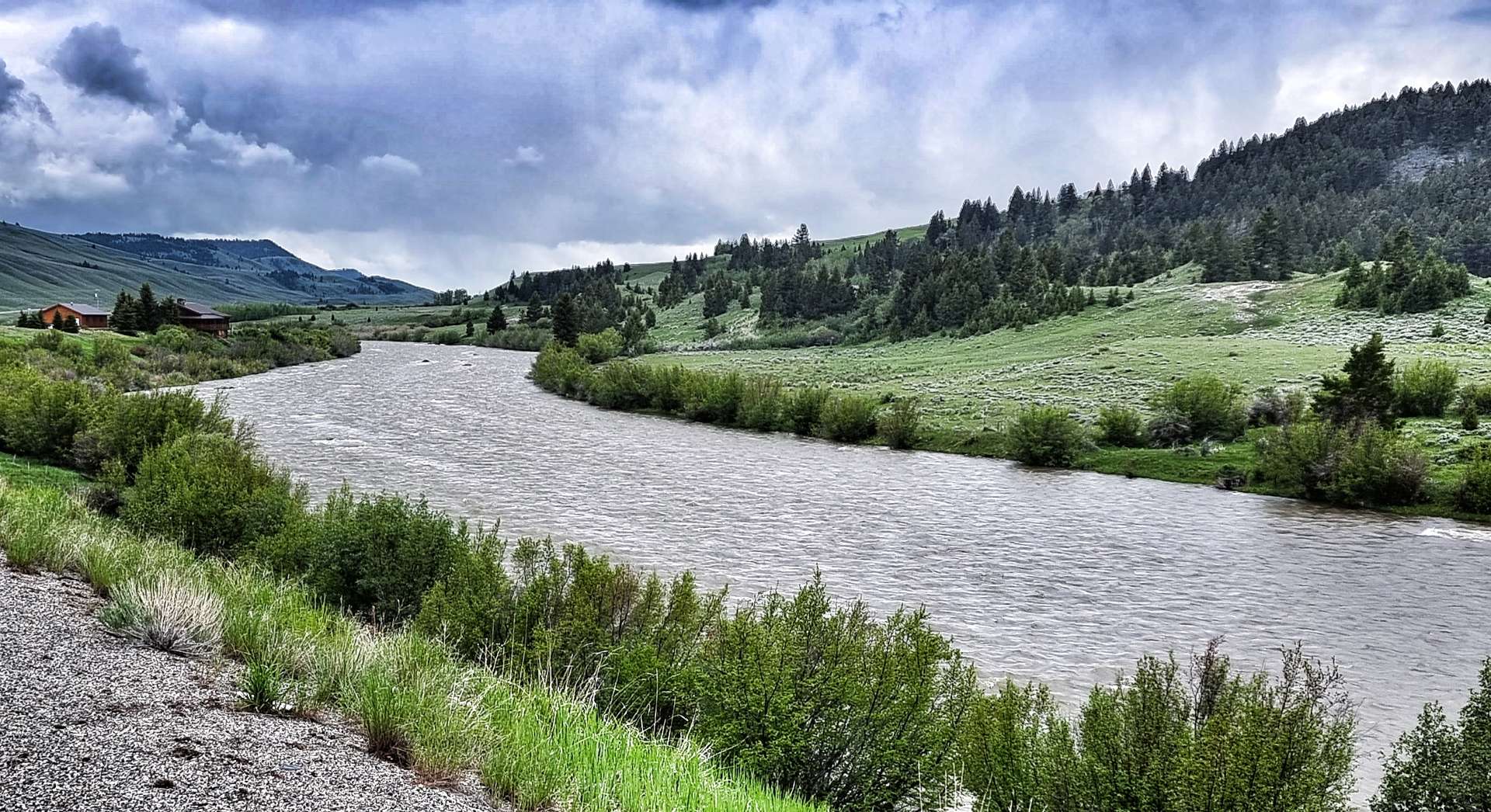
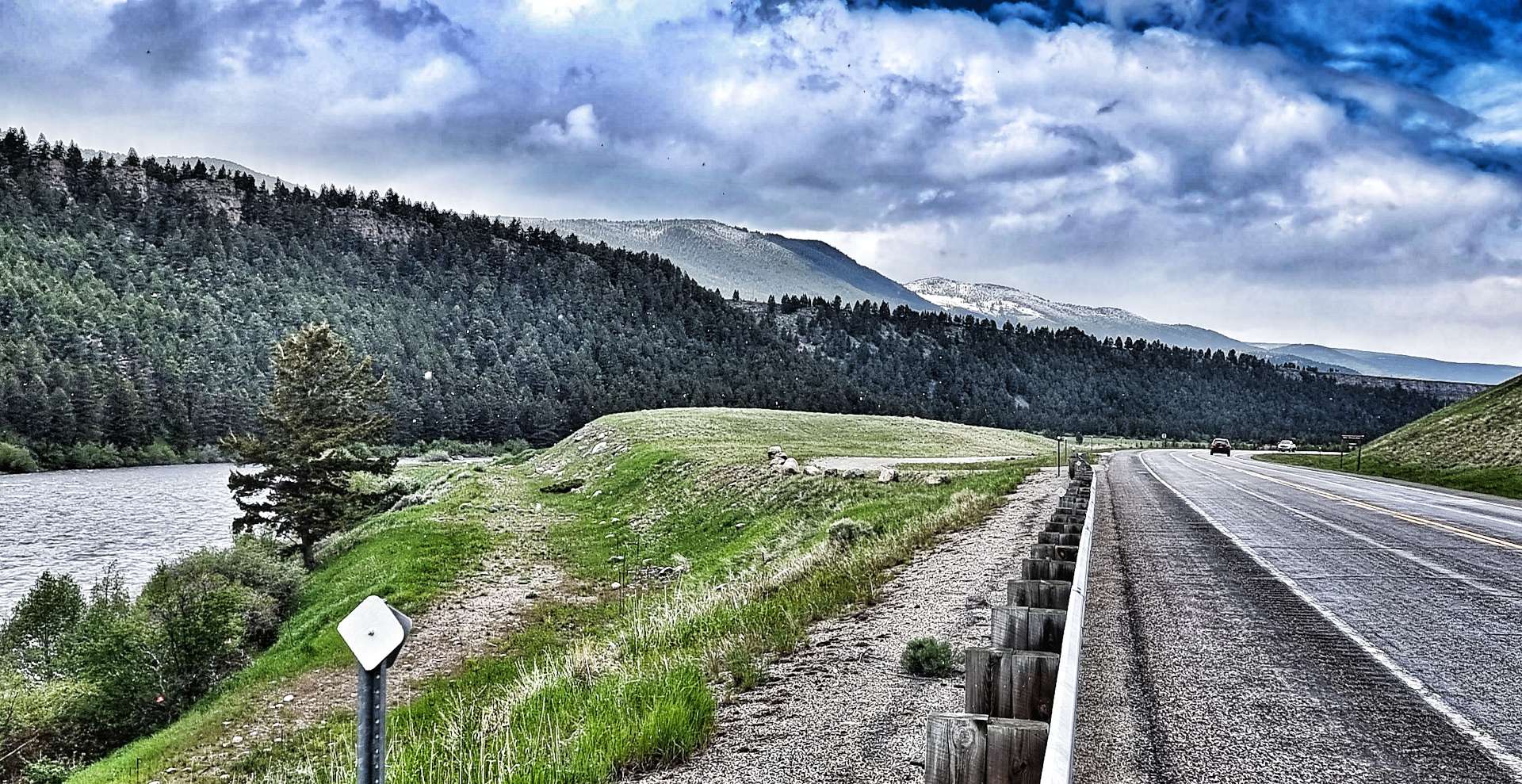
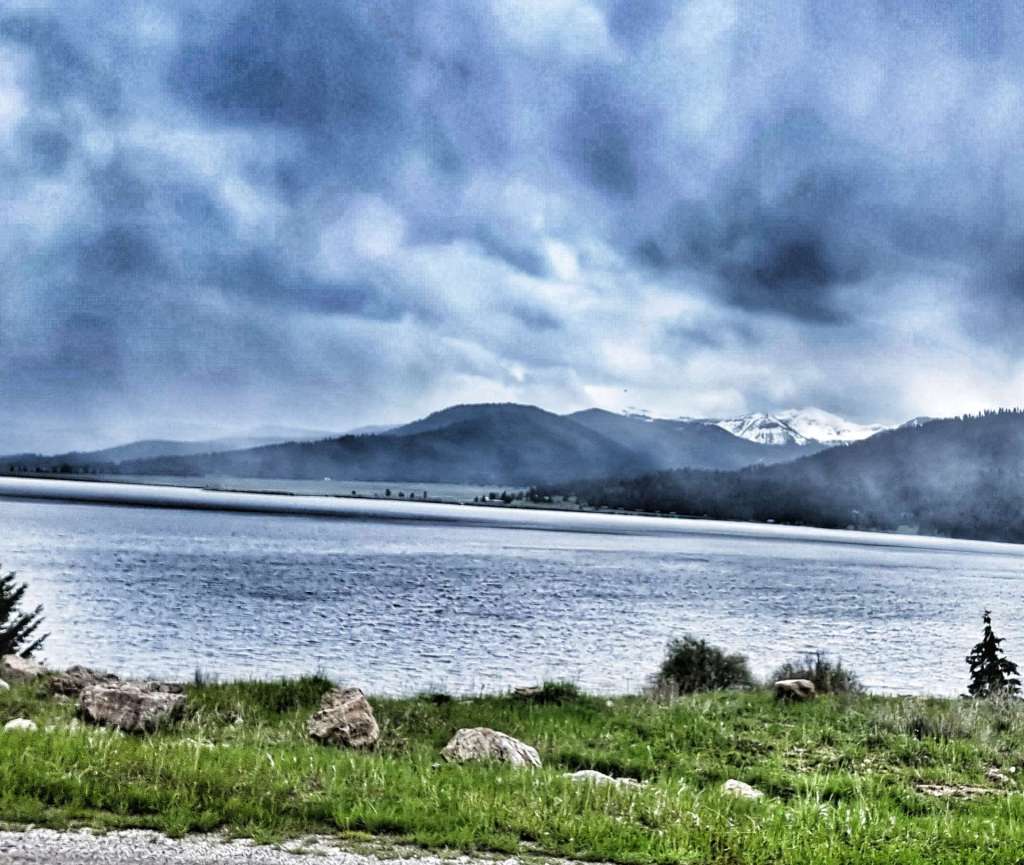
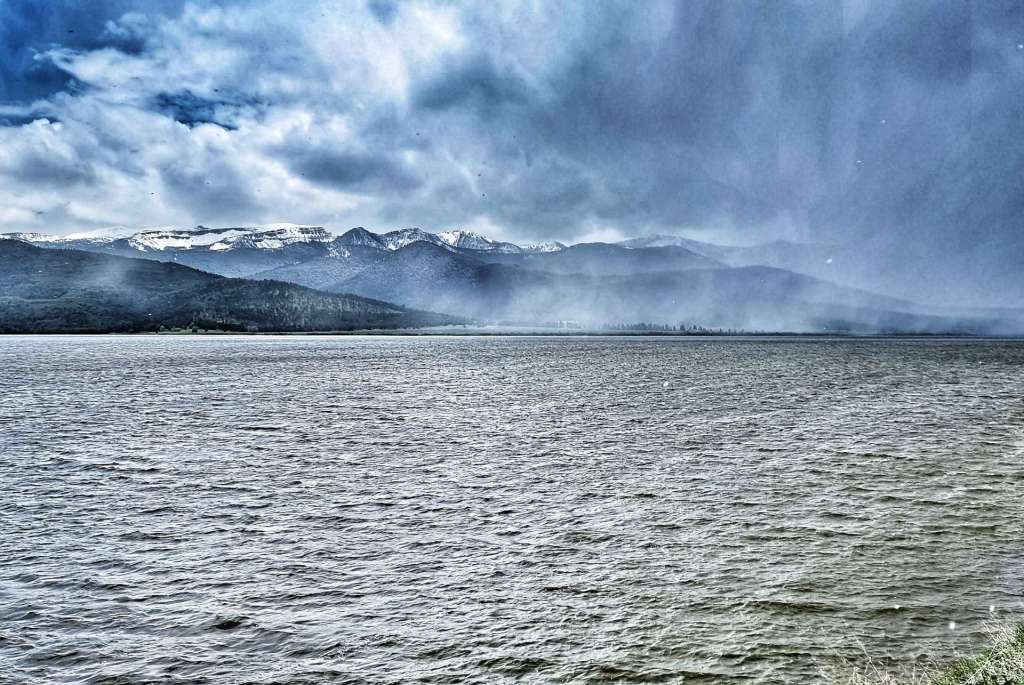
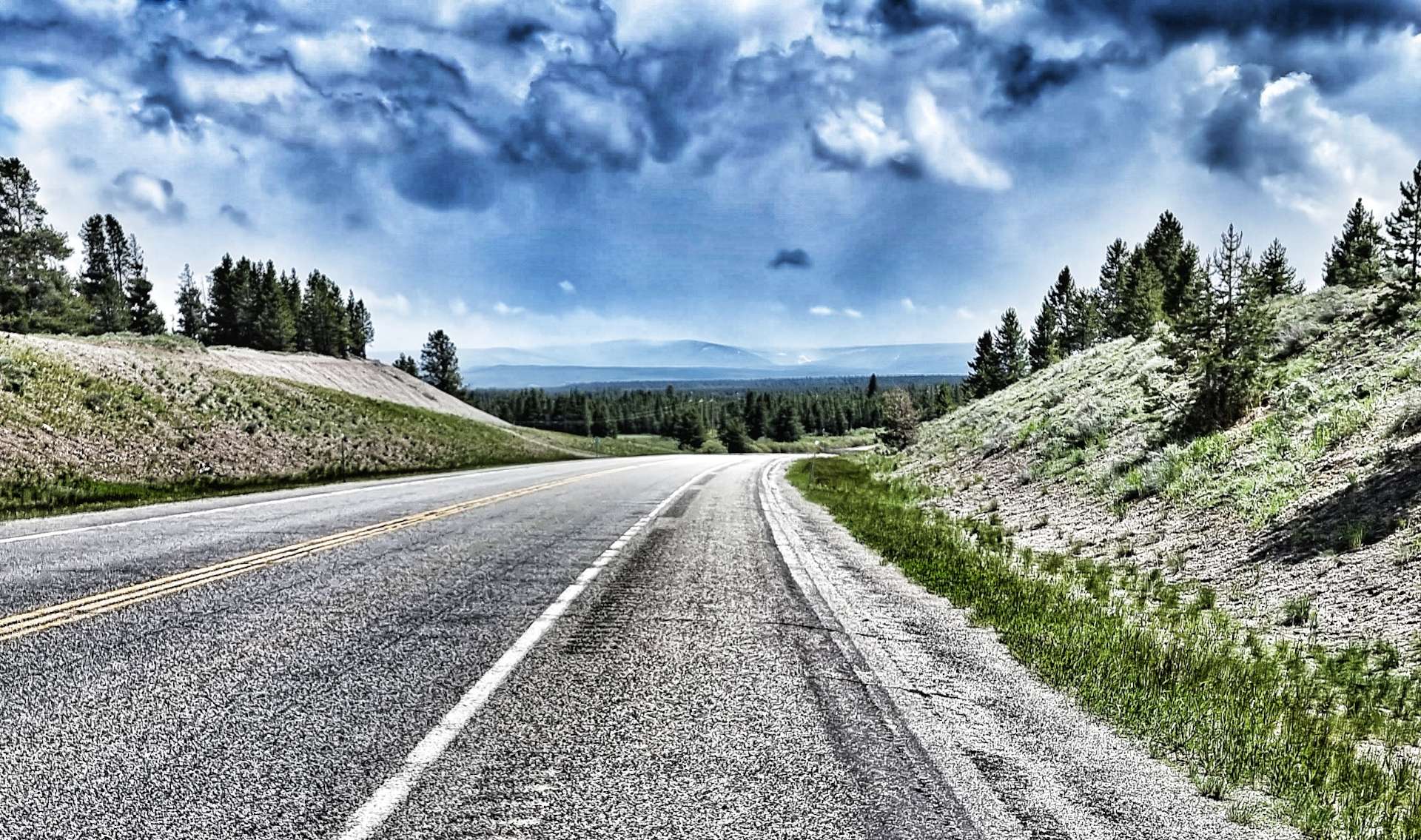
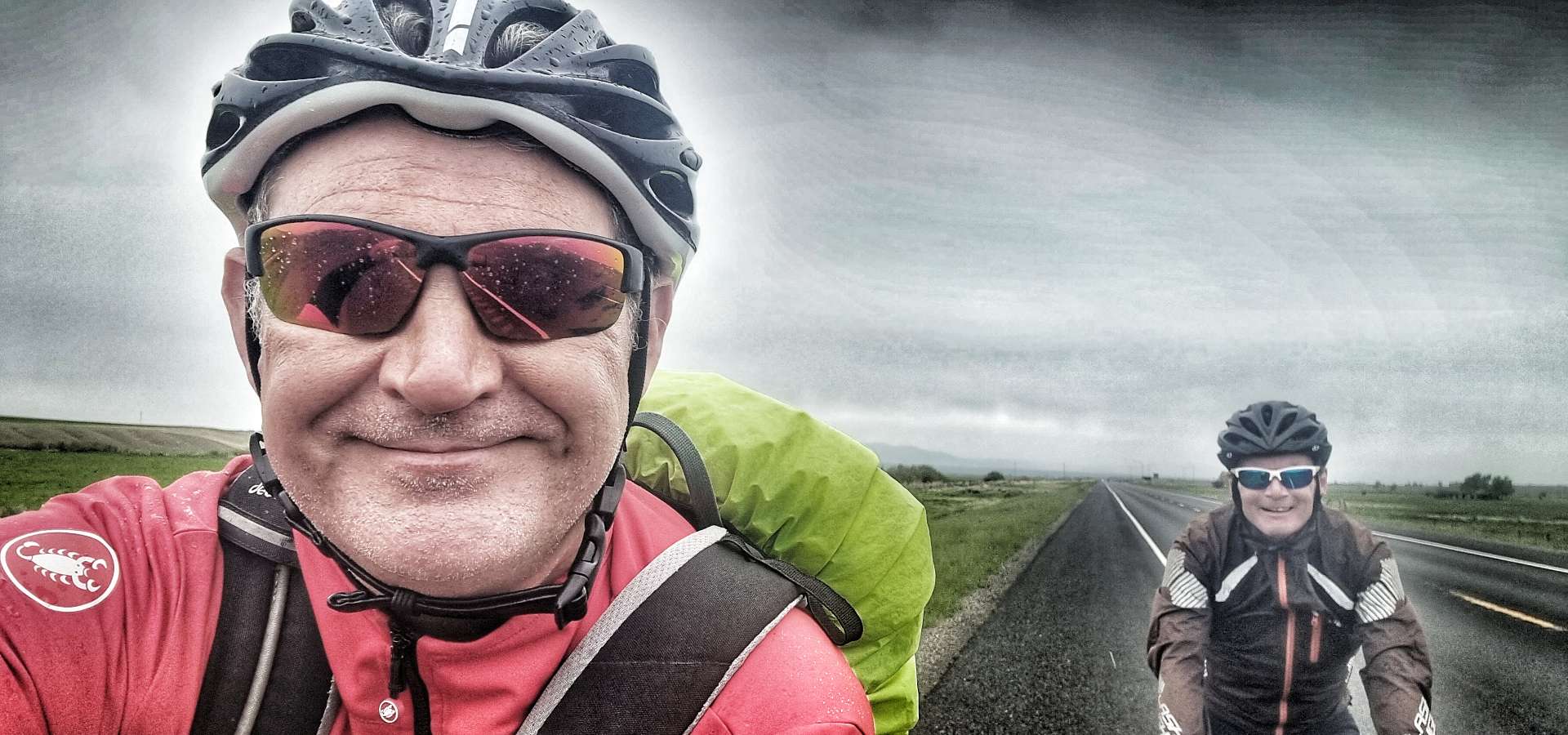
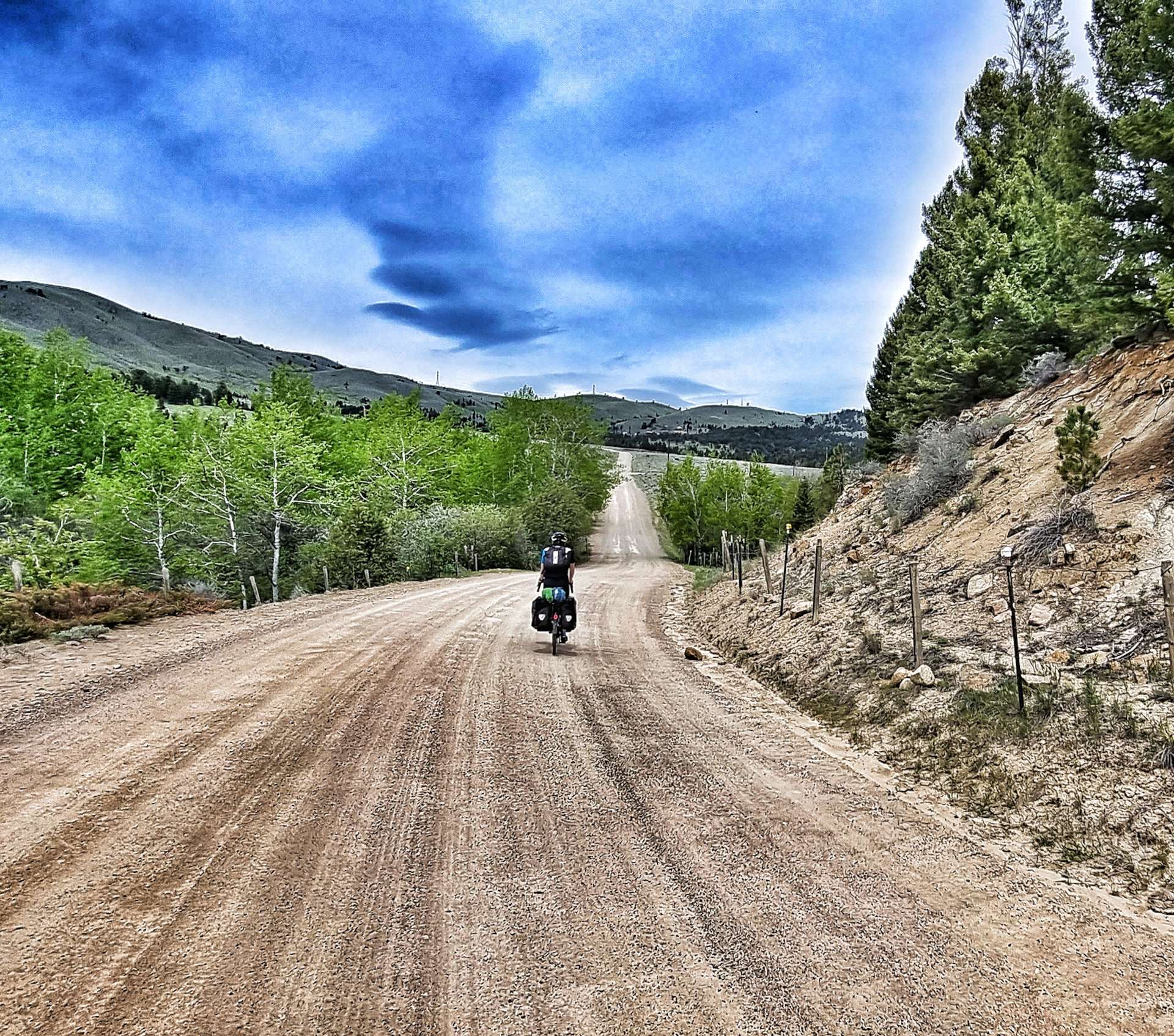
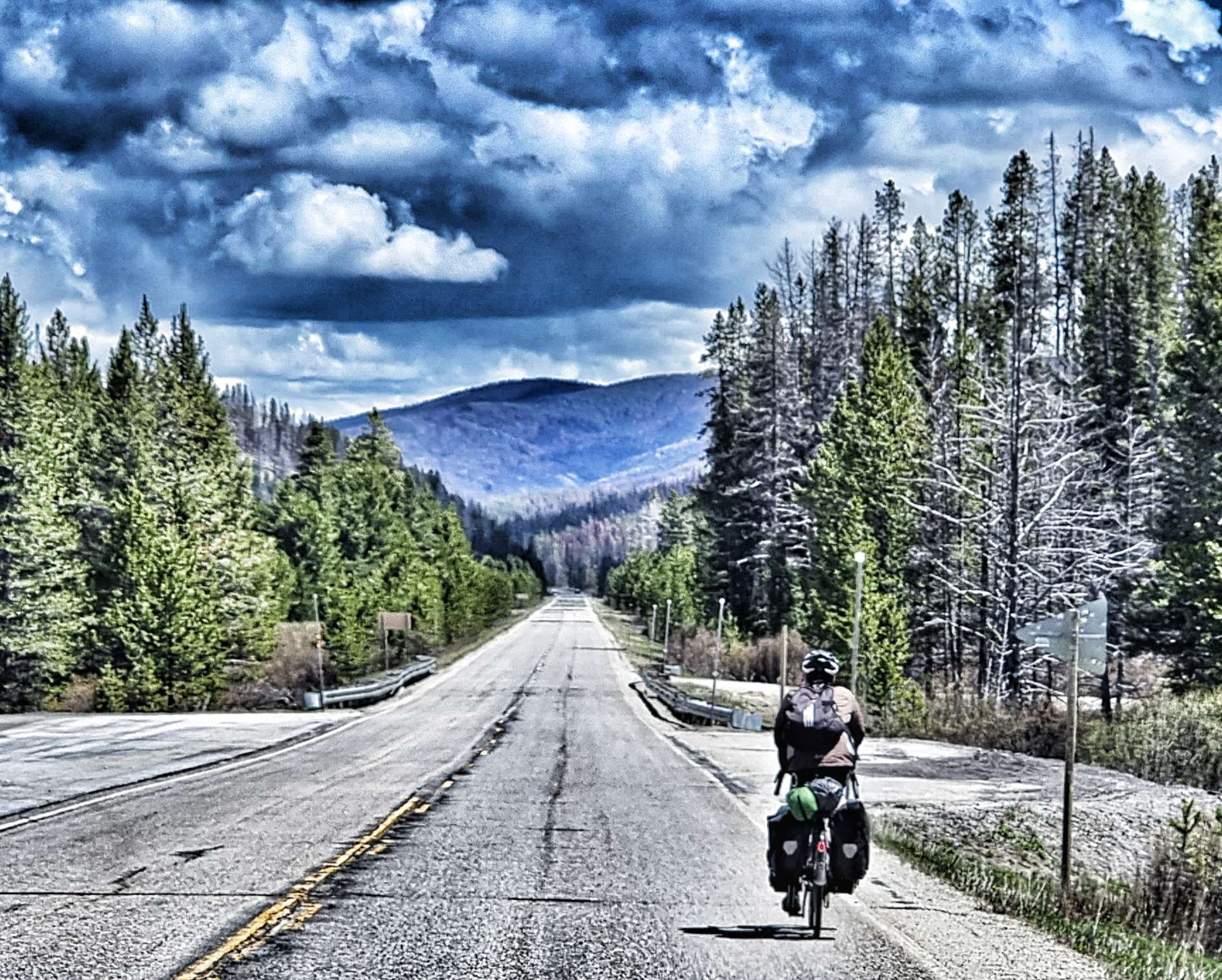
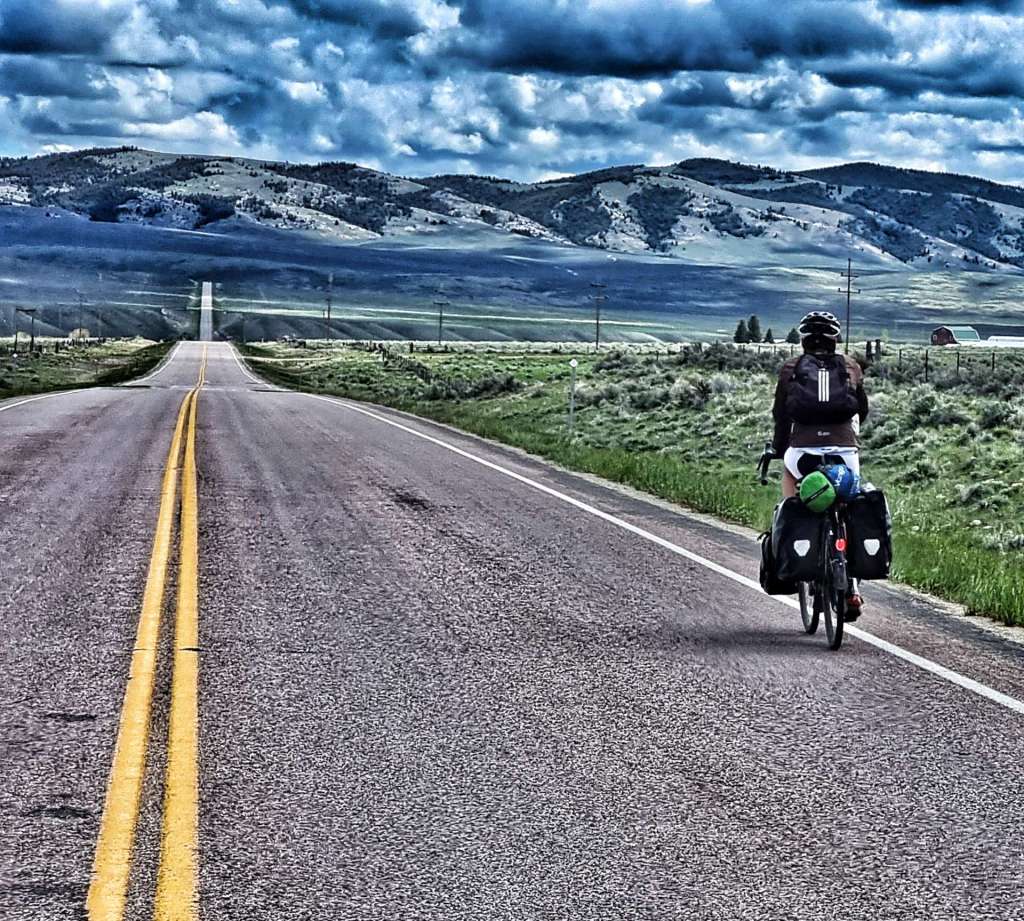
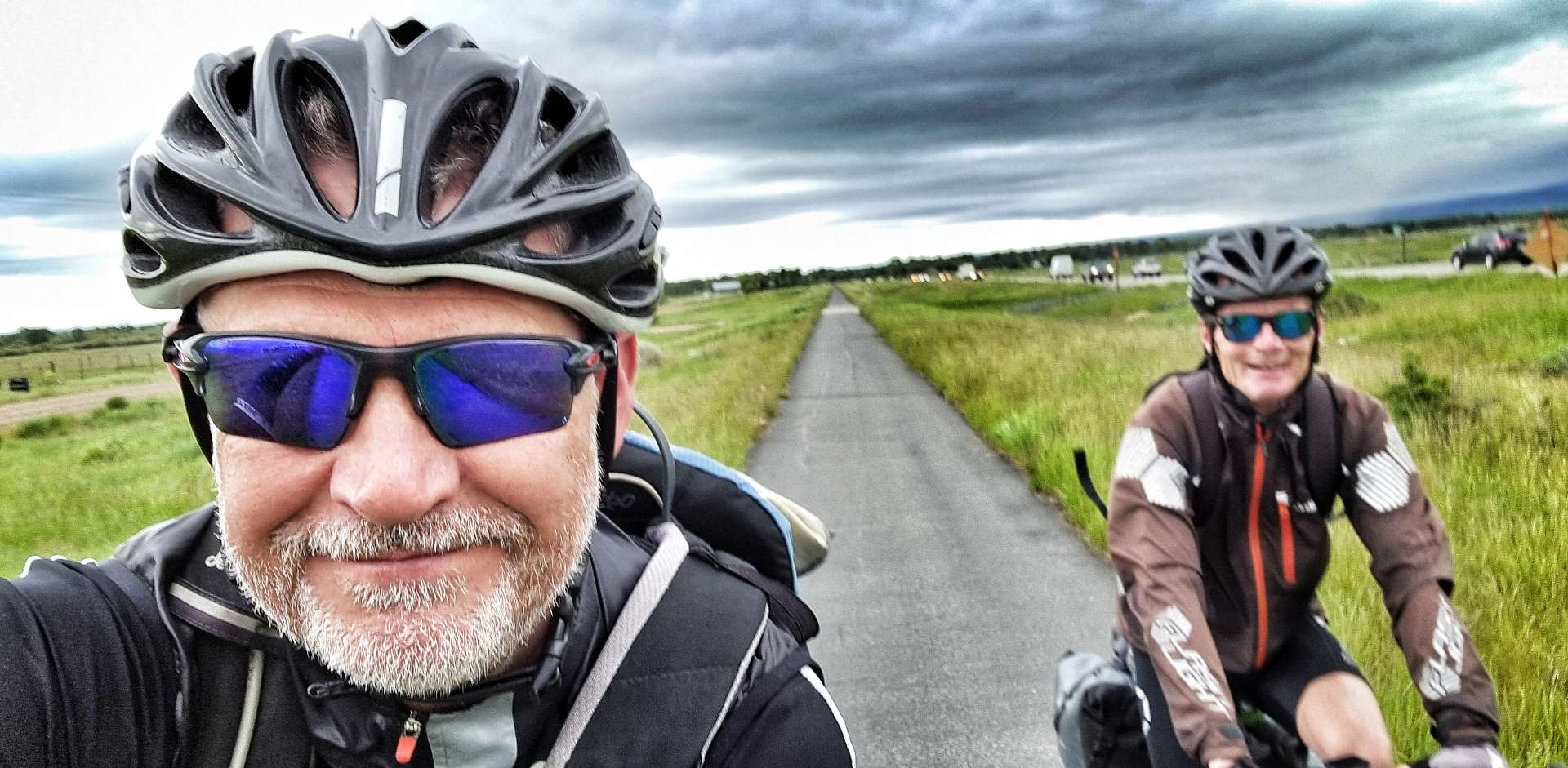
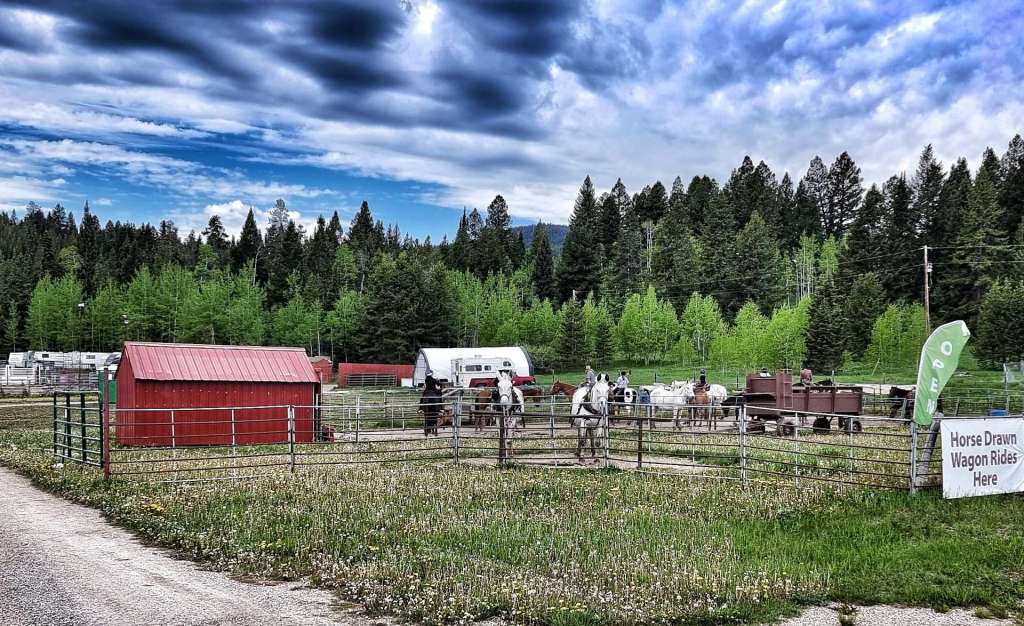
Leaving Driggs, we picked up a cycle track almost immediately that we’d be able to use for the first 9 miles until we reached Victor. We could see rain showers falling to either side of us, but somehow we remained dry – even one of the horses looked on in surprise! You may be able to see in the 2nd photo that Sean had taken most of his kit out of his rear left pannier, we were hoping that the reduced weight would increase the chance of the pannier surviving until Jackson.
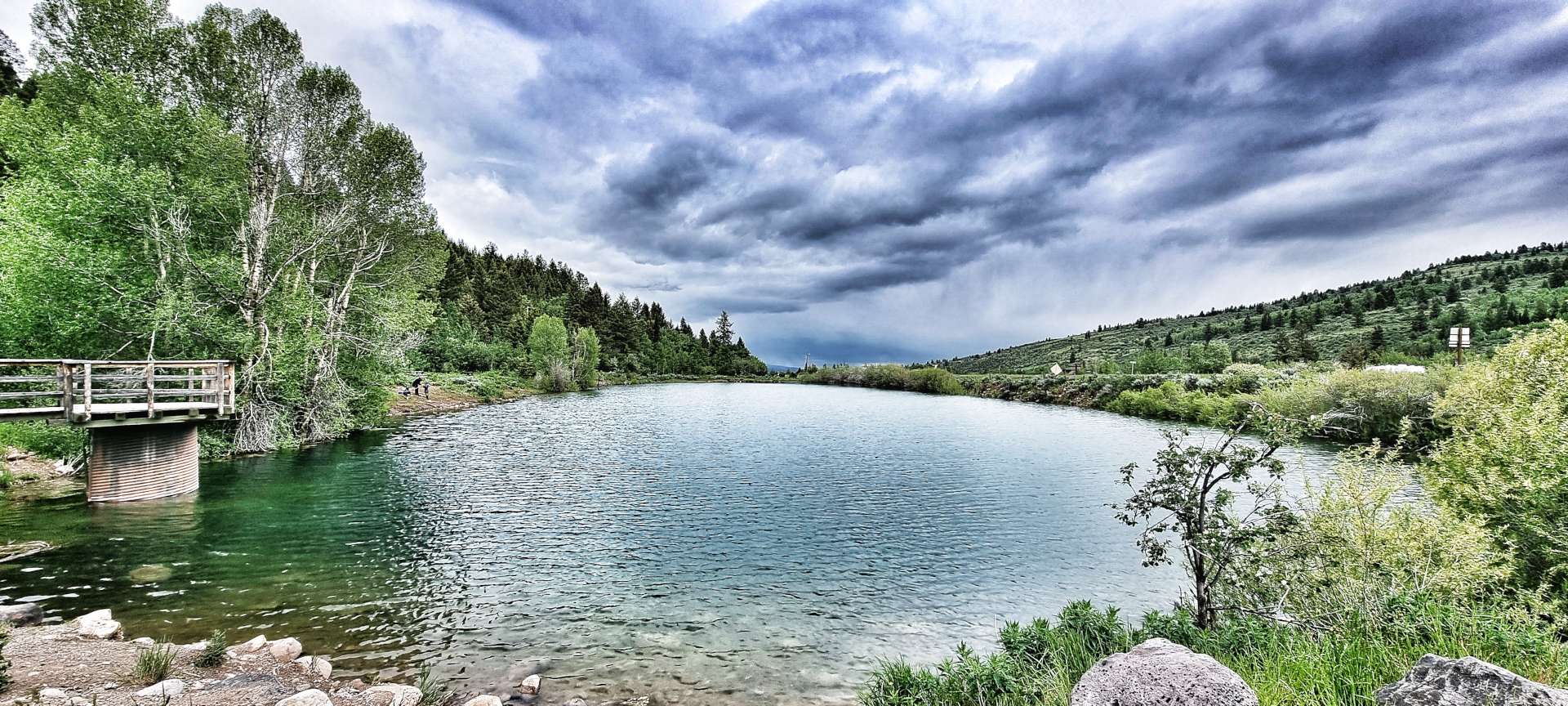
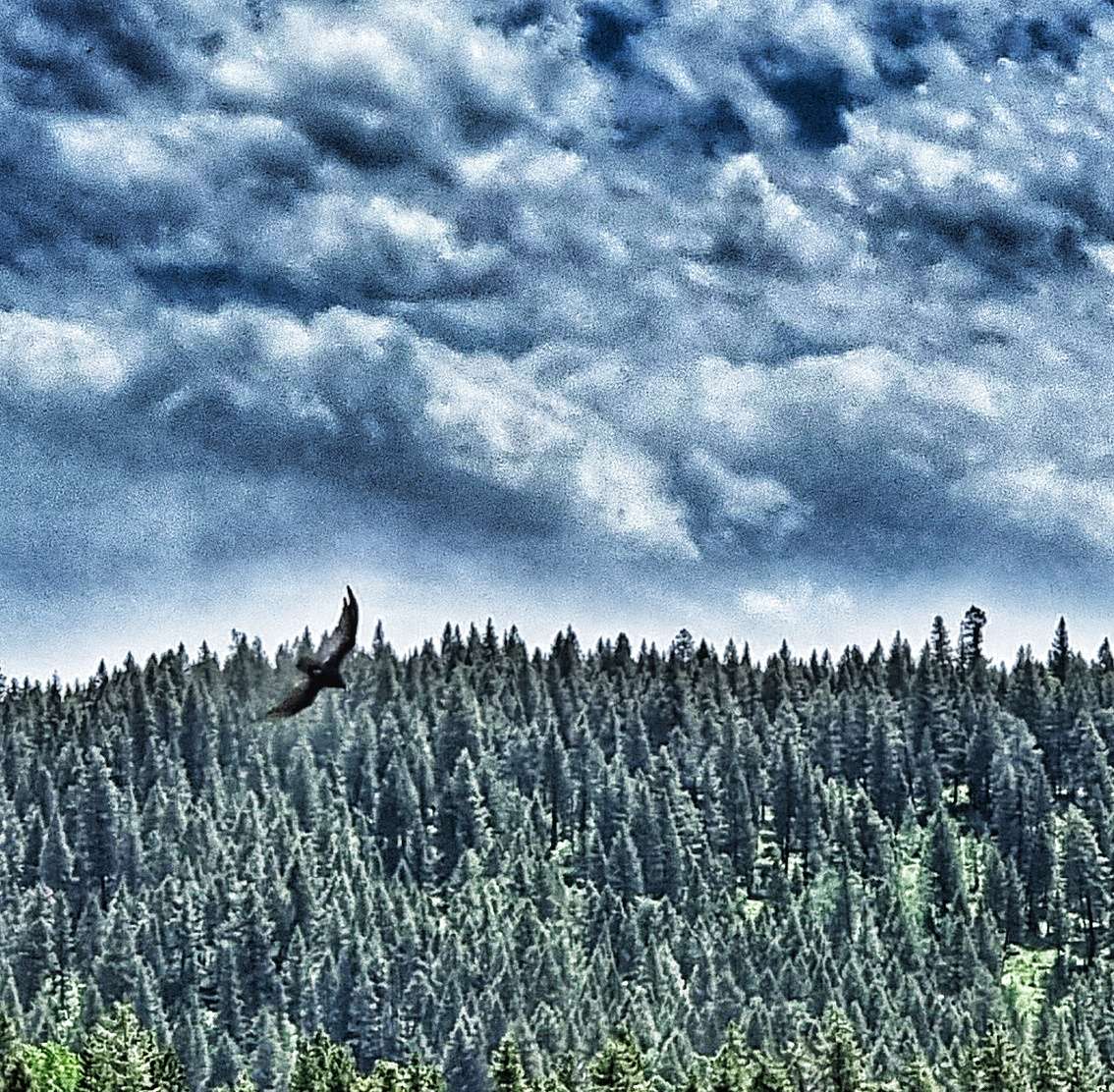
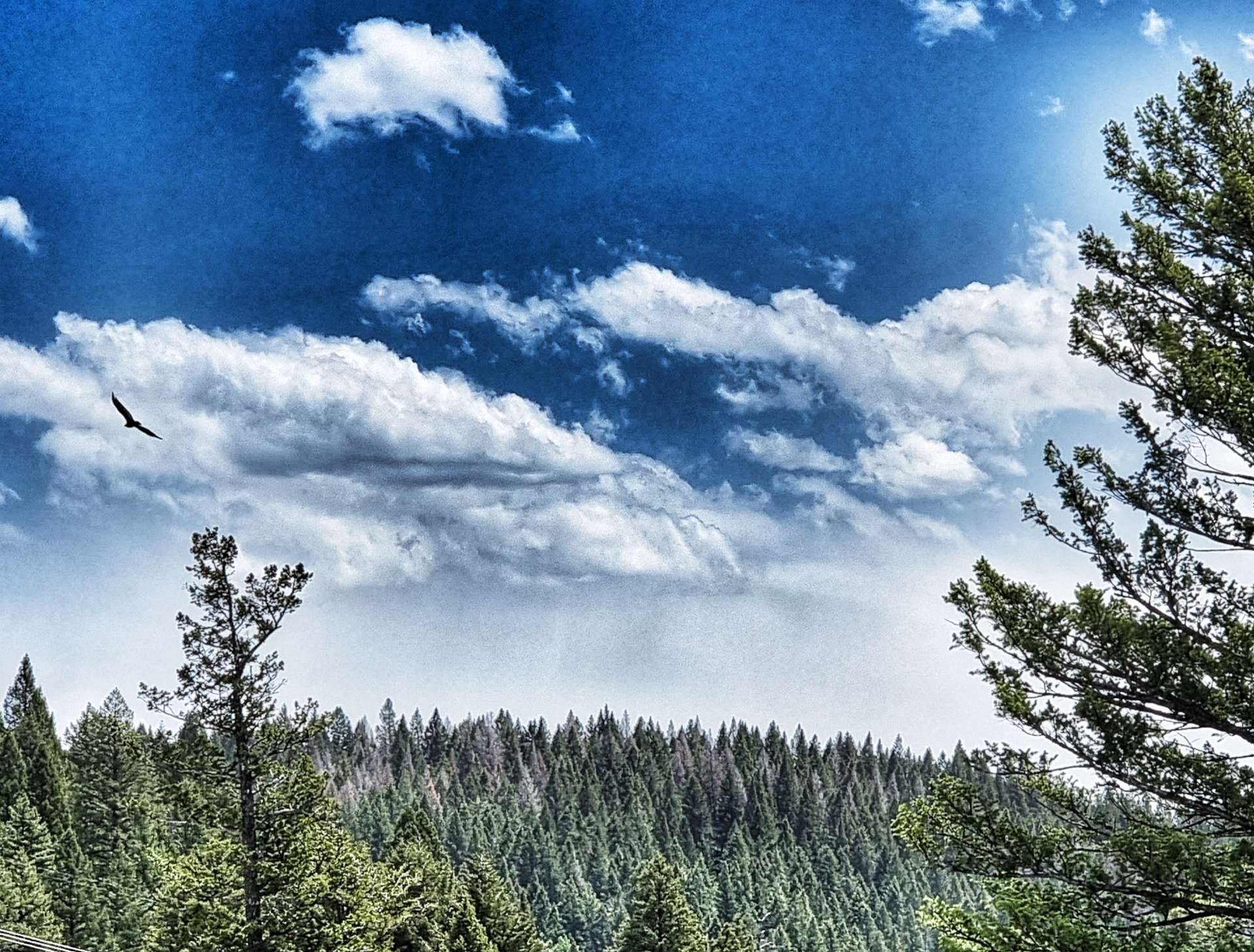
When we reached Victor, two things happened; firstly, the cycle track ended so we were back on Highway 33. Secondly, the road started to gradually head uphill, as we joined the very early & easy slopes of the Teton Pass. As we passed Trail Creek Pond we spotted an eagle who had a fish dangling from its talons as it flew by – sadly it all happened too quickly to get a photo, but it was a great moment & the first time I’d ever seen this happen in real life!
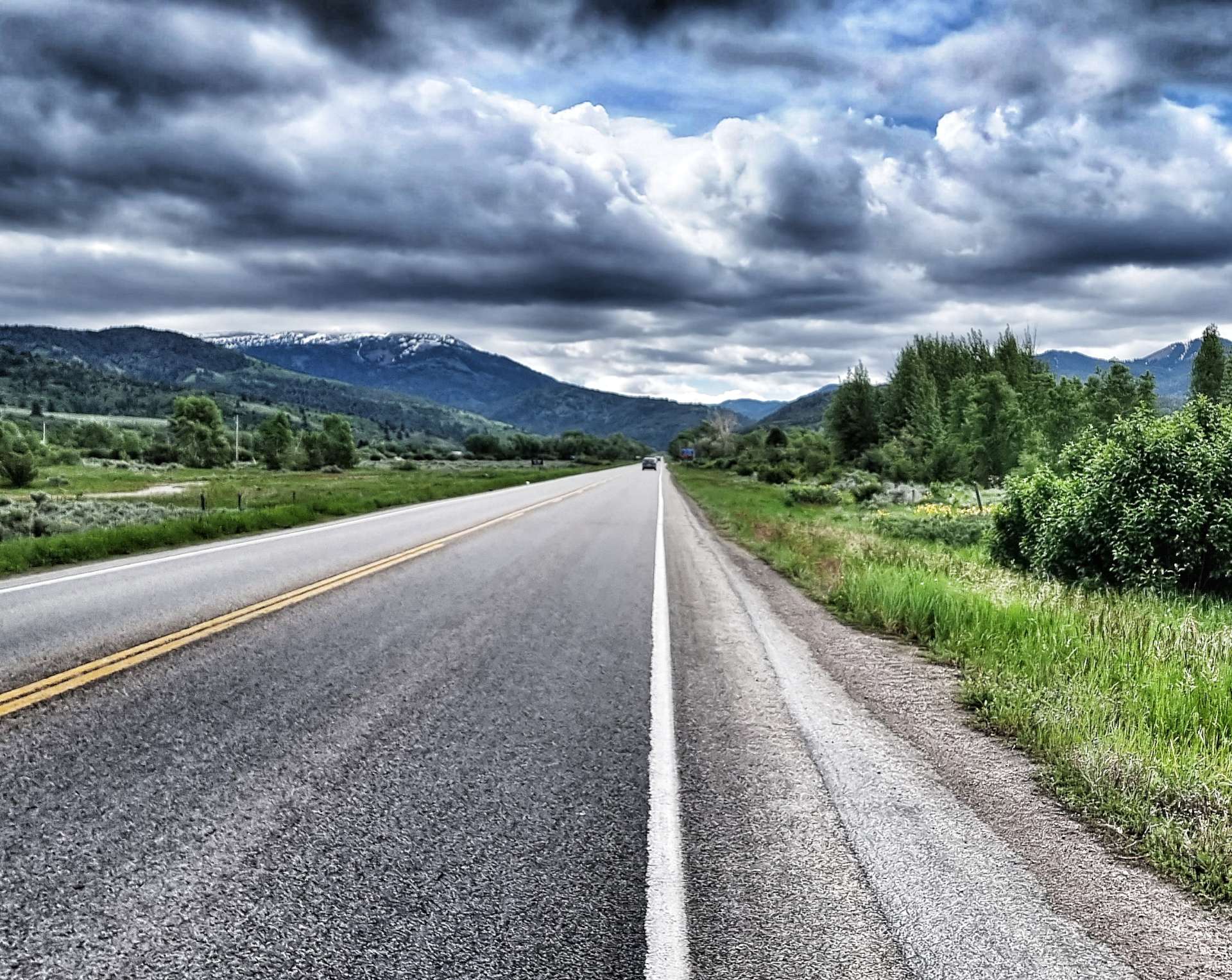
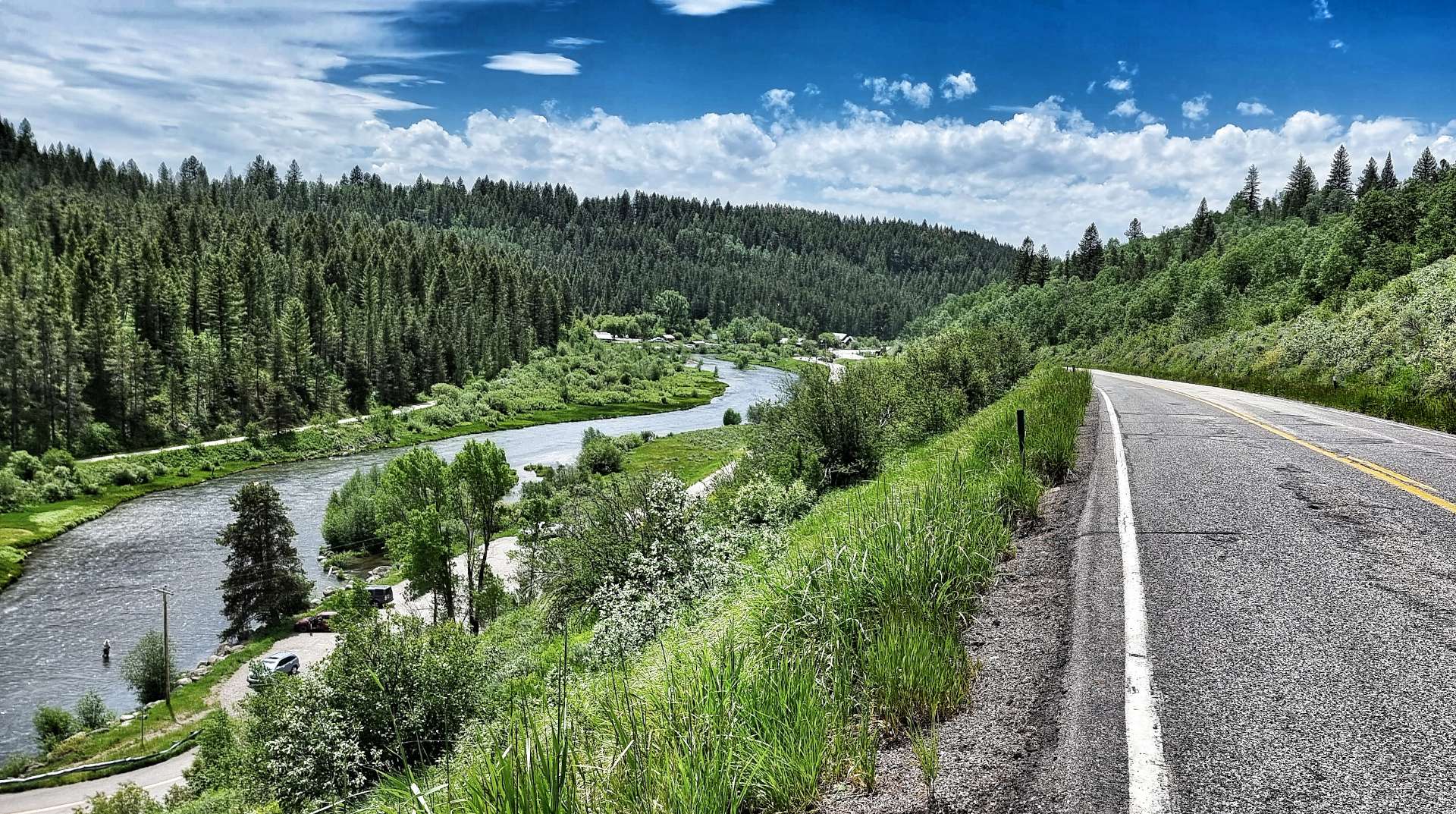
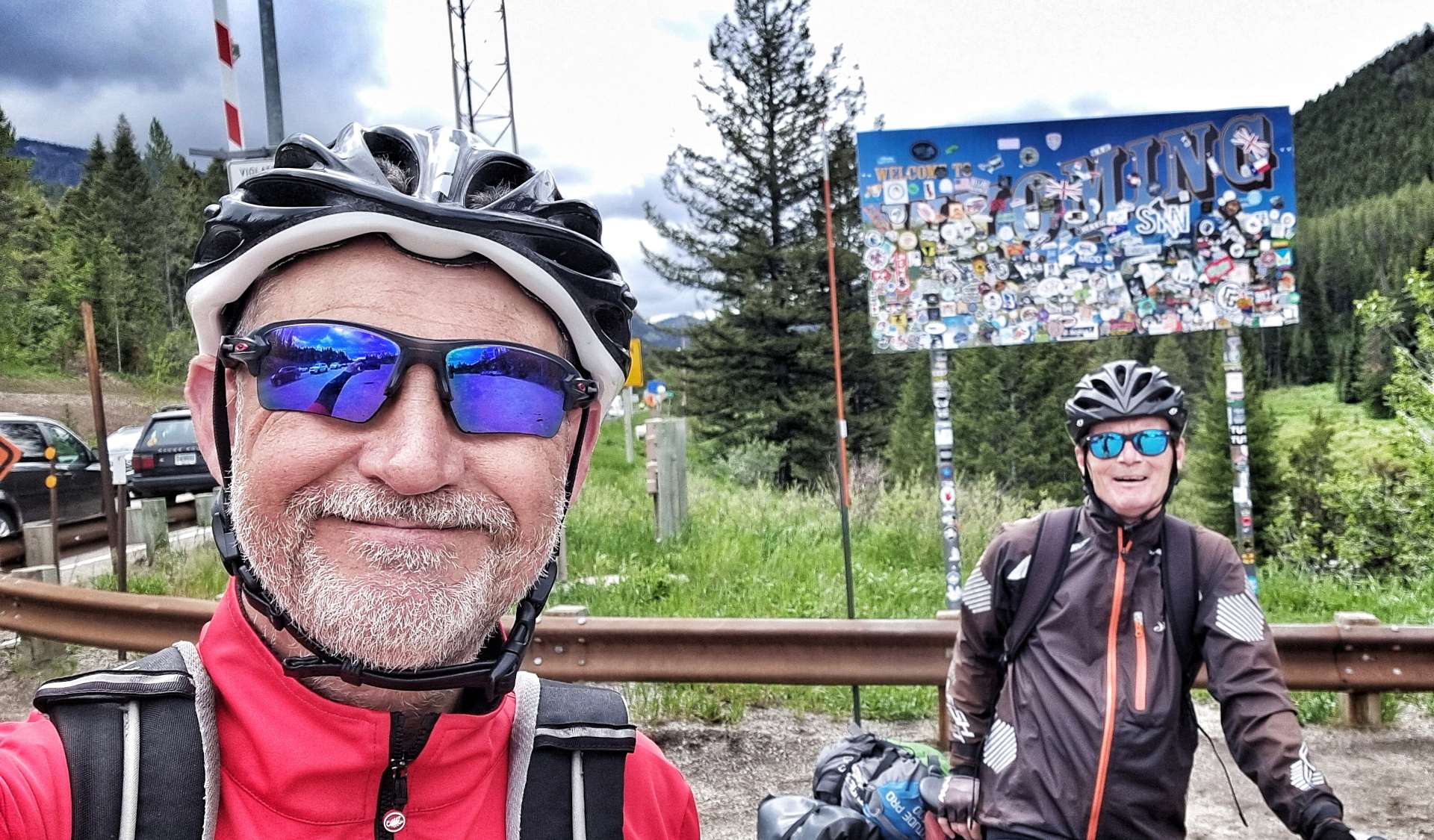
We followed the Trail Creek as it climbed the valley & after a couple of miles we reached the State Line crossing from Idaho into Wyoming (the Highway changed from ID 33 to WY 22). This also marked the point at which the gradient increased from about 2% to 4 – 5%, still very manageable, it just made for slower going.
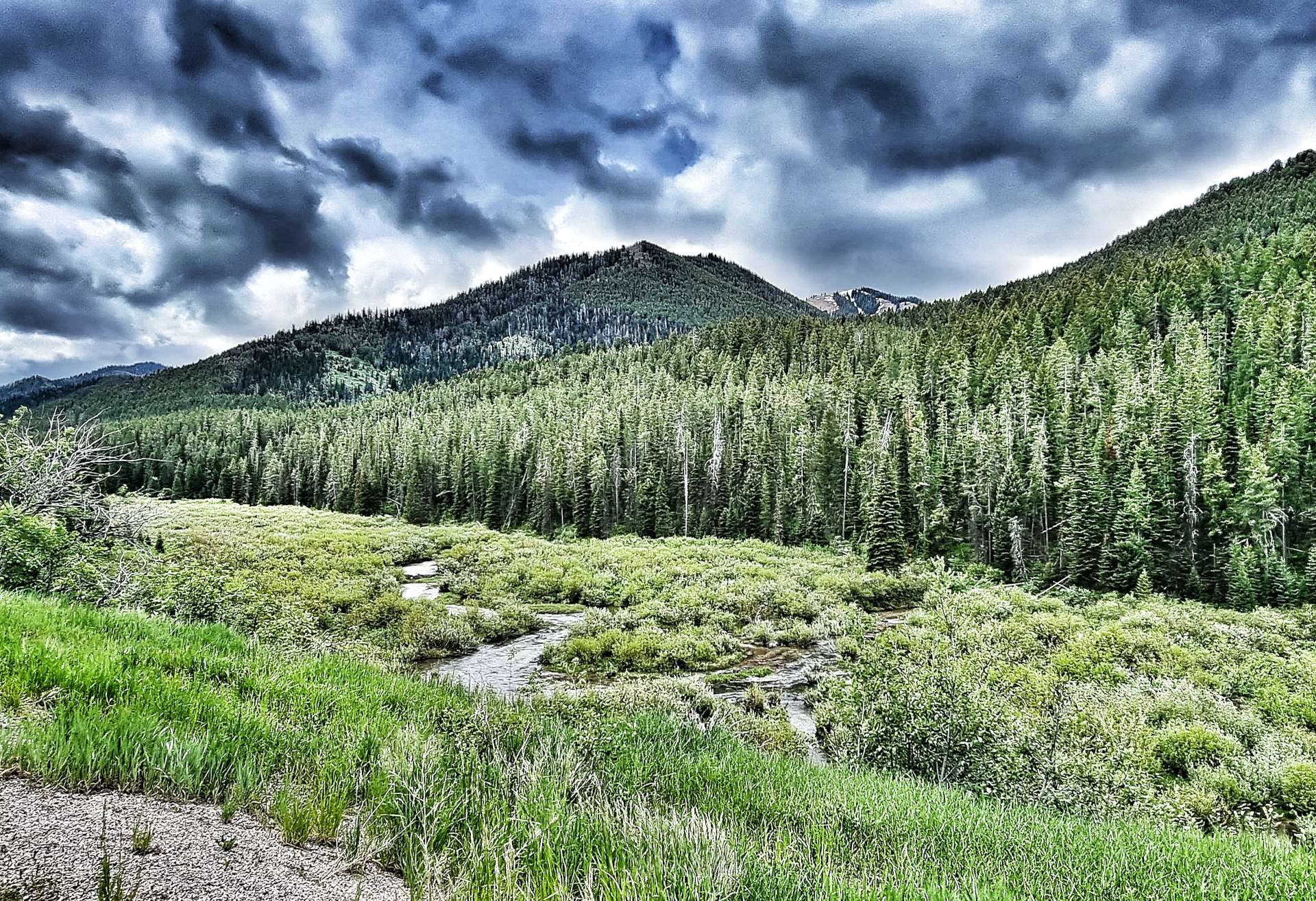
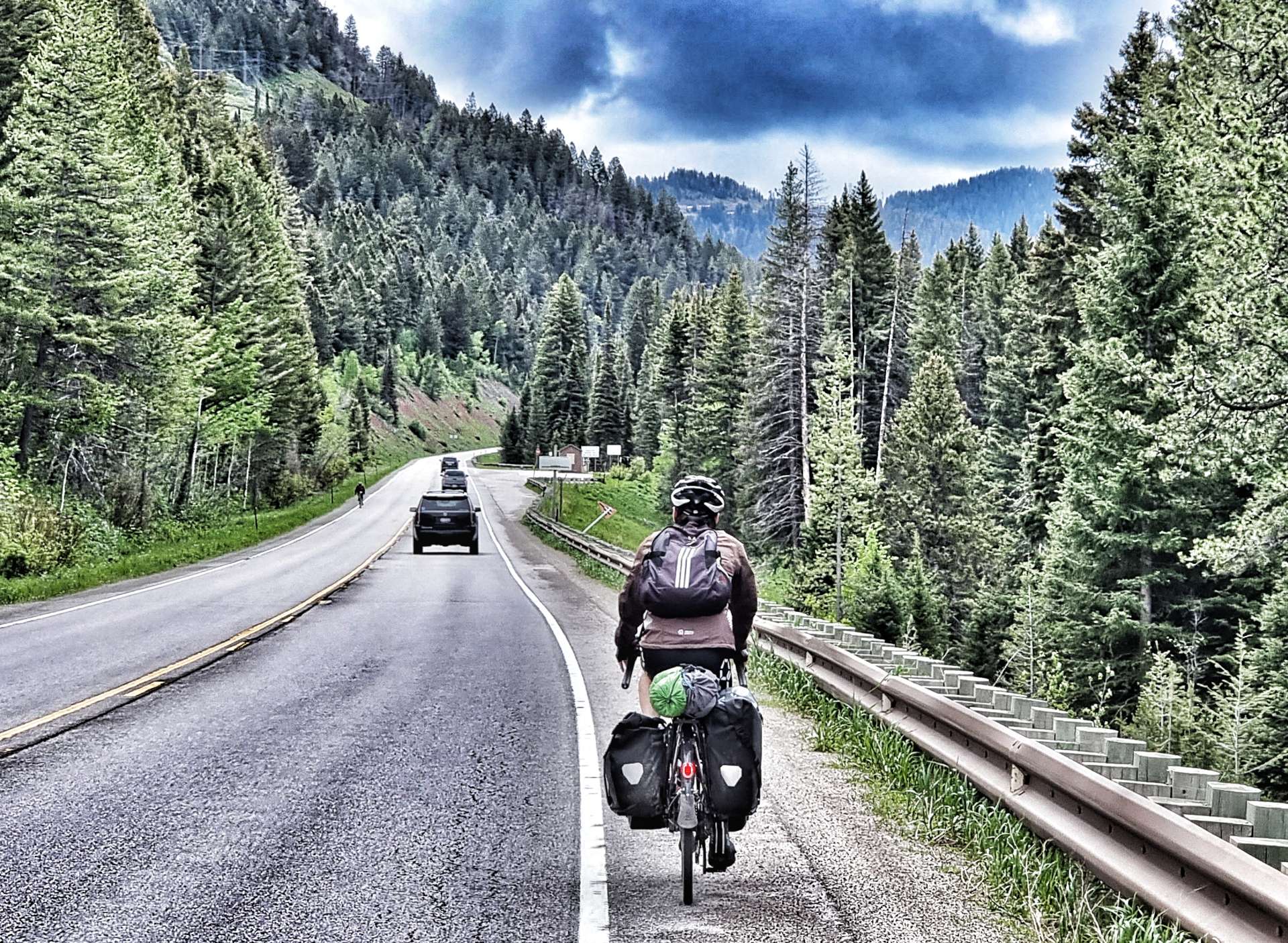
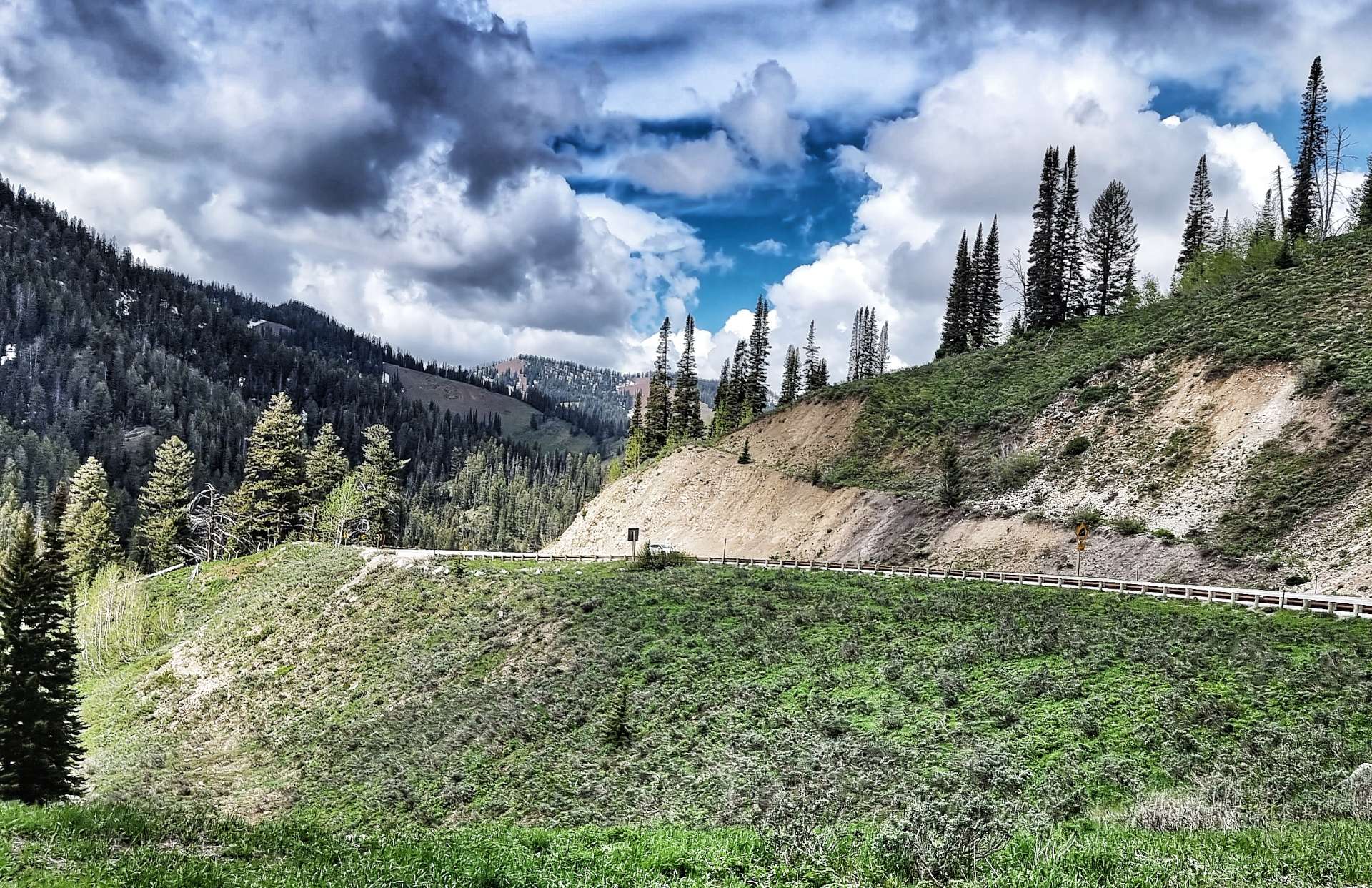
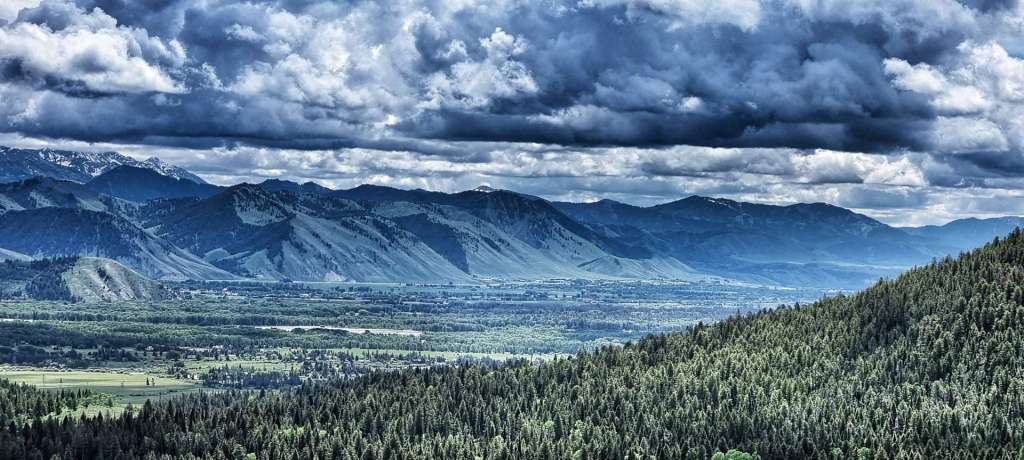
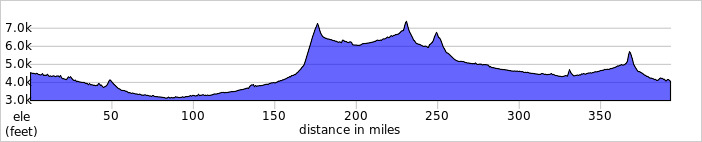
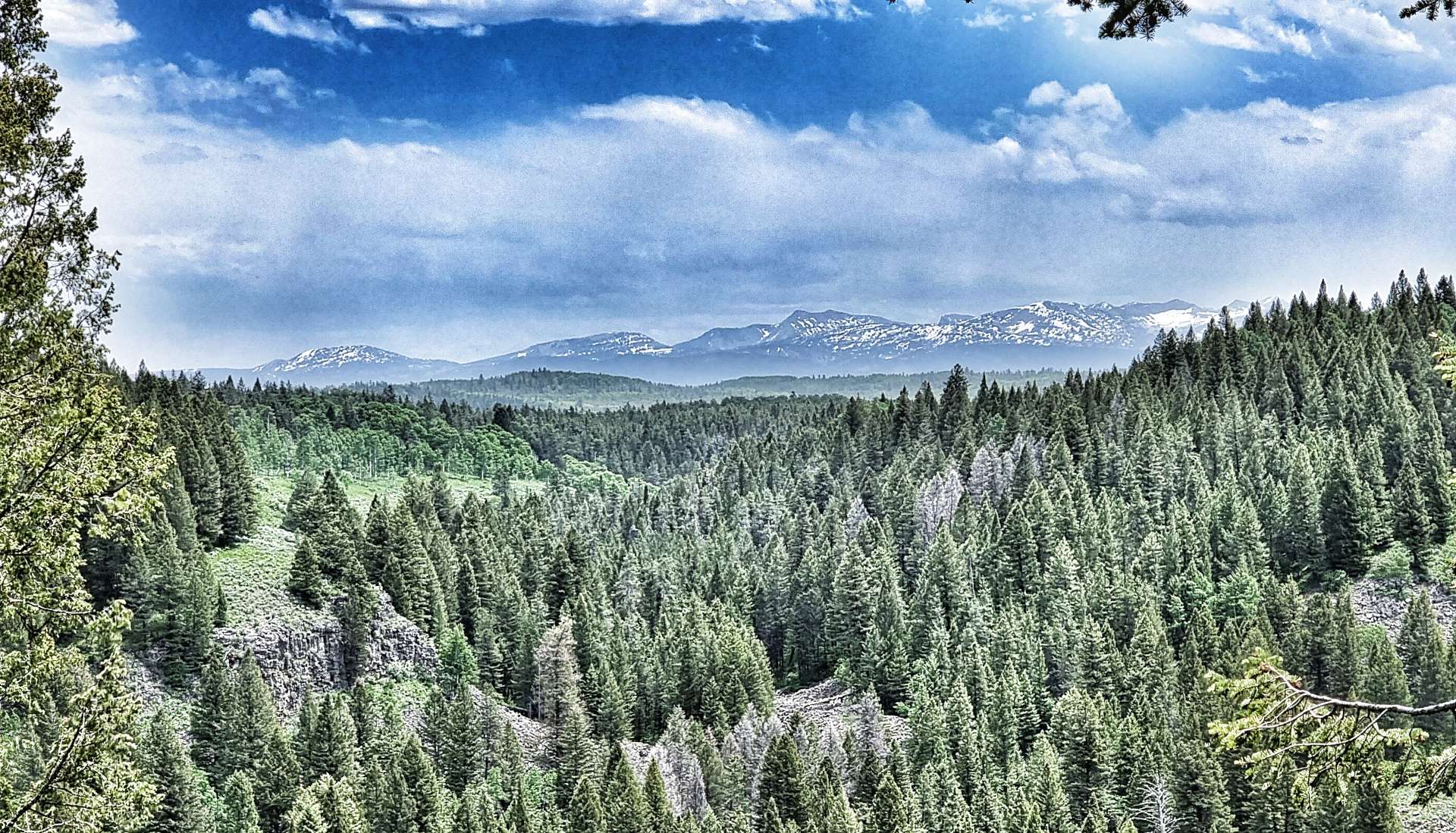
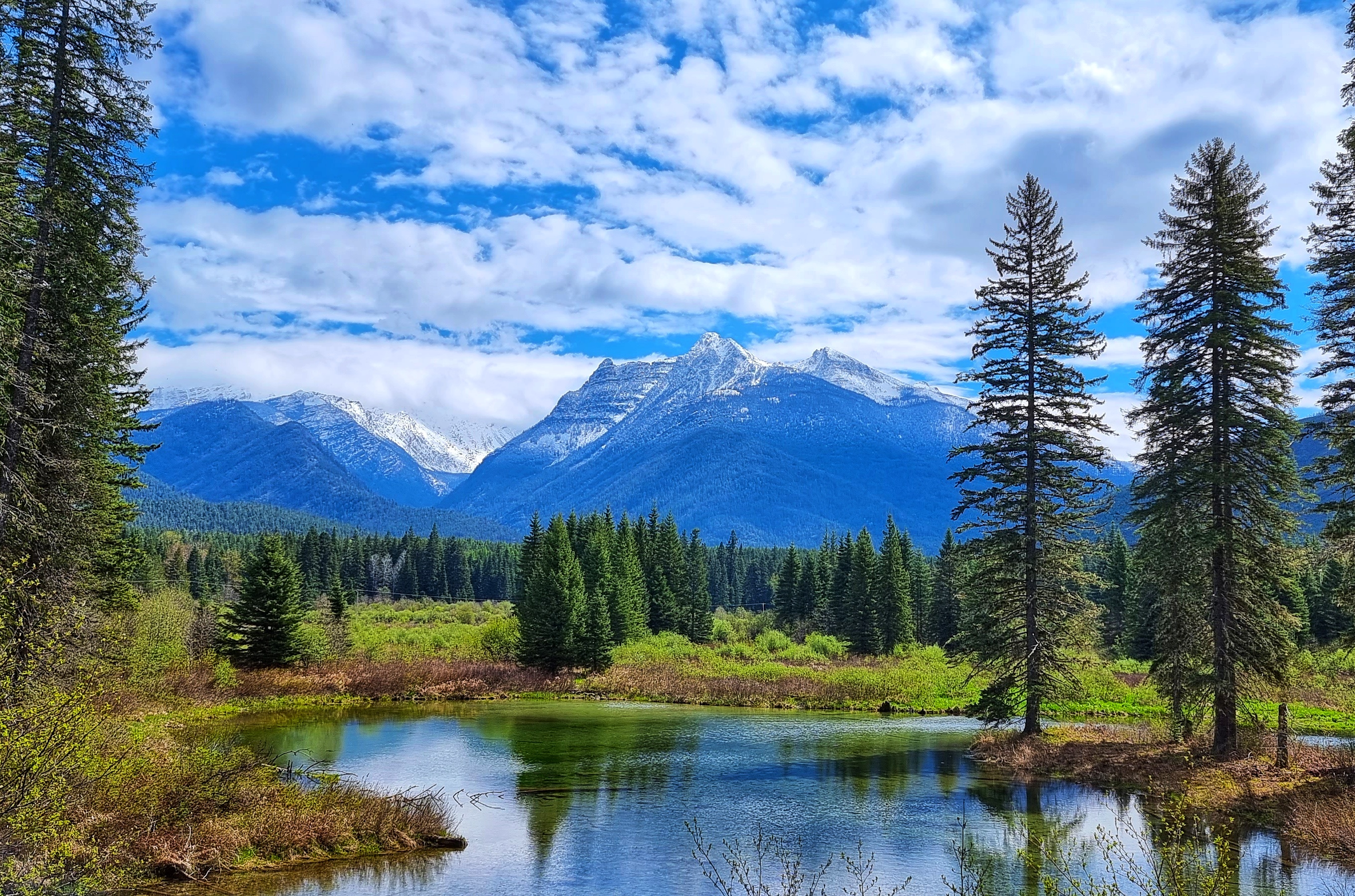
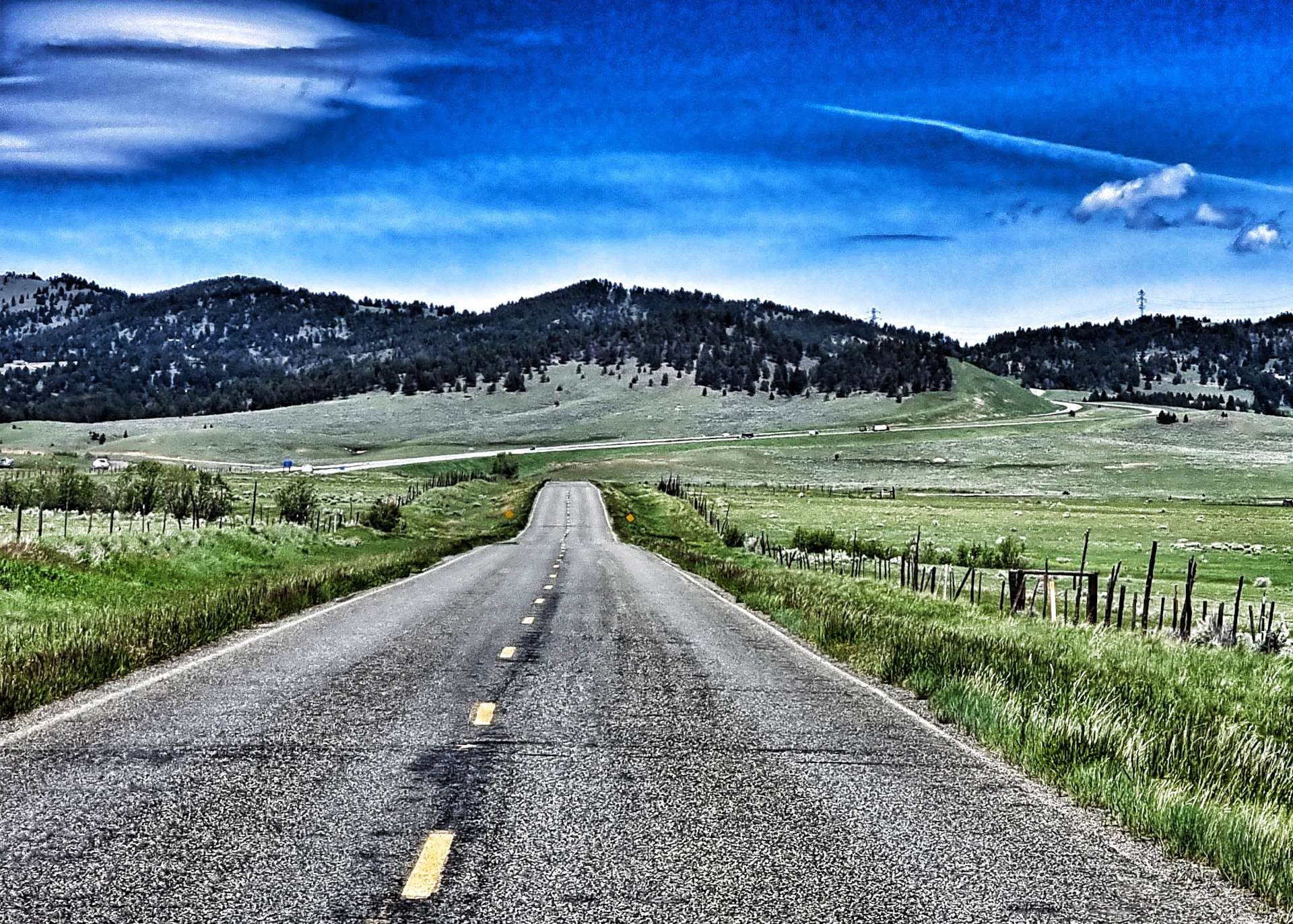
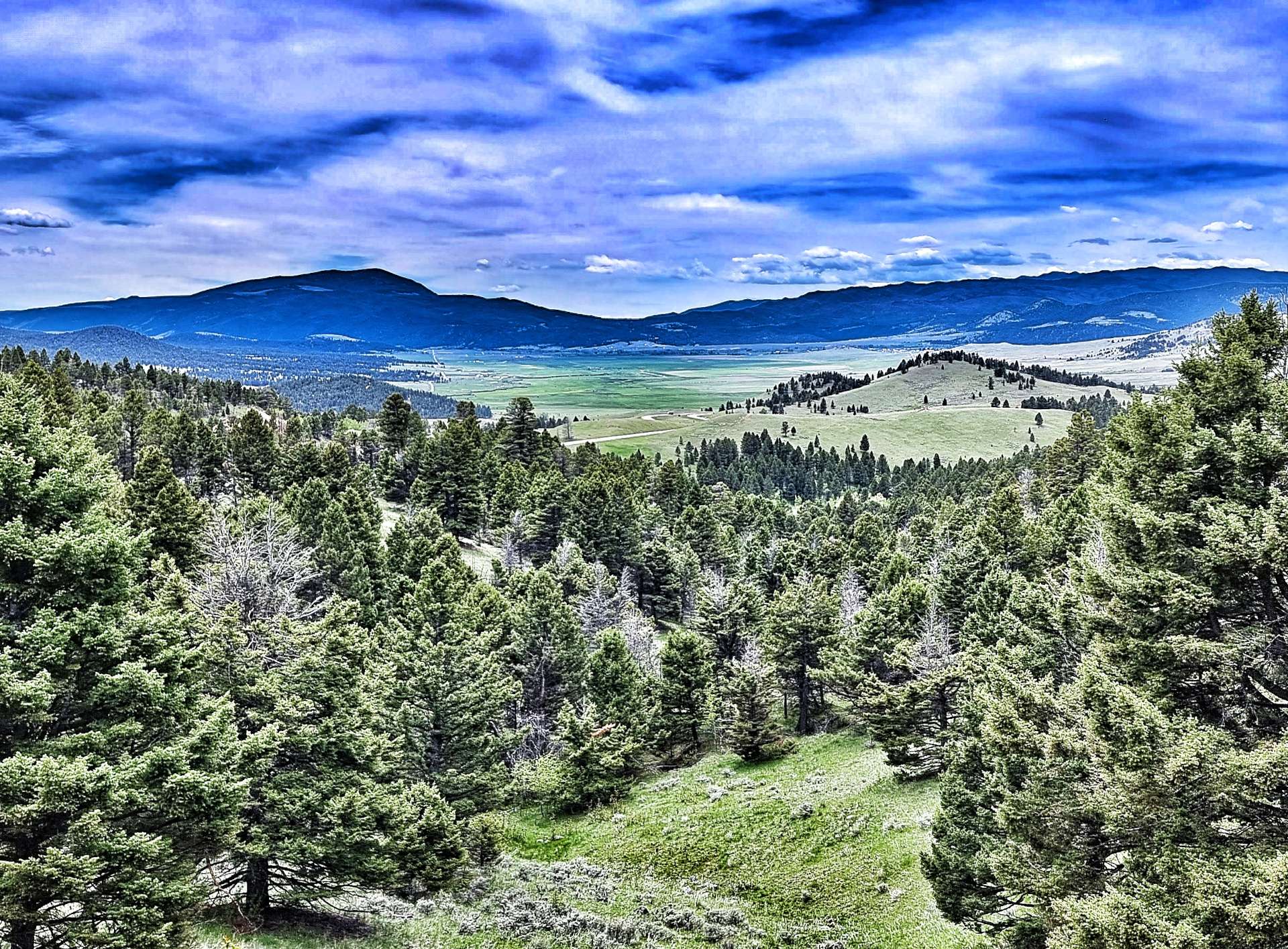
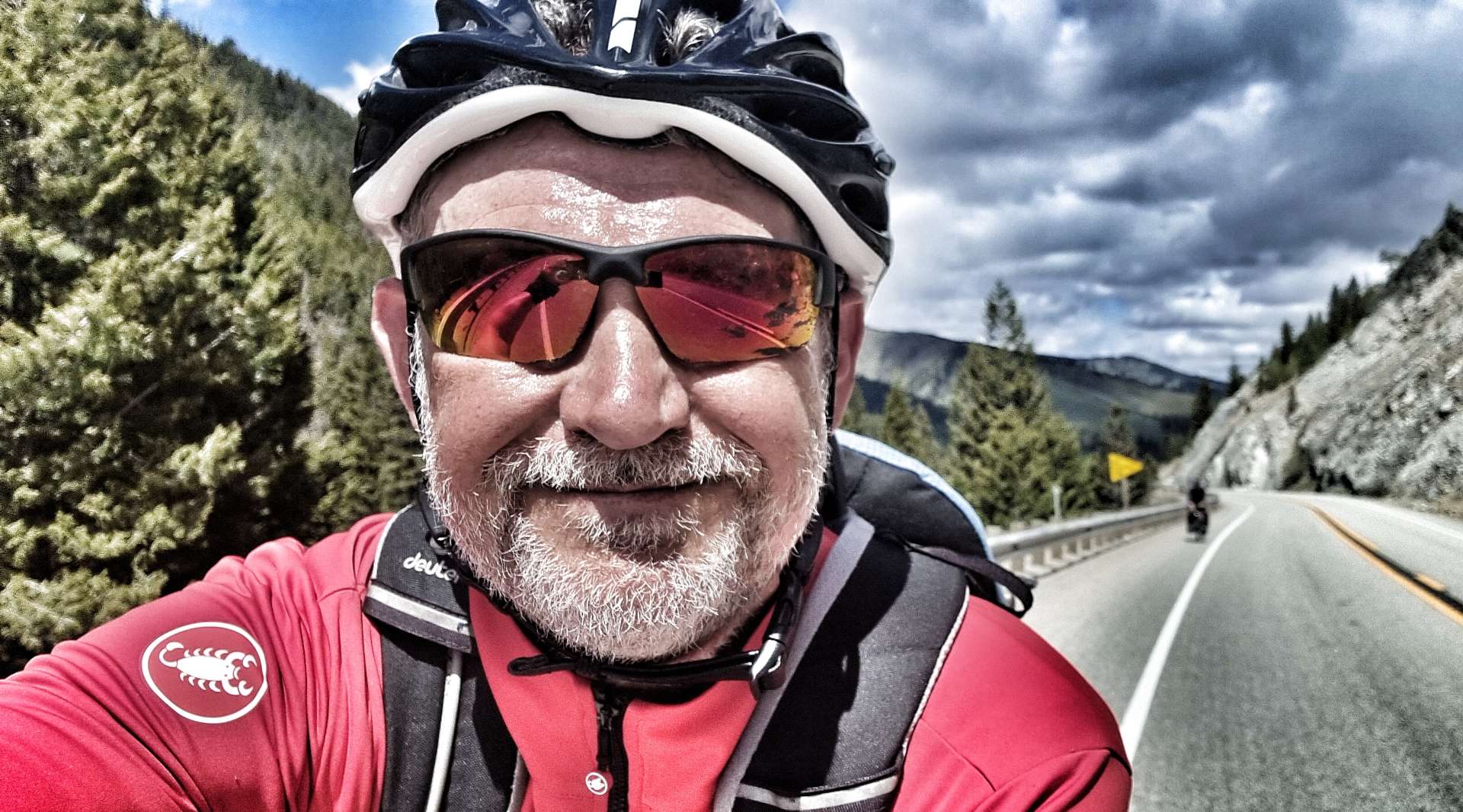
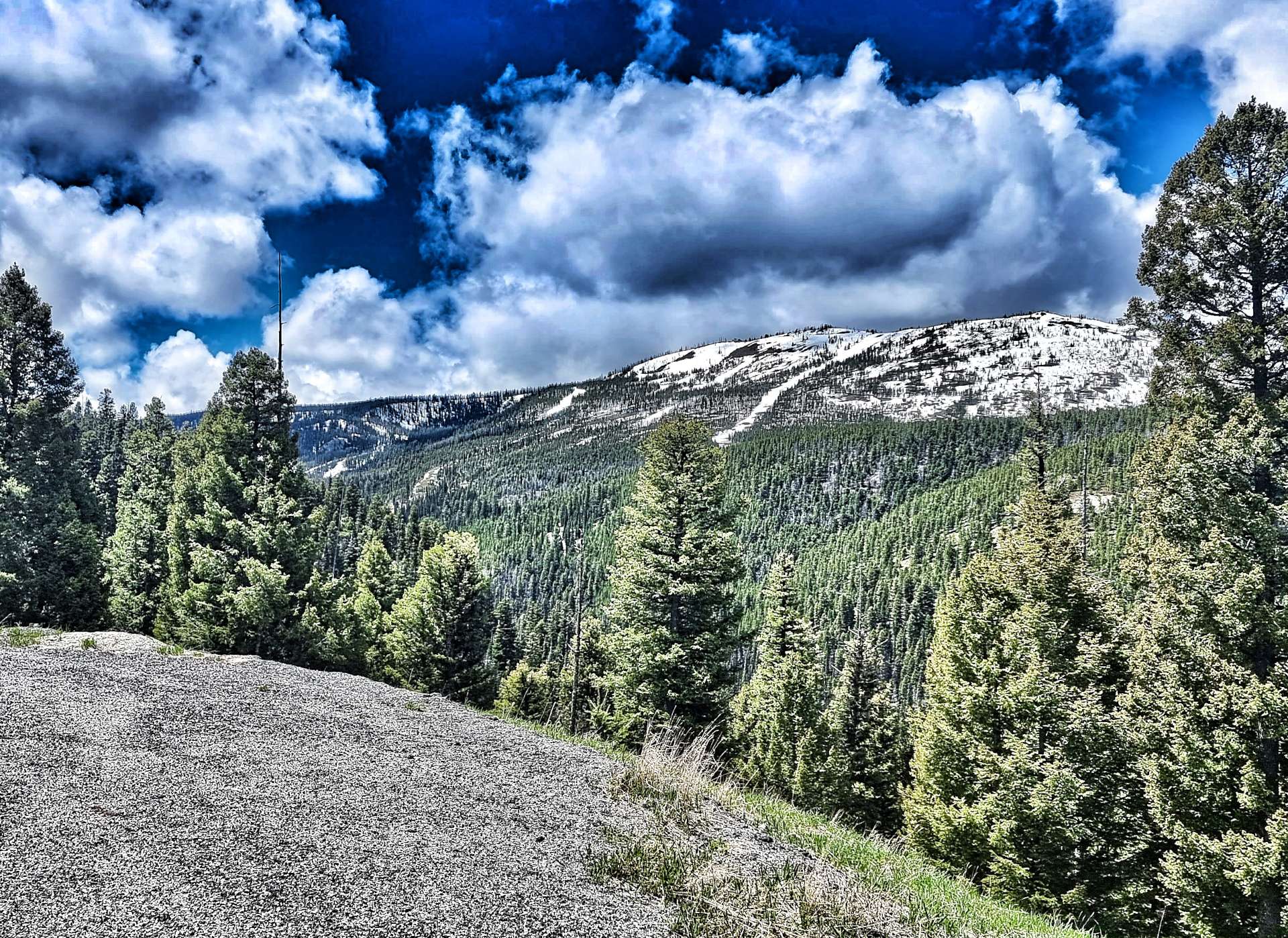
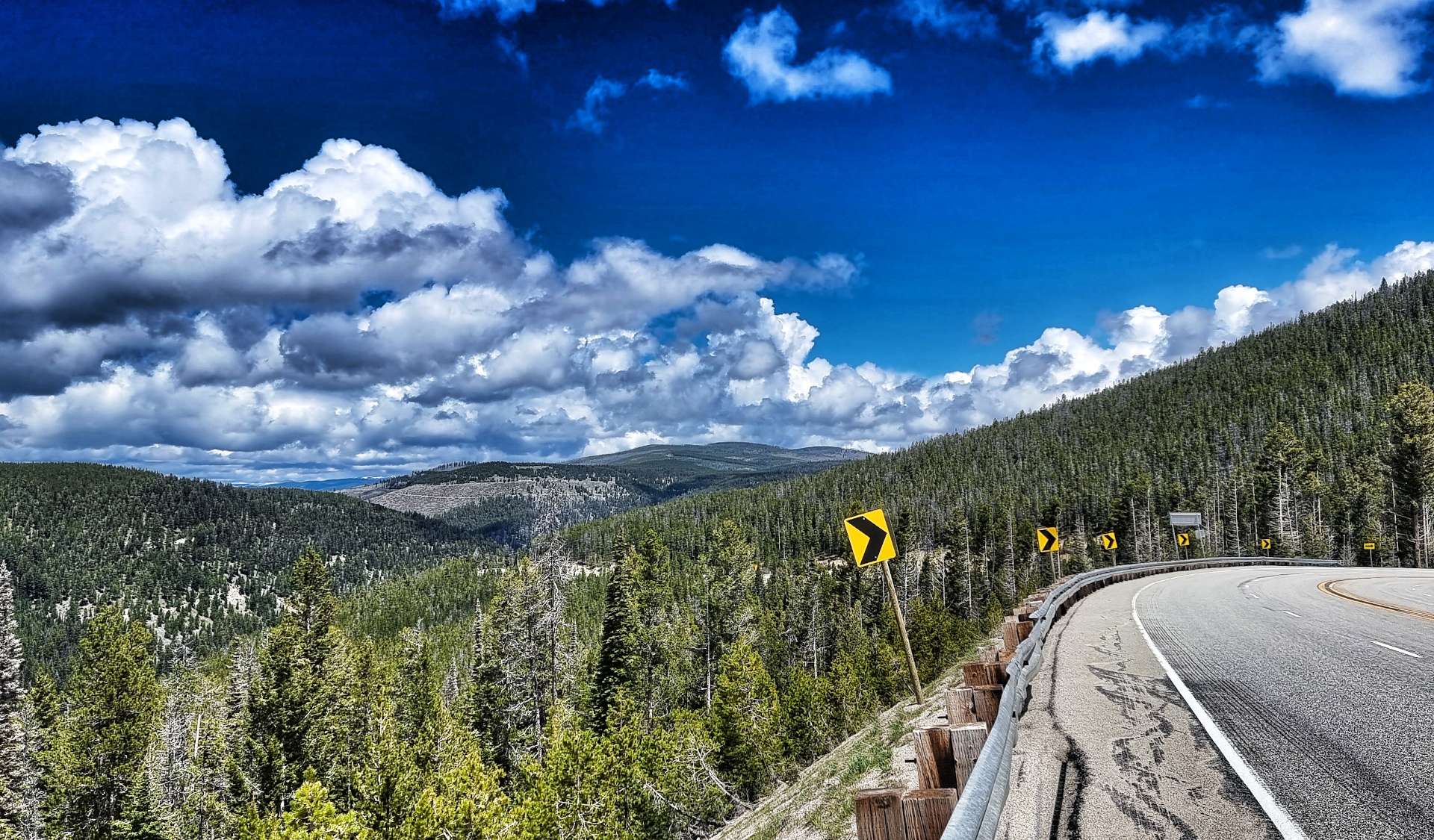
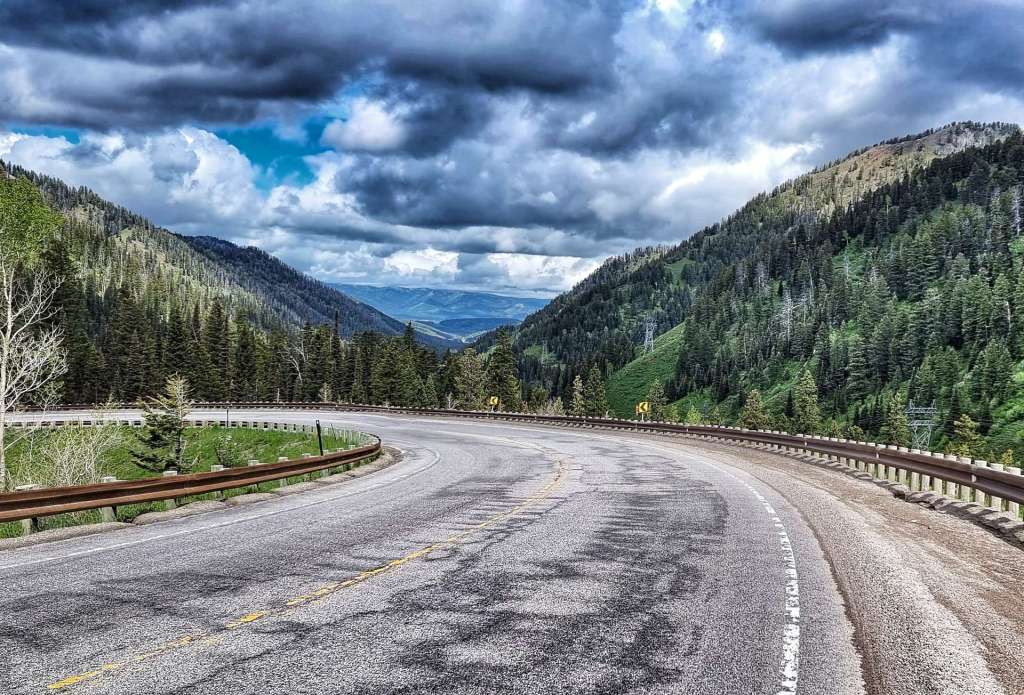
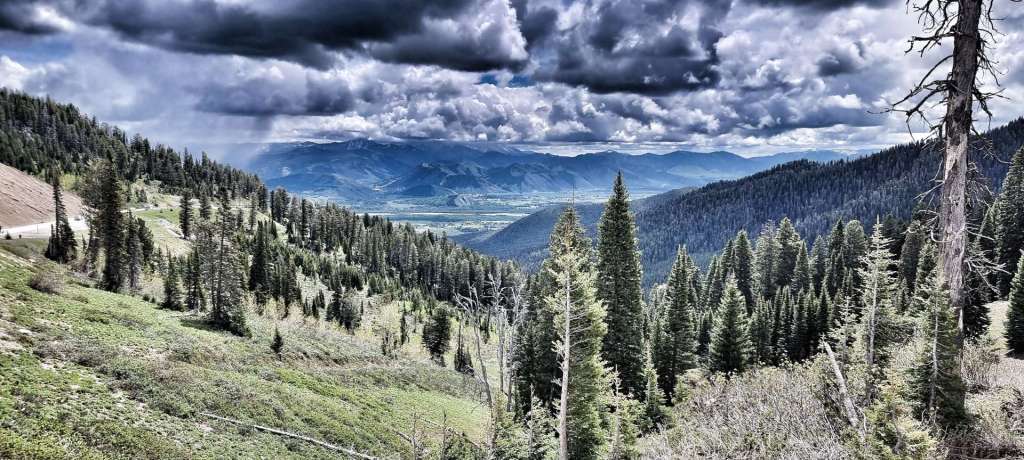
Because the summit of Teton Pass was over 8,000 feet above sea level, I’d researched the climb. This isn’t always a happy place to be, as I knew that from the next corner to the top (about 4 miles in total), the gradient wouldn’t dip below 9% & would max out at 13% – in the first photo you may be able to make out a thin line just to the left & above the treeline, this is the road. The second photo is taken from that spot looking back down the valley into Idaho.

In the video below I tried to downplay the steepness of the climb for my own confidence – as you’ll see, I was struggling to keep pedalling, breathing & talking at the same time!
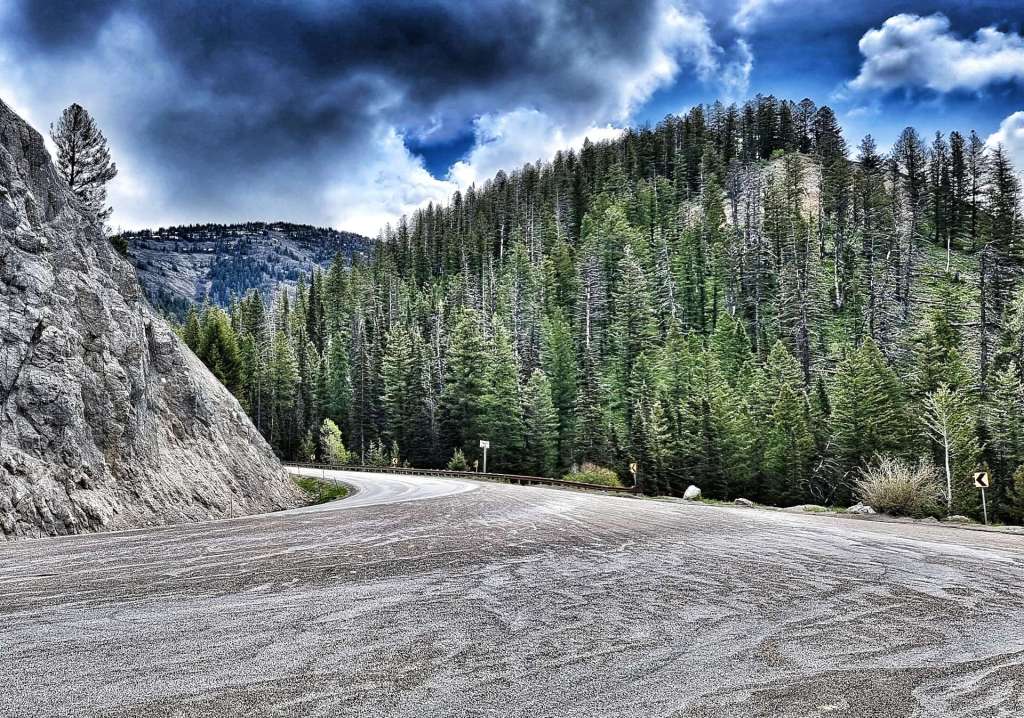
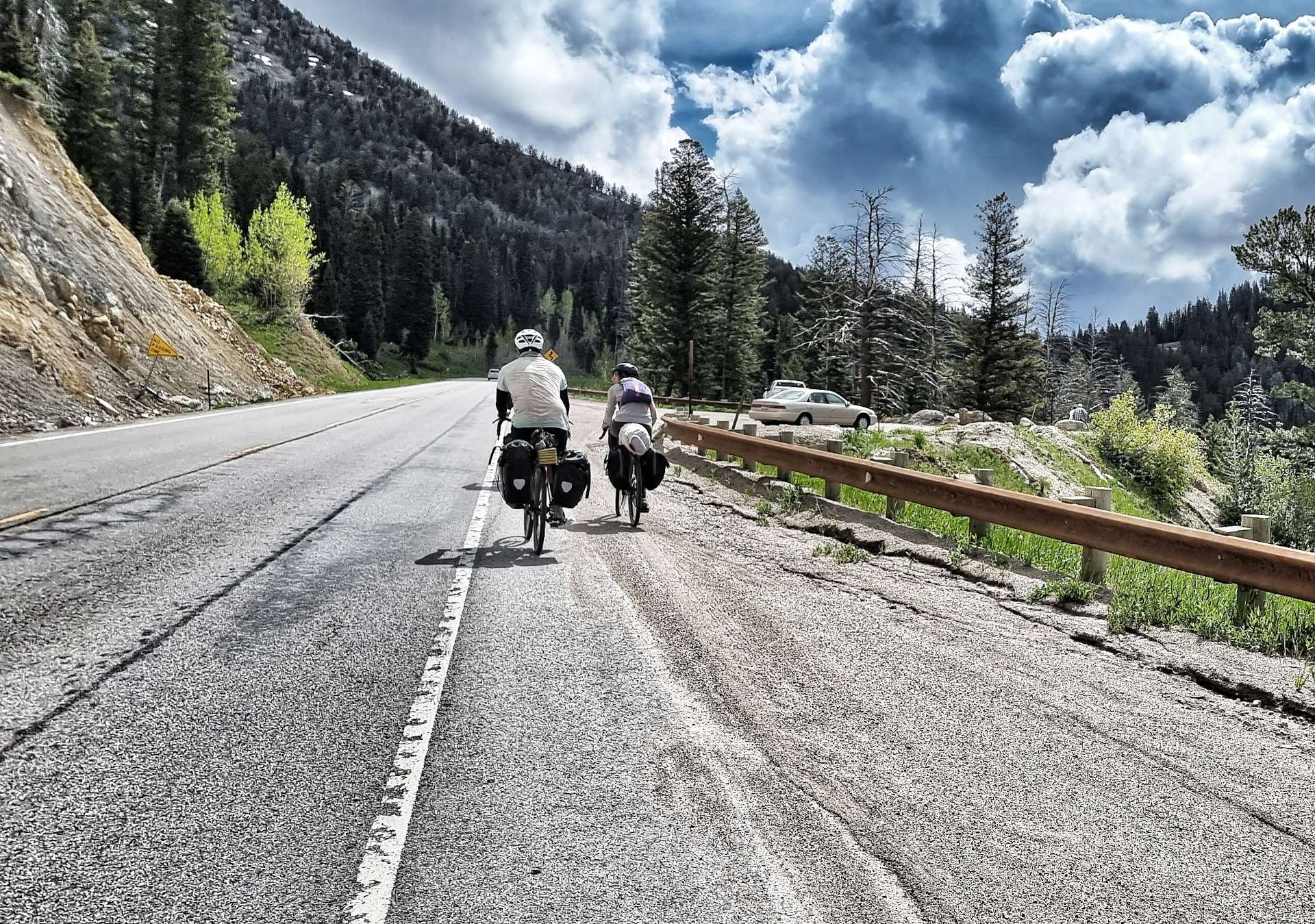
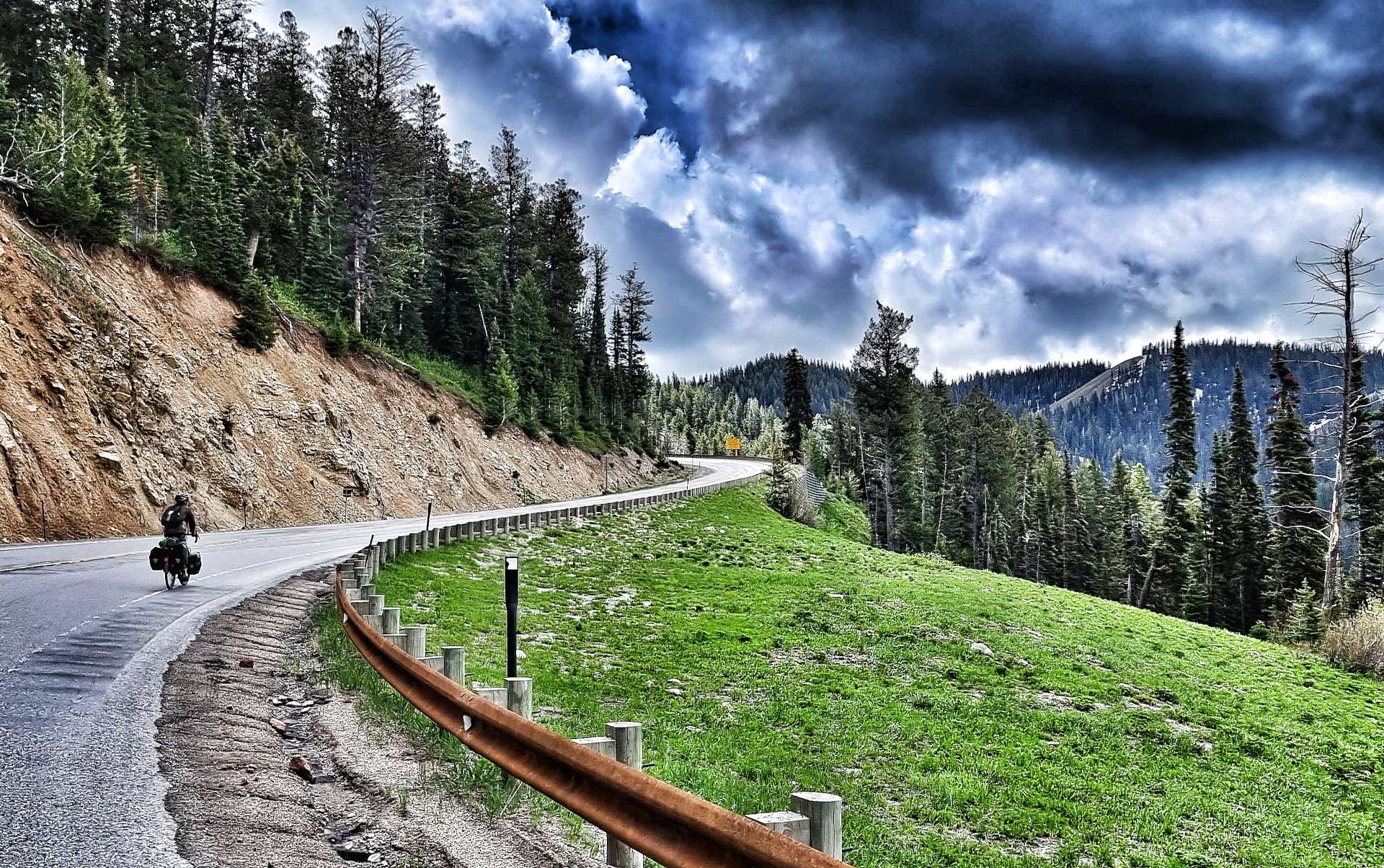
As we climbed higher, we saw two more cyclists daft enough to be climbing the brutal Teton Pass & as we passed them very slowly, we gave them encouragement to keep at it & focus on the vast vistas around a few more corners. As we continued on our way, we could see the first indications that blue skies were coming our way! We’d avoided the rain all morning & couldn’t believe our luck – perhaps the price was having to tackle the steep slopes!!
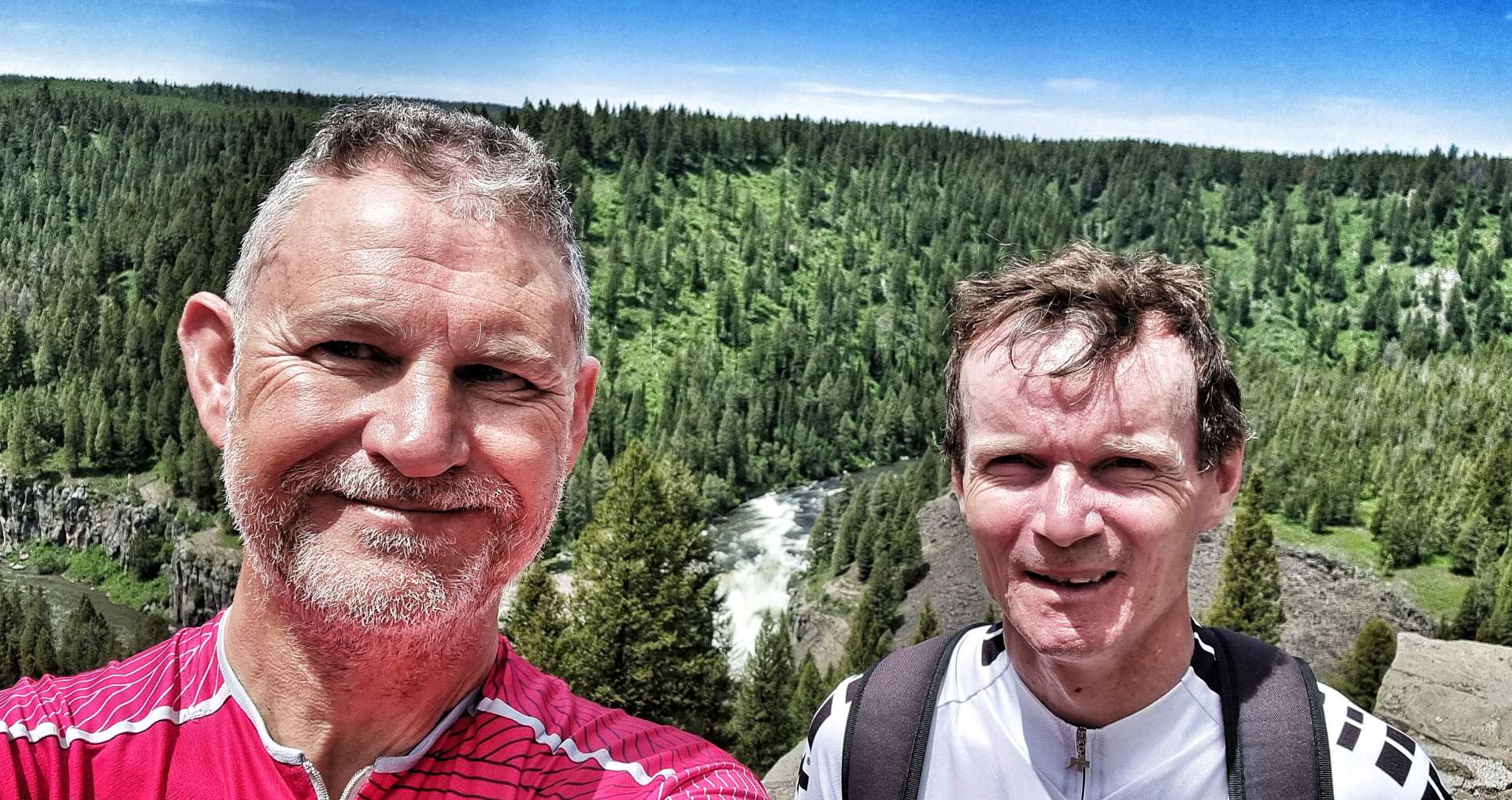
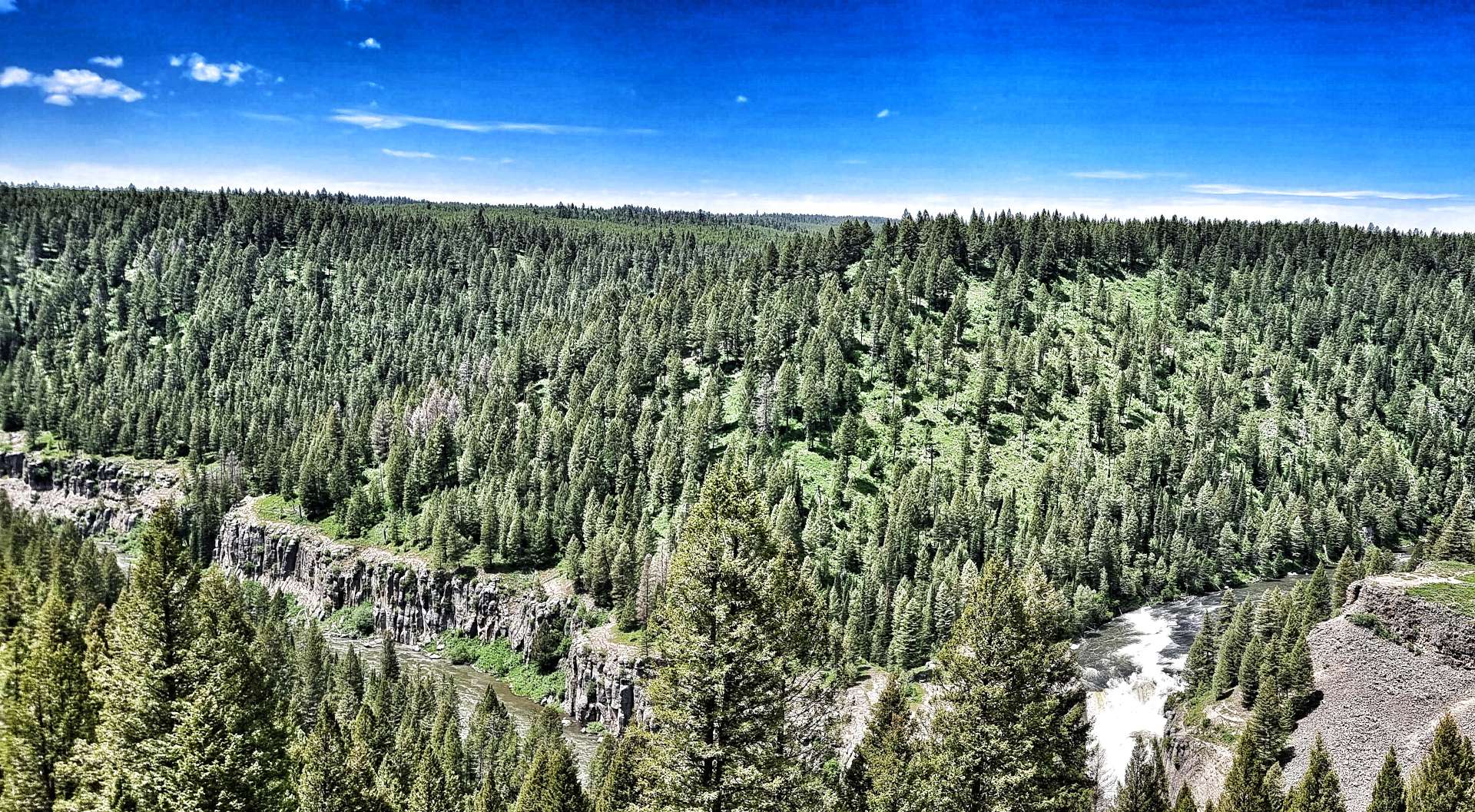
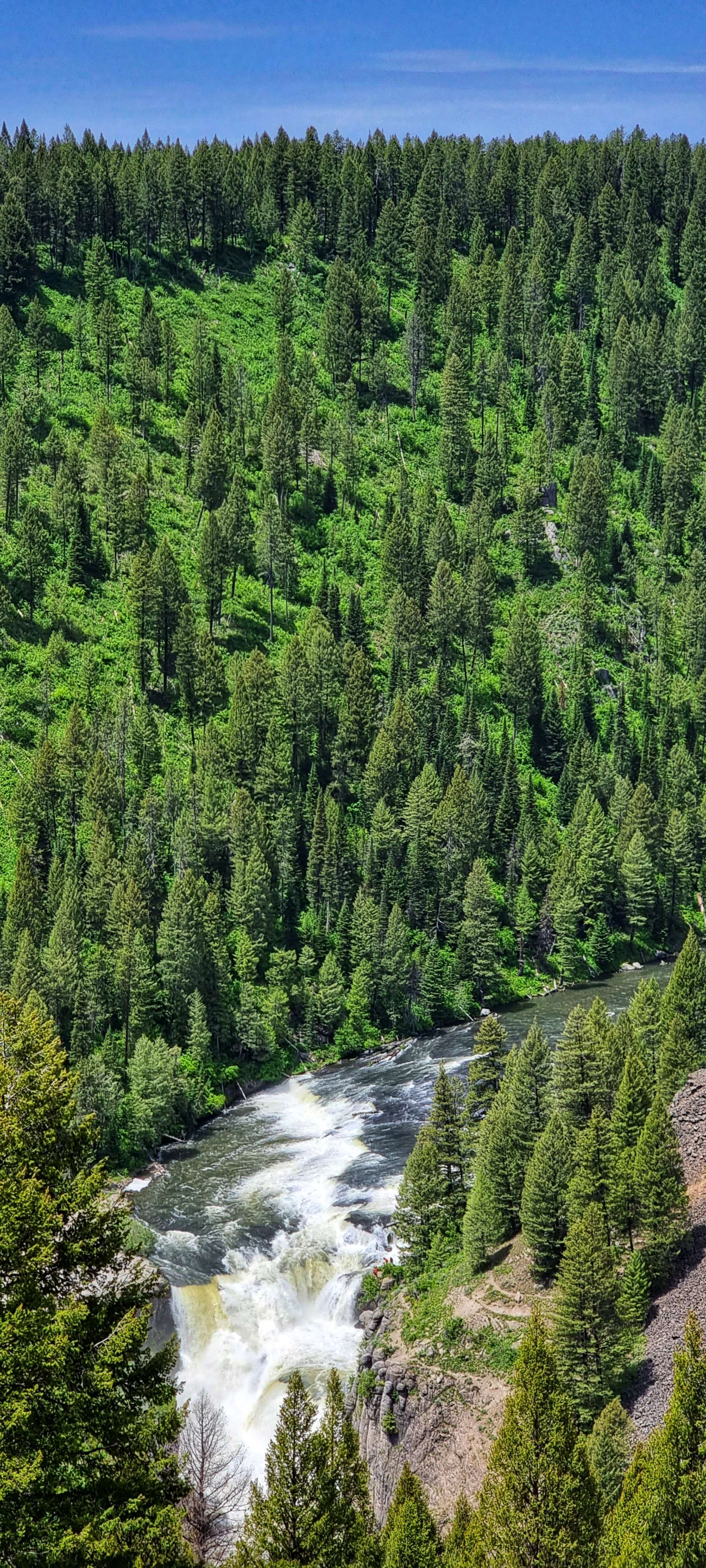
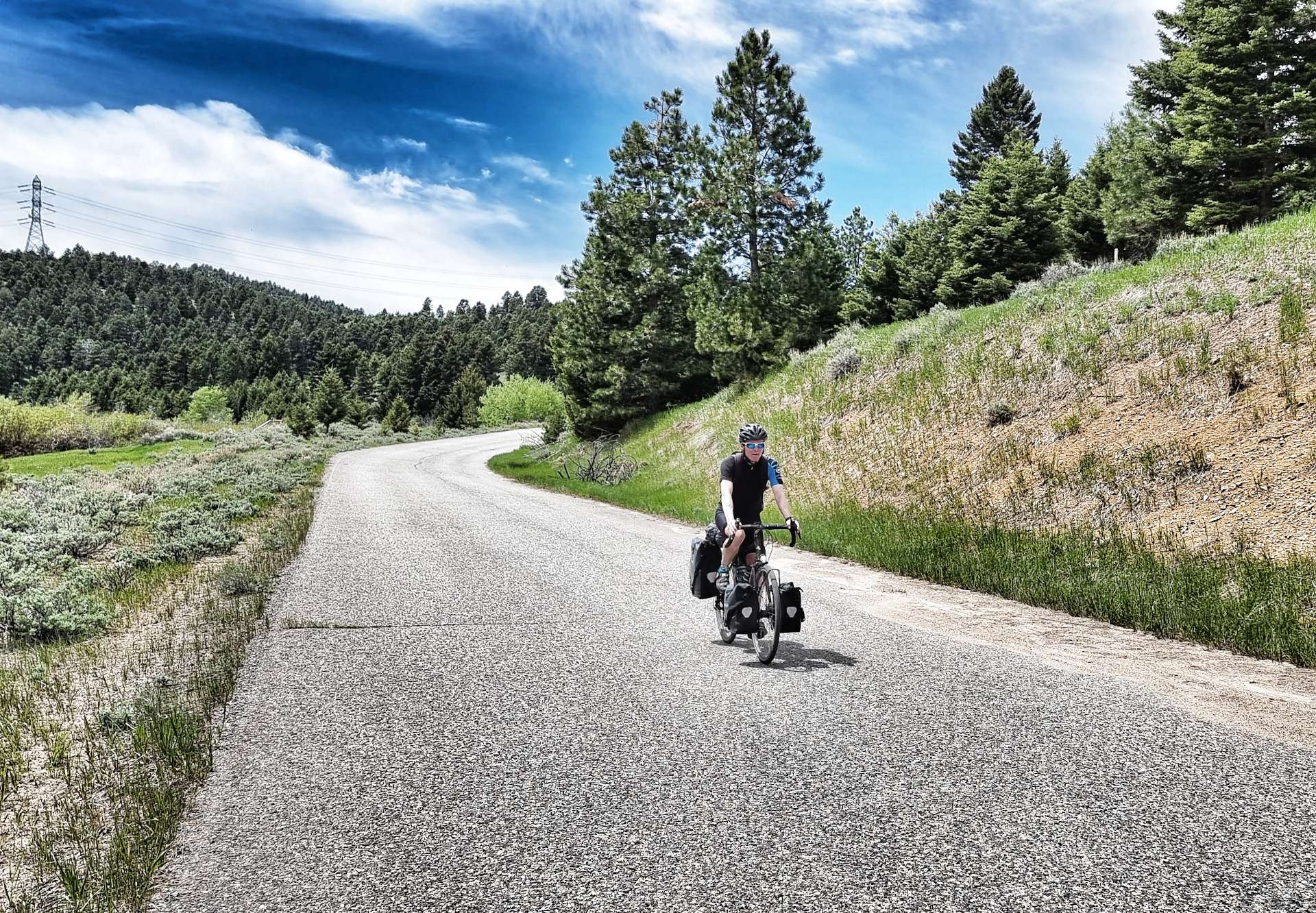
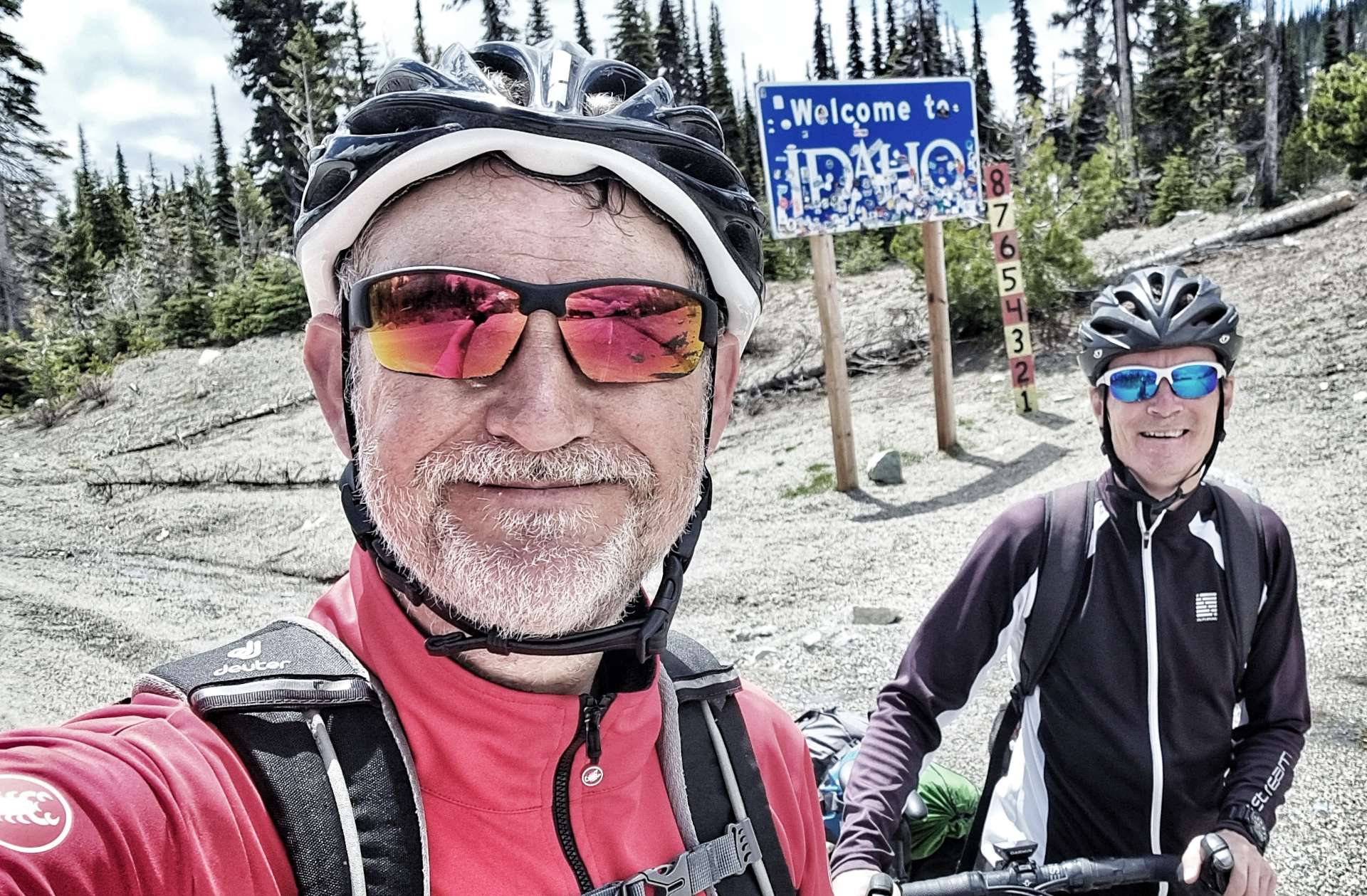
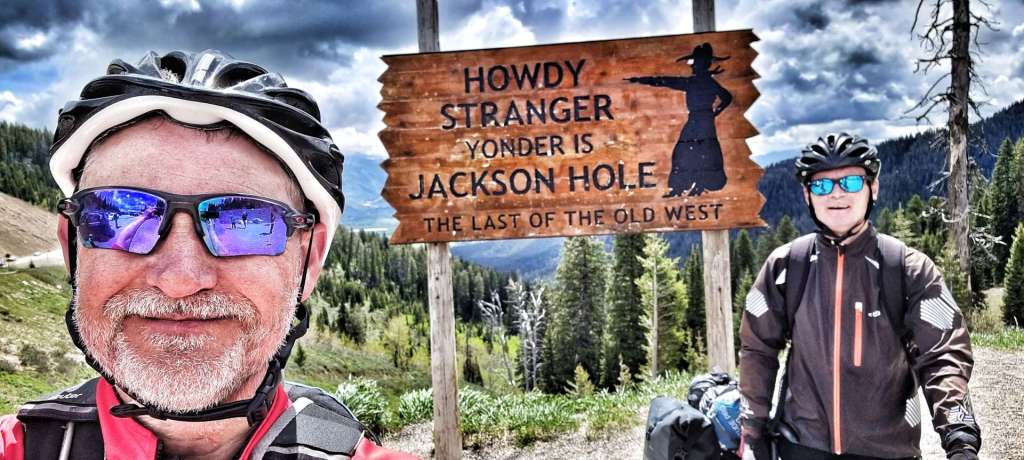
We finally made it to the summit at 8,432 feet (2,570 metres) above sea level & after taking a few moments to gather ourselves, we took a photo & then admired the spectacular views into the Jackson Hole valley from the lookout point.
I took a video of the first 30 seconds or so of the descent, but I picked up speed so quickly I had to put the camera away – LOOK AWAY NOW MUM!!! I hit 53mph in next to no time & decided that was fast enough for me. I’ve not been that fast on my carbon bike!!! I won’t lie, it was exhilarating, but I knew not to push my luck.

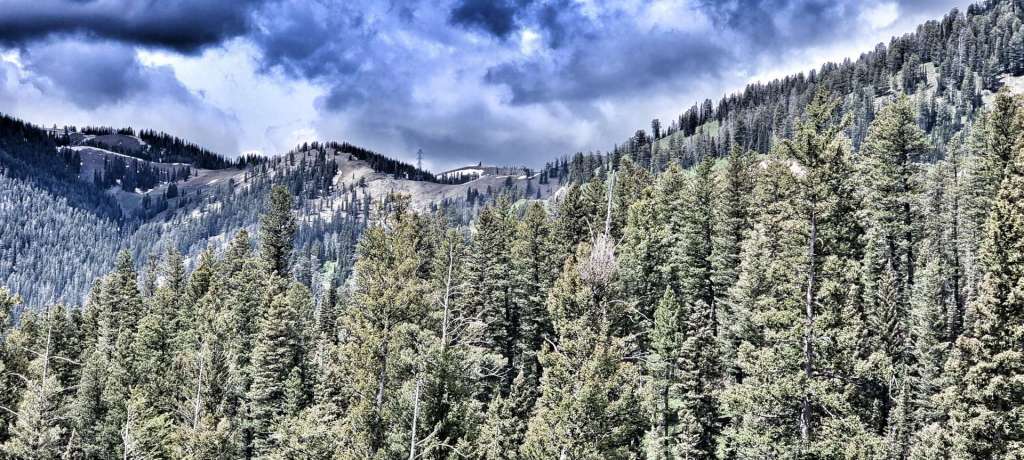
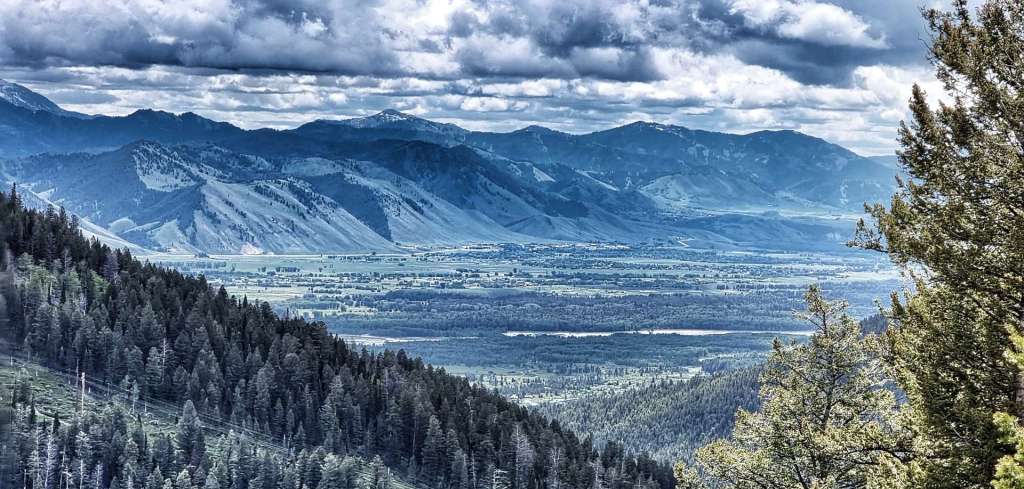
There are a couple of great turnout spots (layby to the Brits). At the first one I could see back to the lookout point a couple of miles away, while the second & third viewing spots gave huge views of the valley as it spread out below.
We regrouped at Wilson & agreed that we should continue on to Jackson, so Sean could try & get his pannier fixed. It was a short 5 mile ride along the valley floor – I’d done some research the night before, so knew that there was a bicycle shop next to our hotel that may be able to help. Within 15 minutes The Hub Bicycles had been able to repair Sean’s pannier – they were absolute legends & wouldn’t even accept any money for doing the work! On an adventure like our we’re totally reliant on the kindness & generosity of others to keep us on the road – The Hub Bicycles helped us out big time. Thanks guys! I’ve dropped them an email, so I’m hoping they may see how much it meant to us.
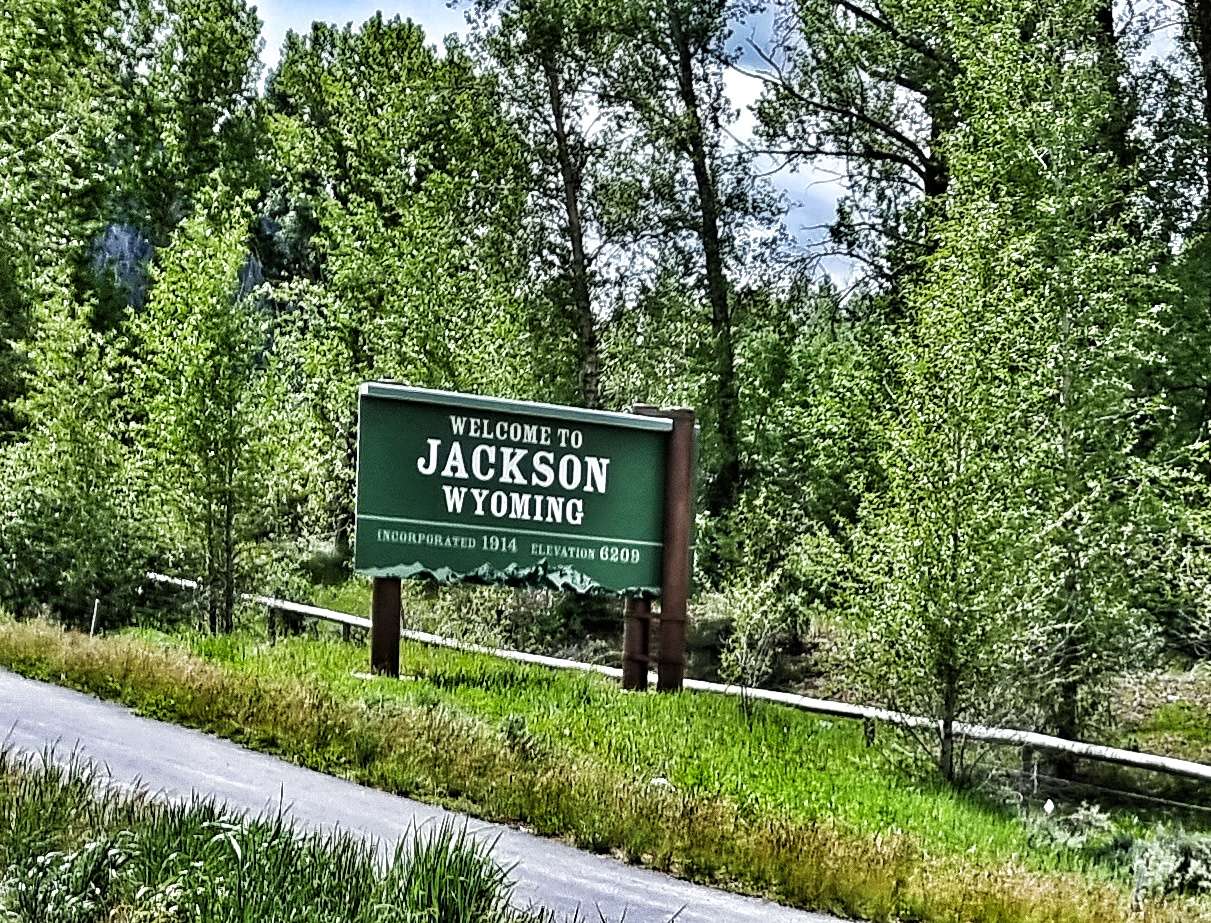
While we were waiting to check in to our motel, we met Owen & Cat, a couple of Brits who were also doing a long distance adventure. They’d started in Eugene & were following the Trans America route towards Virginia (via Colorado, Kansas, Missouri & Kentucky). We shared a really enjoyable 1/2 hour trading stories of our adventures so far.

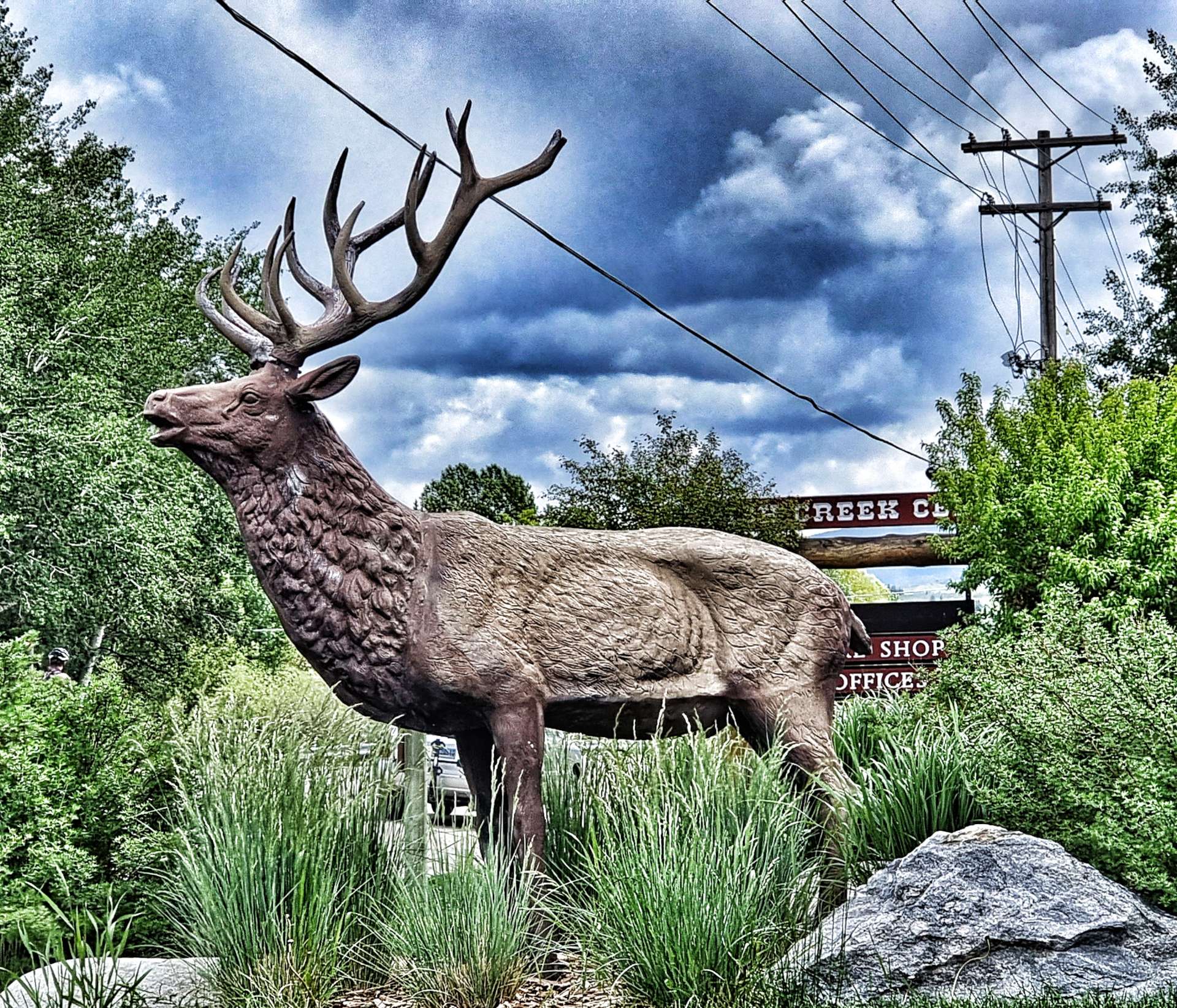
We also went for a quick stroll around the historic part of town. Jackson is famous for its iconic Elk Antler Arches at the four corners of the park. The first arch was erected by the Rotary Club in 1953. Additional arches were added to the other 3 corners of the park between 1966 & 1969.

Elk Antlers have a life span & they begin to decompose after 30 to 40 years, so the oldest arch was rebuilt in 2007, followed by the other 3 arches in 2009, 2011 & 2013. Each arch is in the region of 10,000 to 12,000 pounds in weight (a single antler weighs about 5 to 10 pounds ) & the antlers are are individually weaved into a steel frame.

Final fact – the local boy scouts go out in the Spring when the arches are due to be replaced & pick up the antlers that Bull Elk have shed following the winter.
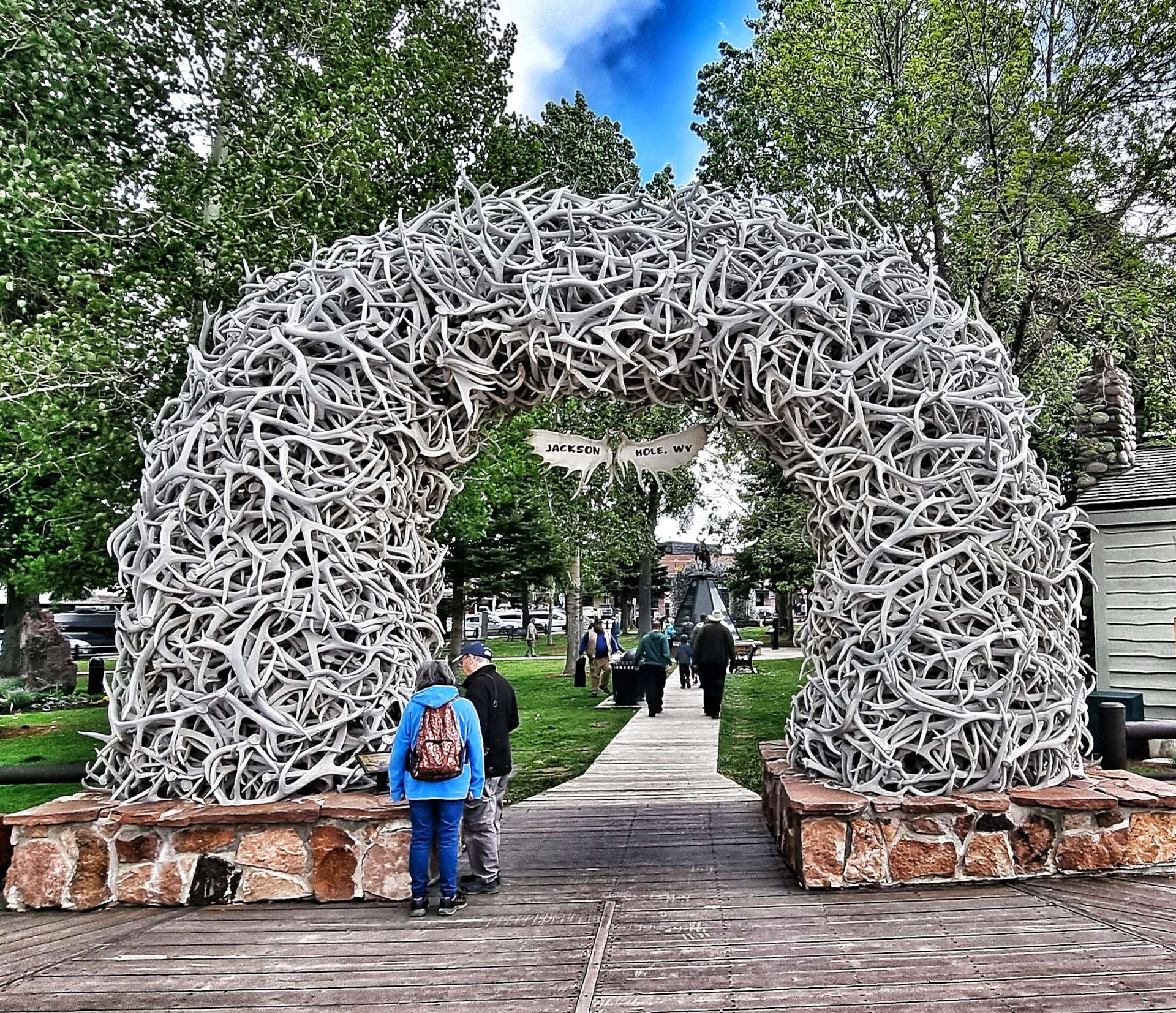
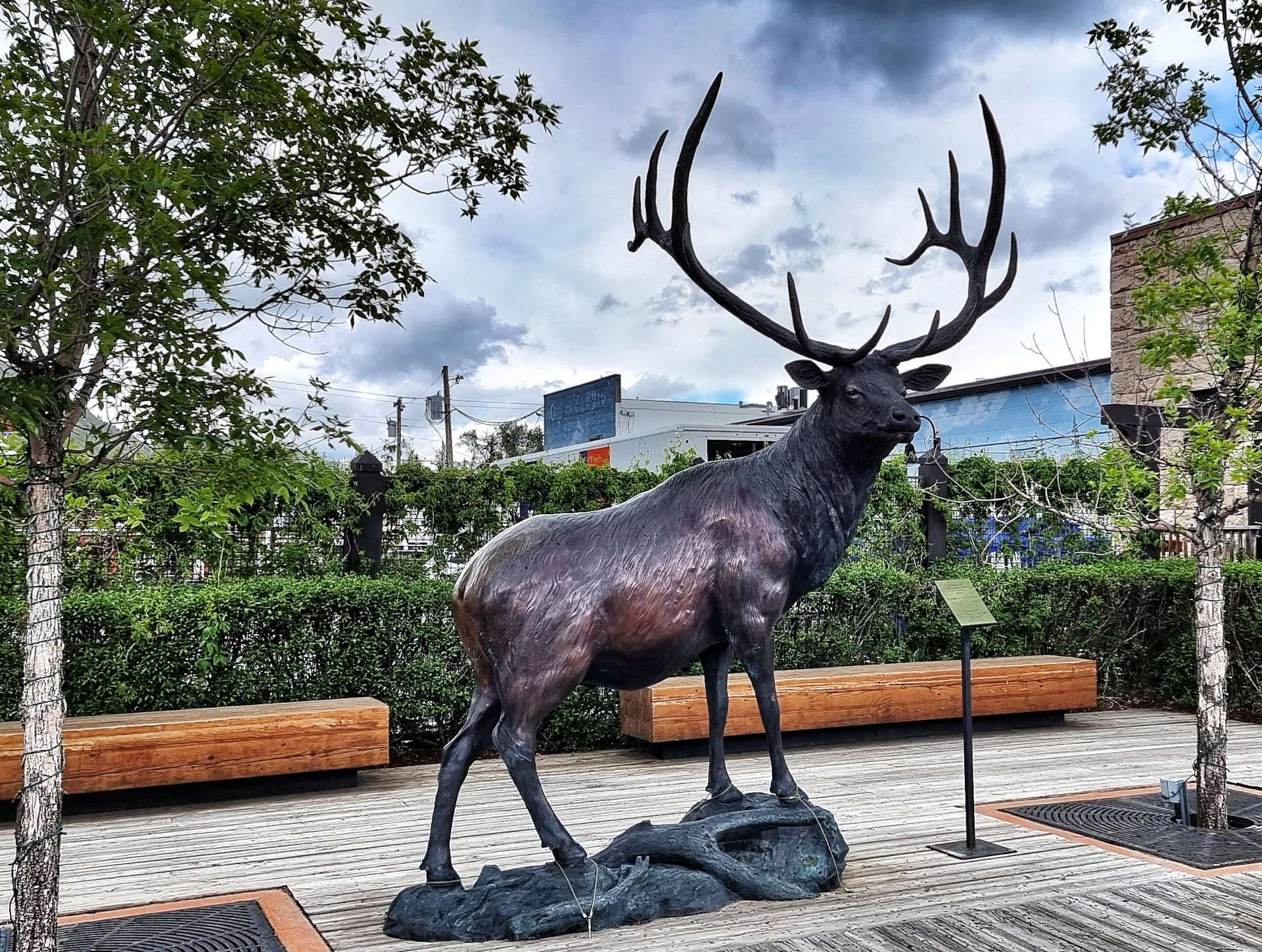
Stage Stats – 33 miles, 2,431 feet of climbing. One big hors categorie climb taking us over 8,400 feet above sea level.

Tuesday 21st June – Jackson to Lizard Creek Campground, Teton National Park (Stage 41).

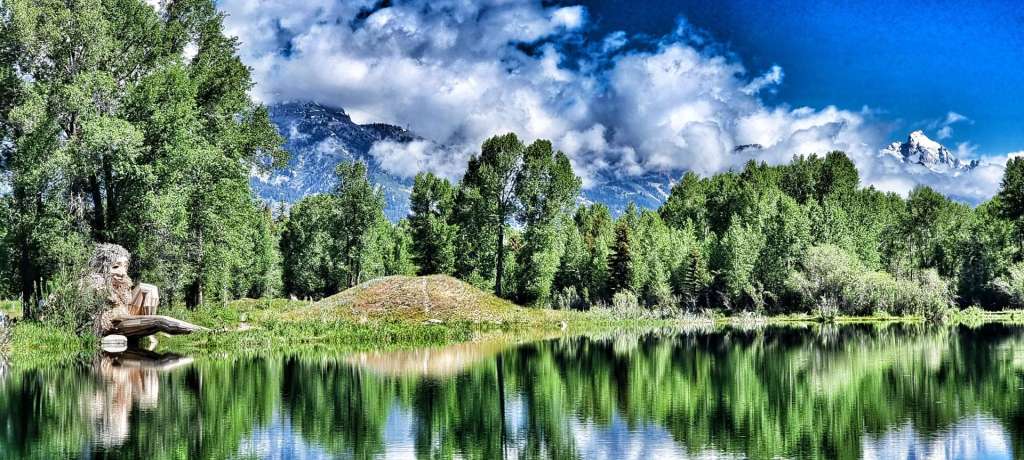
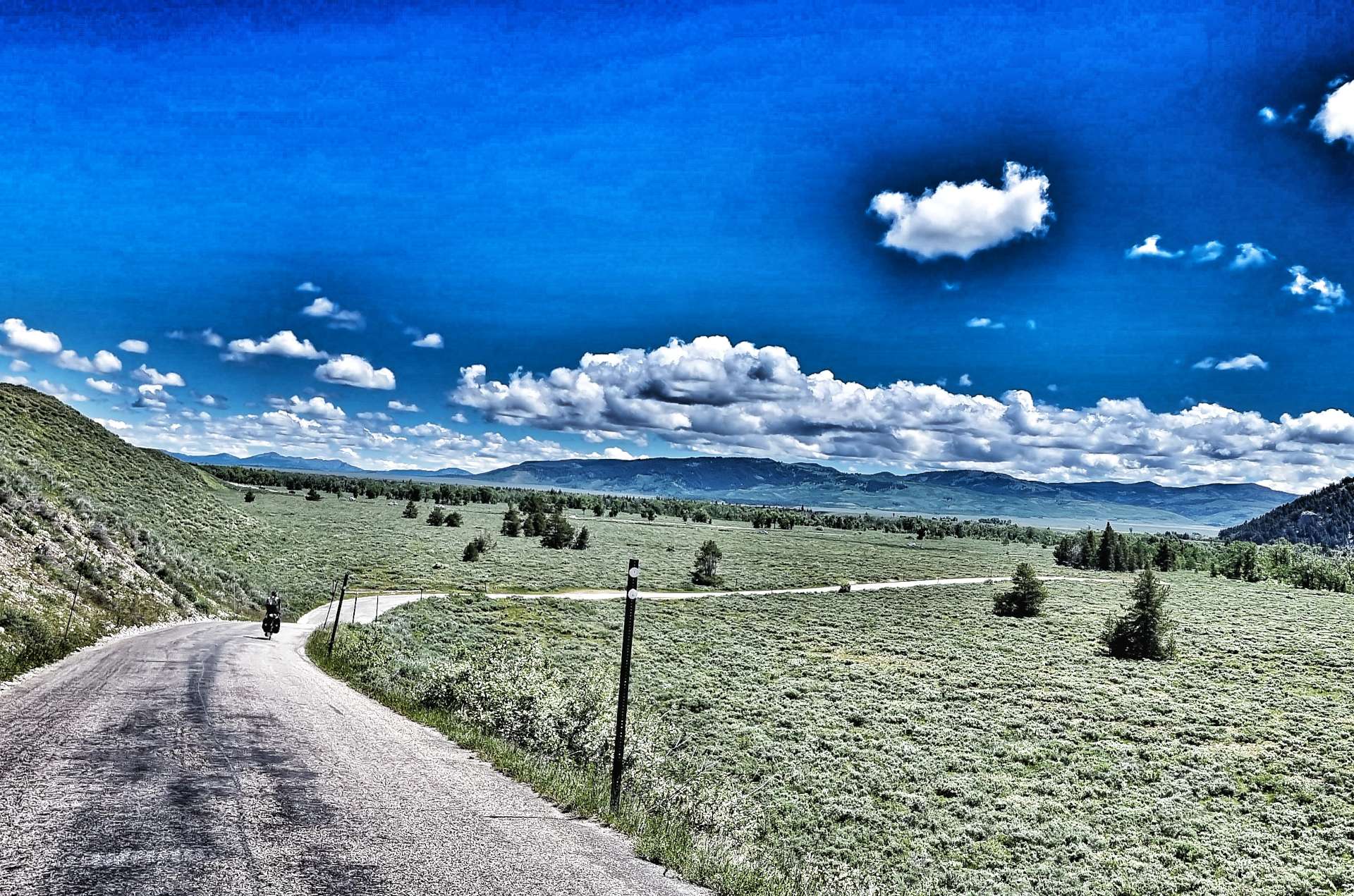
We were on the road for 9.45am & retraced the 5 miles back to Wilson, using the car-free bridge to cross the Snake river & ride through Rendezvous Park (spot the Giant in the 3rd photo!).
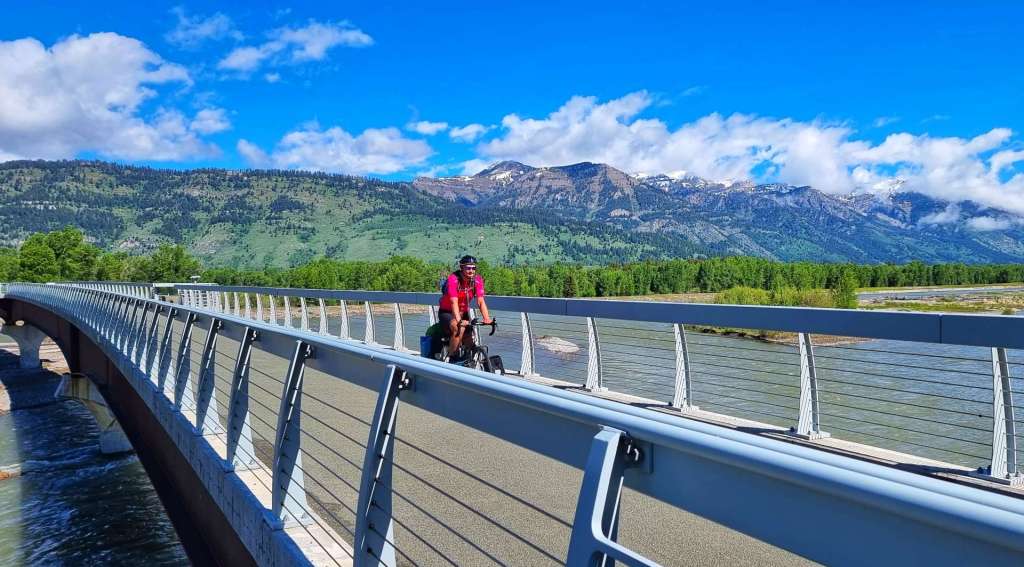
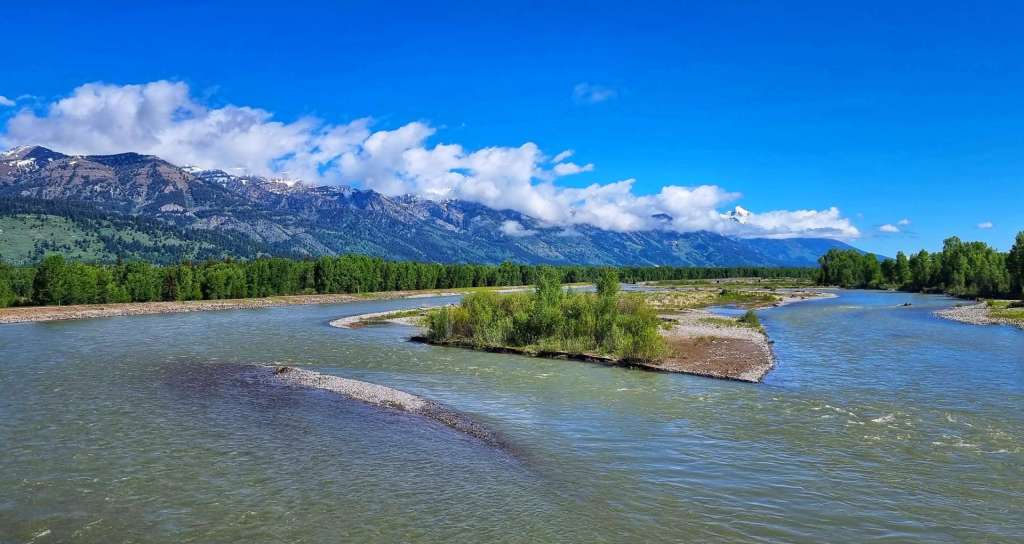
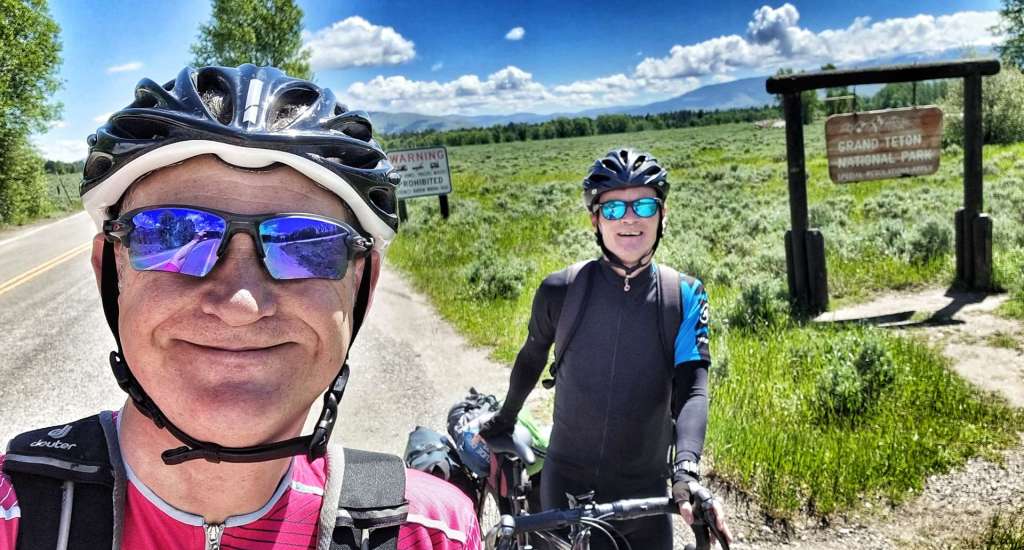
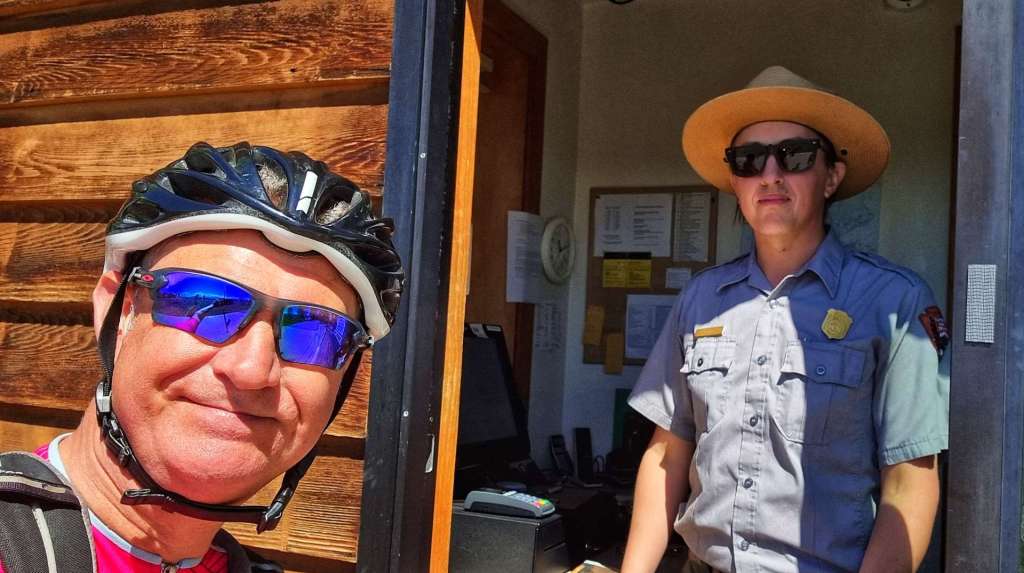
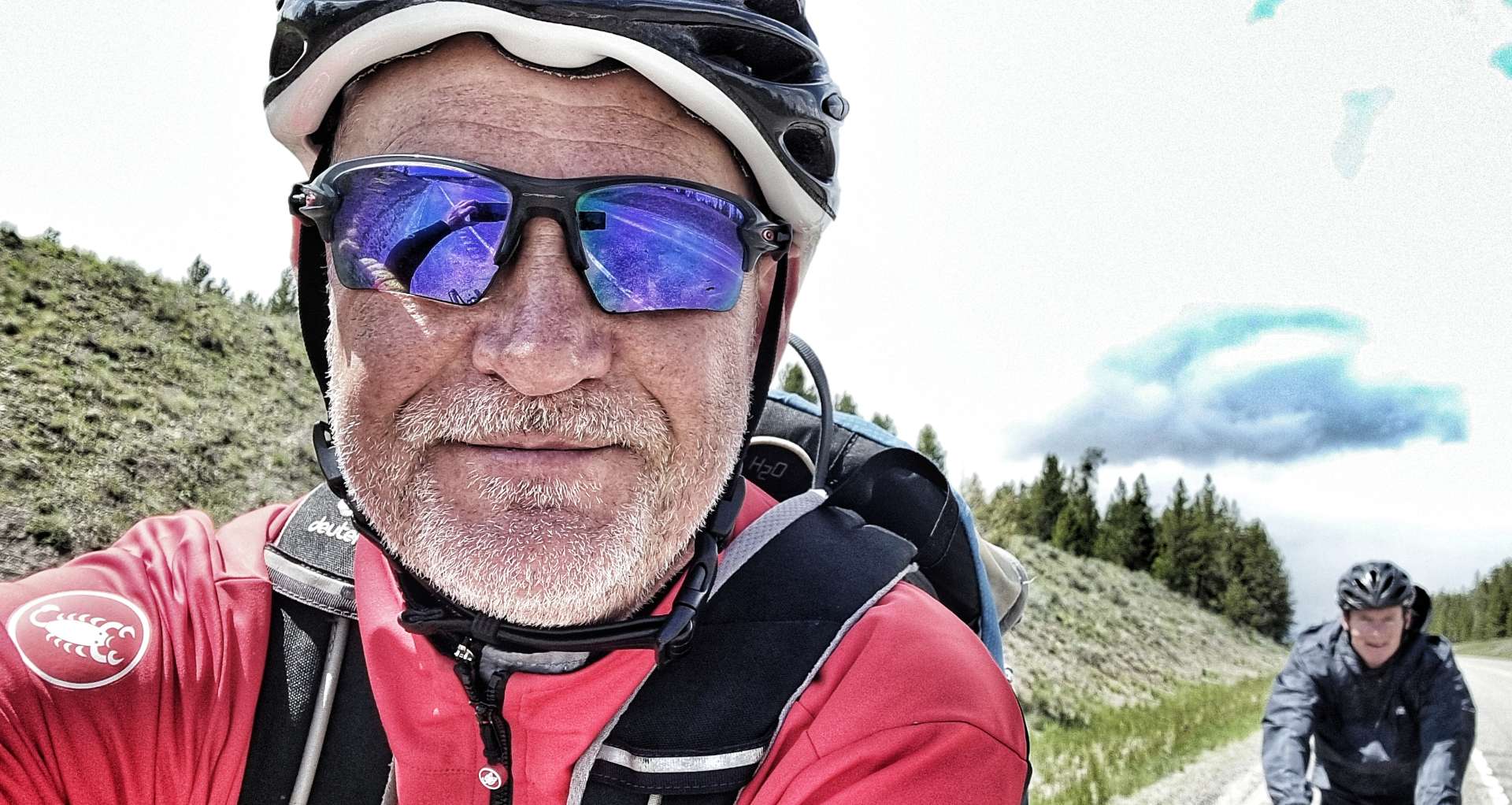
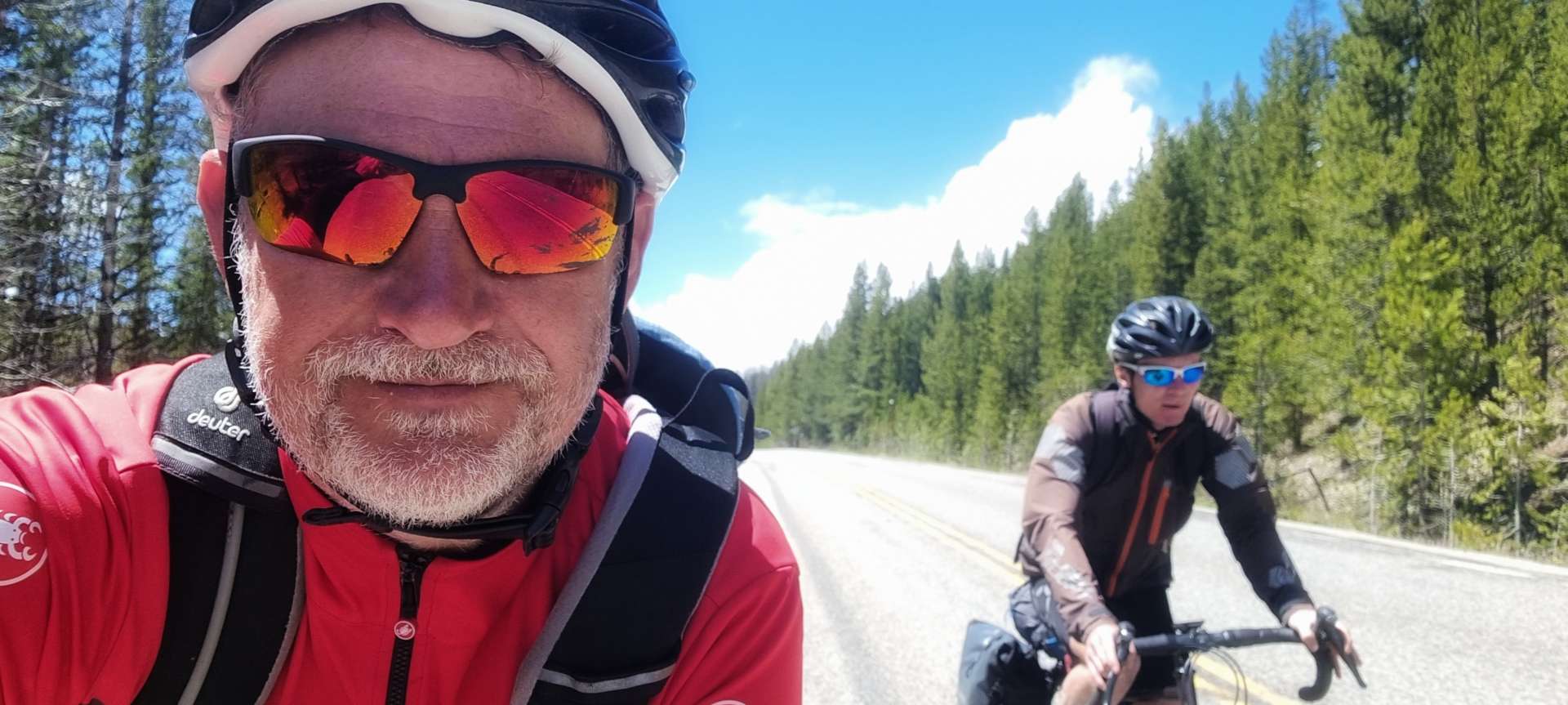
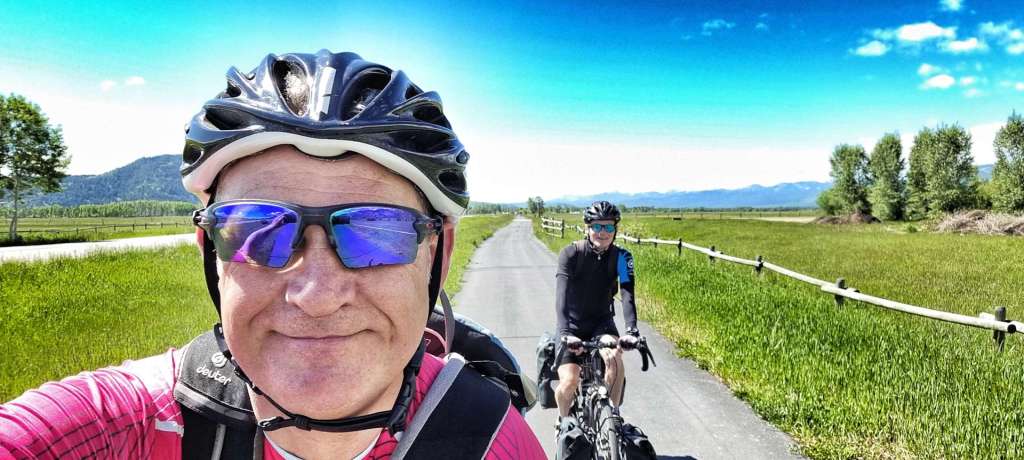
For the next 10 miles we had our own cycle path which ran close to the road, but made for very relaxing & enjoyable riding. We saw a couple of runners & 3 cyclists, so we could take in the mountain views all around us. Before we knew it, we’d passed Teton Village & arrived at the entrance to Grand Teton National Park – thank you to the Ranger on the gate who humoured me when I asked for a selfie!

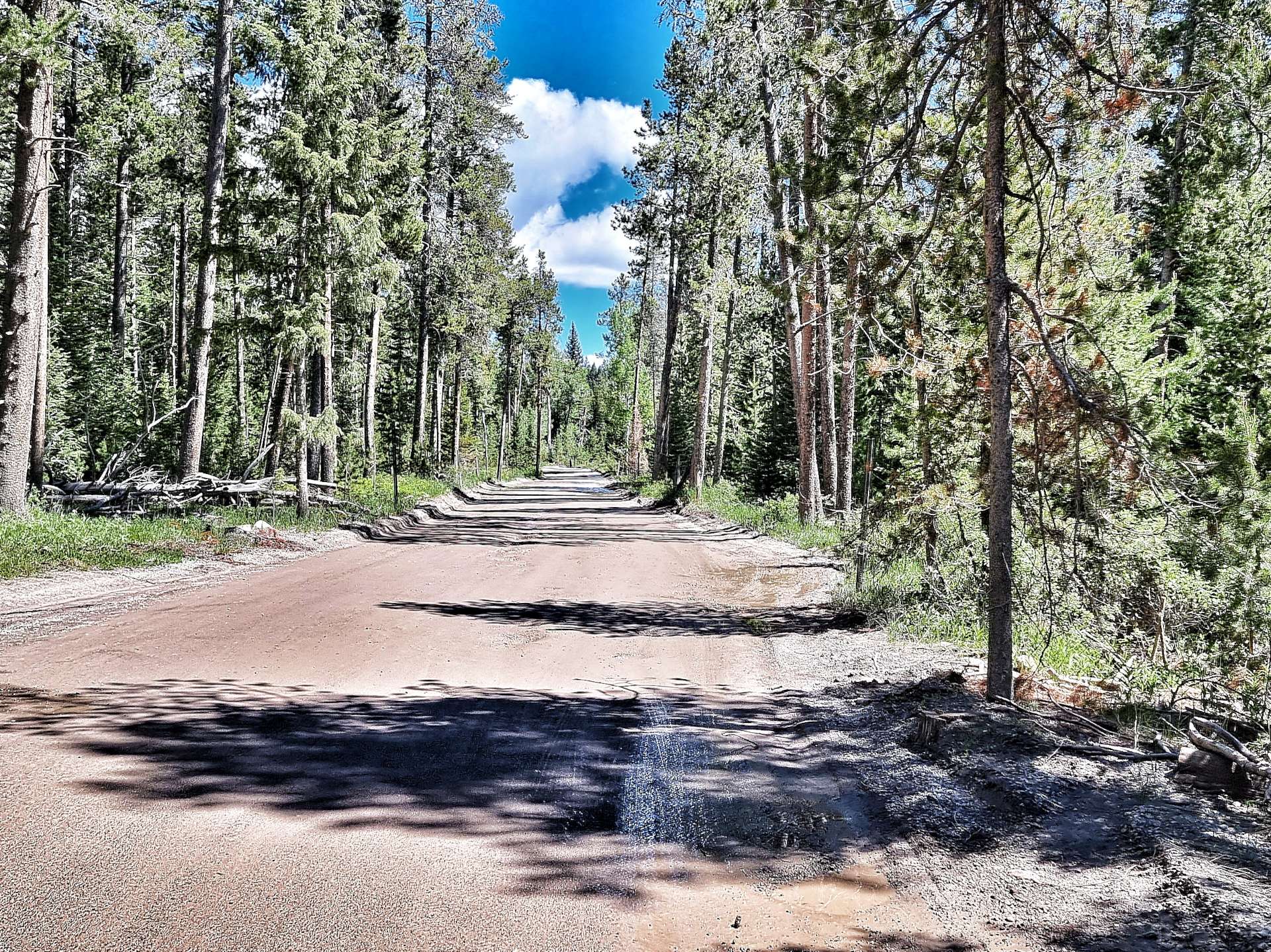
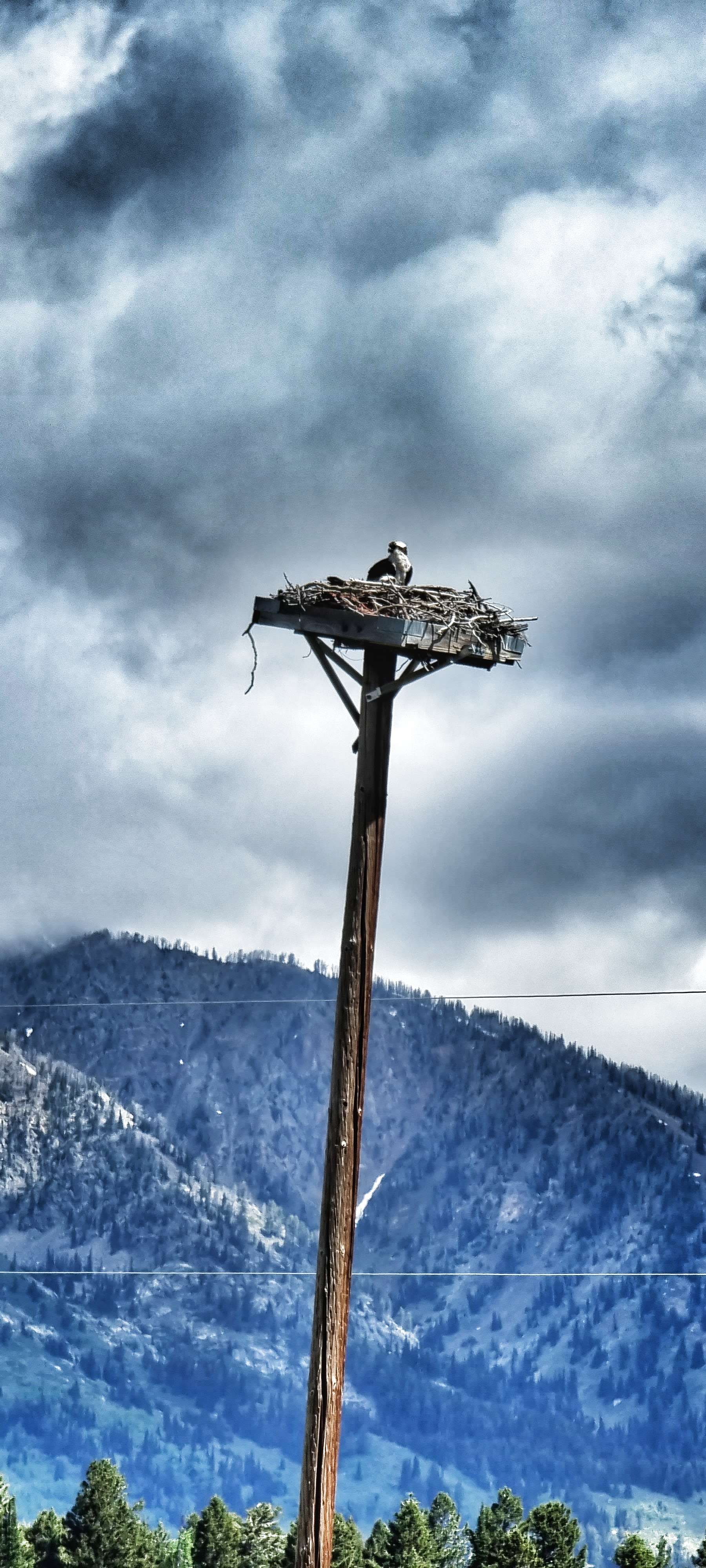
This isn’t a very popular entrance for cars, as the road quickly turns to rough gravel. The quieter roads increase the possibility of seeing wildlife & within 1/2 mile we’d spotted an eagle surveying the world from its eyrie. Tackling the 4 mile off-road section, it felt like we had the park to ourselves as we cycled through the forest. I’m writing this on 28th June & it’s a year ago to the day that I first went off-road on my touring bike – we were on Day One of a 5 day cycling trip to Wales & we did a mile or two of gravel on the Monmouth & Brecon canal towpath – how my adventures have grown!!!
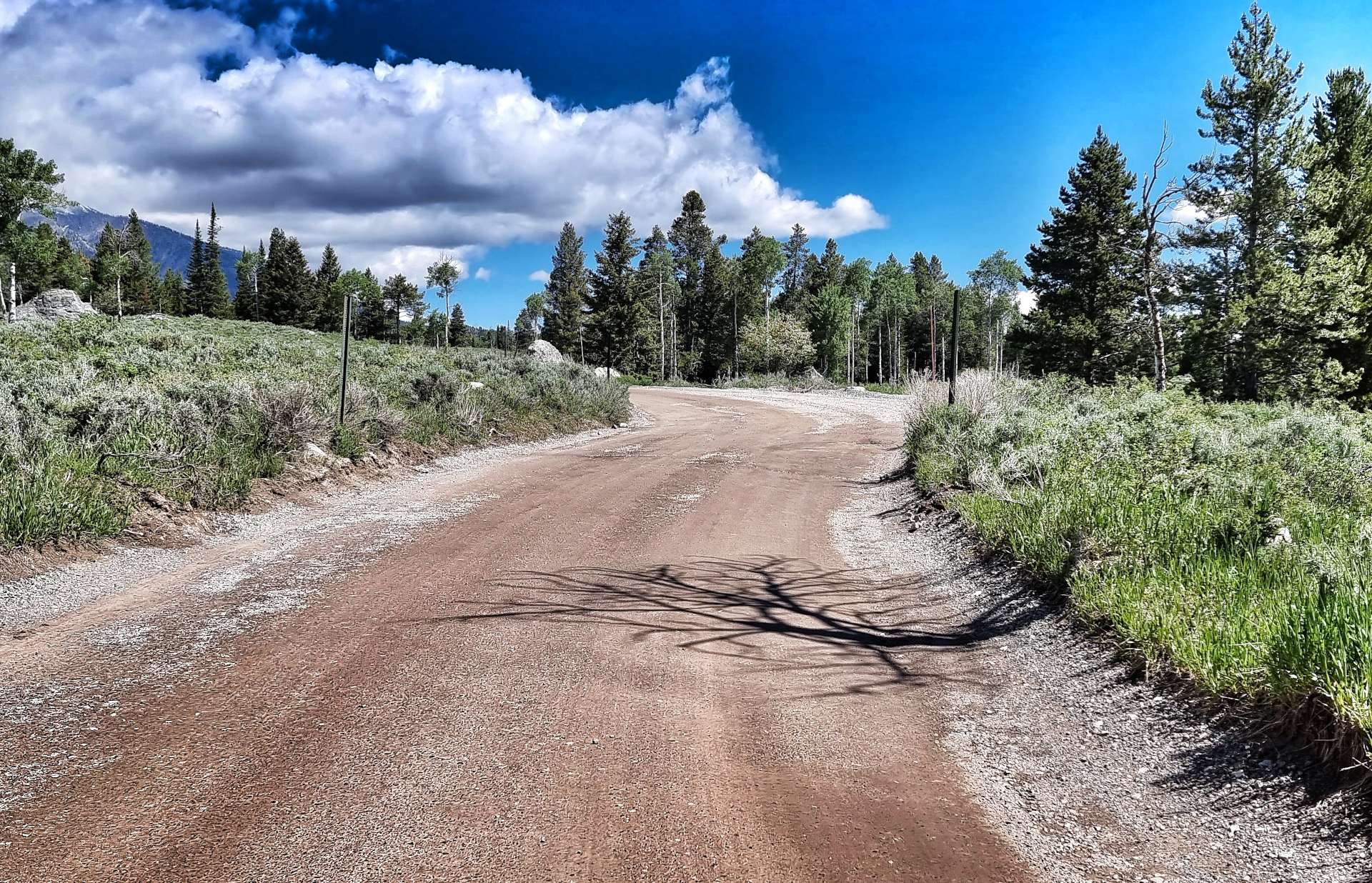
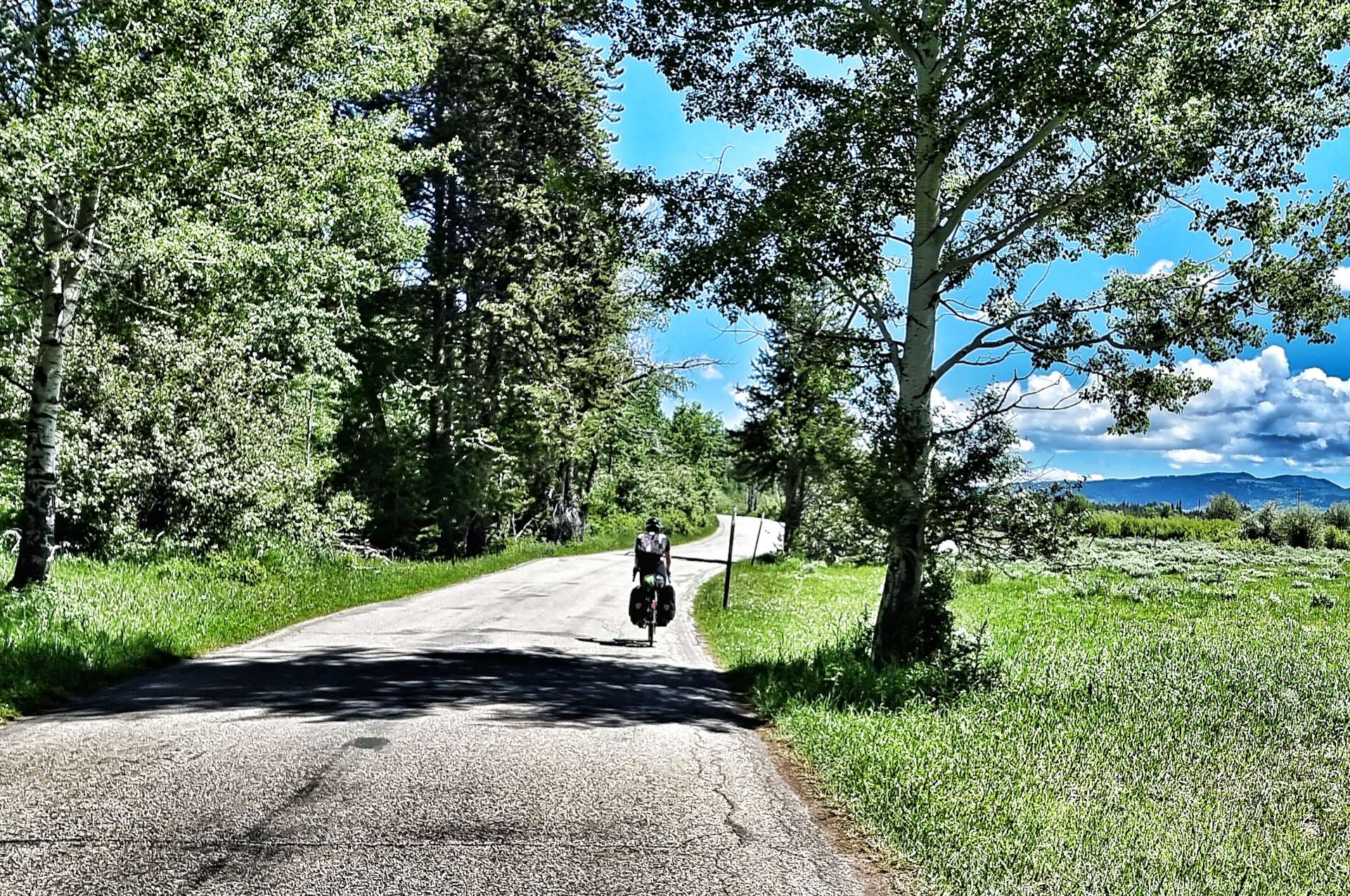
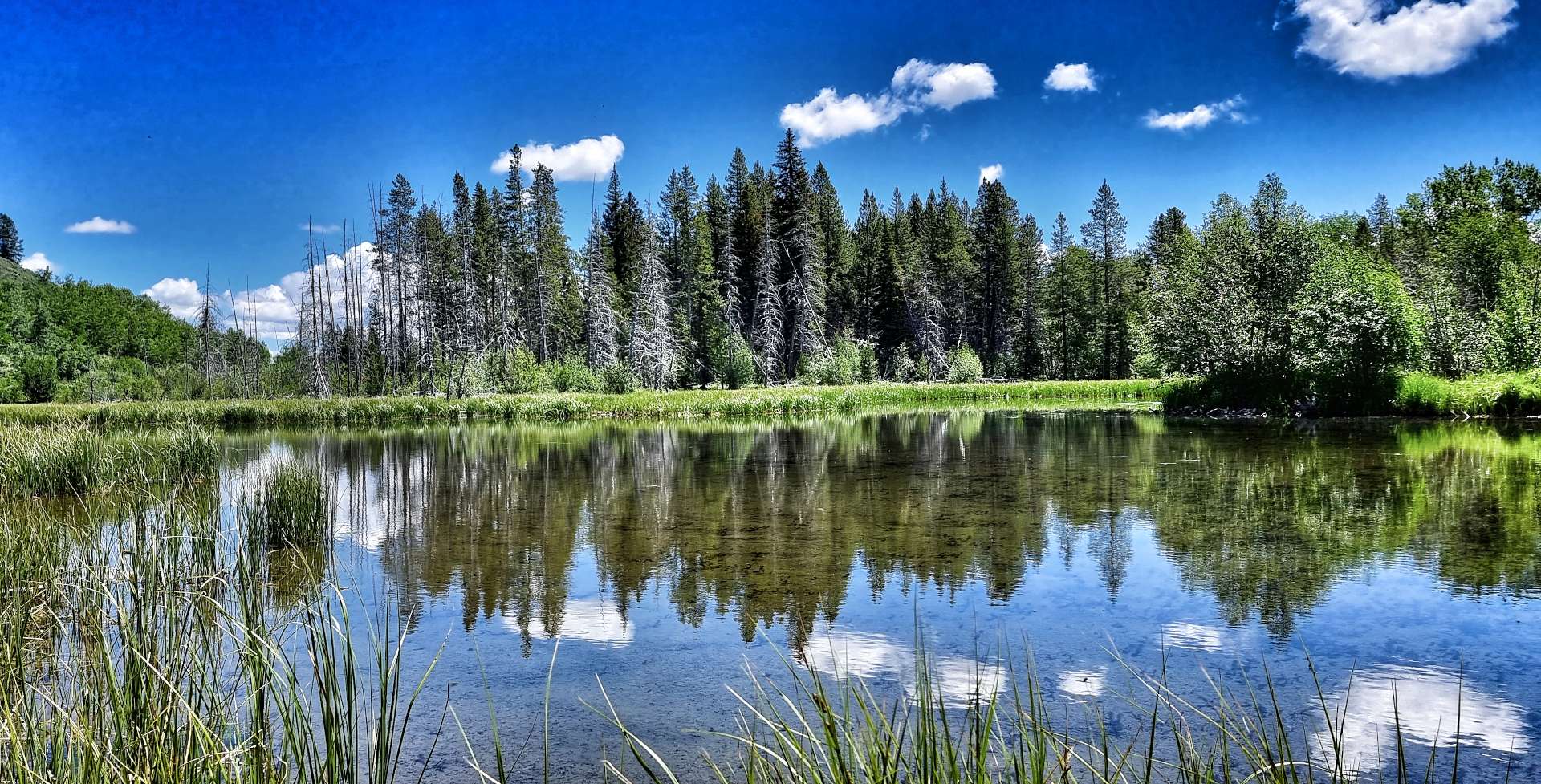
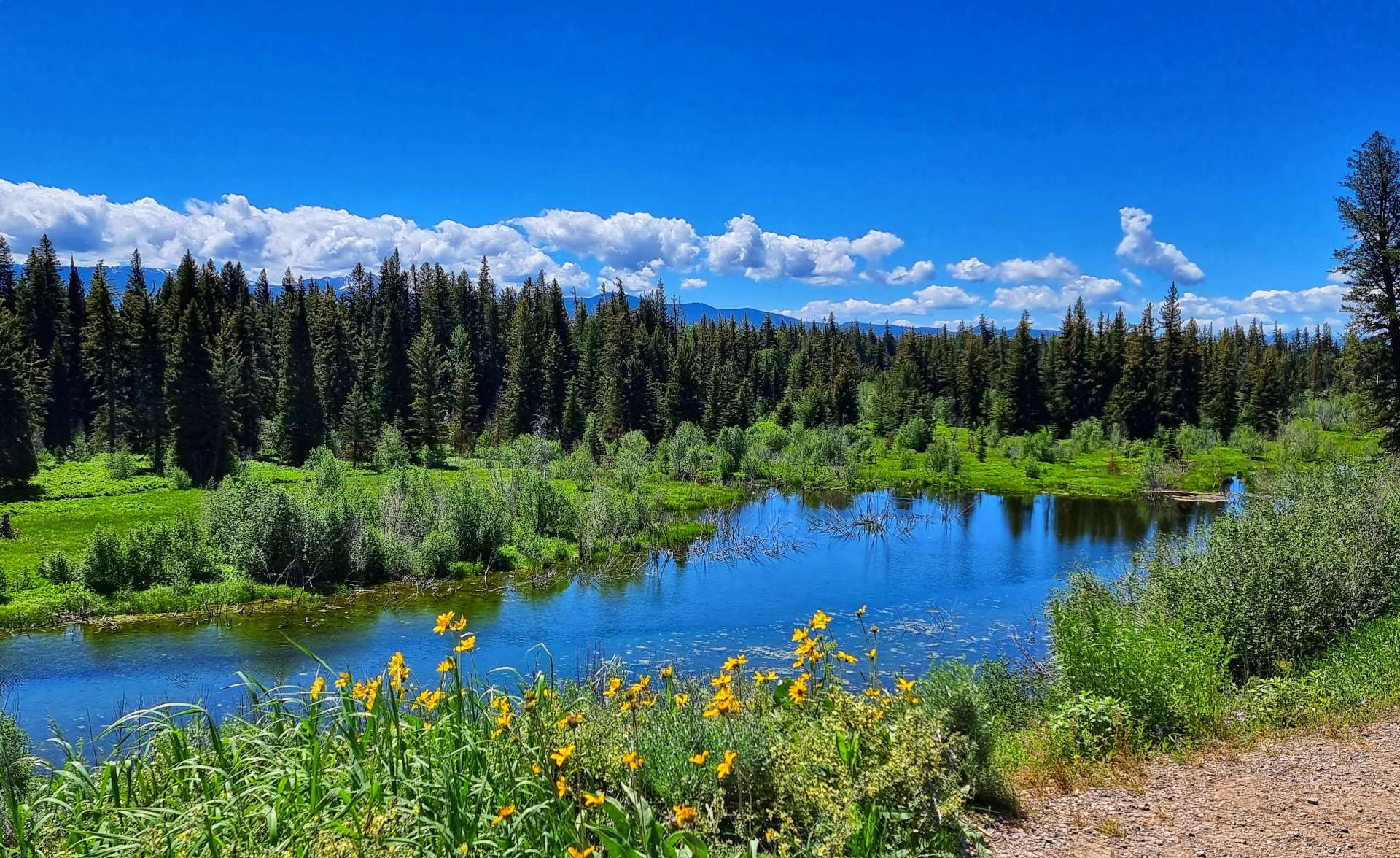
The quiet backroad took us past babbling brooks & creeks which led into or out of the many small lakes & ponds. Then as we turned a corner the forest was replaced by plains & prairie as far as the eye could see. This signalled that we were nearing the end of our remote riding on Moose Wilson Road, but there was plenty more stunning scenery ahead of us.
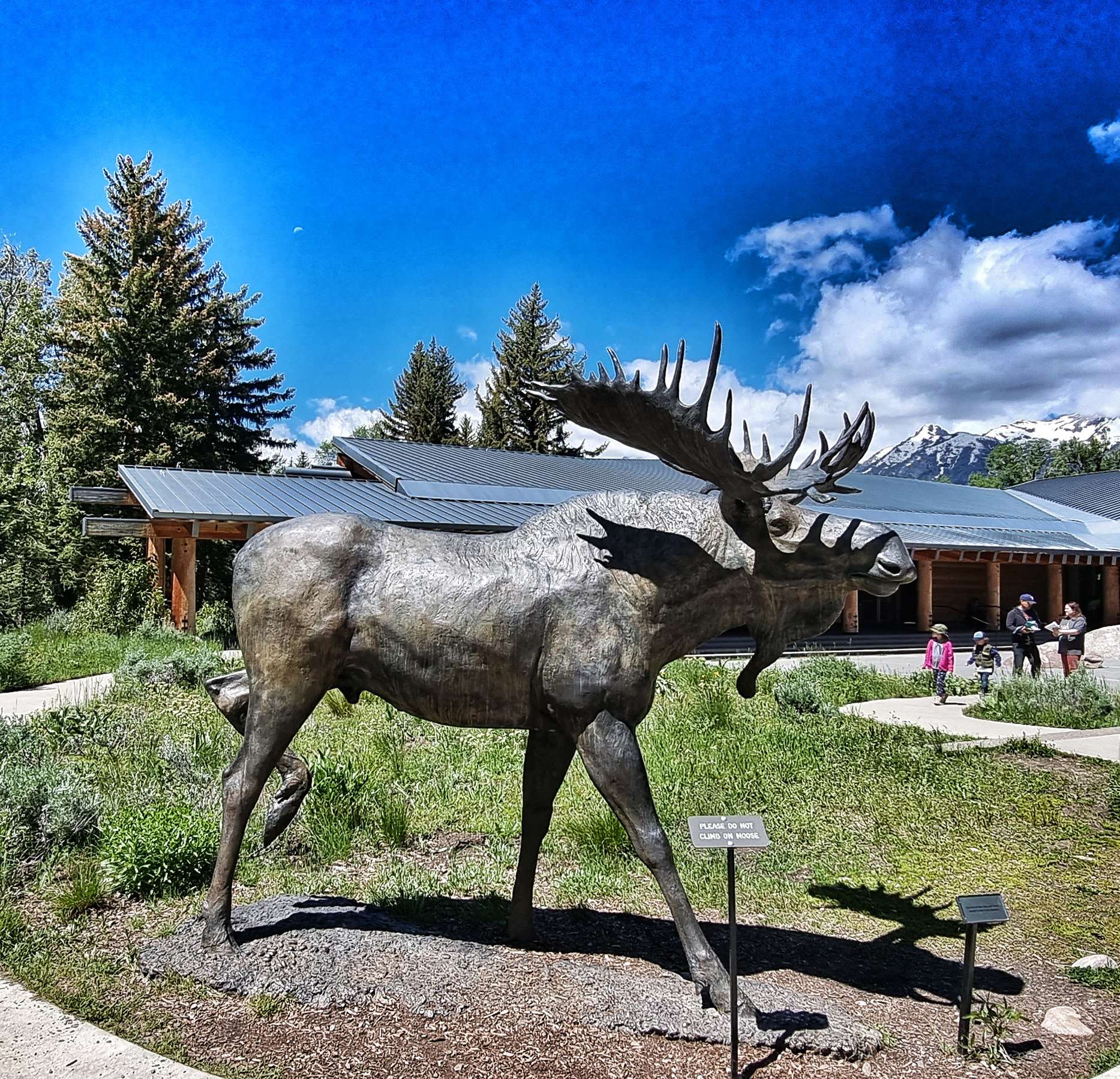
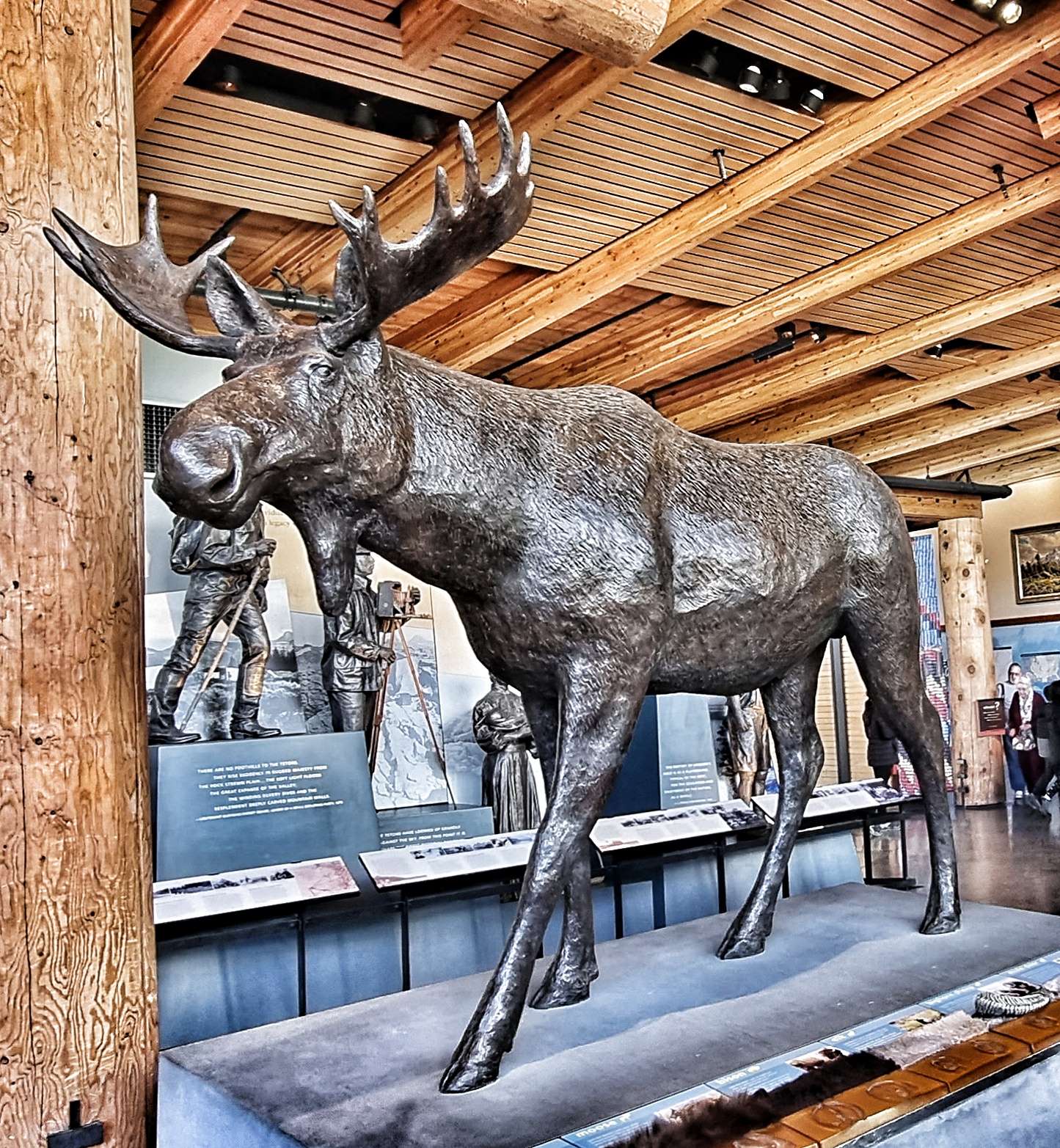
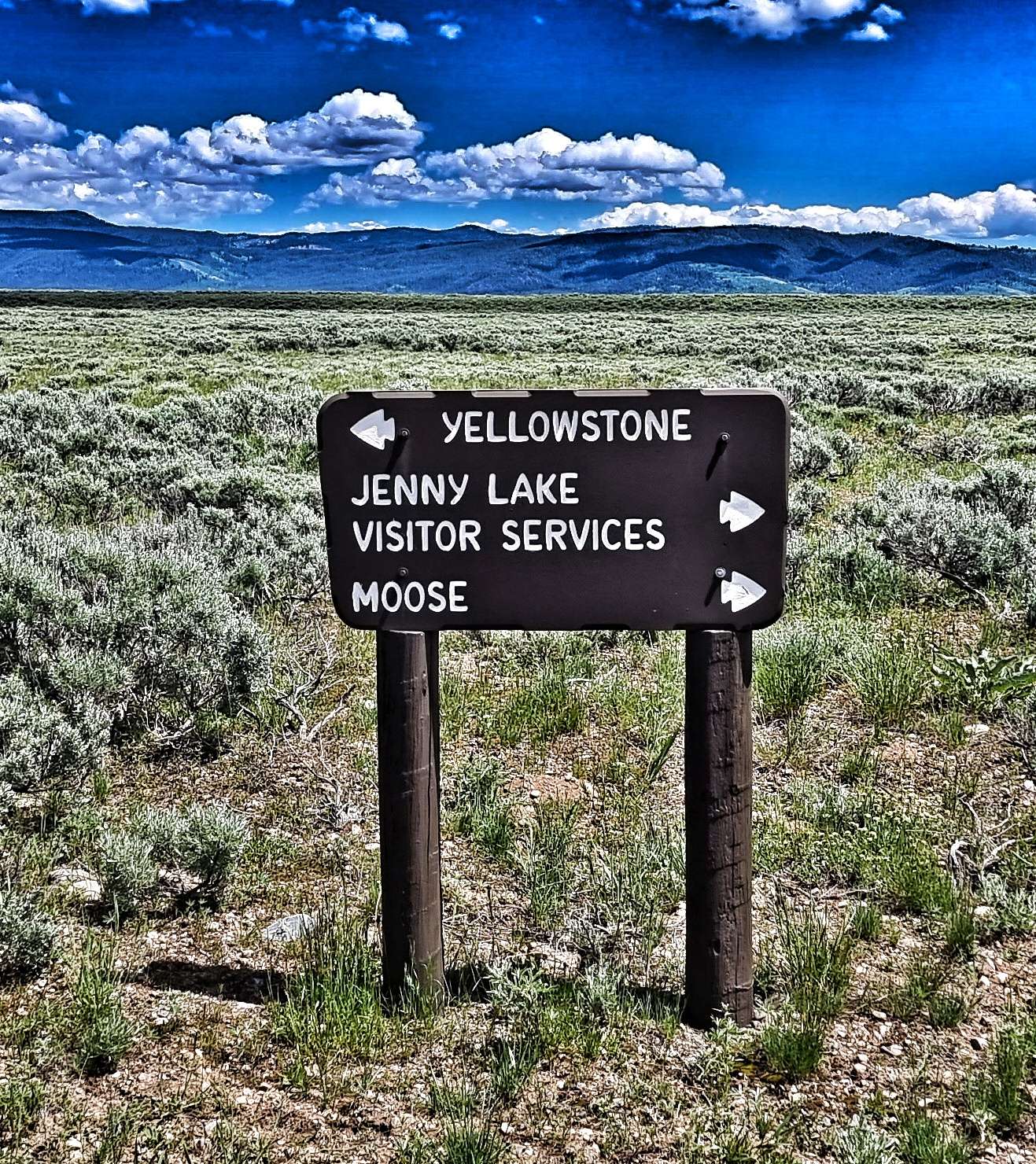
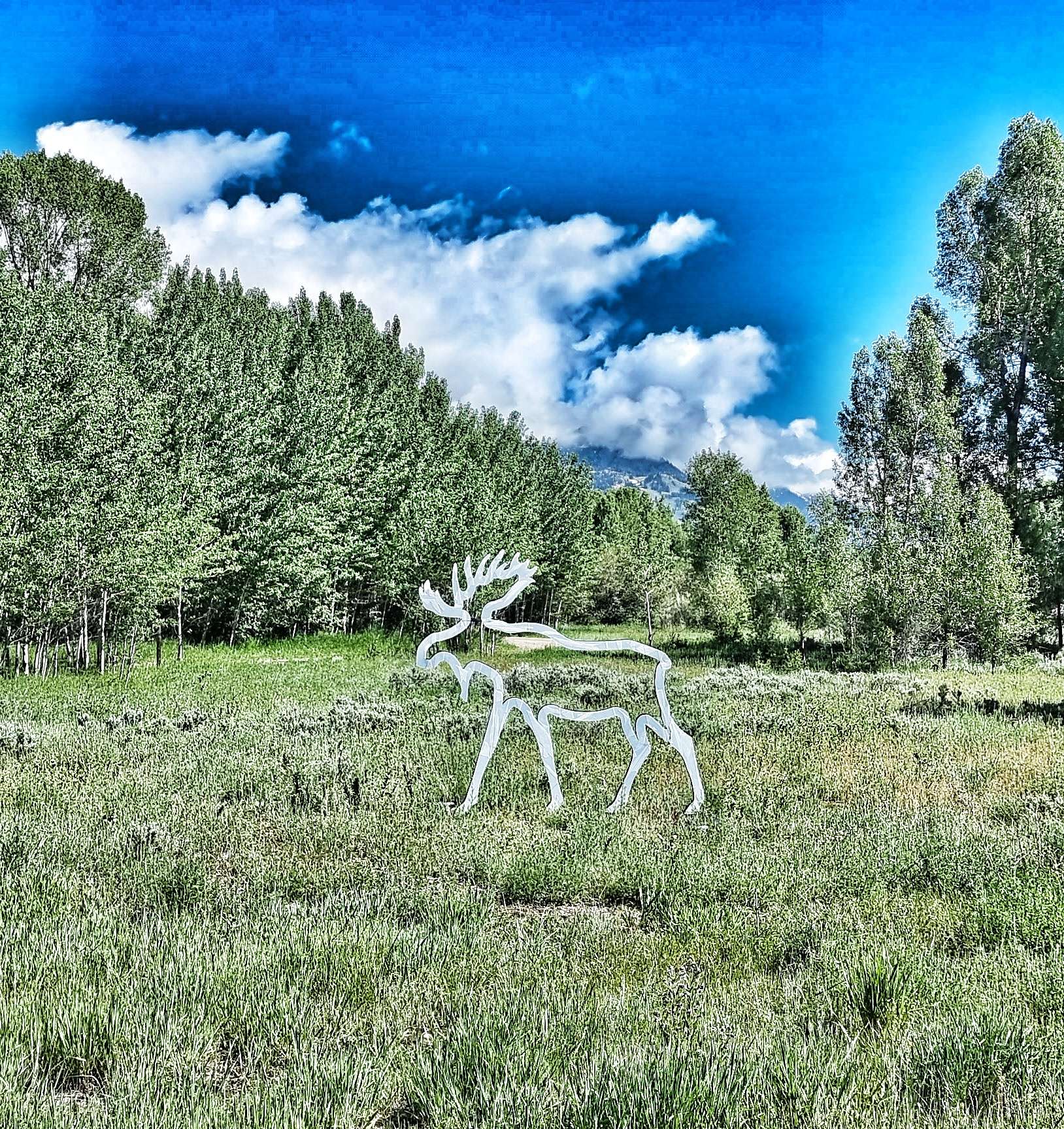
We joined Teton Park Road at Moose, stopping to see the Visitor Centre along the way – I have a few friends (Jo & Tazzer – this is for you both!!) who will appreciate this next set of photos as they’re into Moose. I’ve added my favourite mousse photo!!!
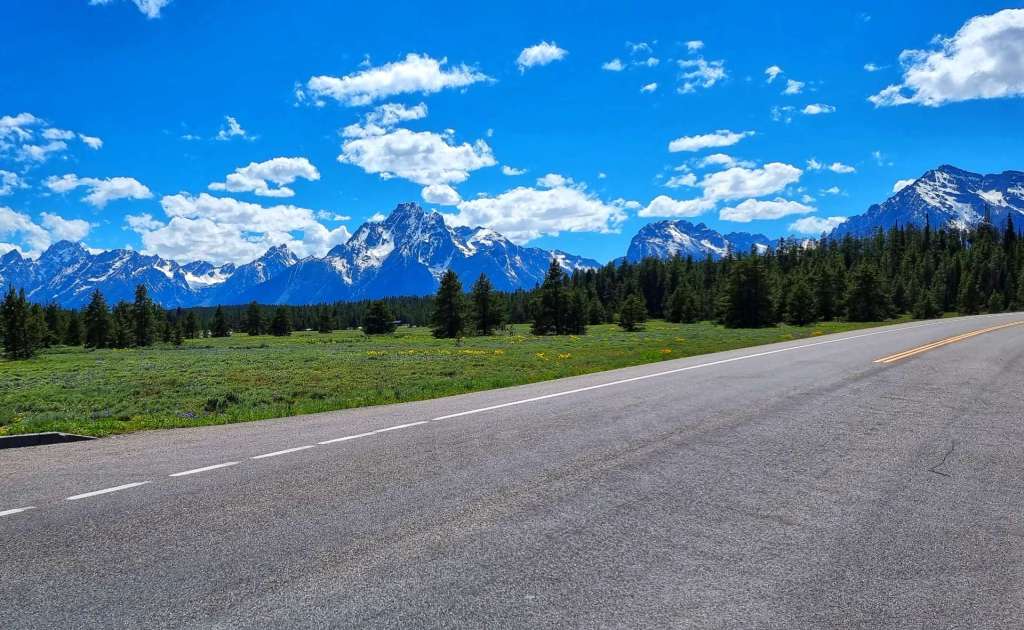
Grand Teton National Park has gone to great lengths to be cyclist & pedestrian friendly. From Moose to Jenny Lake (about 10 miles) we were once more on a separate cycle path. Over billions of years, natural forces including earthquakes, glaciers & erosion have shaped the Teton mountains. The gneiss that makes up much of the range was formed 2.7 billion years ago when the sea floor sediments & volcanic debris were buried up to 18 miles deep as two tectonic plates collided – similar to what is happening to the Himalayas today.
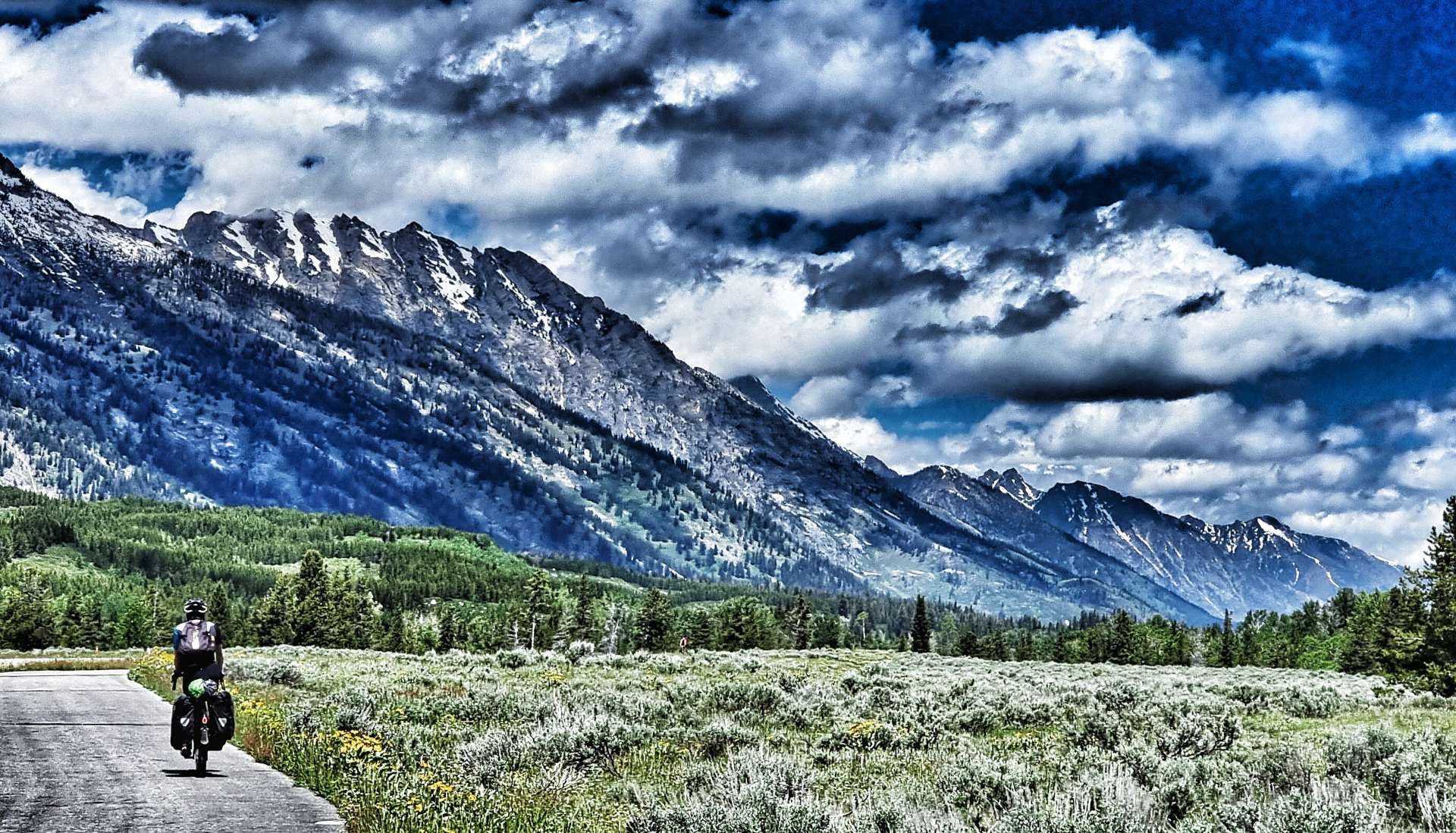
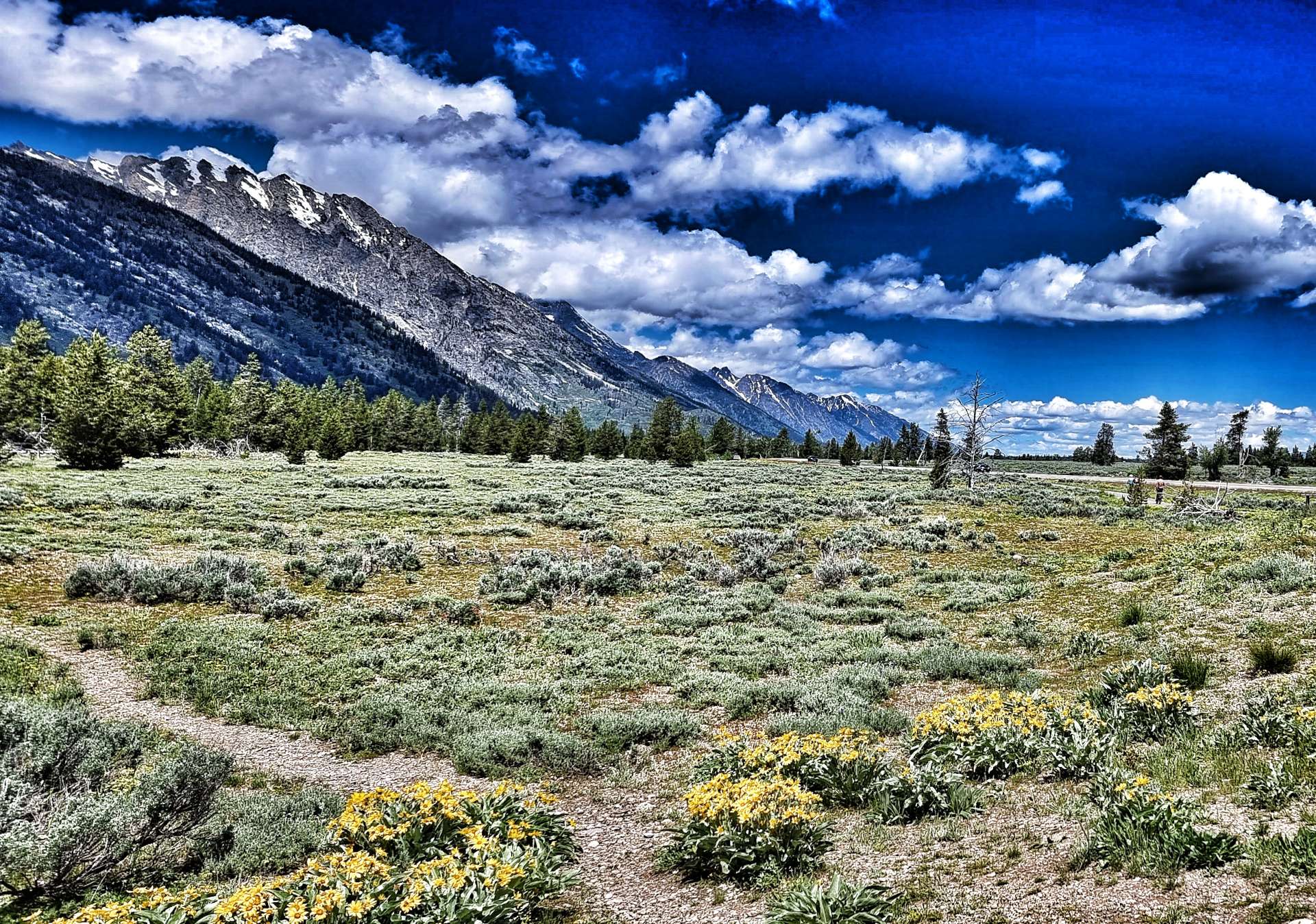
The Tetons are young in geological terms, the uplifting which created them only commenced 10 million years ago. The range continues to uplift one earthquake at a time along the 40 mile Teton fault, a north-south crack in the earth’s crust. As the region is stretched in an east-west direction, this causes stress which is released in the form of an earthquake, lifting the mountain block skywards, while dropping the valley floor.

On average, the fault moves 10 feet with each earthquake – the mountain block rises 2 to 4 feet up, as the valley floor drops 4 to 6 feet. Over 10 million years it’s estimated that the total offset is about 25,000 feet – the flathead sandstone on Mount Moran (to the west of the fault) is at 6,000 feet above the valley, while the same layer is buried 20,000 feet below the valley floor on the east side of the fault. Enough with the geology lesson, here’s some more jaw-dropping scenery!
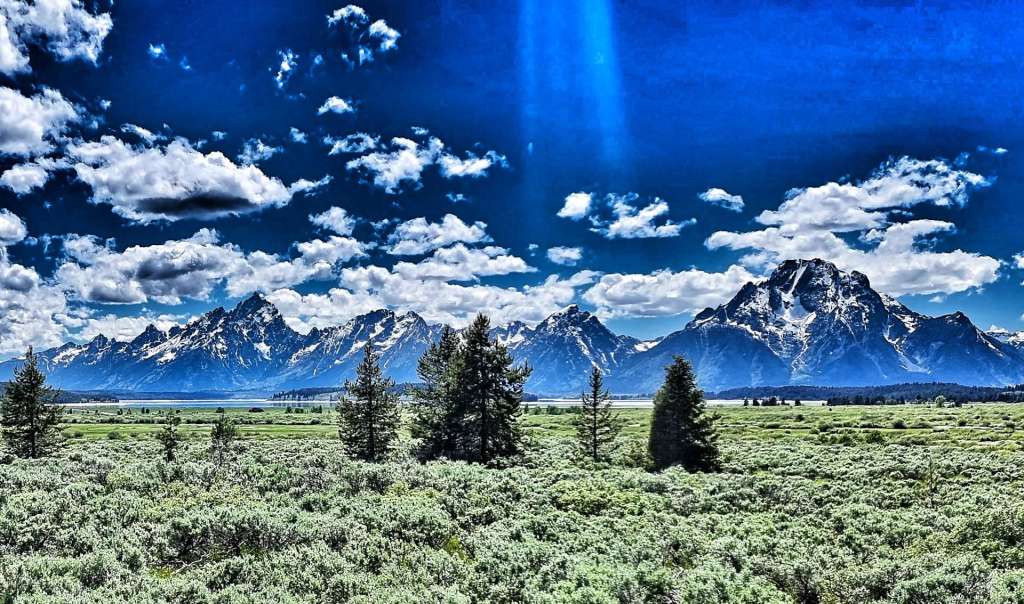
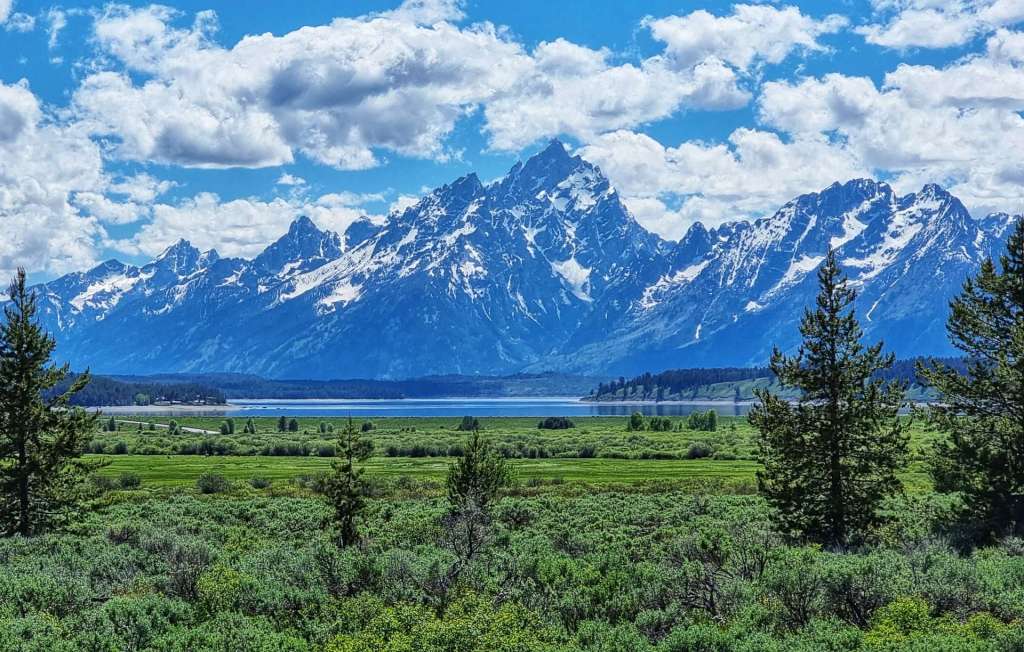
The Grand Teton National Park also has a number of alpine lakes, some natural & others man-made to manage water levels & to create hydro-electric power. When combined with the majestic backdrop of the mountains, the views are out of this world. Jenny Lake is the centre piece of the park, with views of Teewinot Mountain, Mount St John & Cascade Canyon (directly between Tweddle Dumb & Tweedle Dumber!) – you may be able to make out a rowing boat behind us too.

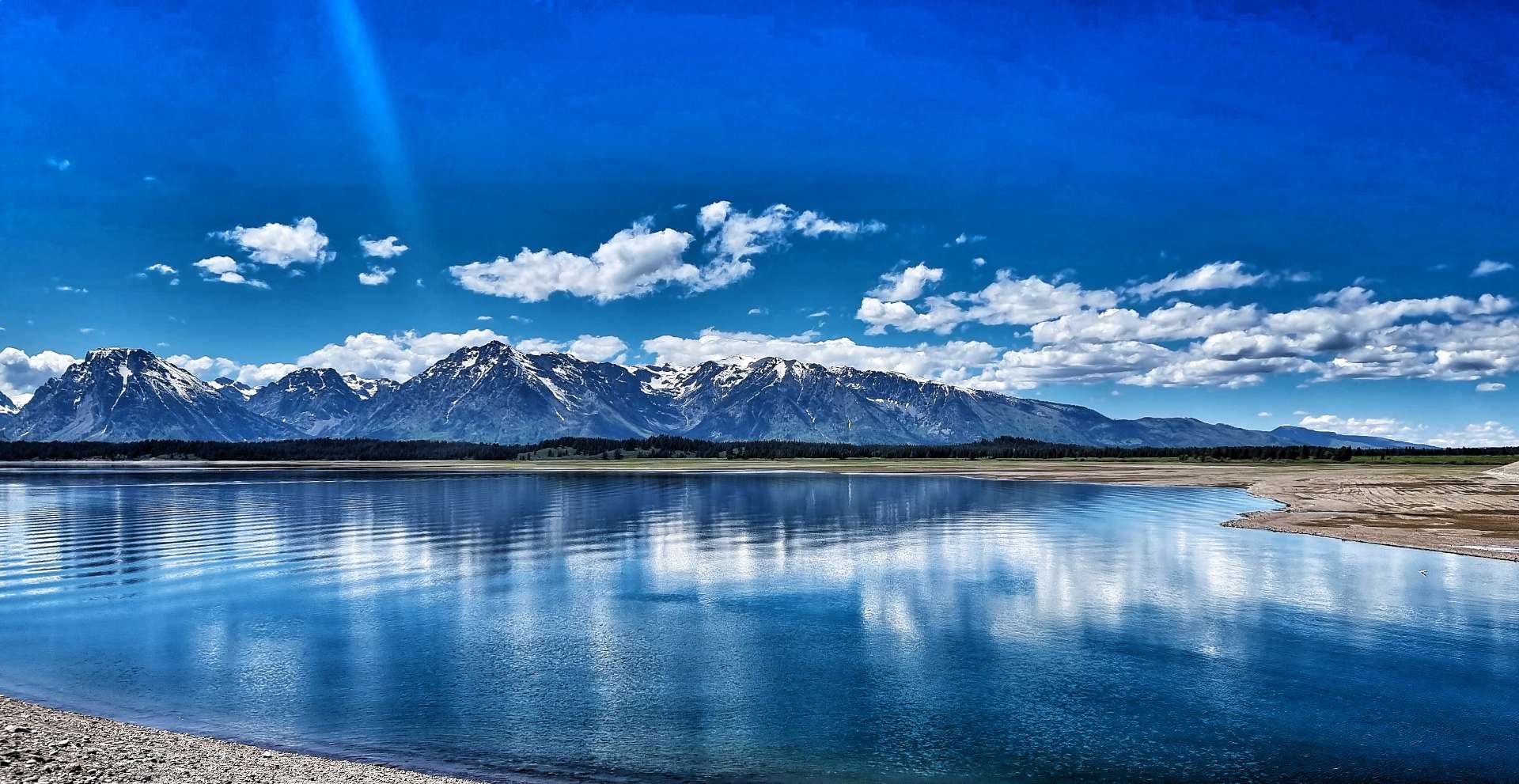
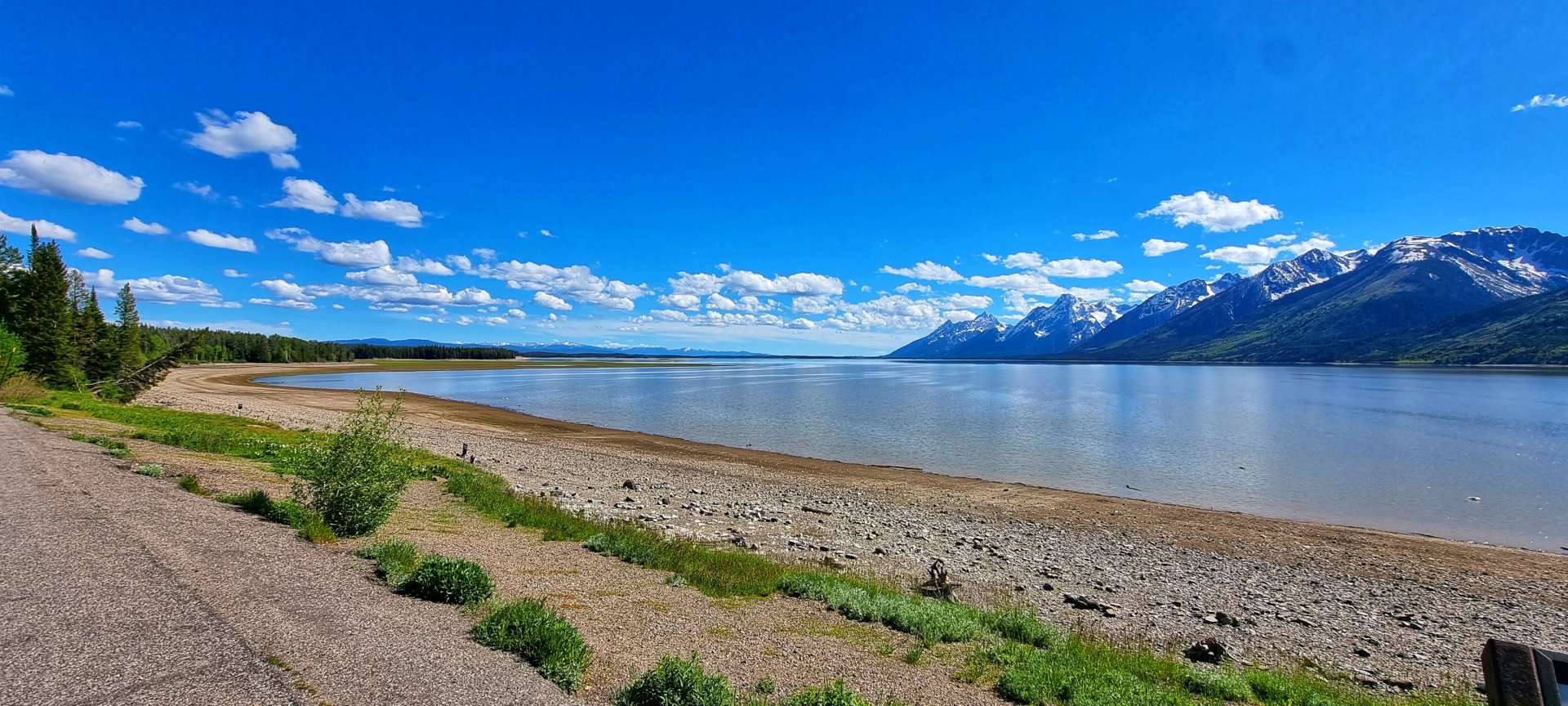
Further up the valley is Jackson Lake – it’s a 400 foot deep natural lake, that was modified in 1916 by the Bureau of Reclamation when they added a 39 foot dam to the lake & rebuilt it in 1989. The lake is a remnant of glacial gouging from the Teton mountain range to the west & the Yellowstone basin to the north. It extends 15 miles up & 7 miles across the valley & is one of the largest high altitude lakes in the USA.

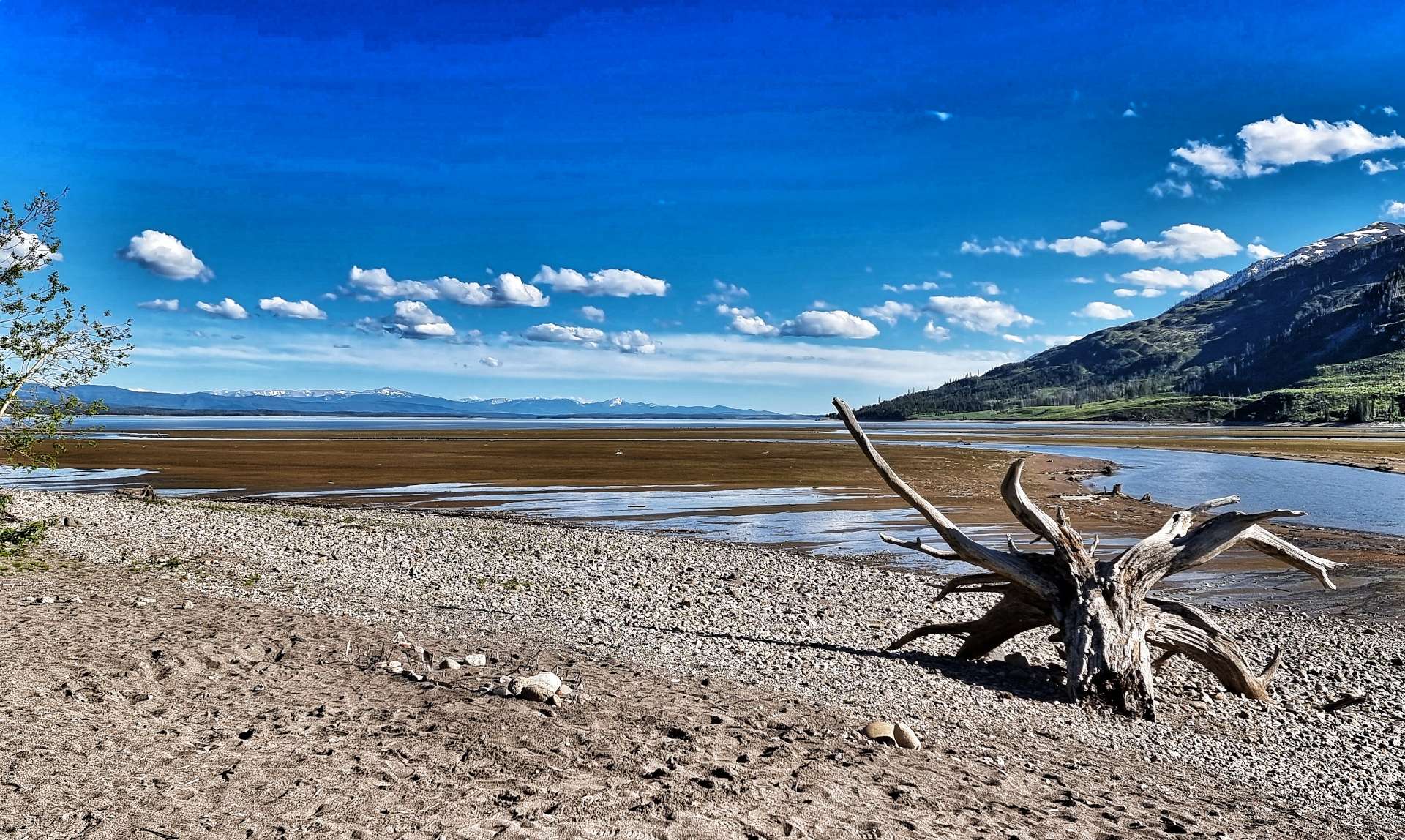
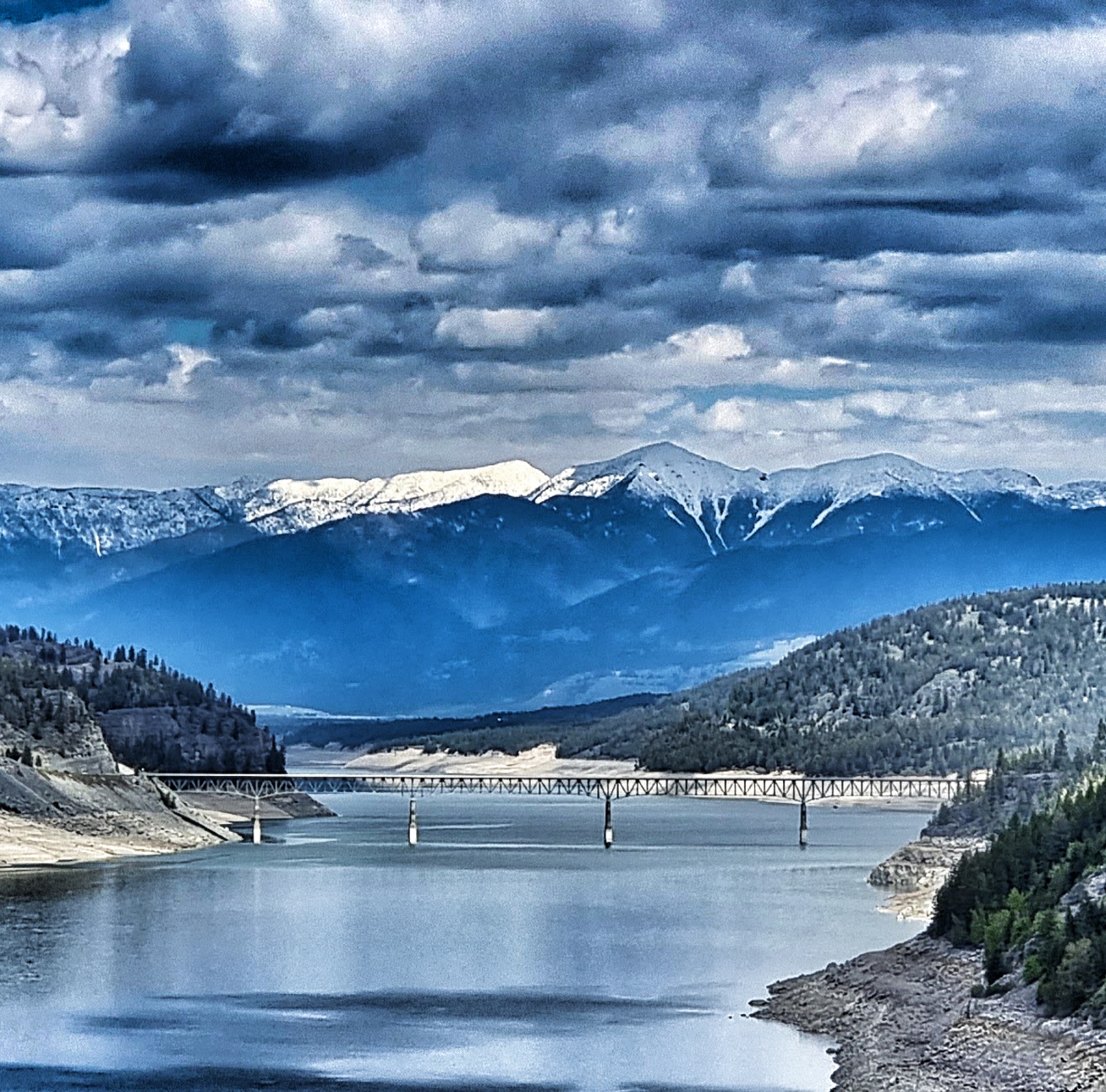
Continuing up the valley, it became more obvious that the water level in Jackson Lake is currently quite low, as more of the shoreline beach became visible. We stopped briefly at Colter Bay Village (a grand name for a gas station, if ever I heard one!) where we stocked up on sandwiches, crisps & fruit for our gourmet dinner later.

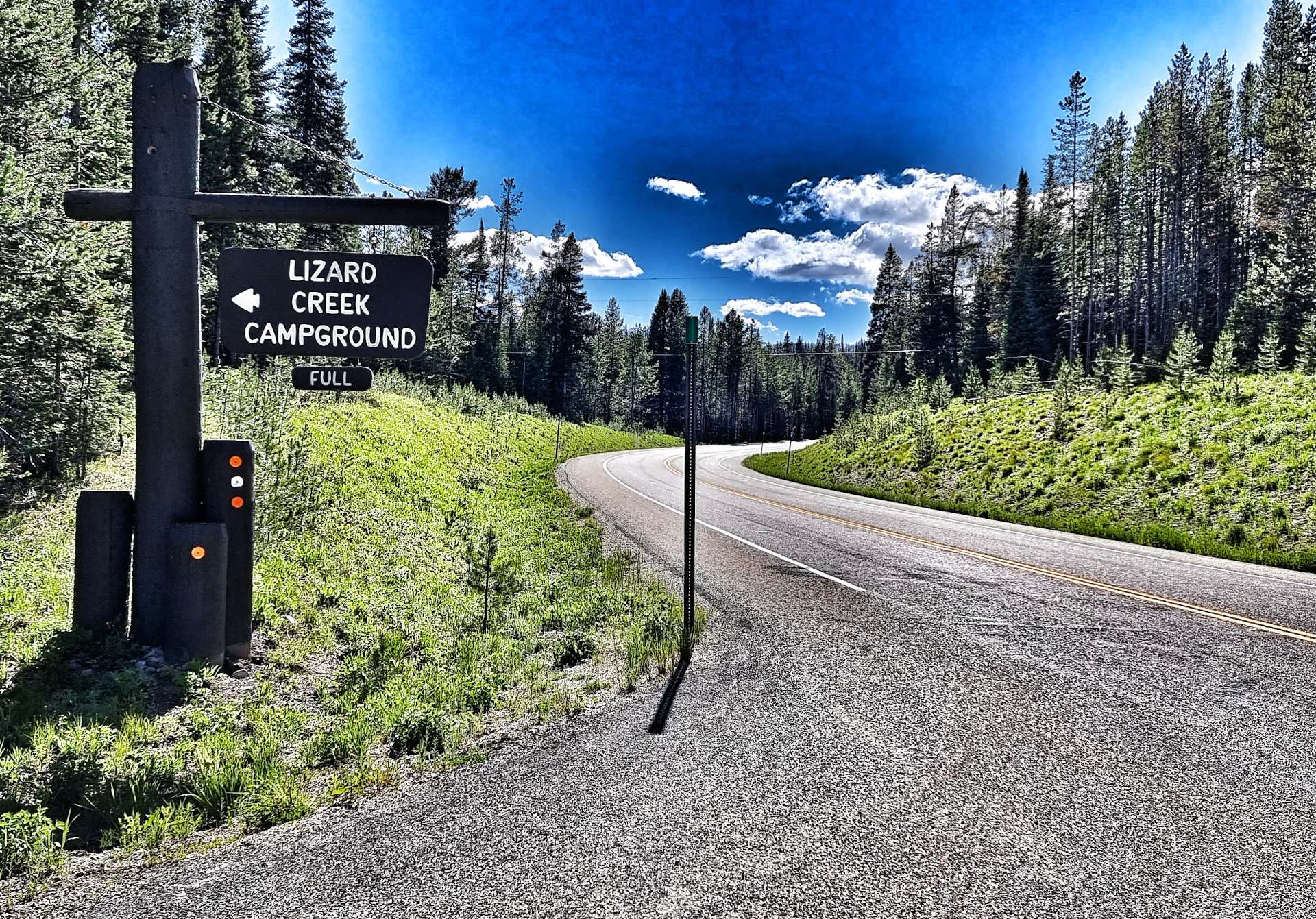
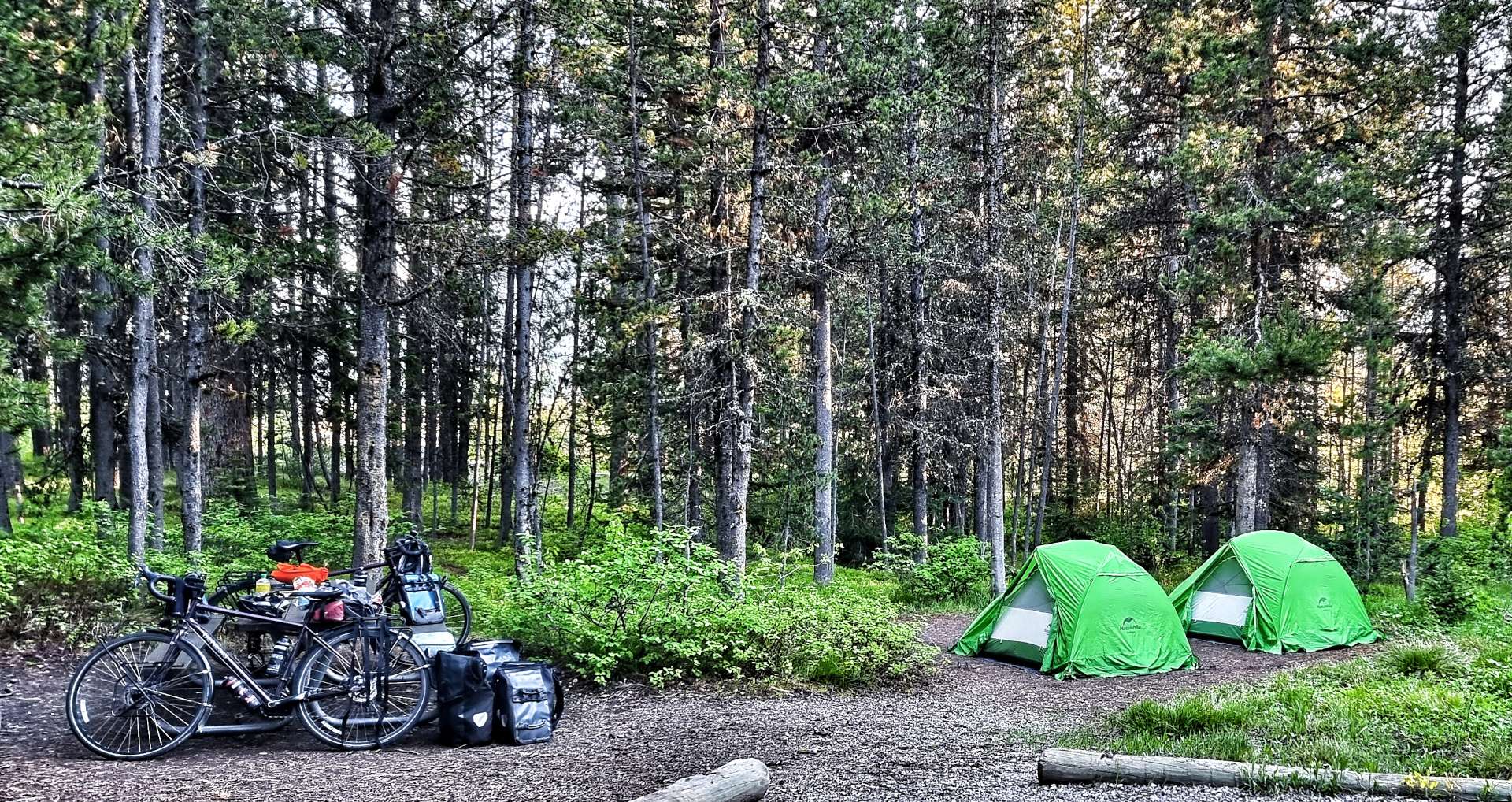
Lizard Creek Campground, where we’d be camping for the night was a mere 8 miles up the road. When we arrived, our friendly campground hostesses Marni & Mandy welcomed us & made sure we found our pitch for the evening.

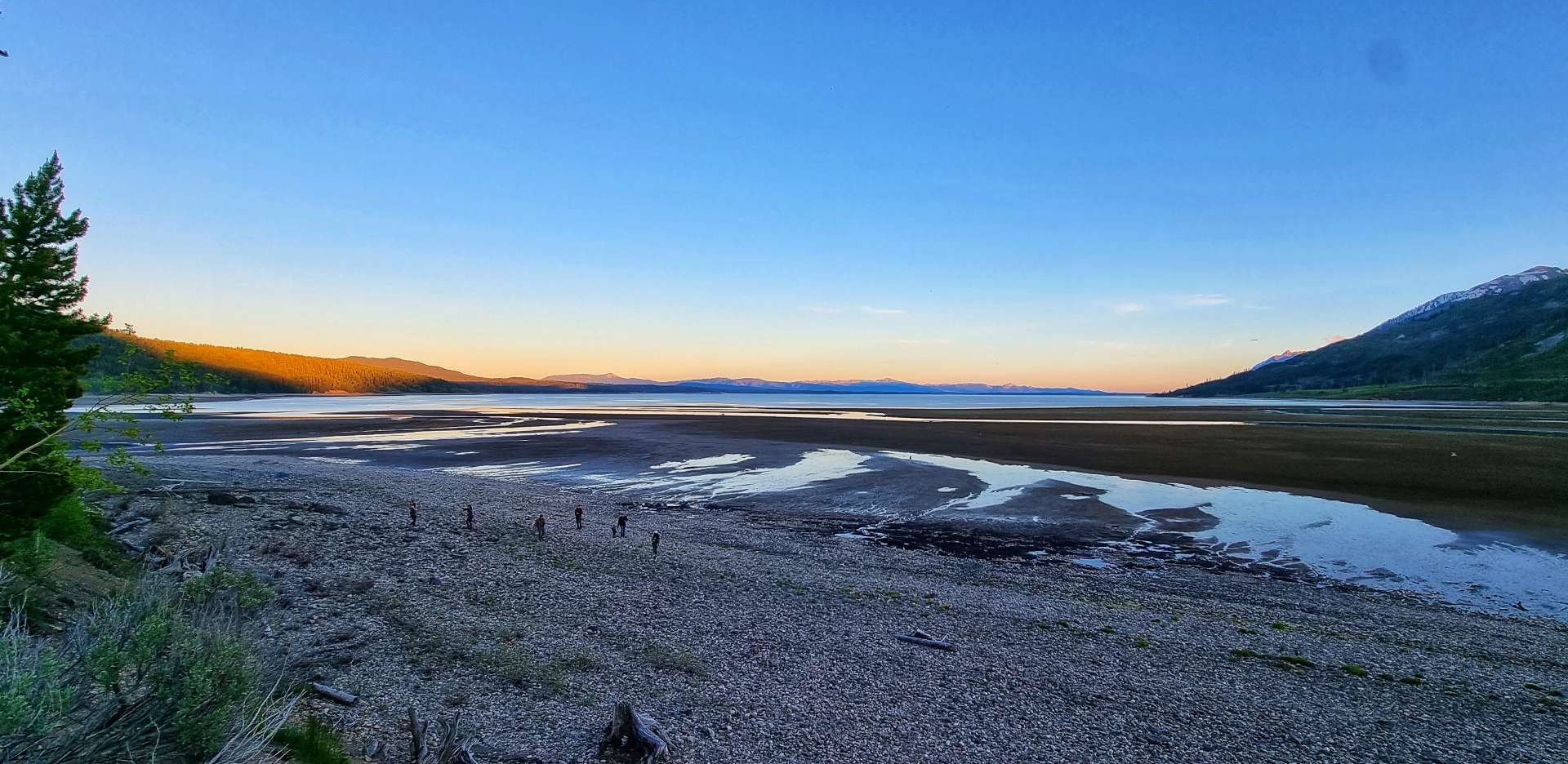
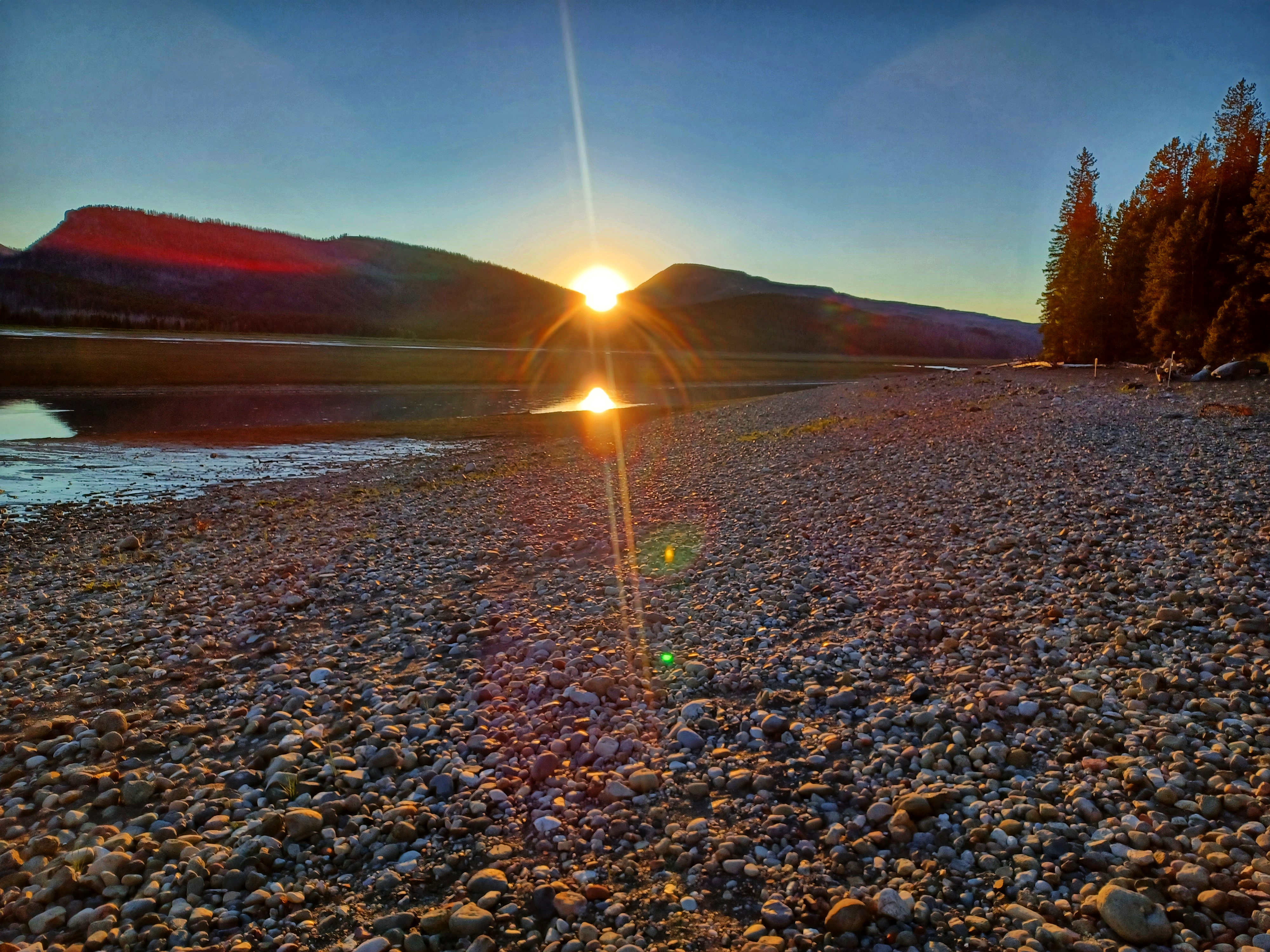
We set up camp, then ate our luxury dinner of ham & cheese sandwiches with either salt & vinegar or plain crisps. A little after 9pm we took a 2 minute stroll to the shoreline of Jackson Lake, where we watched the sun go down – huge thanks to Sean for sharing his sunset photo with me. The perfect end to the perfect day. Grand Teton National Park is a breathtakingly beautiful place & I’d encourage you to make time to visit if ever you’re in the region to see Yellowstone – you won’t be disappointed.
Stage Stats – 64 miles, 2,005 feet of climbing. Sunshine & blue skies all day as we explored a lesser known gem of a National Park.

Wednesday 22nd June – Lizard Creek Campground, Teton National Park to Grant Village, Yellowstone National Park (Stage 42).

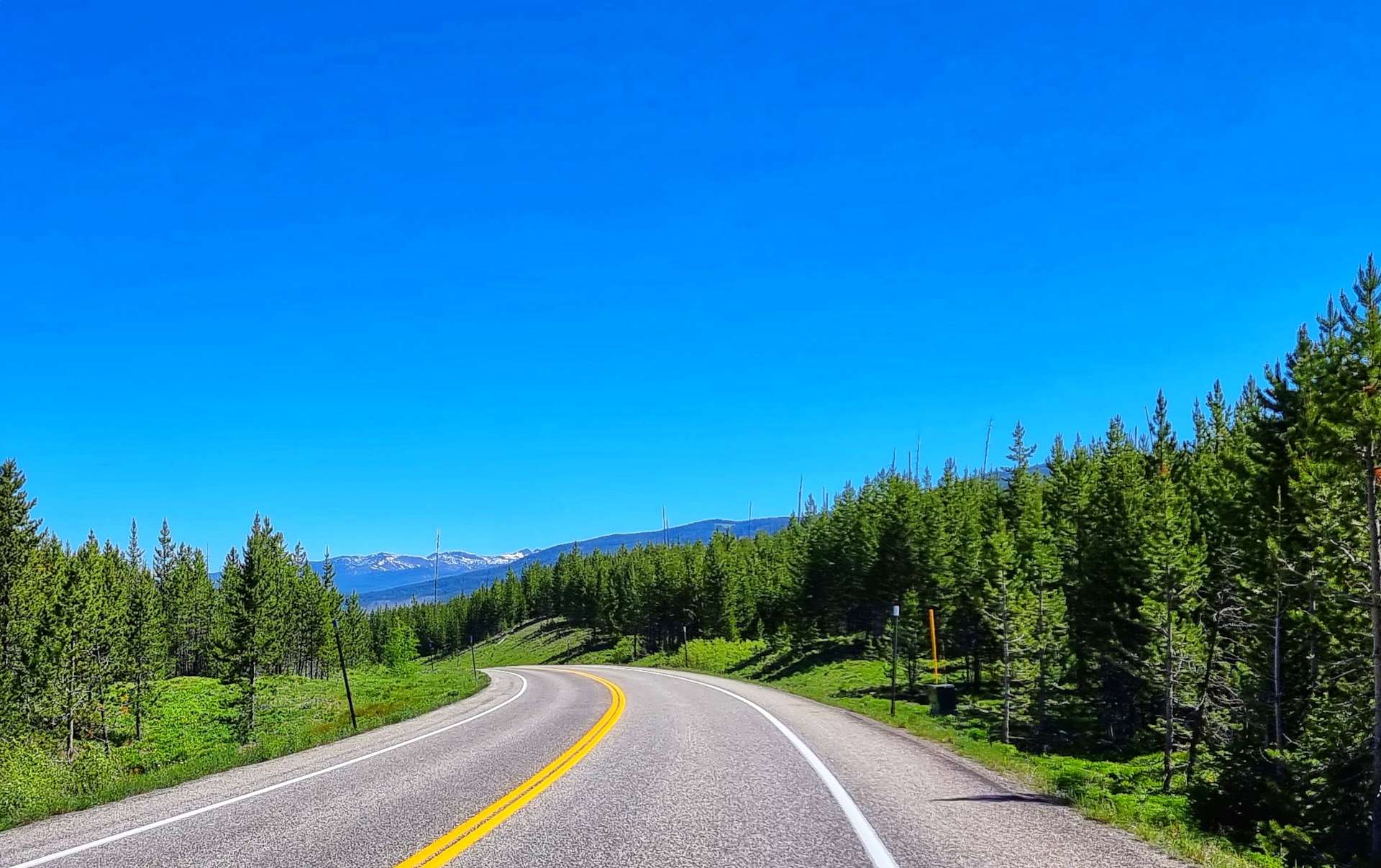
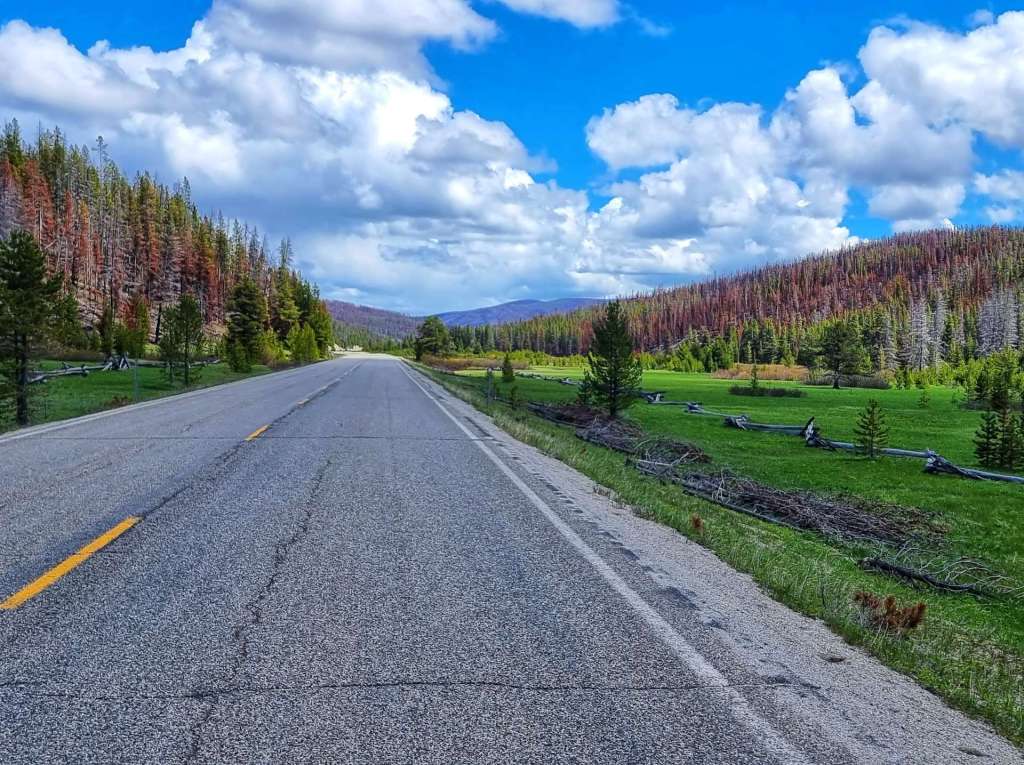
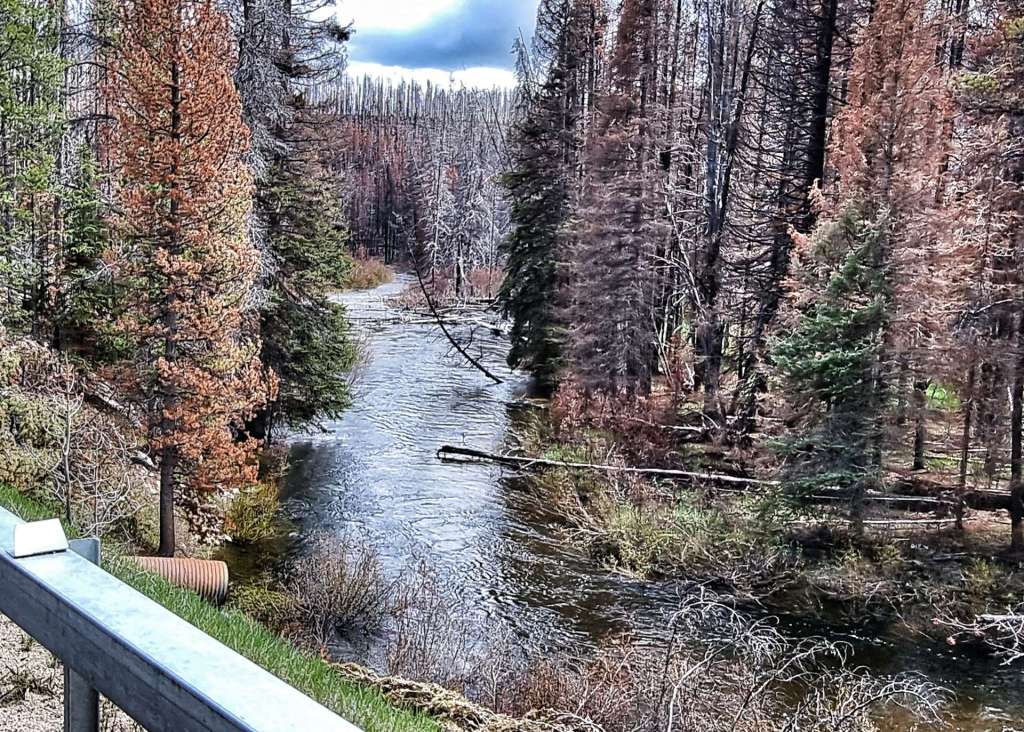
It was bitterly cold overnight (below freezing) – I bought a beanie on 19th May in Sandpoint for just such an occasion & slept in it last night, along with long legged thermal bibs & a long sleeved jersey. We were on the road by about 10am & continued on a constantly rising road for 6 miles through a section of burned forest, before exiting Grand Teton National Park on the John D Rockefeller Jr Memorial Parkway as we headed towards Yellowstone.

John D Rockefeller was the only son of the founder of Standard Oil (now Exxon or Esso depending on which side of the Pond you’re from). He was a philanthropist & financier who donated $500 million to a wide range of causes, including Grand Teton, Acadia & the Great Smokie Mountain National Parks. Congress dedicated a parcel of 24,000 acres of land to recognise his contributions.

He was also involved in the Rockefeller Center (US Spelling), making him one of the largest real estate holders in New York City at one point. I’d encourage you to do your own research to better understand how he amassed his wealth so he could become a philanthropist. It’s not a simple or straightforward story so I’ll leave you to draw your own conclusion.

I’ll remember the stretch of road between Grand Teton & Yellowstone National Parks for two unrelated reasons.

Firstly, it’s where I experienced my first p*nct*re of the adventure – it took between 15 & 20 minutes to unload the bike, check the tyre, fit a new innertube & be on our way again. I’ll try & remember to take a photo next time!

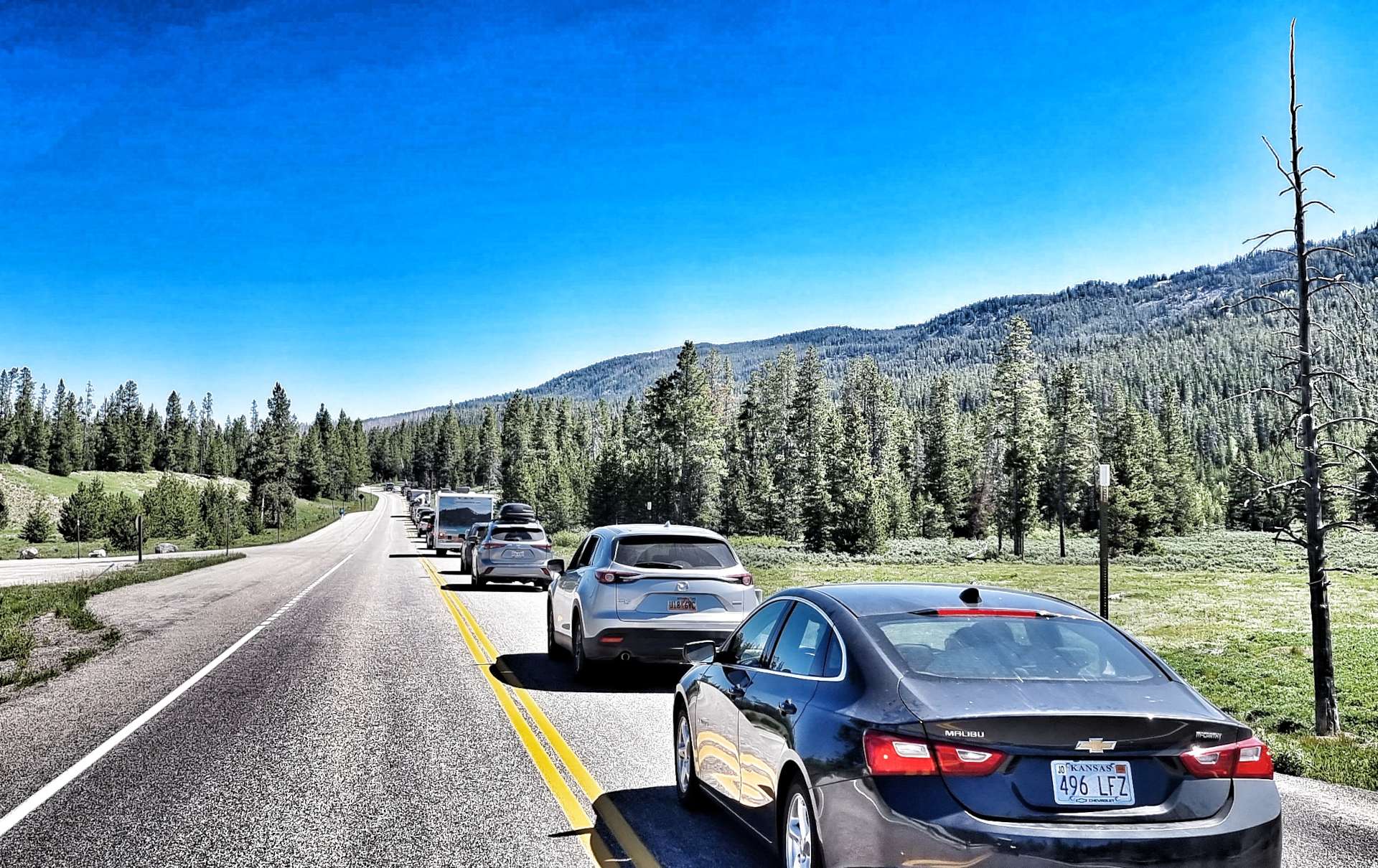
Secondly, we cycled down the hard shoulder, passing a 4 mile tailback of cars queueing to get in Yellowstone’s South Entrance. As an aside, when we stayed at West Yellowstone, we were less than 1/2 mile from the West Entrance Gate – we took a 227 mile detour to get into Yellowstone via the South Gate. But look at the unexpected adventures the last week has brought us!

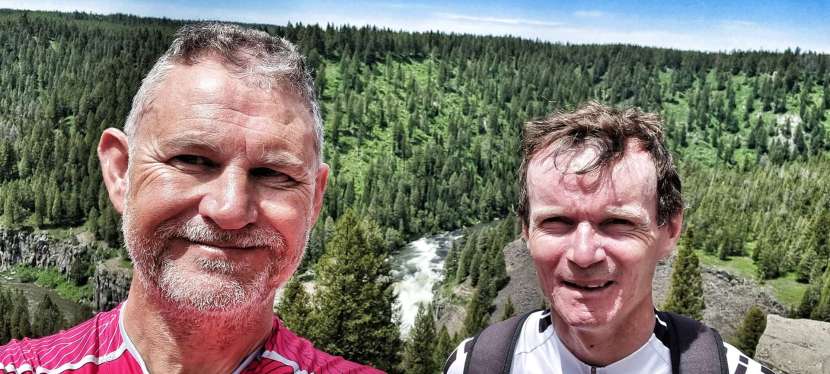
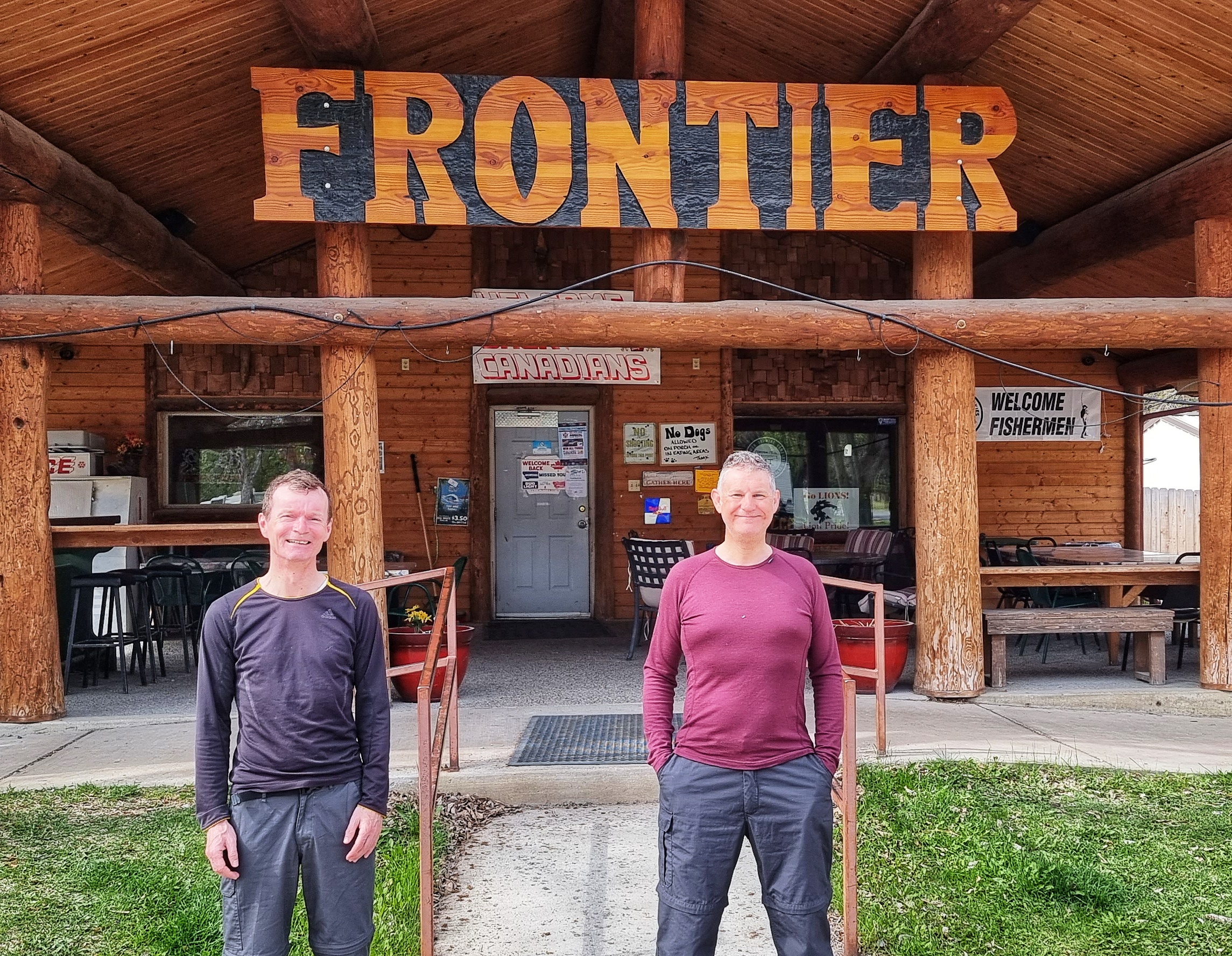
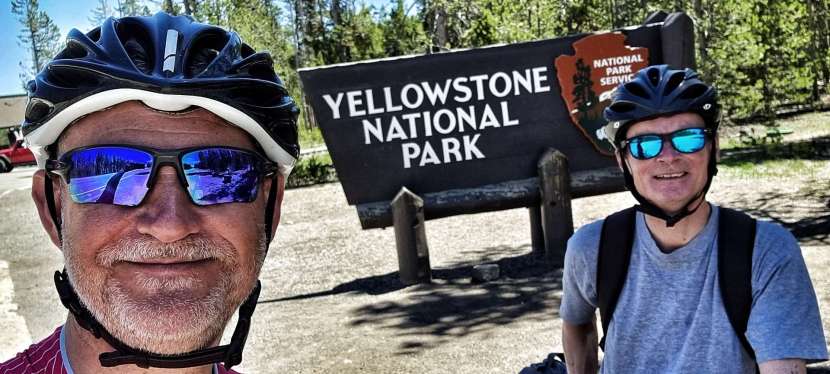
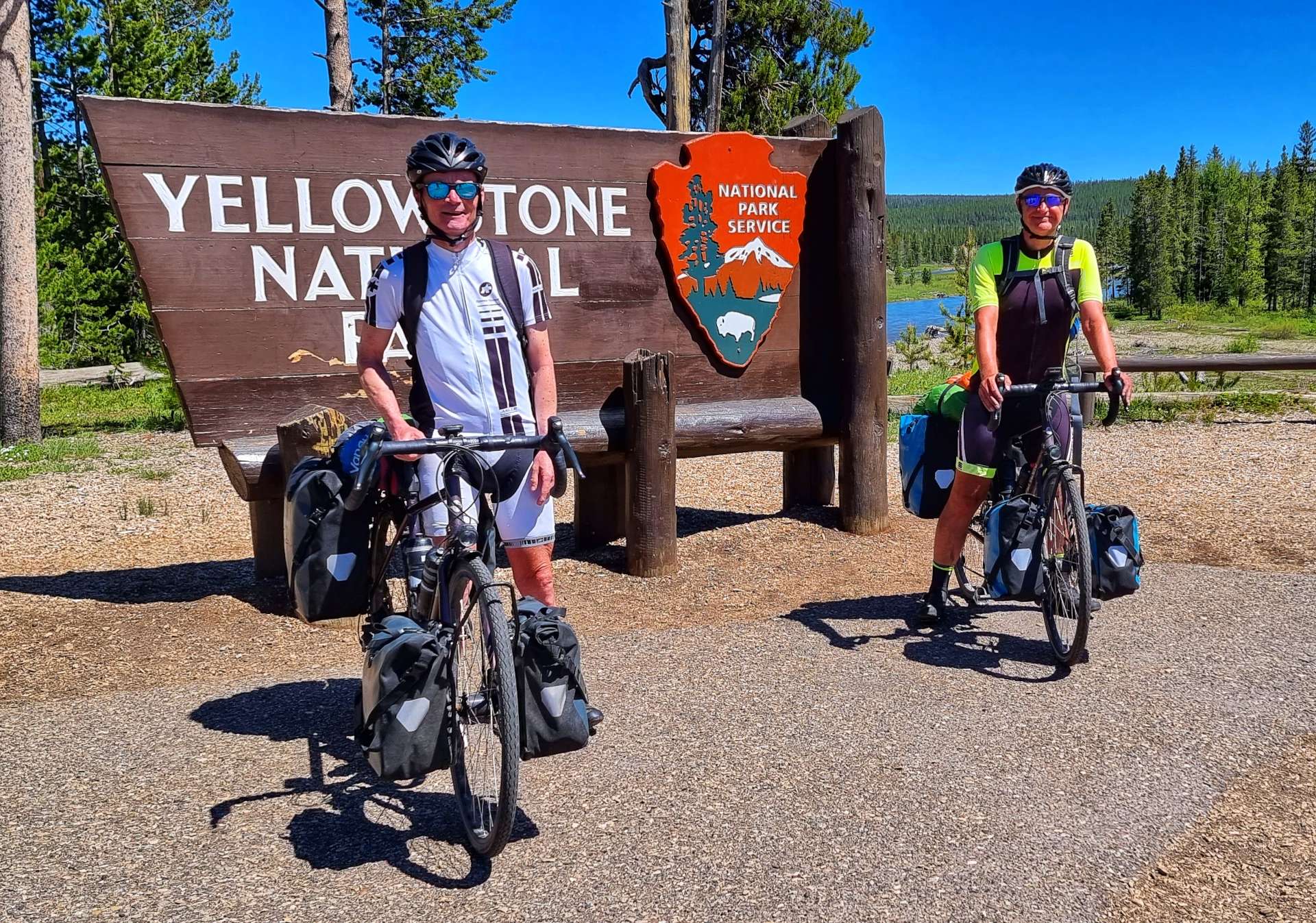
A friendly Ranger took a photo of us both by the Yellowstone sign, before we set off up the Snake River valley.
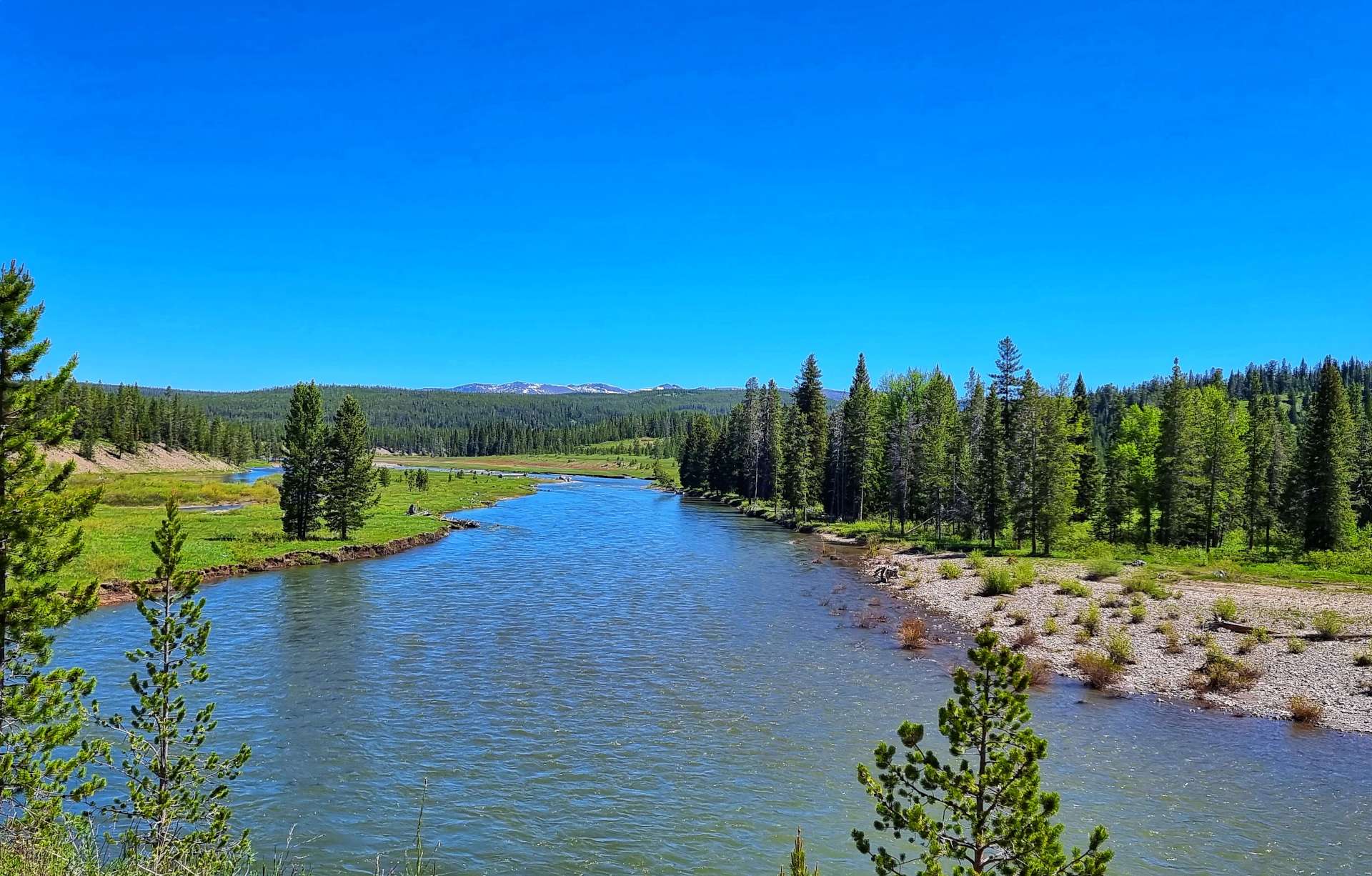
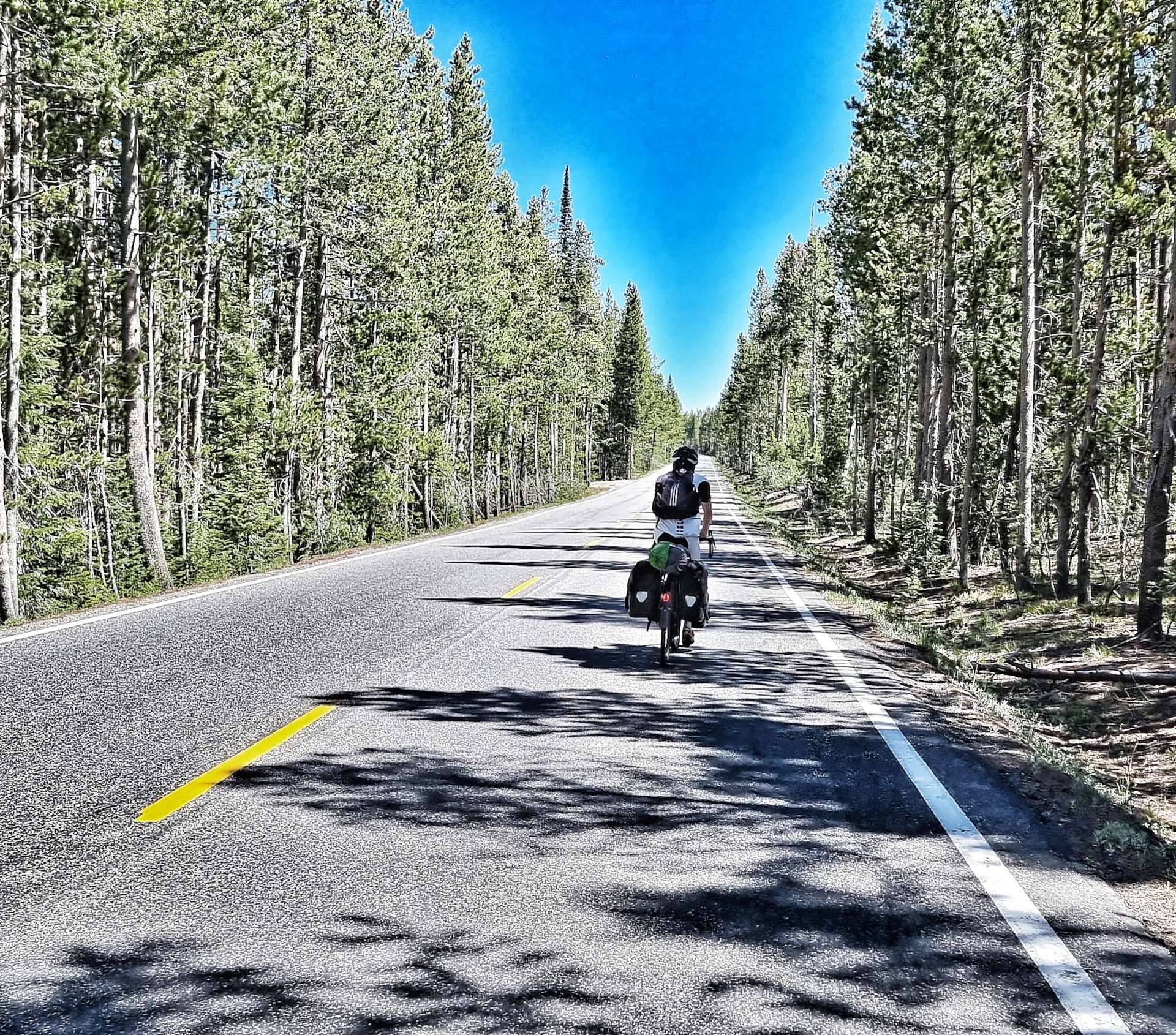
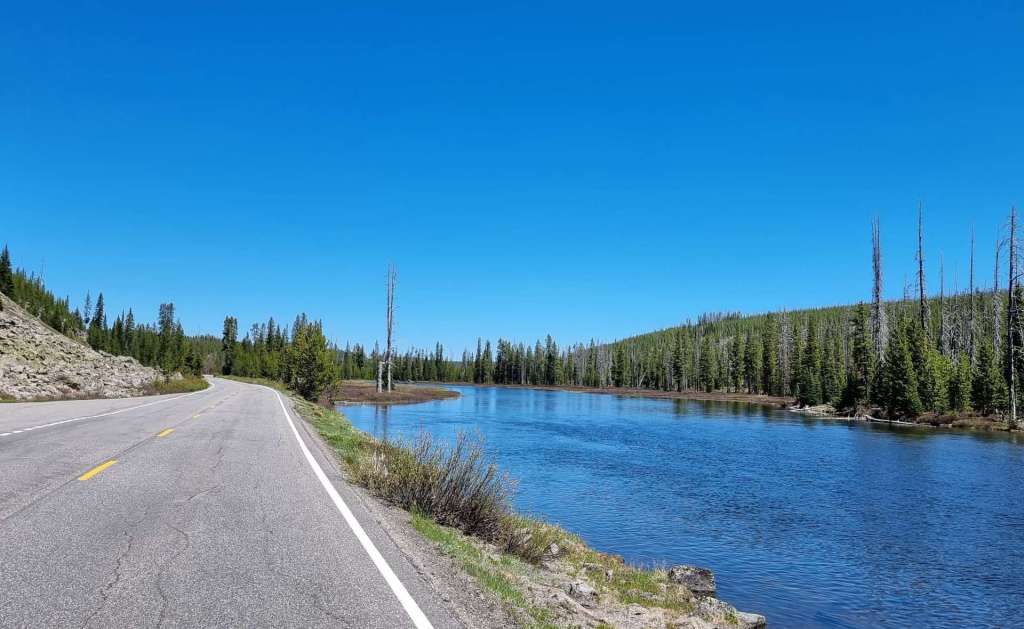
Yellowstone opened today for the first time in over a week – while this increased queues for cars trying to get into the park, the upside was no traffic was leaving the National Park, so traffic could overtake us safely whenever they wanted to. The climb up the Snake River valley was relentless – never steep, but also never ending as we threaded our way through the forest!
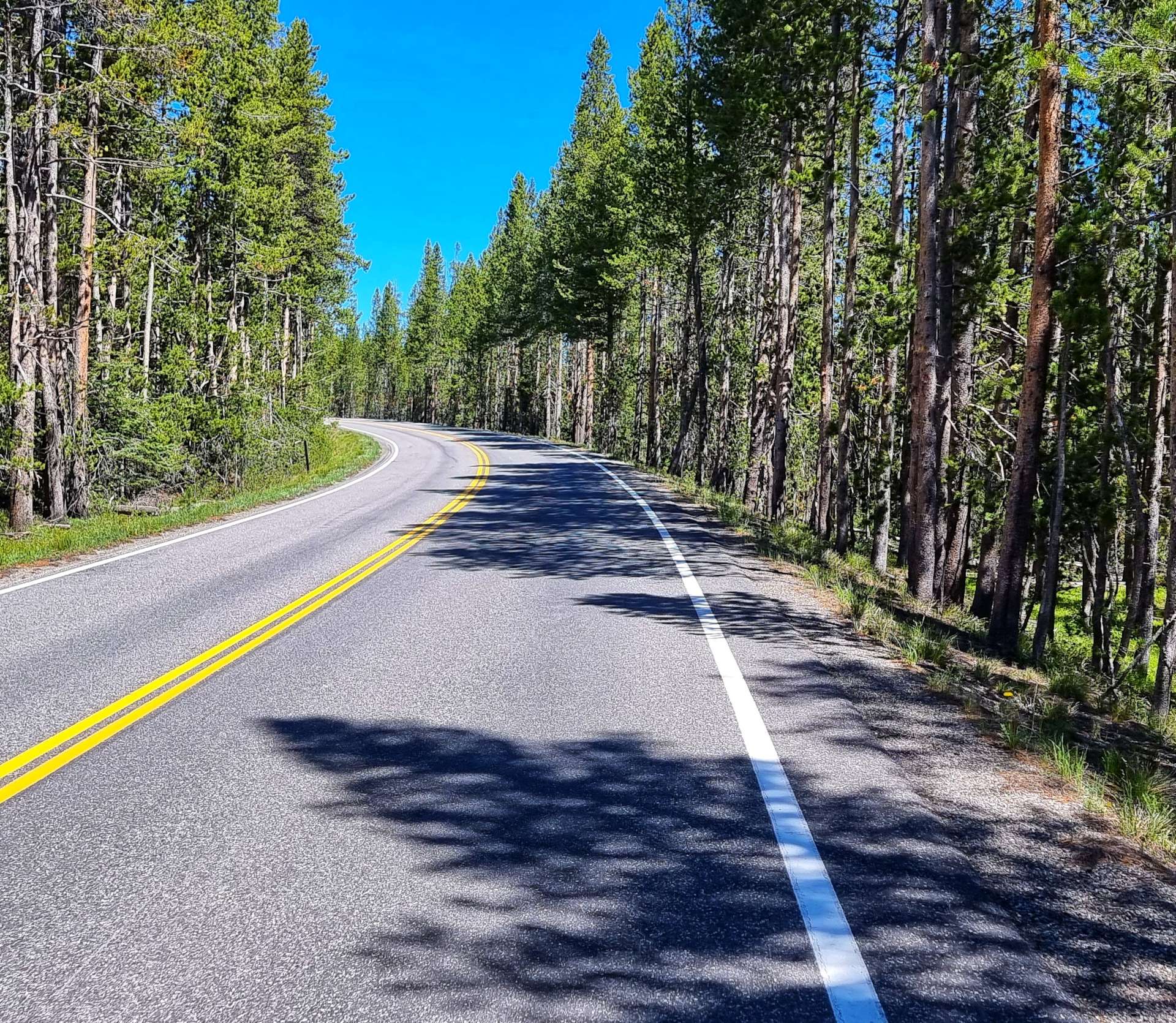
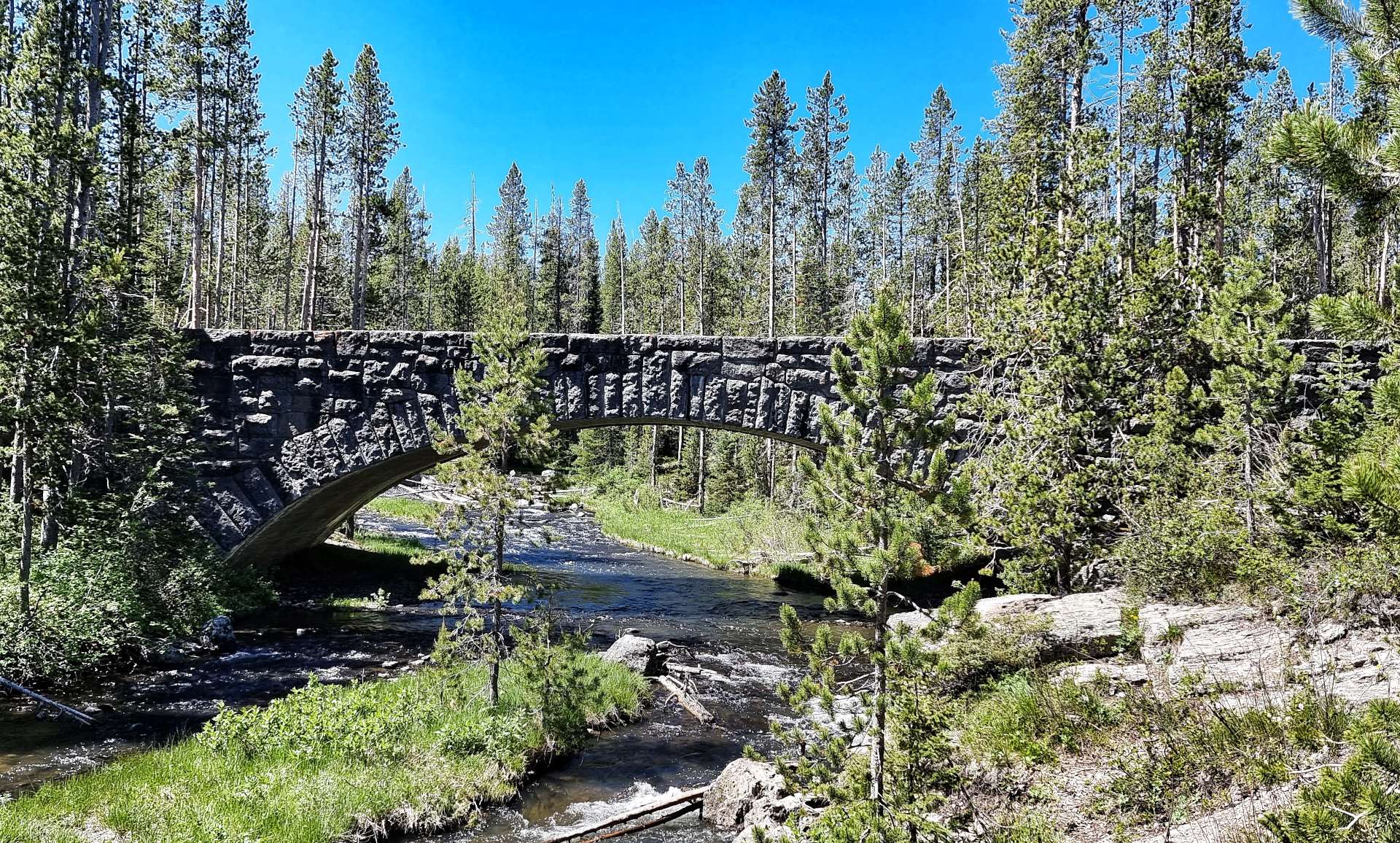
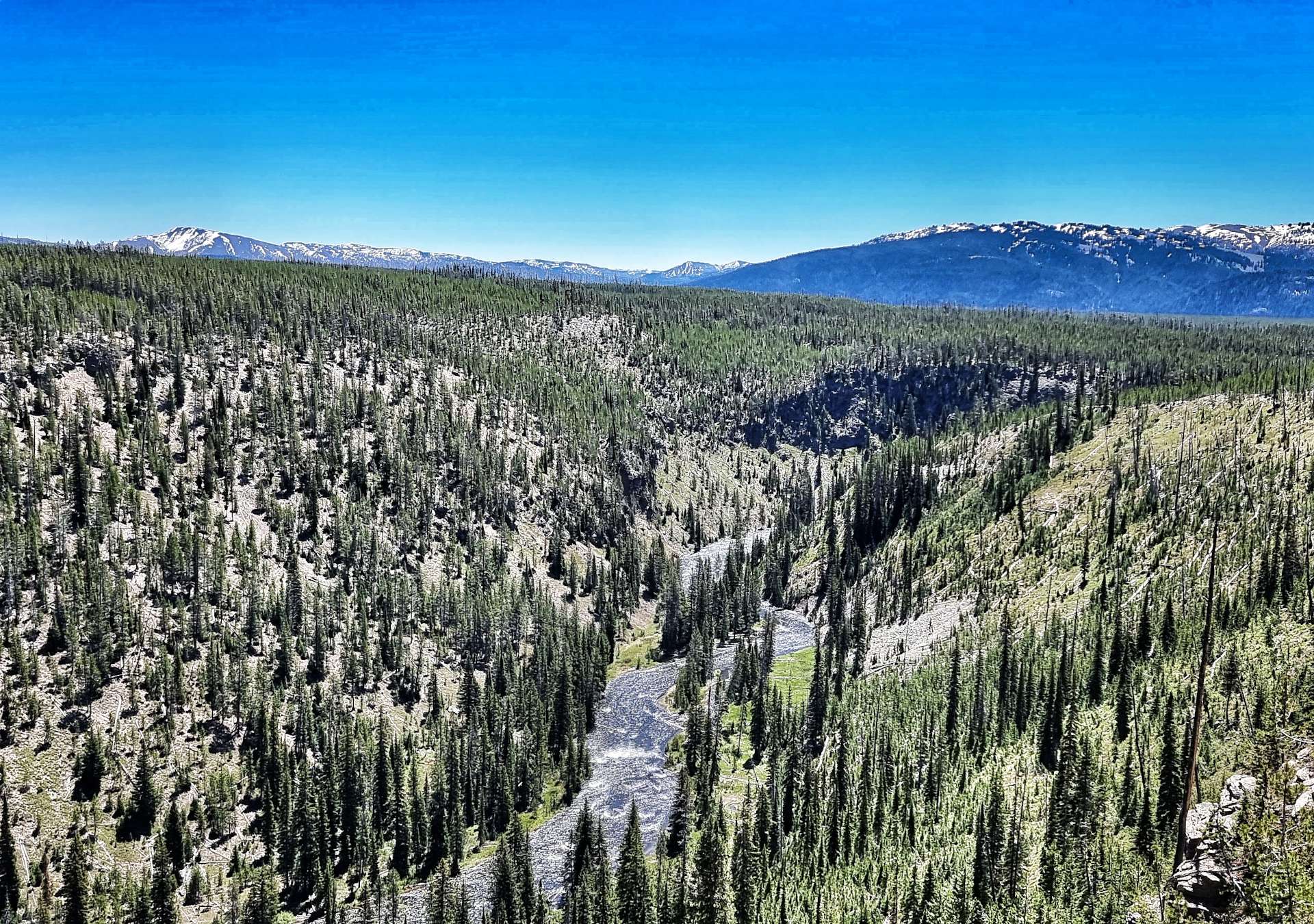
As we headed towards the rim of the canyon, views to the other side of the valley opened up, with occasional sightings of the river below.
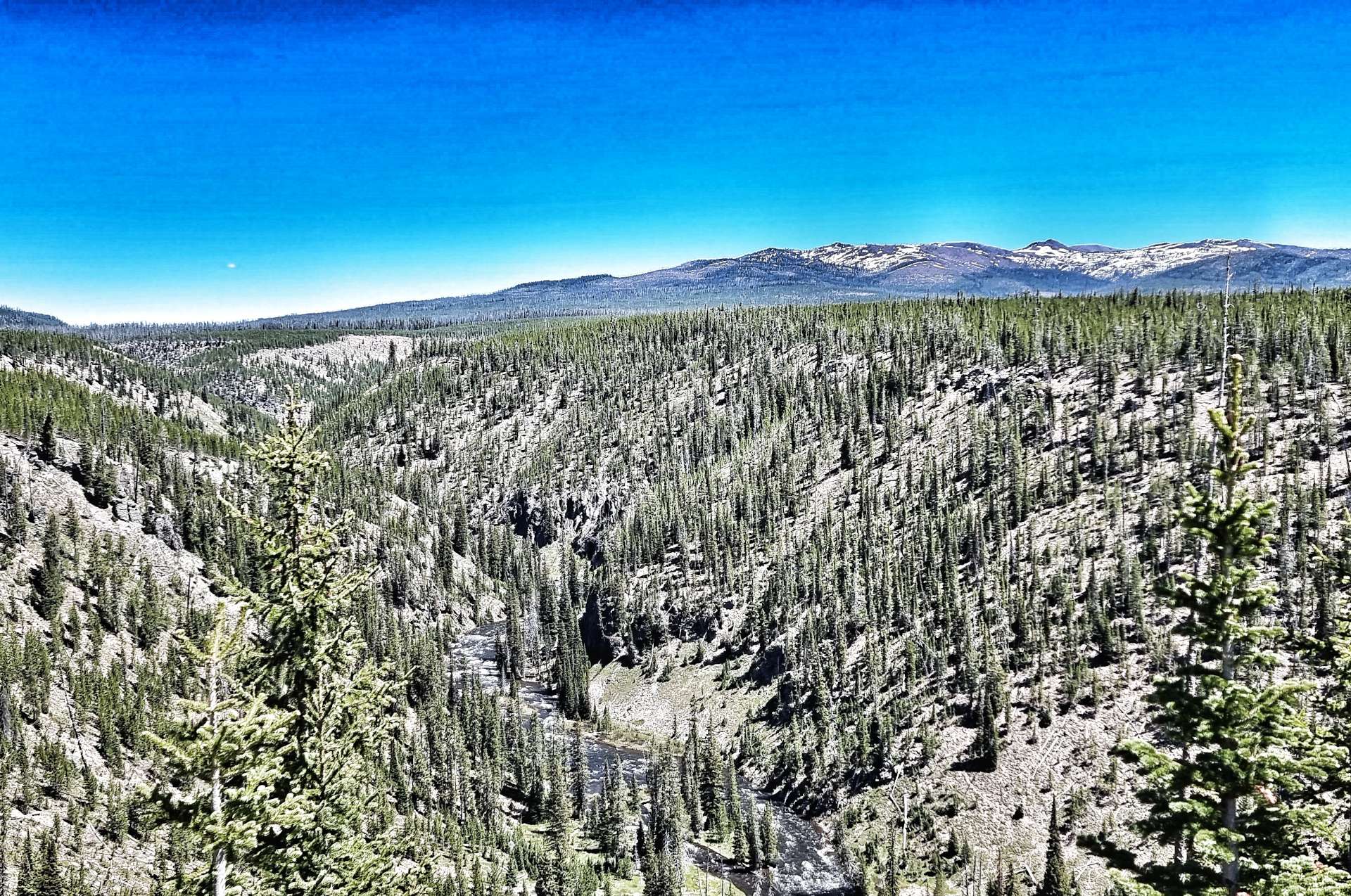
Then all of a sudden the Snake River revealed itself as it cascaded down the valley at Moose Falls & Lewis Canyon Falls – there was white water all the way, suggesting that the water was fast running & the river lost height quickly.
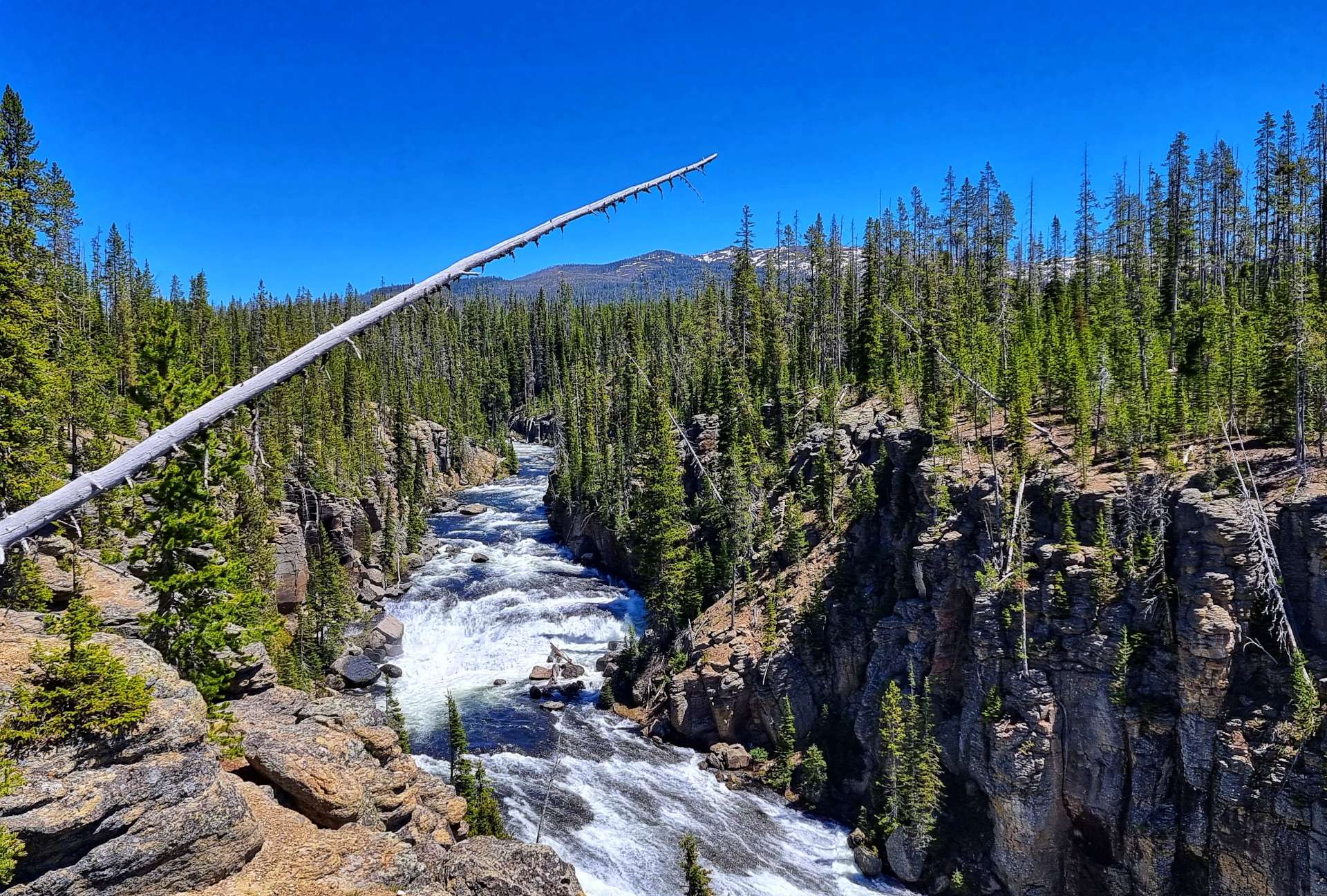
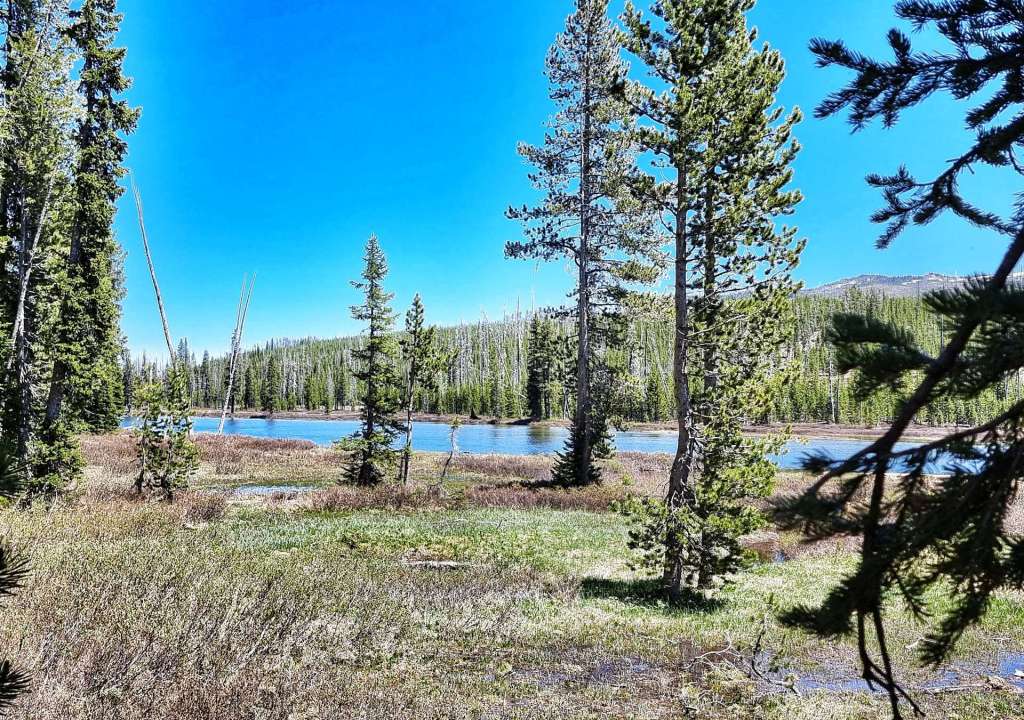
Although the climbing hadn’t quite finished for the day. we were now on much kinder gradients – instead of fast running rivers, we were surrounded by lakes that fed into the Lewis River. As we passed Lewis Lake itself, we knew the climbing was at end end & we had a reward waiting for us……

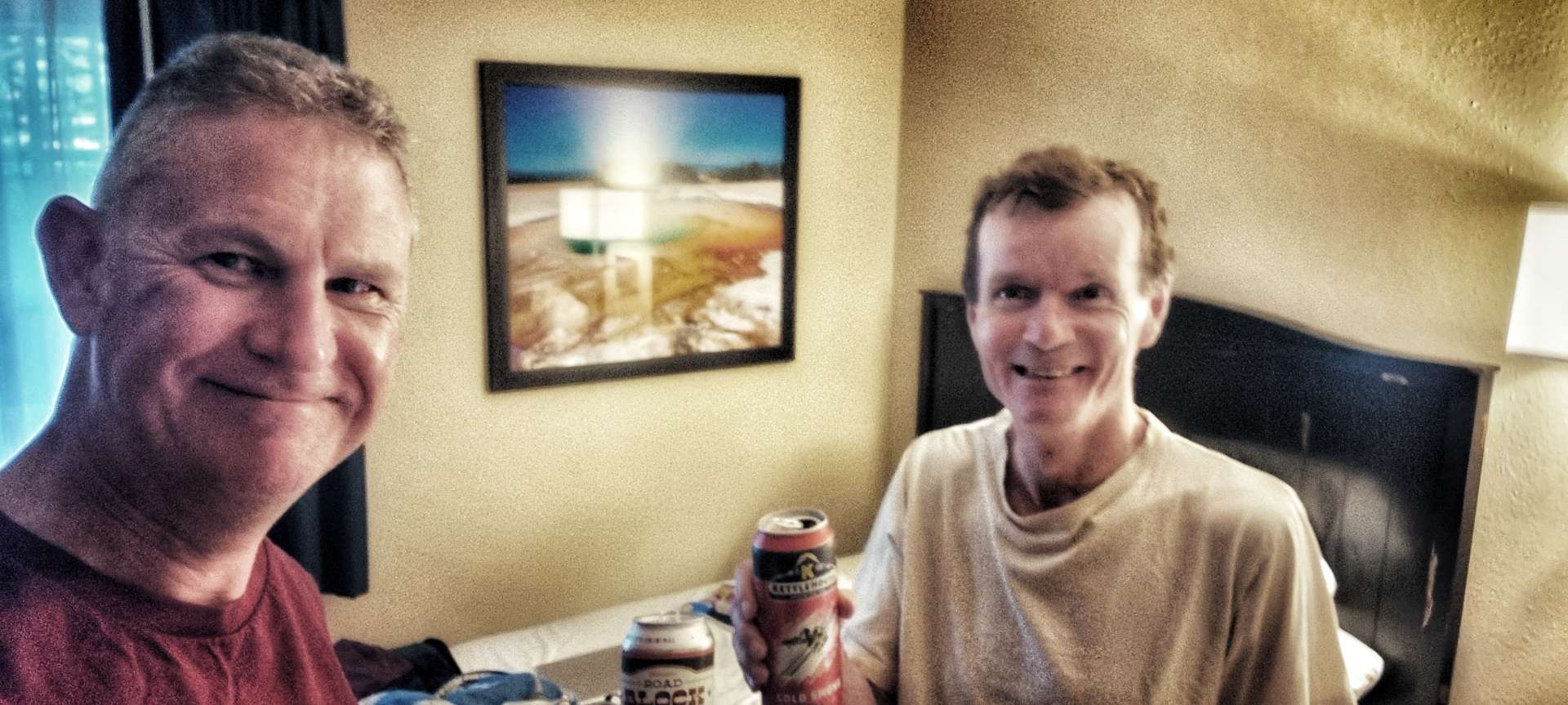
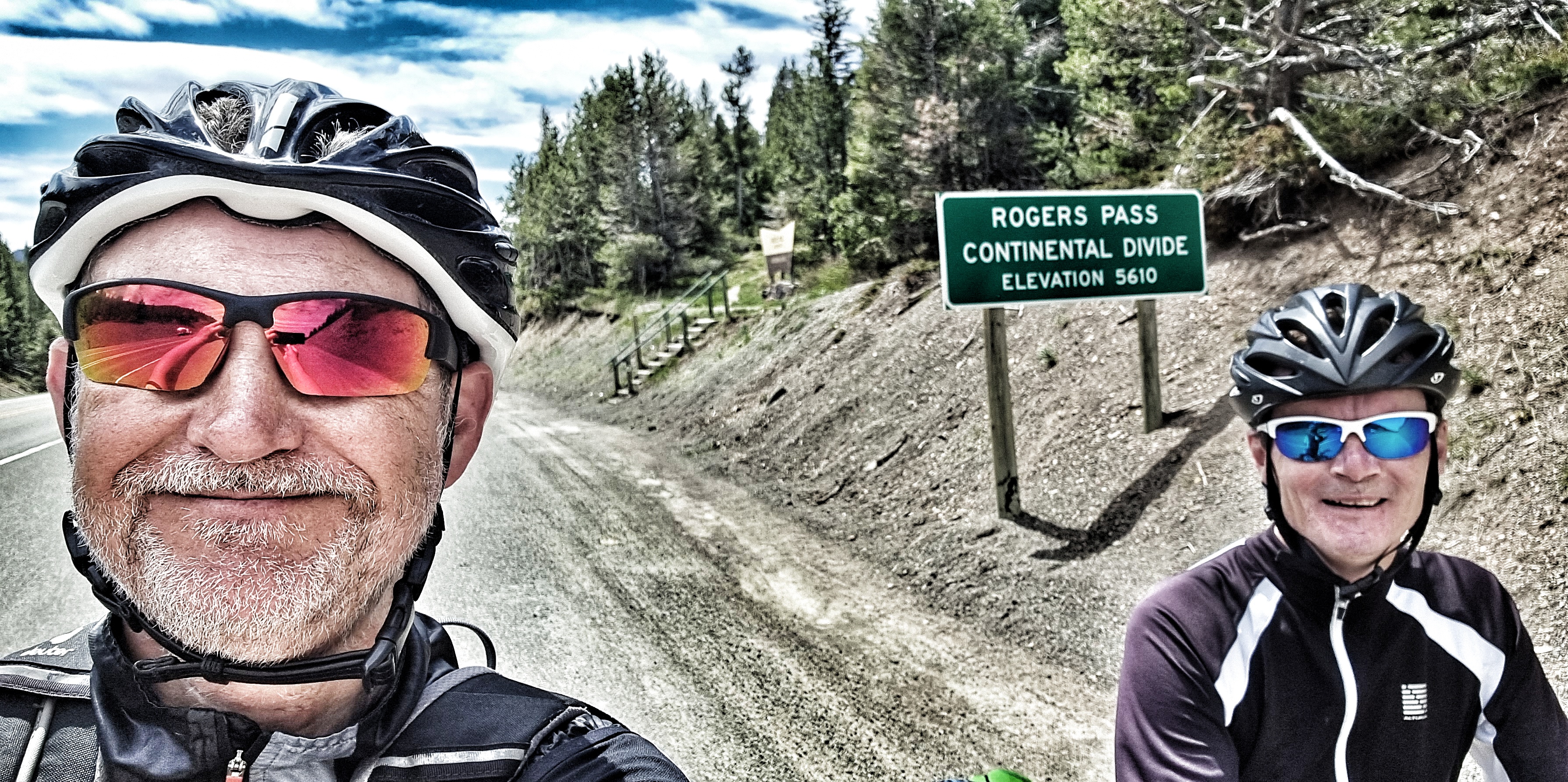
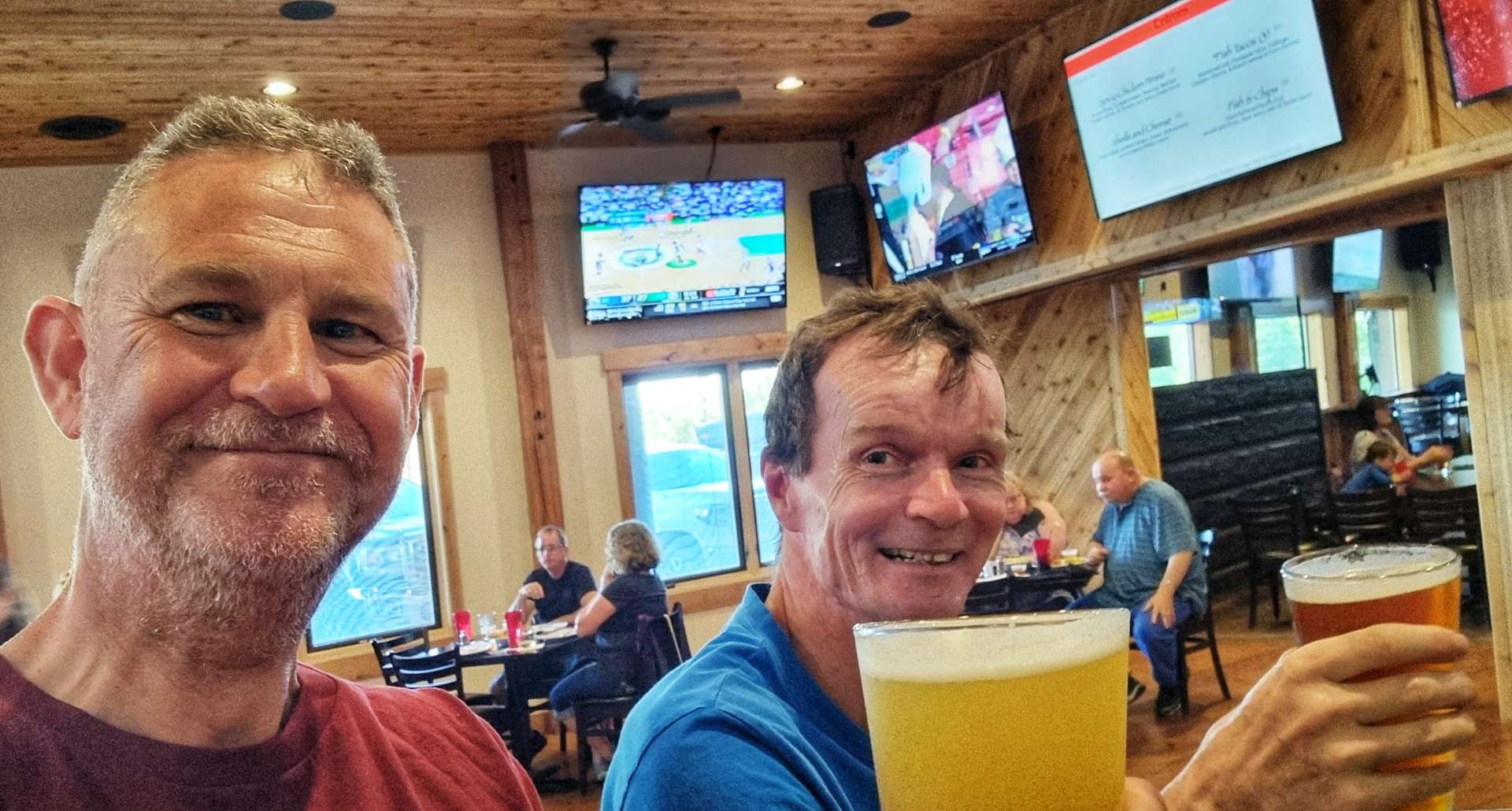
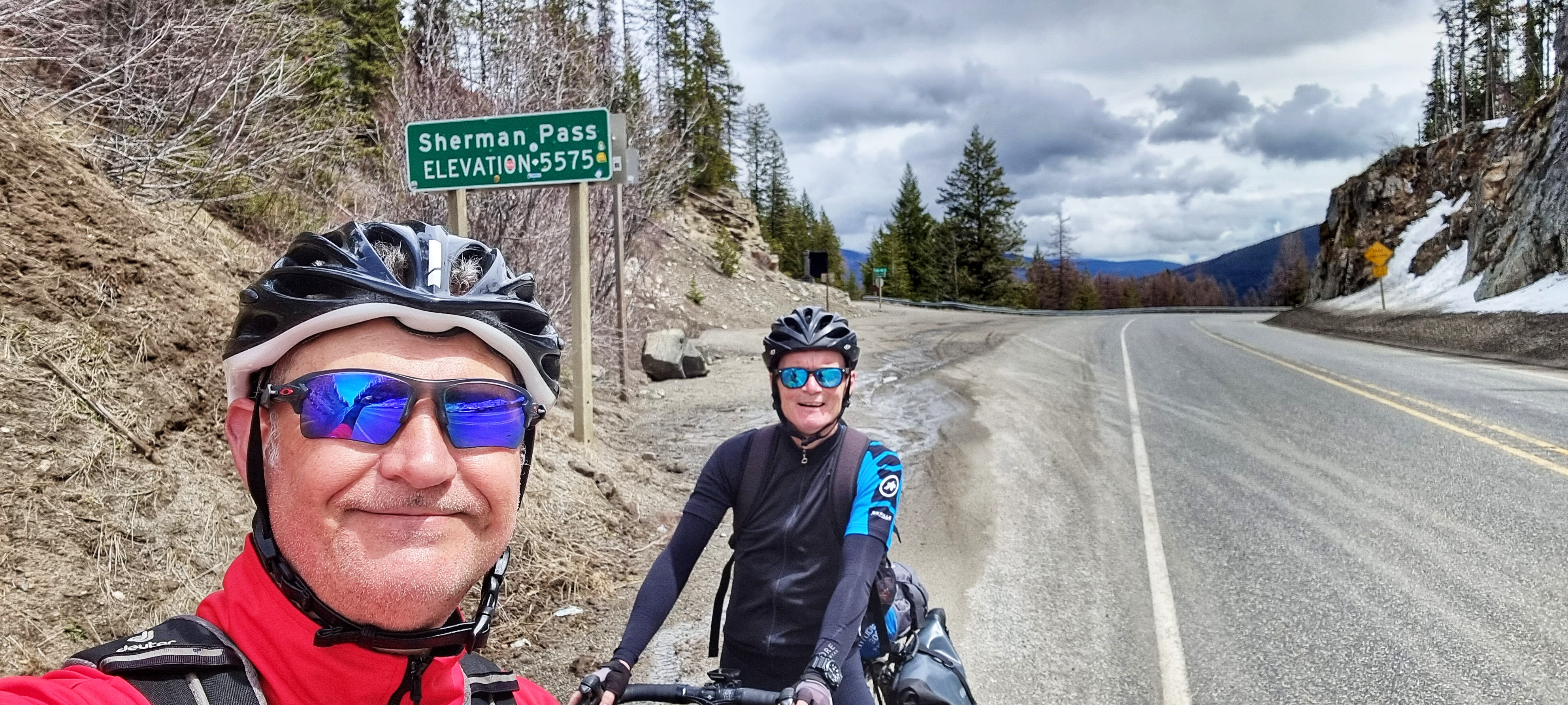
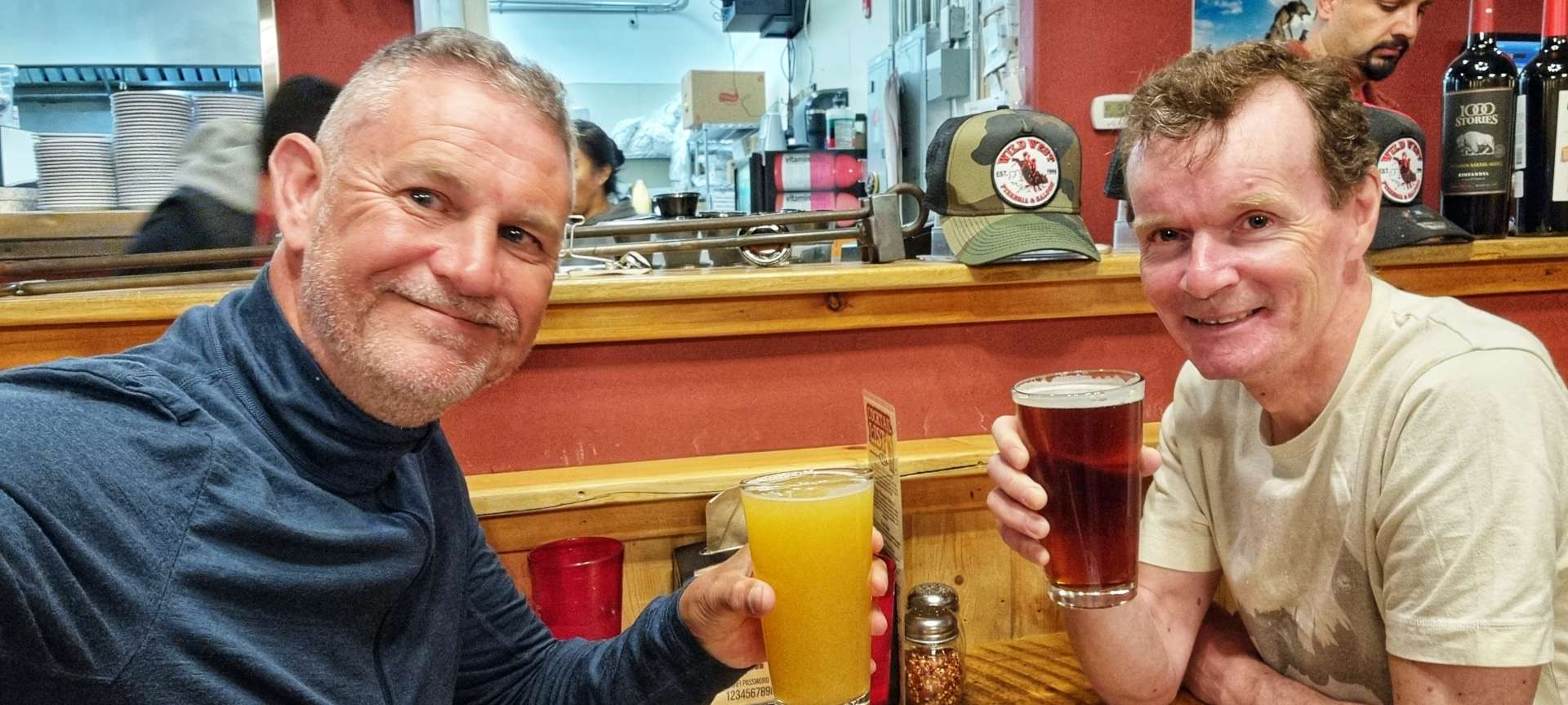
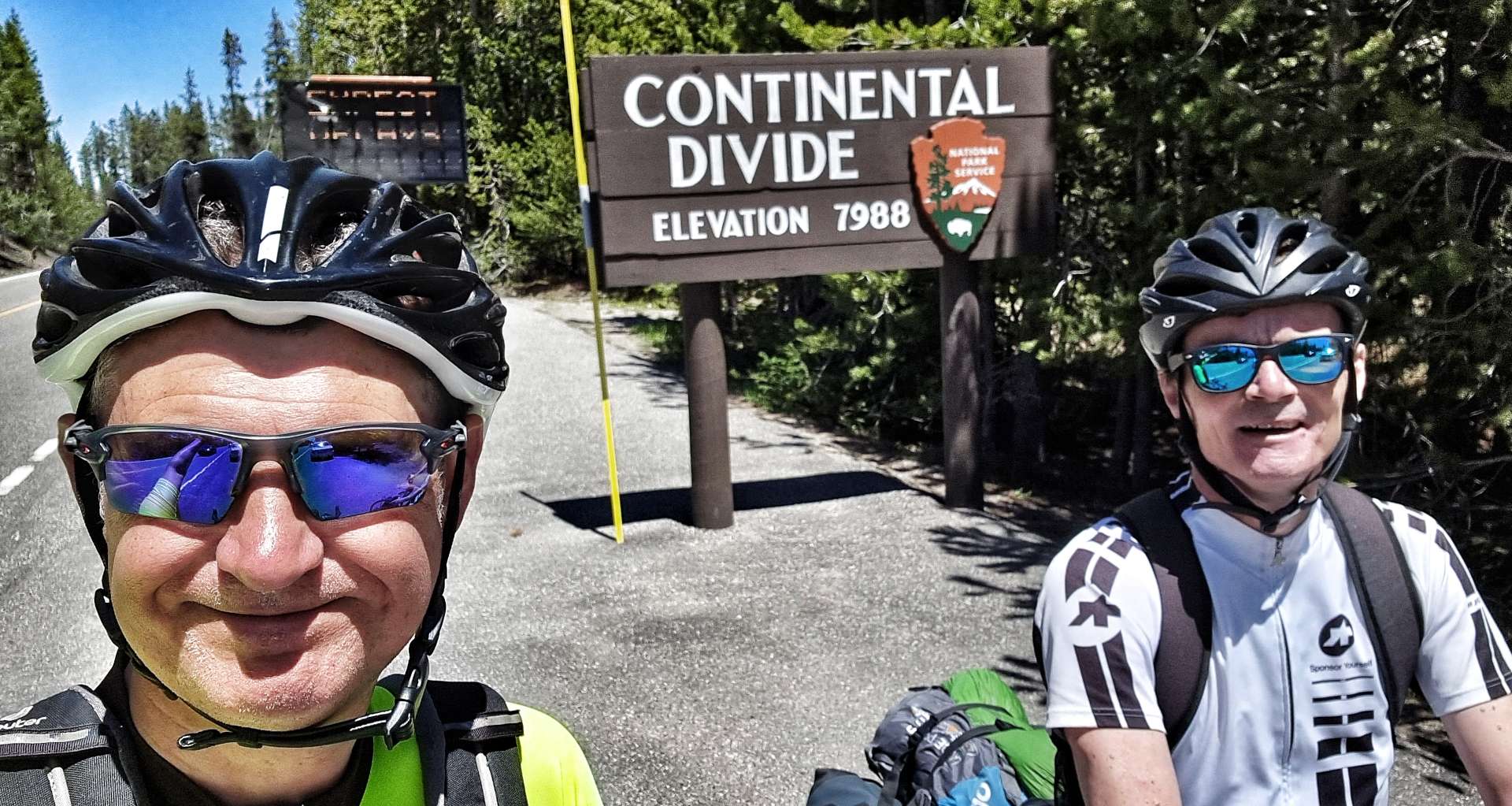
We were on the Continental Divide once more! After a quick selfie, we were on our way again for the gentle descent into Grant Village, where we’d managed to secure a non-air conditioned, no tv, flaky wifi room for the bargain price of $366 (including tax) between us. Luckily sandwiches were slightly cheaper than that at $8 each, but dinner in our room still cost $35 each, including a tinny to celebrate making it to Yellowstone in the first place!

Tomorrow our Yellowstone adventure continues!
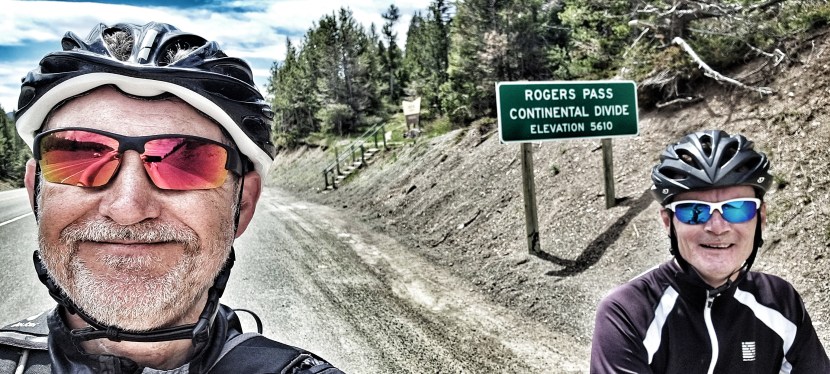
Stage Stats – 31 miles, 2,251 feet of climbing. Sunshine & blue skies all day again as we said goodbye to Grand Teton National Park & hello to Yellowstone National Park.
Tour of the USA – Weeks Five & Six

Well, How Did We Get Here? Miles, Feet Climbed, Maps & Profiles.

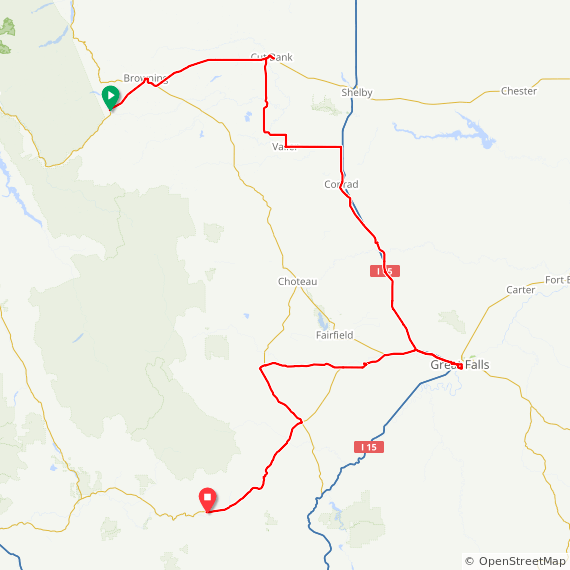
Part One described how we travelled from Seattle to Omak in the first two weeks of our adventure & Part Two documented our journey from Omak to East Glacier Park Village. Now find out where we went & what we did in Weeks 5 & 6! Picking a single photo to represent a day has proved almost as big a challenge as climbing a 13% gravel slope on a fully loaded bike, but then I wouldn’t want it any other way – plus it will refresh my mind when it comes to looking back on my adventure!

Week Five – East Glacier Park Village (MT) to Lincoln (MT)

DateStart LocationEnd LocationMilesFeet Climbed
28/05/22East Glacier Park VillageCut Bank48958
29/05/22Cut BankConrad531,909
30/05/22REST DAYREST DAY00
31/05/22ConradGreat Falls651,240
01/06/22Great FallsAugusta57869
02/06/22AugustaLincoln573,176
03/06/22REST DAYREST DAY00
Totals2808,152

If you want to get more detail, the link below will open in a new tab & allow you to explore further, if that’s your thing;

https://ridewithgps.com/routes/39784702

Week Six – Lincoln (MT) to Helena (MT)

DateStart LocationEnd LocationMilesFeet Climbed
04/06/22LincolnMissoula821,512
05/06/22MissoulaDarby631,207
06/06/22DarbyWisdom593,422
07/06/22WisdomDillon662,434
08/06/22DillonWhitehall56643
09/06/22WhitehallHelena692,562
10/06/22REST DAYREST DAY00
Totals39511,780

If you want to get more detail, the link below will open in a new tab & allow you to explore further, if that’s your thing;

https://ridewithgps.com/routes/39784778

West Yellowstone to Driggs

The Long Way Round (Part One) – Friday 17th to Sunday 19th June

Friday 17th June – West Yellowstone to Island Park, Buffalo Campground

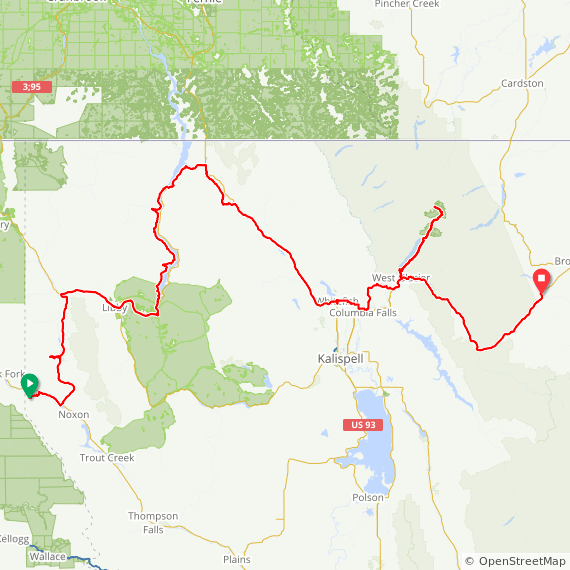
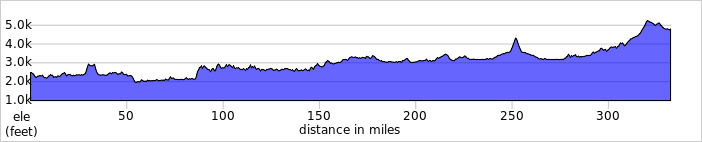
With Yellowstone National Park being closed, we decided to carry on with our adventure & take a different route to that previously planned (again!!) – West Yellowstone to Grant Village can be done in 51 miles, but we’re going the long way round, so join us as we explore some more of Idaho & Wyoming! This route also gave us the opportunity to have a few shorter days in the saddle & today that also included a lie-in!

As we left town at 10.30am, we passed one final reminder of bison, before picking up the main Highway 20. We initially headed west towards Bald Peak which dominated the vista for the next 20 minutes or so, as we gradually descended until we crossed Buttermilk Creek.

As we passed a ranch offering Rodeo training a very kind motorist pulled in ahead of us, ran to the back of his car & offered us a couple of ice cold cokes – as we’d only be going for about 1/2 hour, we decided to carry on. In the event this happens again, I think we’ll stop, as we missed a good chance to chat to very kind-hearted person & fellow cyclist (he had a bike on his roof).

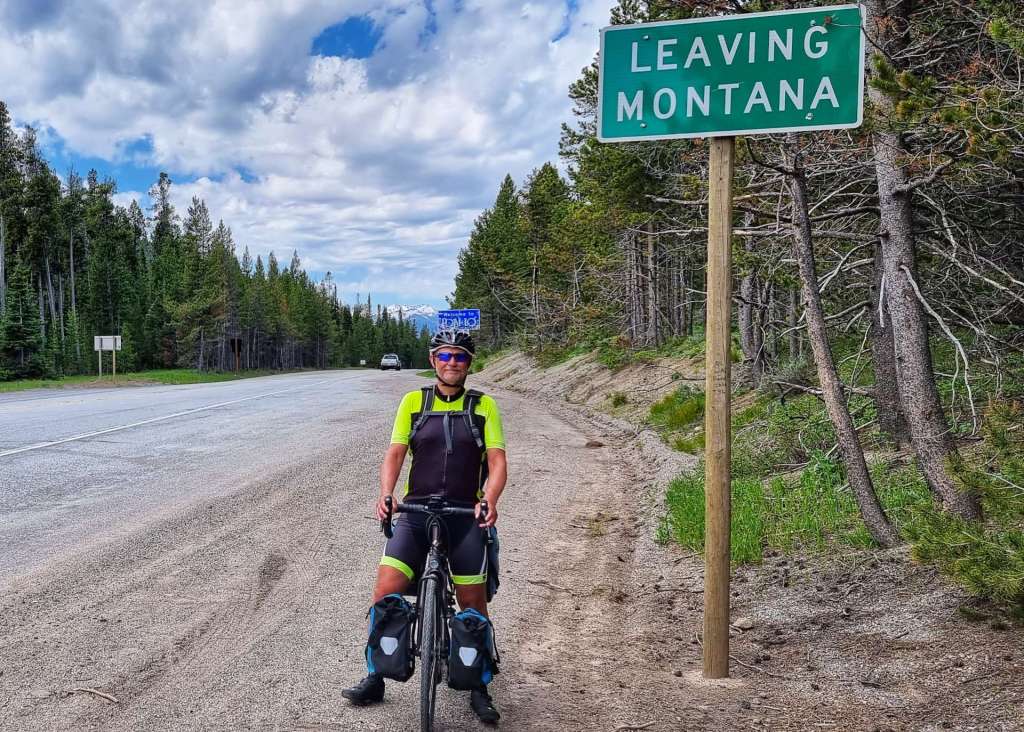
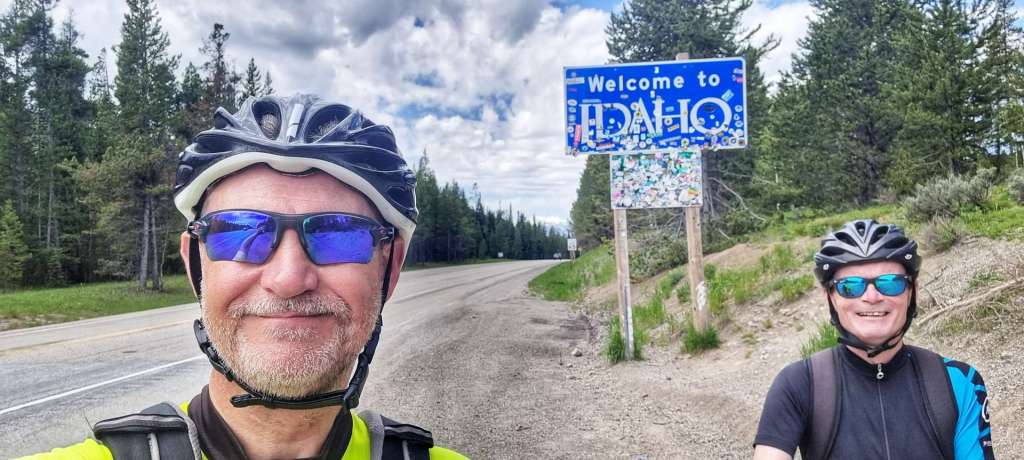
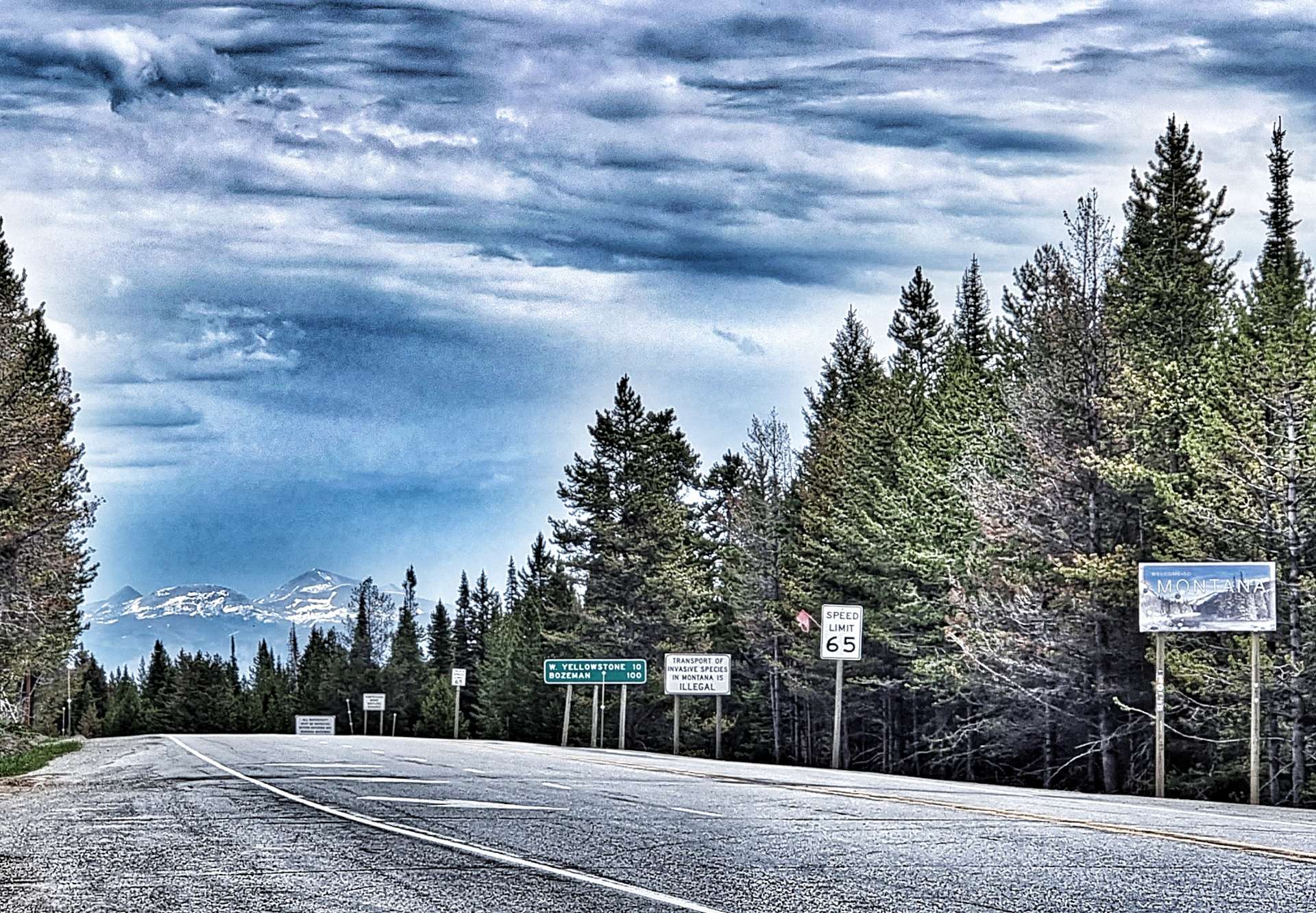
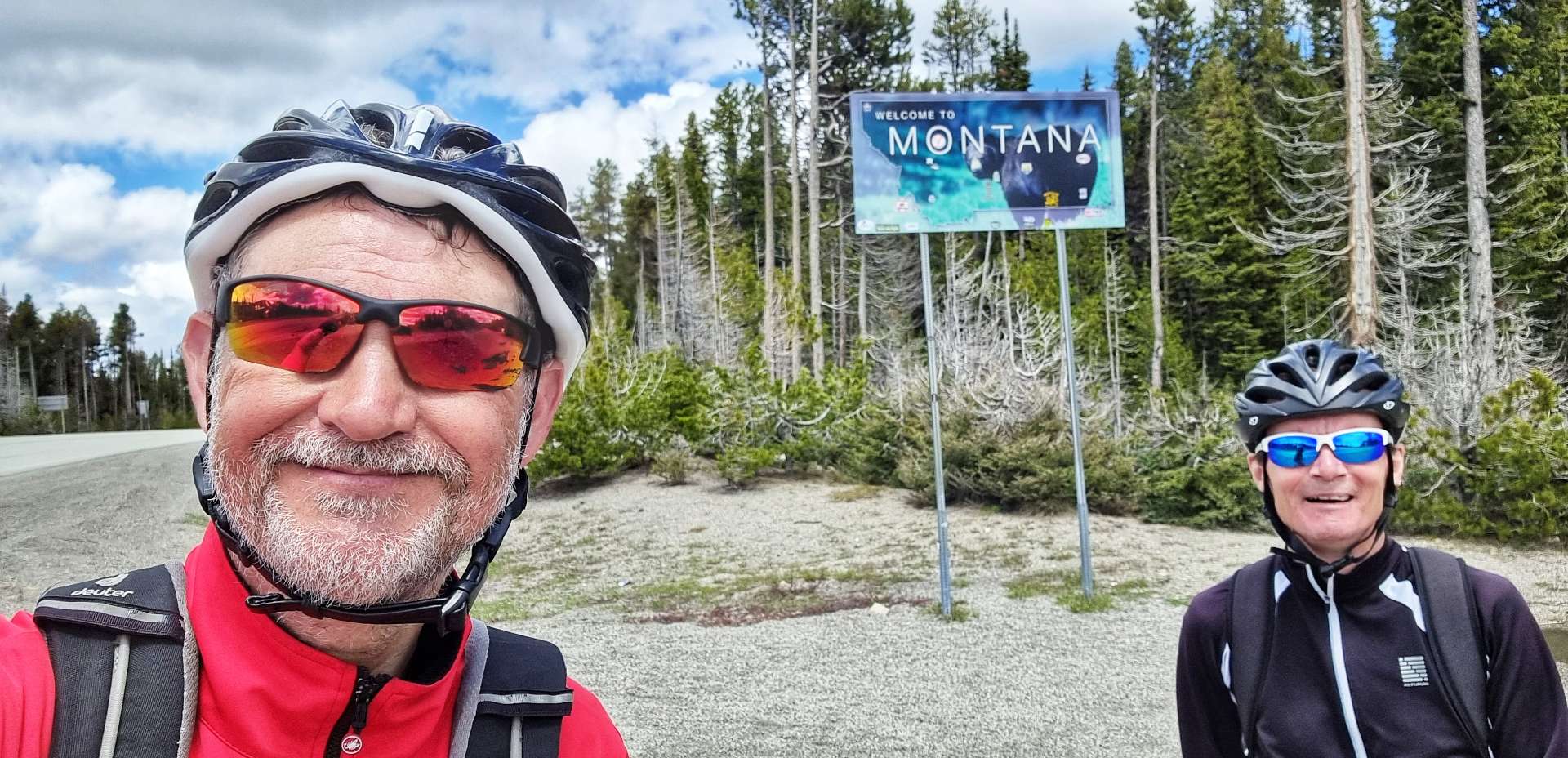
Leaving civilisation behind us, we started climbing the Targhee Pass (not a long or difficult climb) which marks the border between Montana & Idaho at its summit. I was initially confused, as I knew Idaho was in a different time zone – my confusion was caused by Northern Idaho being on Pacific Time, while Southern Idaho (where we were) is on Mountain Time, the same as Montana!!!

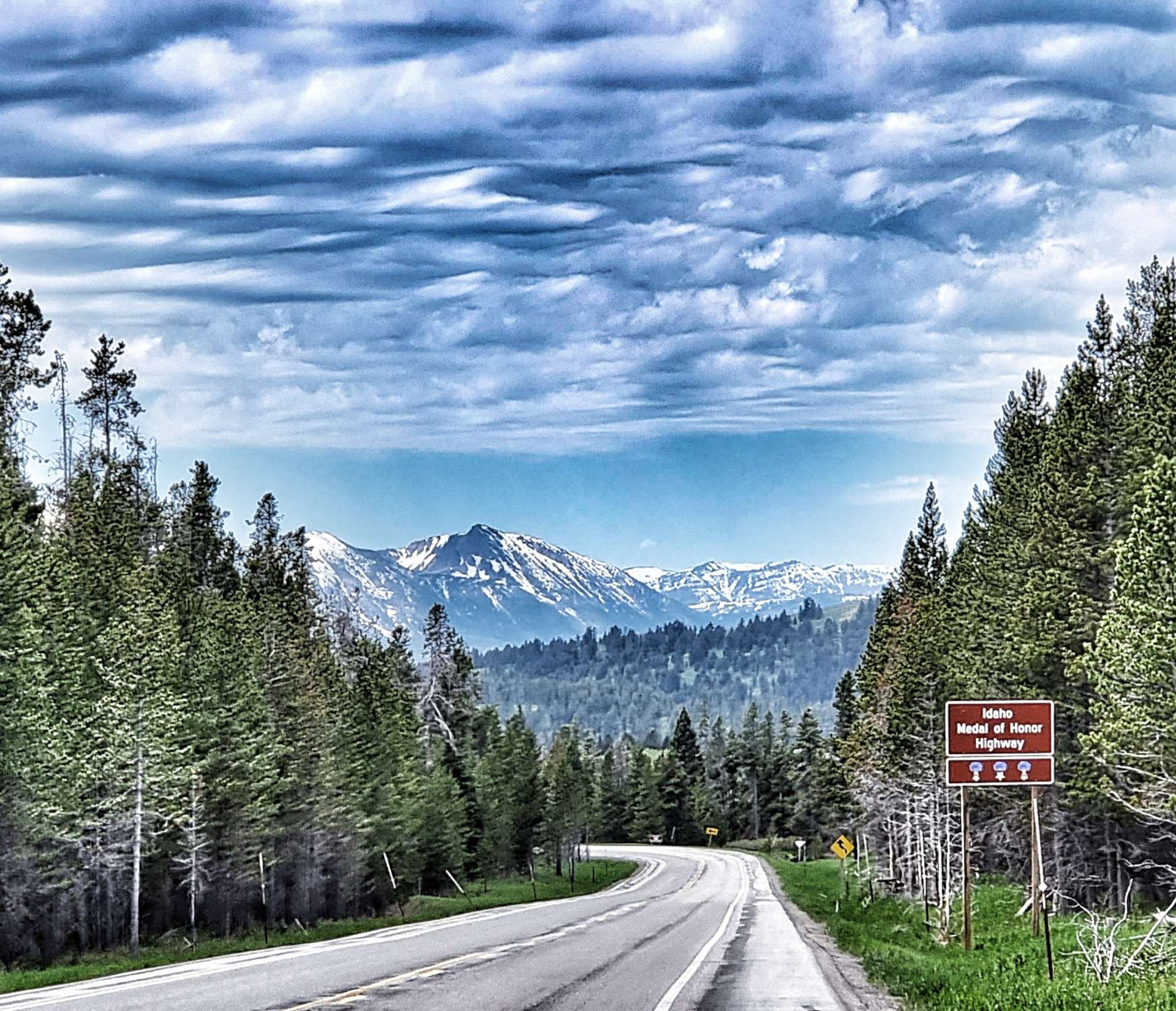
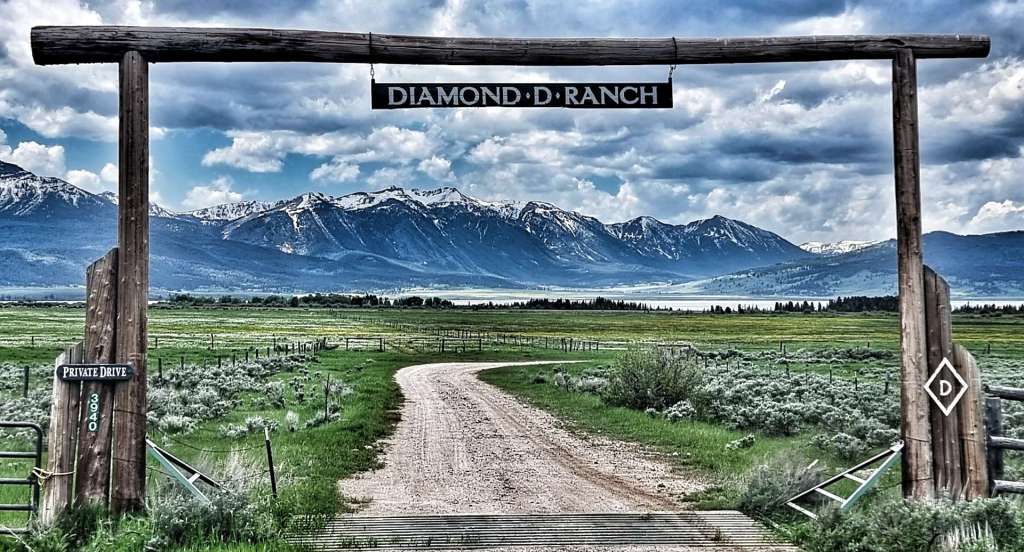
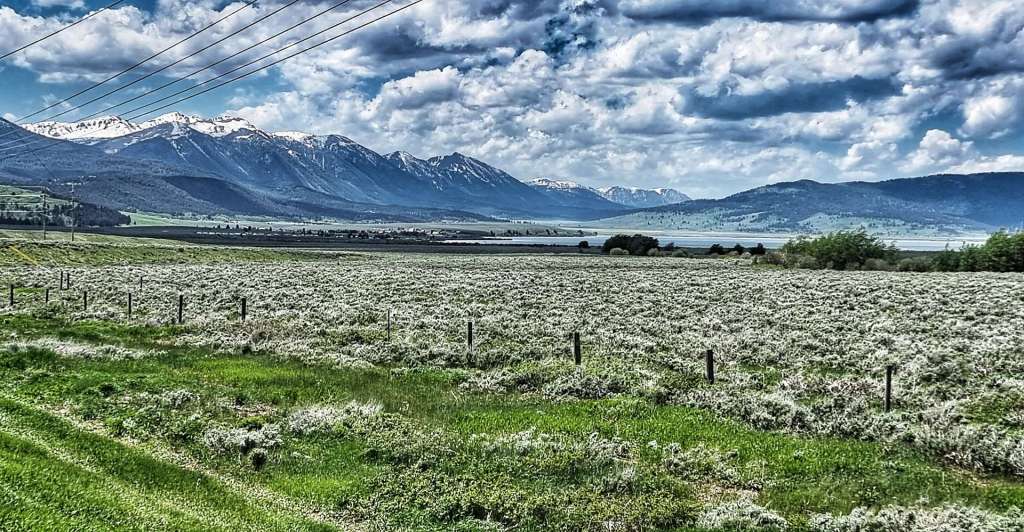
Looking in all directions, we were surrounded by panoramic peaks. Descending into Idaho, we transitioned through a wetland marsh, where the “ribbit ribbit” of frogs could be heard above the noise of the wind in our ears. On the spur of the moment, we took a right turn towards Henry Lake – this wasn’t on our planned route, but that’s the point of having an adventure, to explore the unknown & see what’s around the corner!!

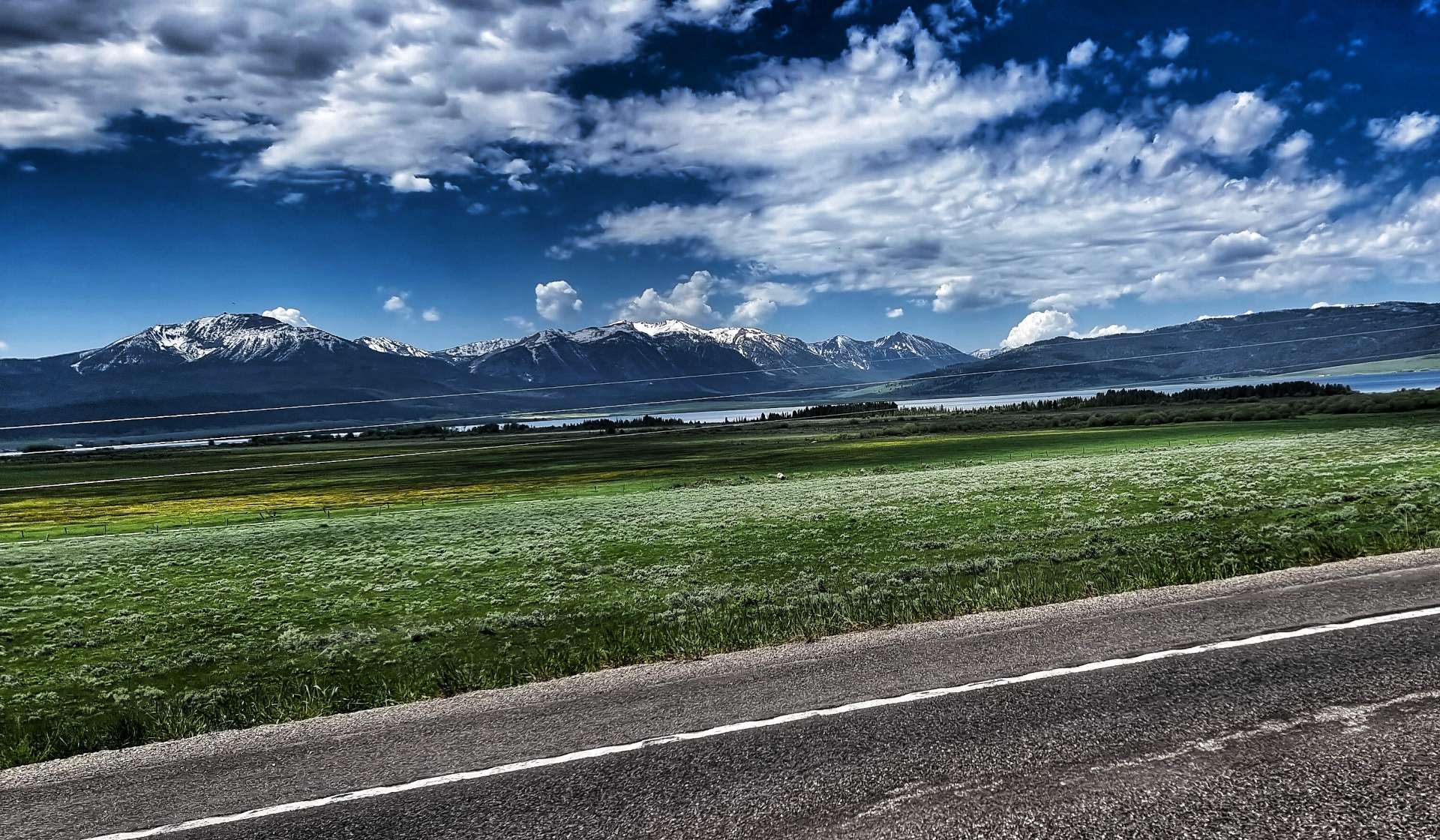
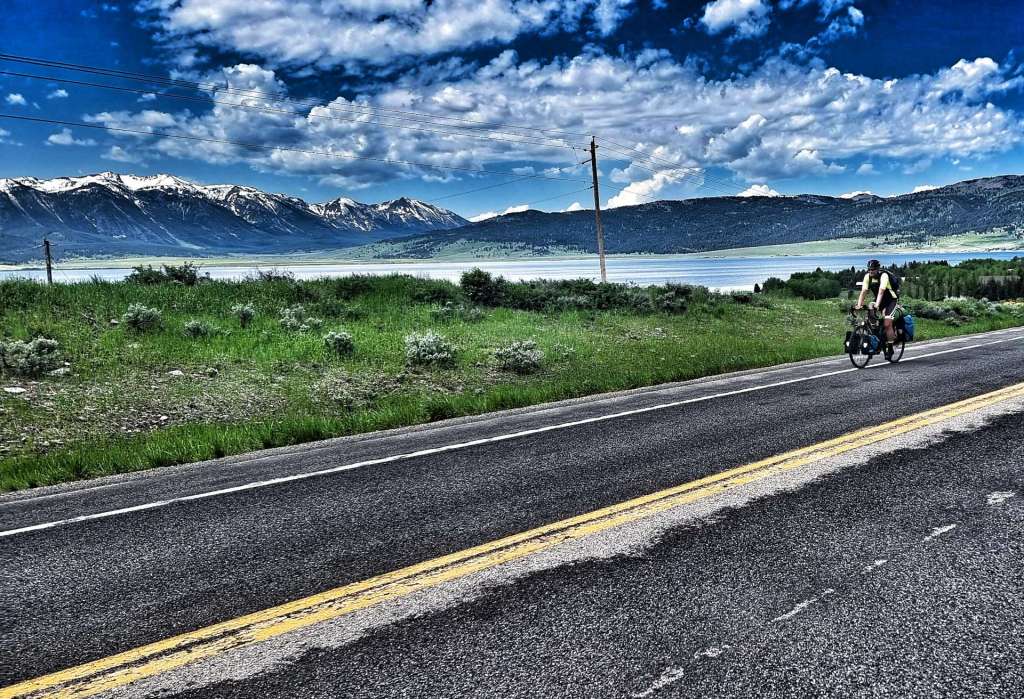
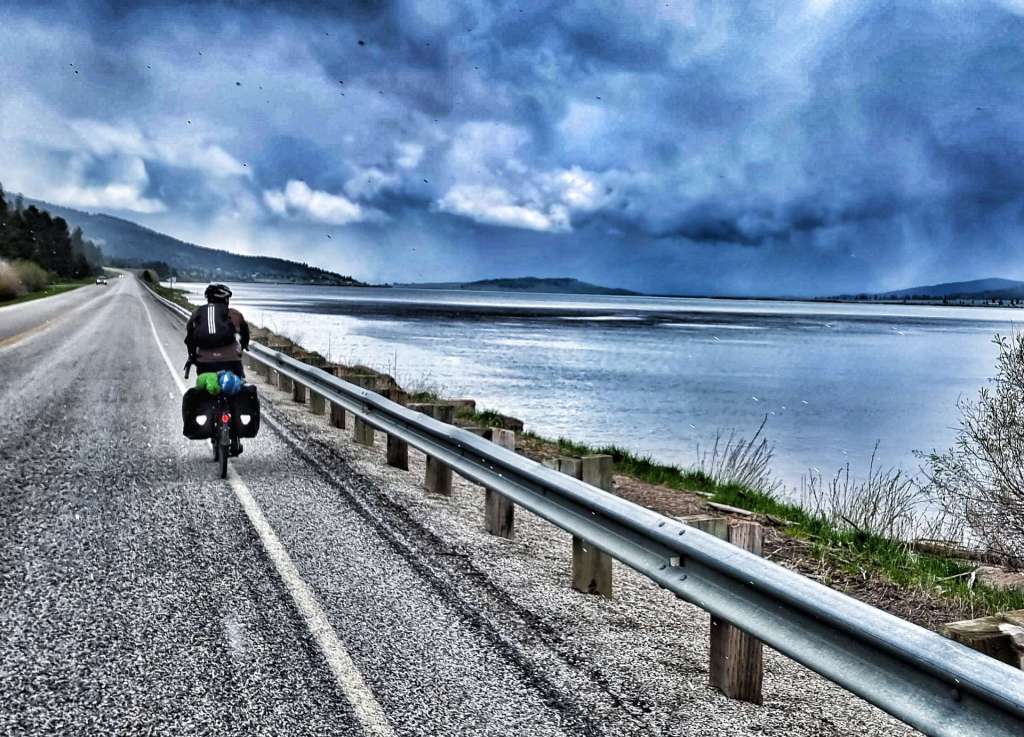
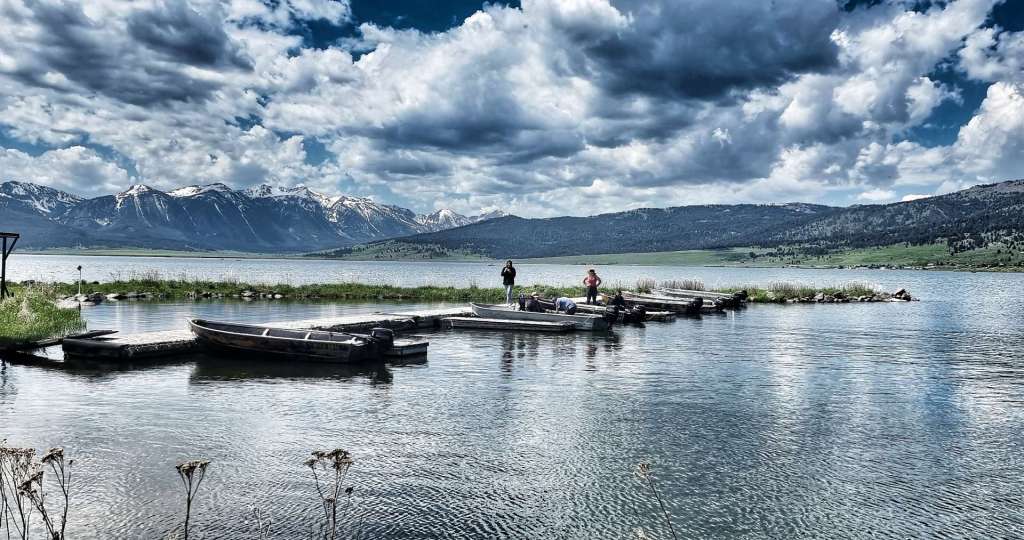
We were at the opposite end of Highway 87 to when we visited Earthquake Lake on Tuesday & we had the road almost to ourselves. We took a couple of action photos as we rode along the shoreline, then turned round as the lake ended at Jared’s Wild Rose Ranch Resort & Marina. Deer Mountain, Sawtell Peak, Mount Jefferson & Nemesis Mountain provided the backdrop to the lake.

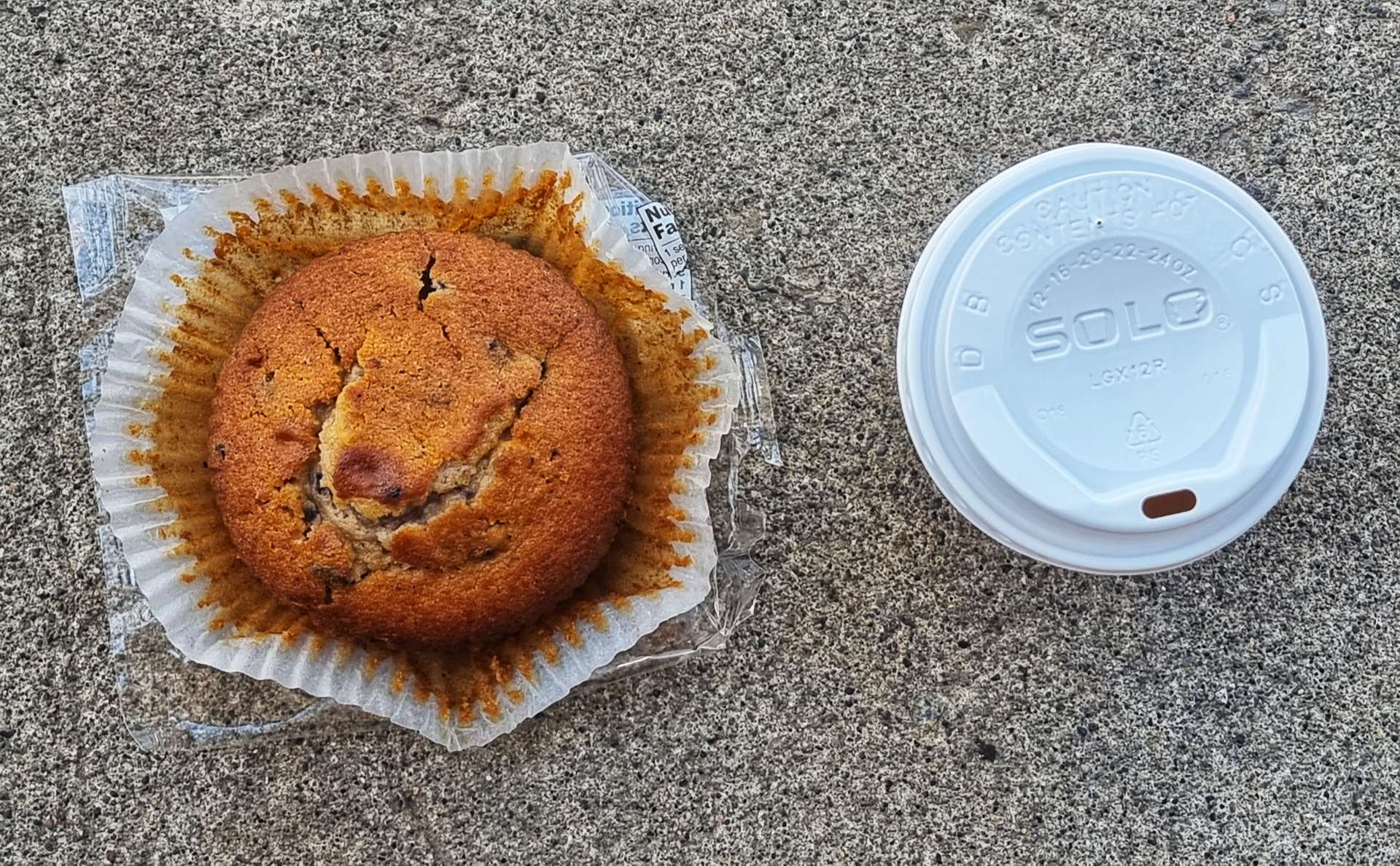
As we re-joined Highway 20, we entered Island Park. We decided to stop for a coffee & packaged muffin from the Exxon Gas Station (not every day involves luxury cake!) before setting off to explore part of the longest main street in America…..

I was faintly amused by the longest Main Street claim as we started cycling across the prairie into a nagging headwind. However, for the next 17 miles we remained within the City Limits of Island Park!

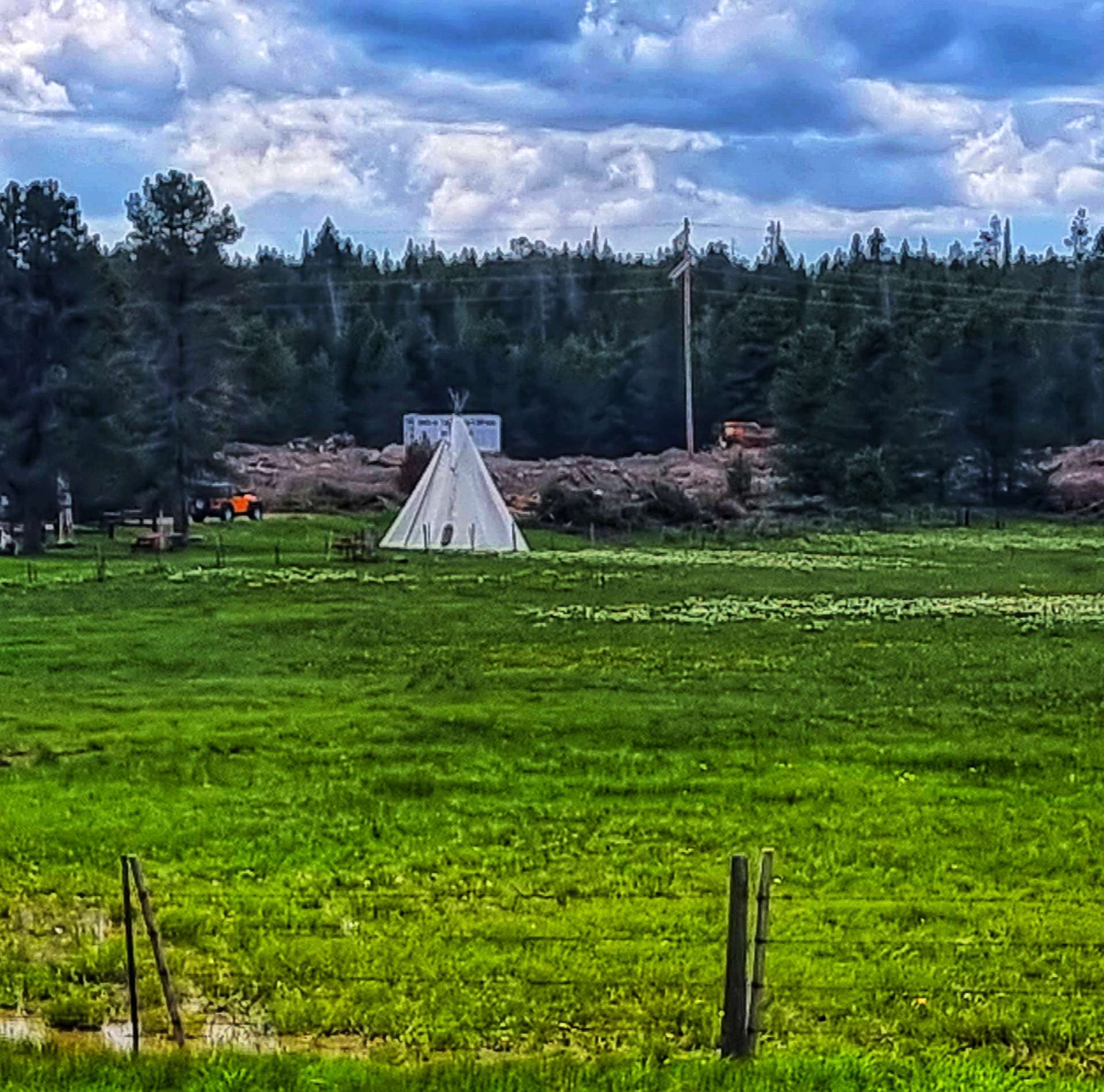
In that time, we passed a number of ranches & resorts offering wild west experiences, including overnight Teepee camping. We stopped at one of the river crossings to watch sea gulls diving into the water, trying to catch fish. I’d always been under the impression that gulls were scavengers (perhaps influenced by watching them bully tourists, then stealing their fish & chips in places like St Ives). This was a completely new behaviour to me.

My only disappointment with Highway 20 was the narrow shoulder in places – there were a few close passes which also included those same drivers Rolling Coal over us (a term used to describe when a driver blows a pile of thick smoke from their exhaust over cyclists). We generally cursed under our (polluted) breathes & simply carried on!

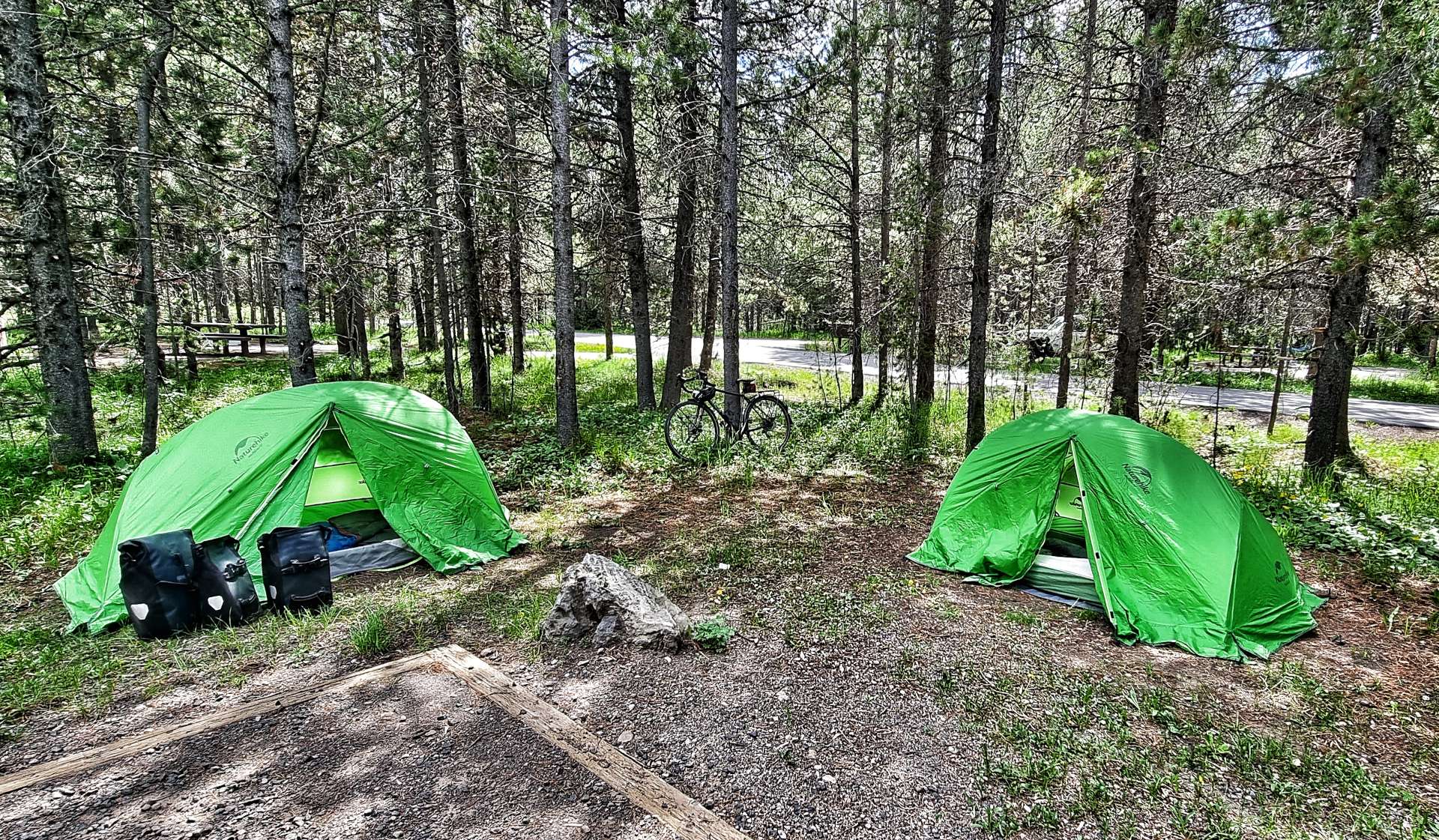
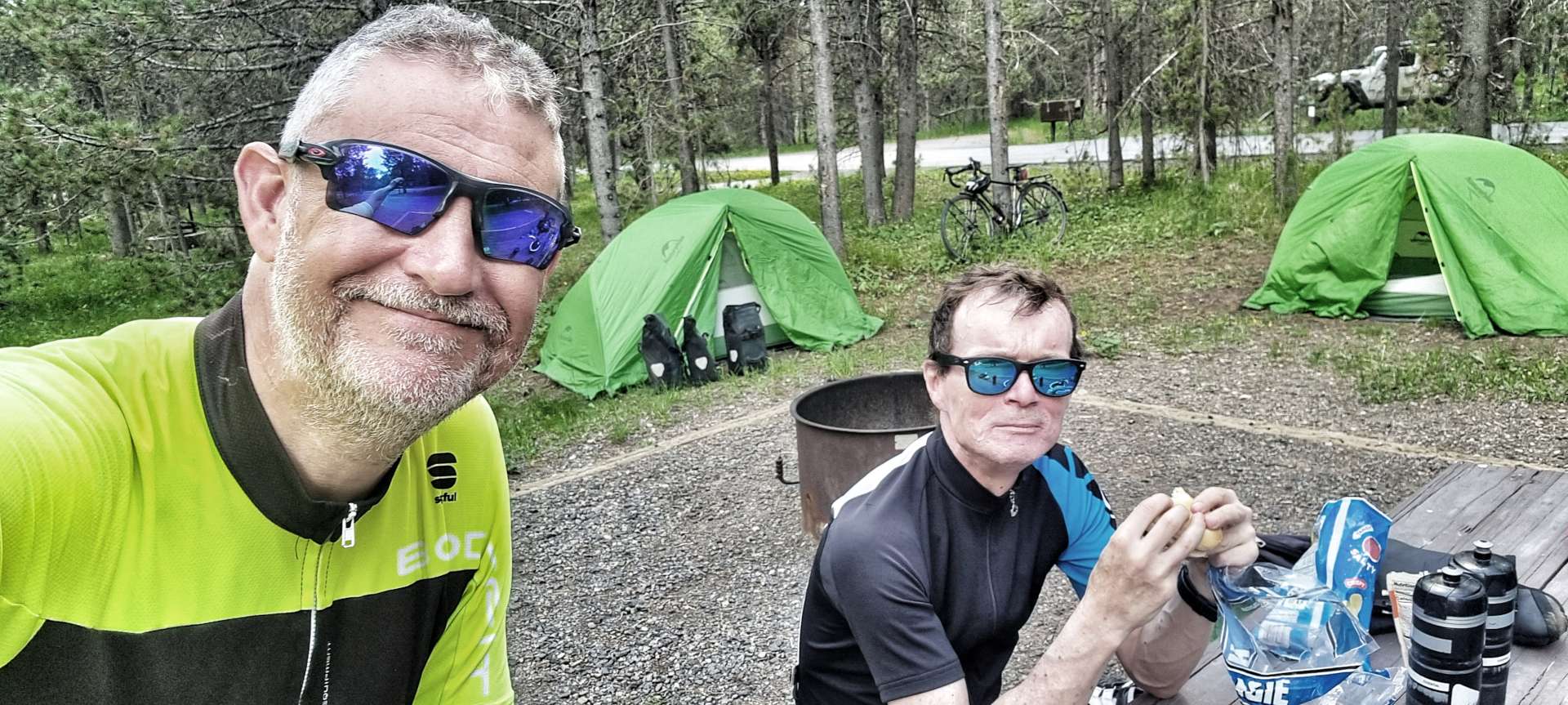
Arriving at Buffalo National Forest, we were welcomed by Helen the campground hostess, who gave us the happy news that our National Park Passes entitled us to a 50% discount on the cost of our campsite. We had our tents pitched in less that 20 minutes, had a snack & generally relaxed in our peaceful surroundings (although we both commented that we could hear the traffic). The campground shower block wasn’t yet open for the season, but even so, we were happy with our site, considering it was $10 between us!

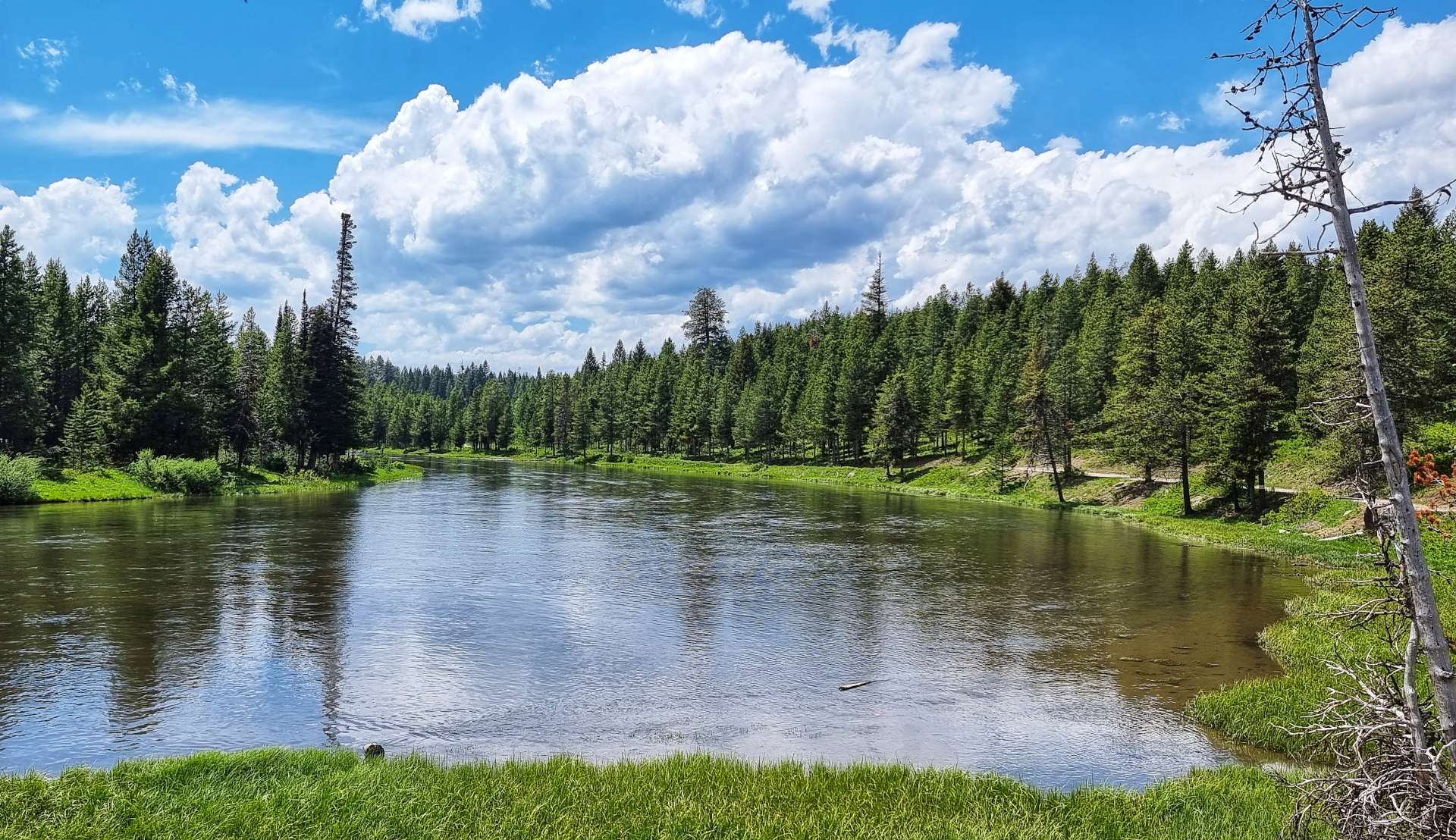
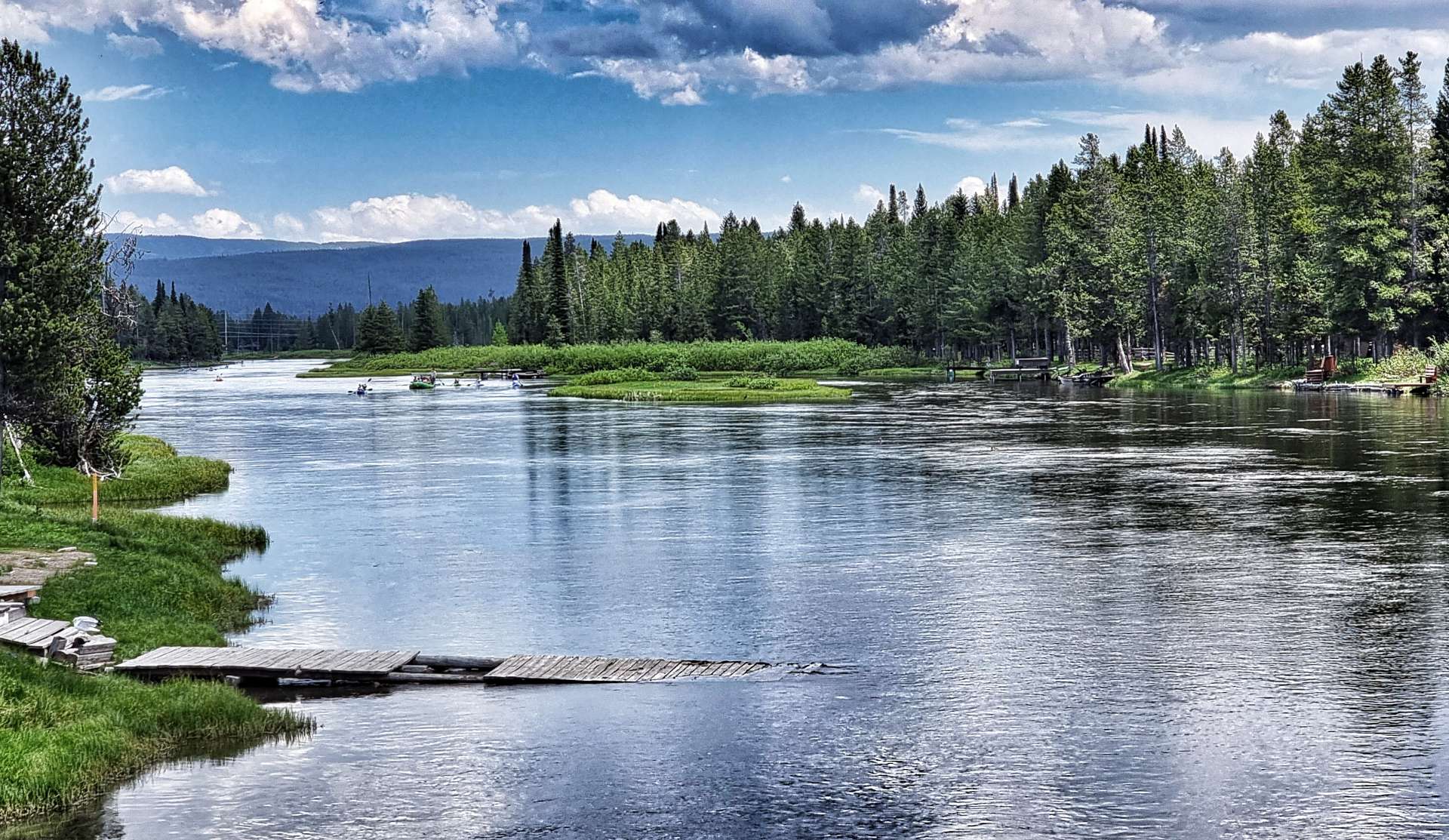
We took a stroll around the campground & down to the nearby river, before walking over to Ponds Lodge for a lovely dinner of chicken pasta & a pint.

Upon our return to the campground, we had to put all our food & wash kit into the bearproof lockers for the night. As we sat chatting at our picnic table, I realised that the local mosquitoes had taken a liking to British meat & were feasting on me! It was time to turn in for the night & we learned that the traffic was indeed very close, as it kept us awake for large parts of the night.

Stage Stats – 40 miles, 2,024 feet of climbing. Cycling into a nagging headwind for the final 17 miles.

Saturday 18th June – Island Park, Buffalo Campground to Ashton

We were both up by 7.30am, so had all our kit packed away & were on the road by about 8.30am. The Gas Station & restaurant weren’t open when we cycled past, so we chose to carry on riding & make do with trail mix if we got hungry. The early start meant that the narrow shoulder wasn’t an issue today, so we could simply enjoy the huge views as we continued on through Island Park for another 8 miles (making 25 in total)!! A long Main Street after all.

We stopped at Henry’s Fork river to learn about the steps that are being taken to restock the native cutthroat trout. It gives me hope that the stunning scenery & wonderful wildlife will remain for future generations. In the background of the 2nd photo below you can make out the rim of the Henry’s Fork Caldera, formed over 1.3 millions years ago. This is one of 3 calderas in the Greater Yellowstone Basin region & this eruption spewed 280 cubic kilometres of molten lava across Wyoming, Colorado, Kansas & Nebraska! Henry’s Fork Caldera measures 18 miles long by 23 miles wide – the power of nature is mind-blowing.

It was time to head into the wilderness, so we took the Mesa Falls Scenic Byway, one of Idaho’s hidden gems. If cycling in the USA over the years has taught me anything, it’s that you simply MUST take any road with Scenic Byway in the title! I know my fellow Cycling Escapes friends will agree.

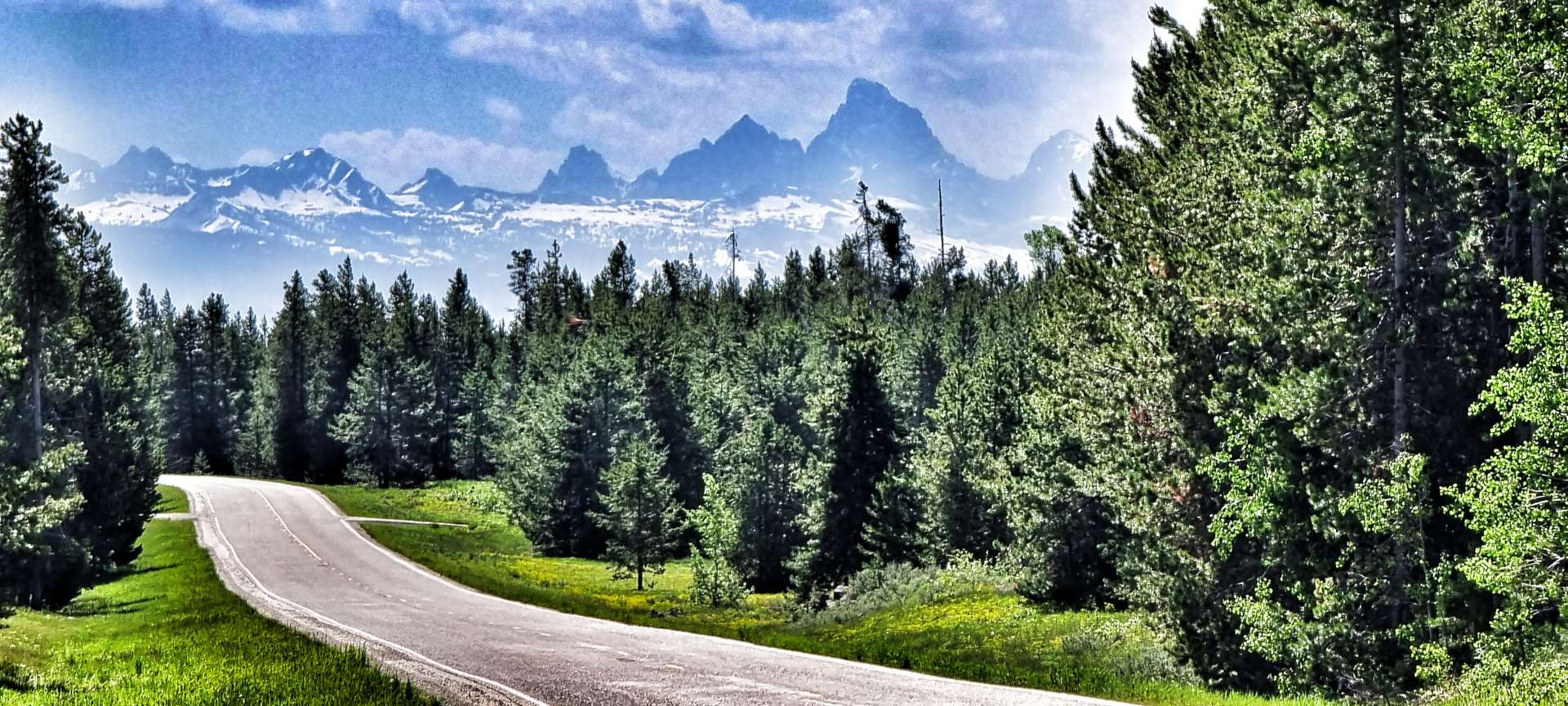
The temperature had warmed nicely & we were cycling under big blue skies – perfect riding weather. The Caribou-Targhee National Forest provided the backdrop of trees, while every now & then the immense Teton Mountain Range showed themselves, even though they were more than 40 miles in the distance. An amusing story is that French trappers in the 1800’s named the mountains “Les Trois Tetons” (the three teats, or breasts) & the name stuck.

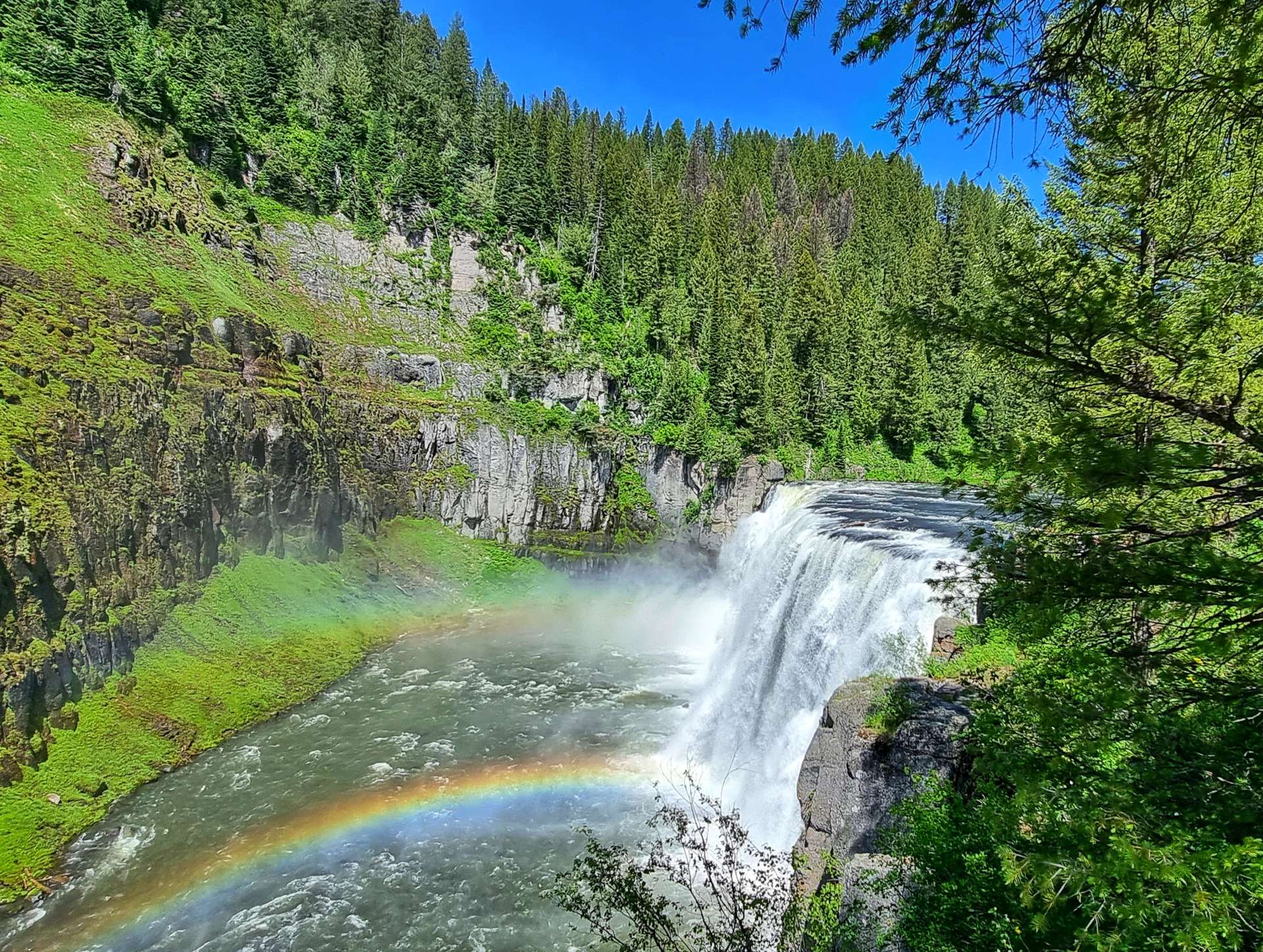
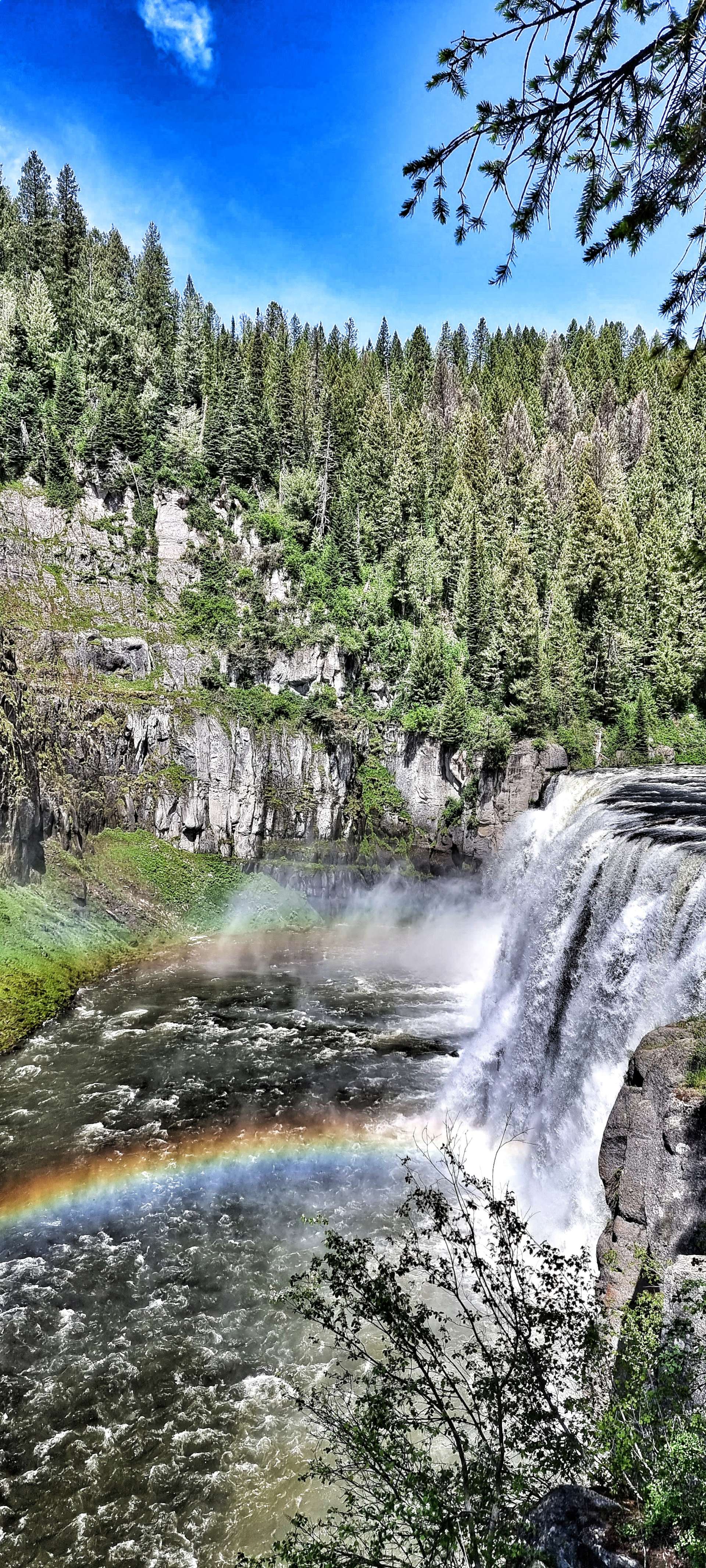
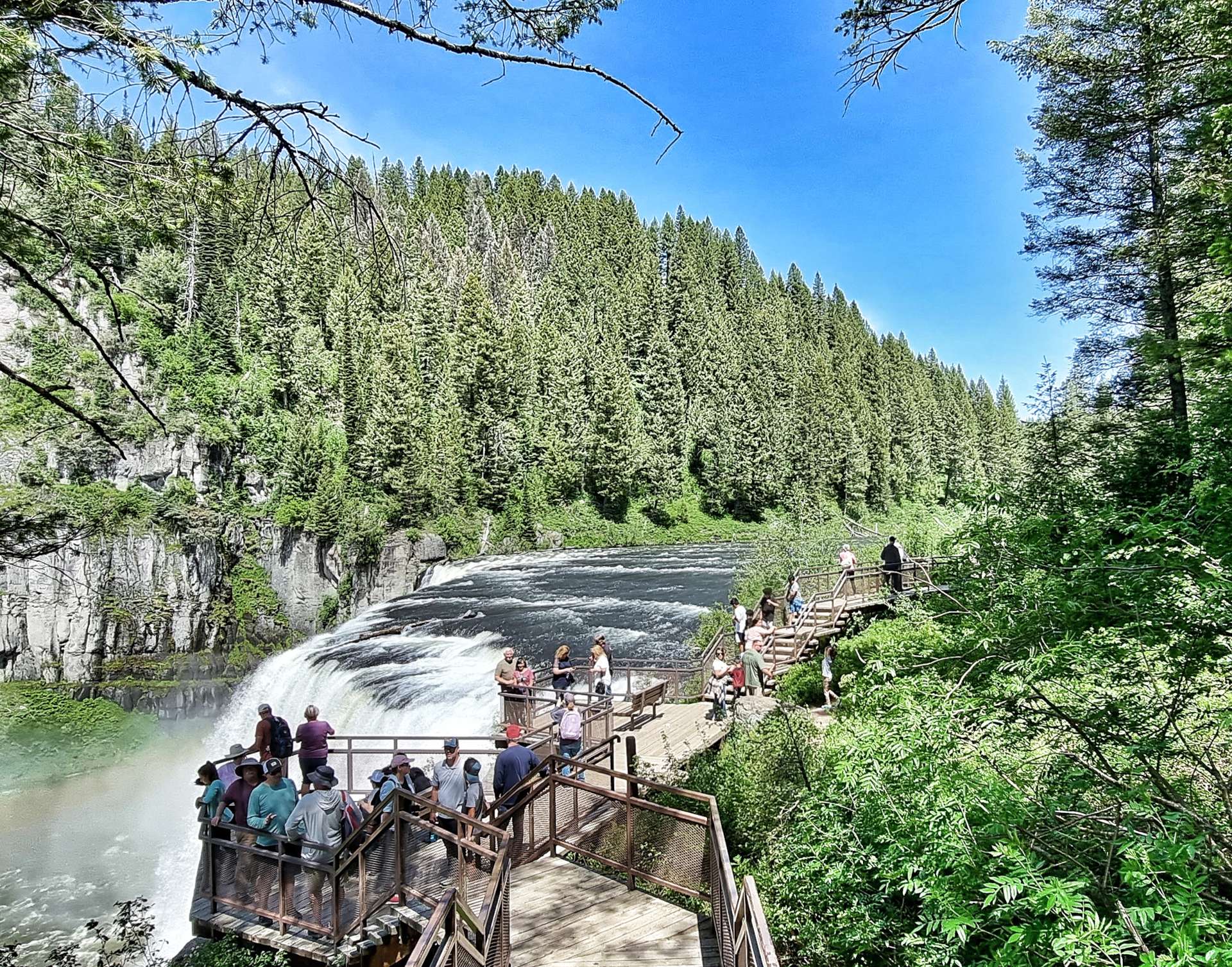
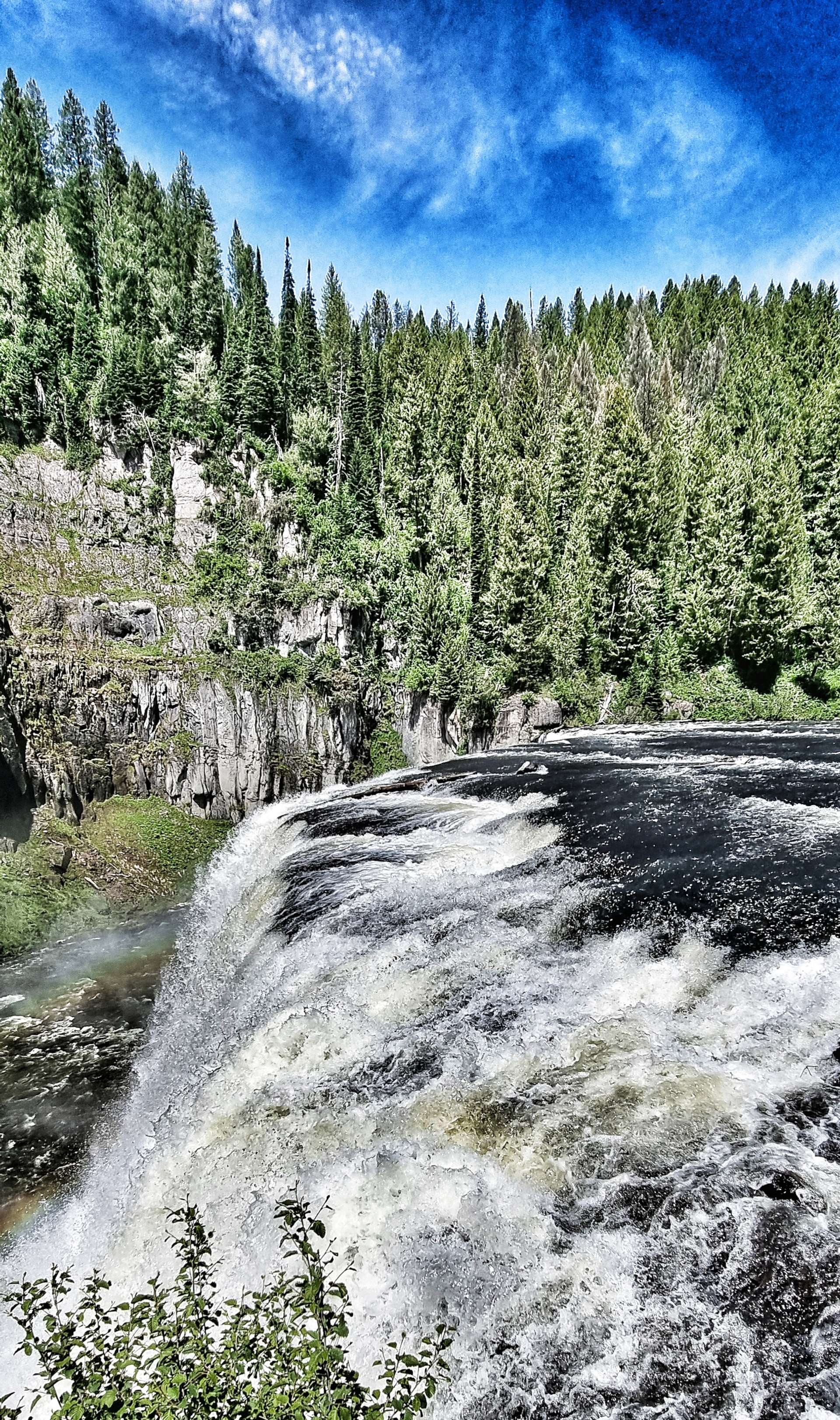
Enough schoolboy humour – the main reason for our detour was to see the Upper & Lower Mesa Falls. A few people I’d chatted to in West Yellowstone said it was a must see sight if we were anywhere near. The Mesa Falls were owned by Montana Light & Power until December 1986, when Targhee National Forest completed a Land Exchange agreement. The National Forest then worked hard to open up this natural gem to the public.

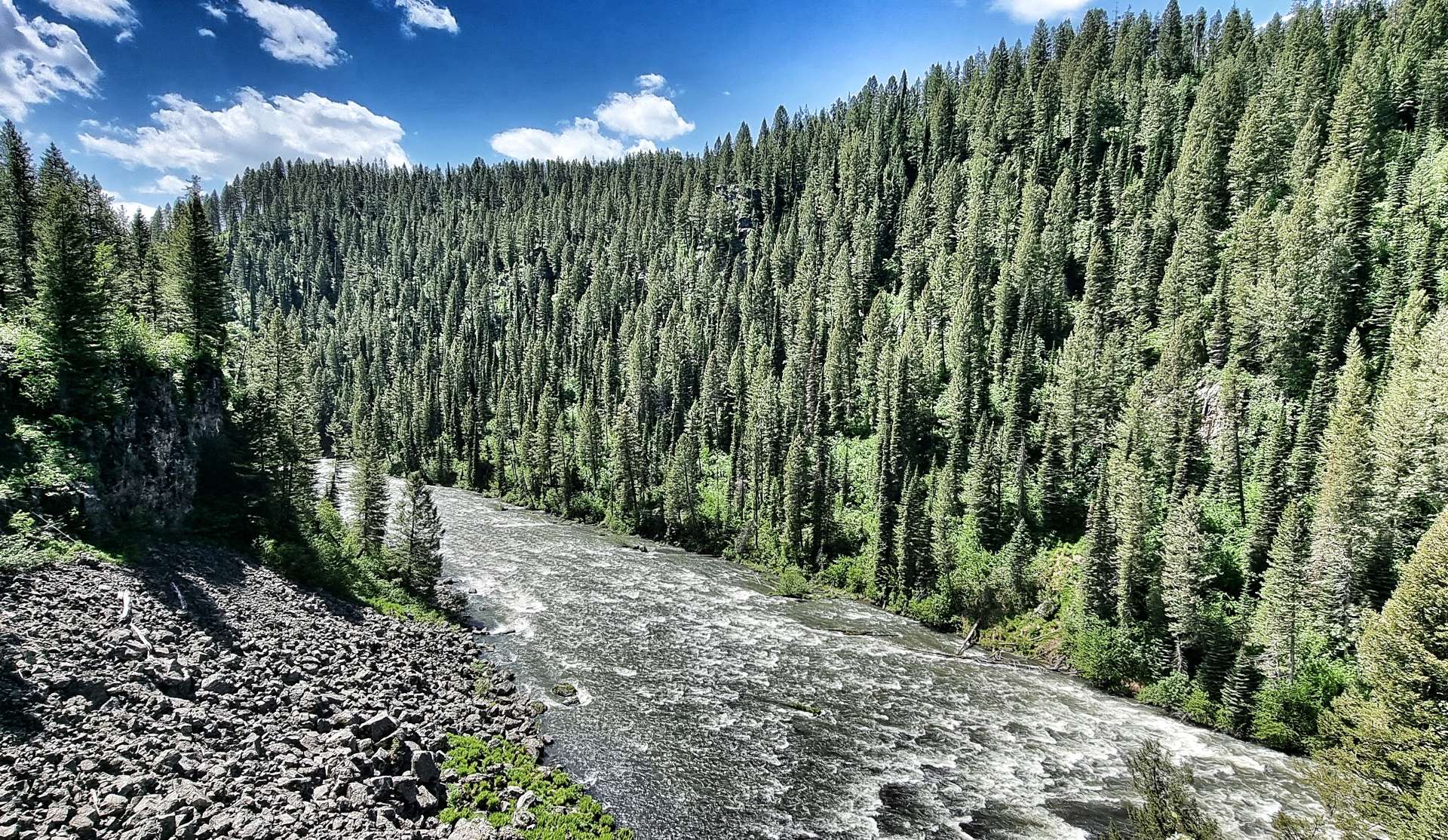
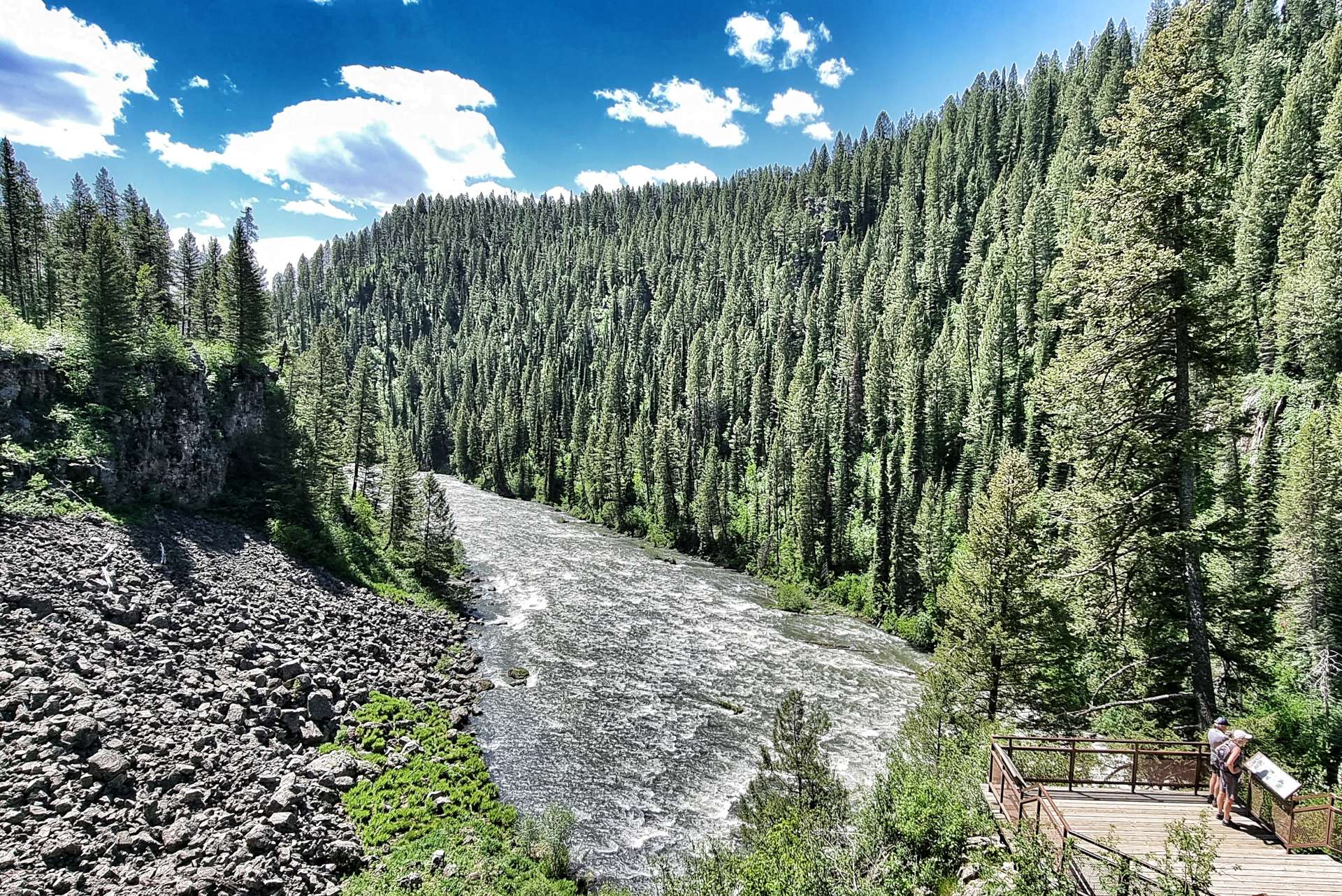
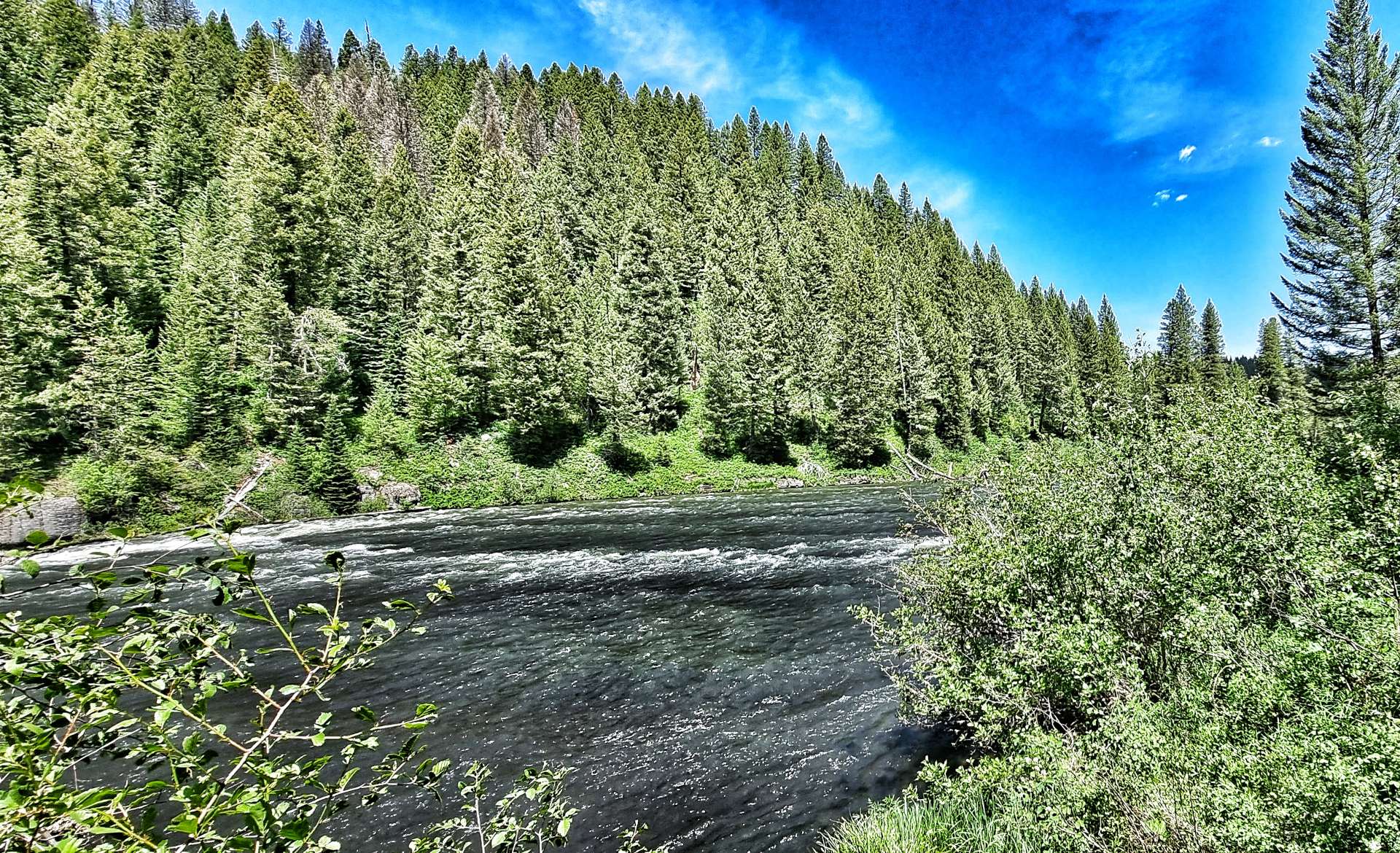
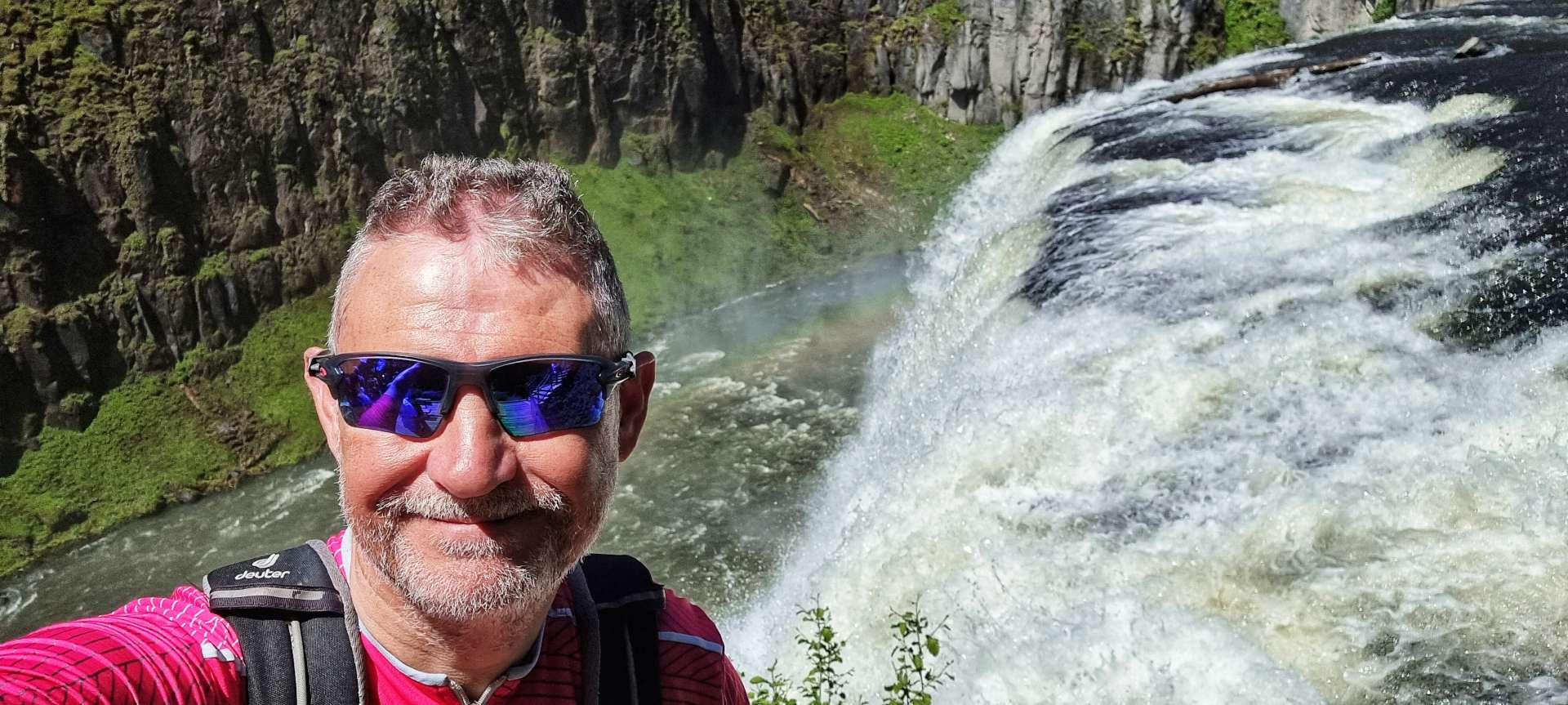
We took the 1 mile descent to the car park & changed into walking shoes – a walkway took us down further into the valley & the thunder of the water indicated there was some big white water ahead long before the Mesa Falls introduced themselves. Overhead there were eagles gliding on the thermals, while bears, deer & elk wandered the forest, always too shy to show themselves.

We reluctantly left Upper Mesa Falls behind (in part because of the steep climb ahead of us to get back to the Scenic Byway!) & made our way along to Grand Overlook where we took in the vast views of the Lower Mesa Falls – from here you could really see that although they were born of fire, they’ve been shaped by water.

We continued along the almost deserted road, giving us time to set up the odd action shot, as well as stop & poke around the small ponds seeking the eternally ribbiting frogs – we never did find one! All the while, the Tetons edged ever nearer.

In 1938, Bear Gulch was the second ski resort to be established in Idaho (after Sun Valley). Alf Engen, a world-class skier who had emigrated from Norway helped lay out the first runs of what later became Bear Cat, Dipper & Teddy Bear. It endured a troubled history as ownership regularly changed hands & ongoing development & running costs soared.

While we were reading about the history of Bear Gulch, an eagle glided overhead, keeping its beady eye on us! It’s a shame the resort didn’t flourish, as it’s in a glorious location with big views of the surrounding mountains.

In order to reach Ashton, we needed to cross the Warm River in the valley below. That involved a descent to the valley floor where we saw people fishing & canoeing on one side of the bridge, while on the other, children were throwing bread into the river & watching the feeding fish.

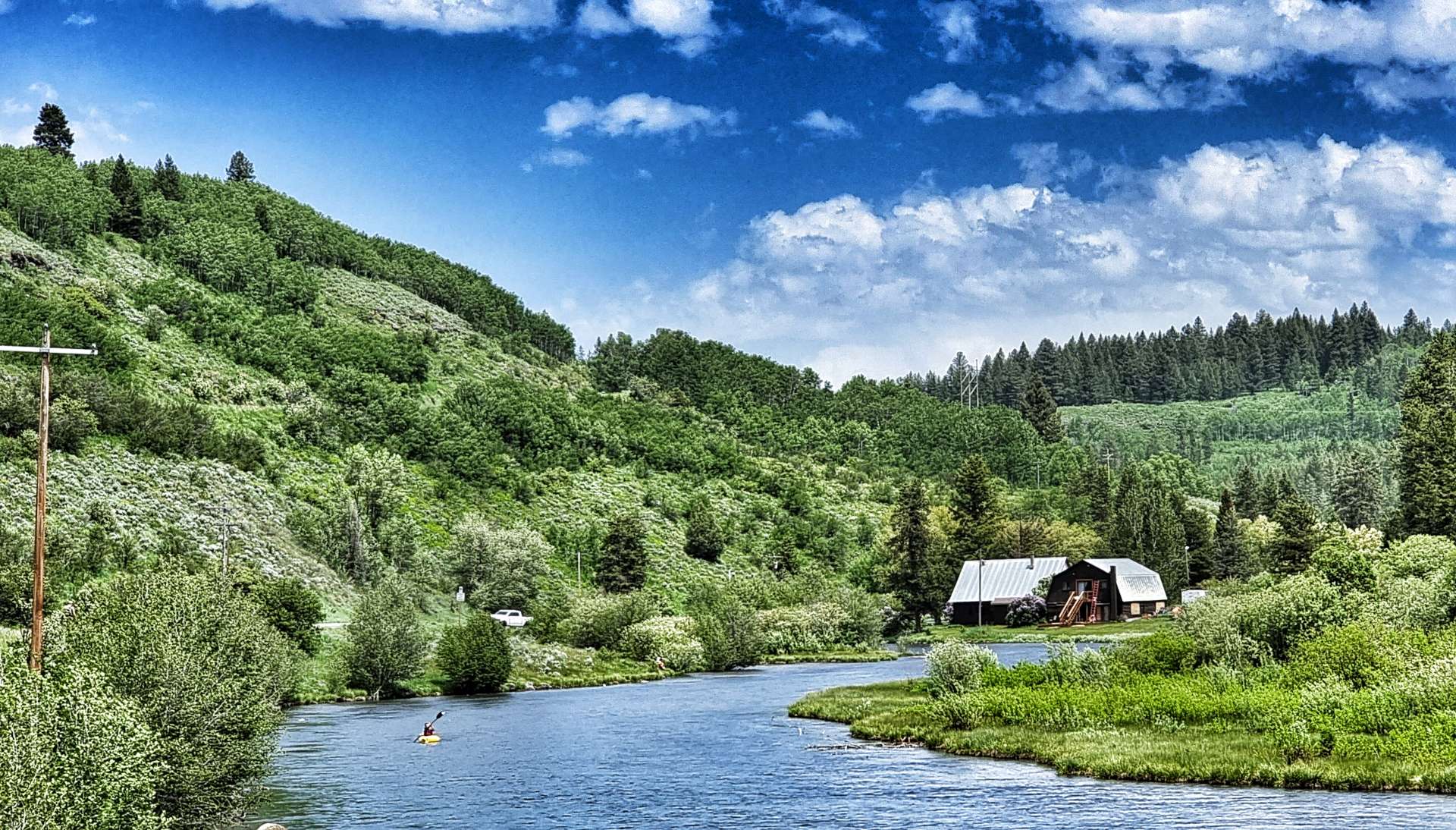
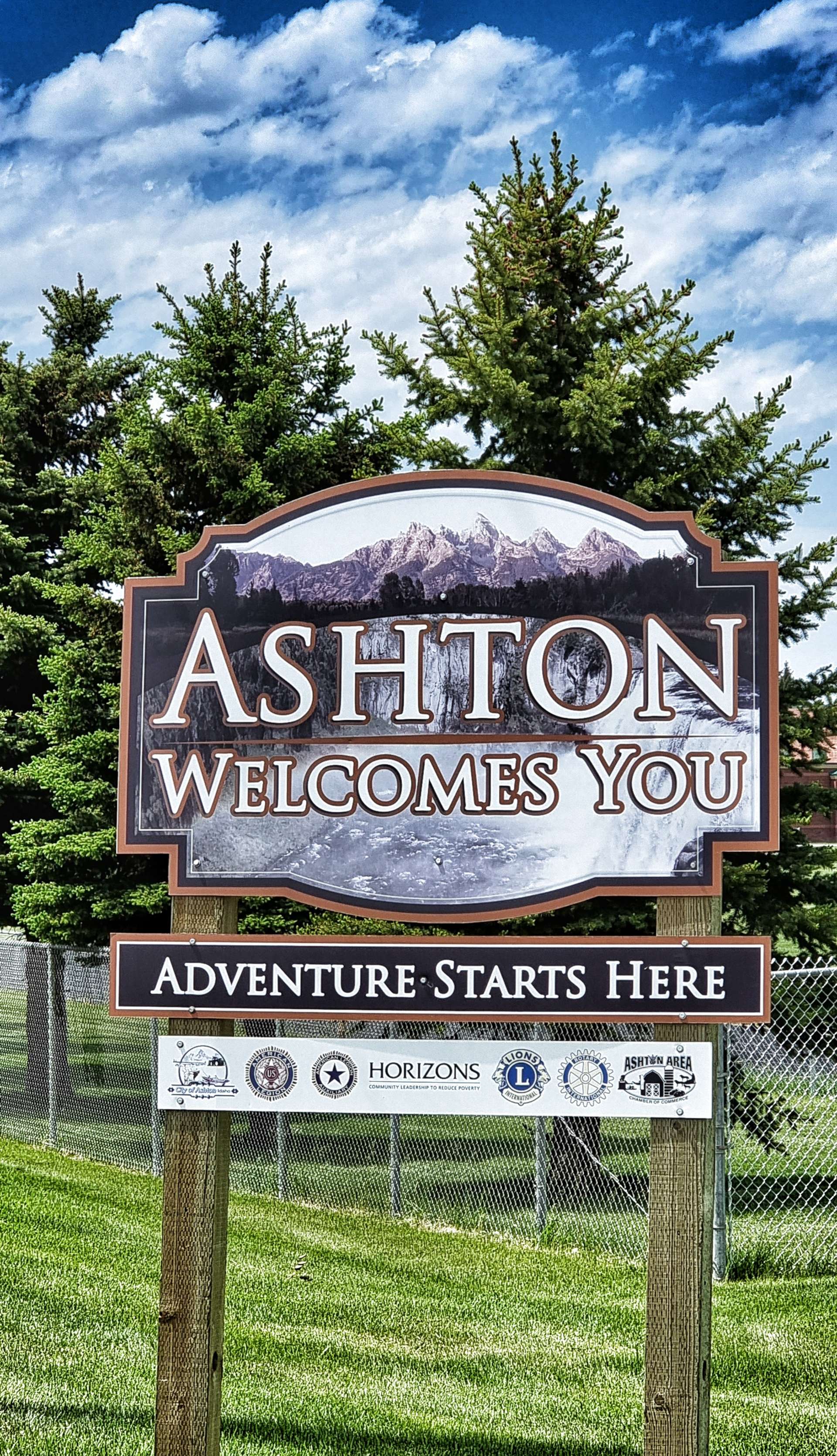
A two mile climb took us back up to a plateau on the opposite side of the valley & we were now in farming territory, as was obvious from the ploughed fields & irrigation systems. It was a short ride into Ashton, where we would be staying for the night.

Stage Stats – 40 miles, 1,345 feet of climbing. Stunning scenery on the Mesa Falls Scenic Highway.

Sunday 19th June – Ashton to Driggs

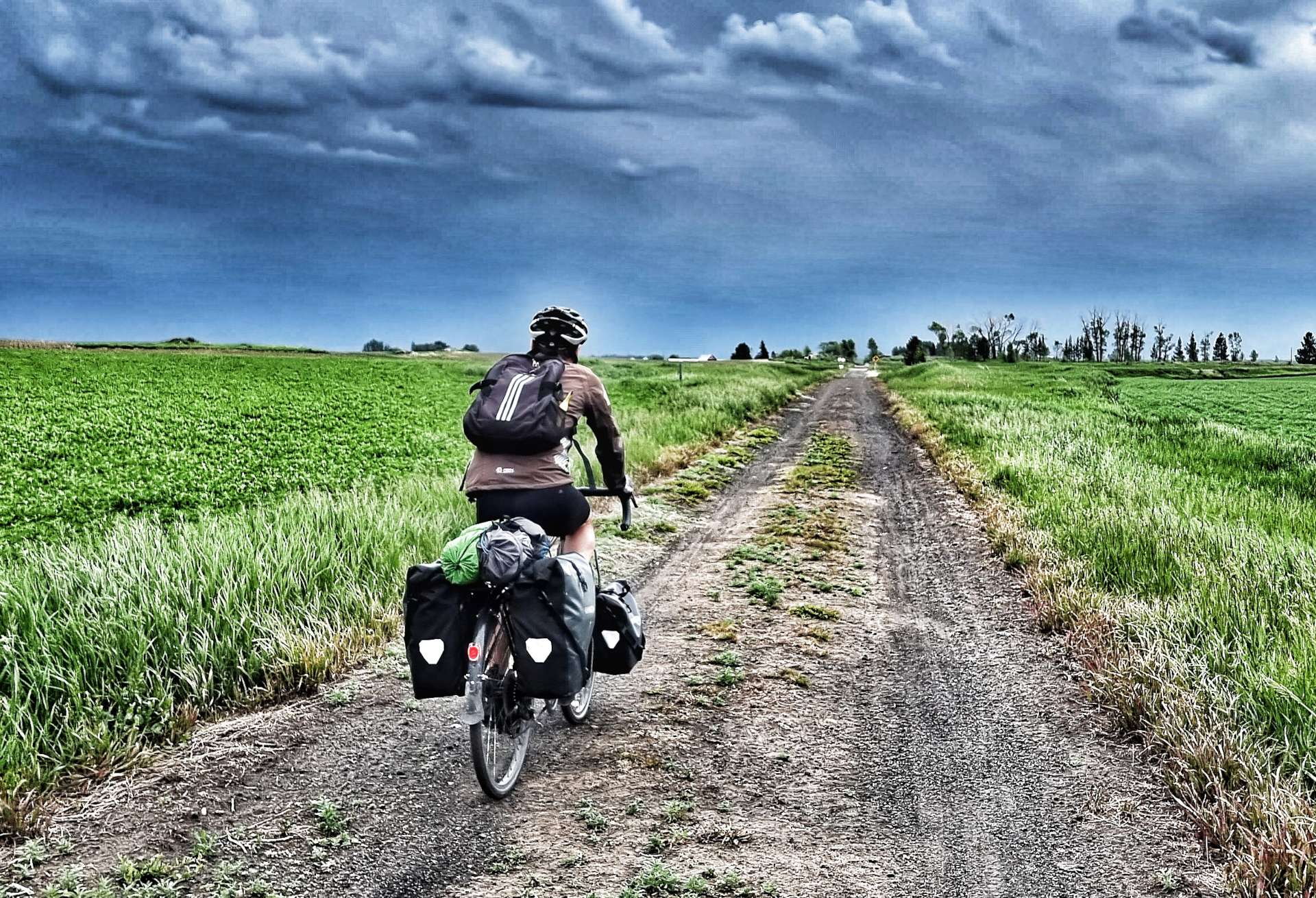
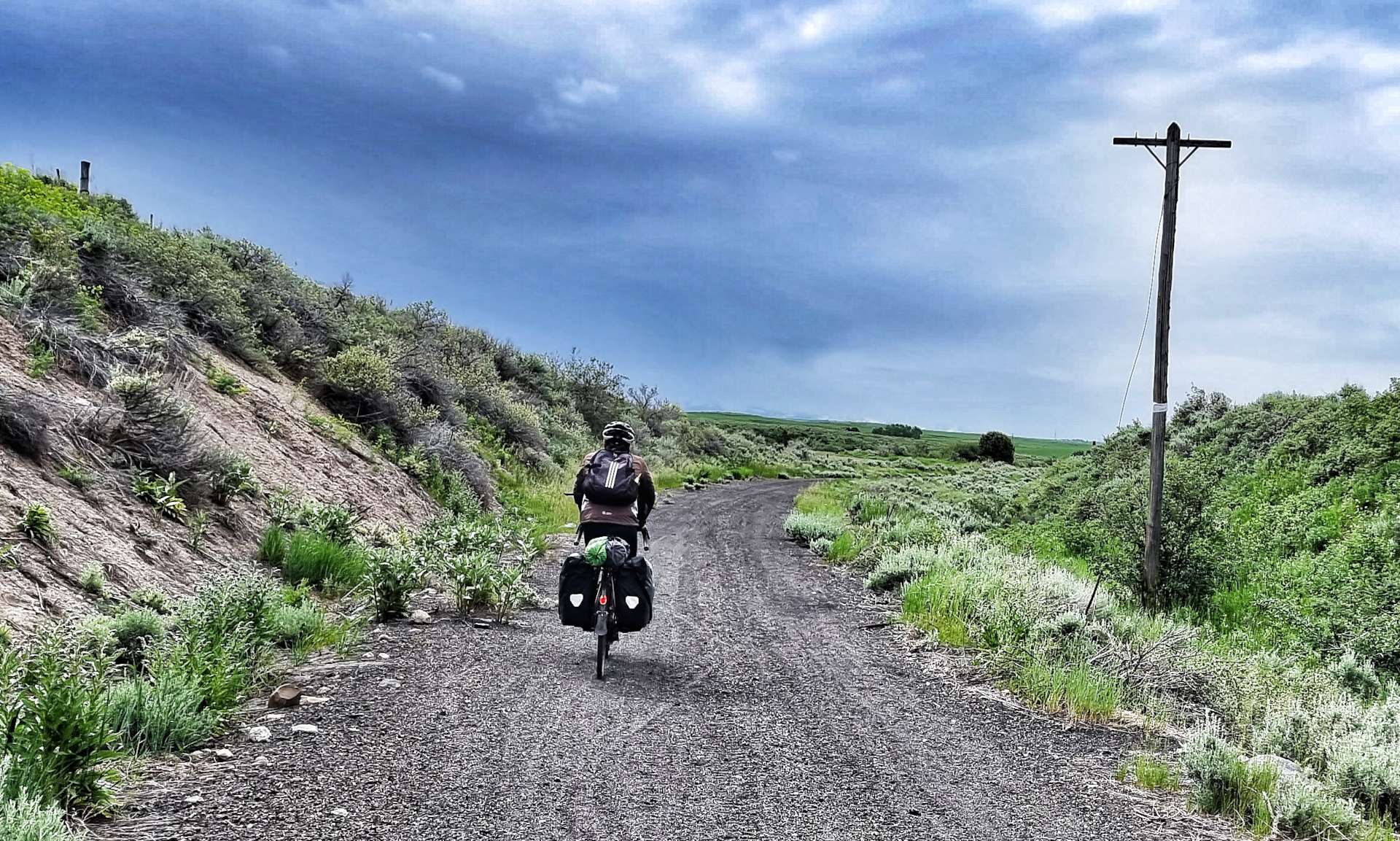
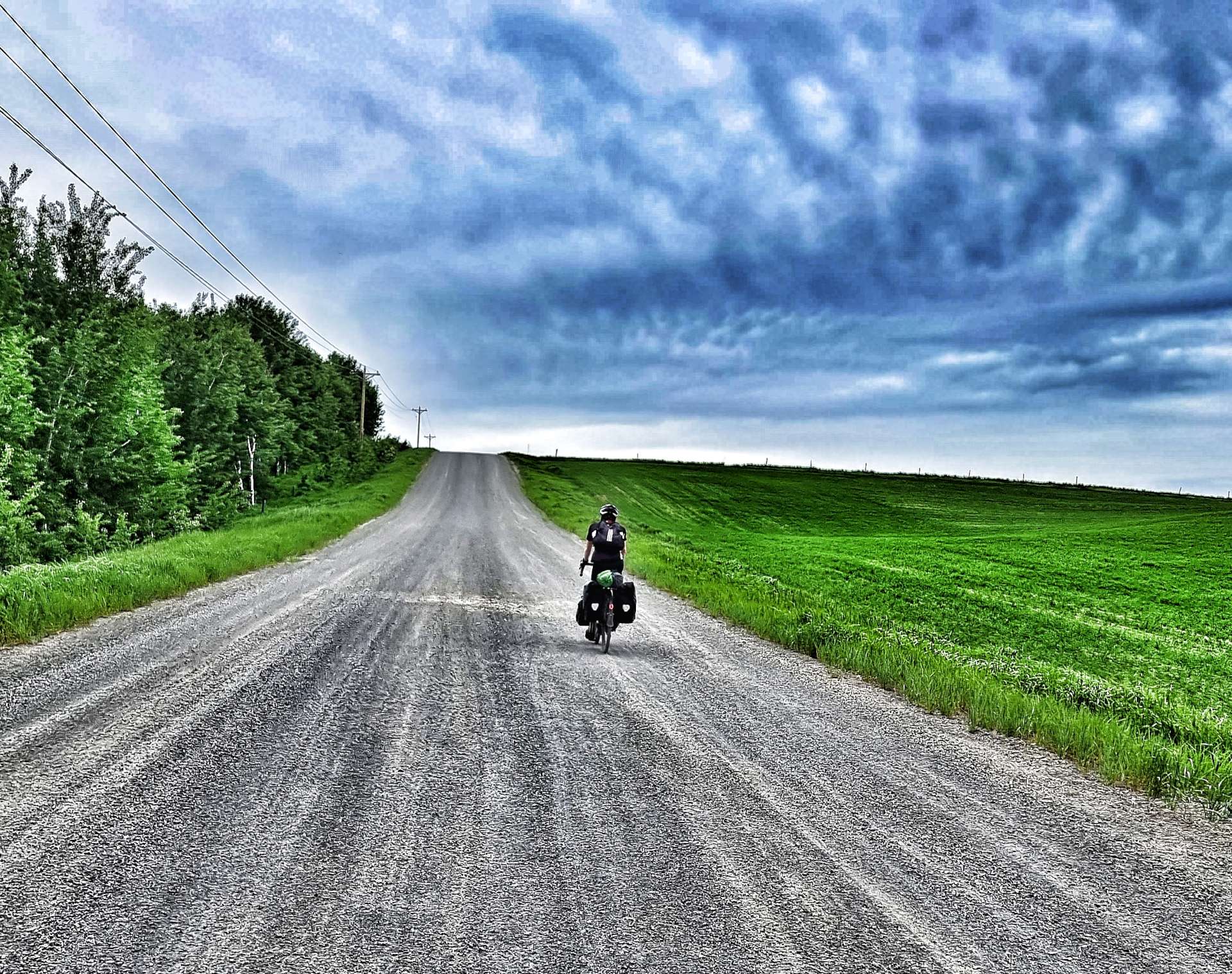
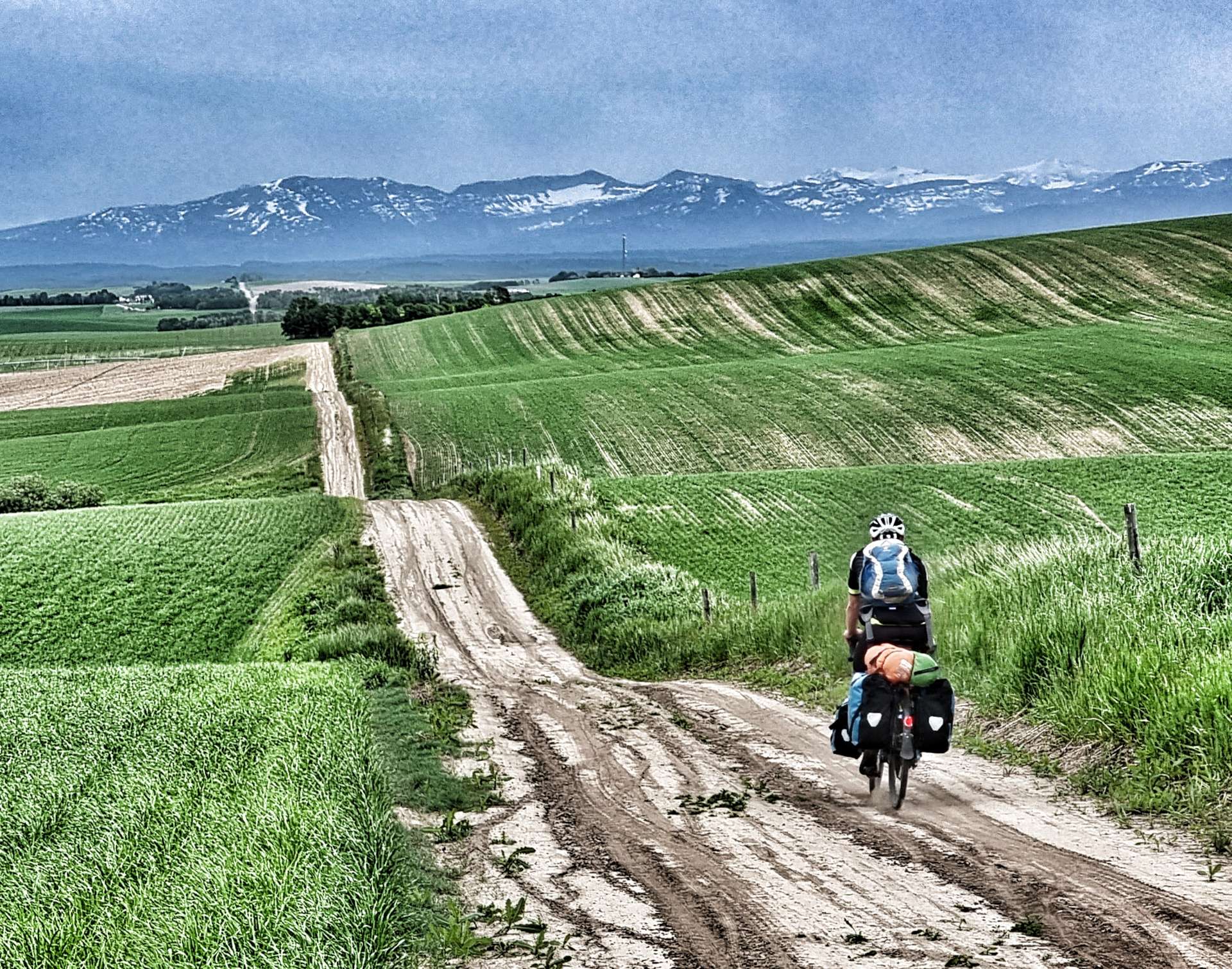
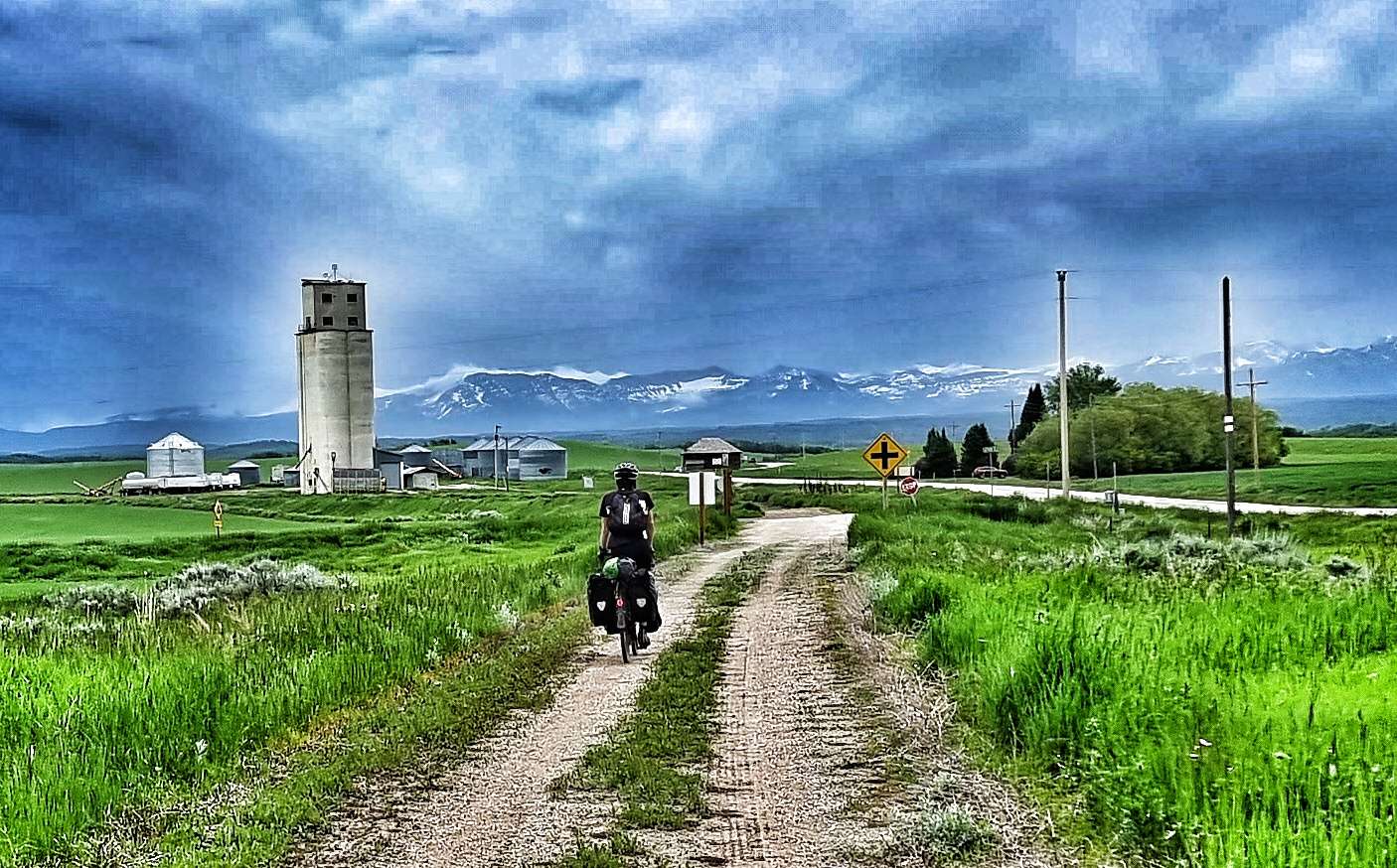
We woke to overcast skies, but decided to continue with our plans for the day. The Ashton to Tetonia Rail To Trail is a 29 mile of off-road track which was opened to the public in 2010 & follows the Teton Valley Branch of the old Union Pacific Railroad. It was originally used to move livestock, seed potatoes, peas & grain.

The surface was constantly changing as the trail crossed different terrain – in the early miles we encountered rough farm tracks, flint, grit & fine soil (on a brutally steep descent) that required me to ride with one foot out the cleats in case the bike slipped from under me – it didn’t, but it was tricky!!

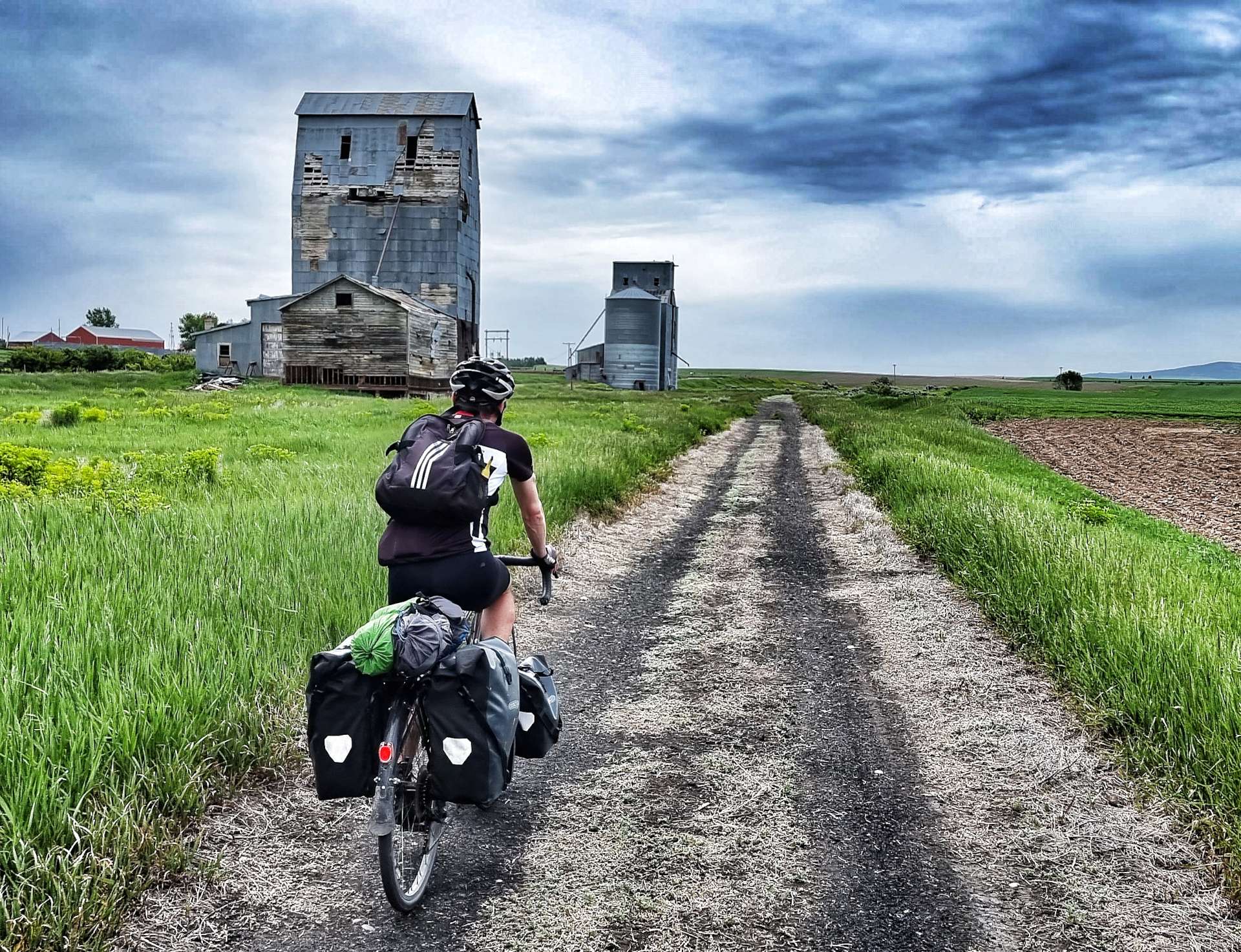
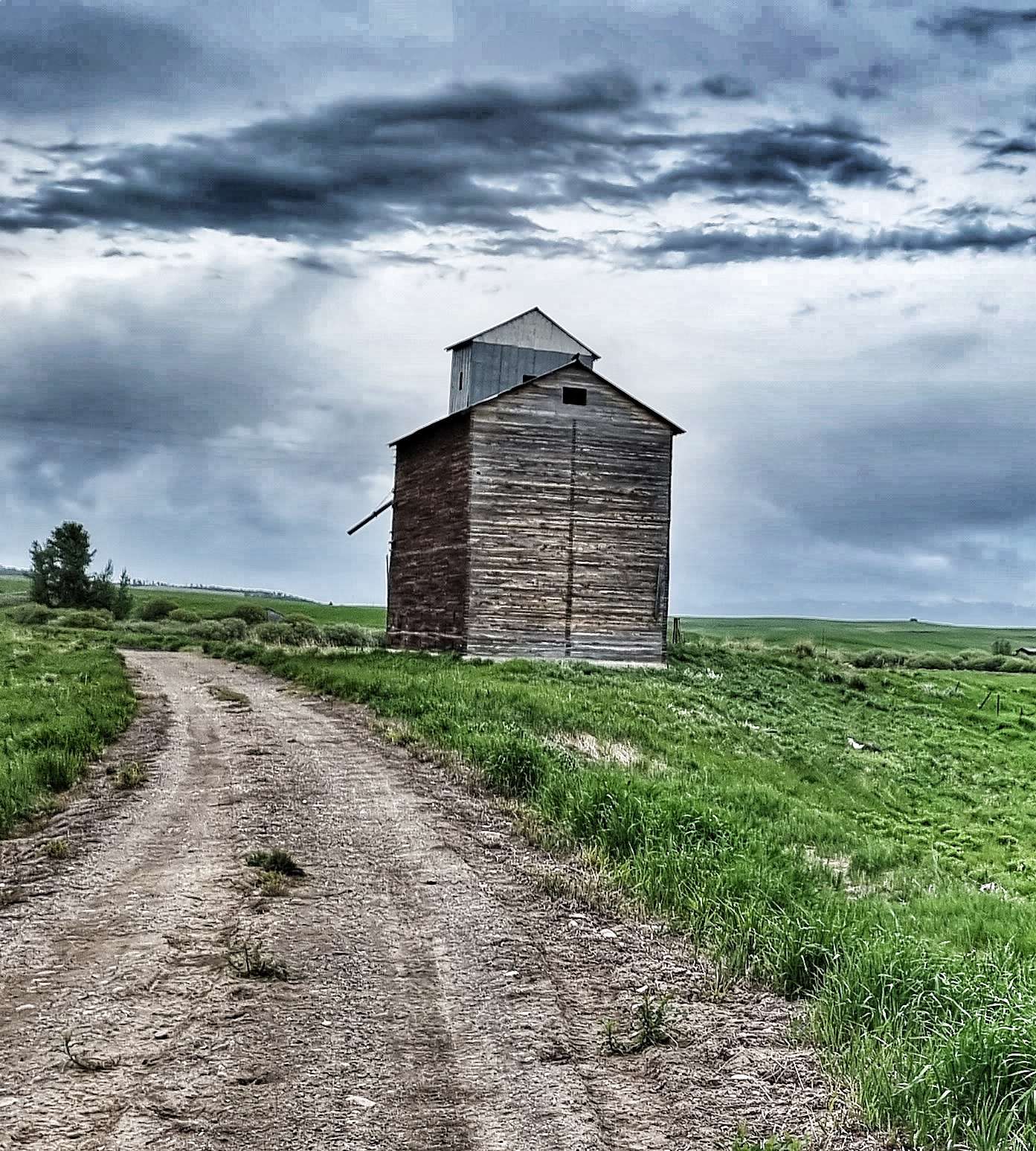
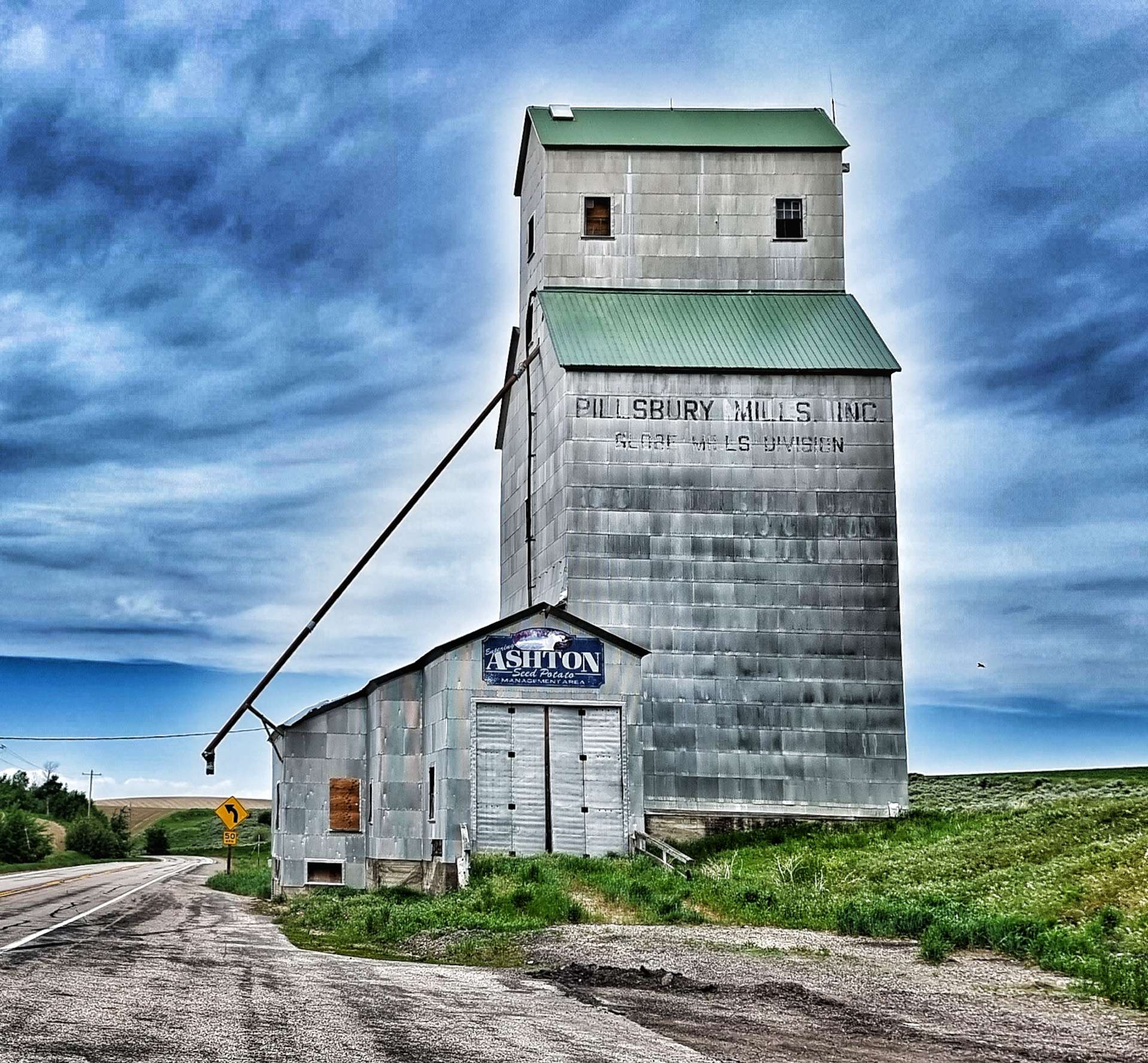
Along the way we passed a few historic Elevator buildings used to store & transfer wheat &/or grain. The most iconic is the Pillsbury Mills Elevator – does anyone else remember the Pillsbury Doughboy giggling when his stomach was poked? Google it if you’re wondering what I’m on about, it was an advertising gimmick from the 1960’s to earlier 2000’s!

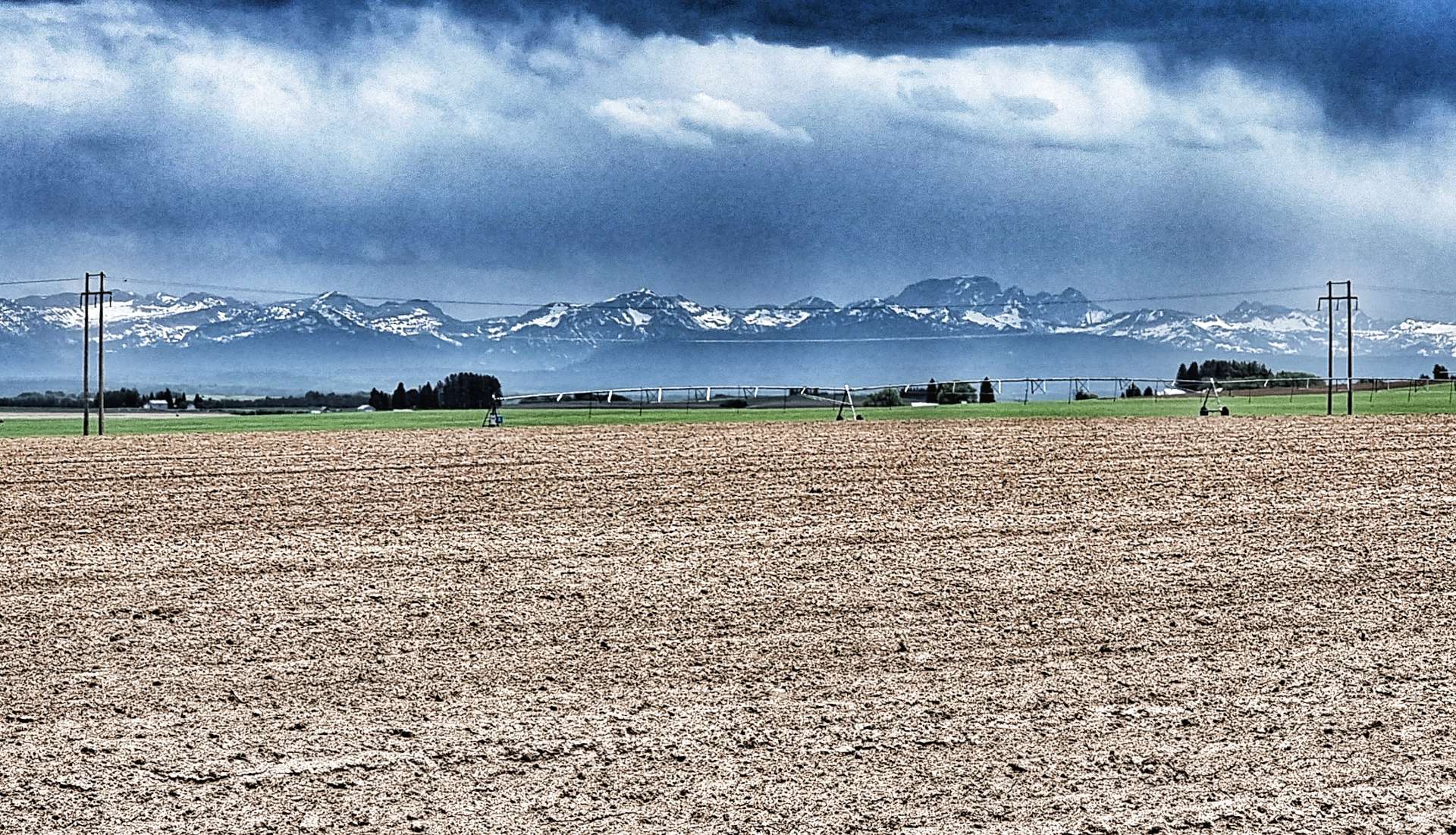
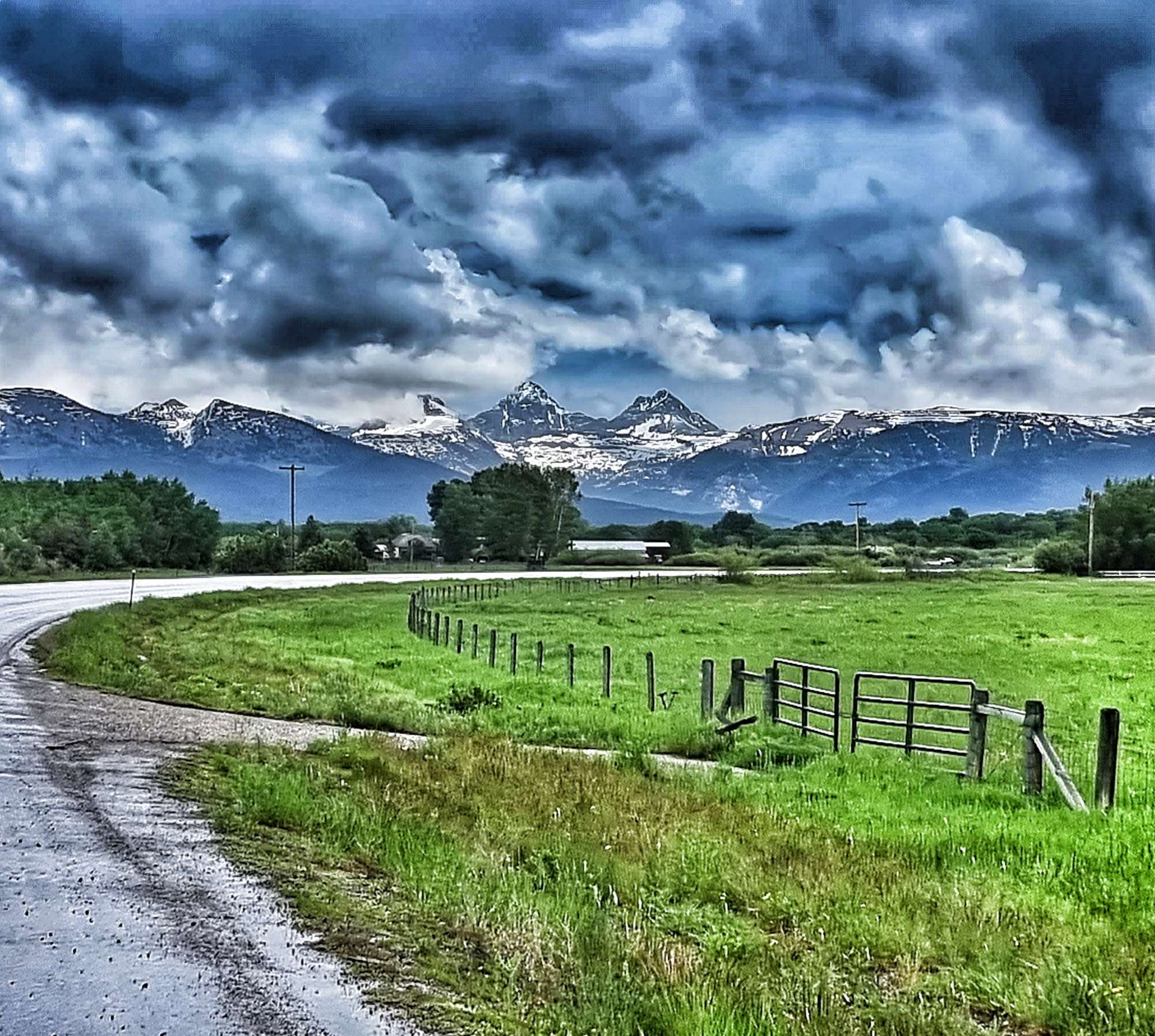
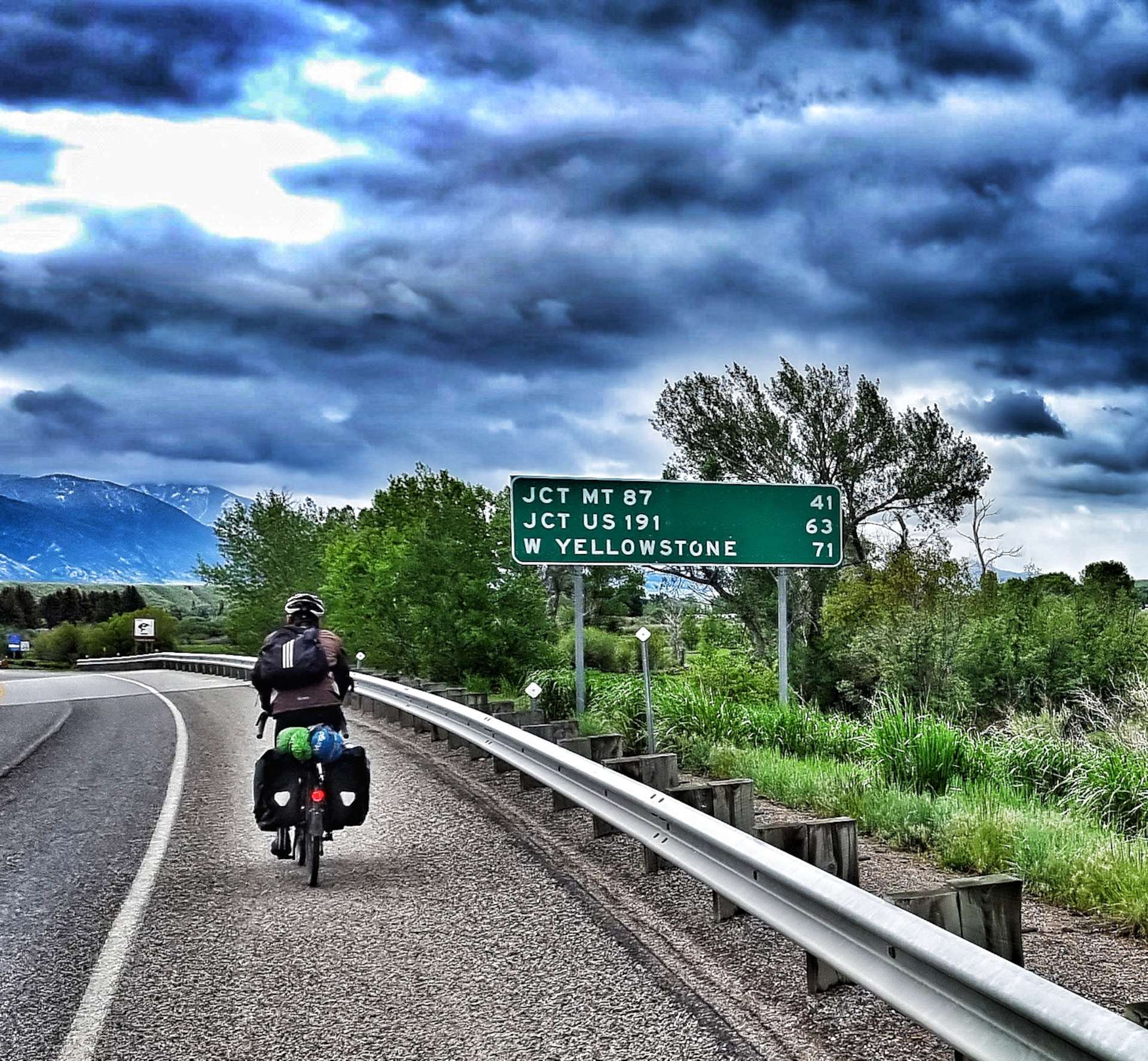
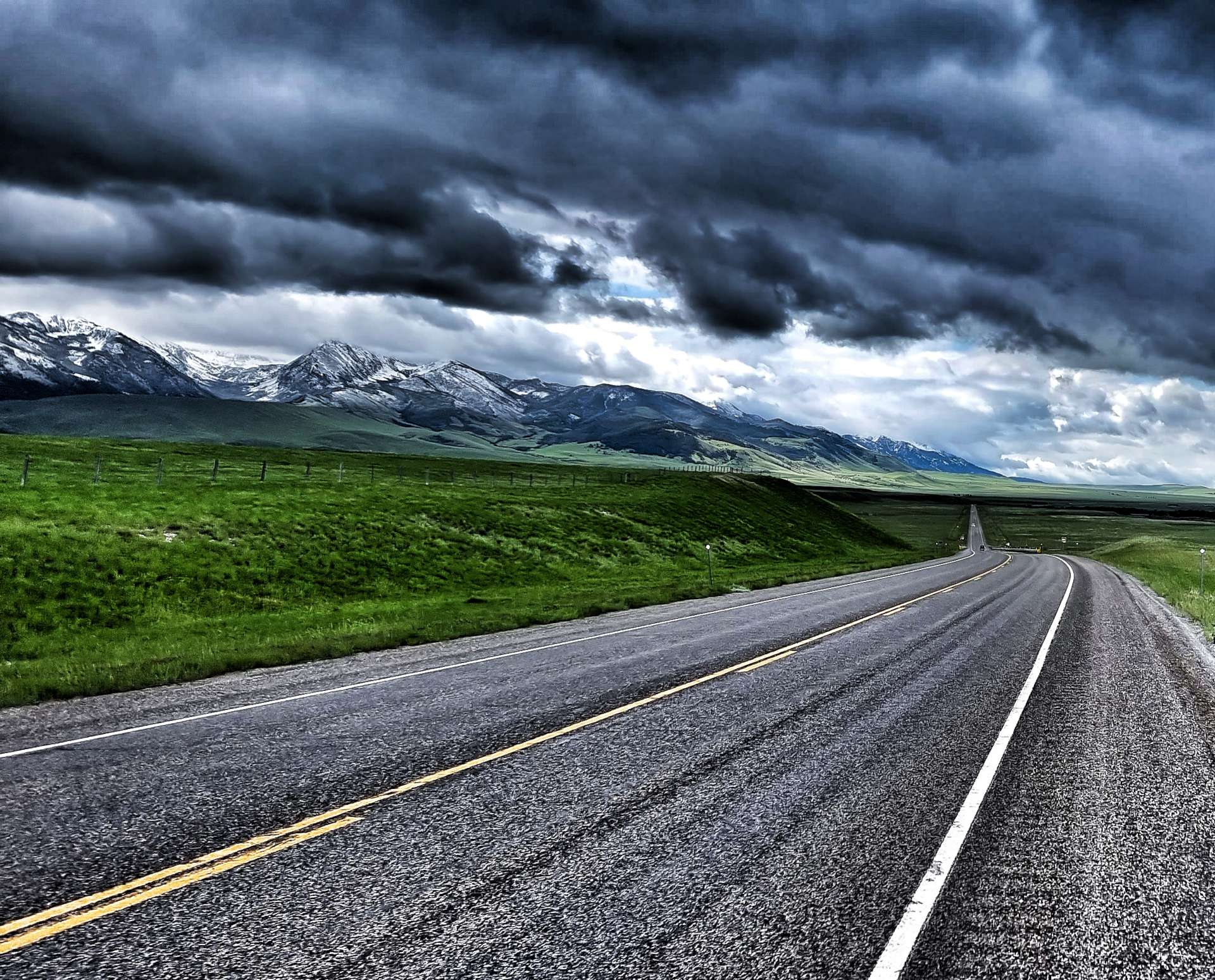
Every now & again the Grand Tetons reminded us of their presence. They now only appeared to be on the opposite side of the valley, but were still in the region of 20 to 25 miles away. The moody skies also indicated that rain would probably be on its way to meet us at some point, but in the meantime we had 3 final treats to look forward to…..

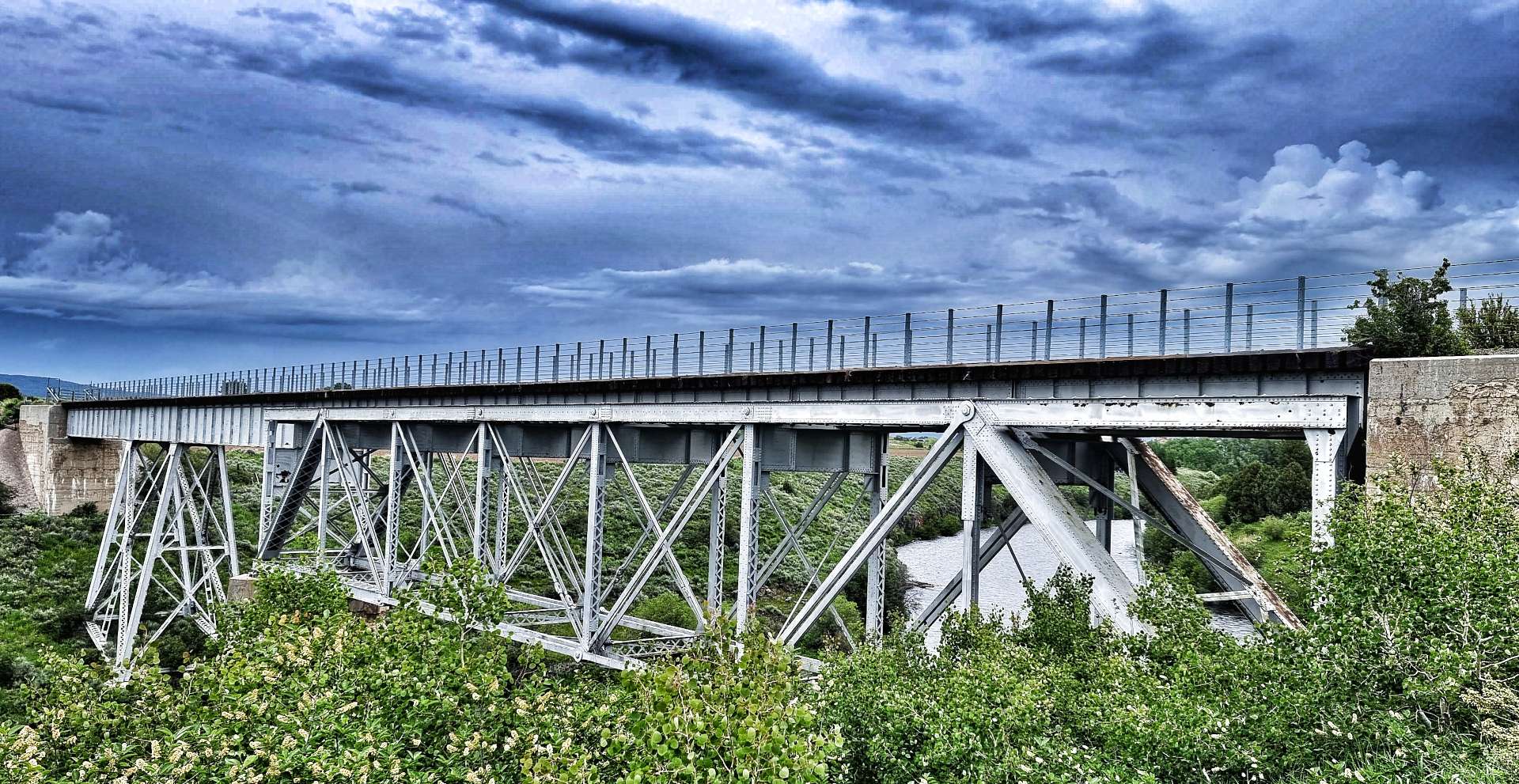
The trail includes three trestle bridges which cross Fall River, Conant Creek & Bitch Creek – they each span 600 feet in length & 130 feet in height. It was an instant step back in time to when I used to watch Casey Jones on tv at the throttle of the Cannonball Express. The Conant Creek Bridge (in the photo with the Tetons in the background) was constructed in 1911. It used a Truss section previously designed & built in 1894 to cross the Snake River at American Falls.

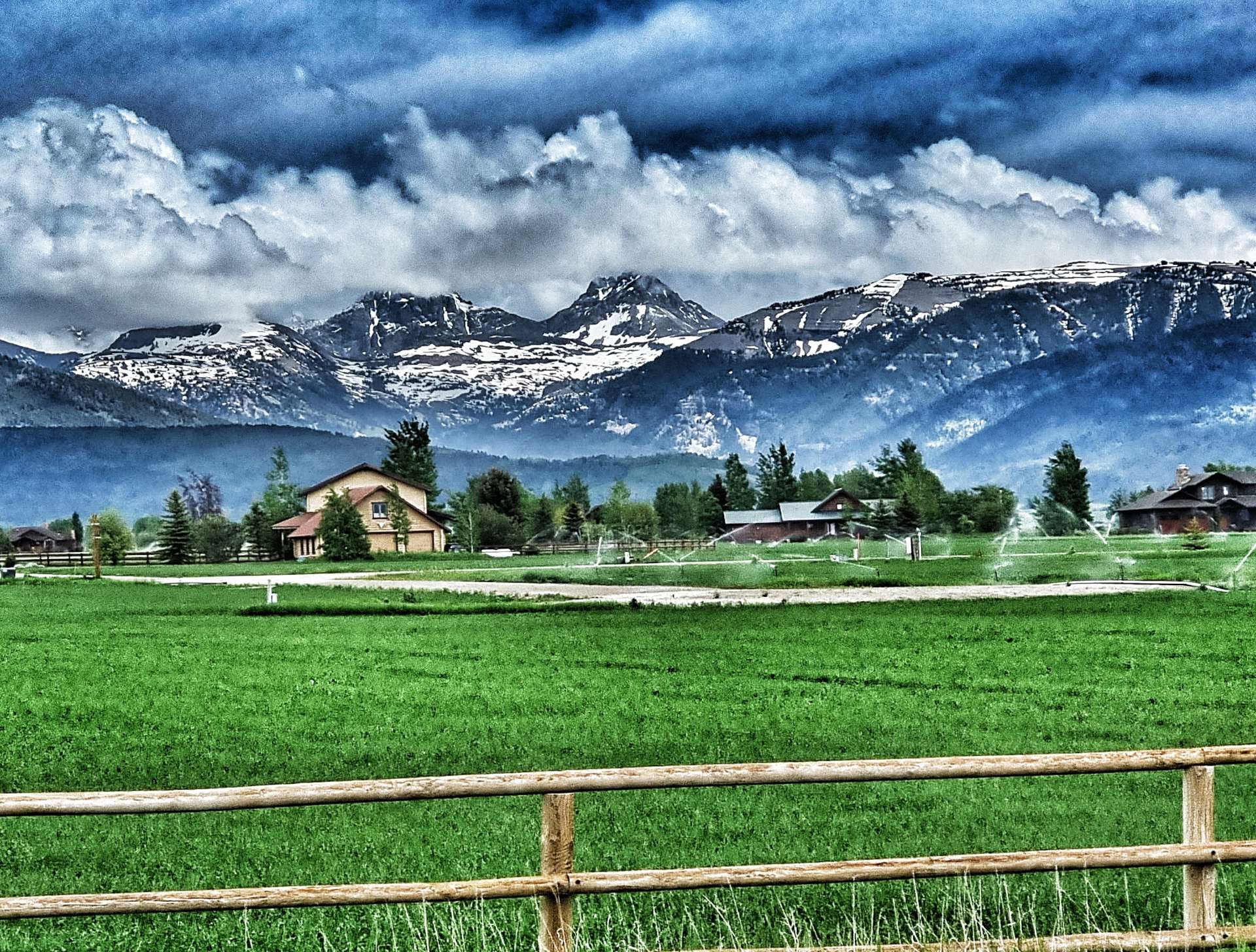
As we neared the end of the 29 mile trail we could see the rain directly in front of us – by some wonder of science, it had almost completely dispersed by the time we reached the road, where it had been raining but 5 minutes before! The skies were already starting to clear & they gave us one last peep at the perky Teton peaks – a size D up close!

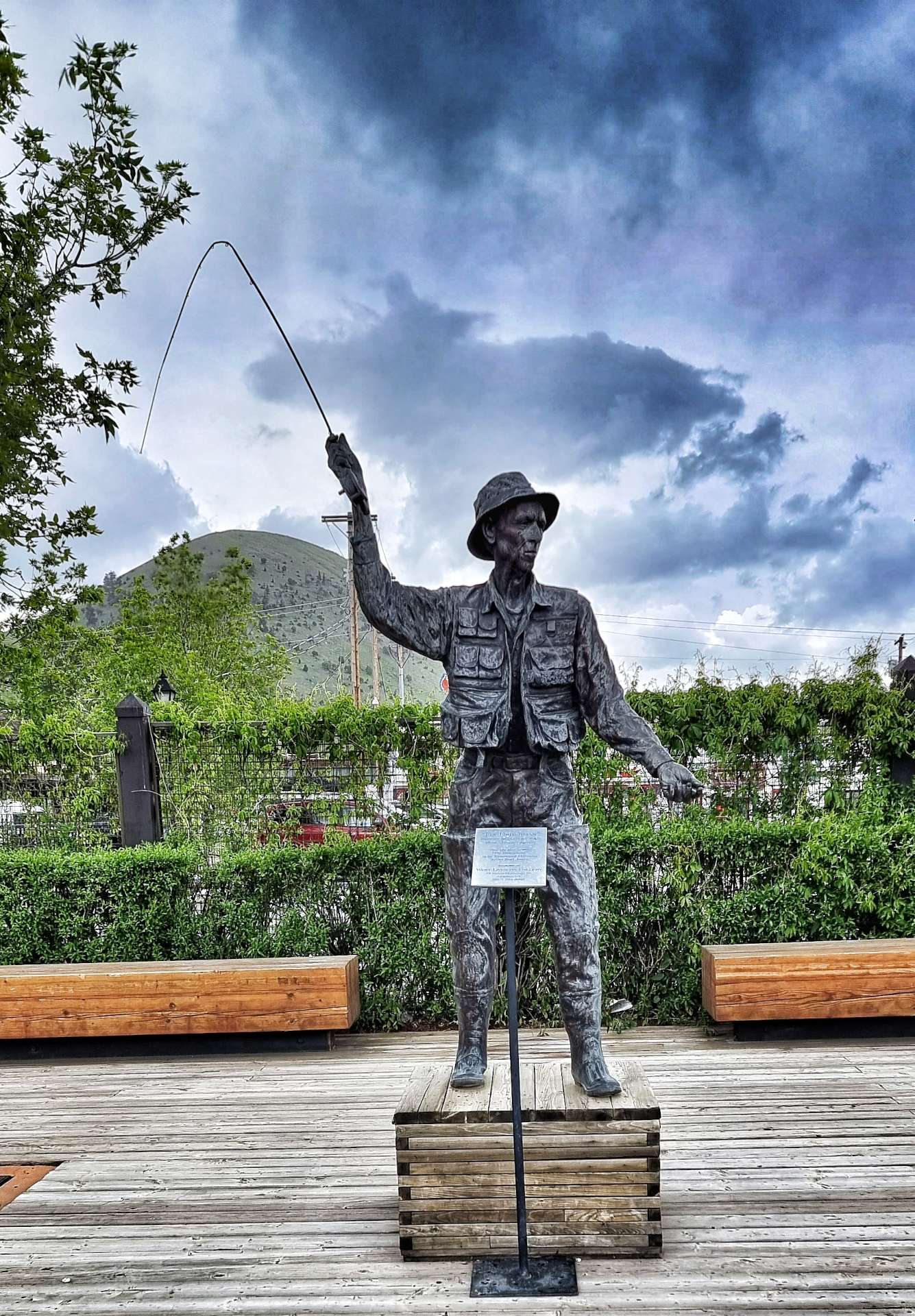
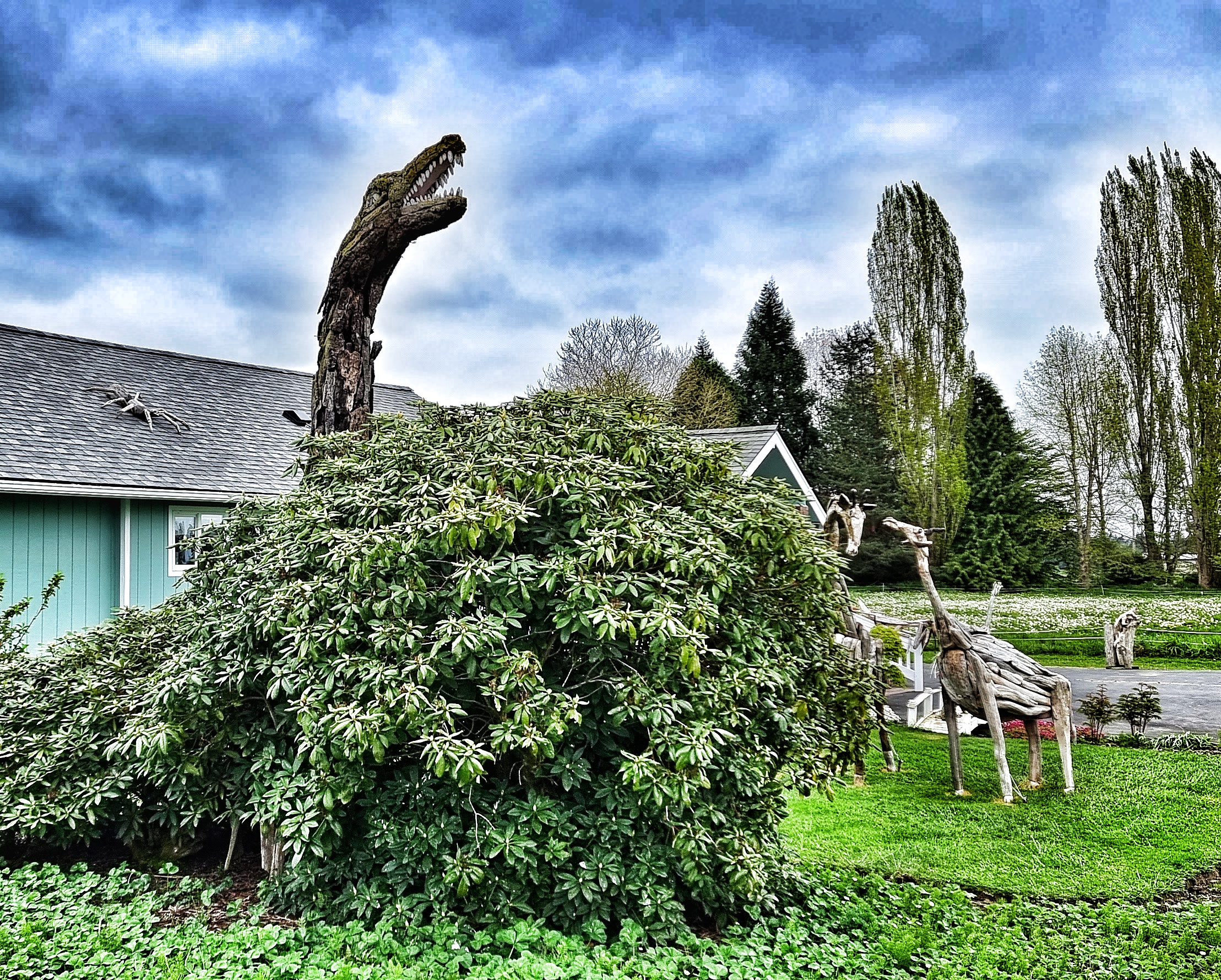
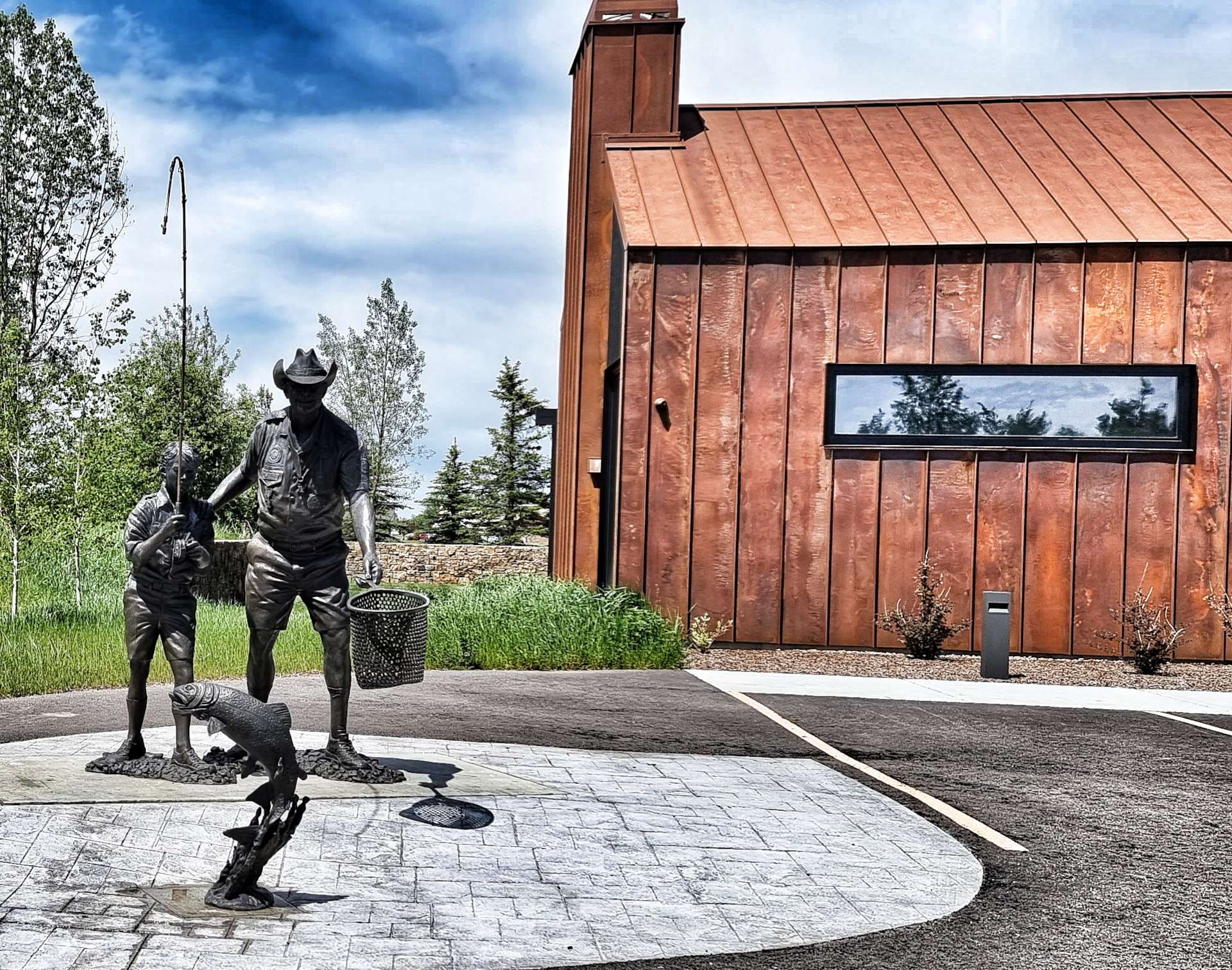
We had an 8 mile ride into a stiff headwind before we reached Driggs – another town that offered up a selection of unusual statues, the most striking of which was an adult teaching a young boy how to fish. As we rode up Main Street, a private jet was in the final stages of landing at the local airport.

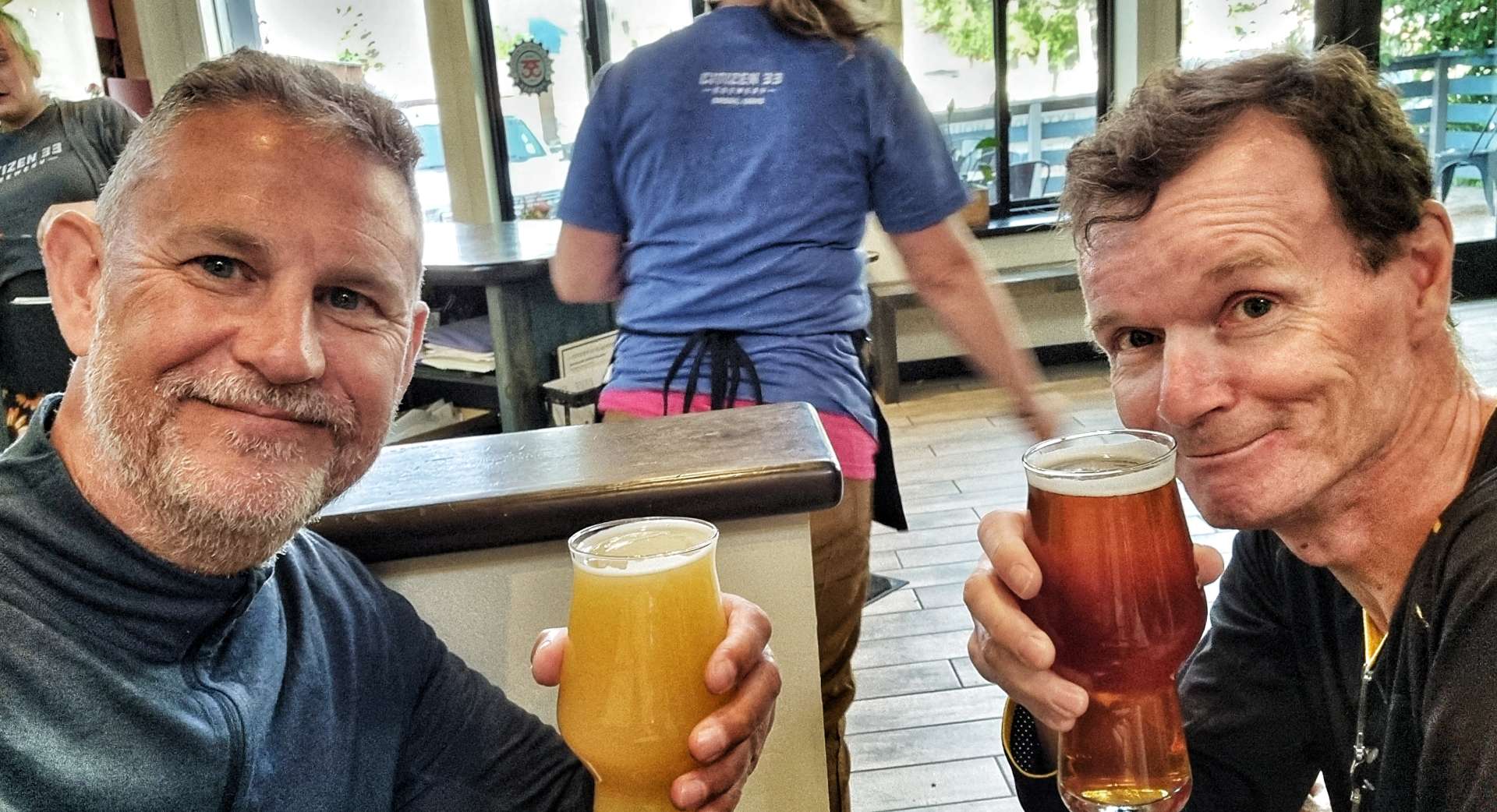
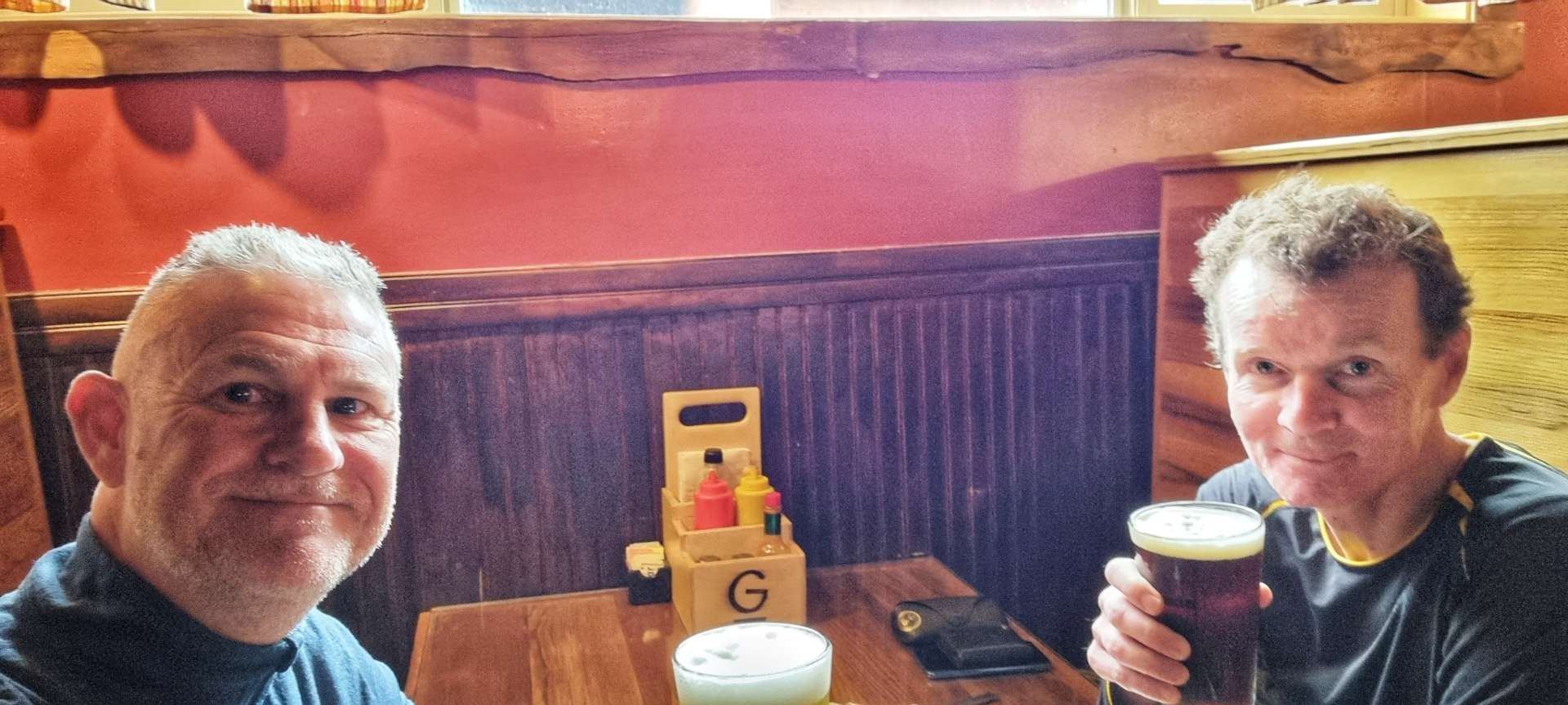
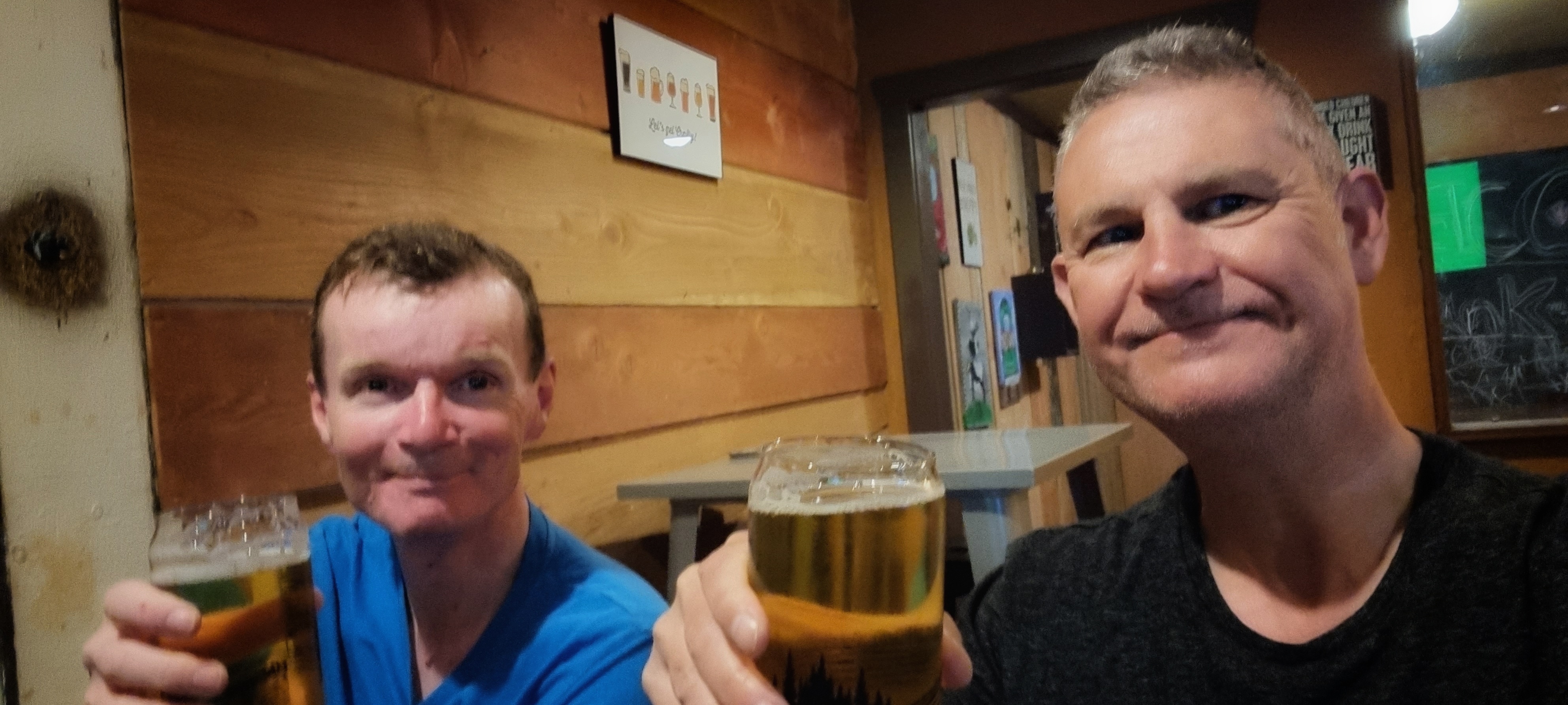
All that remained was to do get the laundry out the way, then head next door to Citizen 33, where we toasted yet another wild day of adventures. We have an unexpected task tomorrow, as Sean’s pannier didn’t survive the off-road adventure as well as us – we need to find an Ortlieb dealer or someone who can cobble together a repair for us!

Stage Stats – 40 miles, 1,365 feet of climbing. Exploring the Ashton-Tetonia Rail to Trail.

Tour of the USA – Weeks Three & Four

Well, How Did We Get Here? Miles, Feet Climbed, Maps & Profiles.

Part One described how we travelled from Seattle to Omak in the first two weeks of our adventure. Now find out what happened next & where we went! I’ve also continued with the idea of posting a photo from each day – it will refresh my mind when it comes to looking back on my adventure!

Week Three – Omak (WA) to Heron (MT)

DateStart LocationEnd LocationMilesFeet Climbed
14/05/22OmakRepublic694,252
15/05/22REST DAYREST DAY00
16/05/22RepublicColville574,354
17/05/22ColvilleIone432,618
18/05/22IoneSandpoint862,552
19/05/22REST DAYREST DAY372,589
20/05/22SandpointHeron441,634
Totals29915,410

If you want to get more detail, the link below will open in a new tab & allow you to explore further, if that’s your thing;

https://ridewithgps.com/routes/39784497

Week Four – Heron (MT) to East Glacier Village (MT)

DateStart LocationEnd LocationMilesFeet Climbed
21/05/22HeronLibby693,205
22/05/22LibbyRexford693,507
23/05/22REST DAYREST DAY00
24/05/22RexfordWhitefish632,835
25/05/22REST DAYREST DAY00
26/05/22WhitefishGlacier NP – Lake McDonald682,854
27/05/22Glacier NP – Lake McDonaldEast Glacier Park Village683,556
Totals33915,957

If you want to get more detail, the link below will open in a new tab & allow you to explore further, if that’s your thing;

https://ridewithgps.com/routes/39784602

West Yellowstone – The Gateway to Jellystone!

Yogi, Booboo & Ranger Smith shut up shop, but then take pity on us.

As you’ll know by now if you’ve read my last update, substantial flooding, rockslides & rockslides on roads caused Yellowstone National Park to temporarily close all 5 entrance gates on 13th June & they currently remain closed. I’m pleased to report that no-one was injured by this devastating natural disaster.

When we left Helena on 12th June, our plan was to reach West Yellowstone on 14th, then head into the National Park via the West Gate. We would then look to camp for up to a week as we explored the North Loop (via Gardner & Cooke City) & the South Loop (Old Faithful, West Thumb & Yellowstone Lake), then exit via the East Gate to Cody.

This is no longer possible, so we’ve taken the decision to enjoy a couple of days of rest & relaxation in West Yellowstone, while we come up with an alternative plan. Full details of our alternative plan will be at the bottom of the post (assuming we have a plan by then!!).

Due to the late decision to stay longer in West Yellowstone, we spent 13th & 15th June in Dude & The Round Up, while on 14th we stayed in The Travelers Lodge.

Yellowstone National Park preserves the most important bison herd in the United States. It’s the only place in the USA where bison have lived continuously since prehistoric times & they are the largest herd on public land. They are able to roam over the expanse of Yellowstone & some nearby areas of Montana.

As a result they continue to exhibit wild behaviour just like their ancestors, congregating during breeding season to compete for mates, as well as migration & exploration. Less than a century ago, the bison population was on the verge of extinction, but by the end of 2021 there were in the region of 5,450 in Yellowstone.

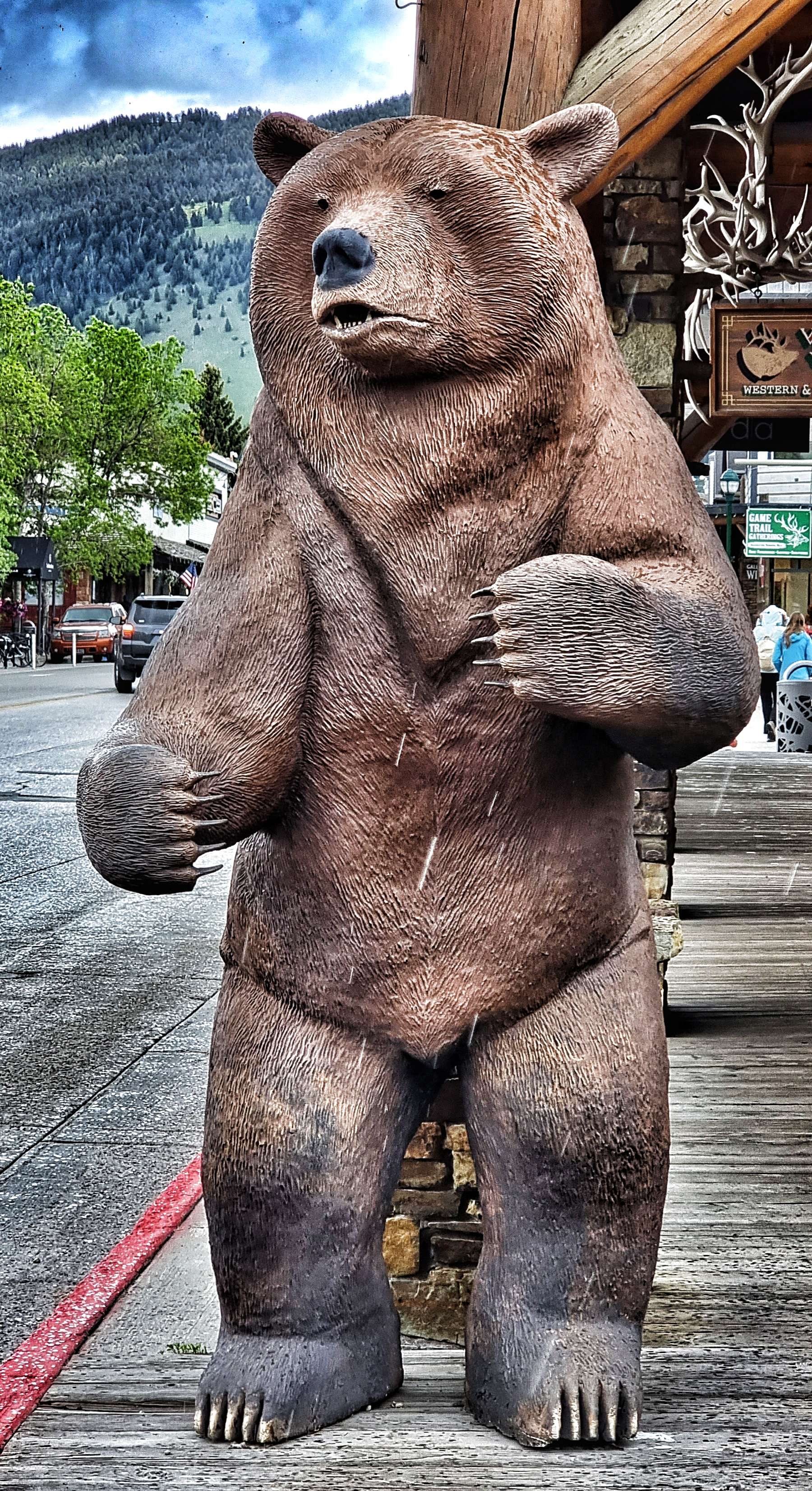
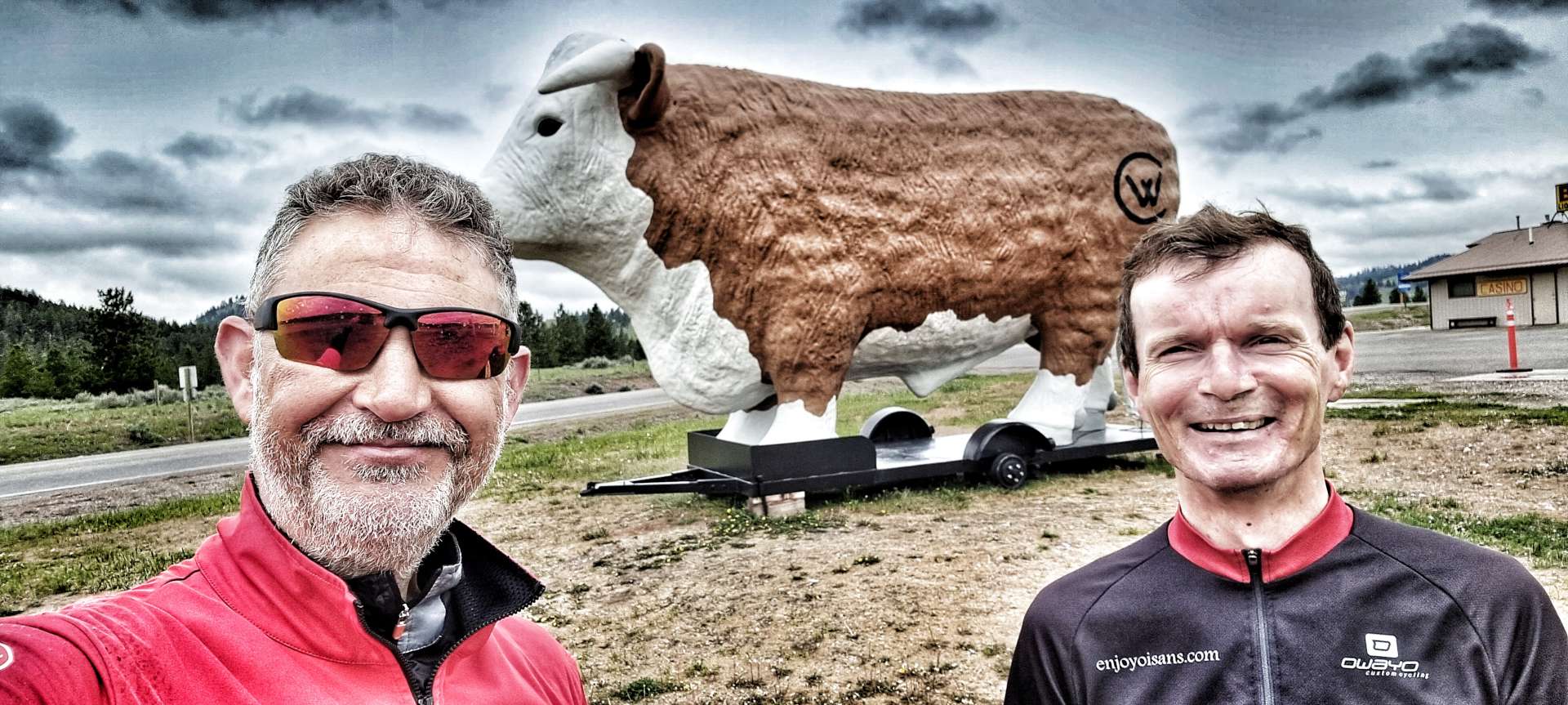
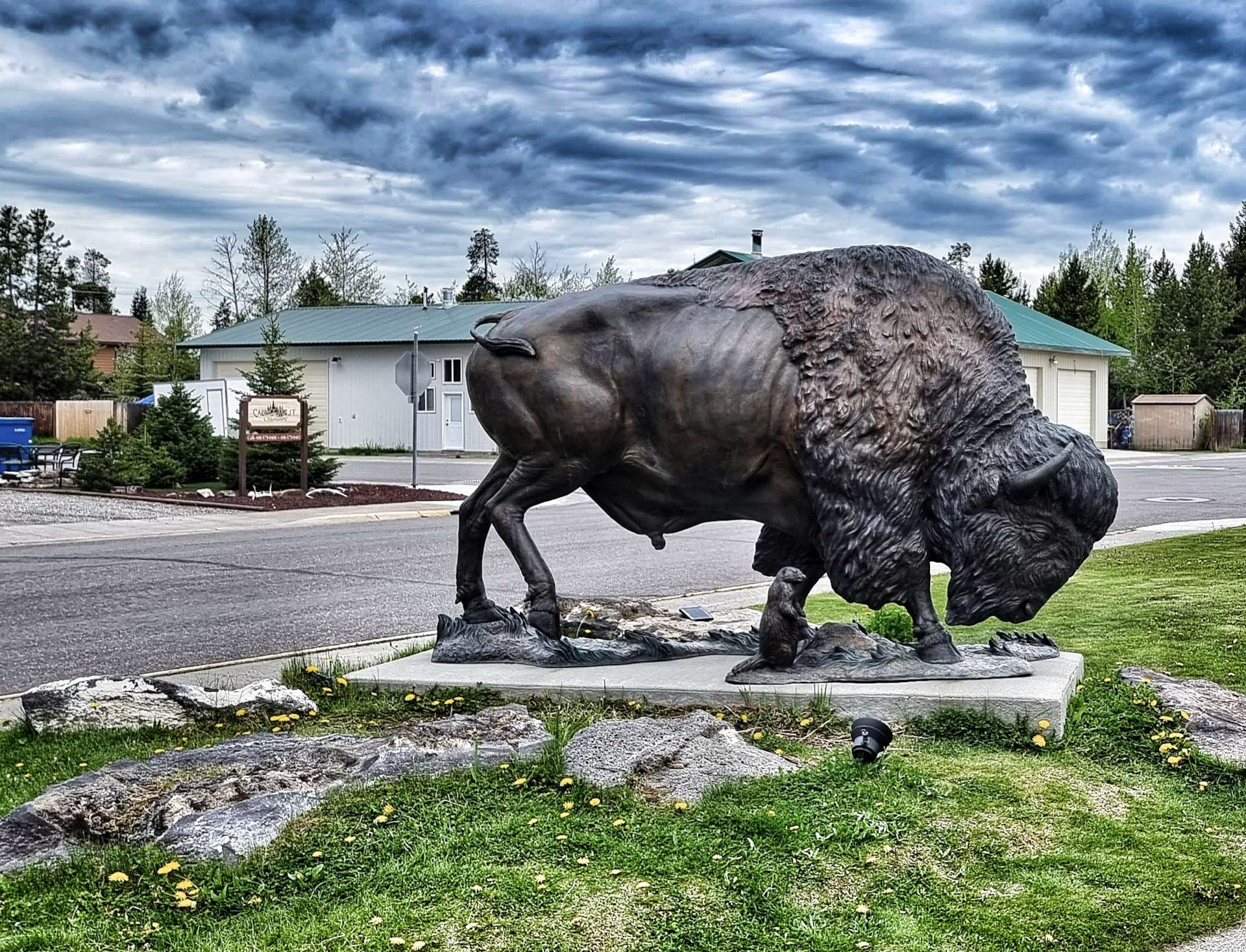
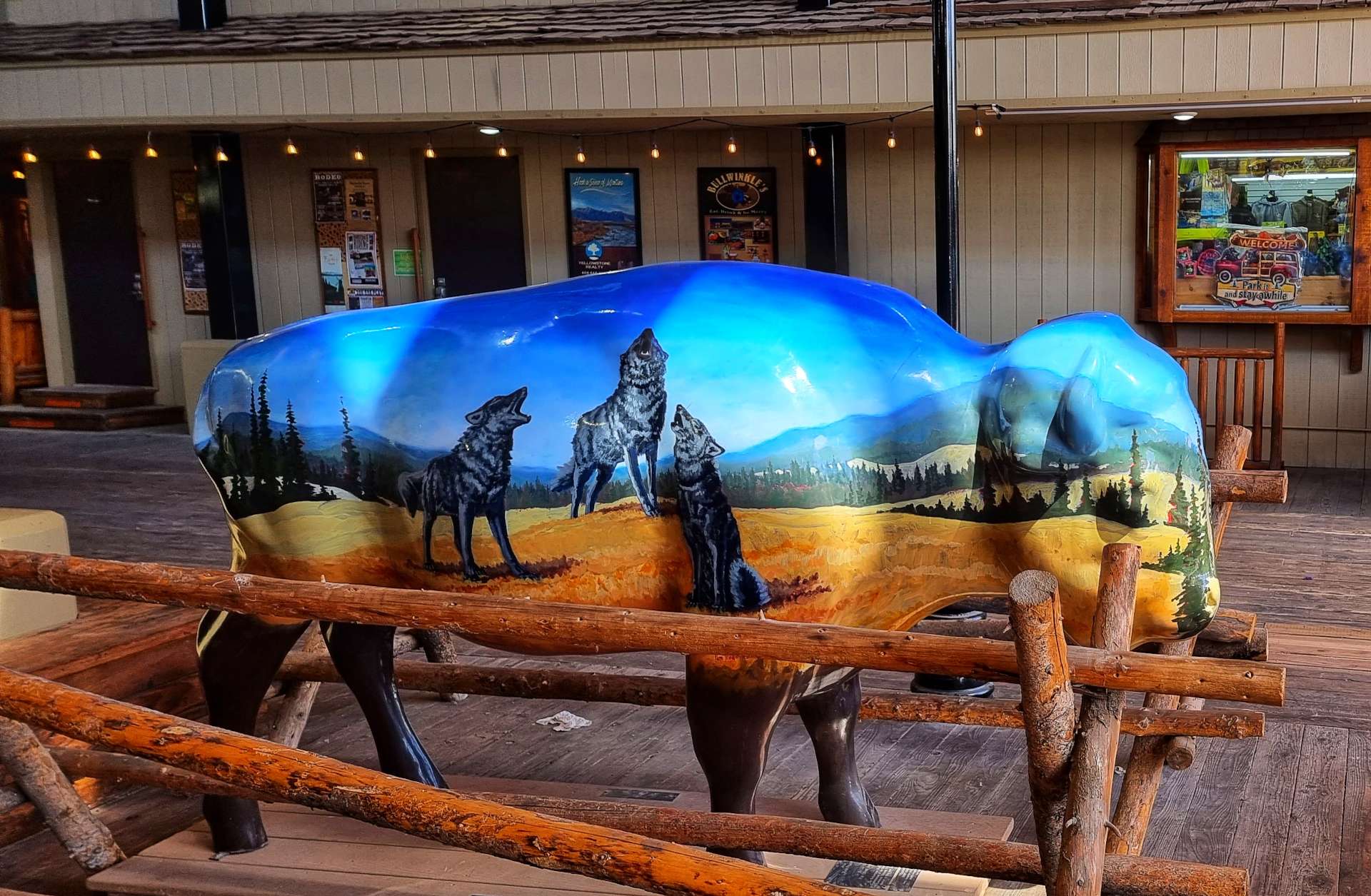
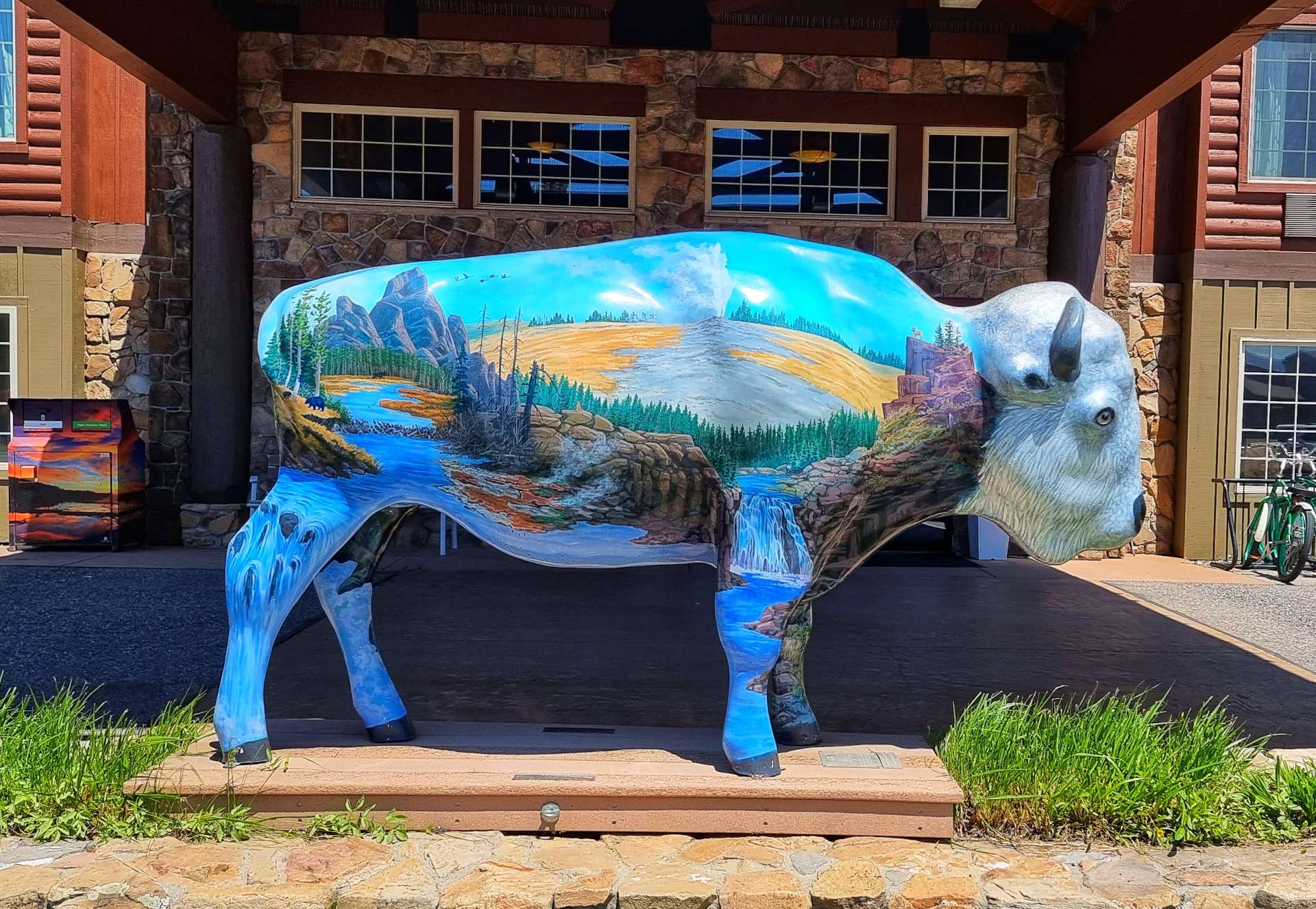
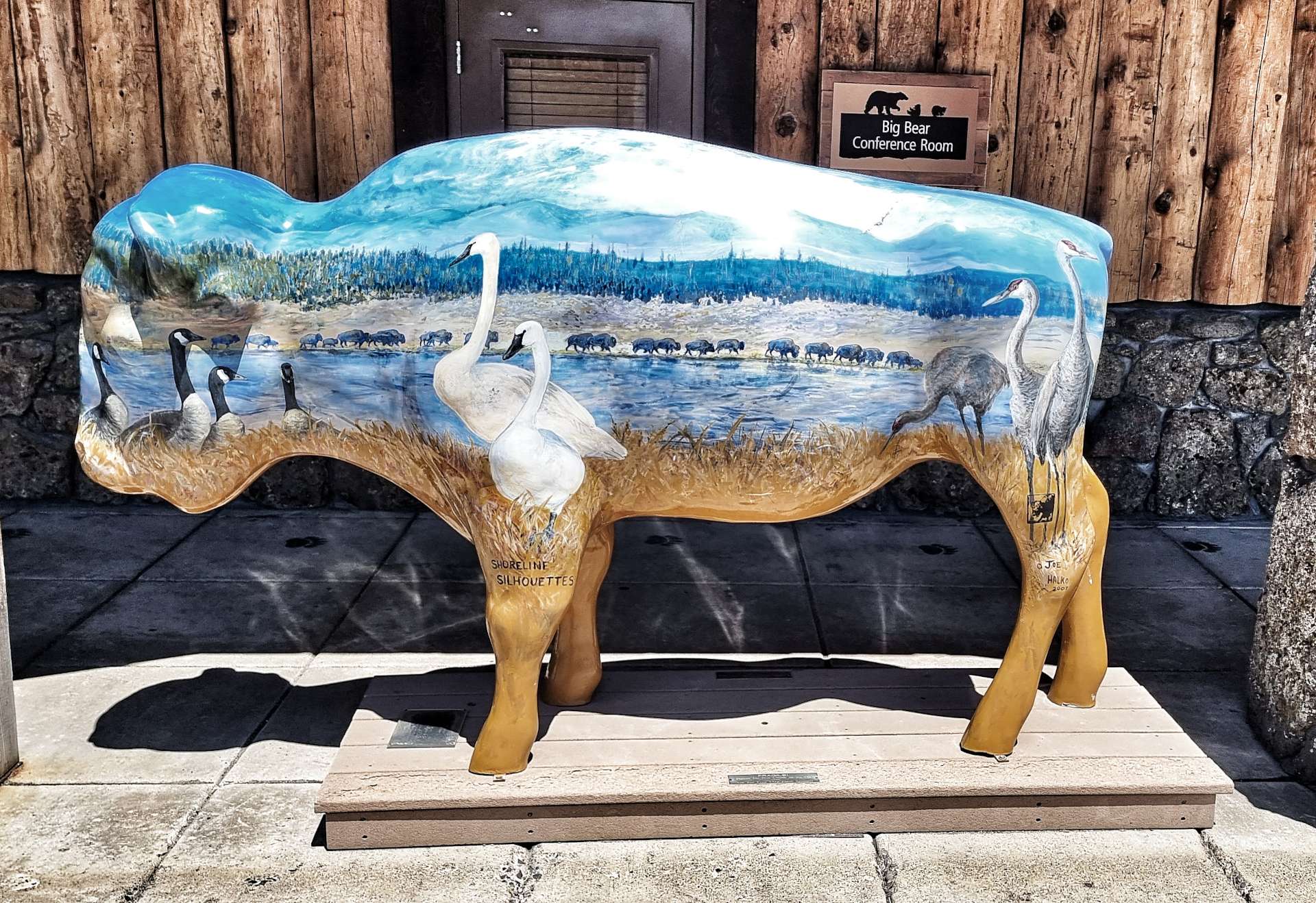
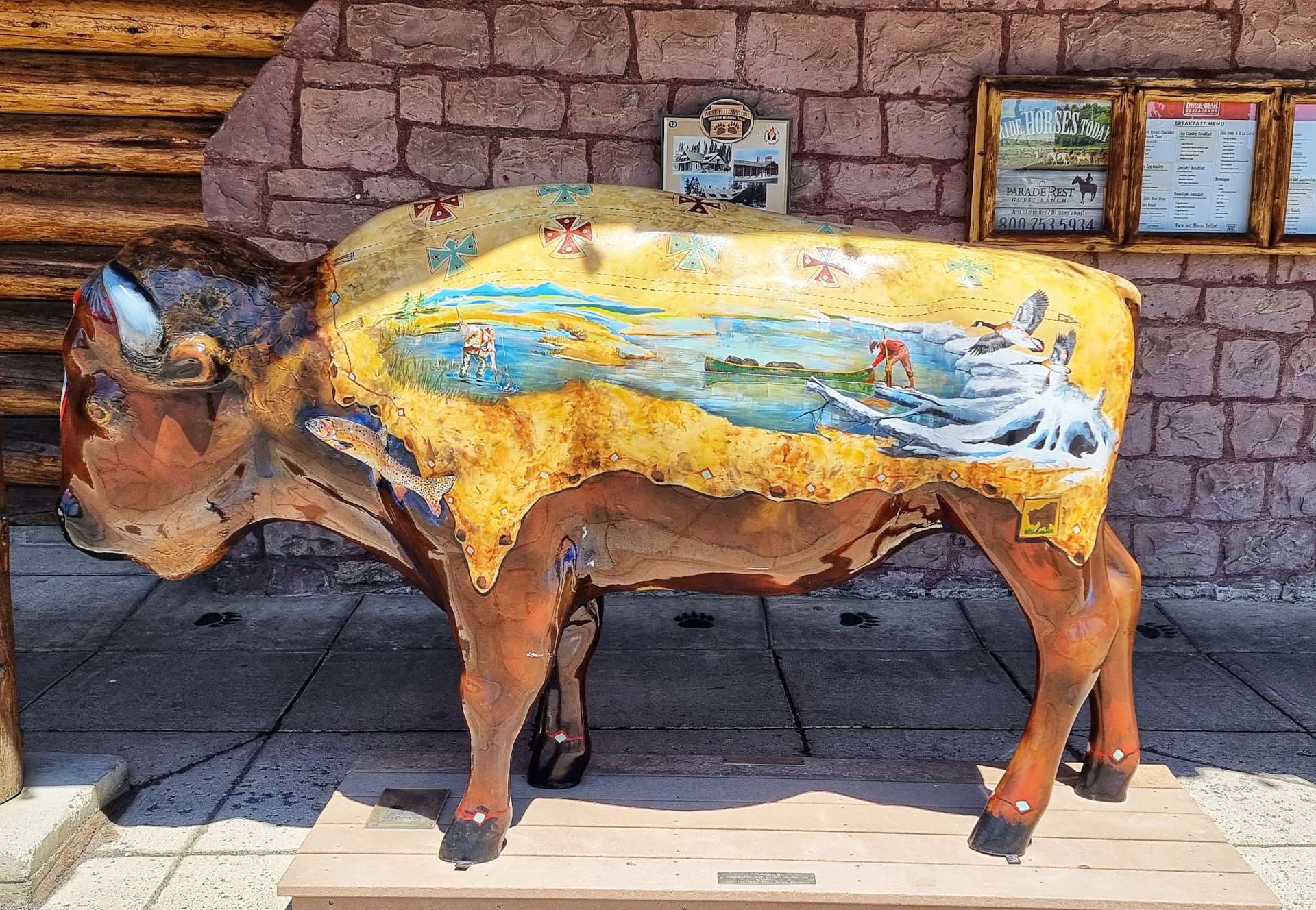
West Yellowstone has its own herd of bison sculptures – each individually painted.

West Yellowstone has had 5 names throughout its history. Before there was a town, stage coaches bringing passengers from Monida to Yellowstone National Park crossed the nearby park boundary. The location of that crossing & the surrounding area was known as Boundary.

Terminus applied to this location as the Union Pacific Railroad progressed to the soon-to-be town site. Riverside was the official name for the town’s first Post Office, opened in 1908. Many locals considered the name misleading, as the town was 2 miles away from the Madison river.

Early in 1910, the town’s name was officially changed to Yellowstone. This caused concern for the other 4 towns located at the entrances to the National Park (Gardner to the North, Cooke City to the North East, Cody to the East & Jackson / Teton to the South). It was felt that the name suggested this was the only entrance to the National Park.

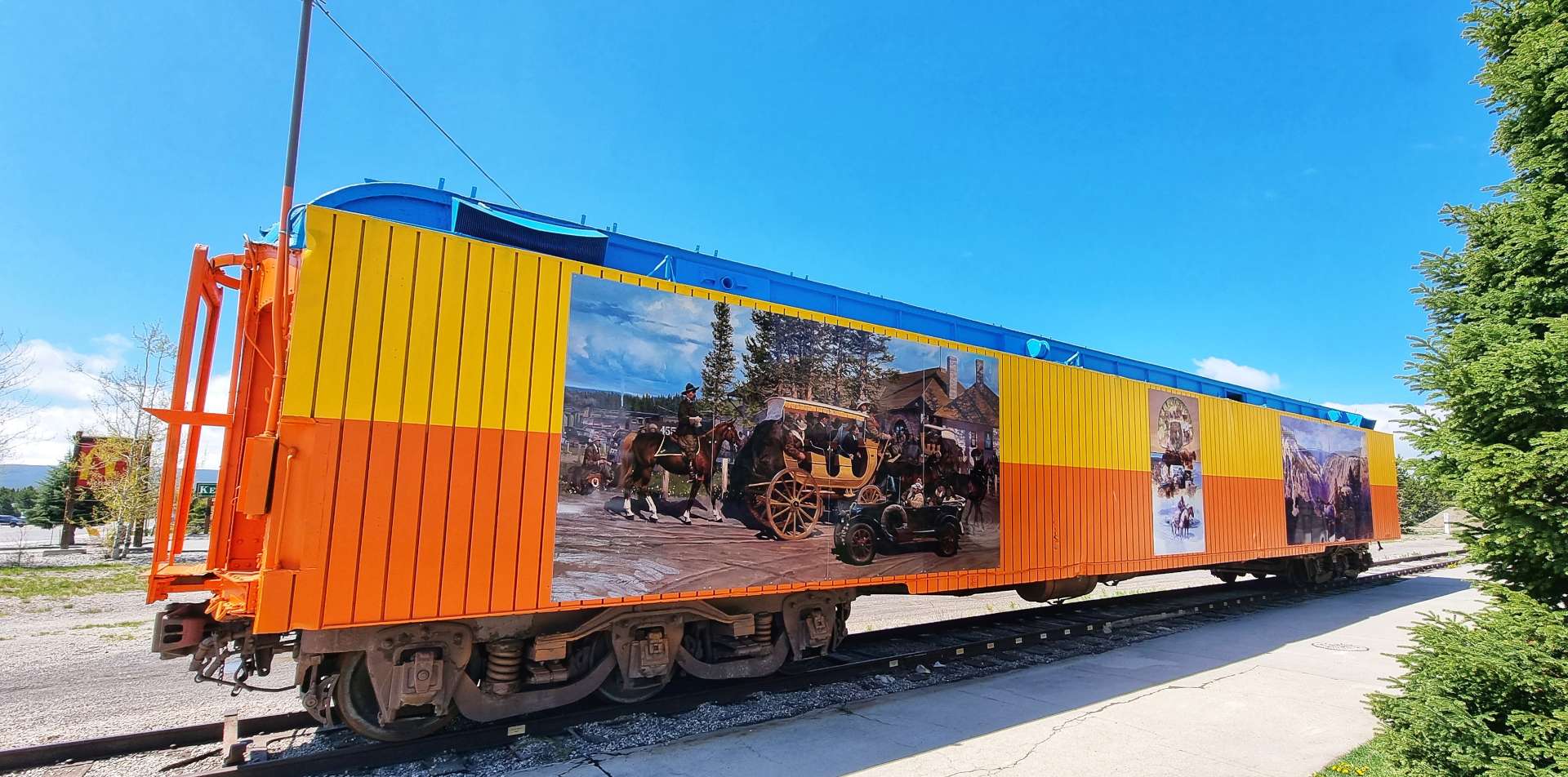
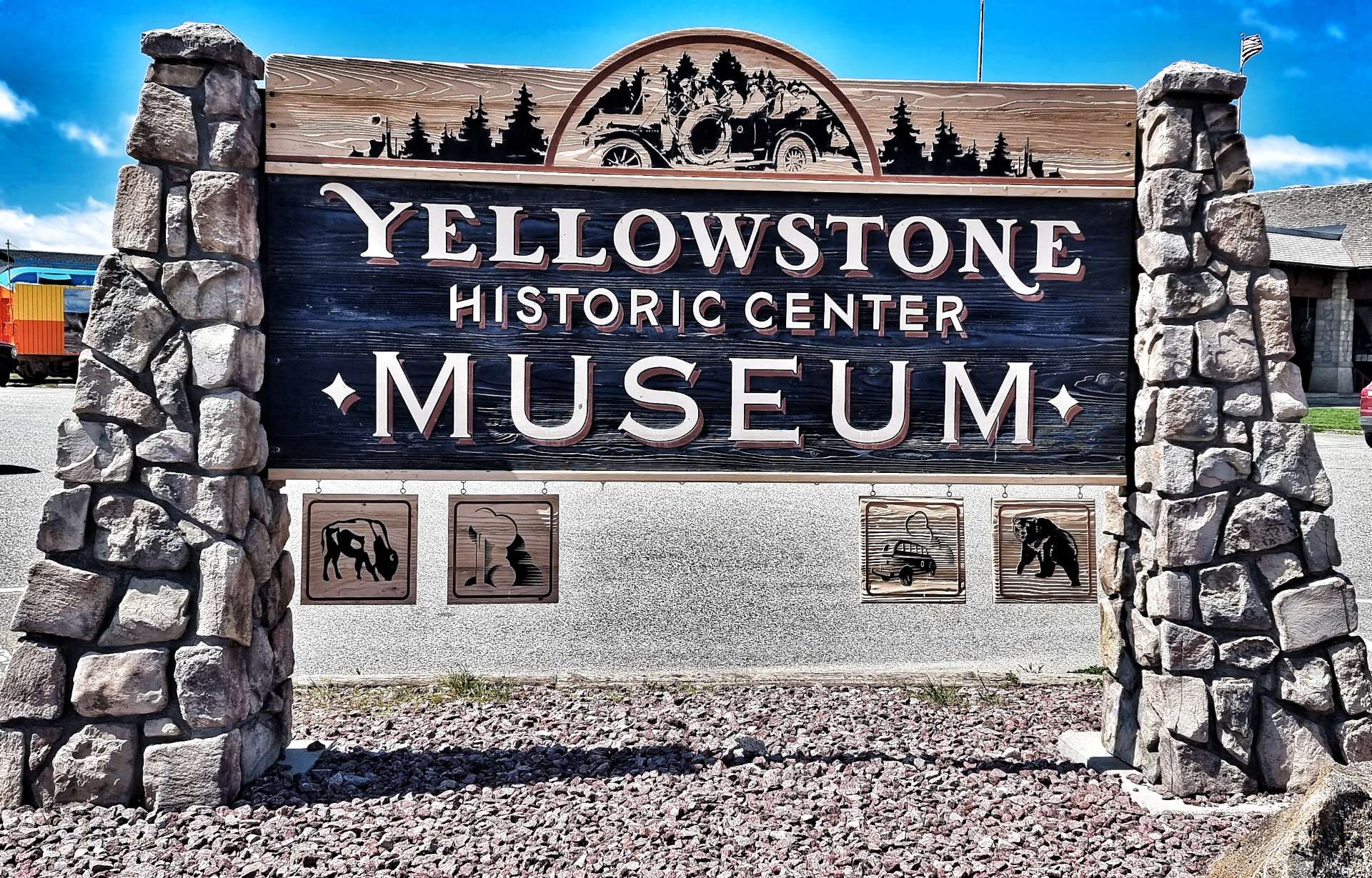
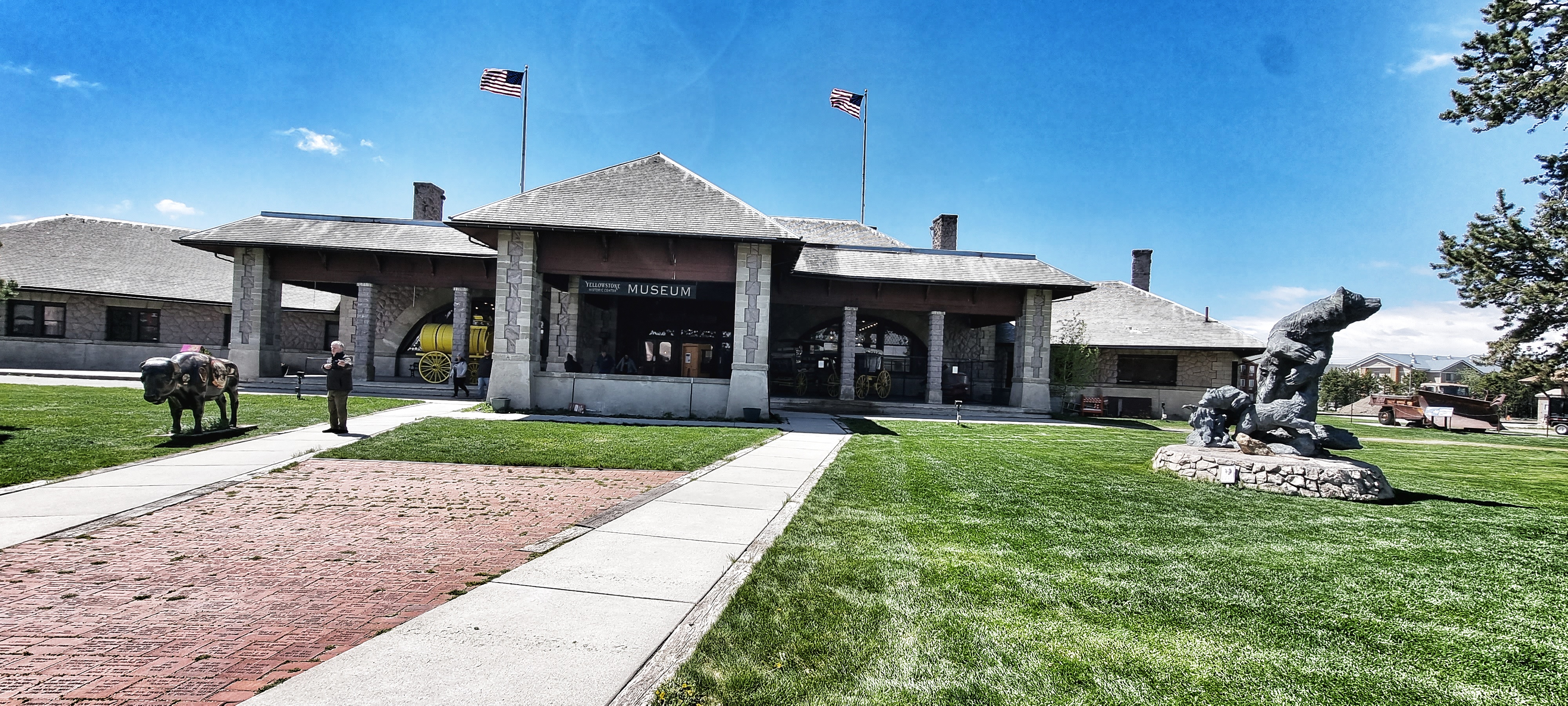
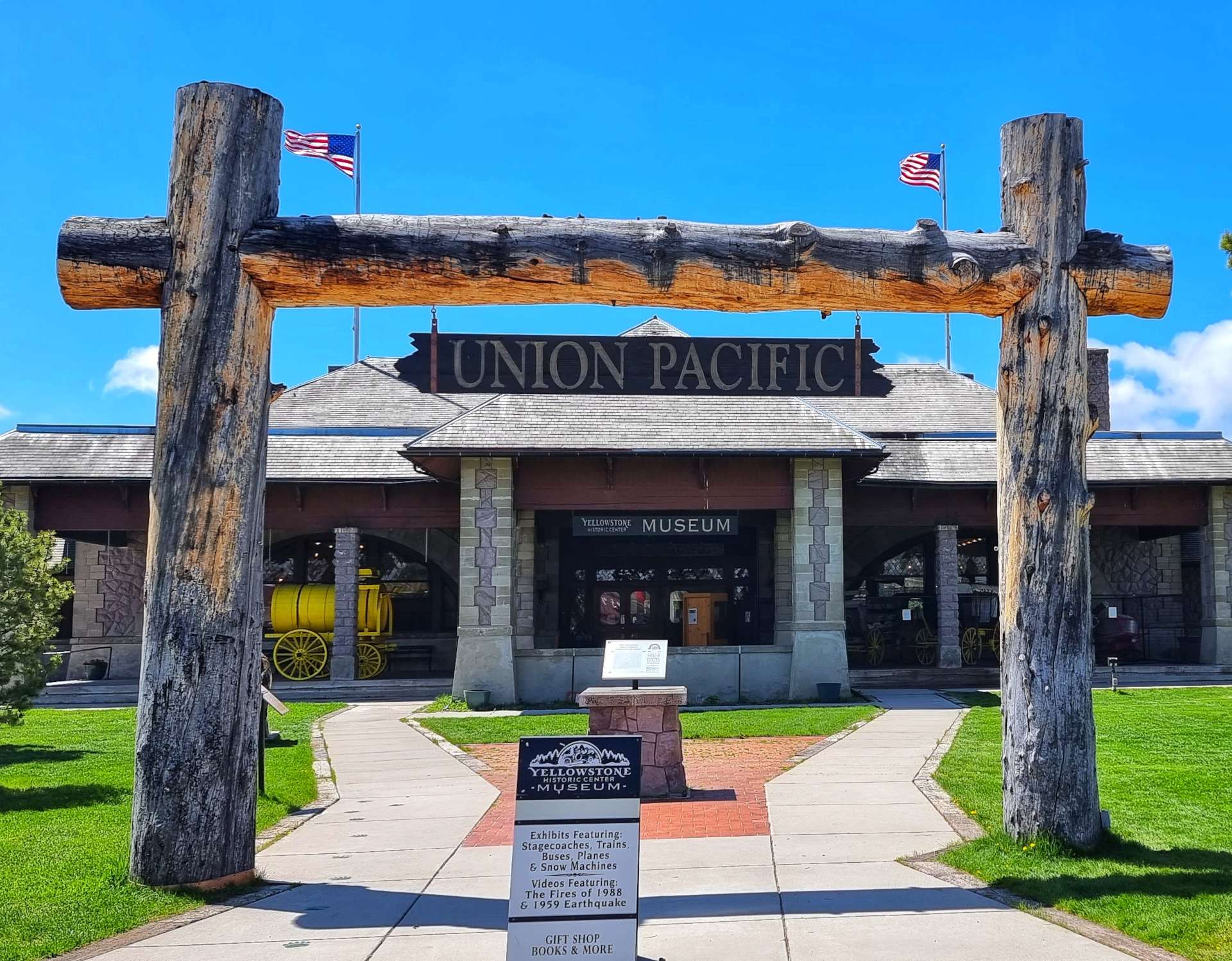
The descriptive name of West Yellowstone was given to the town in 1920 & it was formally incorporated in 1966. It has been the most popular entrance to the National Park since 1913 & regularly welcomes in excess of 4 million visitors per year. All this & more is described & explained in the Museum.

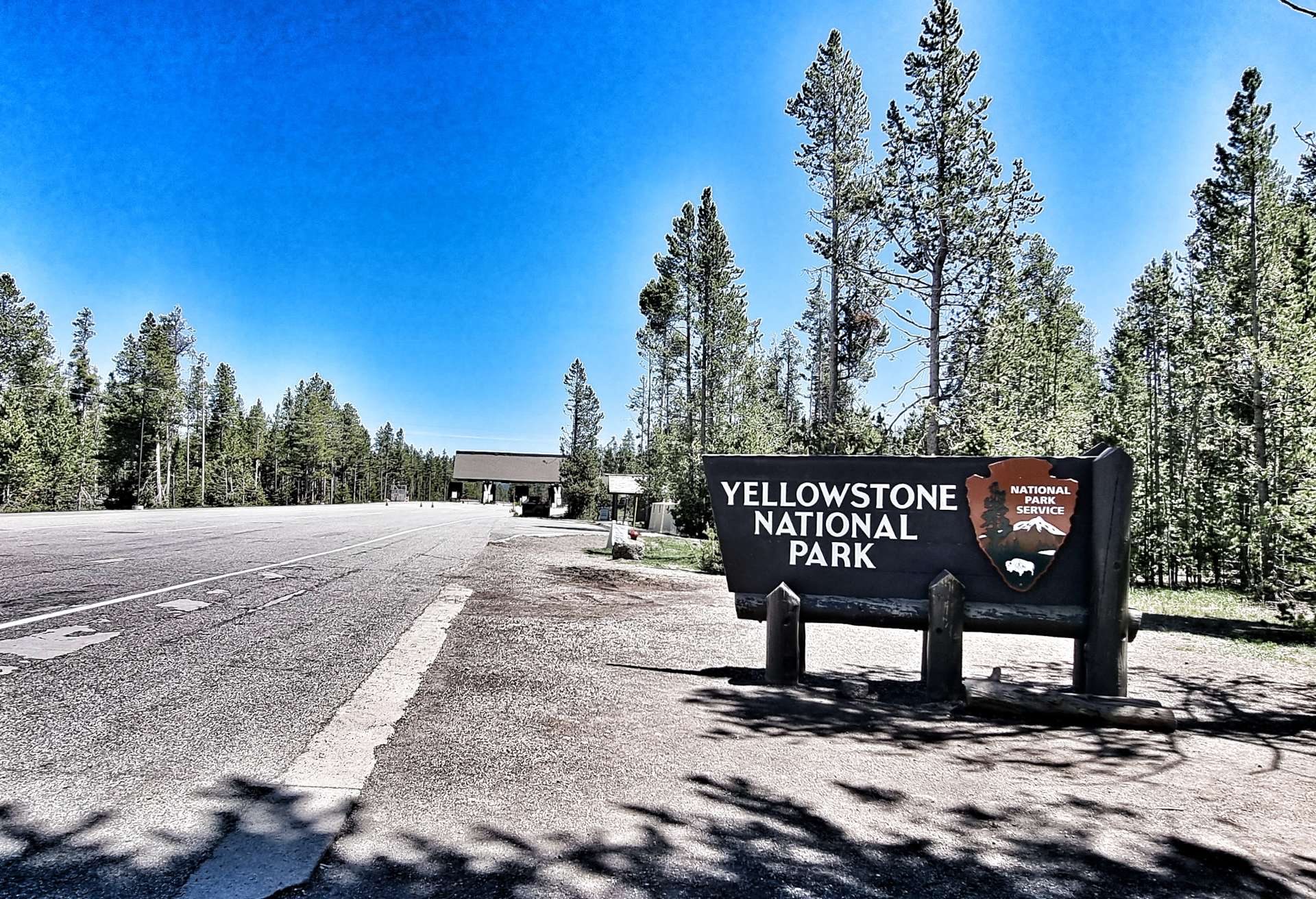
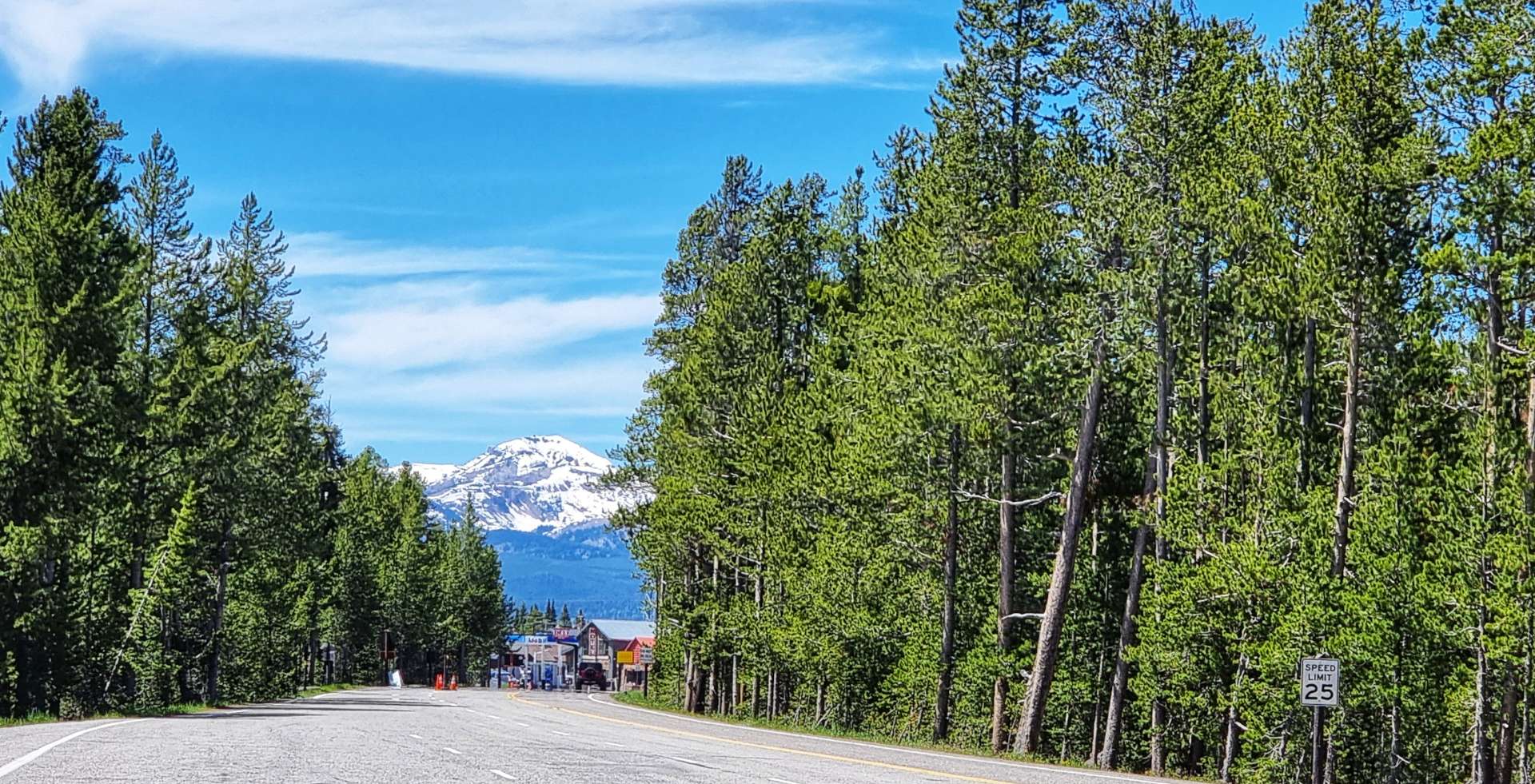
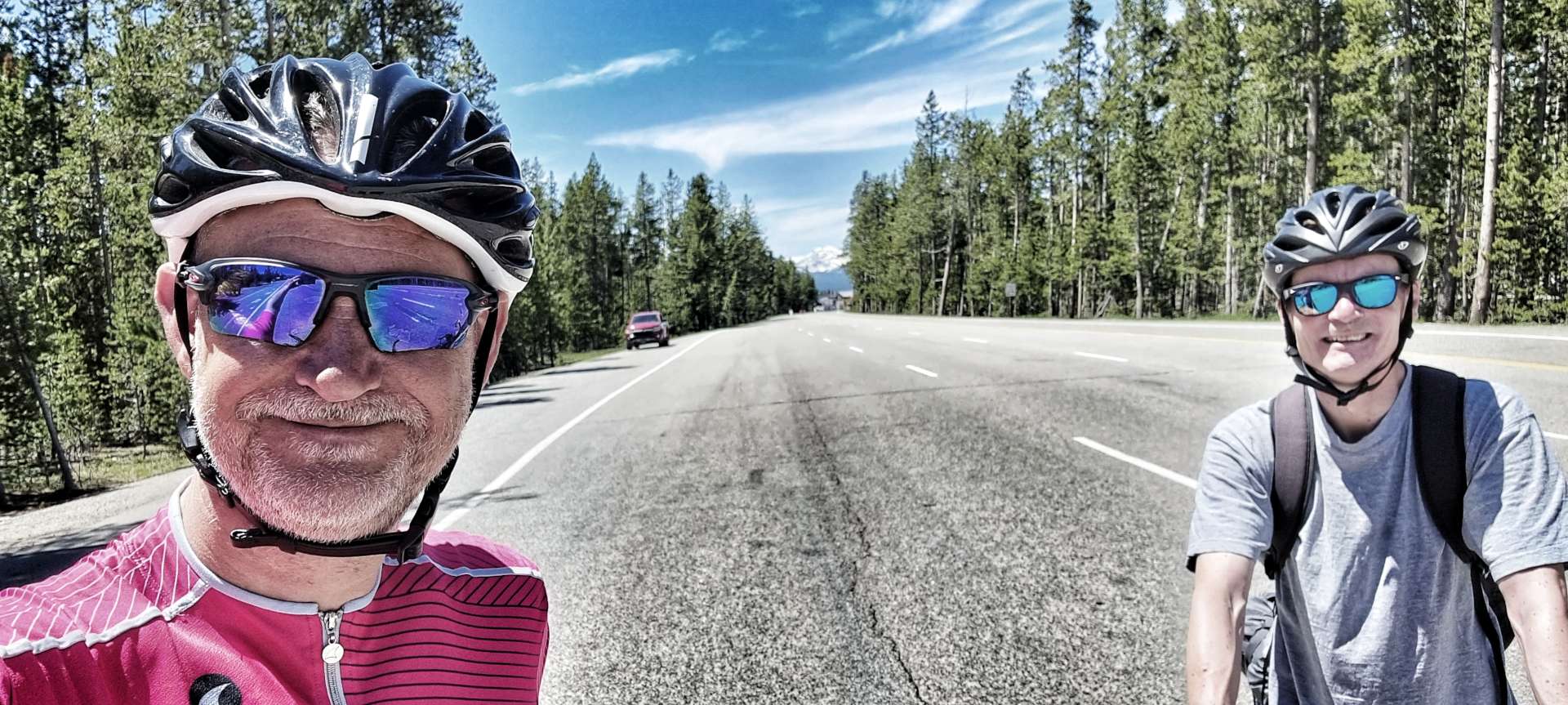
The IMAX cinema is another ‘must do’ activity – we watched an enthralling 45 minute film on the relationship between the animals & man. It was an uplifting story that encouraged us to take the 1 mile trip to the National Park gate & take a couple of photos. Normally this deserted stretch of road would be packed with cars trying to get into the National Park. After such an exciting afternoon, I needed an ice cream to cool myself down!
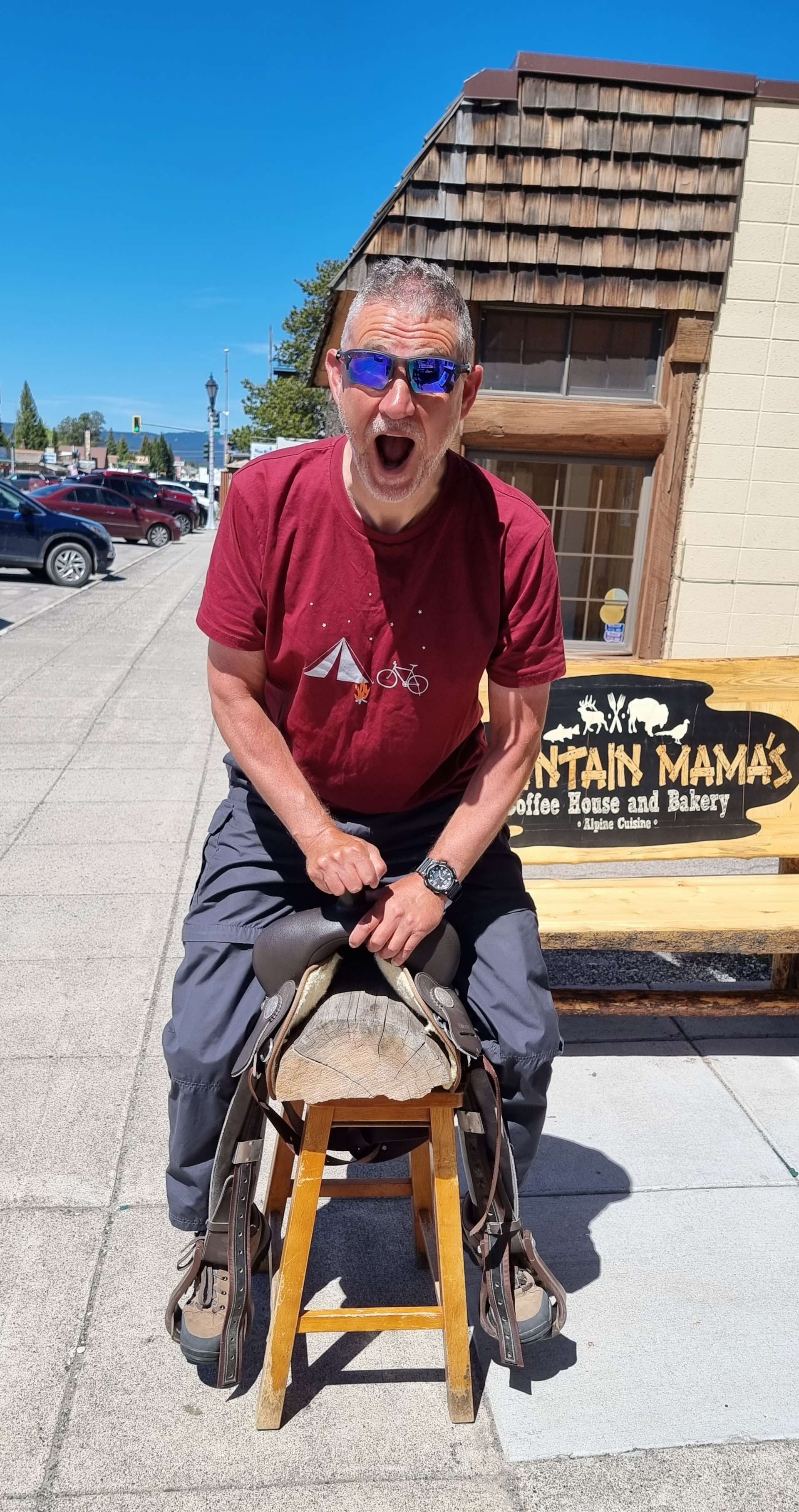
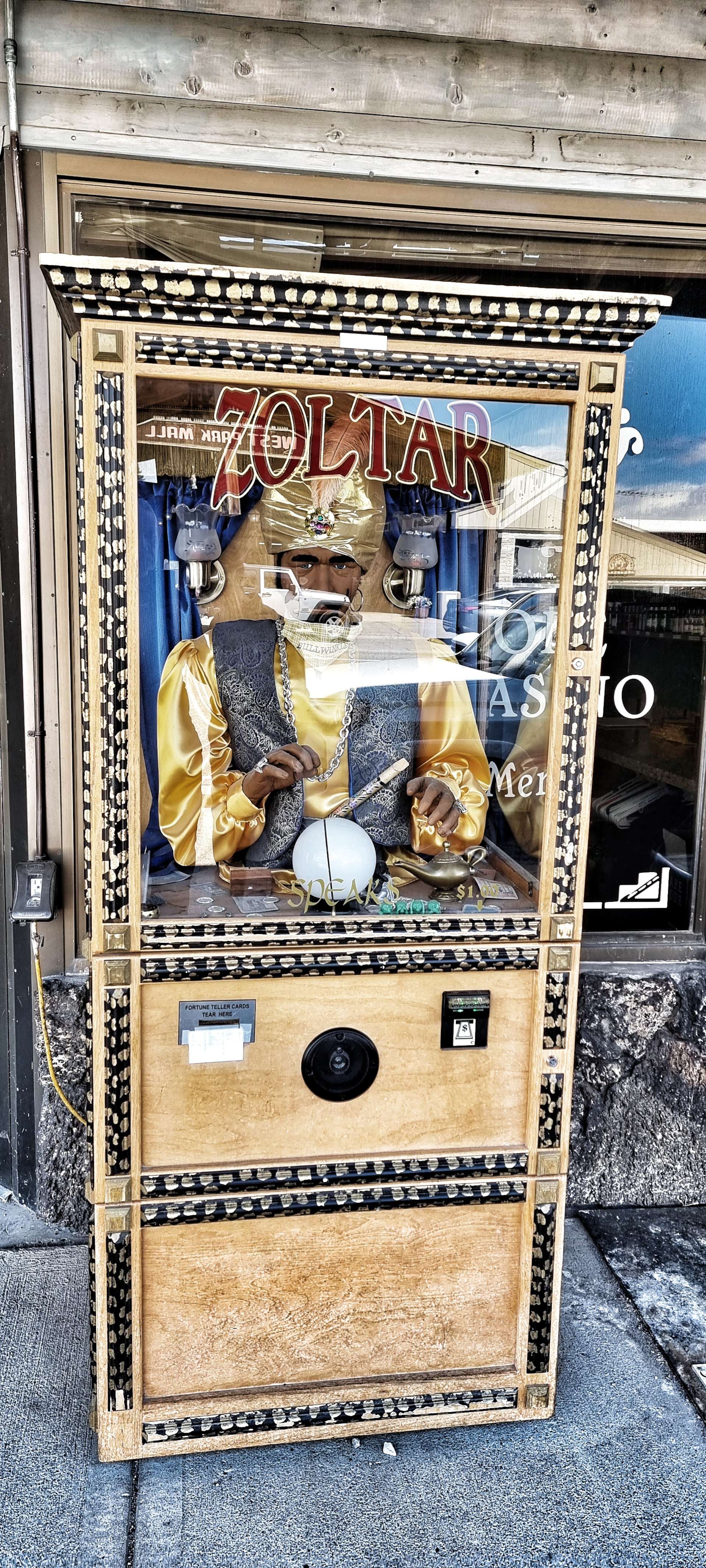
I visited West Yellowstone on a cycling tour in 2010, so had an idea of what to expect – I also wanted to revisit the Best Western to rekindle old memories – it isn’t a good photo, but it triggered some great memories. I also took the chance to catch up with Yogi Bear & Booboo, as well as practice riding another type of steed! I also asked Zoltar if he could predict whether Yellowstone would be open if we headed to a different Gate.

Although Zoltar didn’t provide an answer, we agreed that our best chance of seeing Yellowstone National Park would be to approach it from the South. We eventually worked out 4 short days that would get us to Jackson Hole for Monday 20th June. We could then take in Teton National Park on Tuesday 21st & then be reliant on the National Park opening by 22nd June. Alternatively, we would have to move on & pick up our original route further East.

As it’s now the 21st June, we know the National Park will open at 8am on 23rd. We have a campsite booked in Teton National Park on 22nd & have booked over-priced accommodation at Grant Village in Yellowstone on 23rd, but at least we’re now going to see the National Park!! I’ll post later in the week about what we did & how we got to Jackson – we had plenty of fun & a few adventures along the way!

Helena to West Yellowstone

Hey, Hey, Hey, we’re off to see Yogi at Yellowstone. Oh, no we’re not! Sunday 12th to Tuesday 14th June

Sunday 12th June – Helena to Three Forks

After a couple of rest days, we were looking forward to a 3 day block of riding which would take us to Yellowstone National Park to see Yogi Bear, Booboo & Ranger Smith. We were up & on the road under overcast skies by 9.15am, for what on paper looked to be a straightforward day – gradual climbing most of the day with a couple of small downhills.

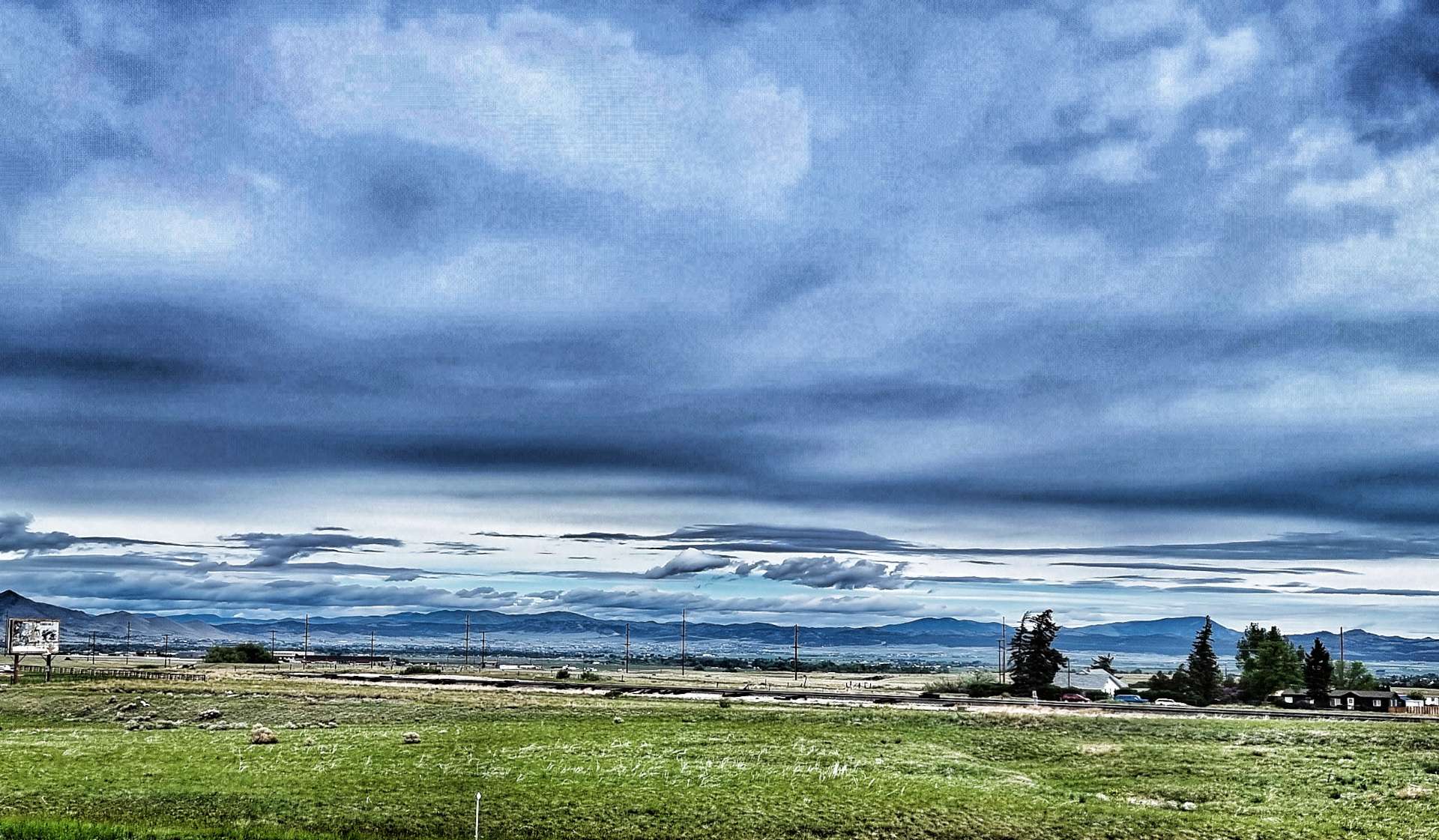
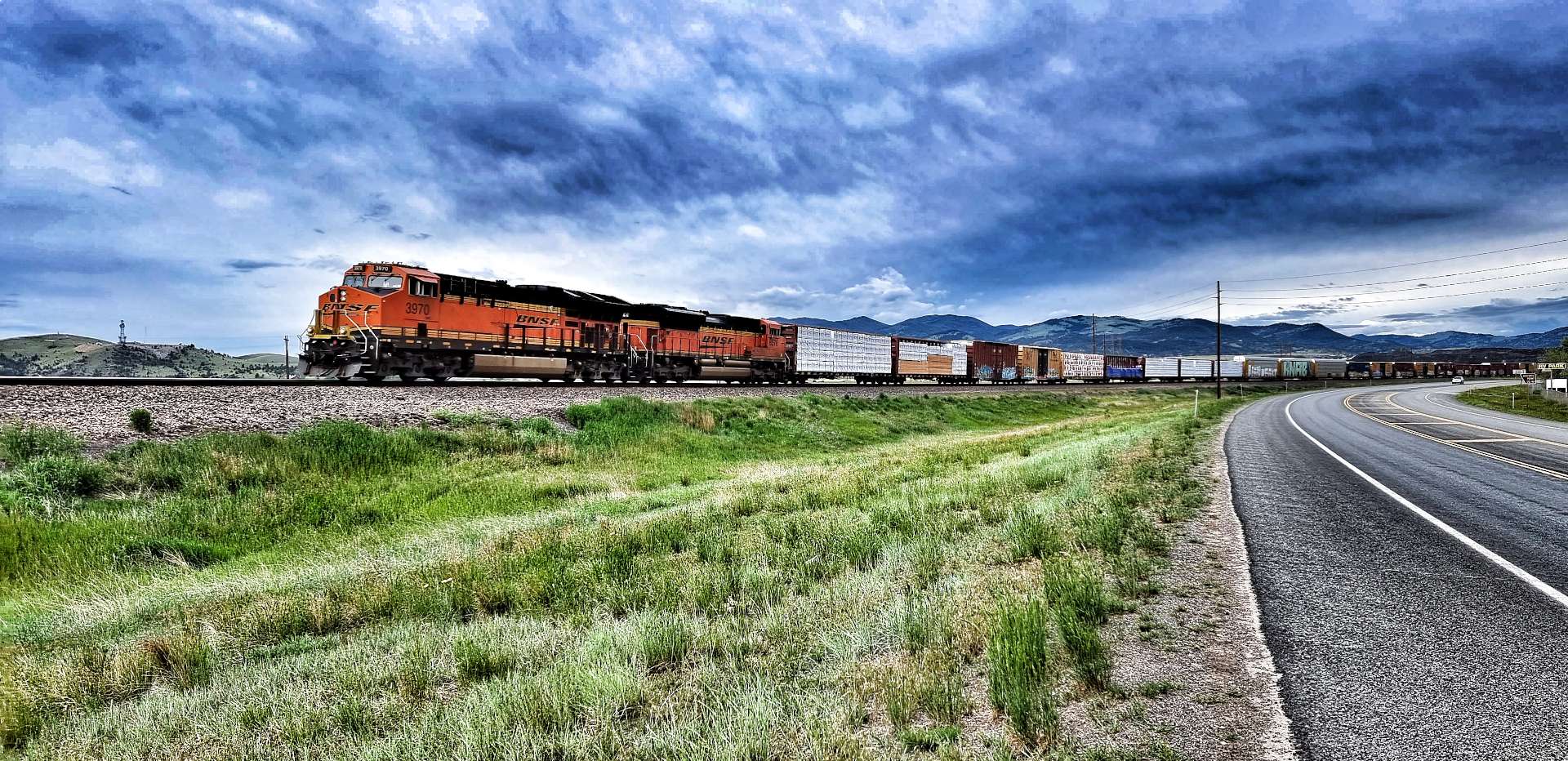
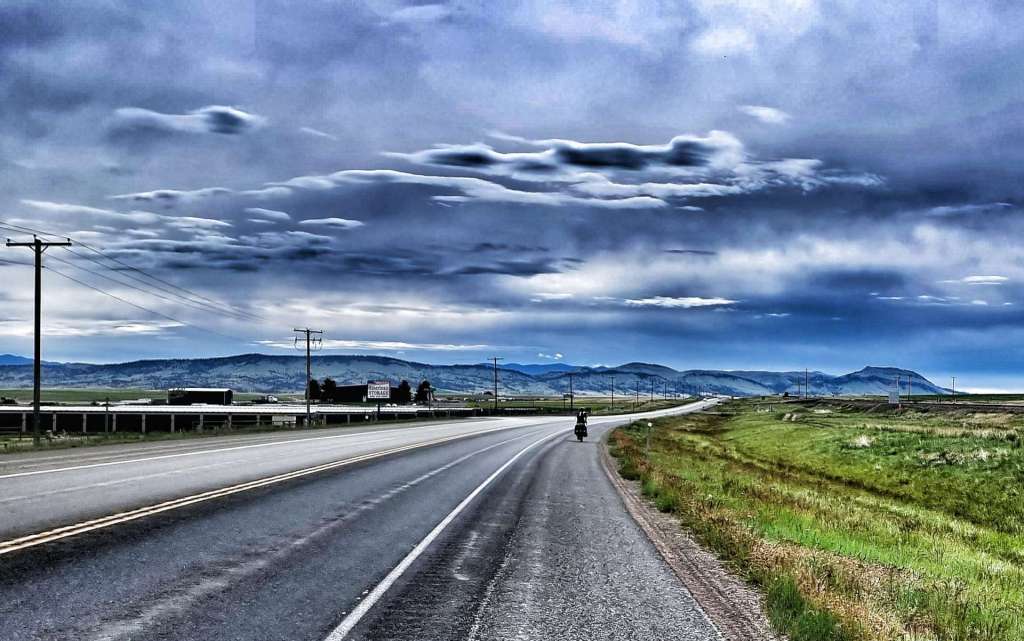
Before we’d even left town we passed a docile deer nibbling on a boundary hedge of a house – it can’t have been 5 yards away from us & to begin with I thought Sean was joking when he said “Deer Alert!” & as a result I missed my opportunity for another deer close-up. We soon picked up Highway 287, which was going to be our road for the next 3 days. We were surrounded by big mountains, with the railroad off to our right & big, cloudy skies overhead. There was also a wind that was beginning to pick up some momentum & it was blowing across us & into our faces!

A combination of cross-headwind & a small incline results in slow progress for me – I realised this when I deliberately let Sean ride off the front so I could get a photo, then had to work really hard to get back in his wheel! The road was quite busy with RV’s making their way towards Yellowstone & one poor deer found himself on the wrong side of the road. We watched vehicles speeding past until the deer spotted a gap & sprinted across the road, fleeing into the wide open spaces.

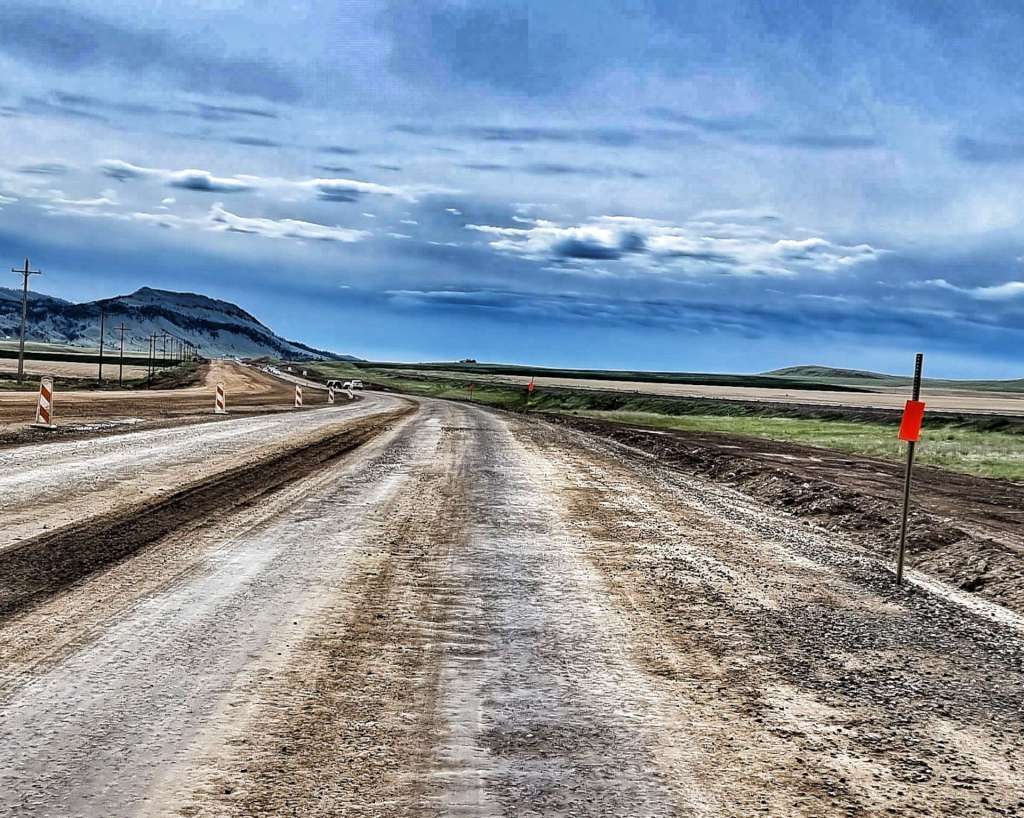
After about 10 miles we hit a 4 mile patch of rough gravel laid on mud, as the main carriageway was being resurfaced – we bumped & rattled along, making progress as fast we could, with cars & RV’s impatiently passing us.

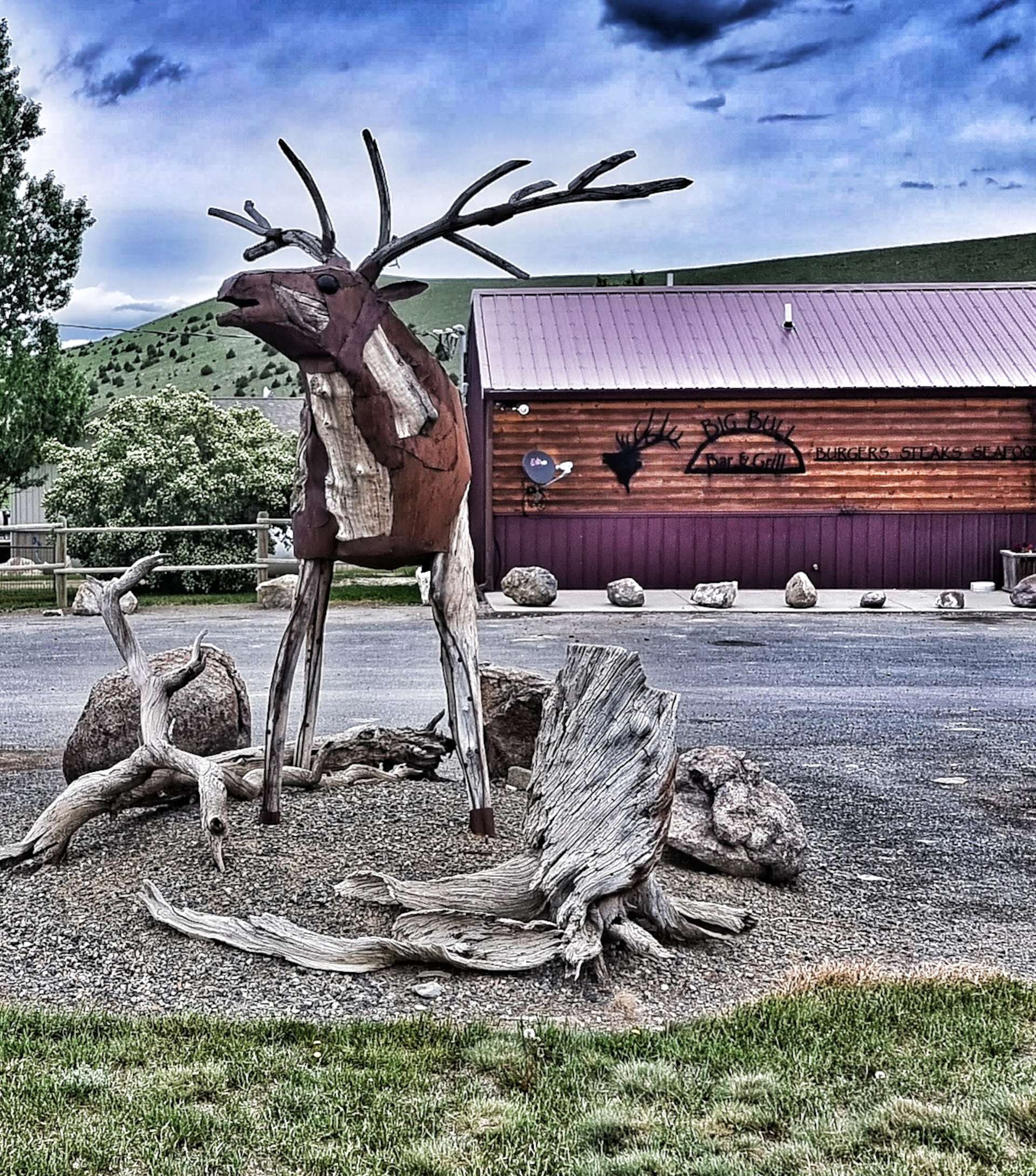
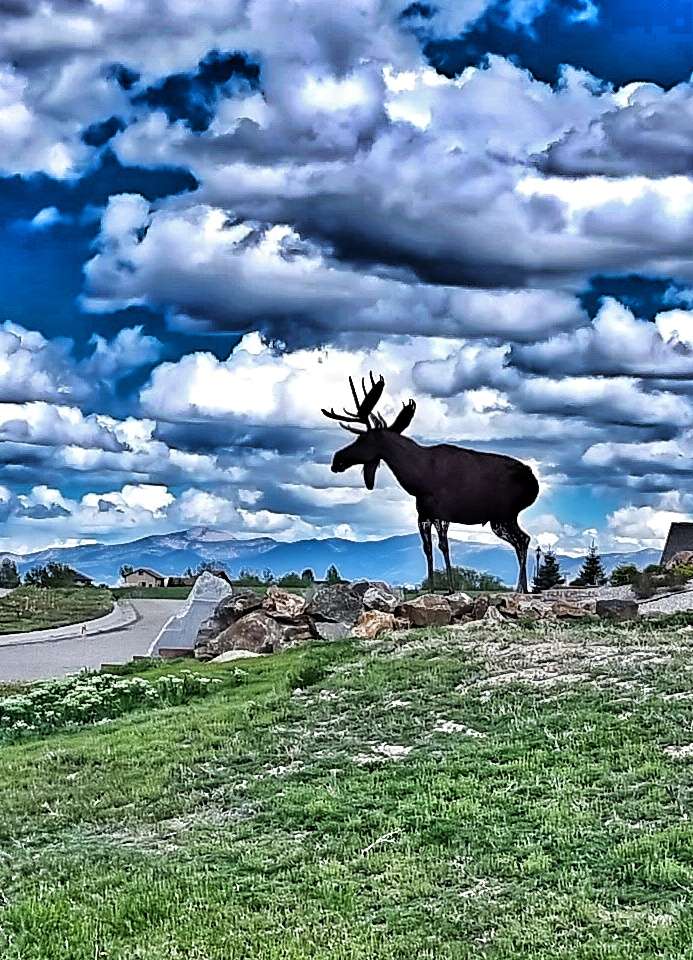
We were still very much in ranching & cattle country, as the long, straight road stretched into the distance. For about an hour the scenery hardly seemed to change at all (good practice for when we hit Mid-USA), until we stopped at a Historic Marker to learn about the town of Winston. It now has a population of less than 100, but in the 1860’s & 70’s it was big enough to have its own newspaper, as well as 7 saloons – this was at the height of the gold rush. Having topped up my knowledge banks, I grabbed a photo of the moose statue made of metal & wood!

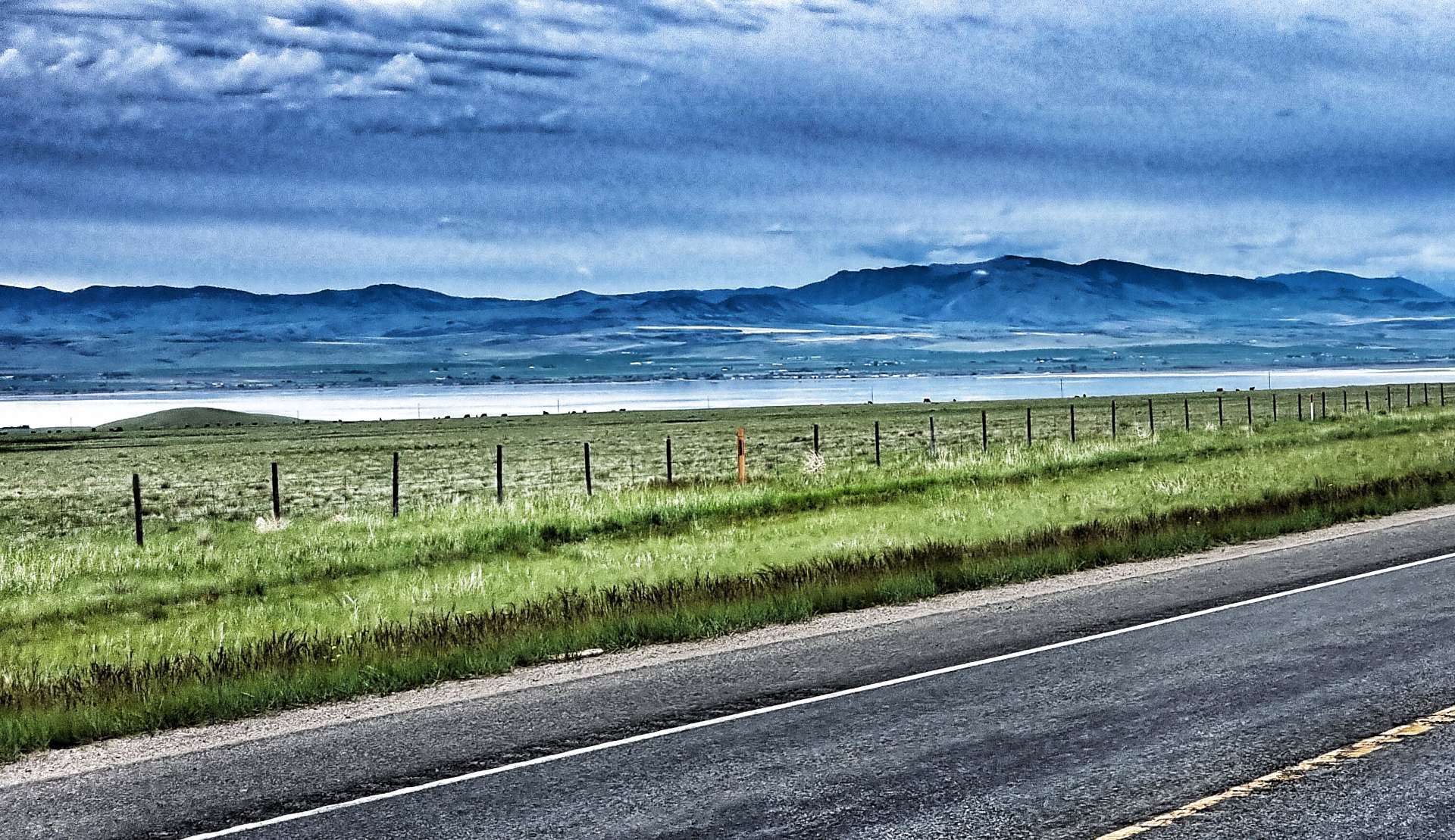
We started a long, shallow descent & had to pedal, so we knew for certain that the wind was picking up & that we were going to be working hard for the remainder of the ride. As we descended, we could see Canyon Ferry Lake getting even nearer. The lake is the third largest body of water in Montana, with 76 miles of shoreline & was created when a hydro-electric dam was built between 1949 & 1954. It’s a popular recreation site, offering fishing, boating, hiking, camping & swimming opportunities as well as having a wetland & wildlife conservation area.

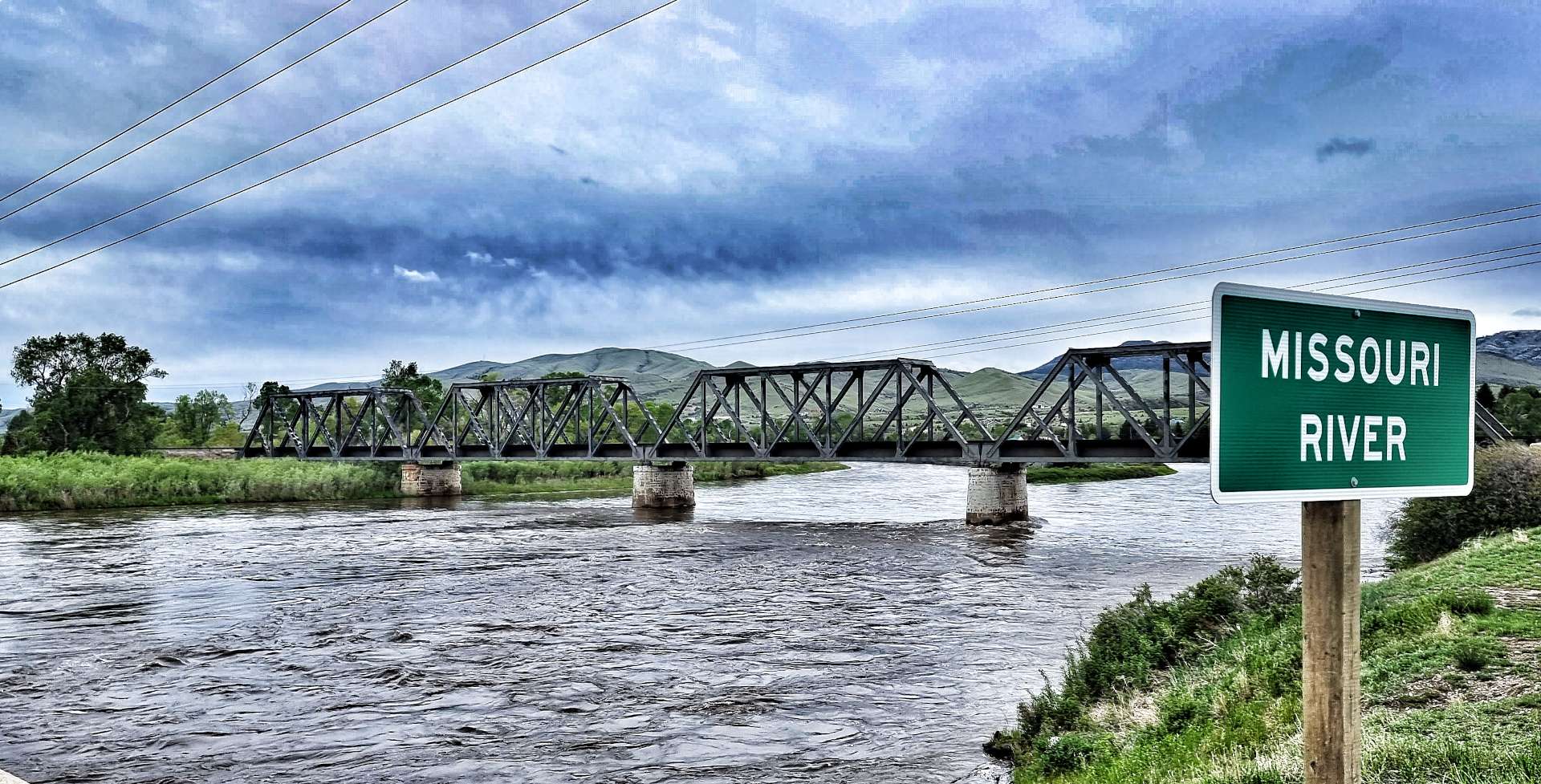
The Missouri river is the longest in the USA at 2,341 miles & the source of water for Canyon Ferry Lake. It’s considered the main artery for the Great Plains, supporting exploration, growing of food, trade & transportation – we hope to pass 2 of its 3 tributaries later in the week.

About 3 miles after crossing the Missouri, we spotted a Historical Site sign that took us about a mile down a gravel track & took us right to the riverbank. York was a black slave to William Clark & was integral to the success of the Corp of Discovery – we were looking across to York Islands, one of two places in Montana which were named after him. Clark spent 5 years trying to negotiate York’s freedom from slavery, but he remained a black man living in a world of segregation.

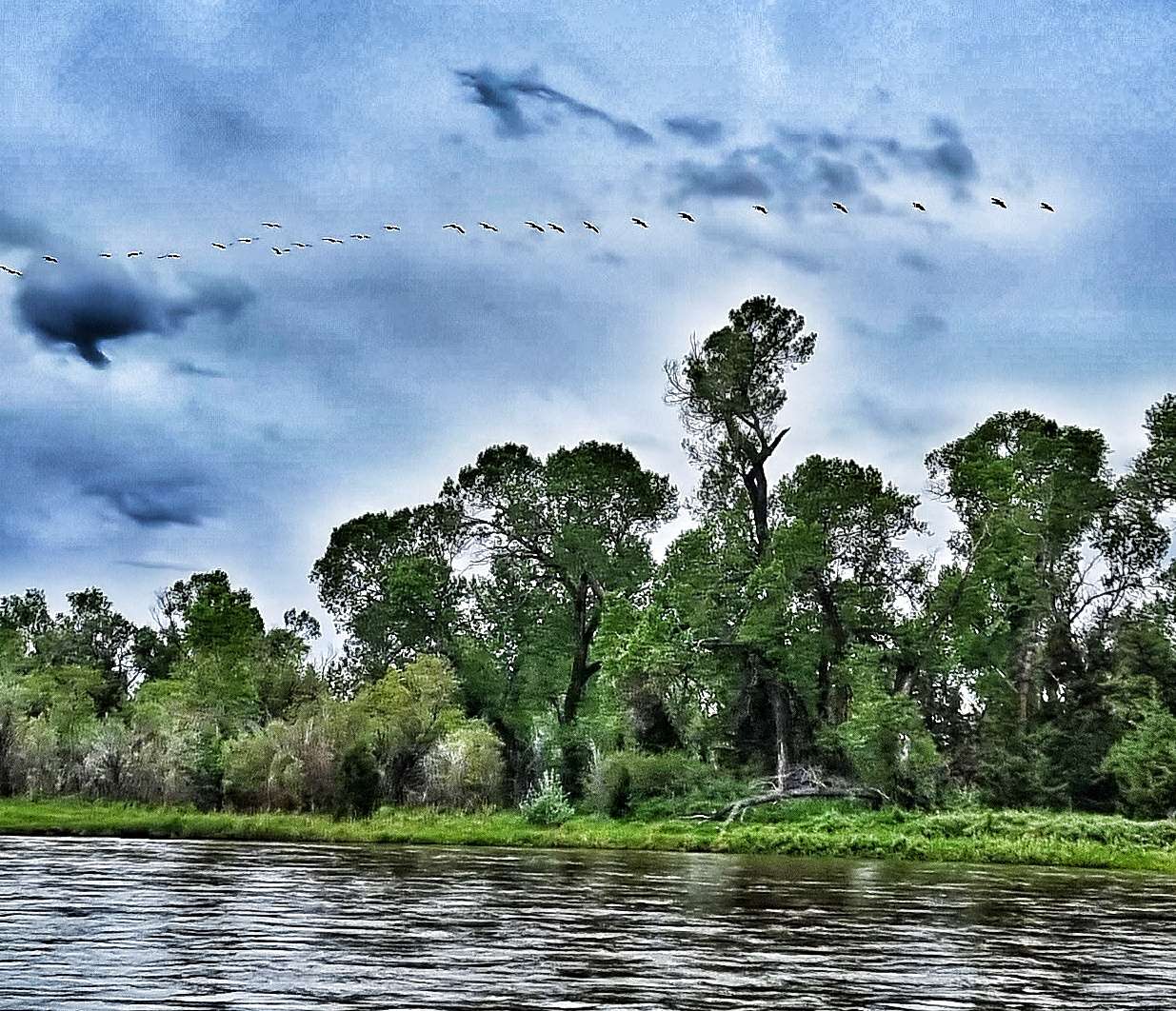
As we looked over to York Islands, above us a chevron of Canada Geese were practicing their aerobatic manoeuvres – they kept splitting into small strings, then re-forming into a long line again. After heavy rains & late snow melts in the Rocky Mountains, the Missouri was looking full to overflowing.

As we continued towards Townsend, we passed a small resort complex on our right, which offered wedding, christening & elopement ceremonies! Their post box at the end of their drive was an exact replica of their chapel. Our coffee stop today didn’t warrant a photo – lukewarm, stewed coffee & a processed muffin – not every day is gourmet cake day!!

Leaving Townsend behind, we continued on an arrow straight road with a gusting cross-headwind from the right – this wasn’t good news, because as we reached Toston it became a full on headwind. We struggled to maintain 10 mph on the flat & when the road gradually rose, our speed dropped correspondingly!!! I foolishly stopped to take a photo of Sean against a mountain backdrop & a combination of the headwind, gradual climb & tiredness meant it took me 3 miles to get onto his back wheel again!

As we crested the long drag, we could make out Three Forks way off in the distance, but at least it was downhill! You may be able to make out the headlights of the cars coming up the hill towards us – it was only about 4pm, but it was already getting murky & that’s when we both realised that although the headwind was tough, rain would have been way worse! This was the closest we could get to saying “What an epic day out!”. Tomorrow’s another day & hopefully the wind will have calmed down & it will still be dry.

Stage Stats – 66 miles, 1,667 feet of climbing. Gradually climbing all day into a character building headwind!

Monday 13th June – Three Forks to Ennis

We woke up to overcast skies & trees bending in all directions – another headwind had been delivered, but at least it wasn’t raining…….it waited until we’d had a Frosties breakfast & tasteless motel coffee before it turned up! If you’ve been taking part in my adventure for a while, my last sentence yesterday set up today’s weather!!!

Almost immediately we passed the turn-off for the town of Three Forks (we’d stayed at the Travelodge on the I-90 junction) & picked up the Jefferson river for a short while (one of the 3 tributaries to the Missouri). The early miles were rolling in nature, which combined with a headwind made getting into a rhythm more of a challenge than usual. However, it wasn’t all bad news, as we could see slightly less dark clouds in the distance & after 10 miles the rain stopped.

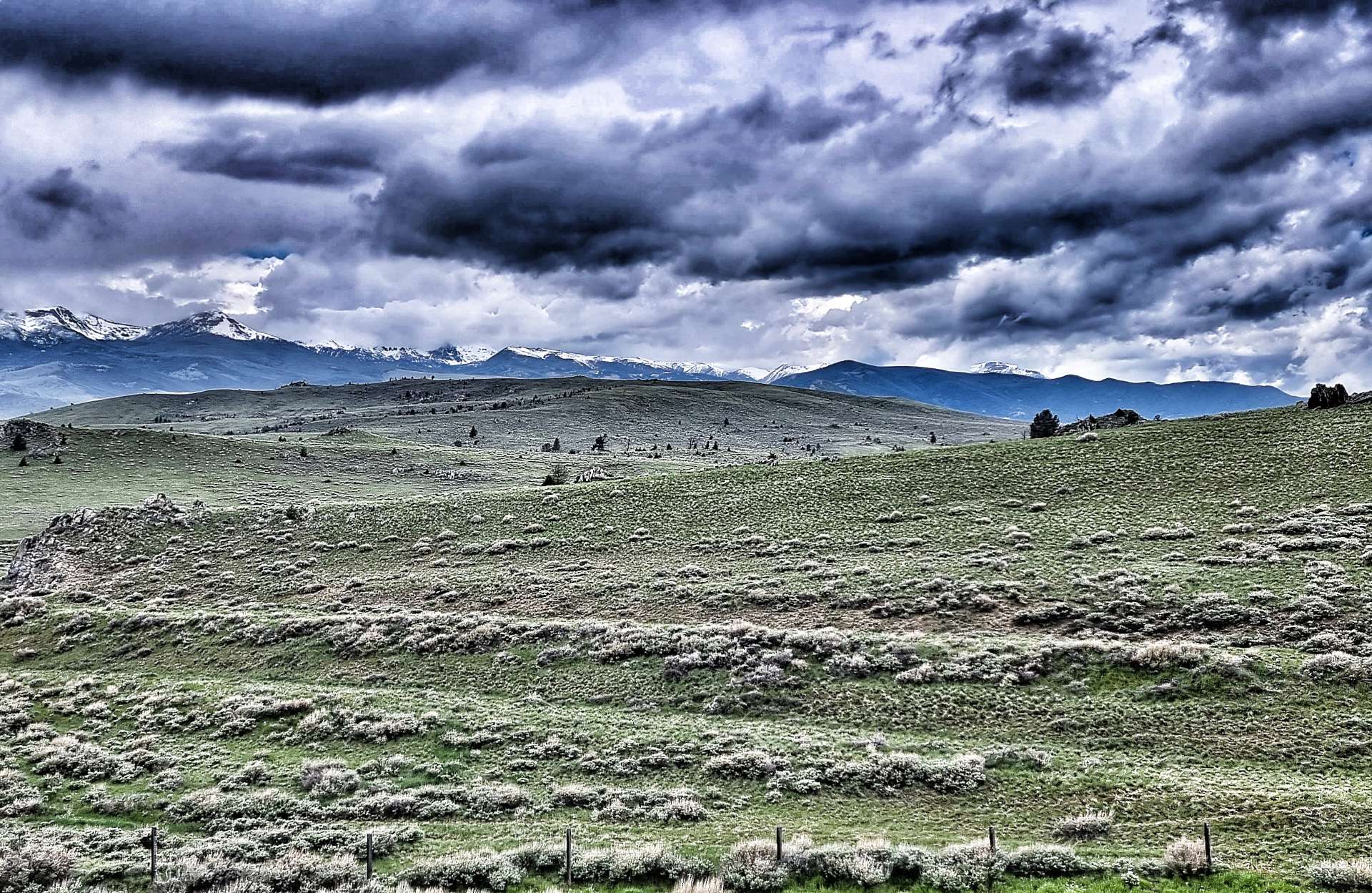
Within 5 minutes, mountains that had been hiding in the clouds suddenly started to show themselves. At the time we were riding, it felt like the wind was always in our faces, but looking back at a few of the photos, the road wasn’t ruler straight, although the general direction was always North to South into a Southerly wind. If I’m honest, I enjoy these days, I weigh enough to be able to push through the wind & the moody skies always look dramatic on photos – it’s the wet I dislike!

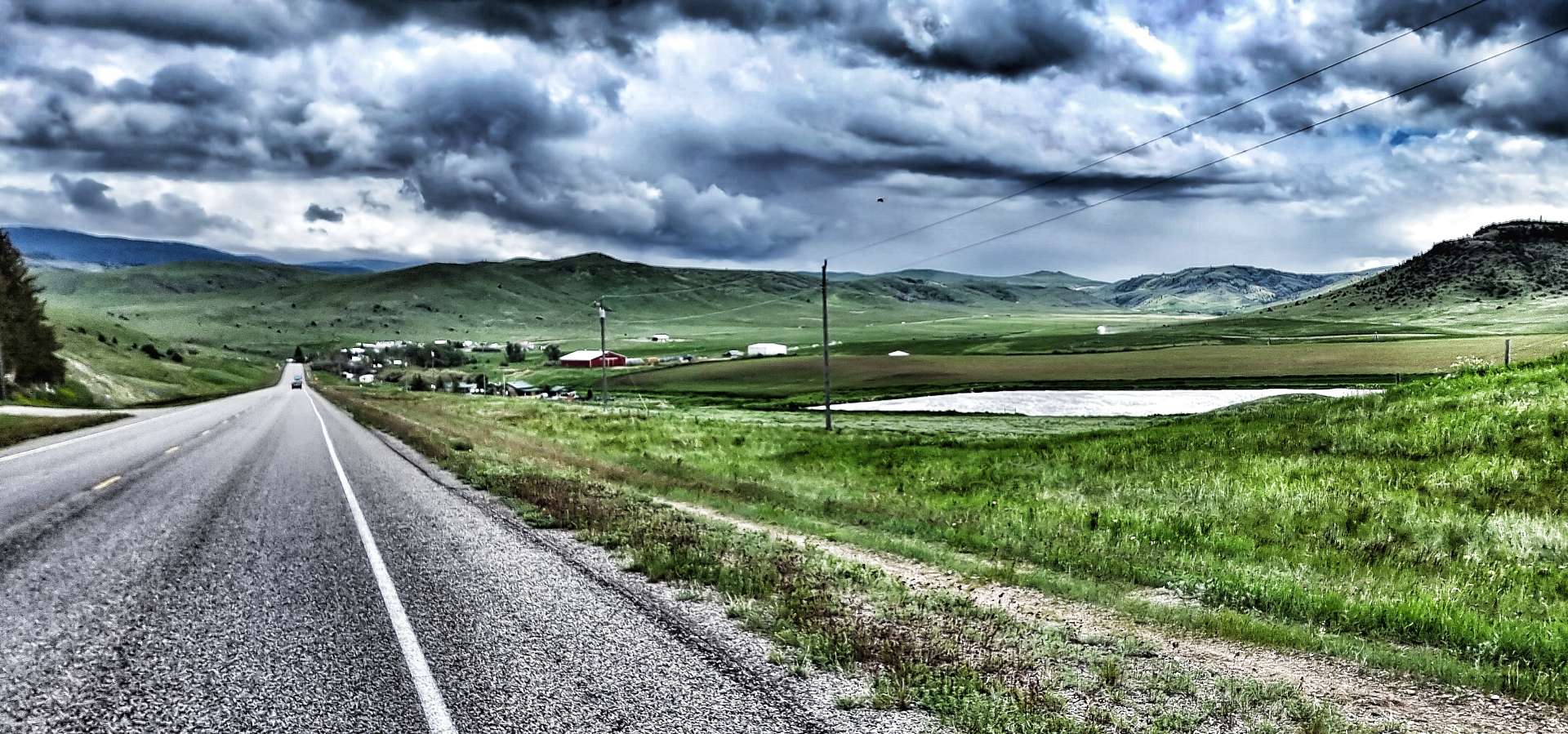
As we reached Sappington, we passed signs for the Lewis & Clark Caverns National Park, but unfortunately they were too far off our route to make a detour. We crossed the Jefferson river, which I now know begins at the confluence of the Beaverhead & Big Hole rivers near Twin Bridges (all of which we passed last week). This marked the start of the first climb of the day, a 4 mile ascent to a plateau with snow-covered peaks in all directions.

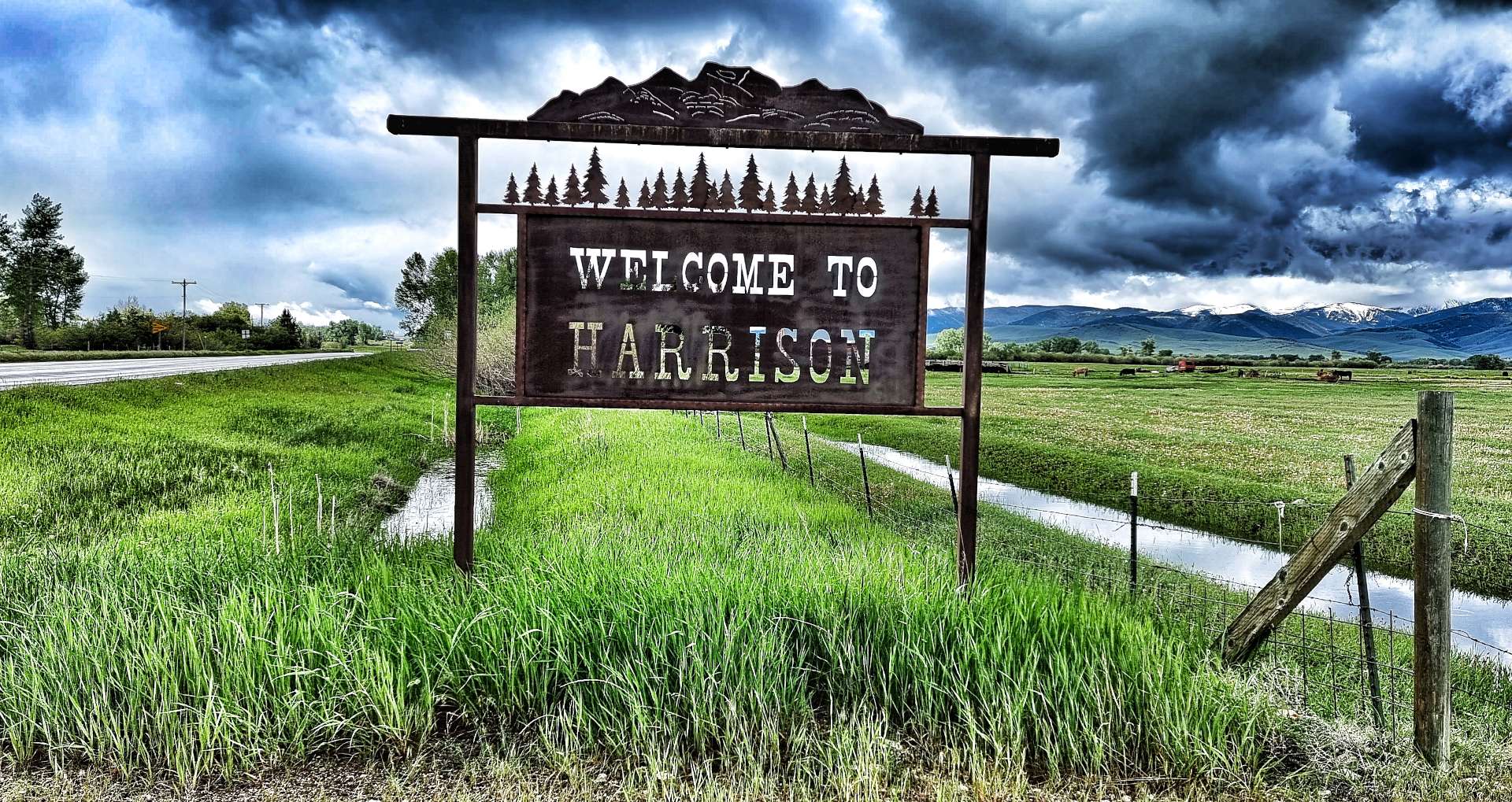
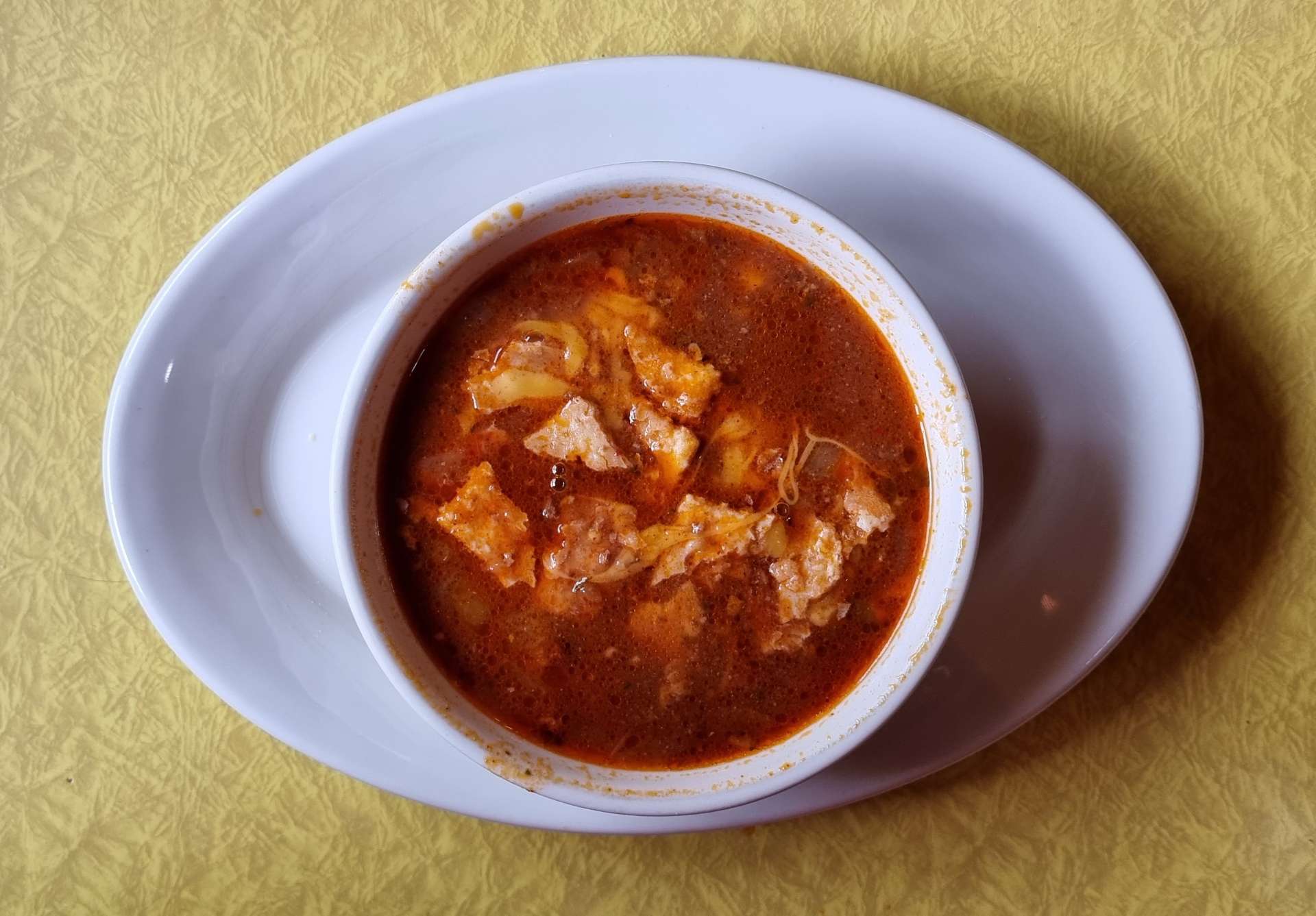
There was no protection from the wind, so we were both grateful when we reached the small town of Harrison (population, 137) & spotted the Town Haul Diner, where we stopped for soup & coffee – rain & headwind makes for a cold day in the saddle!! Within its Town Limits, Harrison only has buildings east of Highway 287, as a fire in the 1920’s destroyed everything to the west of the road.

We spoke briefly to a mountain biker who was 4 months into a 6 month adventure riding the Great Divide Mountain Bike route – he was leaving just as we arrived. We would see him again later, as he was on thick tyres, a heavy bike & carrying more kit than us. As we left town, I took one final look back to the Tobacco Root mountains behind us.

The next 10 miles were among the toughest of our adventure so far, making yesterday’s headwind feel like a minor inconvenience! We took it in turns to ride on the front for no more than 2 minutes & covering about 1/4 of a mile), then tucked in to recover (we would usually be happy doing 5 minutes each & covering about a mile in that time). As fellow cyclists know, headwinds start getting into your head in a bad way – I’ve had to learn how to accept anything & everything that comes our way on this adventure & my resilience has probably improved as a result. Anyway, enough psycho-analysis for now!!

As we dropped into Norris Hot Springs our second & final climb of the day was laid out in front of us.

At 5 miles long & 900 feet it took me about an hour to complete the climb of Norris Hill – we both set our own pace on these long climbs & as you can see, Sean was some way ahead of me! The road already existed in 1864, when it was used as an extension to the Bozeman Trail, which was a short cut to the Montana gold fields from Casper, Wyoming. We’re retracing history on a daily basis & as a result of the numerous Historic Point markers, we get to see what that history is.

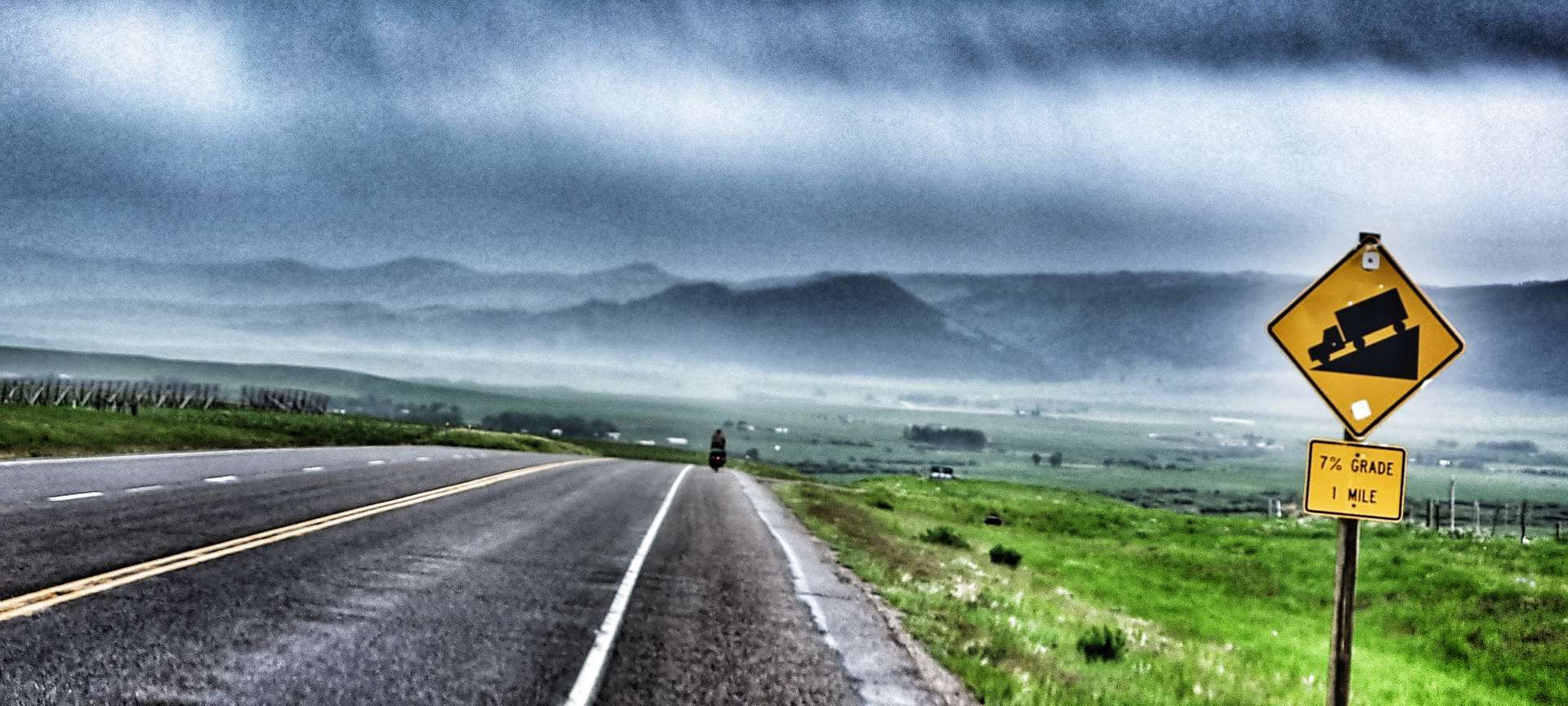
The view from the summit of Norris Hill was awe-inspiring (big views in all directions), exciting (a 7% descent for a mile) & disappointing (sheets of rain rolling in) all at the same time.

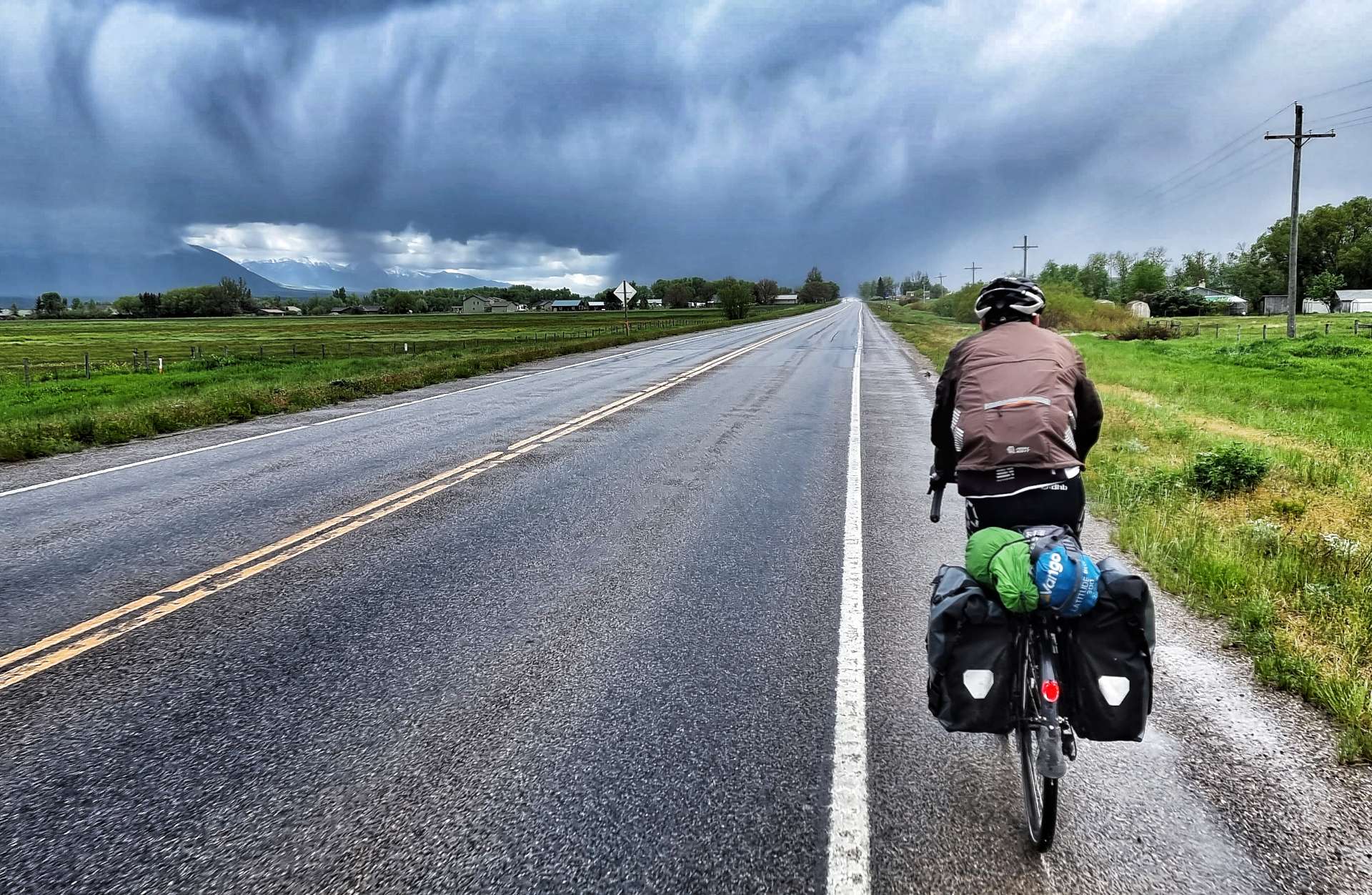
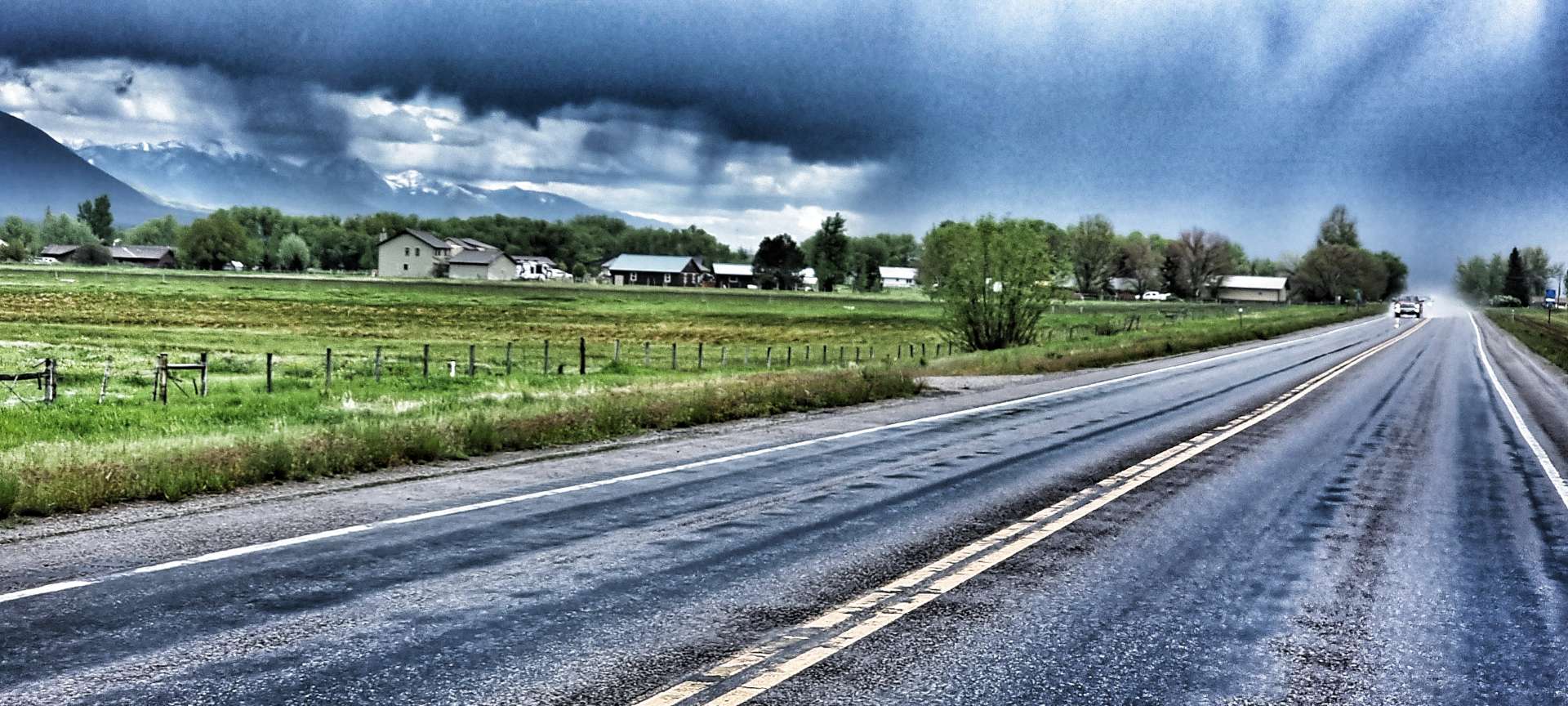
As we reached the valley floor, we got hit with the rain & it was heavy! Although we were only about 5 miles from Ennis Town Limits (pronounced EEEE-Niss), we got totally drenched & cold!

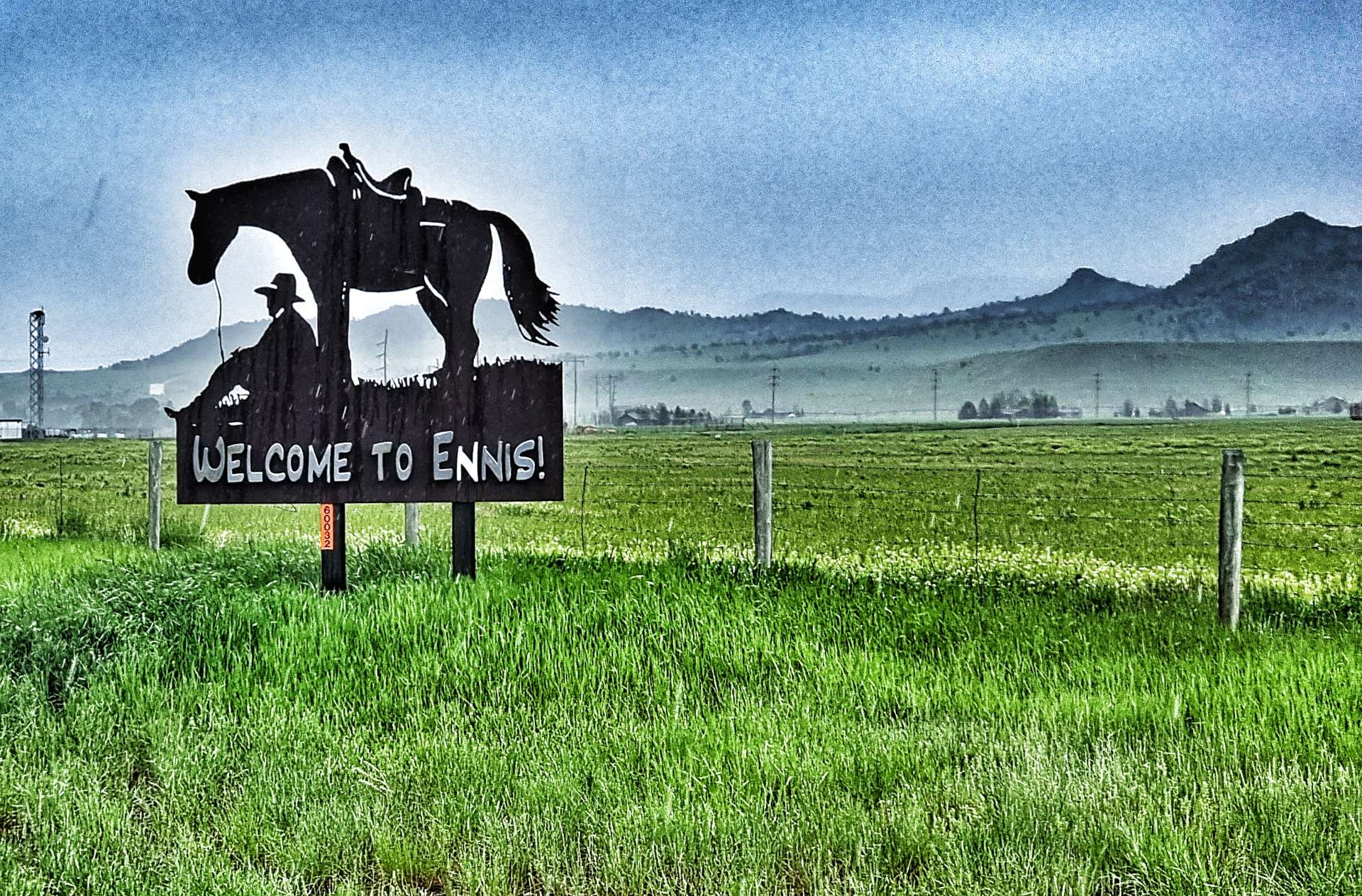
In spite of the rain I stopped to get a photo of the Ennis sign – this was an expensive mistake, as there were another 5 miles from here to our motel & I’d be riding them on my own. I hadn’t told Sean I was stopping & he’d carried on riding – a valuable lesson on the importance of communication, as it made the end of the ride more difficult for both of us.

Our motel turned out to be more of a cabin & we had our own room each, which enabled us to dry all of our kit overnight. However, of a shorter term priority was having some warm food (we both had a chicken focaccia sandwich & fries washed down with a Midas Crush IPA for me & a Devil’s Hump for Sean. Cheers everyone!

On a serious note, when we got back to out motel, we found out about the terrible flooding of the Northern Loop in Yellowstone National Park – I’m pleased to report there were no casualties, but there was huge damage to the roads. The National Park will be closed for the foreseeable future, so we will likely need a new plan for where we go when we get to West Yellowstone tomorrow evening.

Stage Stats – 47 miles, 3,825 feet of climbing. Going uphill most of the day with 2 proper climbs & a powerful, gusting headwind all day.

Tuesday 14th June – Ennis to West Yellowstone

We awoke to new footage of the chaos in Yellowstone National Park – large sections of the Northern Loop road have been washed away, a house tumbled into the river & the town of Gardner is under threat of flooding. I hope everyone stays safe – it’s a brutal reminder of how fast conditions can change in The Rockies.

As we had a long day ahead of us, we were on the road by 8.15am. Leaving town there was still a headwind, but it was less powerful than yesterday’s battering & although overcast, it was dry. We immediately crossed the Madison river (the second of the Missouri river’s tributaries) & ahead of us could see rain showers on both sides of the valley, as well as how far we had to ride. We would need to be lucky to stay dry!

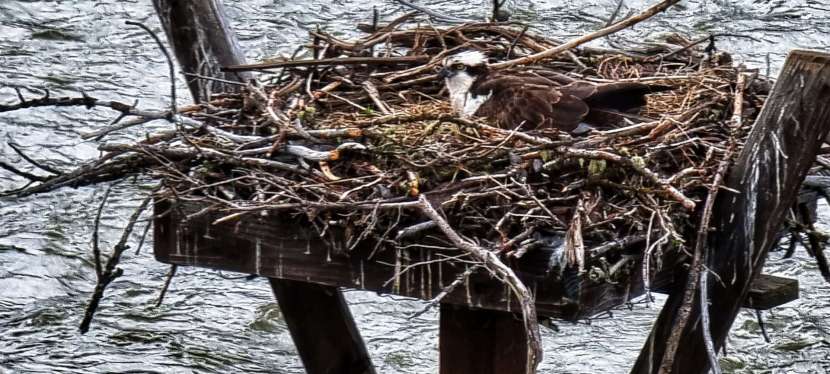
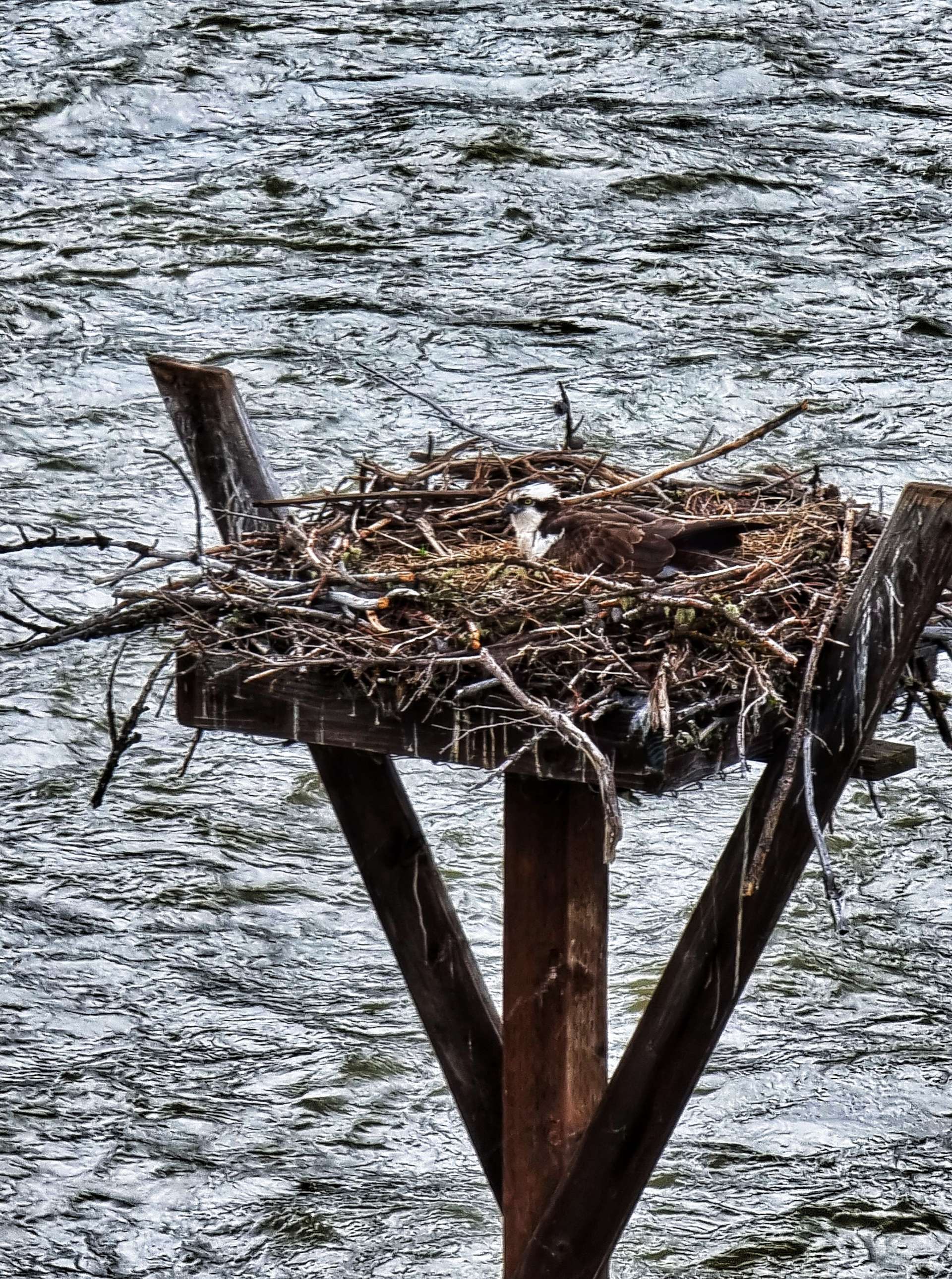
There were imposing mountains all around us as we continued up the Madison valley & after about 15 miles the river re-appeared from a gulch below us & with it an opportunity to look down on an eagle in its eyrie – the first time I’d actually seen the inside. We were taking it in turns to ride on the front, which resulted in the morning passing quickly as the miles ticked down.

Over the next 10 miles we saw 4 long distance cyclists heading in the opposite direction (presumably previous Yellowstone plans had been scrapped). As we approached a fork in the road we could see heavy rain ahead of us, yet miraculously by the time we eventually reached the turning we were in glorious sunshine! The weather gods were clearly looking down on us!

Taking the left fork towards West Yellowstone, we were entering the Yellowstone Basin, one of the most active geological regions on the planet. In 1959 there was a huge earthquake that registered 7.5 on the Richter scale. At the time the quake was the 2nd largest in the continental USA.

We stopped at the Visitor Centre to learn more, but first a Park Ranger insisted on making us a cup of coffee, although the Visitor Centre is food & liquid free. We must have looked like a couple of very cold waifs & strays!

The quake caused an 80 million ton landslide, which formed a dam across the Madison river as it travelled down the side of Sheep Mountain at 100 miles an hour. The landslide killed 28 people who were camping along the shores of Hebgen Lake & further down the valley on the Madison river.

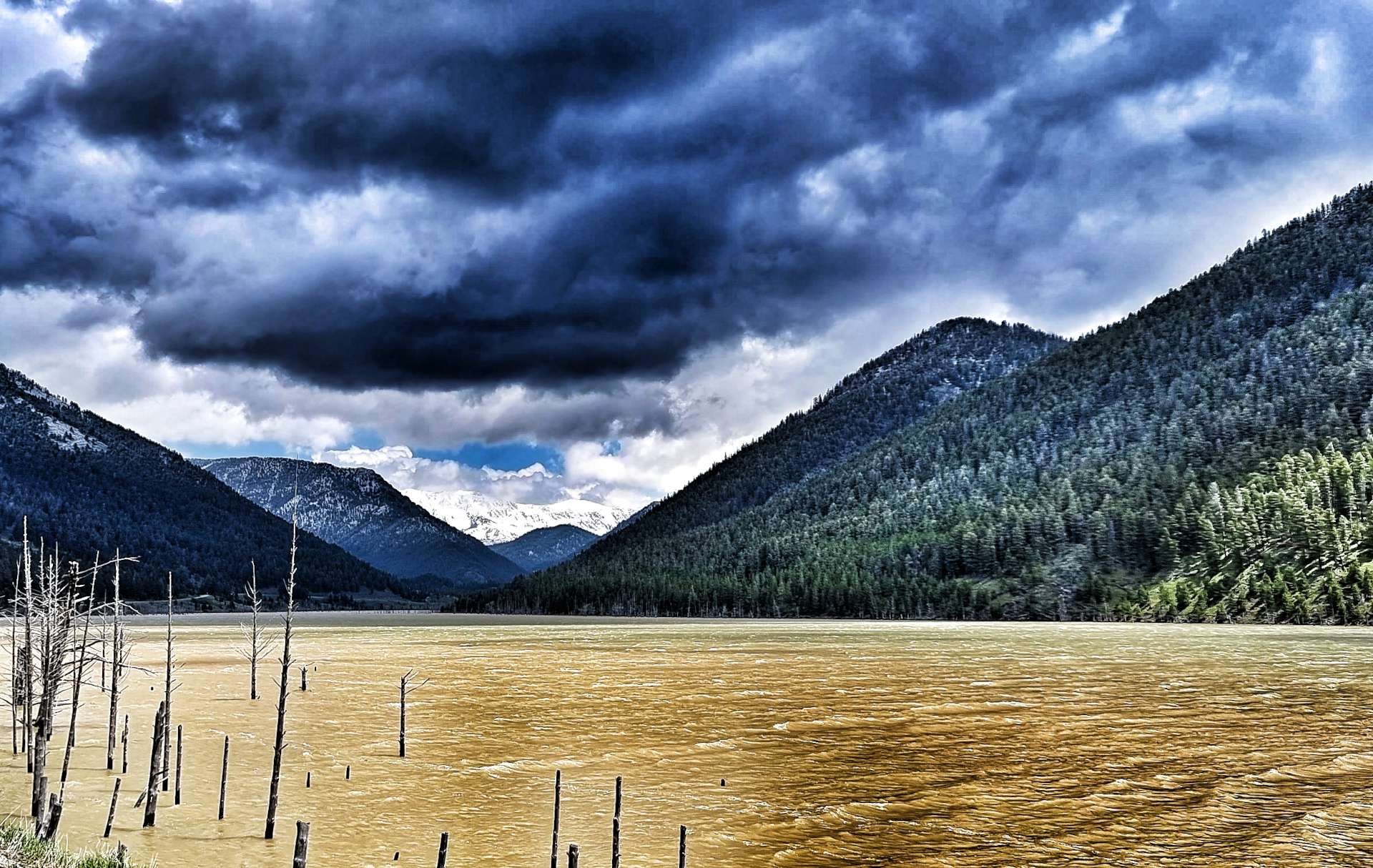
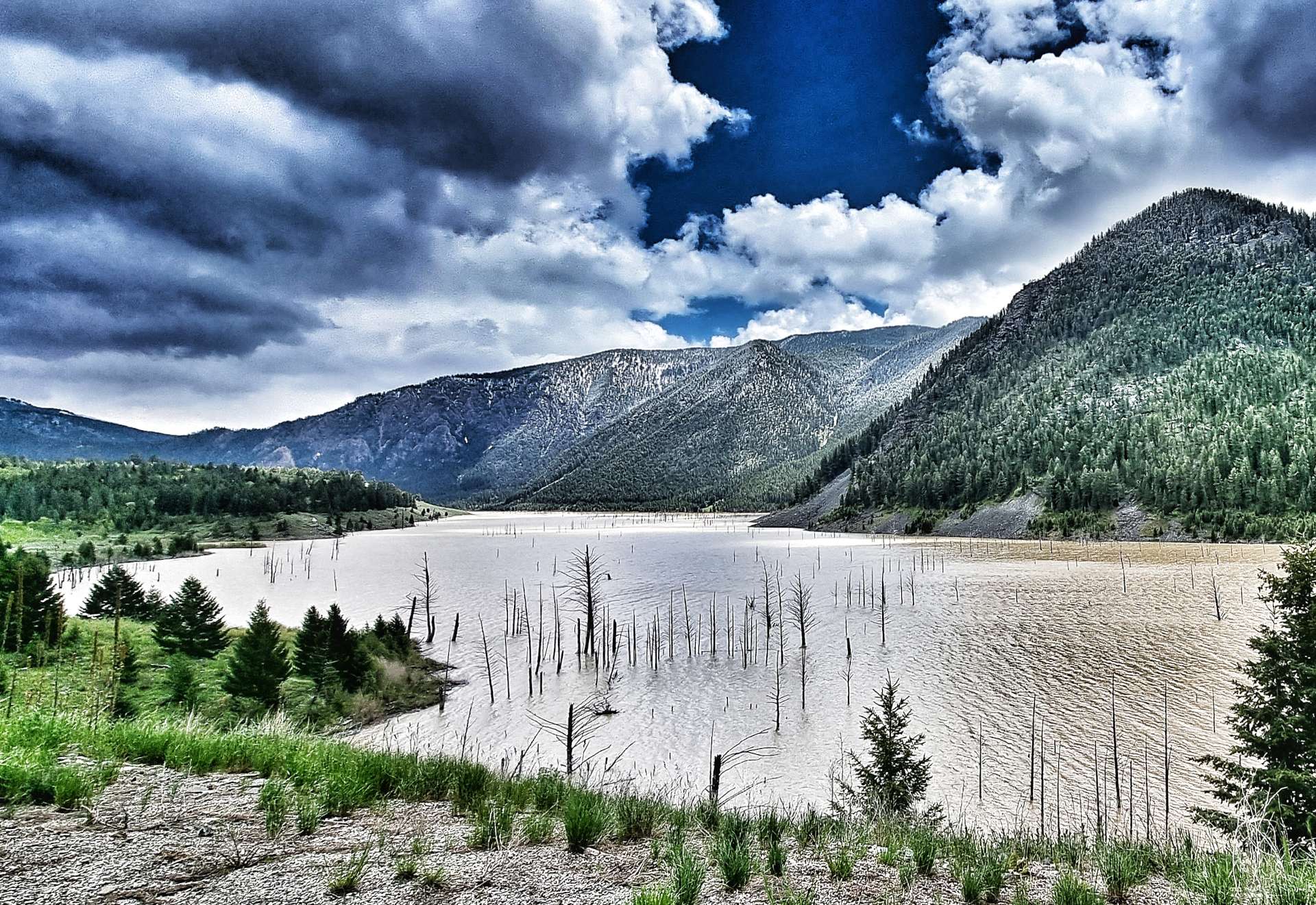
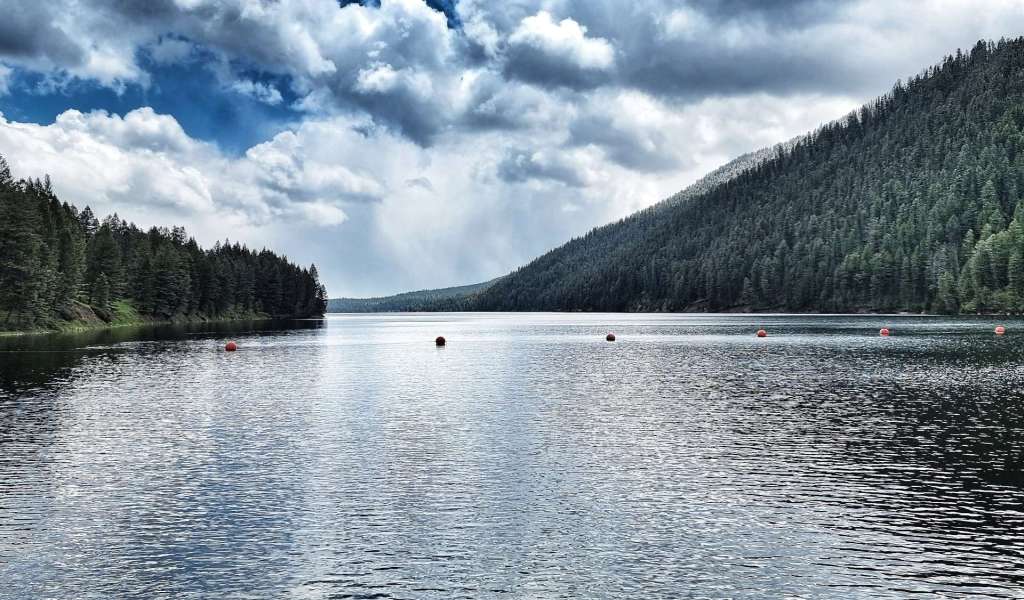
The earthquake caused the ground to subside by 20 feet & the fault line is visible to this day. We could see the tops of trees that had been submerged in Quake Lake more than 60 years ago. Prior to the 1959 earthquake the Madison river was cutting through the valley just like the 2 photos above – less than a month after the initial earthquake, Quake Lake extended 6 miles & had a maximum depth of 125 feet.

Upstream, the faulting caused by the earthquake forced the waters of Hebgen Lake to shift so violently that a wave crested over the dam, causing cracks & erosion. 32,000 acres of land around Hebgen Lake subsided by 10 feet – the impact of the earthquake was truly earth shattering & aftershocks of up to 6.5 on the Richter Scale were felt for several months afterwards.

The Hebgen Lake was created in 1917 by building a dam 85 feet tall & 721 feet in length across the Madison river. It stores & regulates water supplies for reservoirs further downstream, as well as generate hydro-electric power. The lake is a popular recreation destination, with fishing, boating, swimming, hiking & camping all taking place.

As Lake Hebgen receded behind us, we had almost reached our destination – just a right turn onto Highway 191 & the final 7 miles to go. You can almost see the excitement on our faces! We’d stayed dry all day – we later admitted that we’d been dreading the ride this morning as we were both convinced we were going to get soaked & then have to ride for 6 or 7 hours in the rain!

We checked-in to our room at the Dude & Round Up, then headed across the road to enjoy a huge portion of spaghetti marinara, washed down with a Hazy IPA. Tomorrow’s a rest day as we plan what to do next & where to go.

Stage Stats – 72 miles, 3,107 feet of climbing. Going uphill most of the day with 1 climb.

Tour of the USA – Weeks One & Two

Well, How Did We Get Here? Miles, Feet Climbed, Maps & Profiles.

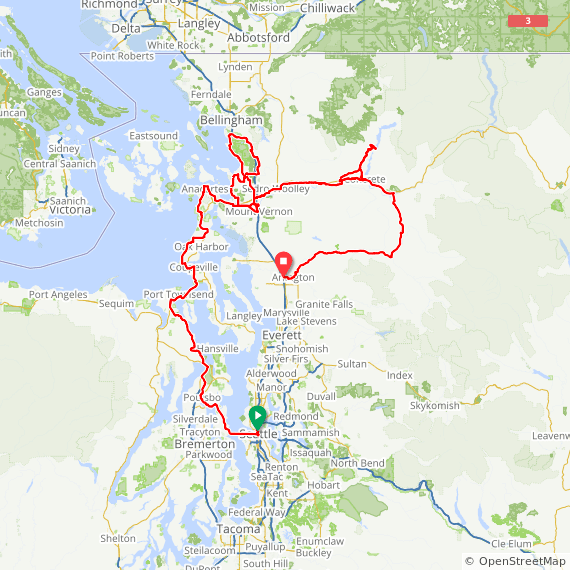
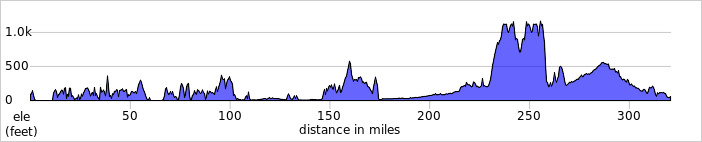
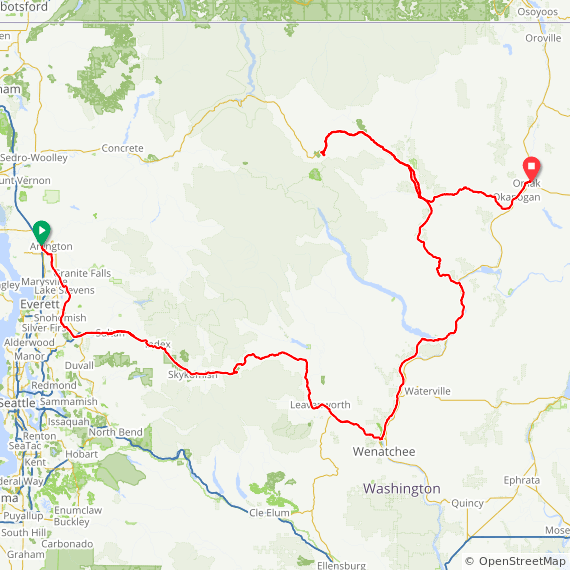
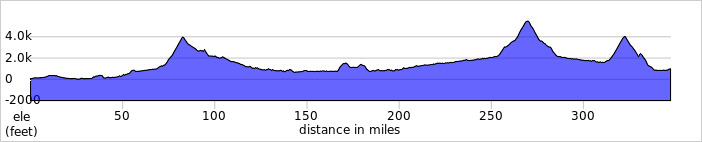
Thank you to everyone who took the time to get in contact, saying that details of where we’ve been would be of interest. I’ve created a weekly table showing where we started & finished each stage, how far we rode & how many feet we climbed. In addition, you’ll find a weekly map & profile chart.

I’m interested in any feedback you may have, so feel free to comment on this post, or drop me a message. I’ll publish 3 updates over the coming days, each will give you a 2 week block. Going forward I’ll update on a weekly basis.

I’ve also decided to post a photo from each day – it will refresh my mind when it comes to looking back on my adventure!

Week One – Seattle (WA) to Arlington (WA)

DateStart LocationEnd LocationMilesFeet Climbed
30/04/22SeattlePort Townsend523,127
01/05/22Port TownsendMount Vernon592,936
02/05/22REST DAYREST DAY00
03/05/22Mount VernonMount Vernon – Chuckanut Loop662,480
04/05/22Mount VernonConcrete37387
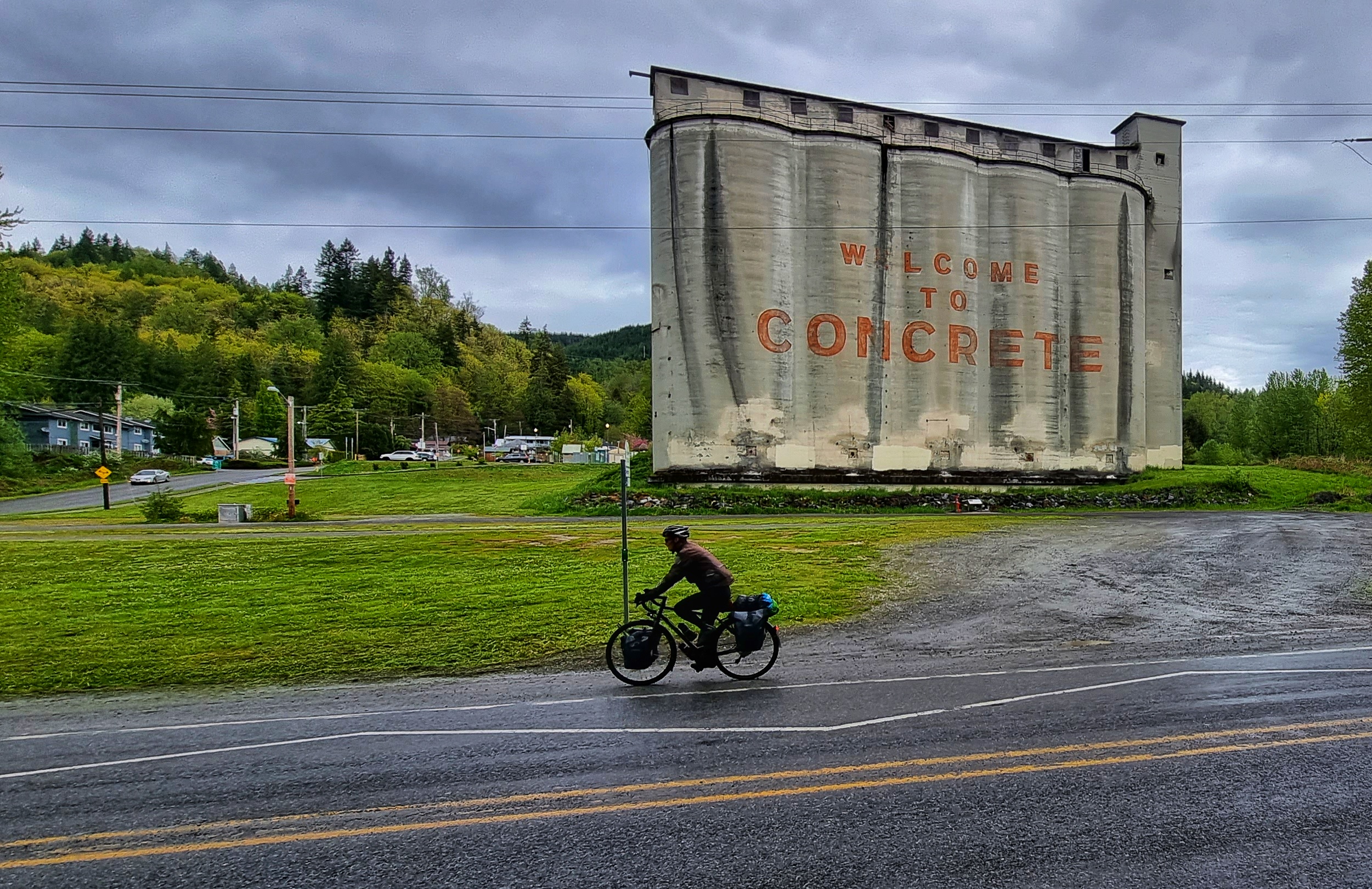
05/05/22ConcreteConcrete – Baker Lake Dam Loop372,589
06/05/22ConcreteArlington611,198
Totals31212,717

If you want to get more detail, the link below will open in a new tab & allow you to explore further, if that’s your thing;

https://ridewithgps.com/routes/39337818

Week Two – Arlington (WA) to Omak (WA)

DateStart LocationEnd LocationMilesFeet Climbed
07/054/22ArlingtonGold Bar46850
08/05/22Gold BarLeavenworth724,767
09/05/22REST DAYREST DAY00
10/05/22LeavenworthChelan561,939
11/05/22ChelanMazama772,556
12/05/22MazamaTwisp574,462
13/05/22TwispOmak393,271
Totals34517,845

As for Week One, the link below will open in a new tab & allow you to get further into the detail, if that’s your thing;

https://ridewithgps.com/routes/39439506

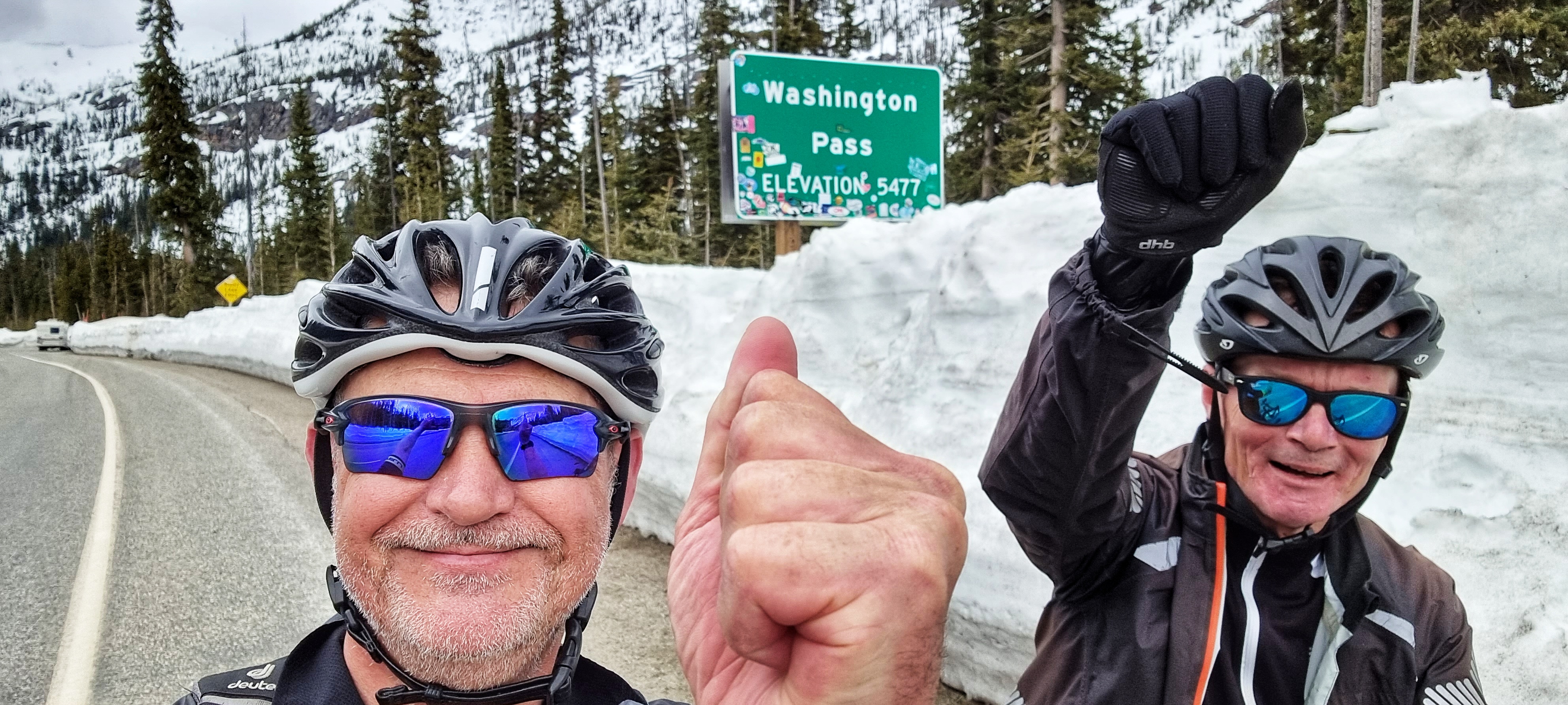
Our original plan was to cycle from Concrete to Mazama on 5th May. However, due to heavy snowfall late into Spring, the Washington Pass wasn’t open, so we did a 6 day detour via Stevens Pass instead. The first of what will be a few re-routes & all part of what a BIG adventure is all about!

Helena – Capital City of Montana

Taking in the history & sights of Downtown Helena

We always try & get a bit of rest & relaxation on our rare days off the bikes, so Helena was a real treat as for the first time on our adventure so far we had consecutive rest days. We arrived at our hotel on Last Chance Gulch (pay attention to the name!) on Thursday afternoon & decided to get a couple of tasks out the way straight away – first up was washing our 3 sets of cycling kit, followed by a visit to Safeway to buy dinner for this evening & breakfast for the next 3 days.

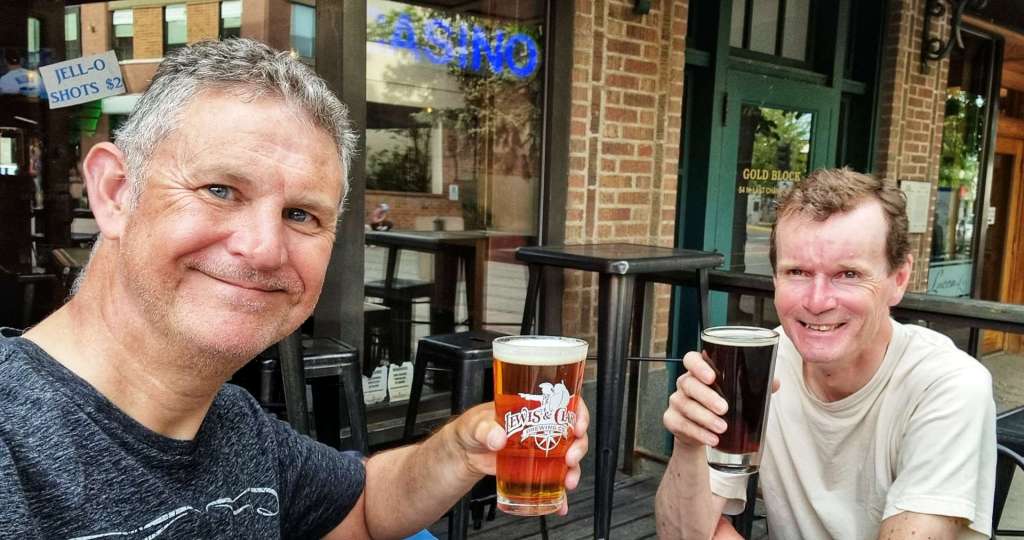
Our kit had completed its wash cycle by the time we returned to the laundromat, so we just needed to throw it in the dryer & wait 20 minutes. We were both flagging & on the verge of falling asleep by the time our kit was dry, so we did the only sensible thing, we headed into town for a beer! In the end I had a couple of Scepter Head IPA’s & Sean went for a couple of Cold Smoke Scotch Ales. As we chatted about our highlights of the last 6 days, we could feel our energy returning enough that we could eat our supermarket dinners!

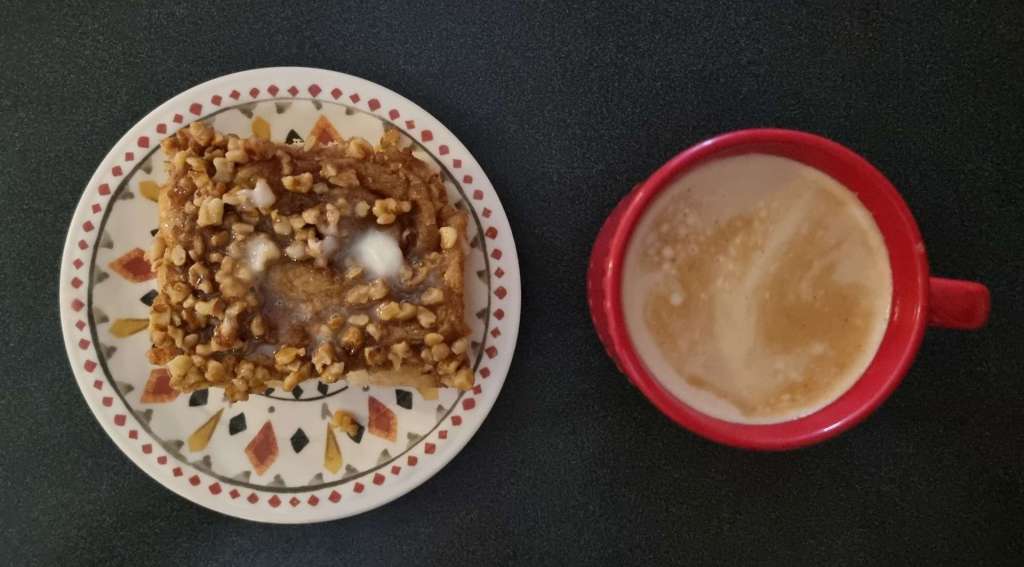
We had a room each for our time in Helena, so we could spread out & enjoy a bit of space both physically & mentally. We met at 10am on Friday & popped to The Fire Tower coffee shop (not the be mistaken for THE Fire Tower) for a pecan & caramel pastry & latte – it felt like a real treat to be able to sit down & just watch the world pass us by, rather than needing to get back on our bikes.

Helena is the State Capital of Montana & 32,655 people live within the city limits. Prior to Europeans arriving in the early 1800’s, the Salish & Blackfeet visited the area seasonally as part of their nomadic travels.

In July 1864, the discovery of gold by “The Four Georgians” prospectors led to the founding of a mining camp along a small creek in an area called Last Chance Gulch. Within 3 months, the population had grown to 200 & by 1888 there were 50 millionaires in the city – it’s estimated that $3.6 billion of gold in today’s money was excavated between 1864 & 1888!

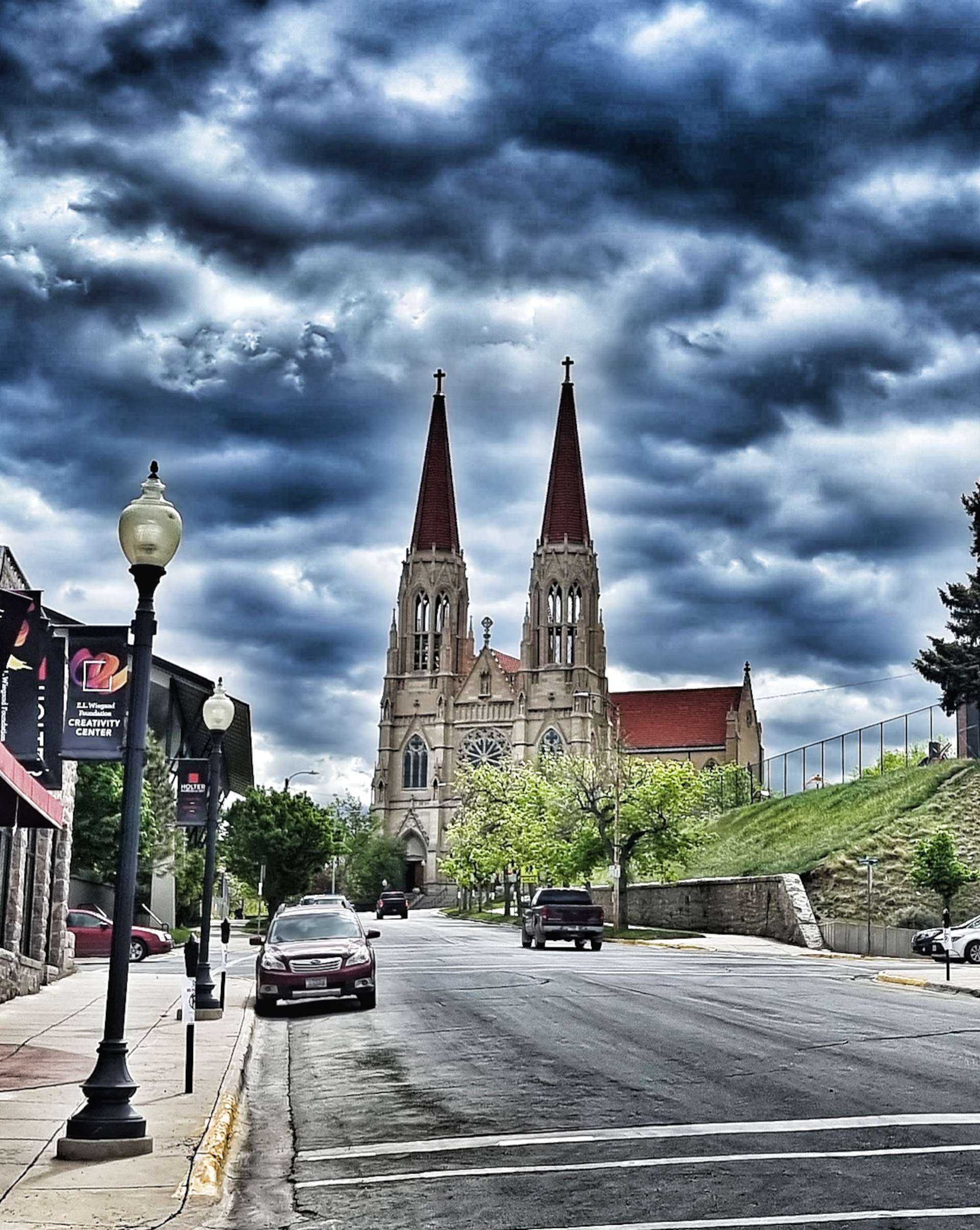
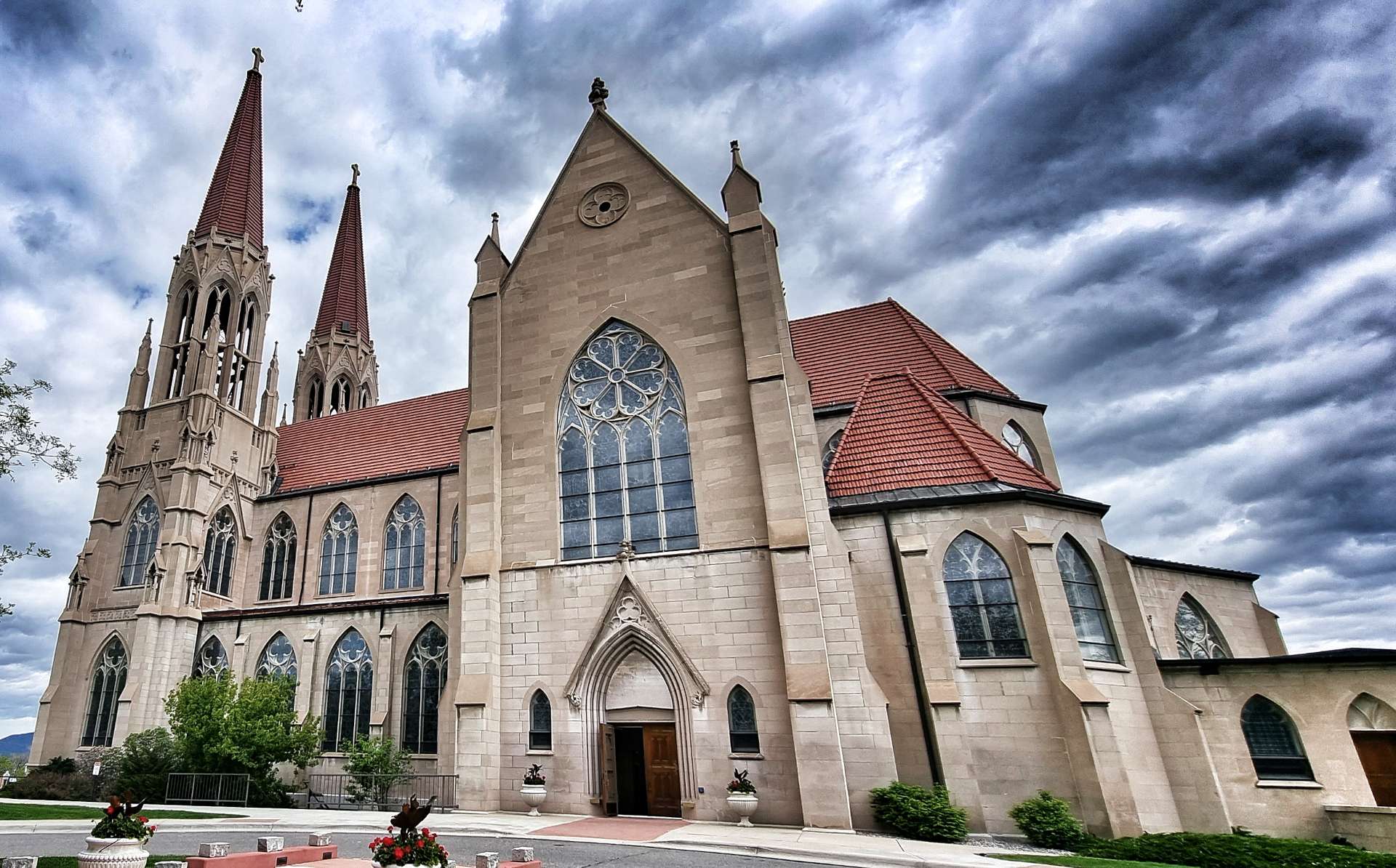
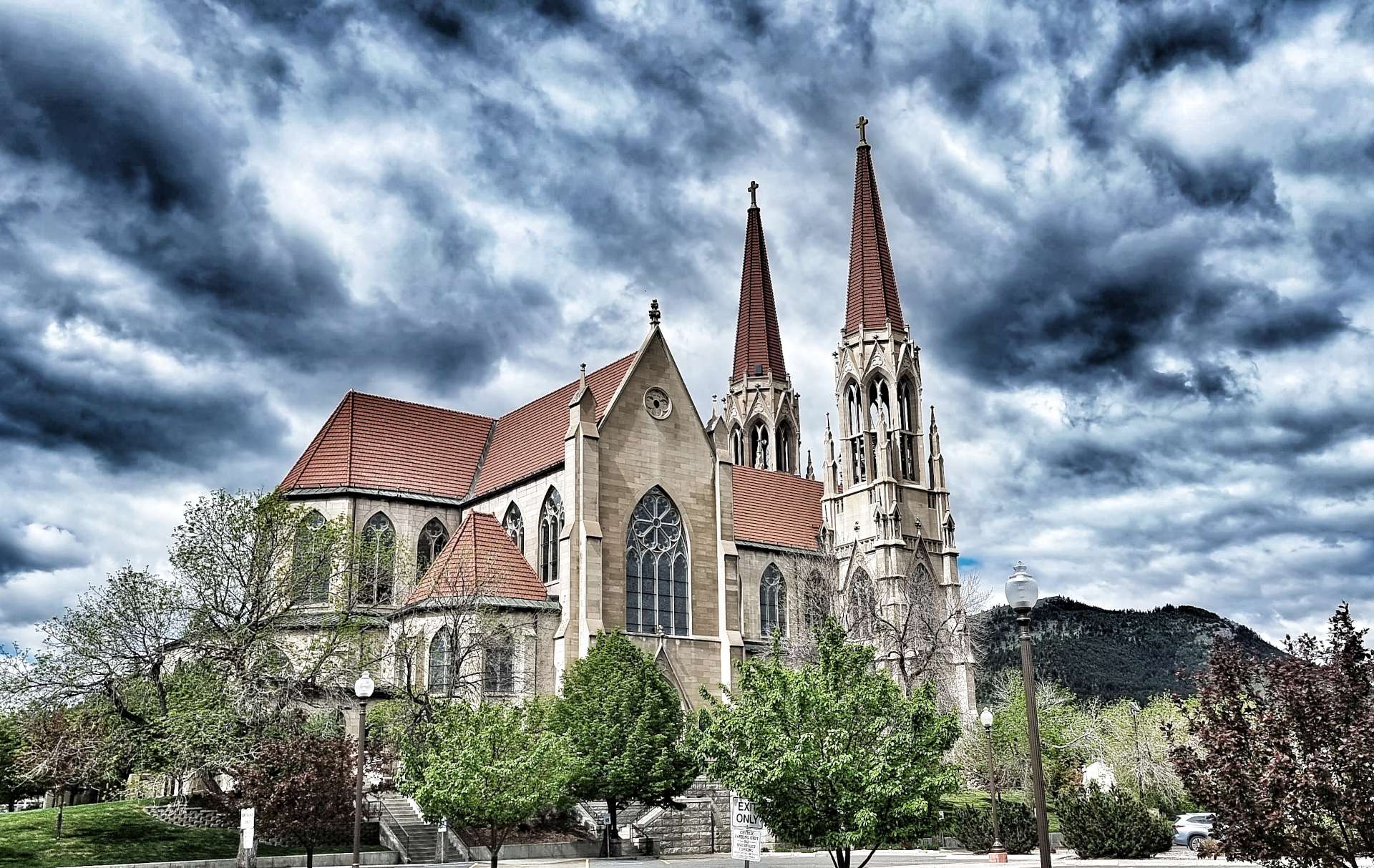
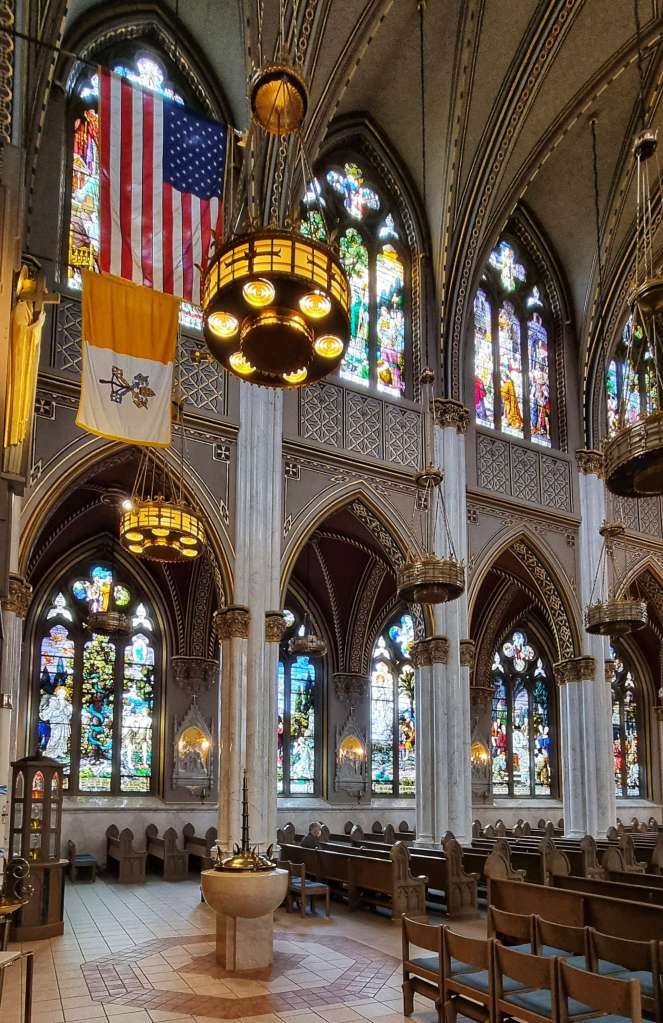
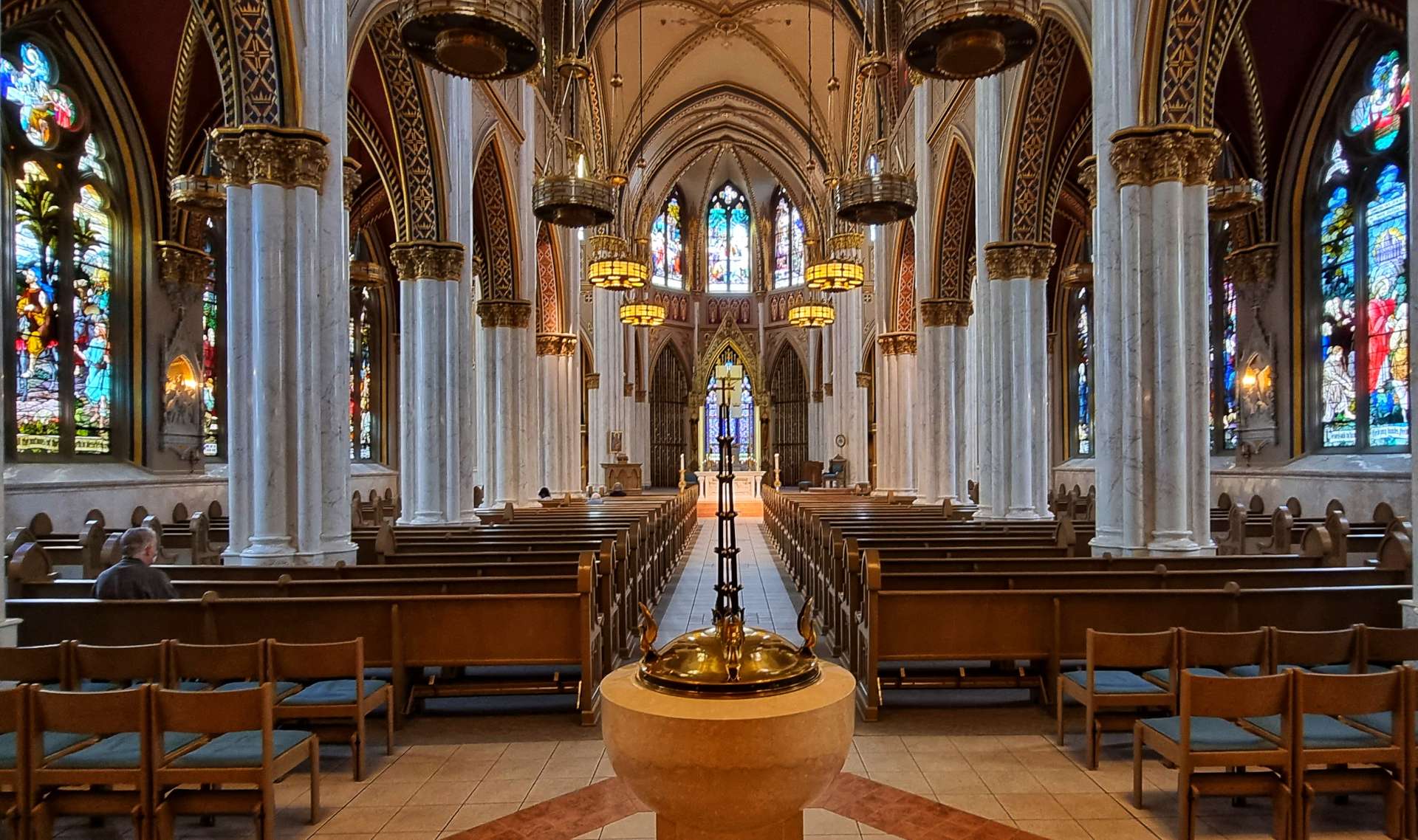
We decided to start our expedition by visiting the cathedral. The site was purchased for $25,000 in 1905 & the cathedral was designed in a Gothic style, based on the Votiv Church of the Sacred Heart in Vienna. Building commenced in 1908 & was consecrated in 1924, some 10 years after the first Mass was celebrated.

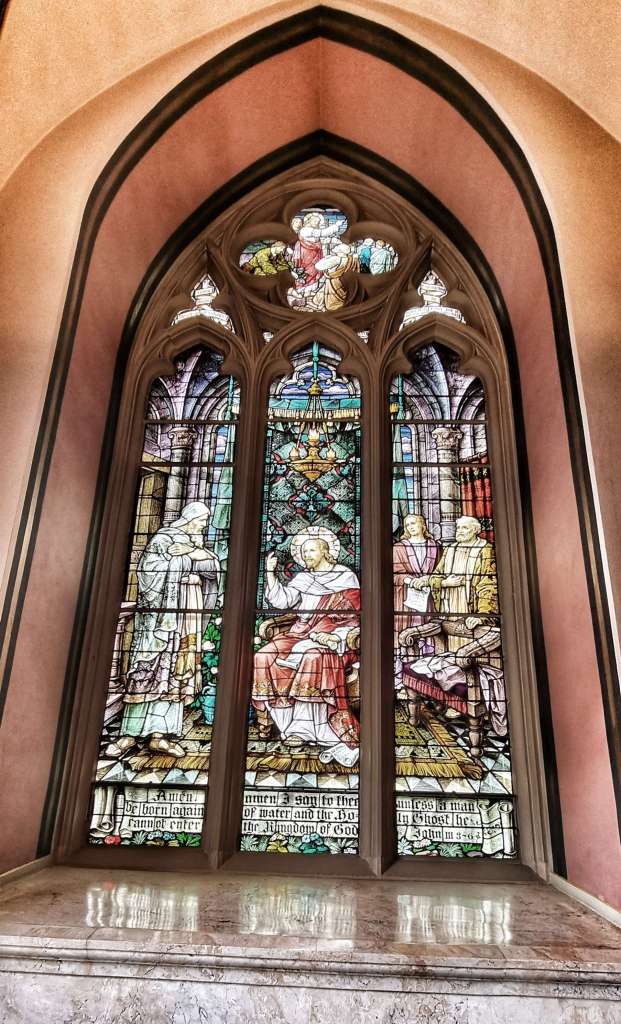
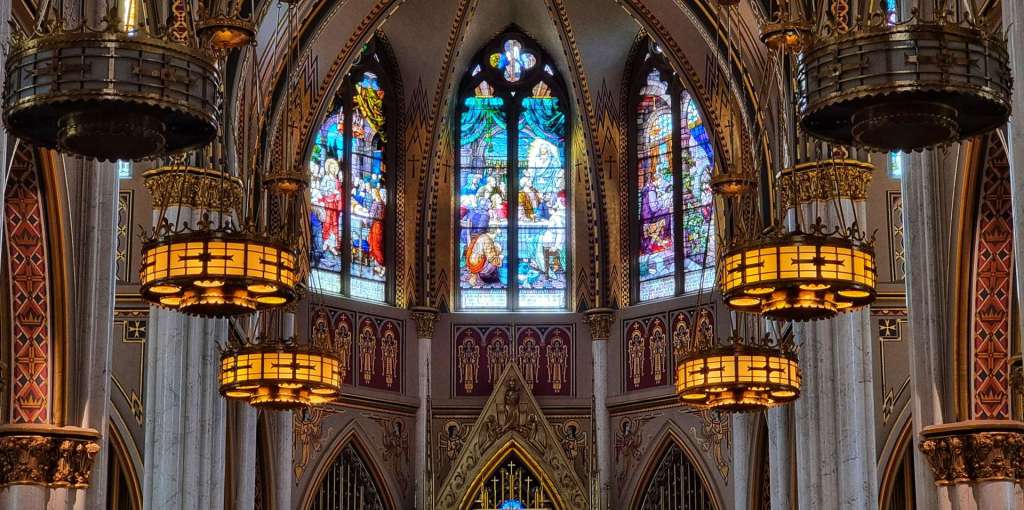
The stained glass windows are stunning, as they enable the outside light to flood in – these next photos were taken on an overcast morning! The lighting fixtures are of hand-carved bronze with a special lacquer finish.

There are white marble altars, statues carved from the purest Carrara marble & genuine gold leaf decorates the sanctuary, while the pews & woodwork are all done in hand-carved oak. When the cathedral was finished, it had cost $625,000 to build & decorate.

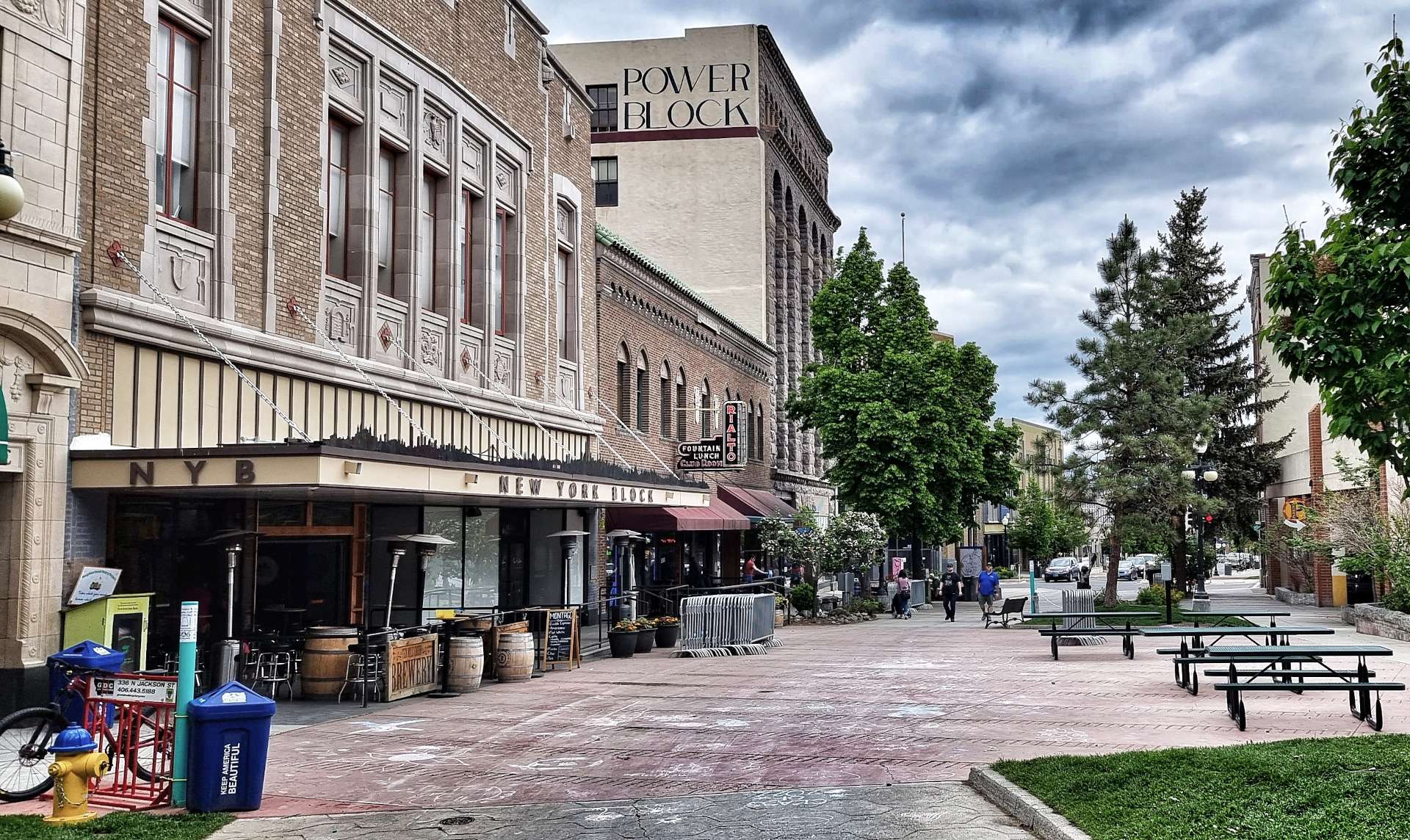
As we left the cathedral behind we headed towards the pedestrianised area of Last Chance Gulch. This follows the path of the original creek where the first gold strike was declared.

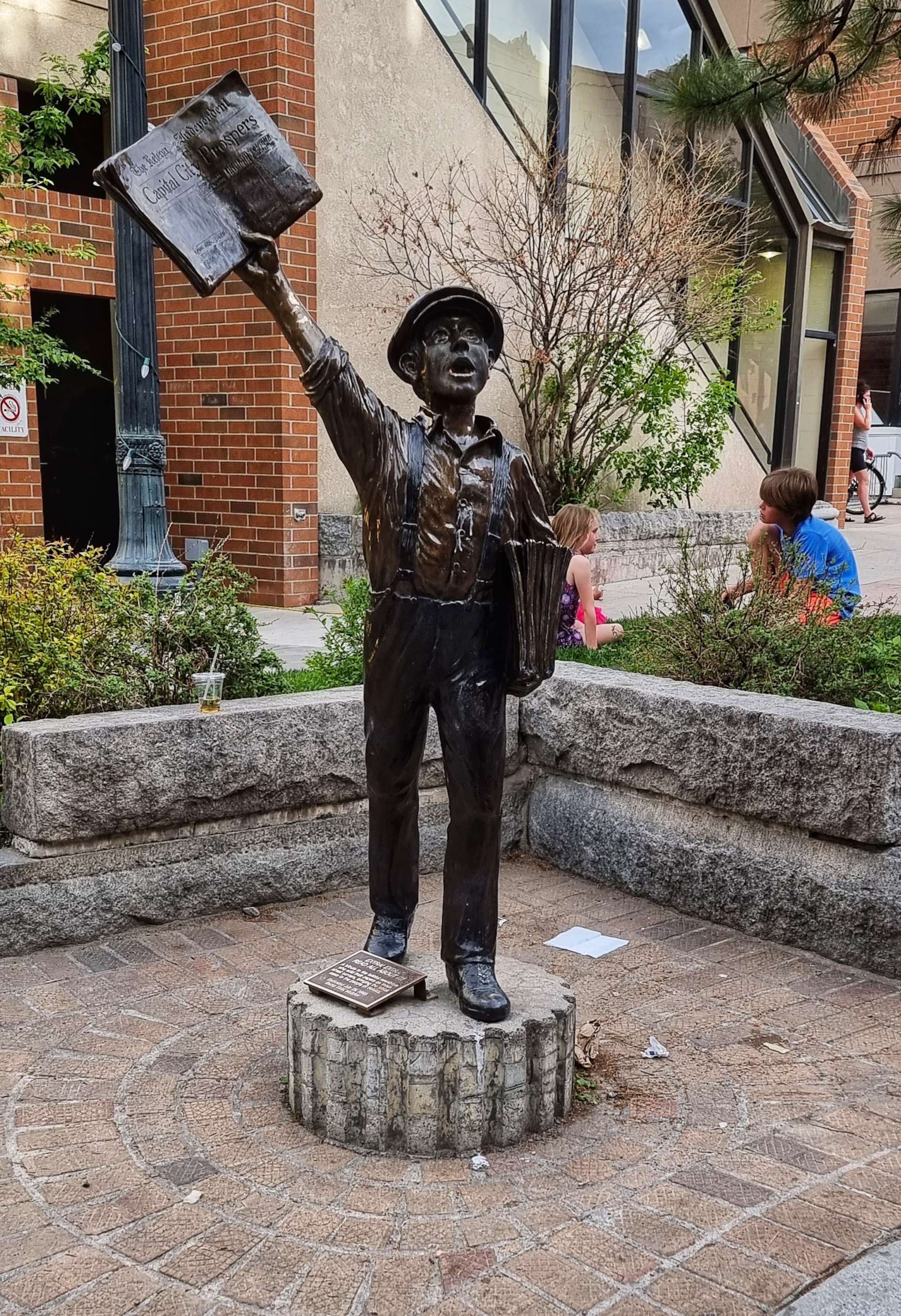
I quite like a statue, so was pleased to see I had a good selection to view. First up was “Extra, Extra” where a young newsboy is proclaiming Capital City Prospers to his passing clientele. We then met The Bullwhacker, who was responsible for cracking the whip above the heads of the cattle to keep them moving & if that failed, he shouted & cursed them to move! The whip wasn’t used to hit the animals, according to historical references. Finally, we found our friends the gold prospectors, as they sluiced & panned the deposits through the early processing machinery.

As we continued towards Fire Tower Park, we passed a memorial devoted to the 4 warships named after the city of Helena. This included a gunboat (1896 to 1932), a warship that was damaged in the Pearl Harbour attack but was repaired – she was sunk in battle in 1943, a heavy cruiser bought with Montana war bonds that served from 1945 to 1972 & finally a fast attack nuclear submarine that was commissioned in 1987 & remains in service today.

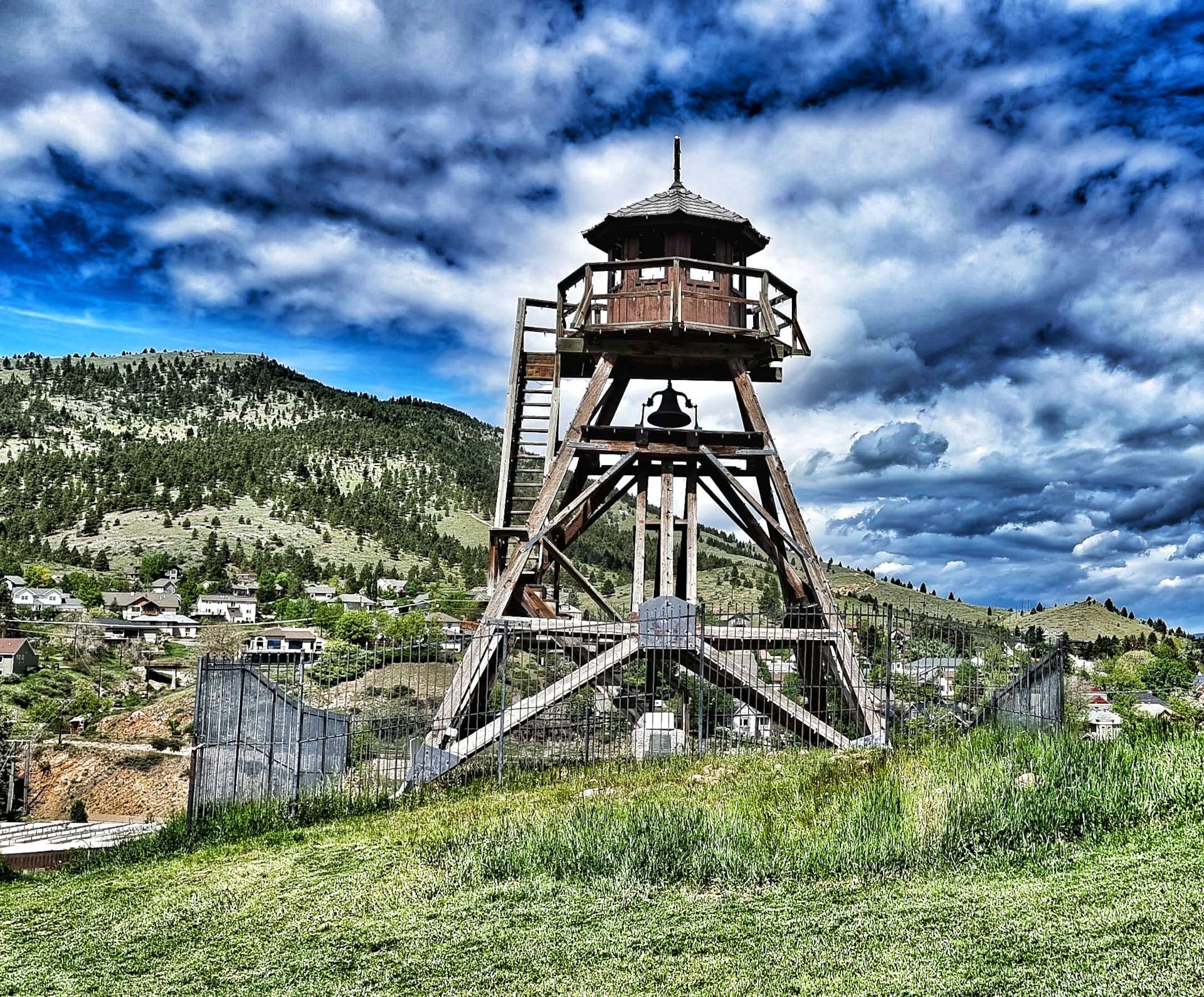
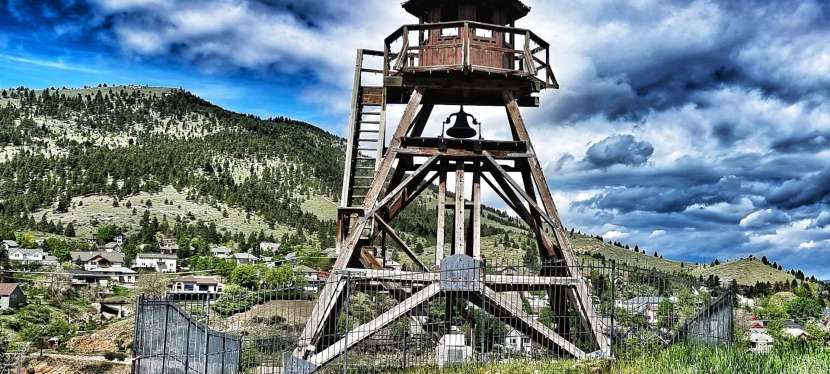
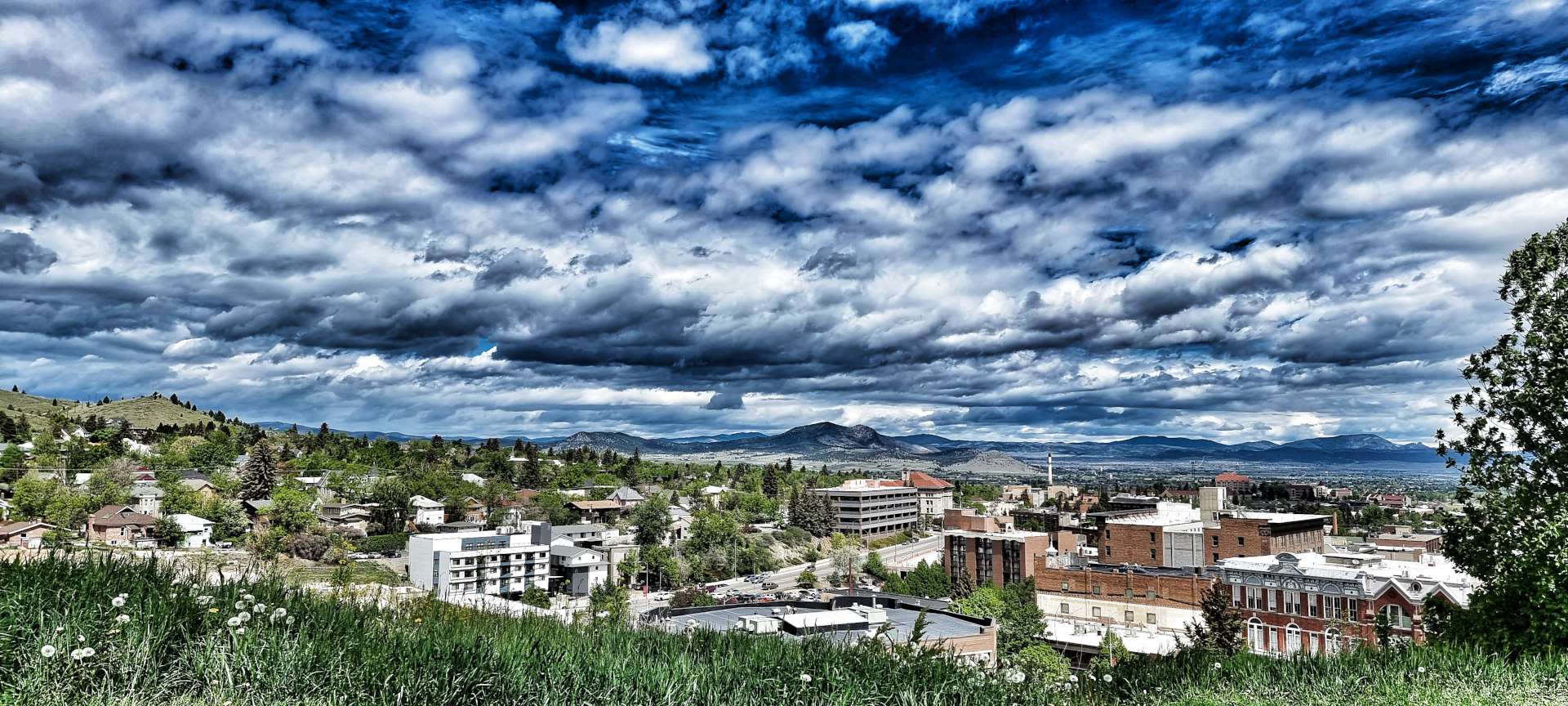
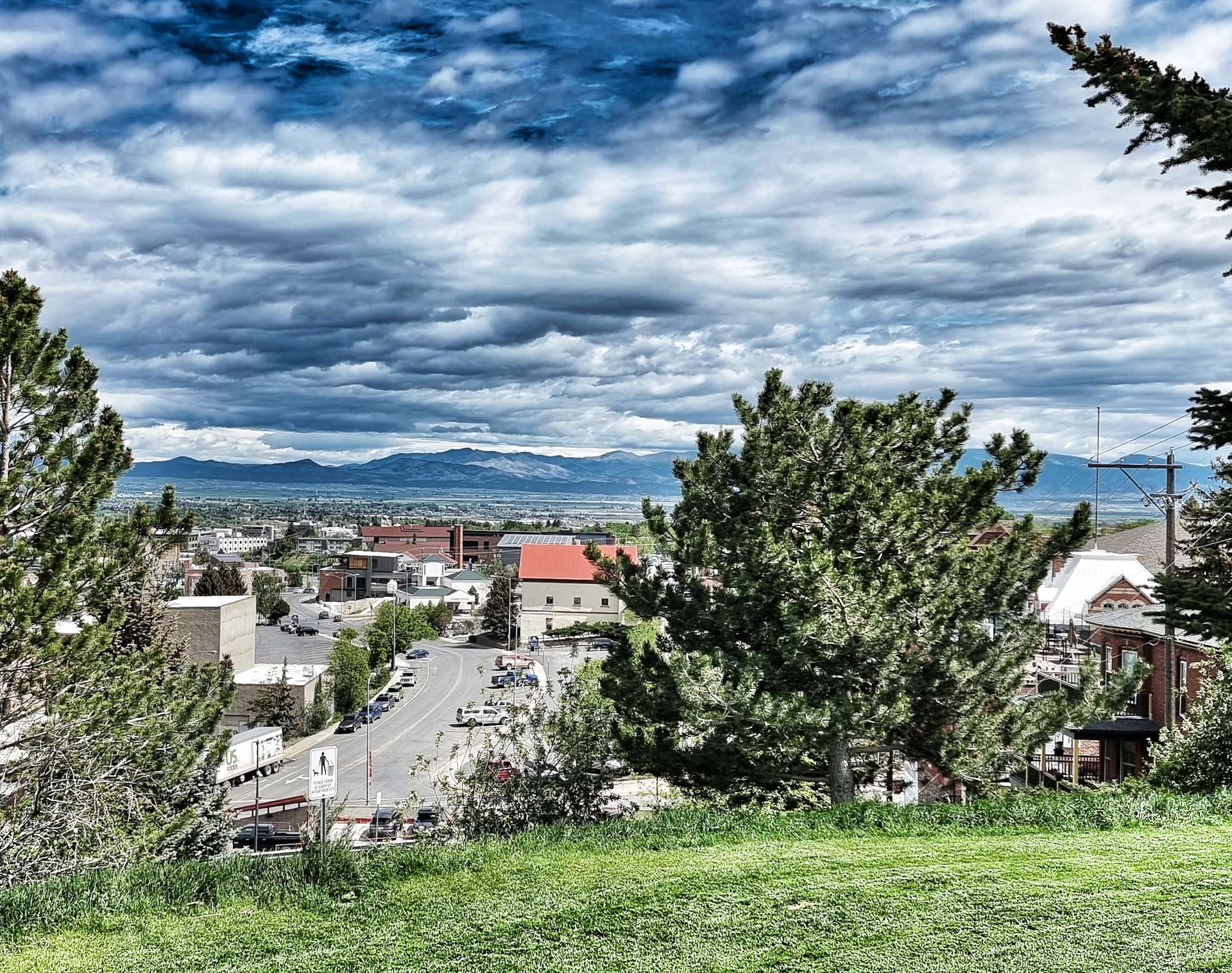
We then took a short, sharp climb up to THE Fire Tower itself – known locally as The Guardian of the Gulch. It was built in 1876 after a huge fire had destroyed downtown Helena & was manned round the clock. It was last used in 1931, with it’s location giving commanding views over Helena in every direction, it’s one of only 5 remaining in the entire USA.

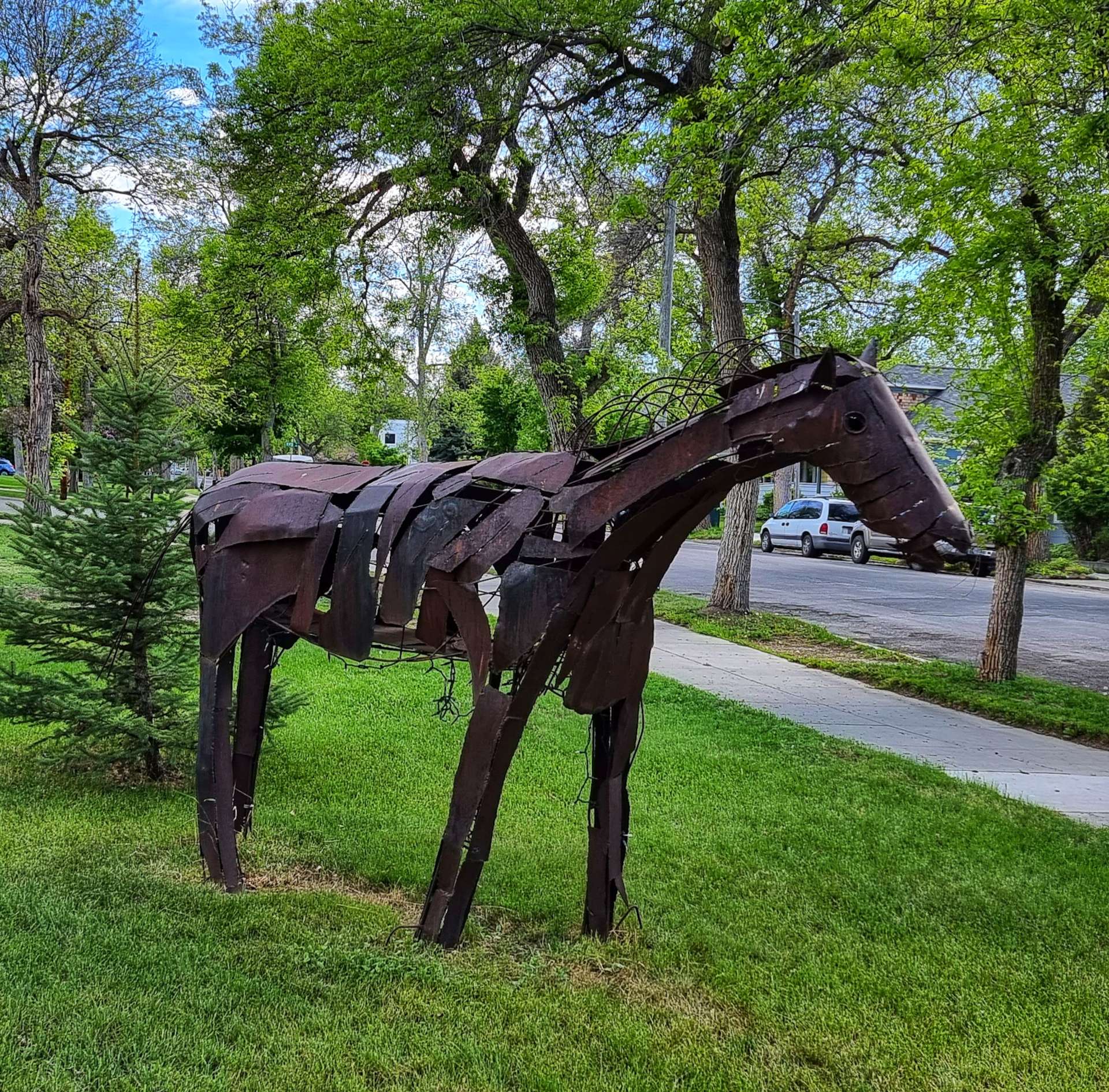
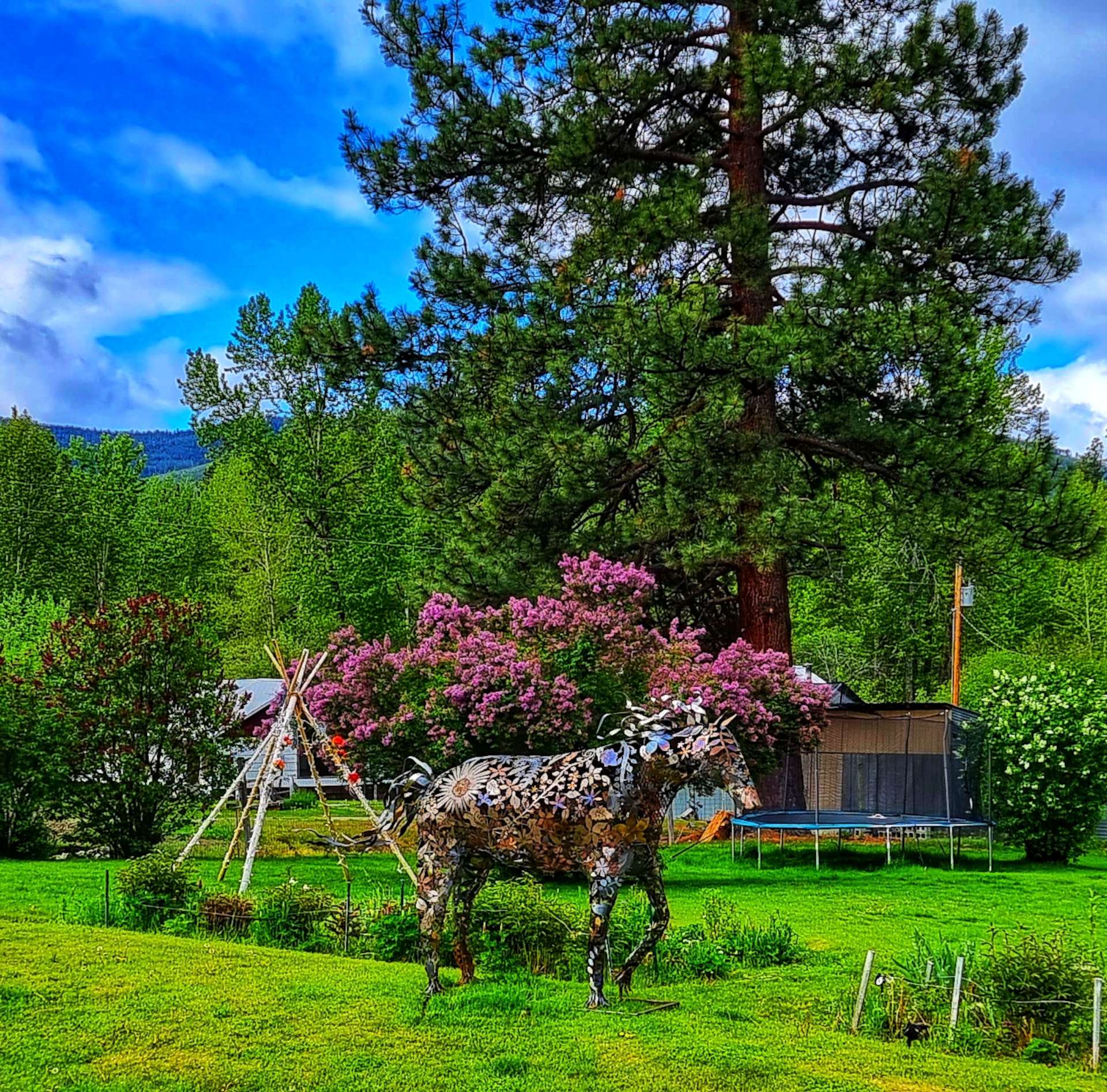
Later in the day as we were exploring some of the quiet backstreets, we passed the Federal Reserve Bank, where we were tempted to go in & beg for some dollars, as the GB Pound is so weak at the moment! Not long after Sean spotted a hover of 4 chinook helicopters overhead (I only managed to get 2 in the shot) – on our way into Helena yesterday we also spotted one with equipment being carried in a cargo net. A final treat was spotting a beautifully sculpted horse in a residential garden.

In addition to all the above excitement, I managed to get my first haircut of the adventure & I also had my cycling jersey repaired. The box at the bottom of the zip had fallen off, so my zip no longer stayed zipped up – not a sight anyone should have to see!! My new friend Katelynn (from The Sewing Bee) went out of her way to sort me out, by taking my jersey home with her, buying a new zip on the way & fitting it that evening, before going away for the weekend. Katelynn, you’re an absolute star, thank you so much – hopefully you’ll read how much your kindness meant to me.

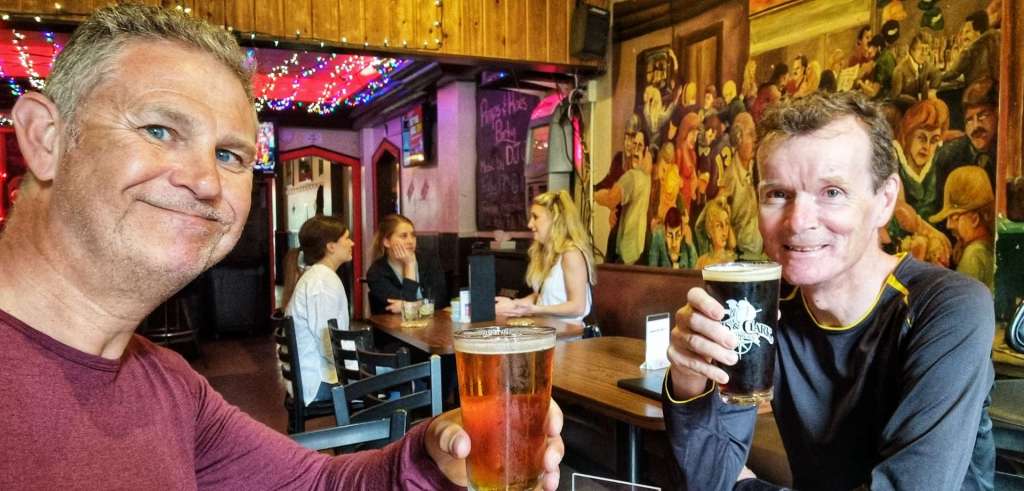
After such an action packed day, we both needed to take the weight off our feet for a little bit – somehow we found ourselves back in The Rialto Bar (neither of us know how!), so we had a few beers, then a few more & eventually left at about midnight. Friday Night Beer Club lives on! Luckily Saturday was also a rest day – my only activity was to publish a new blog!!!

Dillon to Helena

Riding to Rest & Relaxation – Wednesday 8th to Thursday 9th June

Wednesday 8th June – Dillon to Whitehall (Stage 32)

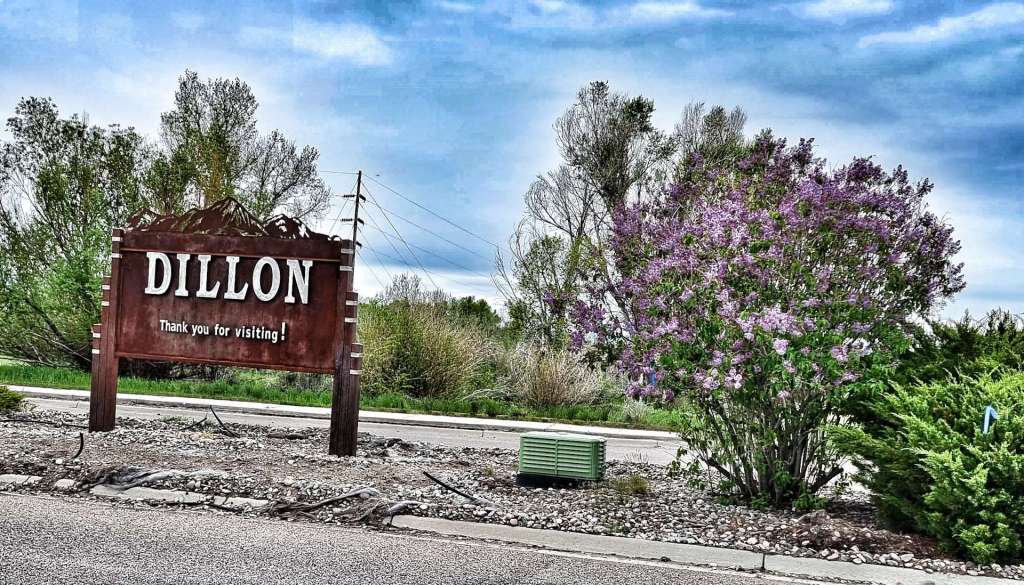
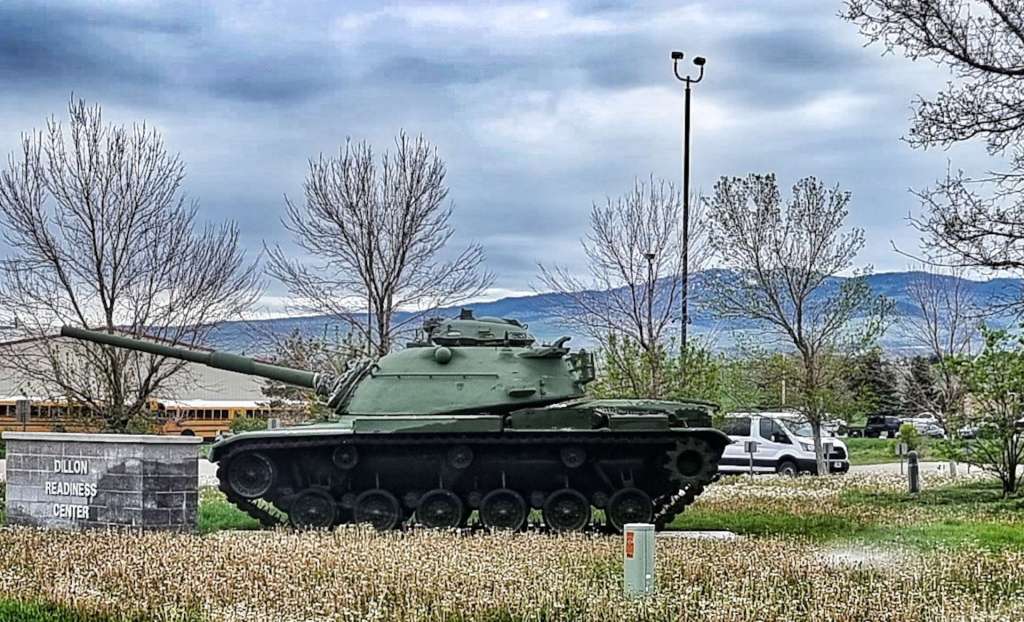
We woke to overcast skies which threatened rain at some point in the morning. After a continental breakfast from the hotel, we took our time packing & set off just before 10am. We left town with a thank you for visiting message & a reminder that Dillon has an Army National Guard Recruitment office!

Route 41 is advertised at regular intervals along the road as the Auto Tourist Route & it was clearly designed by a non-cyclist! While it took us through stunning scenery, there was nowhere for cyclists to ride. Unlike every other road so far, there was no hard shoulder for large parts of the route & a couple of locals enjoyed driving closer than was necessary.

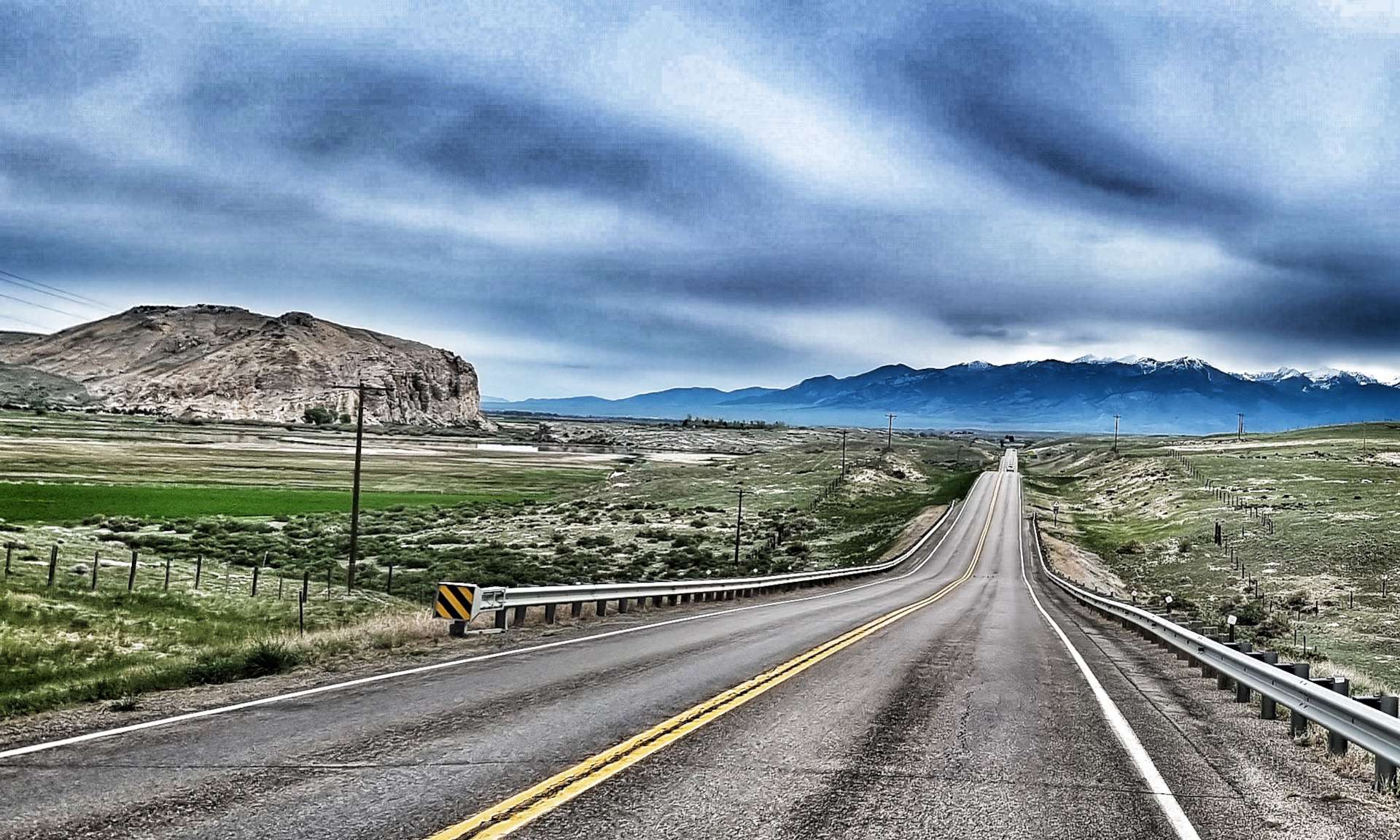
We had glorious views of the towering mountains on either side of us as we cycled towards our first Historical Point of the day – Beaverhead Rock State Park. If you look at the 3rd photo, you may be able to picture a beaver’s head as if gliding across water. Lewis & Clark passed through here on their adventures & learned that the local Indian name for the rock translated as Beaverhead.
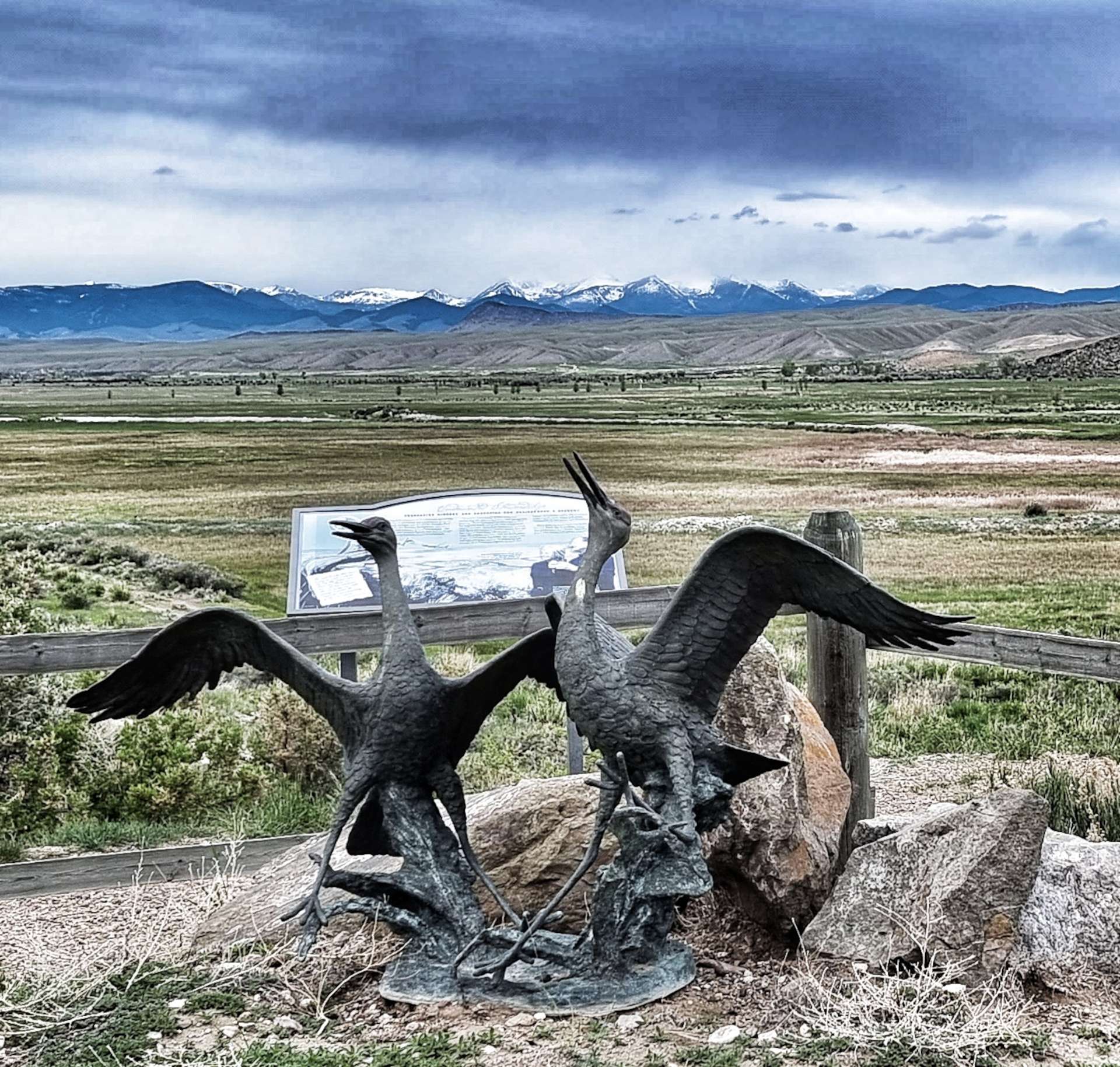
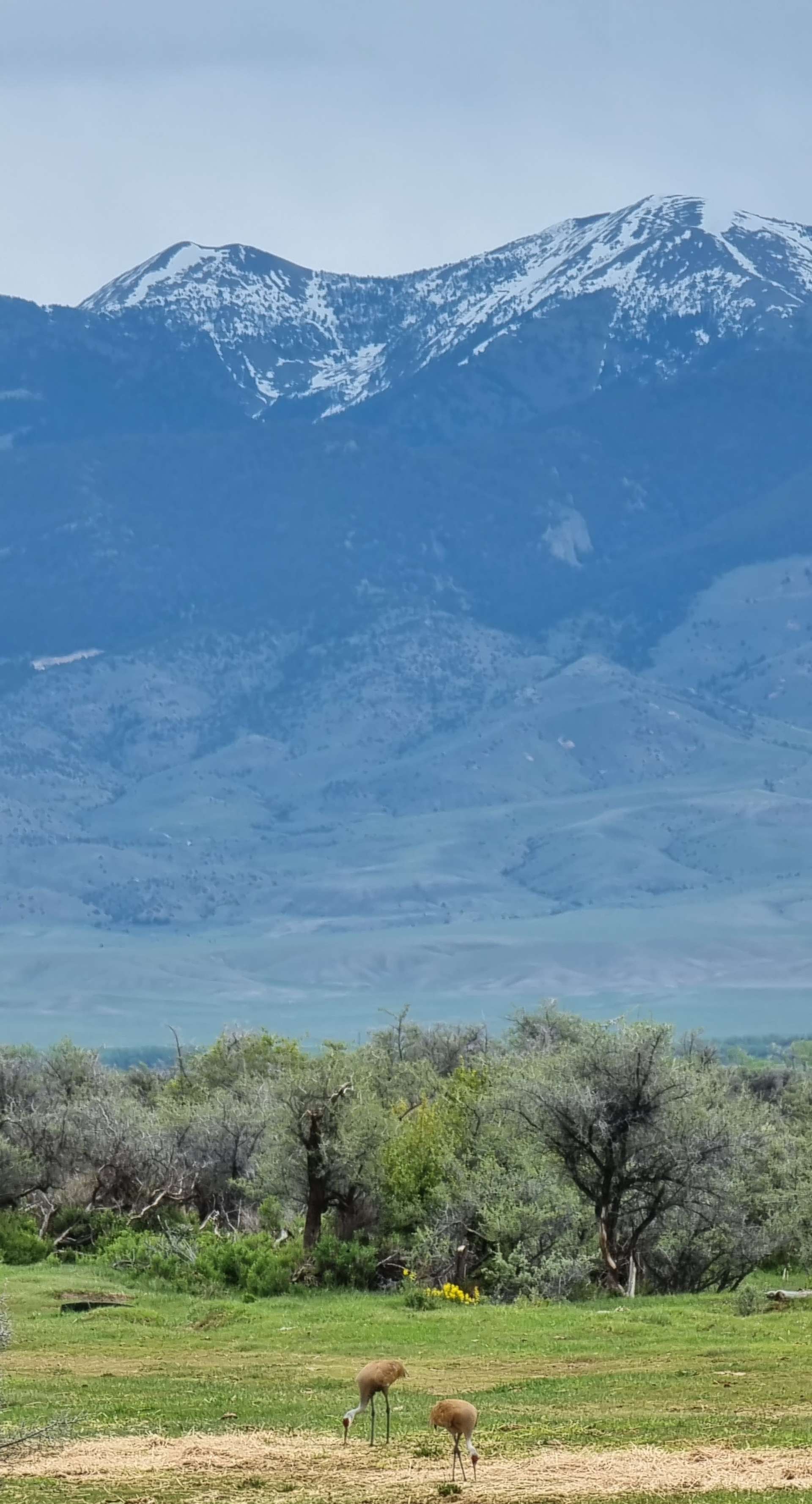
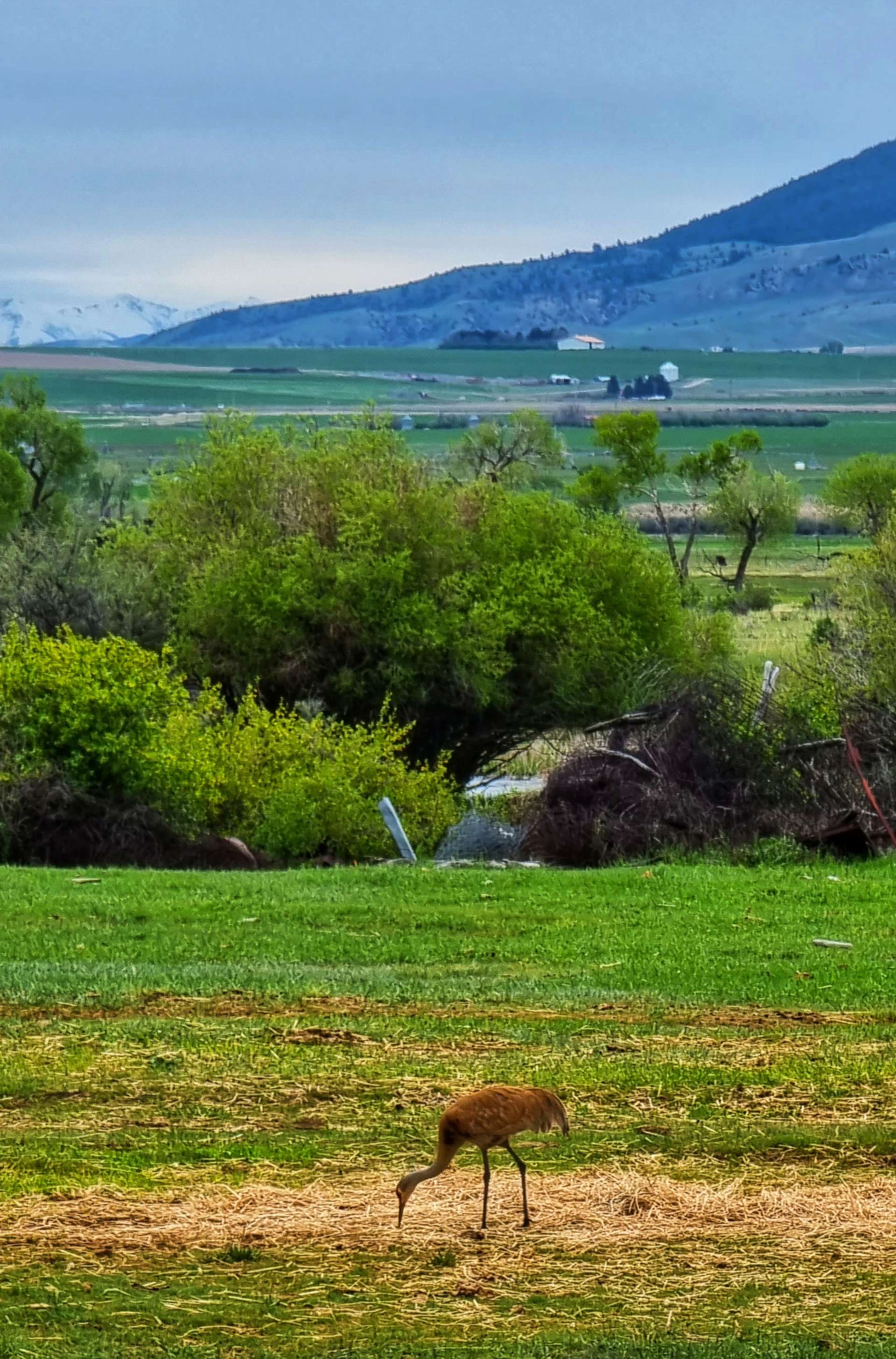
Leaving Beaverhead Rock behind us, we found our next Historic Marker around the corner – the National Sandhill Crane Nesting Site, which had a lifelike sculpture of two cranes. We could just make out a flock of birds in the distance, although we couldn’t tell what they were. This wetland site has been rescued by Montana Department of Transportation & now boasts a diverse range of wildlife.

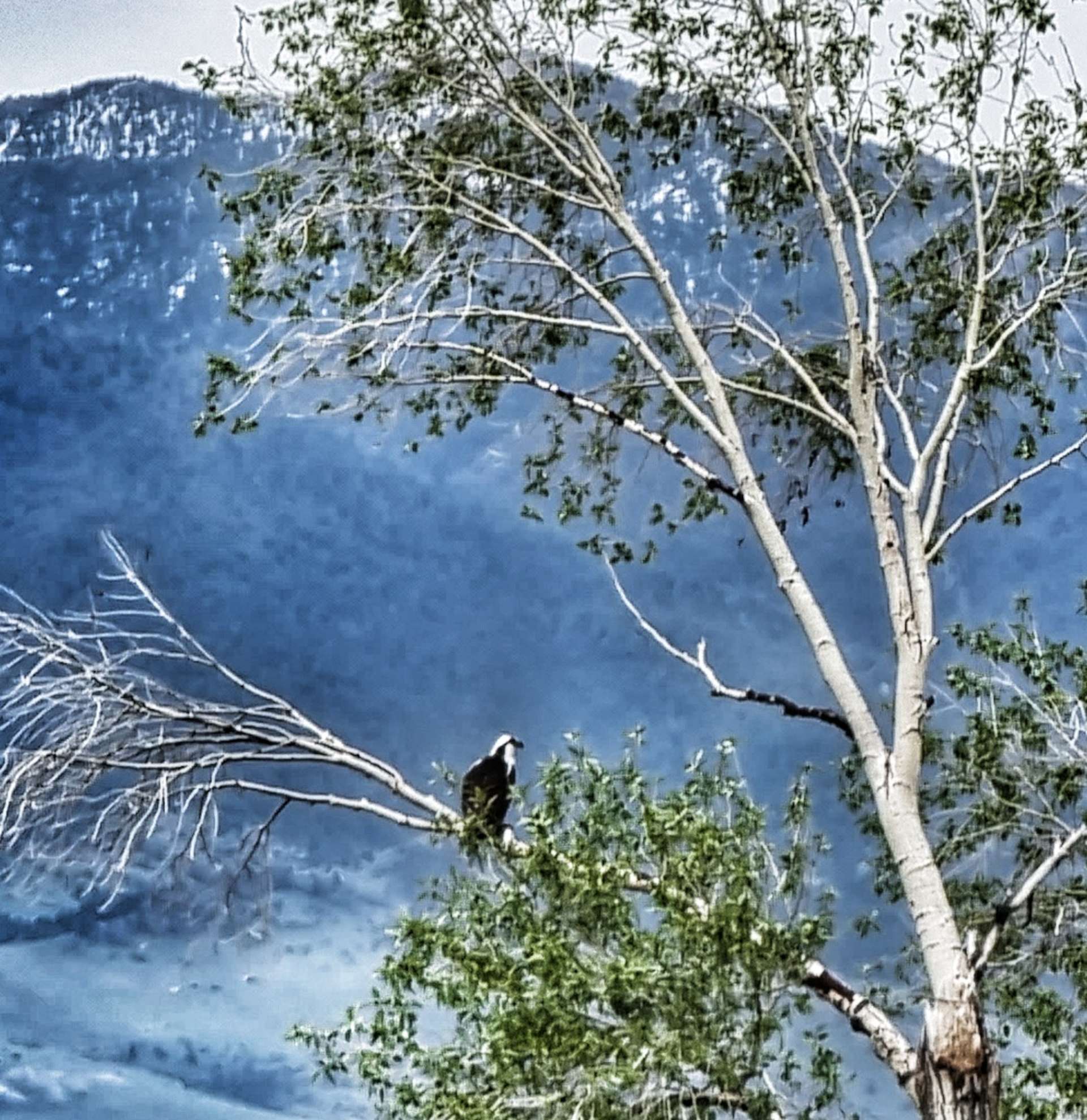
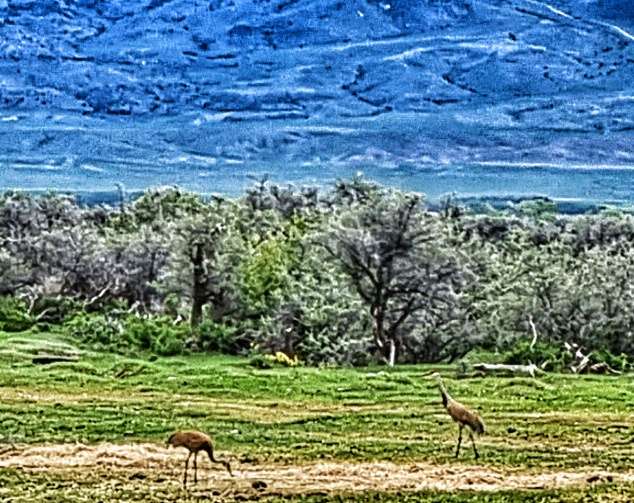
As we continued towards Twin Bridges, we were also fortunate enough to spot an eagle perched in a tree, as well as a couple of herons / cranes that were feeding in a nearby field. The photos aren’t great, but they’re a great reminder of seeing them.

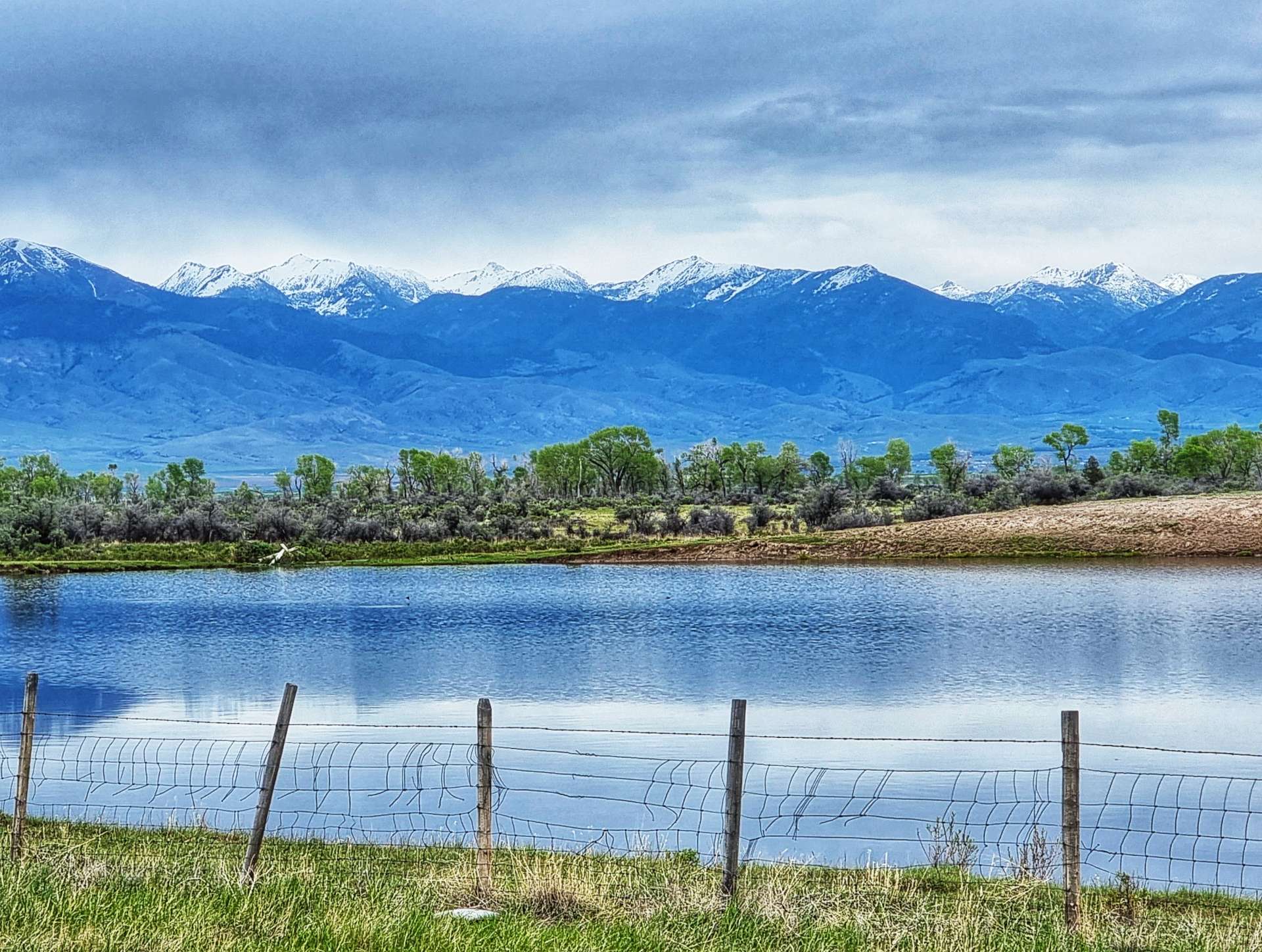
We also passed a couple of fishing lakes along the way, with majestic mountains behind them providing a glorious backdrop. In addition to today’s ride gradually descending the Beaverhead valley, we also picked up a slight tailwind just before we entered Twin Bridges – this boded well as the remainder of our ride was due to follow the same direction. But before that, we had important business in town…..

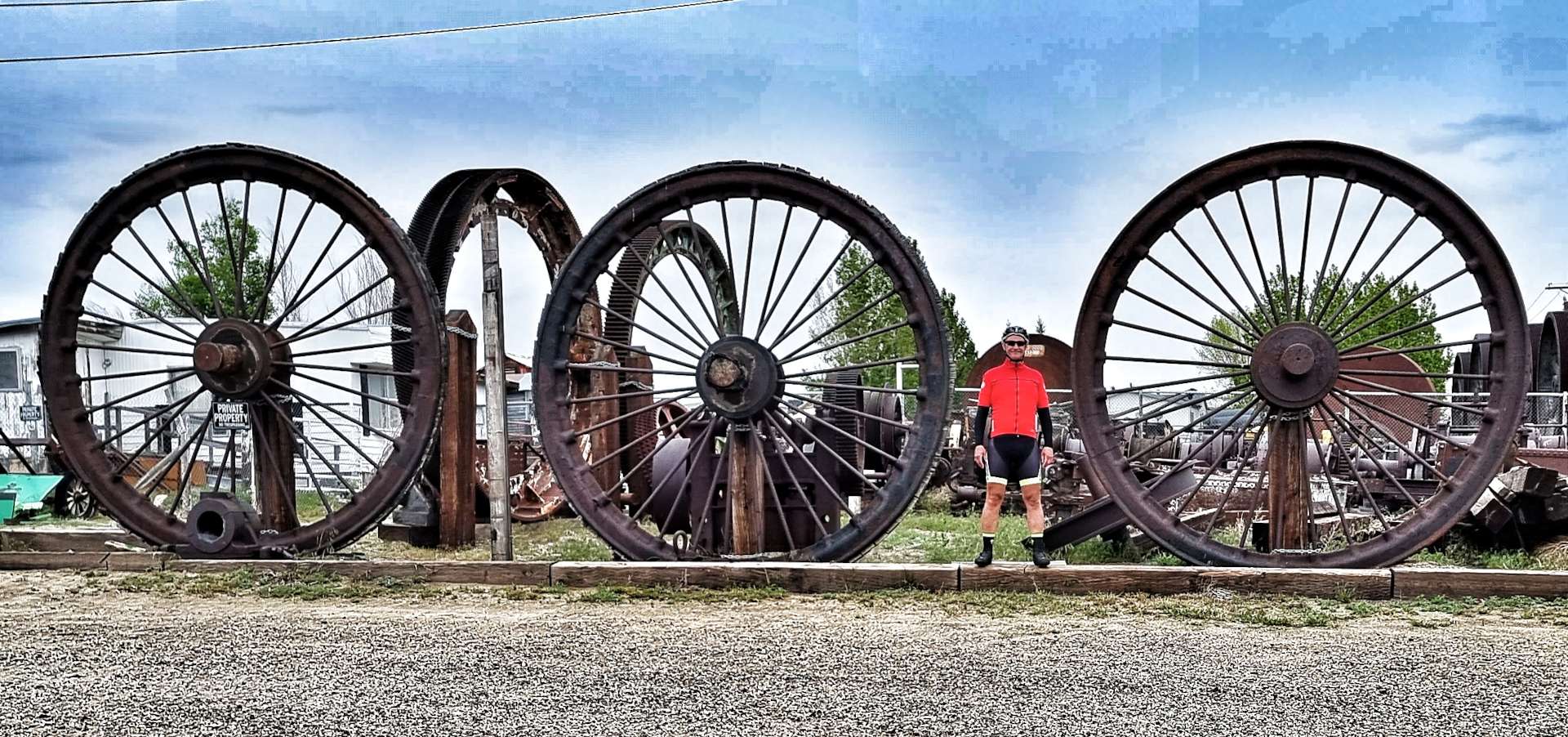
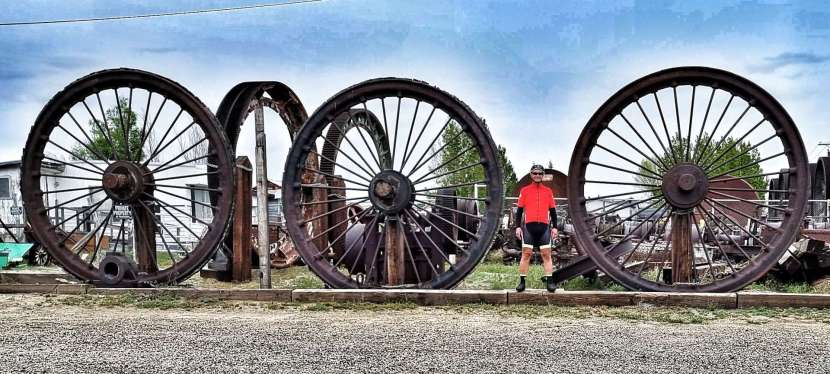
For the first time in 4 days, we found a coffee & cake stop. The Blue Anchor Cafe delivered with a delicious piece of lemon meringue pie! As we left town, we passed the volunteer fire department & they had a tender on display & a bit further on in Silver Star there was a huge display of Rope Drive Compressor Wheels. Lloyd Harkins has been collecting all types of pre-1900 mining gear over the years & these take pride of place.

The tailwind out of town had raised our spirits & we fairly flew along the valley floor, stopping every now & then to take in the towering views all around us.

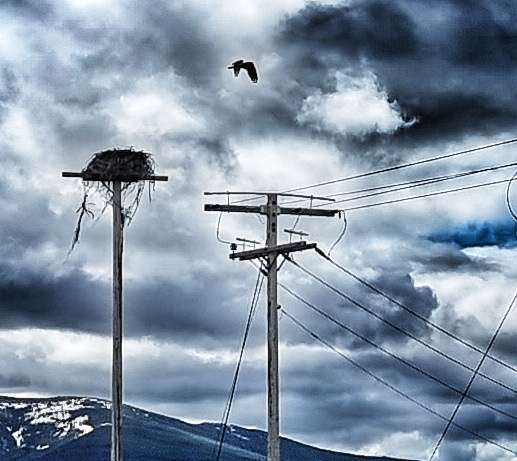
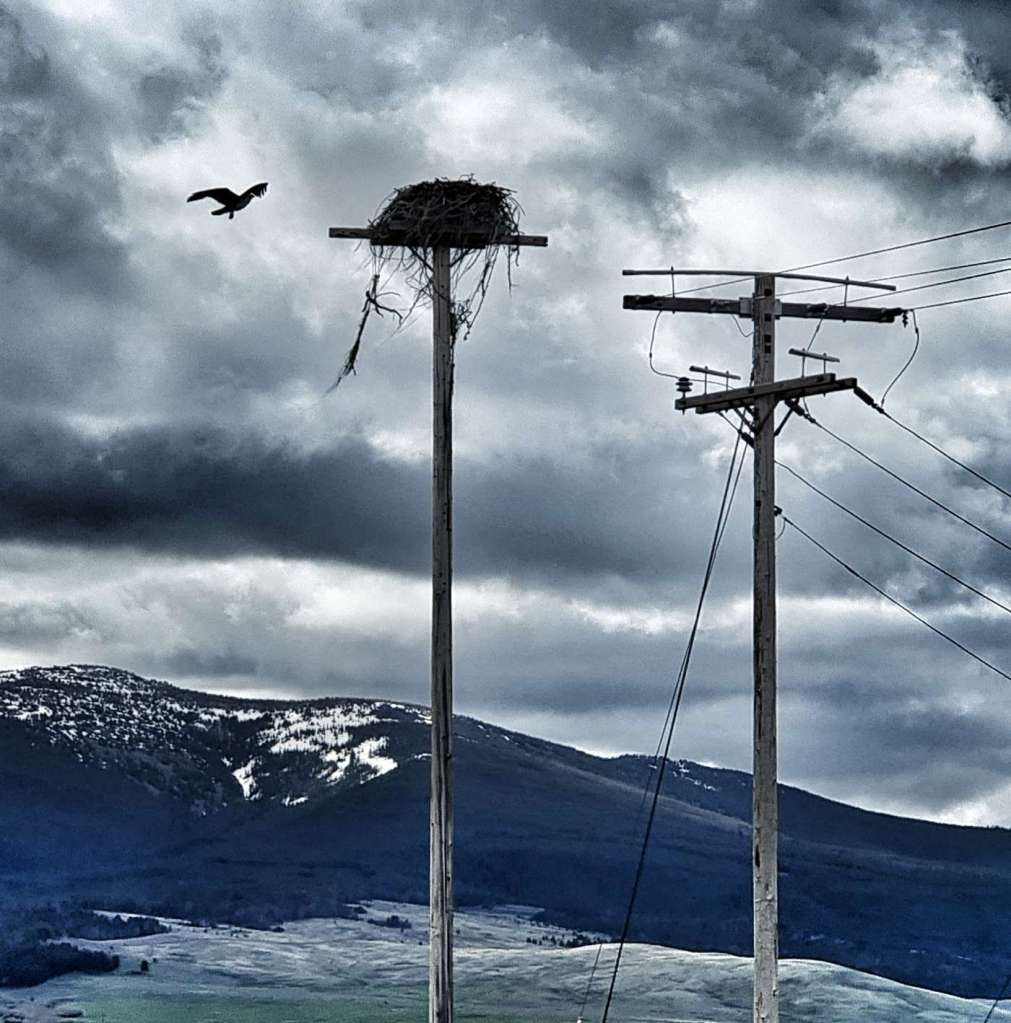
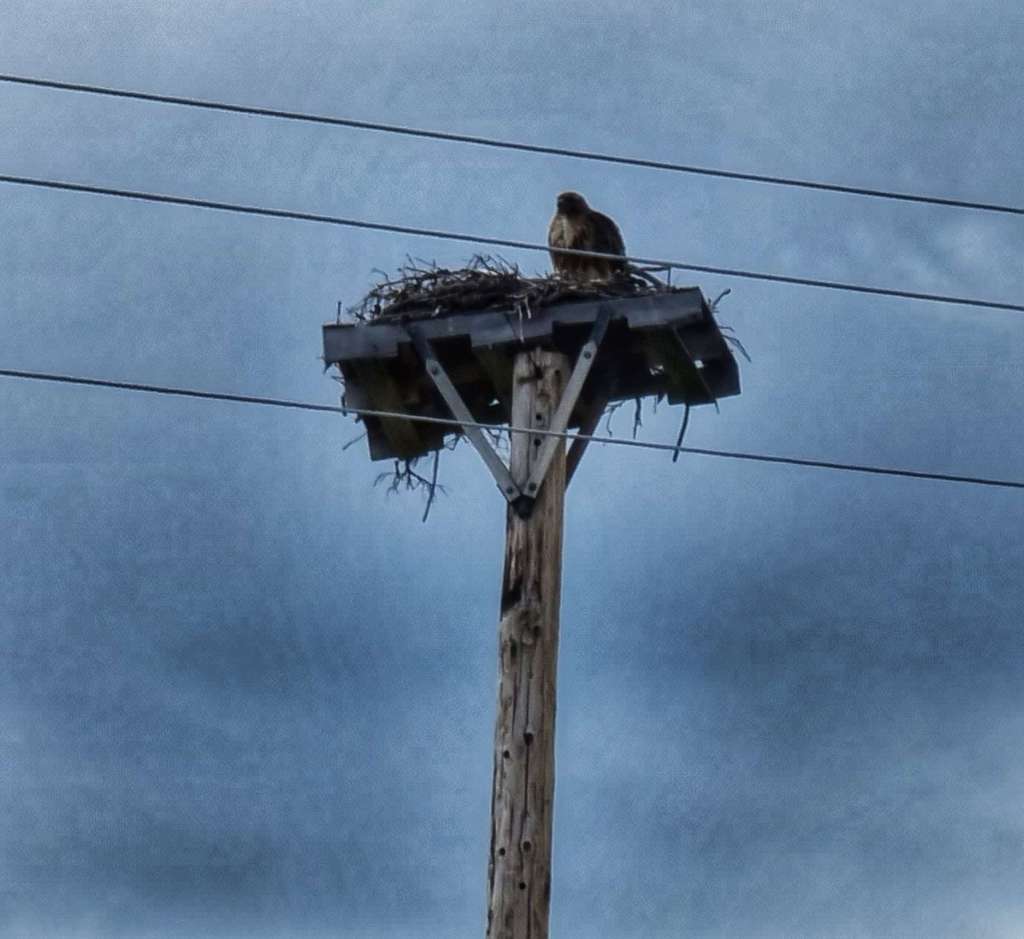
We were still in eagle country & we spotted a couple of telegraph poles where wooden pallets had been placed on the stanchion so that the eagles could build their own nests. There were plenty of creeks & rivers available so the eagles could go fishing.

The gentle descent & tailwind resulted in our ride fairly flying by – we were on the road for a little under 3 & a half hours. We made sure that we took in the huge views wherever possible as we closed in on Whitehall.

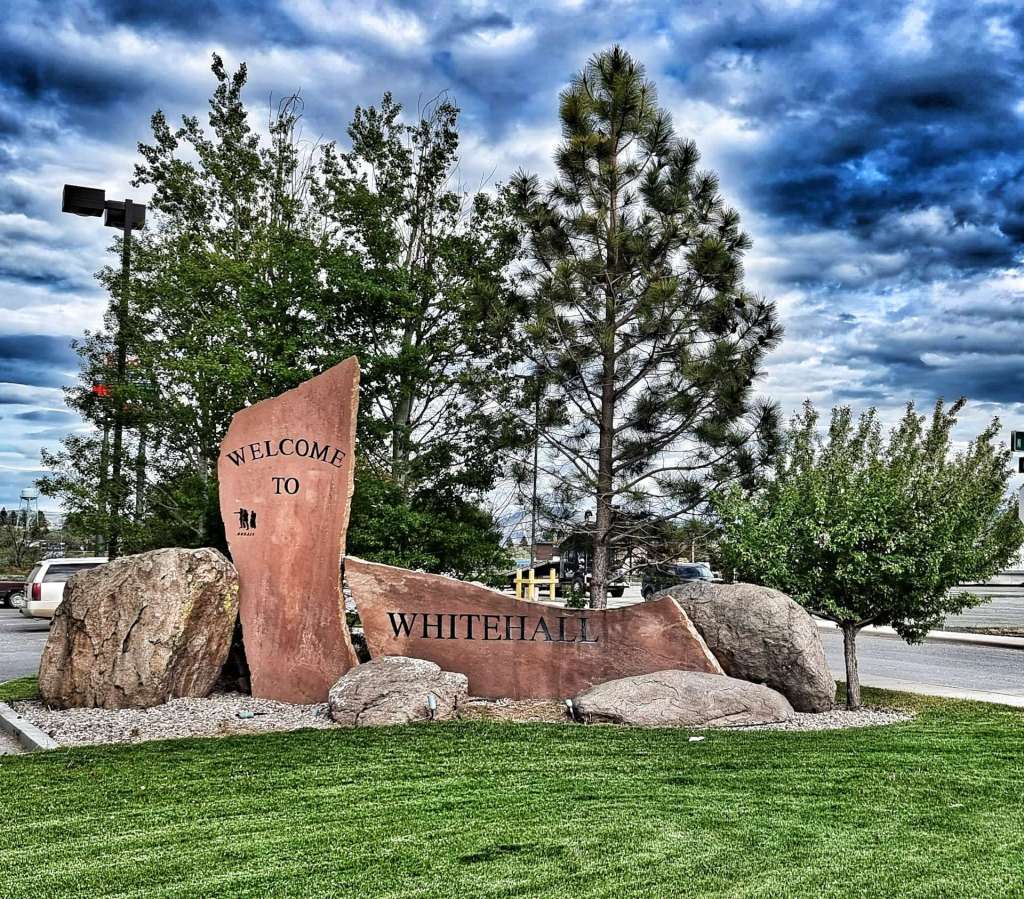
We arrived in town early, so found an espresso hut where we enjoyed a fresh coffee & cookie, before passing a Welcome sign on the way to our hotel. It was a short day in the saddle, but it still delivered on scenery, wildlife, history & lemon meringue pie!!!

Stage Stats – 56 miles, 643 feet of climbing. Gradually descending all day with a friendly tailwind!

Thursday 9th June – Whitehall to Helena (Stage 33)

The is the final day in a block of 6, as we ride from Lincoln to Helena – we then have 2 days of rest & relaxation planned! We woke up to blue skies & for the first time on our adventure we didn’t need our gilets or wind jackets as we left the hotel – woohoo.

We left Whitehall by tracking the railroad, with big views of the mountains ahead of us & beyond the Jefferson Slough to our right. We then followed the I-15 for a short time on a frontage road before our first climb of the day.

As we summited, a secret valley was laid out before us, with huge views spread out before us. As we descended, the Conrow Creek meandered backwards & forwards on the valley floor below. We both remarked that it reminded us of physical geography classes 40 plus years ago when we were taught how rivers like this formed oxbow lakes as the river finds a shorter route through soft landscape. Oh to be 16 again!!!

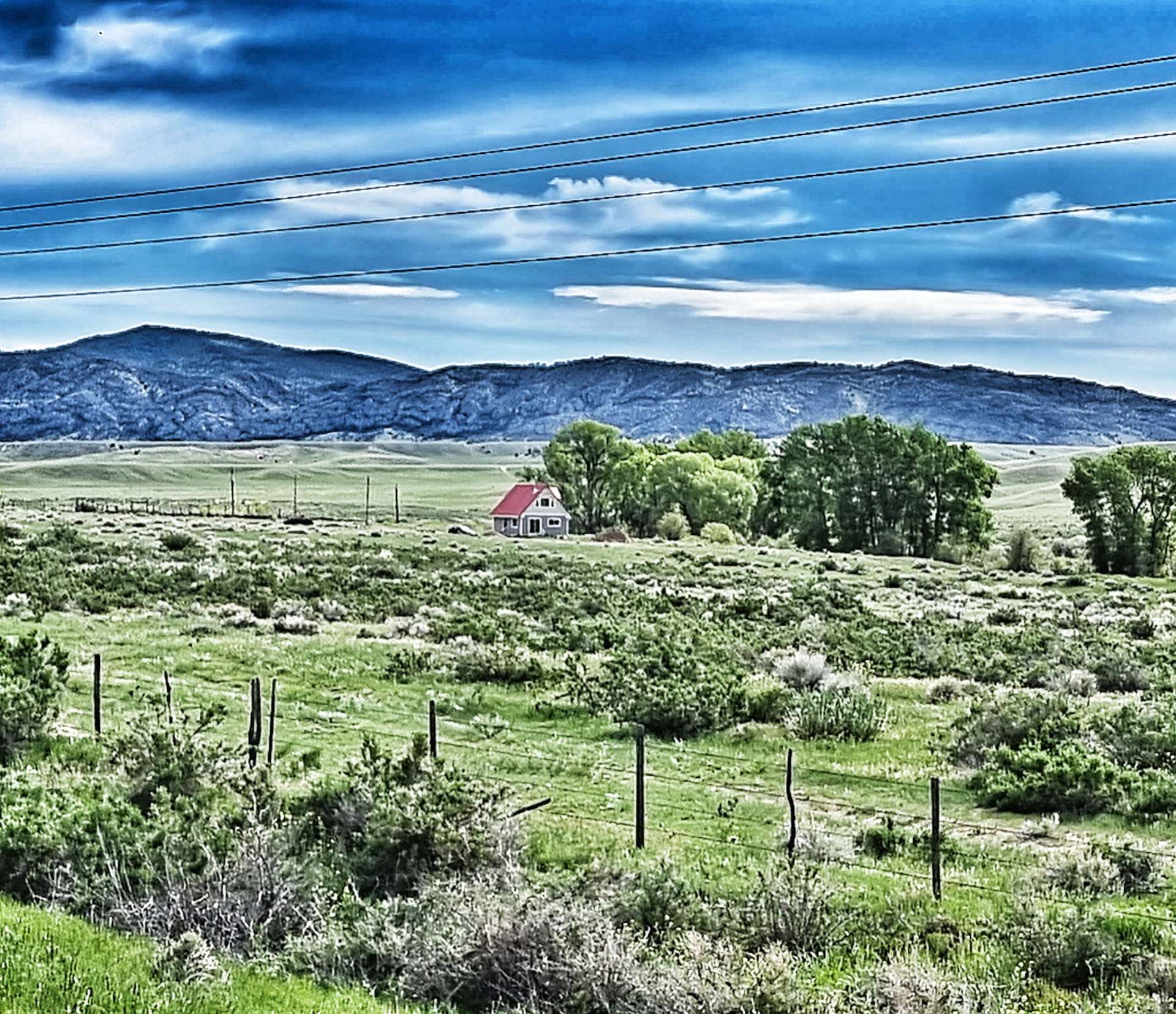
After about 5 miles we finally saw a little house on the prairie – although there would be more habitation further up the valley, this was the first sign of civilisation that we’d seen!

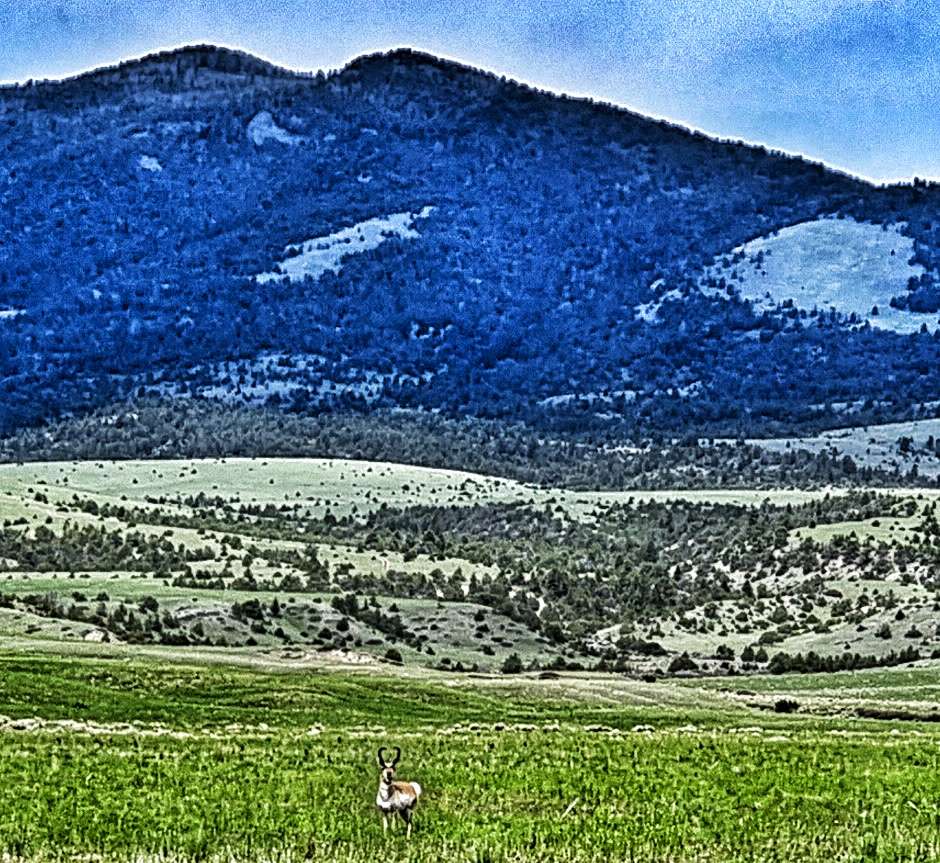
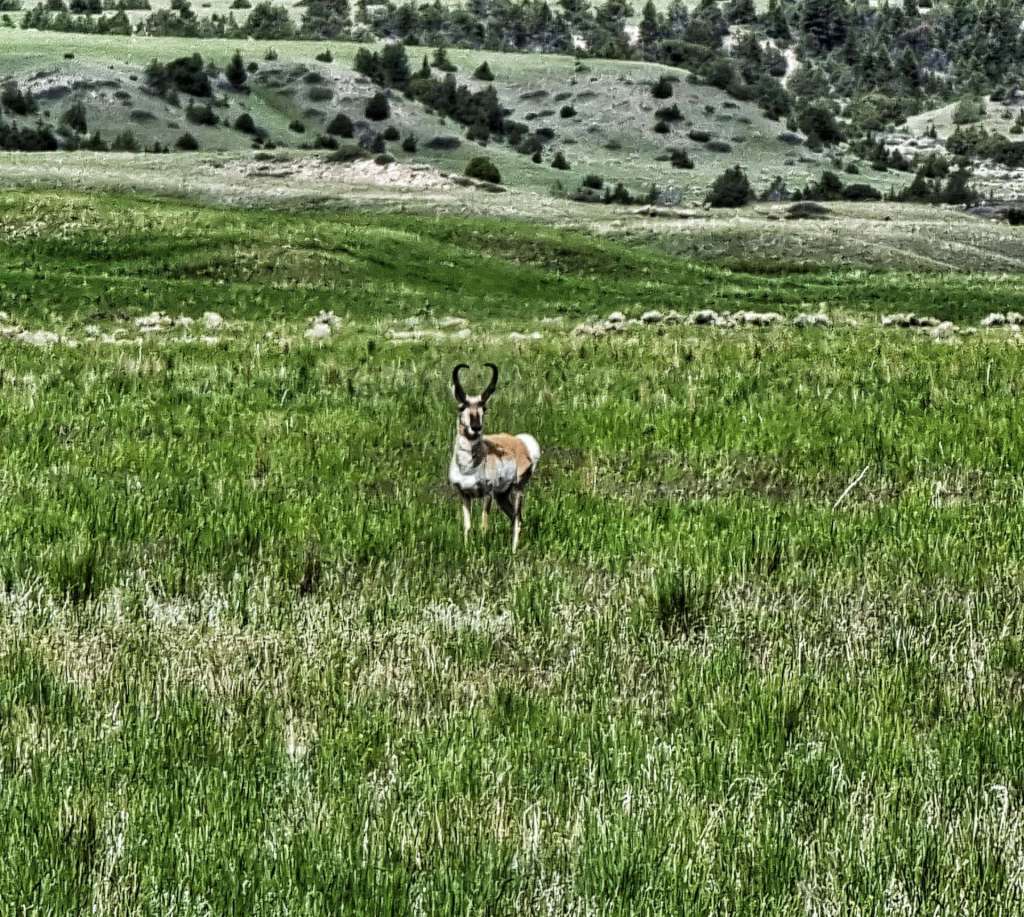
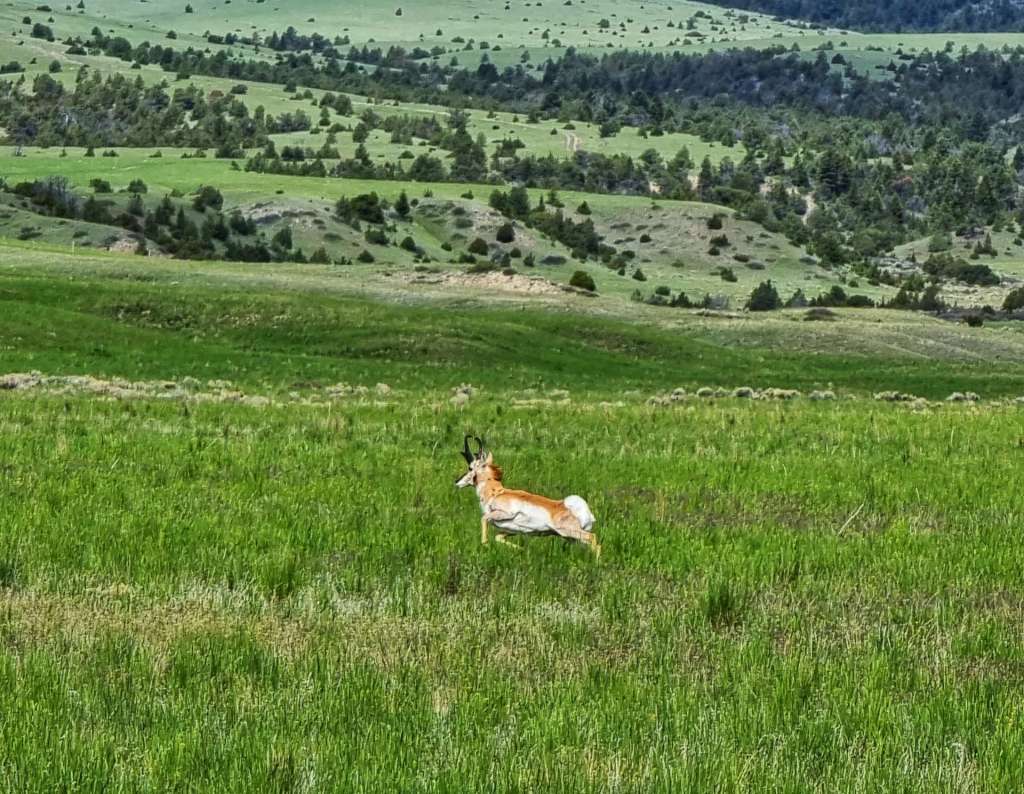
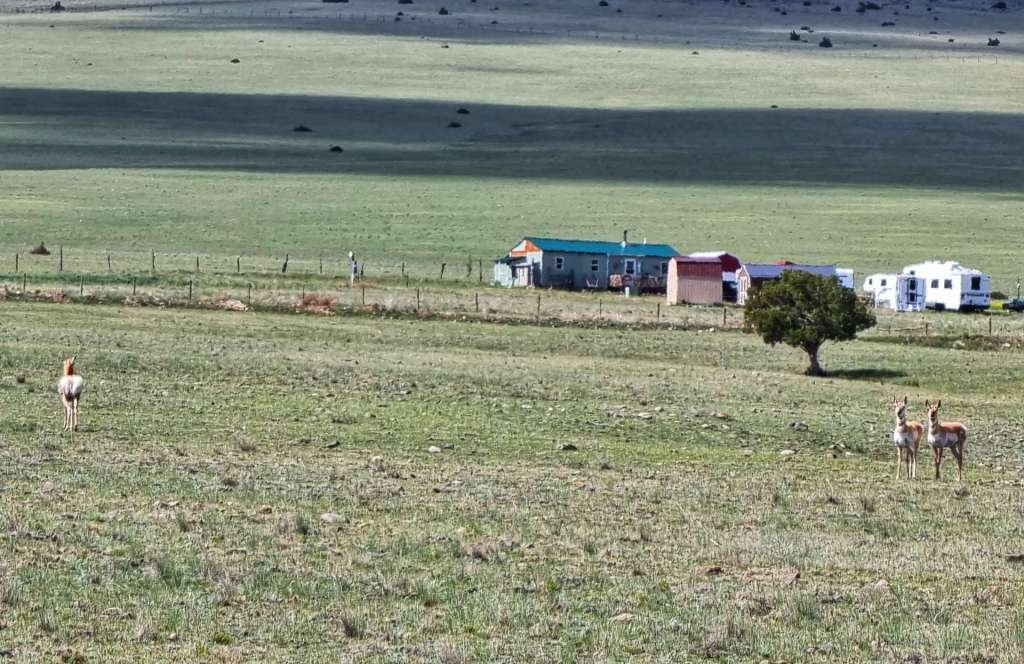
In a place so devoid of human habitation, we expected to see some wildlife & we weren’t disappointed. In addition to the eagles soaring overhead (always too far away to photograph), we also spotted two different types of deer. First up, we saw a herd of prong-horned deer & one of them took an interest in us when we stopped, as he checked us out. He soon got bored & bounded off to join his friends / family. Second up we saw a herd of white-tailed deer without prongs. Two of the 3 made eye contact, but the 3rd one quickly grew bored & walked away. A familiar experience for me!!!

In addition to the wildlife, I’m always on the lookout for interesting scenery & today it came in an unexpected form – the clouds. At times they took the form of a burrito, a caterpillar & a pair of sunglasses lenses. I probably have too much time on my hands & you probably don’t see anything but clouds……!

Being surrounded by big mountains, we also had stunning views to enjoy too. Sometimes it was the views along the arrow straight roads to the mountains in the far distance & other times it was simply enjoying the different colours on view & the way they complemented each other.

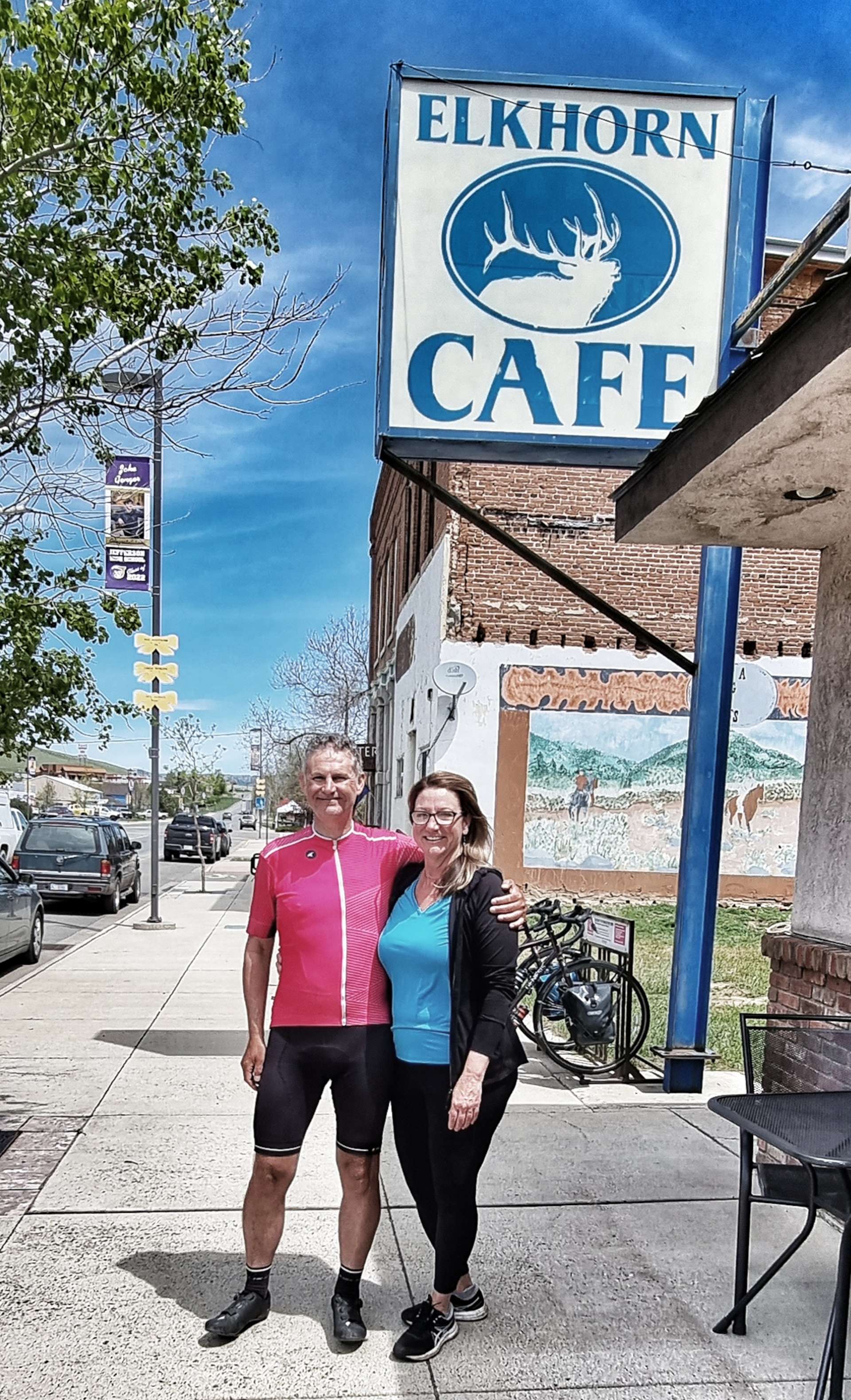
After 37 miles of gradual climbing, we reached Boulder, where we hoped to find somewhere that would serve coffee. We hit the jackpot in a huge way when we found the Elkhorn Bistro, run by Jennifer. We were welcomed with a huge smile as soon as we walked in the door & Jennifer took the time to talk to us about our adventure. She also shared a story about a few Italian long distance cyclists who were raising money for Diabetes, in recognition of a friend of theirs who had passed away – they had left her a poster of their cause, which she planned to frame & put on display in her bistro.

Jennifer recommended the homemade lemon cake with huckleberry frosted icing, then melted my heart by also offering to add some ice cream & whipped cream!!! Cake shop nirvana – Jennifer loves doing what she does as much as my friends Phily & Yas at The Old Stables in Castle Combe & the passion shines through.

Jennifer also shared a story about the tavern next door – Patrick Duffy’s (he of The Man From Atlantis & Dallas fame) parents owned The Lodge & were both murdered on 18th November 1986, when two teenagers committed an armed robbery. Kenneth Miller & Sean Wentz were both convicted of the murders & sentenced to 75 years in jail.

Leaving our new friend behind, we again tracked the I-15 for a couple of miles – as we were riding along we saw a small hawk like bird attack a far larger eagle. The hawk had 4 or 5 attempts the harry & harass the eagle, who didn’t seem to know what to do. I wish I could have got some video or stills, but it all happened too quick.
As we turned away from the I-15, we realised that the steep gravel road we’d been admiring from afar was our way out of the valley!

The video below probably articulates how difficult I was finding the climb (this was my 4th attempt, as the other 3 resulted in me having to abort the video so I could concentrate on staying upright!!! The climb maxed out at 13% & the gravel alternated between hard-packed (easy to get purchase & stay upright) & sandy (almost impossible to get grip & stay upright). It was a great little adventure, but not one I’m in a hurry to repeat.
At the summit of the climb we stopped, admired the view & talked about the importance of giving each other plenty of room for the gravel descent – there was a casualty, but not the one either of us was expecting! As I descended, my trail mix pack bounced out of my rucksack pocket, hit the gravel & split open. Luckily most of it remained in the pack, but some was left behind as a treat for the wildlife – it had M&M’s in it too 😦

Sean overtook me while I sorted out my trail mix fiasco, but once we reached the tarmac I was able to catch up again & enjoy the remainder of the descent into Clancy.

Clancy was a mere 10 miles from Helena, but it was by far the toughest section, as we hit a stiff headwind that required us to pedal on the downhill sections! We stopped very briefly to talk to a couple of cyclists who were following the Great Divide mountain bike route. They had a schedule to reach somewhere 40 miles past Helena, so we wished each other safe travels & went our separate ways.

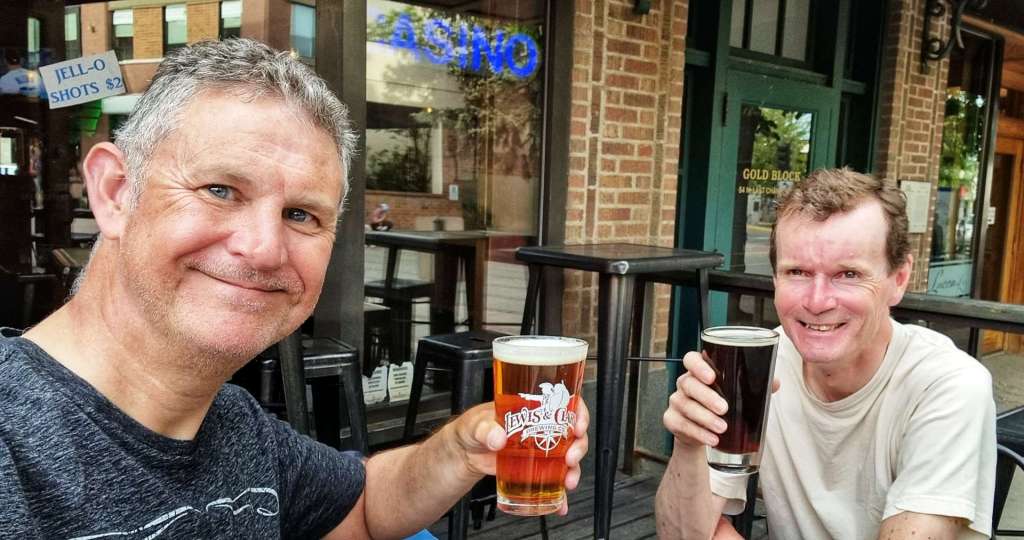
We arrived at the Budget Inn Express (our home for the next 3 nights) at about 3.30. We headed off to get our laundry done & also buy breakfast for the next 3 mornings – by this point we were both almost falling asleep on our feet, so did what any self respecting person would do, we found The Rialto Bar where we had a couple of liveners as we chatted about the last 6 days of riding. Thirsty Thursday beer club lives on!

Stage Stats – 69 miles, 2,562 feet of climbing. Gradually climbing for the first 45 miles, then a slow descent into Helena. Glorious sunshine all day!

Darby to Dillon

The Wild, Wild West – Monday 6th to Tuesday 7th June

Monday 6th June – Darby to Wisdom (Stage 30)

When I left you, we were about to embark on a night under the stars – unfortunately we didn’t see any, as the heavens opened & it rained almost constantly through the night. We both had limited sleep as a result & were feeling very tired when our alarms went off at 7am. The positive news was that the rain had stopped & the tents had kept us dry all night!

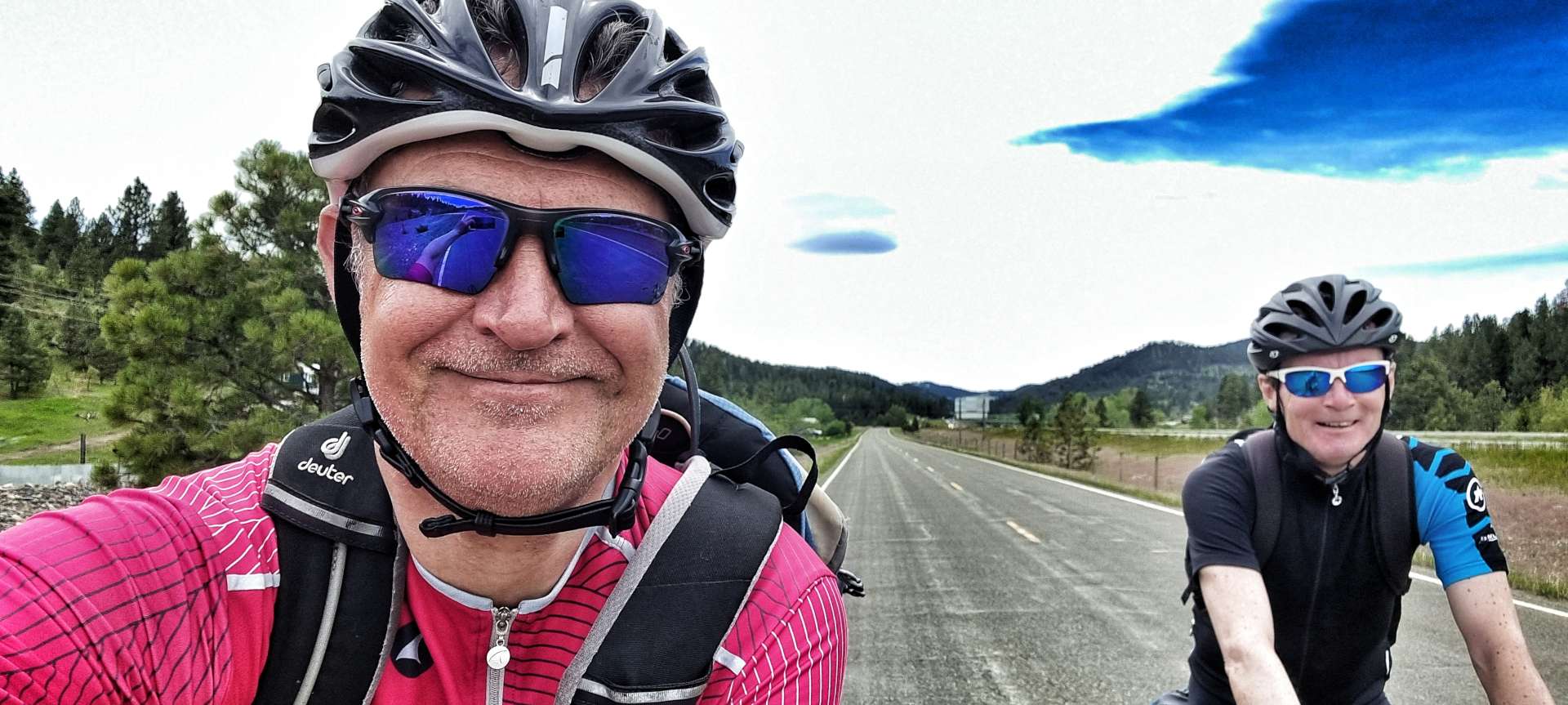
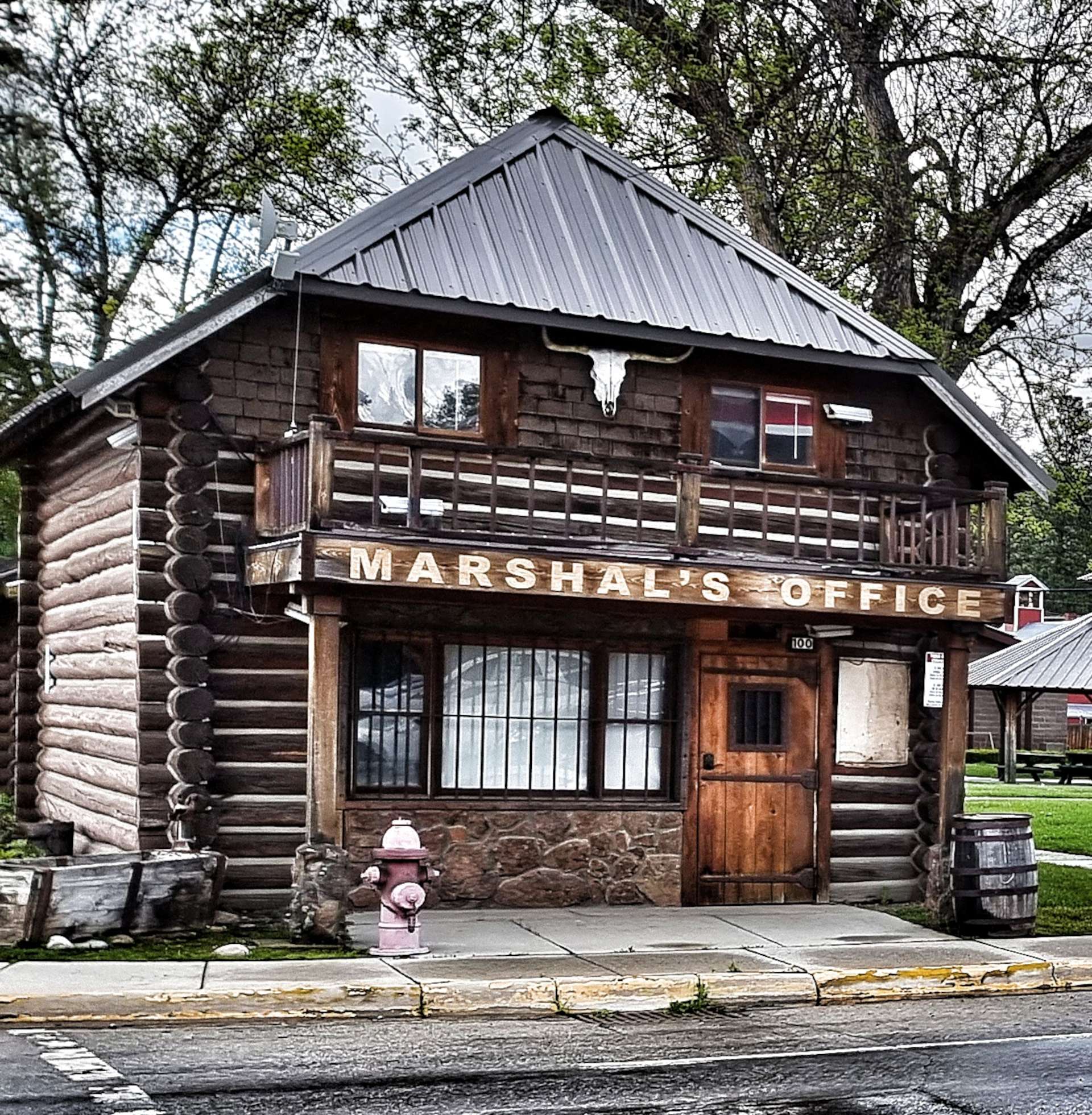
We had broken camp & were sat in the sun enjoying a pre-ride coffee by 8.45am, ready for a big day of climbing, as we would be crossing the Continental Divide again later. As we rode through town we passed the historic Marshal’s Office – I’ve cut the brand new patrol car that was next to the office from the photo. As we headed into more remote countryside, we passed a welder’s home with a metal horse in the garden – it was a majestic piece & the best form of advertising possible. In no time we’d left civilisation behind & were looking across fields of real horses towards towering peaks. The third photo below is of Trapper’s Peak, the tallest mountain in the Bitterroot Range that extends along the Idaho-Montana border & it tops out at 10,157 feet above sea level (ASL).

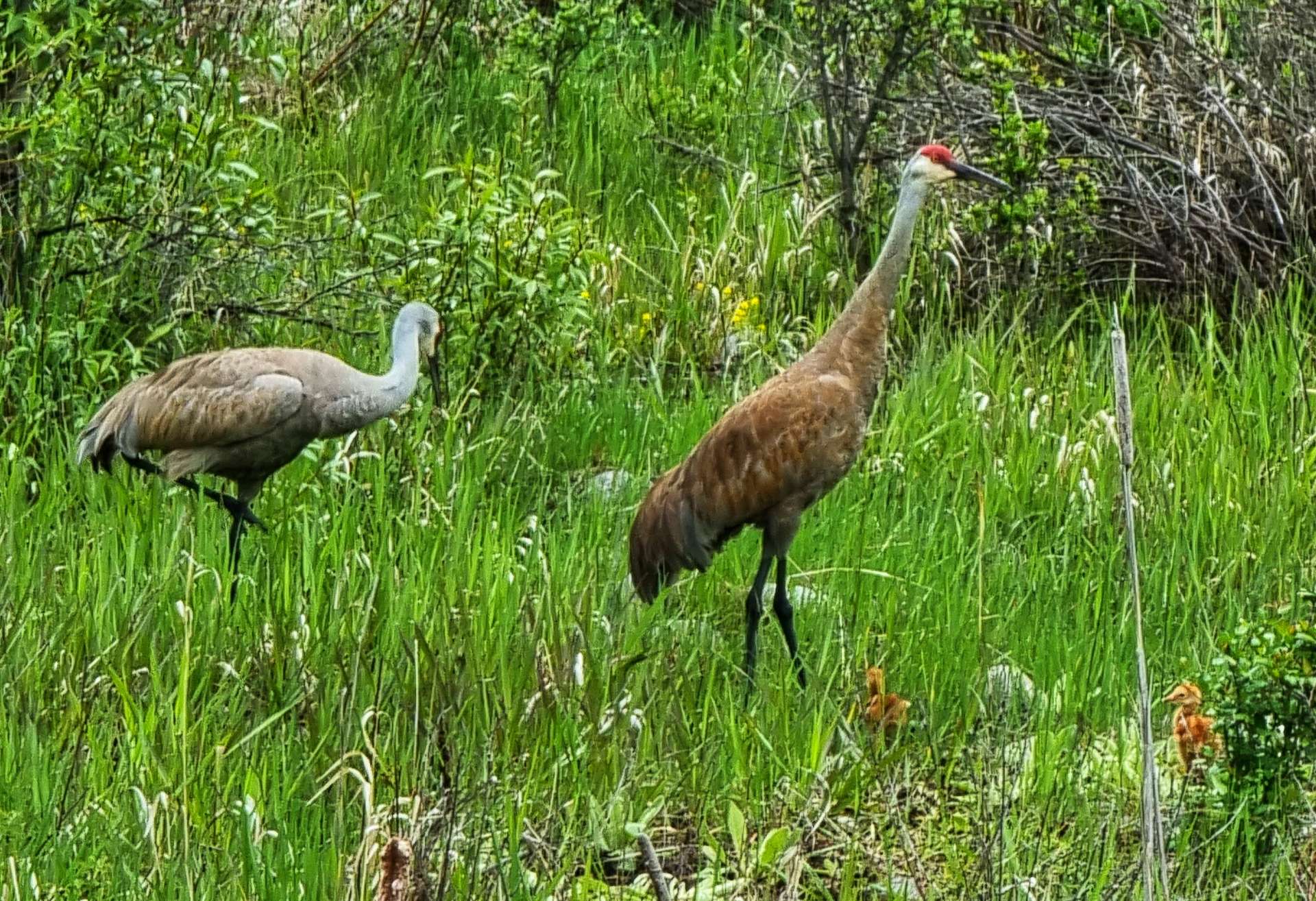
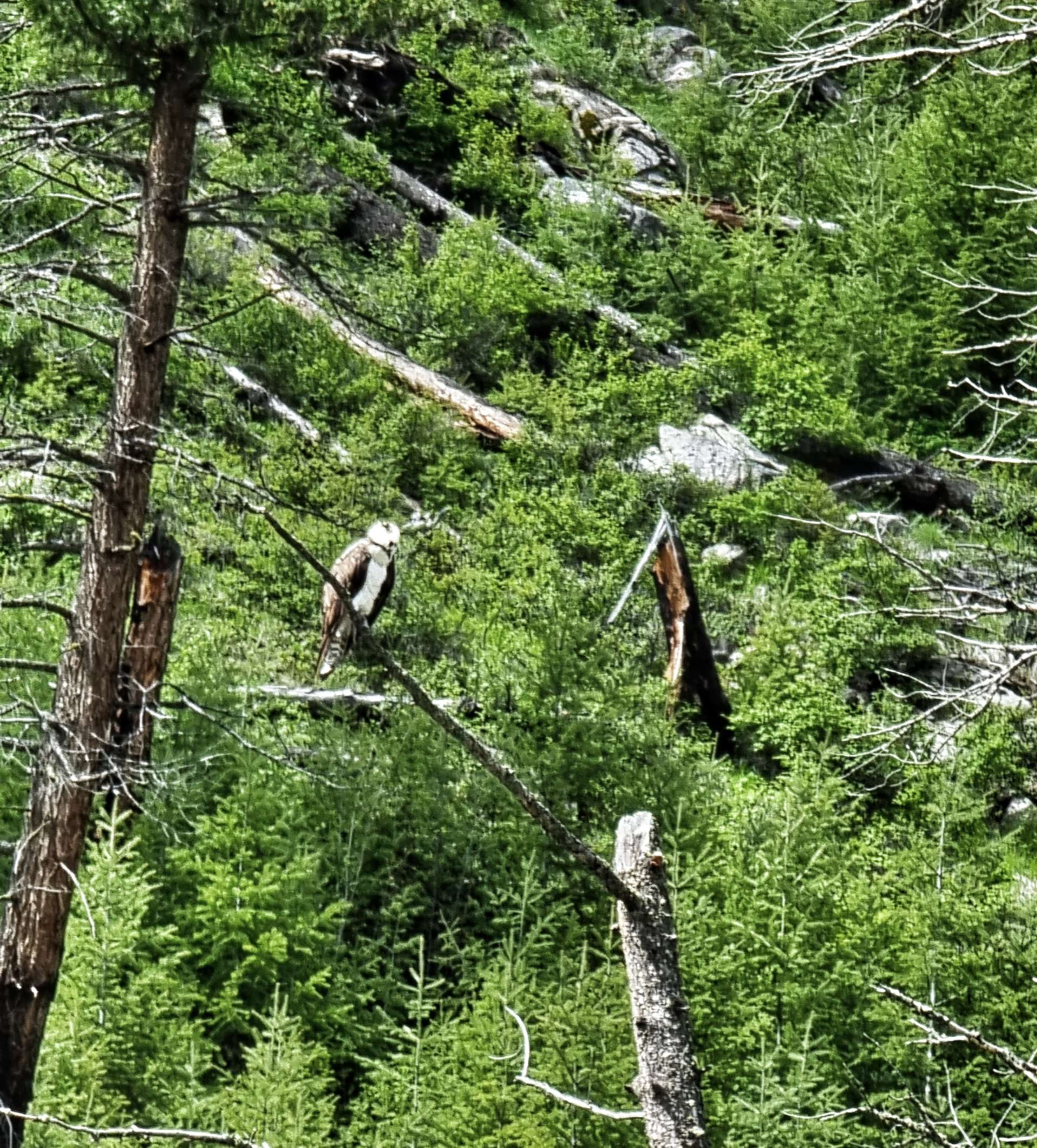
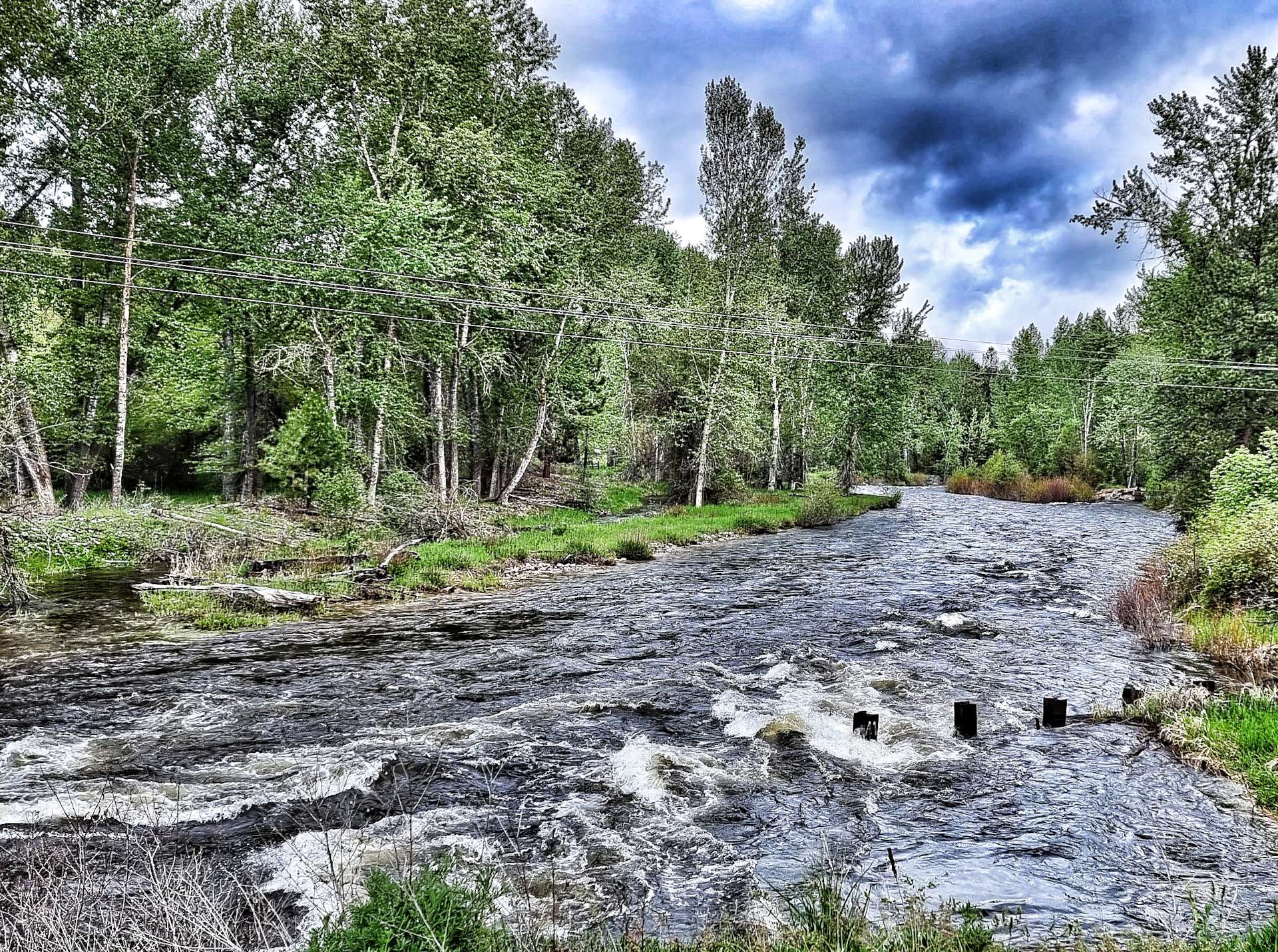
While I stopped to take a photo of the the Bitterroot river close to bursting its banks, Sean spotted a couple of herons or cranes (if you know what they are, please let me know & I’ll update my post). Anyway, as we stood watching them, we realised they had a couple of really small chicks with them – you may just be able to make out the two yellow shapes in the bottom right of the picture. A mere 10 minutes further down the road we also spotted an eagle perched in a tree, surveying the world around him/her. Although we’re now seeing deer & eagles on a daily basis, there’s no danger of me getting bored of them – I realise only too well how privileged I am to be experiencing wildlife in their natural environment & when I return home at some point, I may never see another one.

The Bitterroot river was a torrent as it splish-splashed downstream. We were travelling up the valley in the opposite direction, so were gradually climbing as we made our way to Sula. This was our great hope for a coffee stop, but sadly they didn’t open on Mondays, so we had to tackle the climb in a caffeine depleted state!

At the moment, we’re following the Lewis & Clark Trail – Meriwether Lewis was tasked by President Jefferson with exploring lands west of the Mississippi river that comprised the Louisiana Purchase. William Clark was his co-leader & between 1804 & 1806 they covered 8,000 miles as they sought a route across The Rockies to the Pacific Ocean. Sula was an historic spot where Lewis & Clark were welcomed by the local Indian tribes.

As we left Sula behind, the start of the Lost Trail Pass climb began in earnest. On the early slopes we were surrounded by high mountains in all directions, but over the next 14 miles we climbed from about 4,500 feet to 7,200 feet ASL. We were now looking across to the mountain peaks, rather than looking up. We were also almost up to the snowline once again.

As we reached Gibbons Pass (the highest point of Route 93, we briefly passed from Montana into Idaho (we decided not to change back to Pacific Time!!). We took a left turn onto Route 43 & immediately returned back into Montana, as we climbed another few hundred feet to the summit of Loss Trail Pass. Down below we could make out the road we’d been climbing.

We met Jordan at the summit, another long distance cyclist who was travelling in the opposite direction. We chatted for about 20 minutes or so as he waited for his buddy to join him at the summit of the climb – we shared our experiences, as well as suggestions for places to visit & avoid. We’d been planning to stay at the American Legion Campground in Wisdom, but Jordan advised that the Big Hole River RV Park had better facilities & 2 showers thrown into the price! We made an instant decision to change our plans for our overnight stop.

We descended into the Big Hole Valley on wide two-lane road that was deserted. As we plummeted towards the valley floor the gentle curves in the road were visible way into the distance. I only used the brakes once on the descent & that was to let Sean get in front so I could take a photo of him!

To add to our sense of happiness, we picked up a tail wind as we rolled along the valley floor, along the way passing through a part of the forest that had burned in a huge fire last year. It took in the region of 200 fire fighters to eventually bring it under control. We also passed Big Hole National Battlefield – in 1877, the Nez Perce Indians were forced on a 126 day journey that spanned 1,170 miles & 4 separate states. On 9th August, US Troops surprised the Nez Perce killing between 60 & 90 men, women & children. 31 Troops were also killed during the raid. Big Hole National Battlefield was created to honour all those who died. It didn’t feel right to take any photos while I was there.

As we left Big Hole, the road changed direction & our tremendous tailwind became a sinister sidewind. The final 5 miles were tough work, but we’d had help for most of the previous 10 miles, so we’d still had the better of the conditions. Pulling in to Wisdom we saw that we’d just beaten some rain laden clouds into town & we headed straight for Big Hole River RV Park, realising that we’d likely be having another damp night in the tent.

However, someone was looking after us, as right next door was Nez Perce Motel & they had two rooms available for $79 each. Fate had handed us a way out of sleeping in a wet tent, so we took full advantage of the opportunity to sleep indoors! We turned on the heaters, re-arranged our rooms so we could dry out our camping kit & went for a pint to celebrate 🙂

The rains didn’t come during daylight, which meant I could get a couple of photos of the sun setting behind the herd of alpacas that were in the enclosure outside our rooms. As I turned out my light, I could hear the rain starting to patter against the window – what an awesome day we’d had once again!

Stage Stats – 59 miles, 3,422 feet of climbing. Gradually ascending until the climb of the Lost Trail Pass. Dry all day, sunshine during the climb & descent of Lost Trail Pass, then racing the rain into Wisdom.

Tuesday 7th June – Wisdom to Dillon (Stage 31)

In spite of heavy rain again overnight, we woke to blue skies with cotton wool clouds. All our camping gear was now dry again after our bonus motel stop & we were under way by 9.30am. We immediately picked up Route 278 as we left Wisdom & we passed the “airport” as it’s known in town – in reality it’s a landing strip & was where the fire fighters camped to bring last year’s forest fire under control.

The road was ruler straight for the first 5 or so miles & into a head wind, as we had views of the mountains to our right. The majority of the day we would be in ranching territory, as the soil isn’t fertile enough to grow crops, but is ideal for cattle & horse grazing.

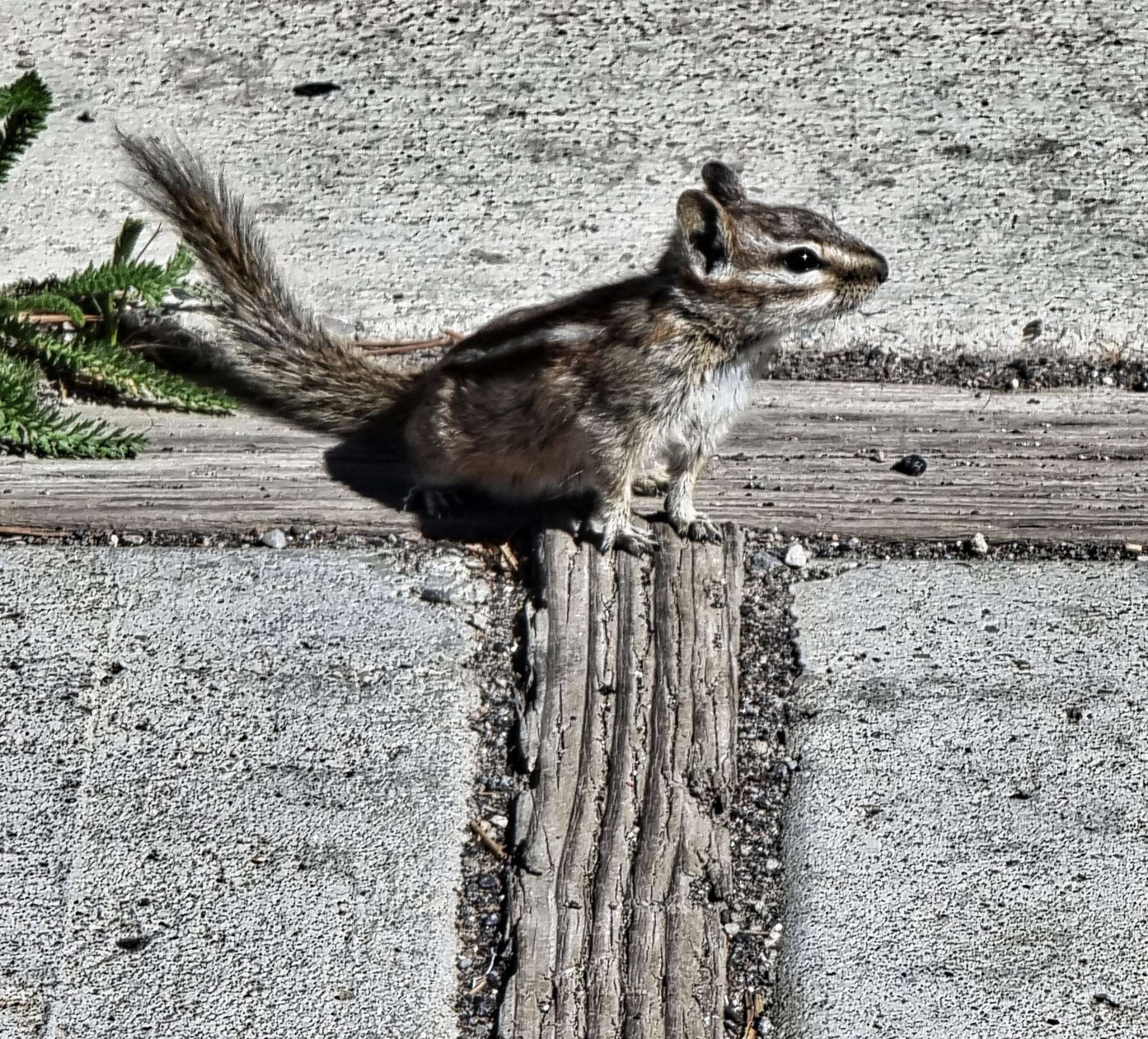
Once more we were fortunate enough to see two separate eagle eyries. The first 2 photos showing the eagle guarding its territory, so we think there may have been a chick in the eyrie. While I was taking photos of our 2nd eagle encounter, there were a scurry of chipmonks playing with each other – they didn’t seem at all bothered by a bird of prey sat watching them.

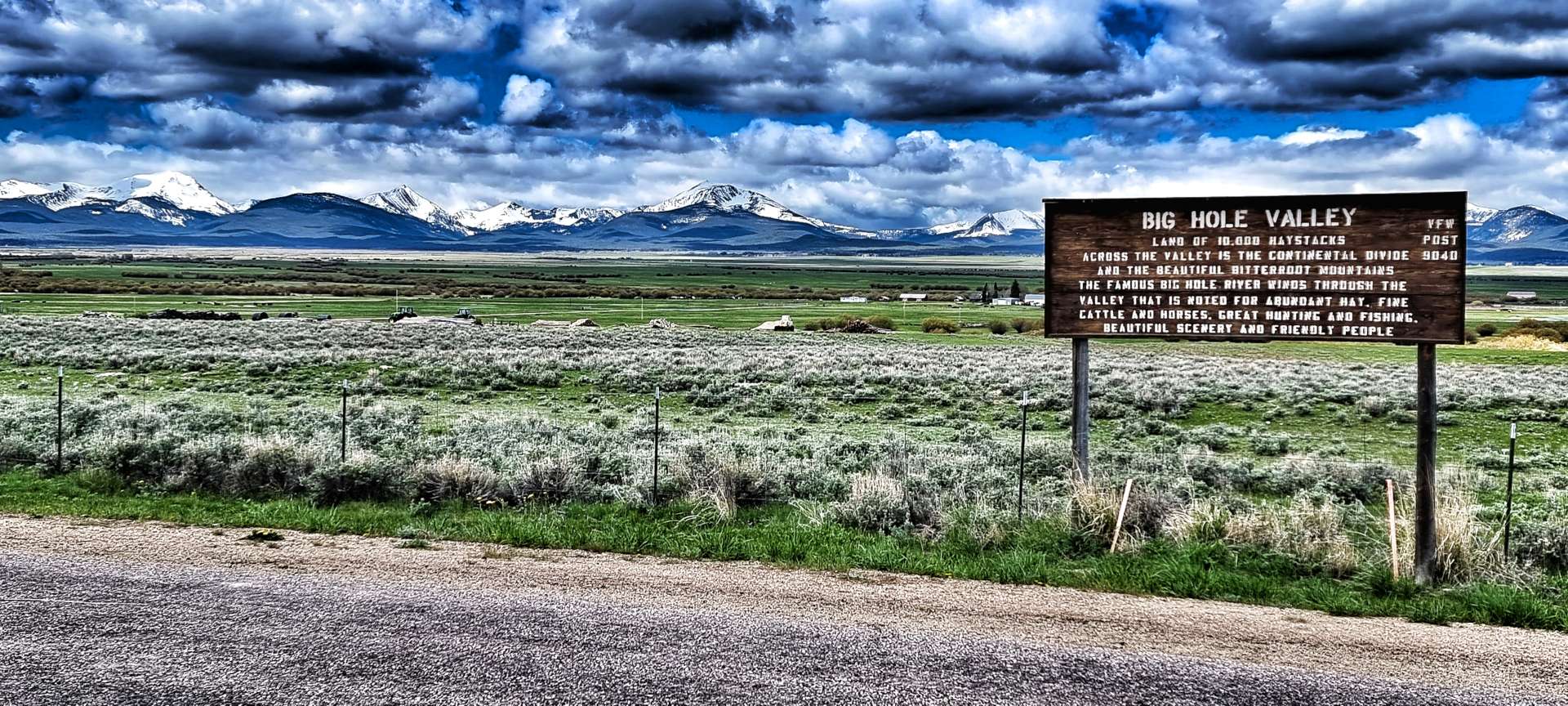
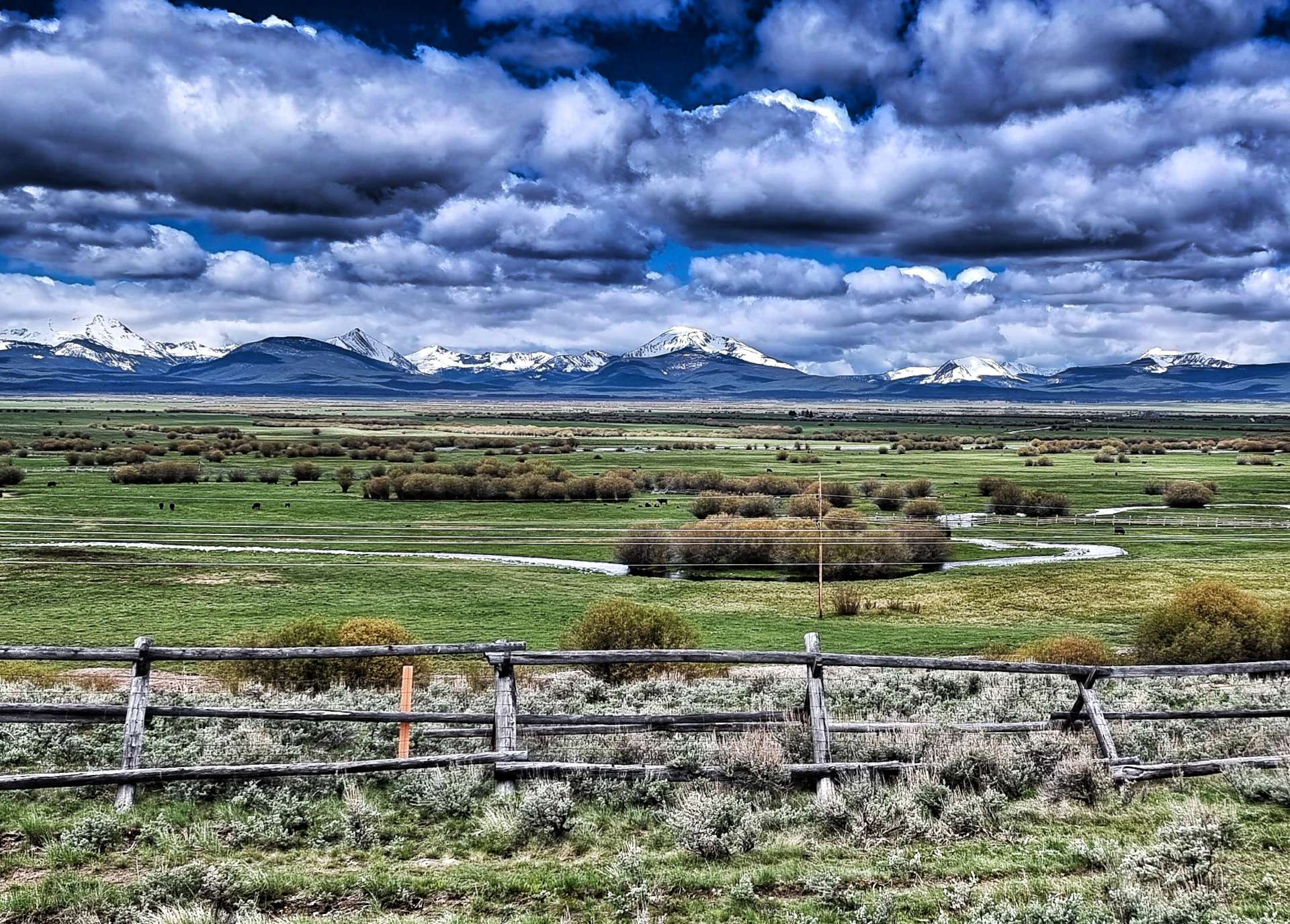
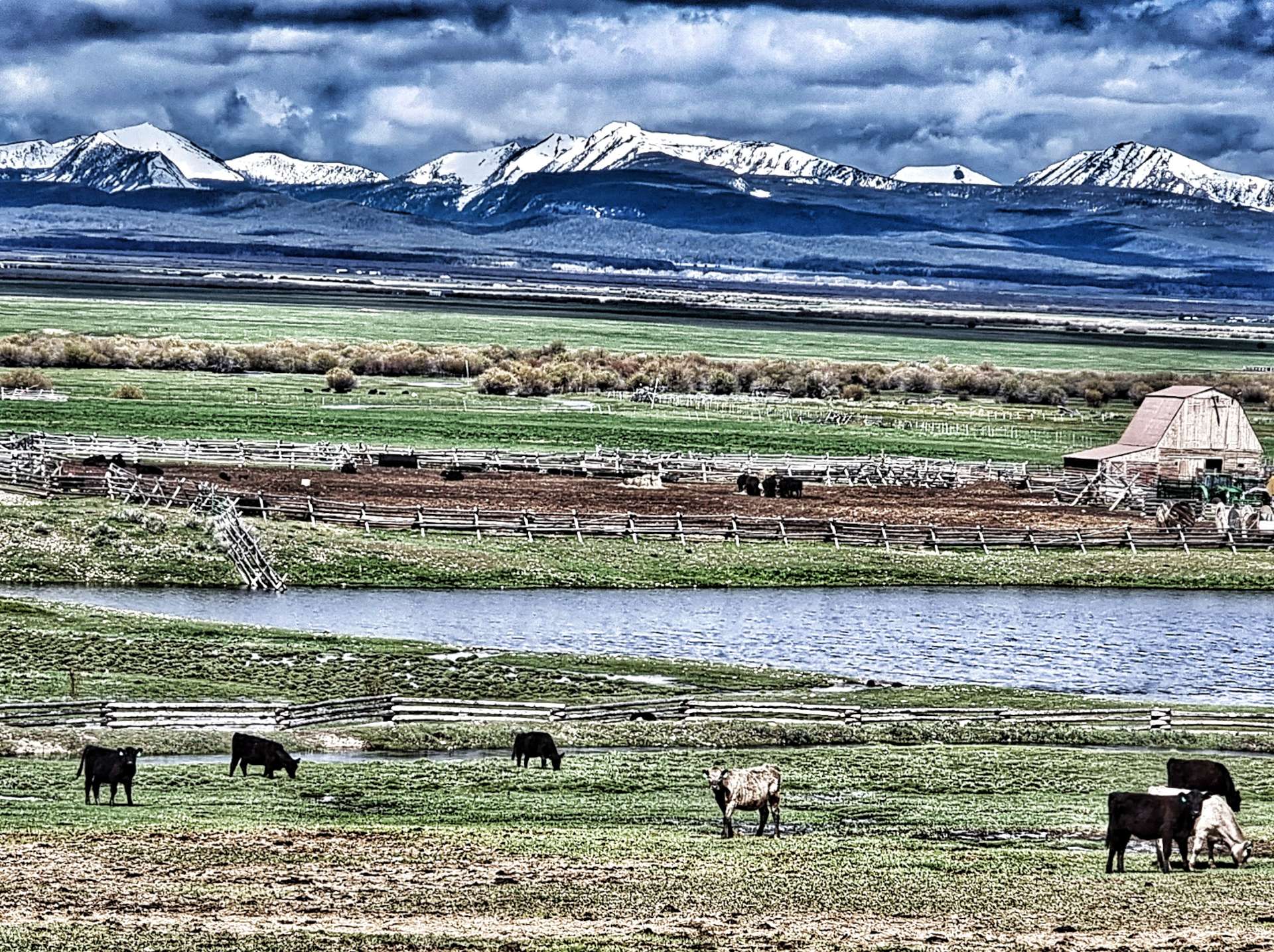
As we reached Jackson, this was our one & only possibility of finding somewhere open for coffee – the town’s only shop was closed for the day, so we would be riding in a decaffeinated state again. Big Hole valley is known as the land of 10,000 haystacks, because of the superior quality of its grassland & it’s also where the “beaver slide” was first developed as a method of stacking hay. Heaps of it look like giant loaves of bread!

The first big climb of the day was ahead of us. Although it wasn’t a long climb, it was relatively steep at 7%. As we turned through 90 degrees, we could make out the road way below us. The good news was that although I was only doing 4 mph, the climb was over in little more than 30 minutes. The final photo below was taken at a Historic Marker where the history of the valley & the nearby ranch is described in detail.

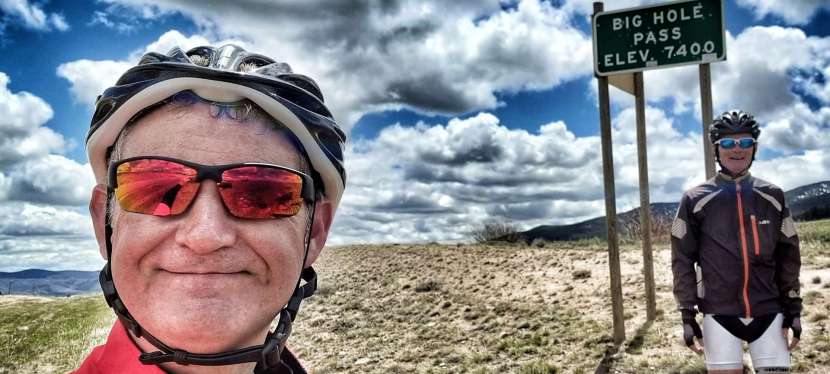
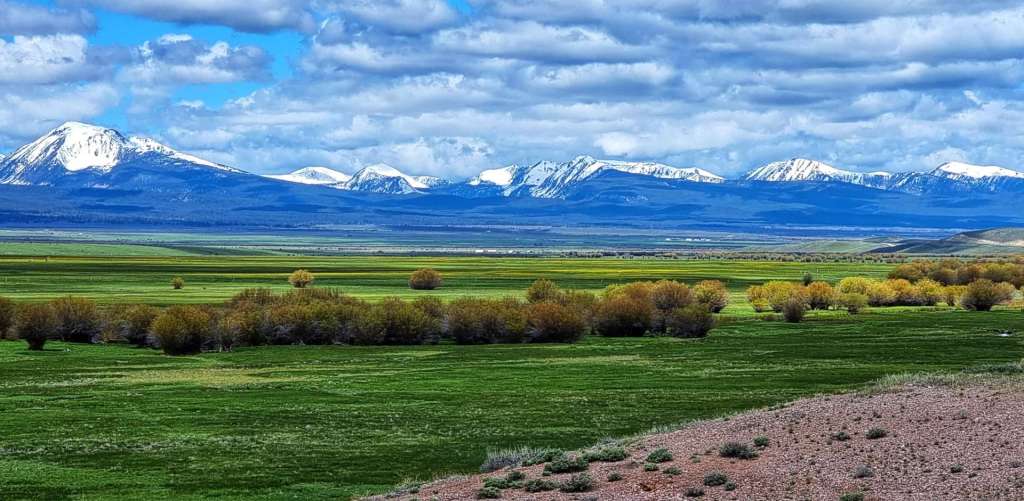
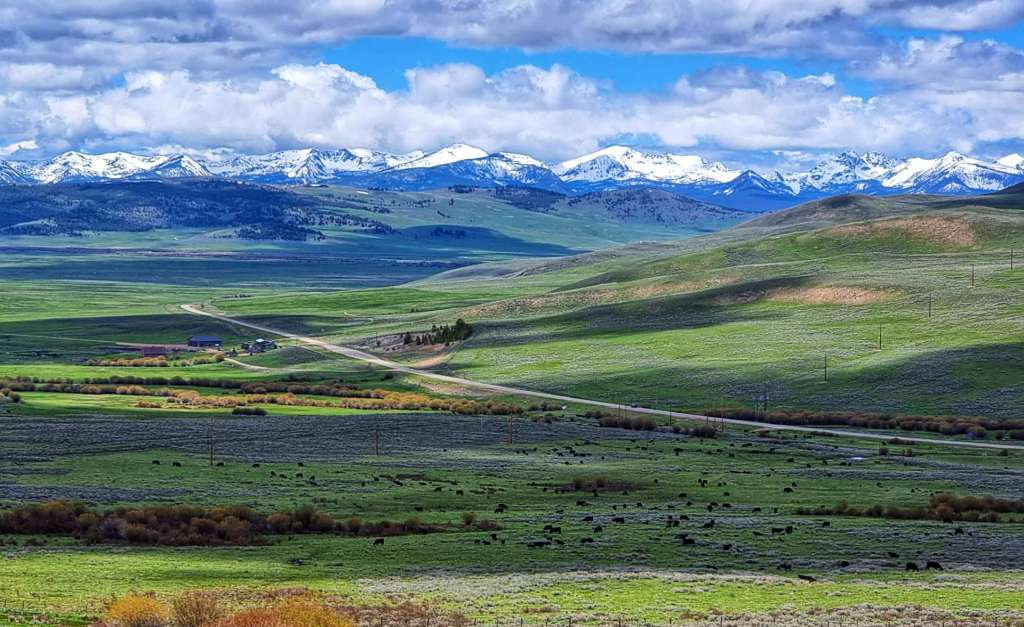
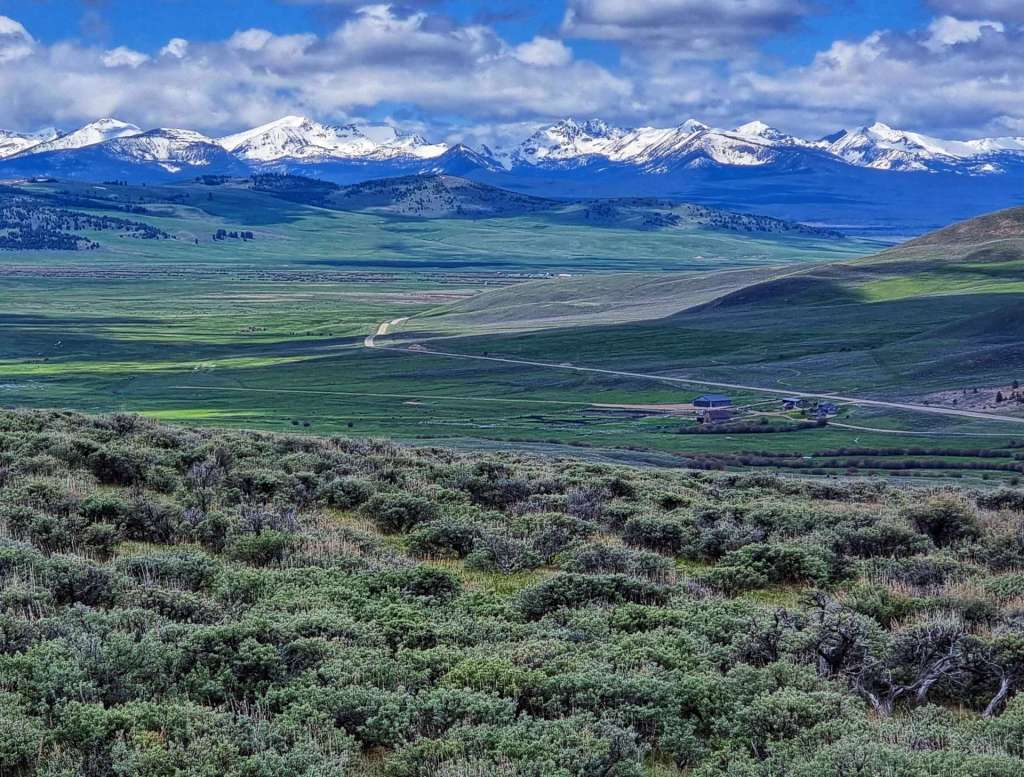
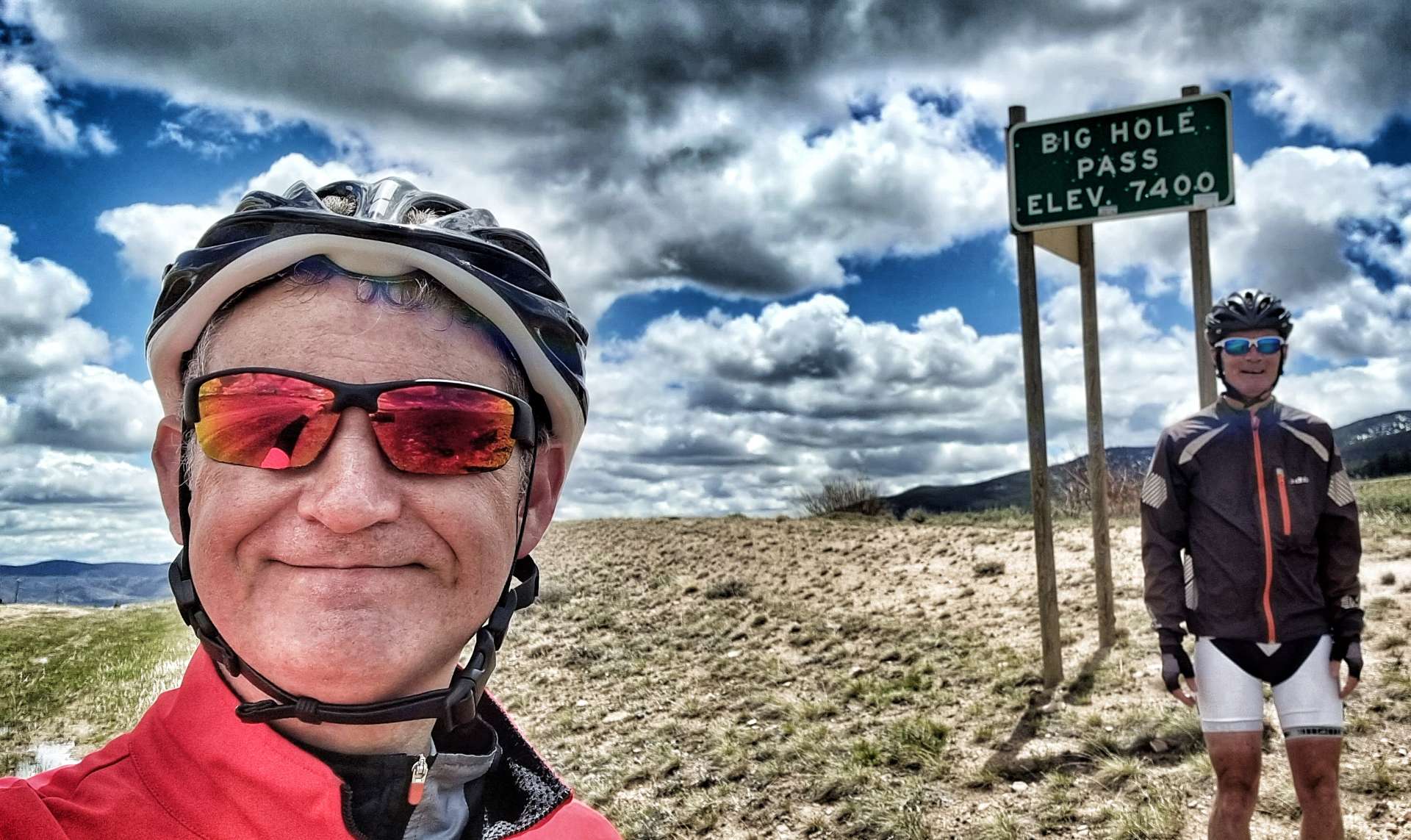
We stopped at the summit of Big Hole Pass for our customary photo, then enjoyed the fastest descent of the adventure so far – I clocked 47 mph on a straight & empty road, with a slight tailwind. I’d slowed considerably when I took the photos below.

We were now in the Lemhi Valley & we got blown forward by the tailwind when we reached the valley floor, reminding us both of the day we were turbo boosted into Cut Bank, happy days indeed!

All good things come to an end however & it wasn’t long before we could see our next challenge on the horizon. Beaverhead Pass was another relatively short, but testing climb. It averaged between 5% & 6%, but occasionally hit 8%, which certainly stung the legs. I was a little disappointed to find there wasn’t a summit sign when we crested the climb.

As we started descending, we were still over 6,500 feet ASL, but the mountains in every direction towered above us. The photos don’t do the view justice, but this was the most spectacular scenery! We separated on the descent, so I took the opportunity to stop & take a photo of Sean descending as he passed me. It took us about 15 minutes to reach the valley floor some 7 miles from the summit.

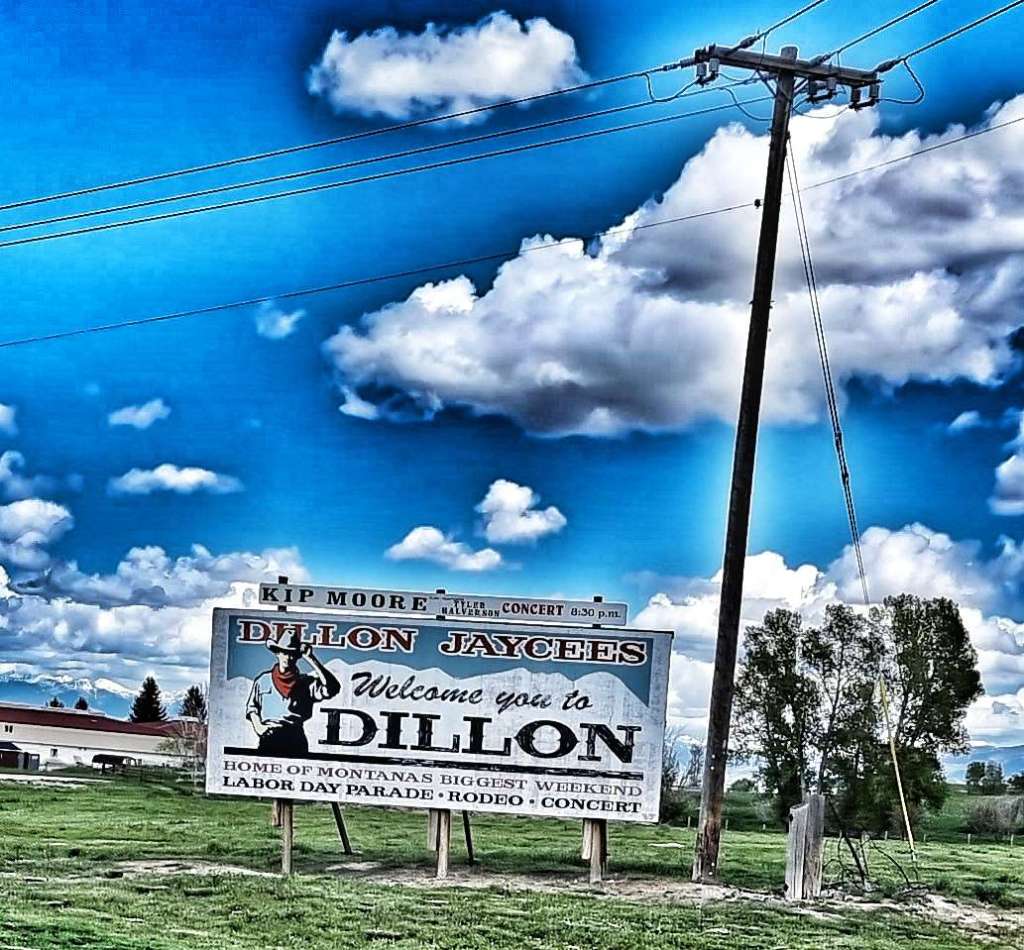
The final few miles were into a cross headwind, but it was a small price to pay for yet another epic day of cycling the remote roads of Montana. Heading into town there was a metal moose by the side of the road & a neat welcome sign.

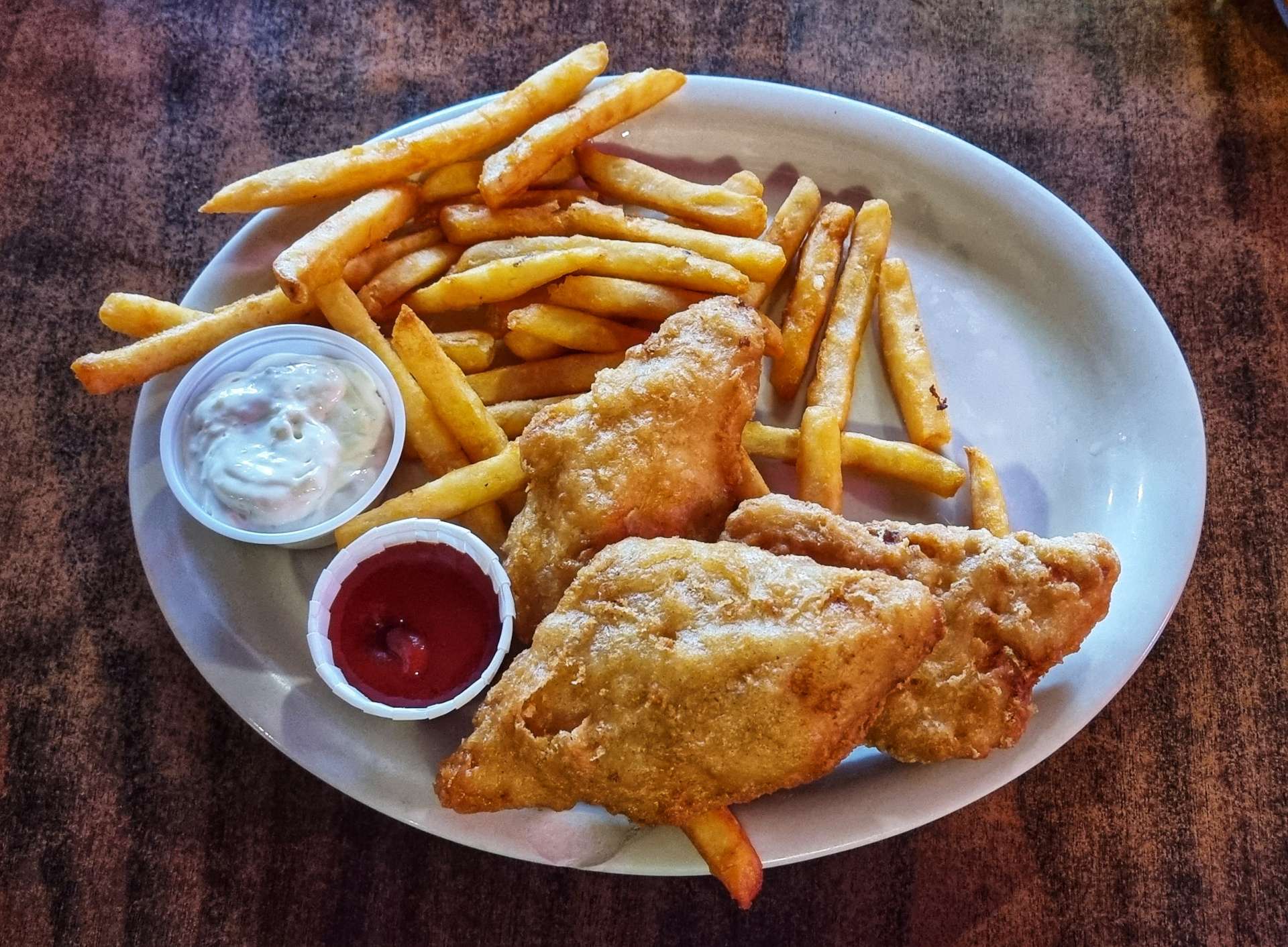
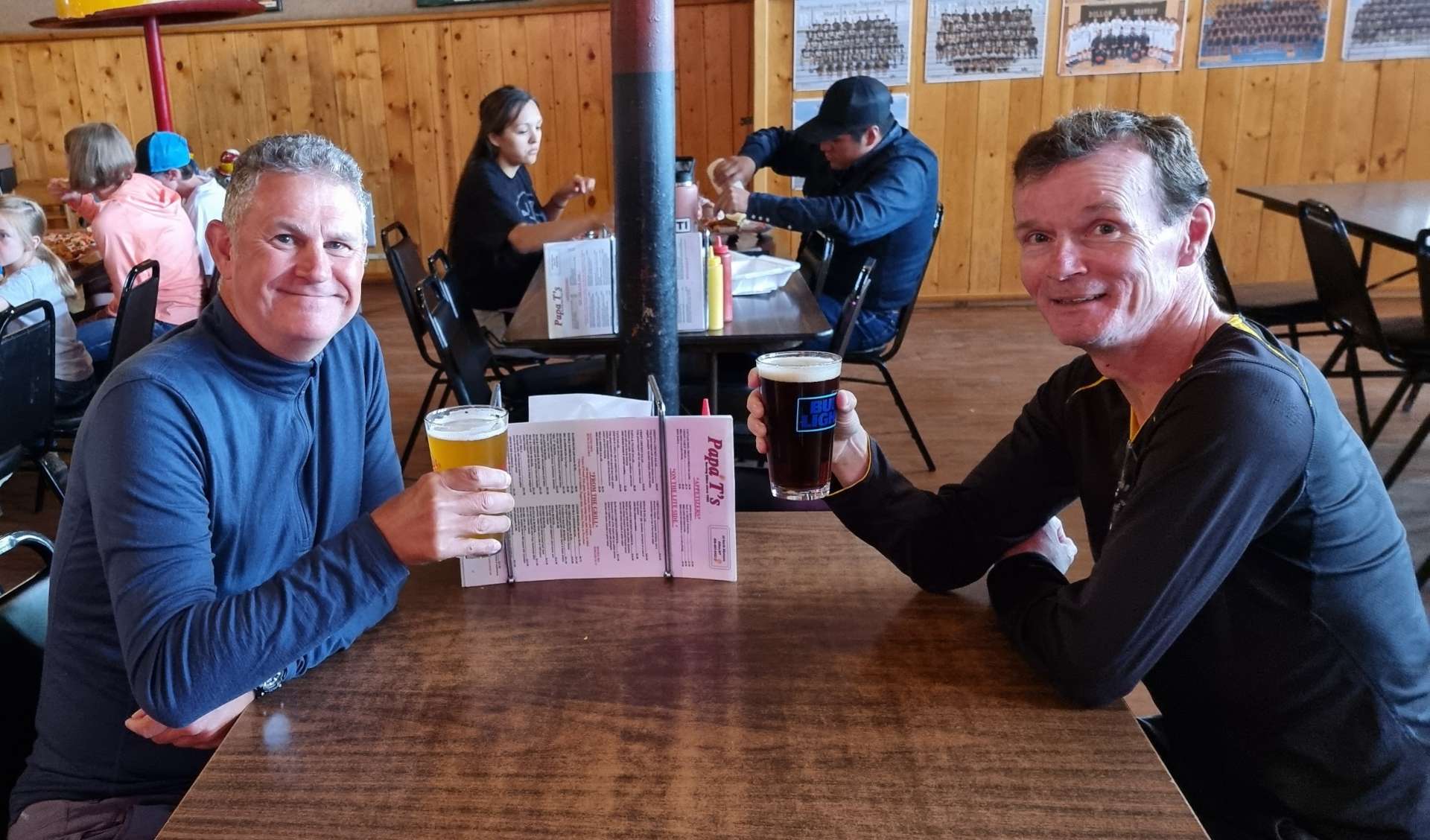
We went to Papa T’s for dinner, it’s a really friendly, family run restaurant that sponsors the local school’s many sports teams & there were photos of winning teams all the way back to the 1970’s. I went for some traditional English food with an USA twist, my pieces of cod & chips came with toast. I obviously removed the offending article before taking a photo!! We did some toasting of our own as we celebrated another glorious day in the saddle.

Stage Stats – 66 miles, 2,434 feet of climbing. Two big climbs of Big Hole Pass & Beaverhead Pass. Big blue skies with a shiny yellow thing in it all day.