A few people have been in touch asking where we are, where we’ve been & how the whole adventure fits together.
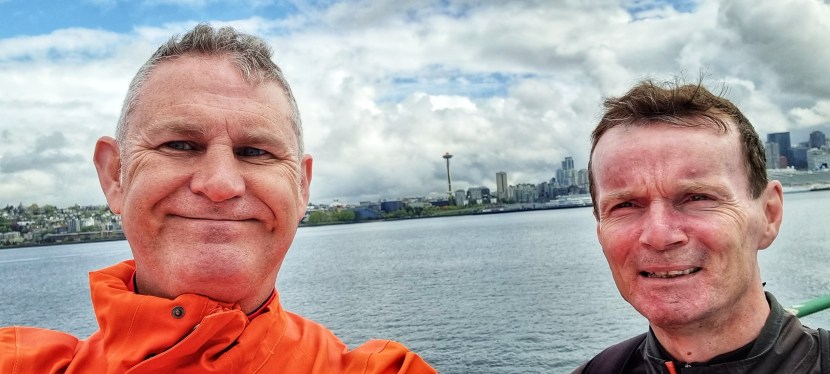
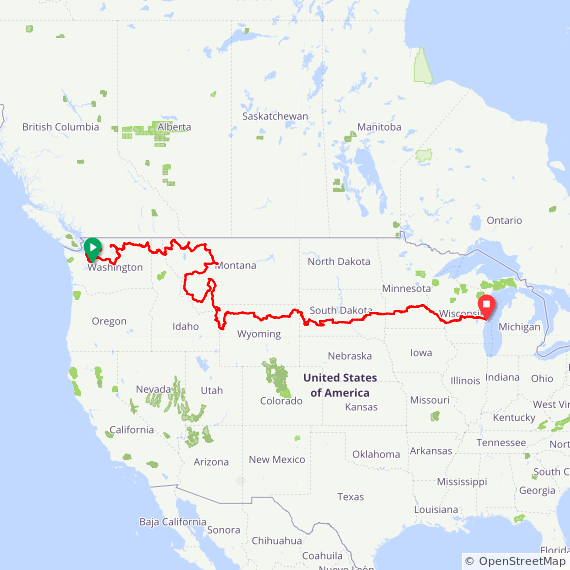
We started in Seattle, Washington on 30th April & the map at the bottom covers our journey up to & including our ferry trip across Lake Michigan on 29th July. We’ve already moved again since then!!
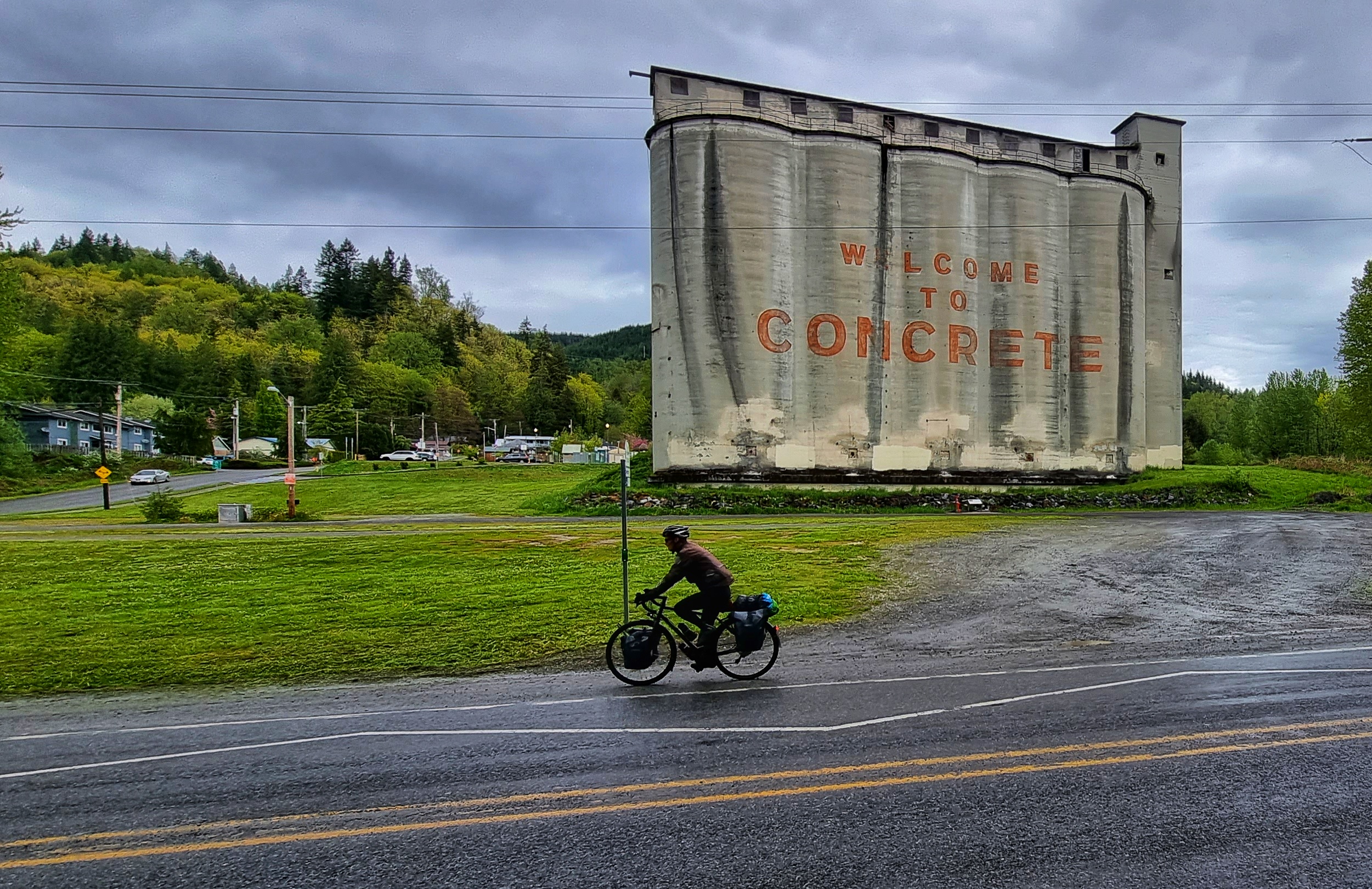
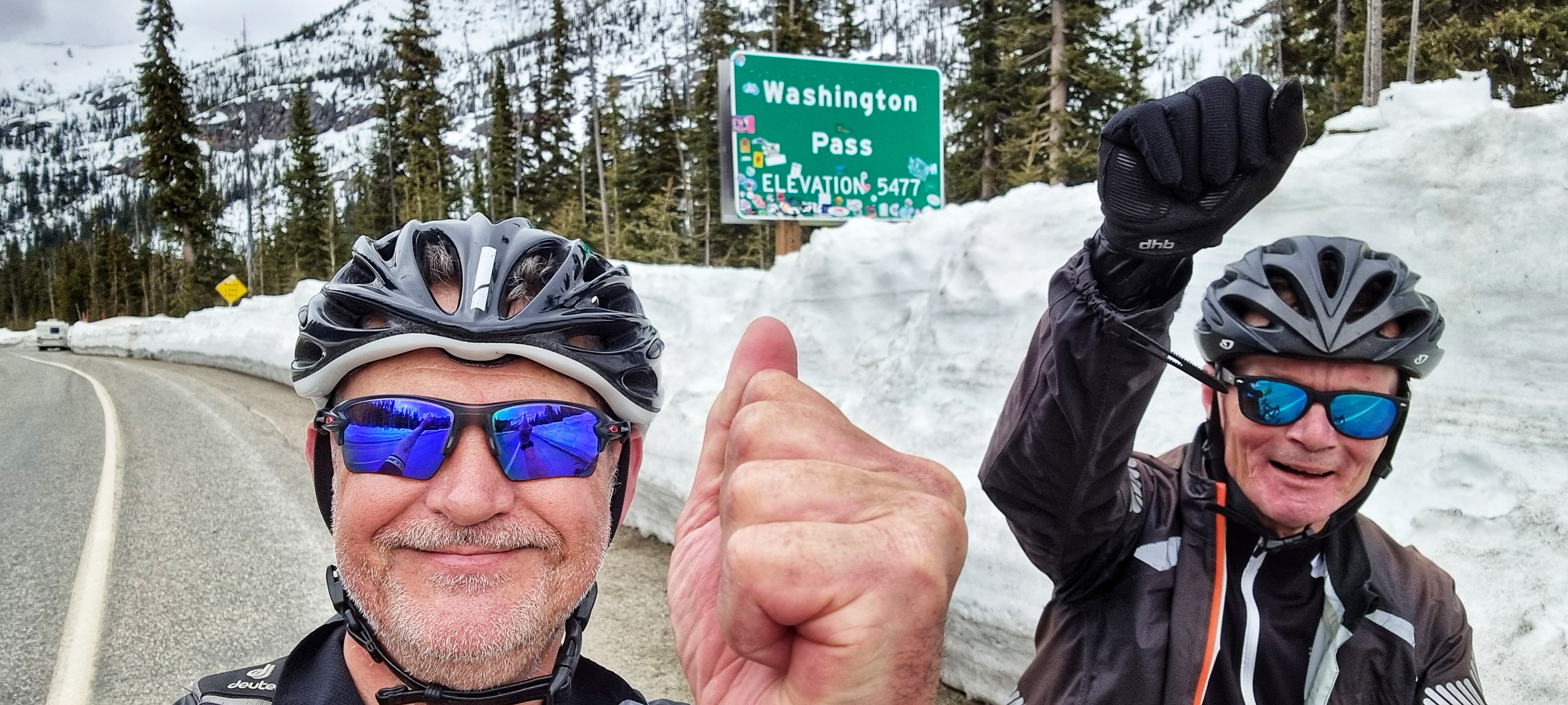
We’ve made a few changes to our original plan along the way – we originally planned to cross the Cascade Mountains via Washington Pass on US20. Concrete to Washington Pass is 80 miles on US20. However, because Washington Pass was still closed due to snow, we detoured via Stevens Pass on US2 – Concrete to Washington Pass was 325 miles!
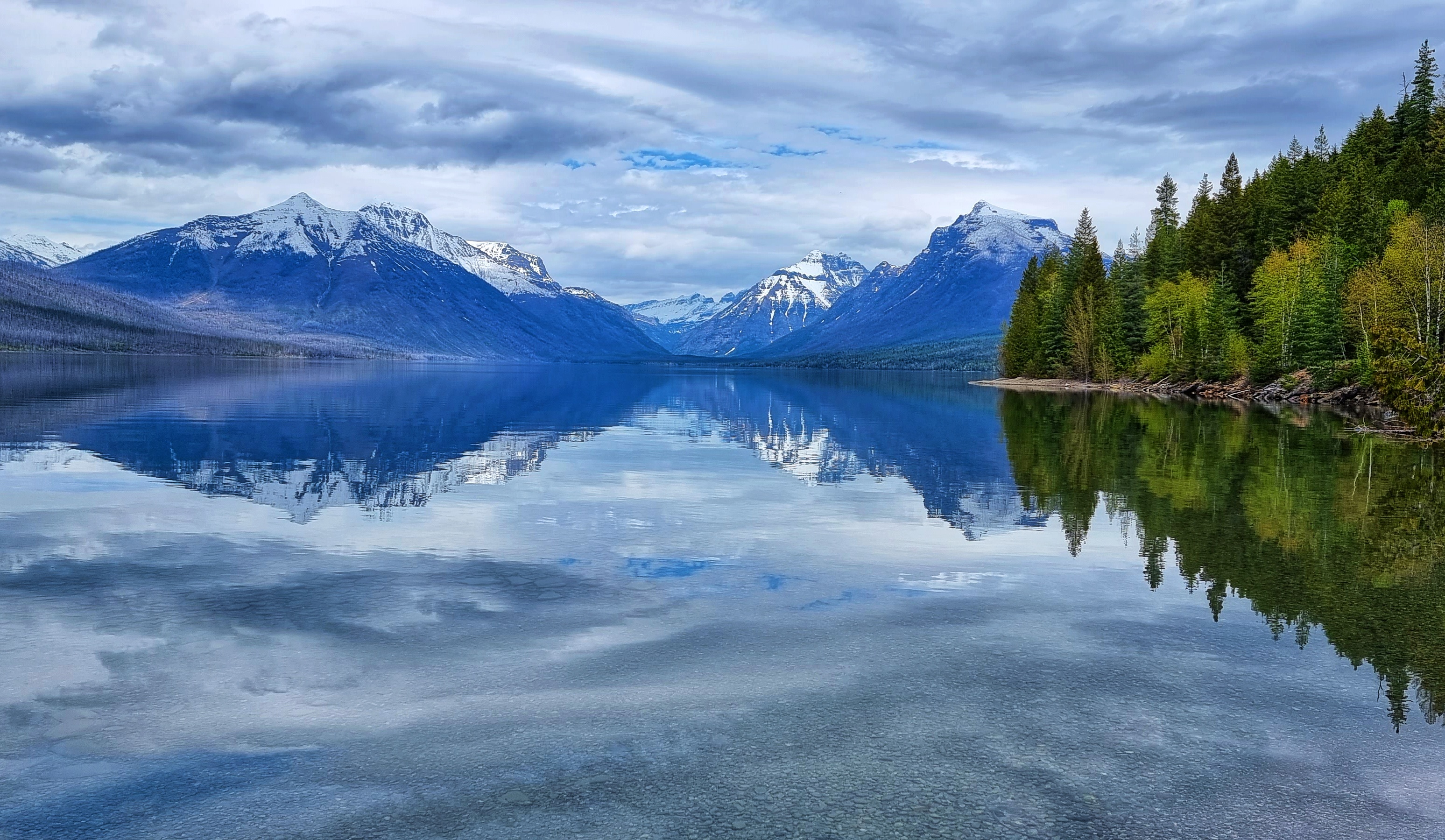
We’d planned to visit Canada, but a combination of Covid Rules at the time & being unable to get the necessary paperwork meant it didn’t happen. We went on a Tour of Montana instead & visited Glacier National Park, Lincoln & Helena.
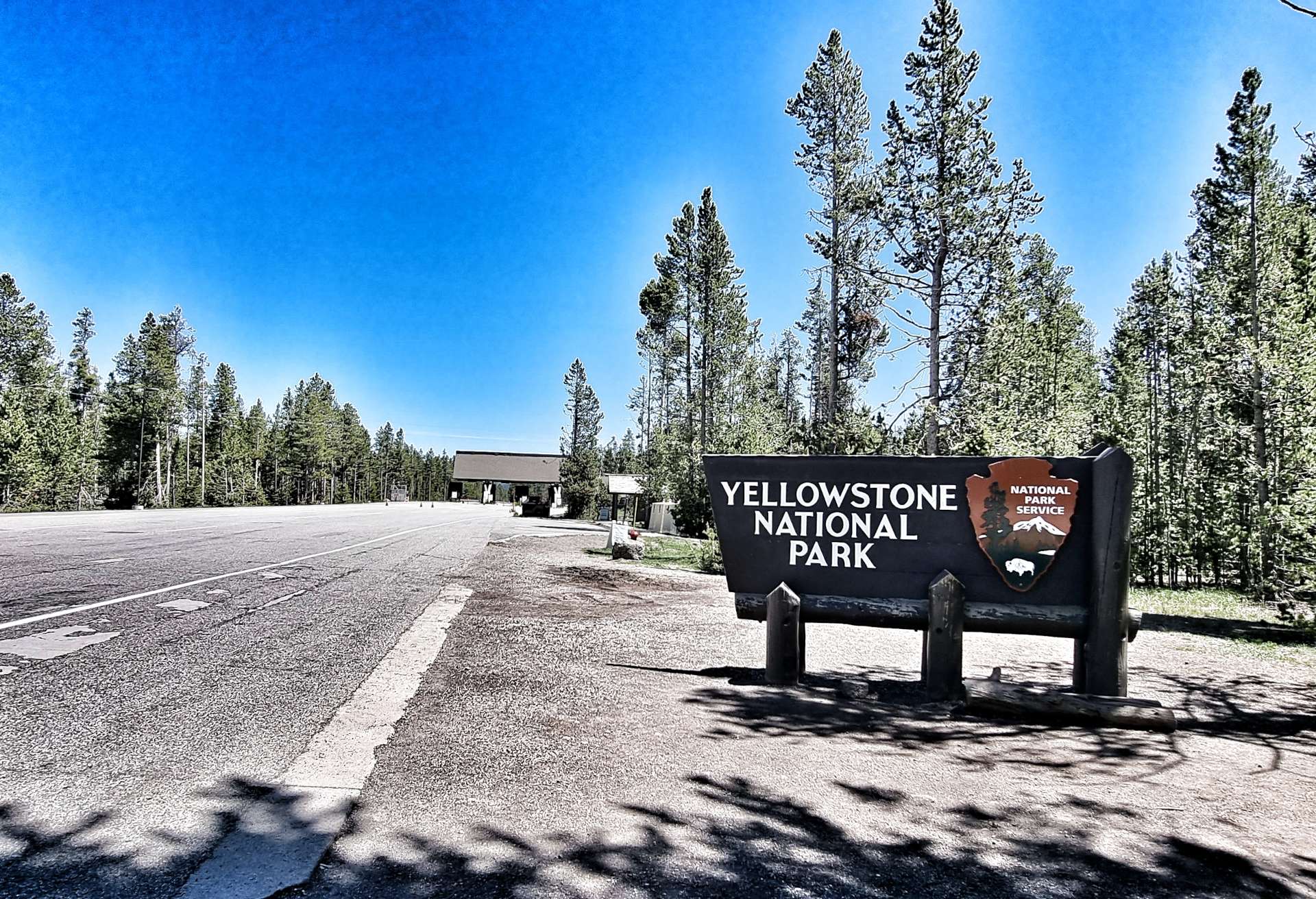
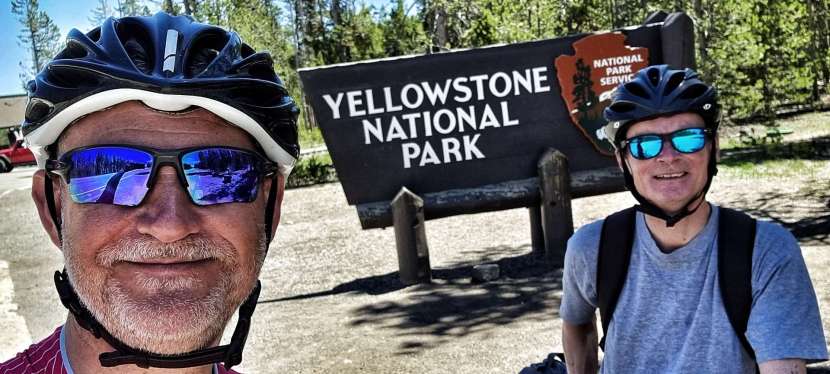
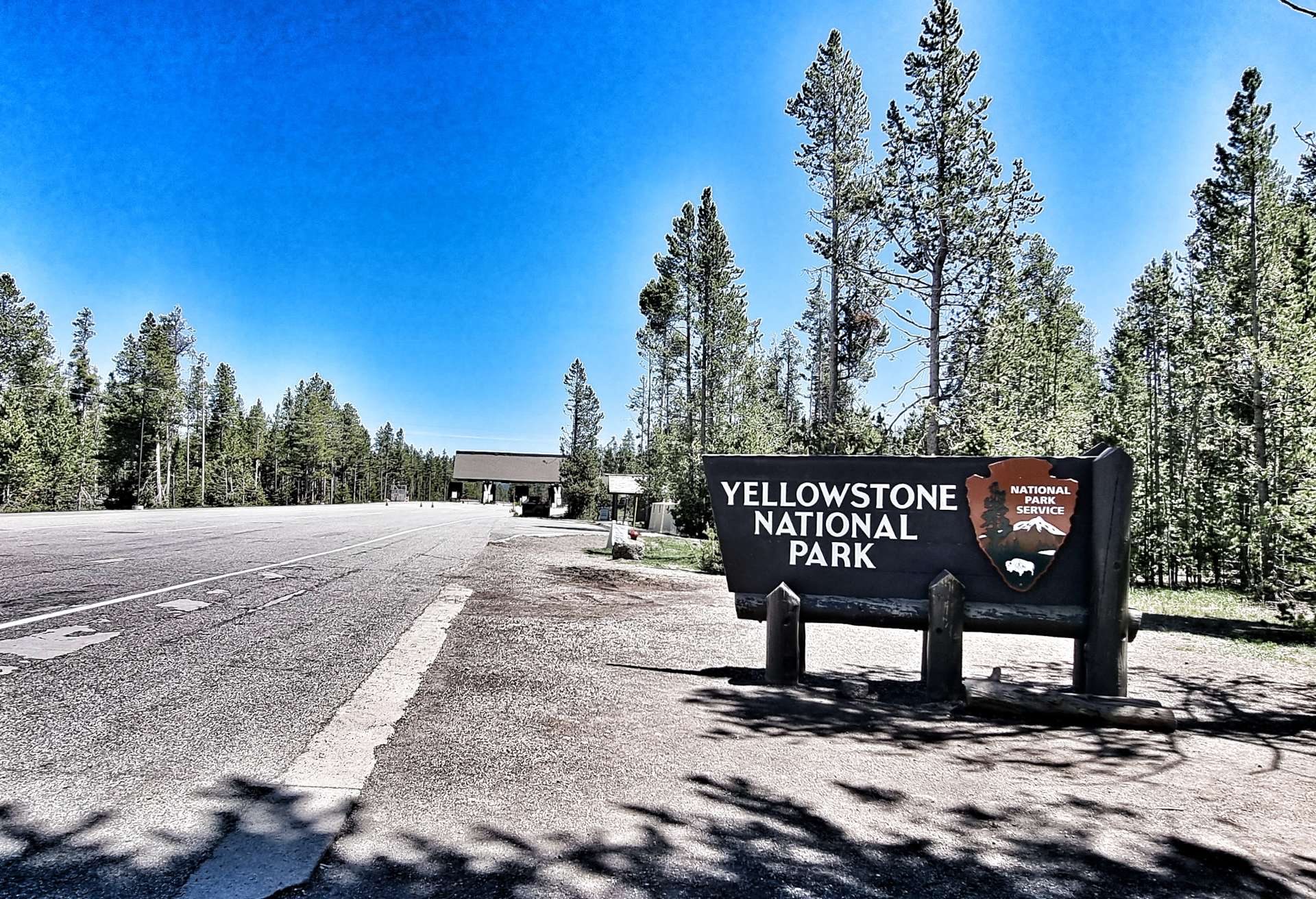
We arrived in West Yellowstone at least 2 weeks earlier than originally planned. This coincided with Yellowstone National Park being closed due to flooding. I took a rare photo of West Yellowstone Entrance with no-one in shot! Our revised plan took us back into Idaho, where we visited the Mesa Falls Scenic Byway & then into Wyoming where we experienced the jewel in the crown that is Grand Teton National Park.
Our detour via Grand Teton National Park resulted in us arriving at Yellowstone National Park on the day it re-opened. There was a 4 mile queue of cars waiting to get in as we cycled past everyone on the hard should, until I got our first p*nct*re of the adventure! We crossed the continental divide in Yellowstone & visited the amazing thermals at West Thumb on our longest ride of the trip – just over 104 miles from Grant Village into Cody.
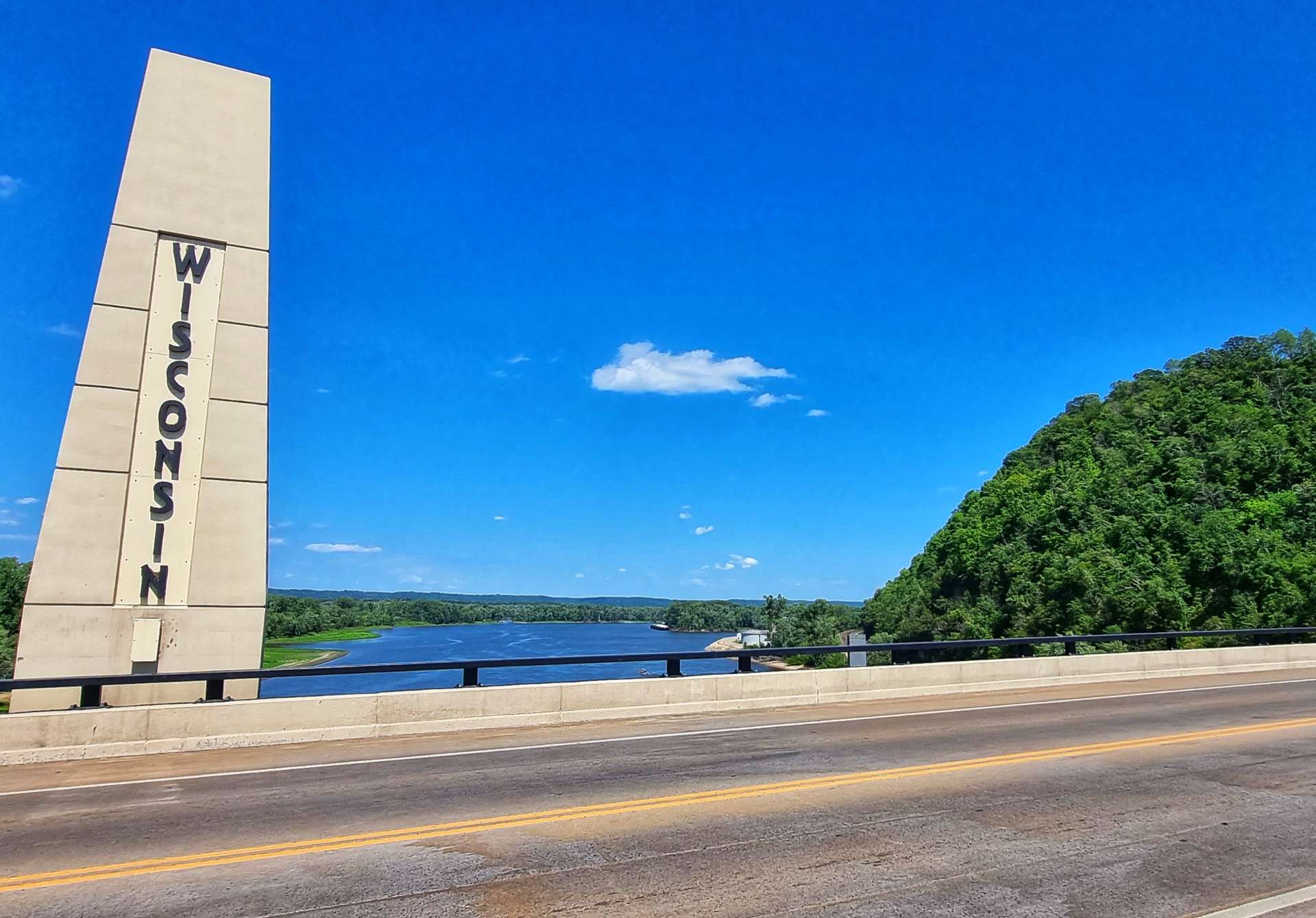
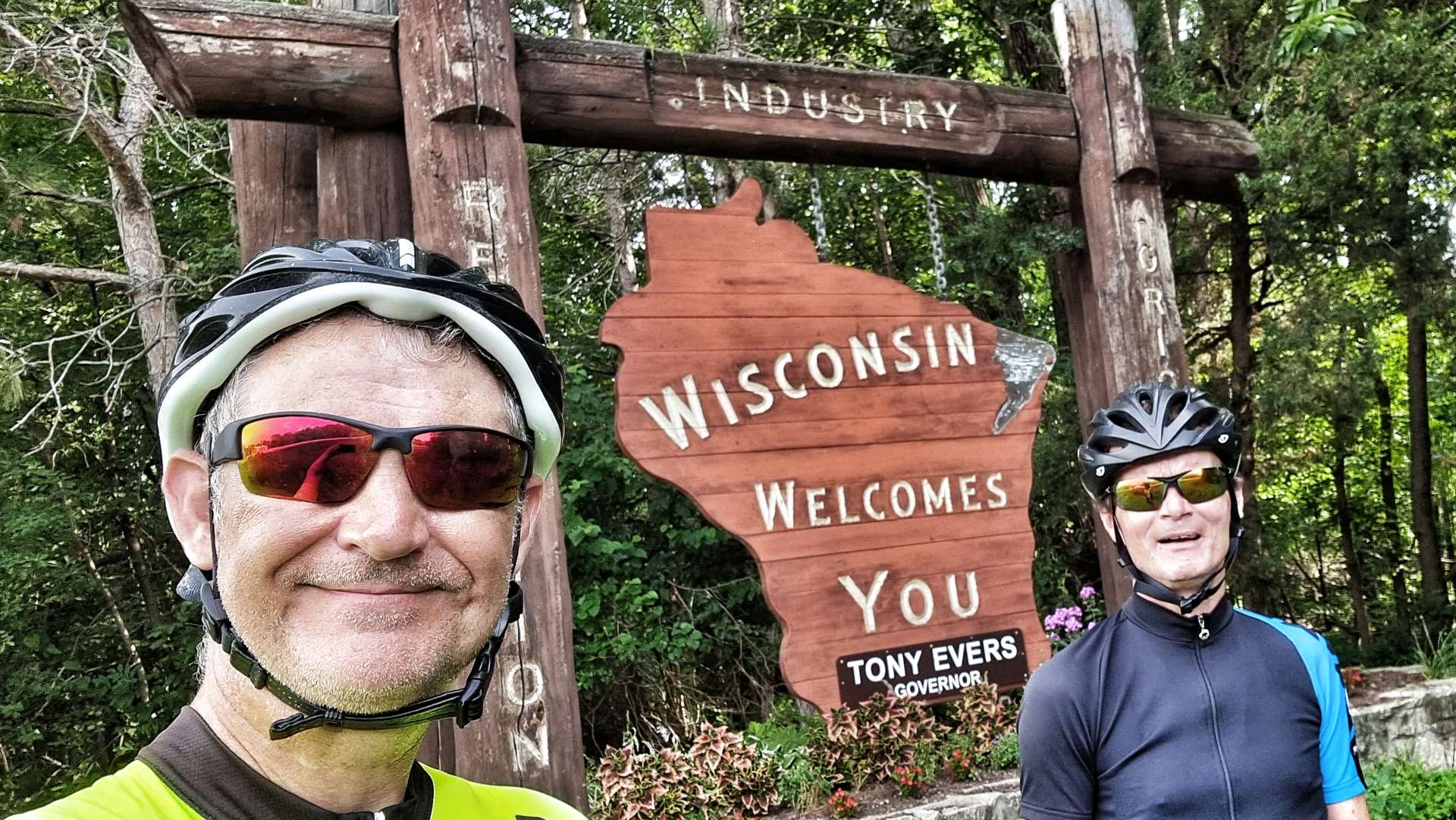
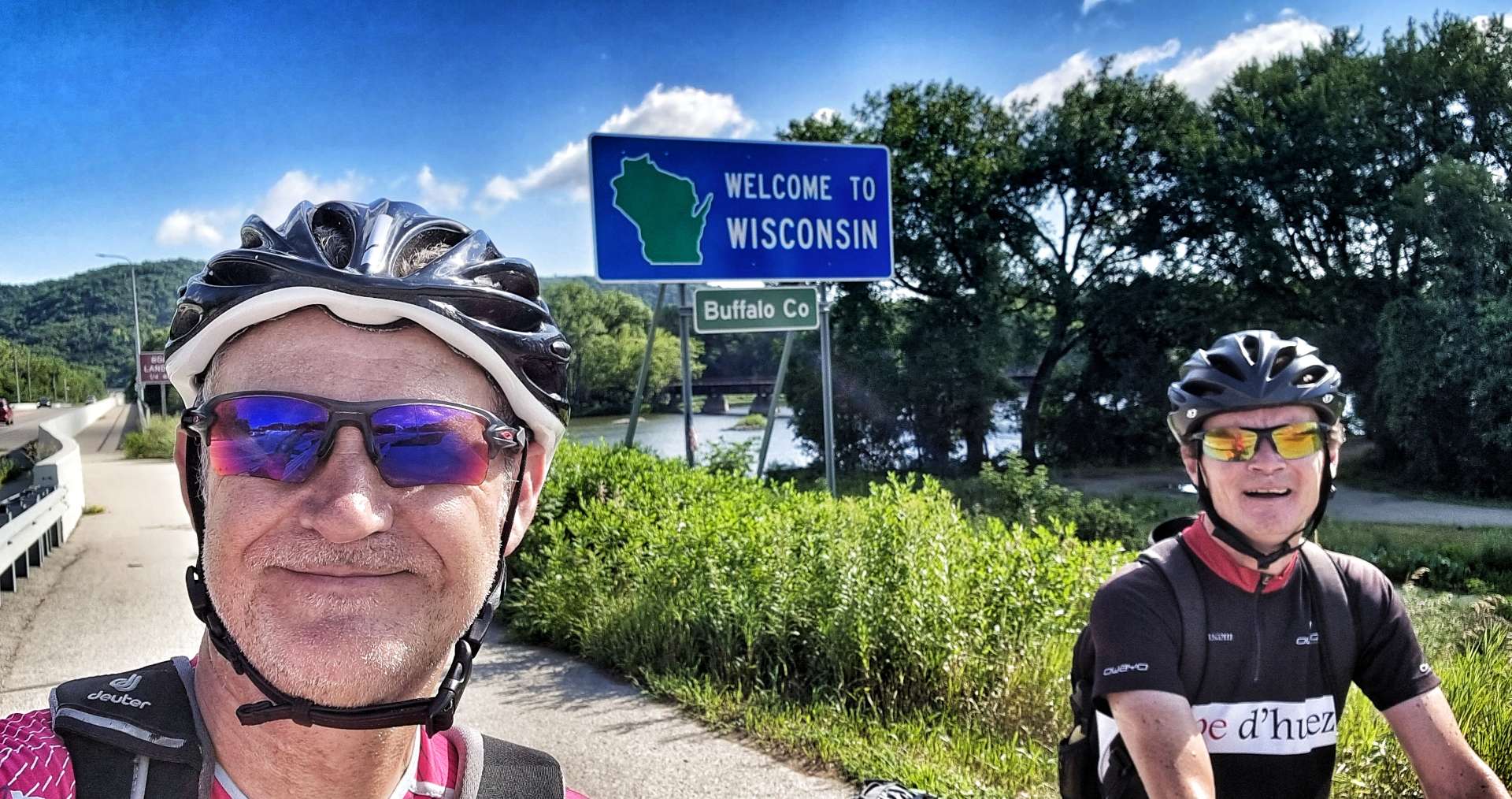
The remainder of the route from Cody to Minneapolis was as planned. However, a number of people we met as we headed East said we should ride in Wisconsin if at all possible. We’ve taken their advice & detoured across Wisconsin (instead of heading though Iowa & Illinois), but as I haven’t yet blogged about it, I’ll not give too much away!
We took the ferry across Lake Michigan & have spent the last 3 days following the shoreline South towards Indiana. Blogs on the ferry crossing & our journey South are also pending. I have a rest day on Wednesday, so hopefully I’ll catch up a bit then!
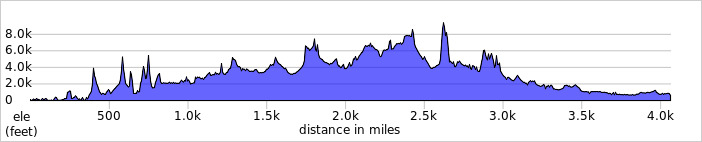
To date we’ve ridden on 69 days out of a possible 90 days & in that time we’ve travelled 4,116 miles & climbed 157,403 feet. The table below shows a bit more information about where we’ve been & for how long.
The numbers in the table are based on the actual routes we rode each day & include all the small detours we took for photo opportunities &/or coffee stops, slight mistakes in routing & general faffing about! The climbing figures in the table are based on what my Wahoo recorded on each ride (it slightly understates those numbers).
State
Time Spent (In Days)
Days Ridden
Miles Ridden
Feet Climbed
Washington
19
16
912
44,318
Idaho
5
4
157
6,775
Montana
28
20
1,238
46,512
Wyoming
11
9
581
25,397
South Dakota
15
11
653
23,654
Minnesota
6
4
240
5,328
Wisconsin
7
5
335
5,419
Totals
91
69
4,116
157,403
If there’s anything else you’d like me to include, just drop me a message – I’ve already been asked to do something about my favourite beers & cakes!!
Thursday 23rd to Saturday 25th June (Stages 43 & 44).
Thursday 23rd June – Grant Village, Yellowstone to Cody (Stage 43).
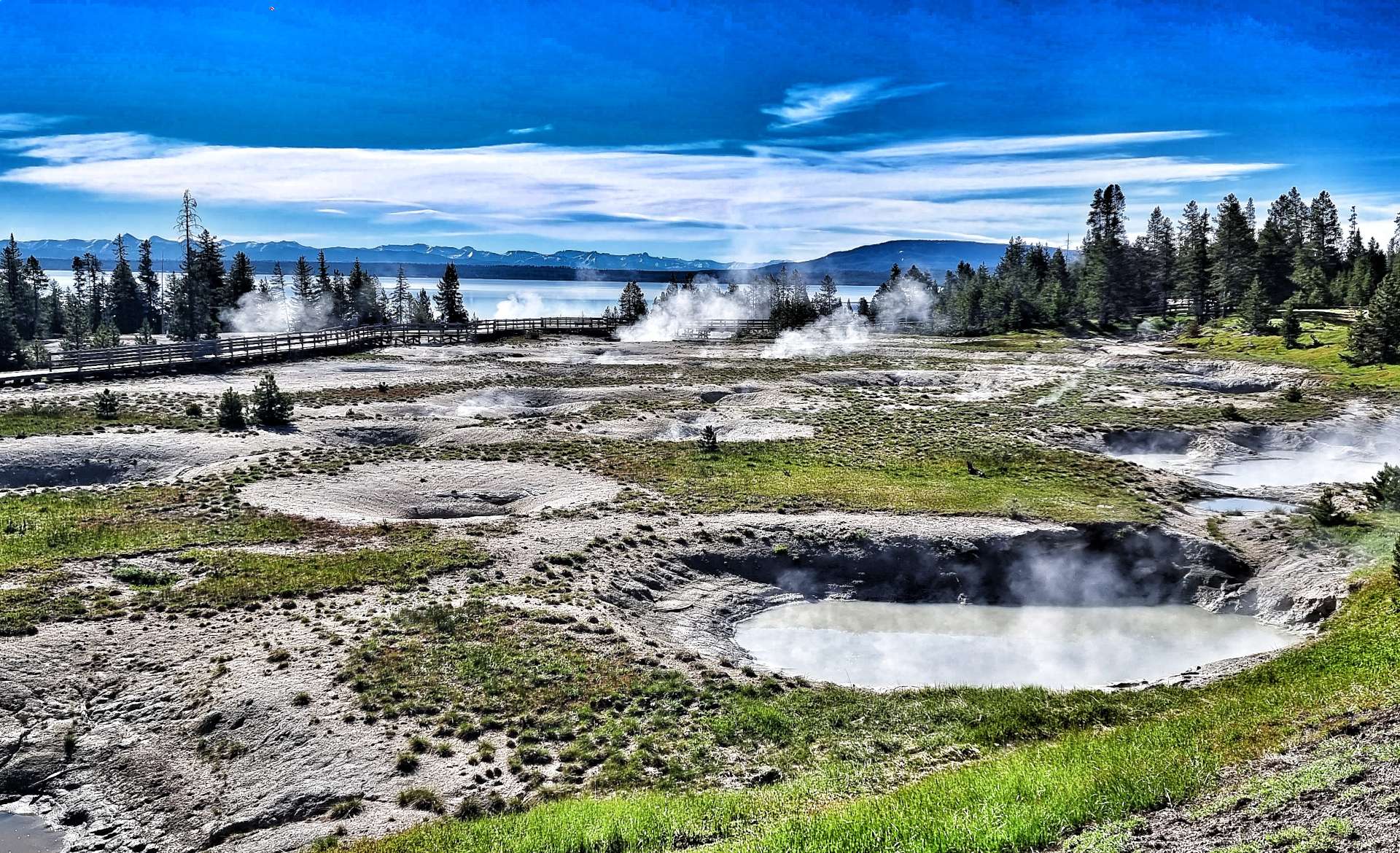
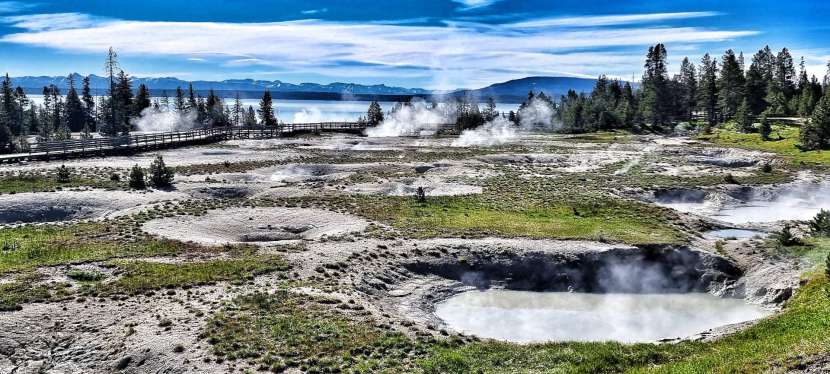
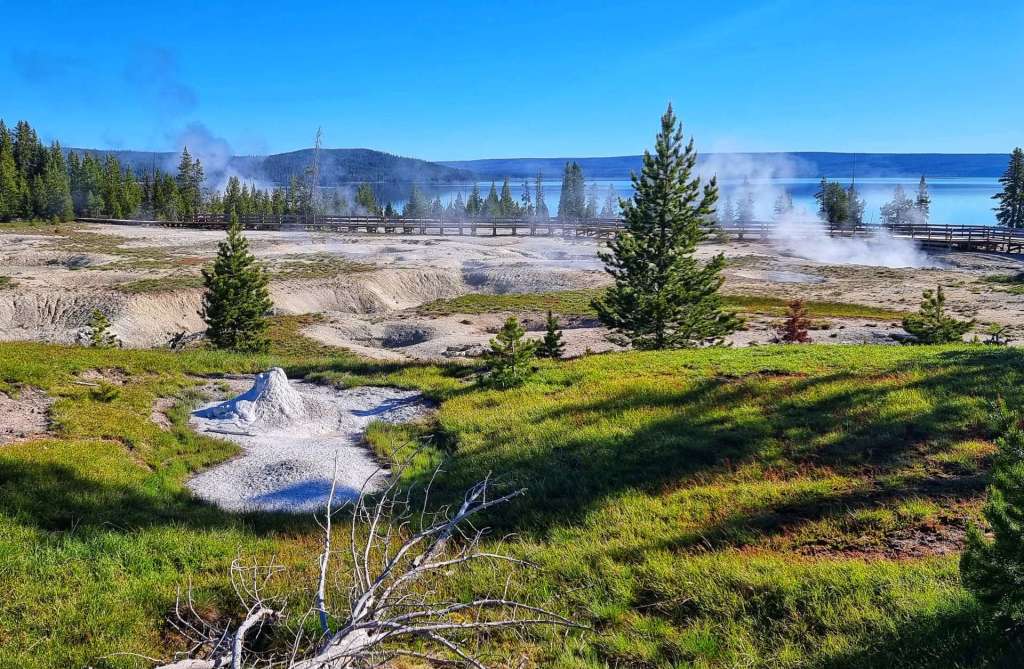
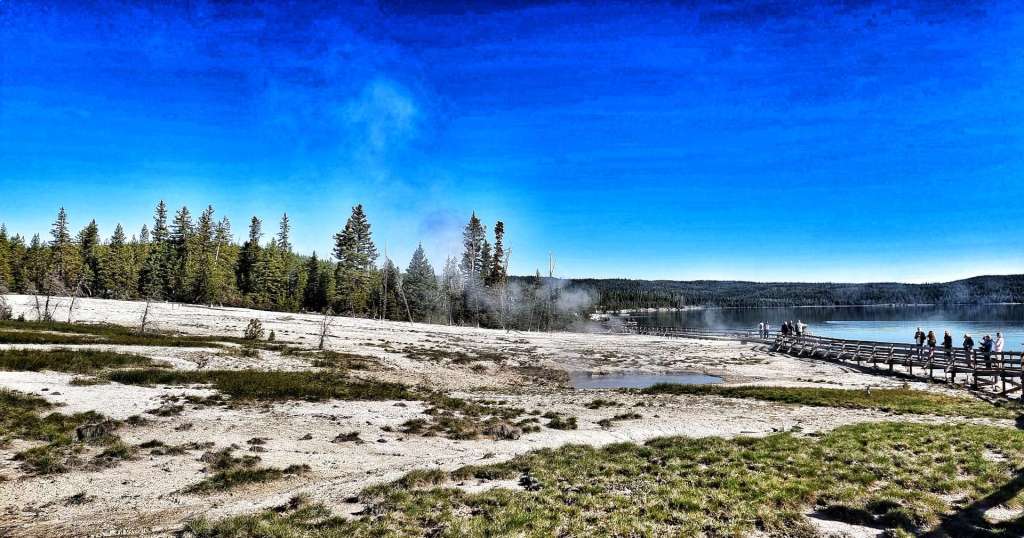
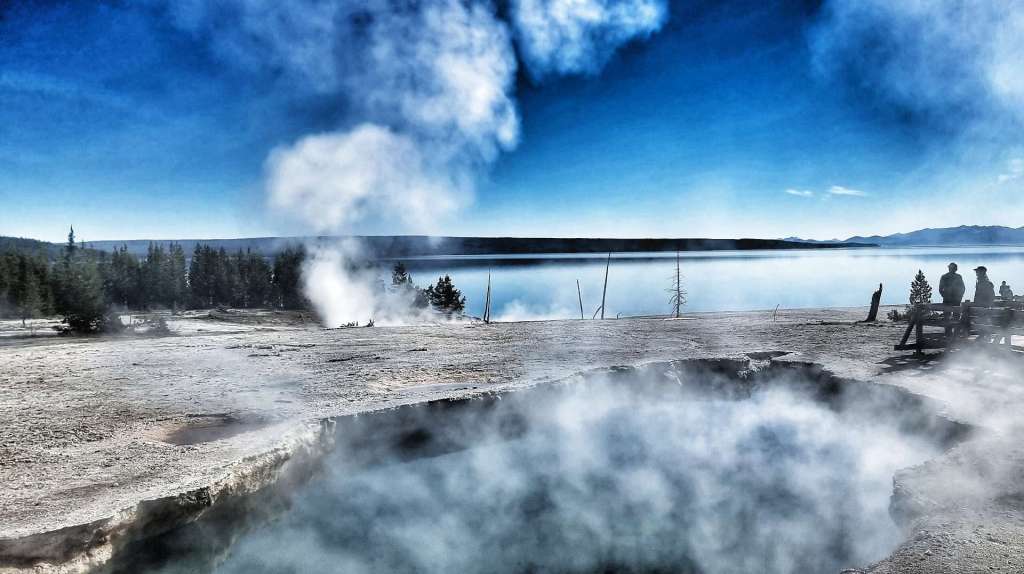
We were up bright & early today for what is the longest ride day of the adventure so far. Leaving Grant Village at 8am, the first 5 miles were very much like the end of yesterday’s ride, taking us through forest, but as we were turning right onto Highway 20, we made a last minute decision to stop at the West Thumb Geyser Basin.
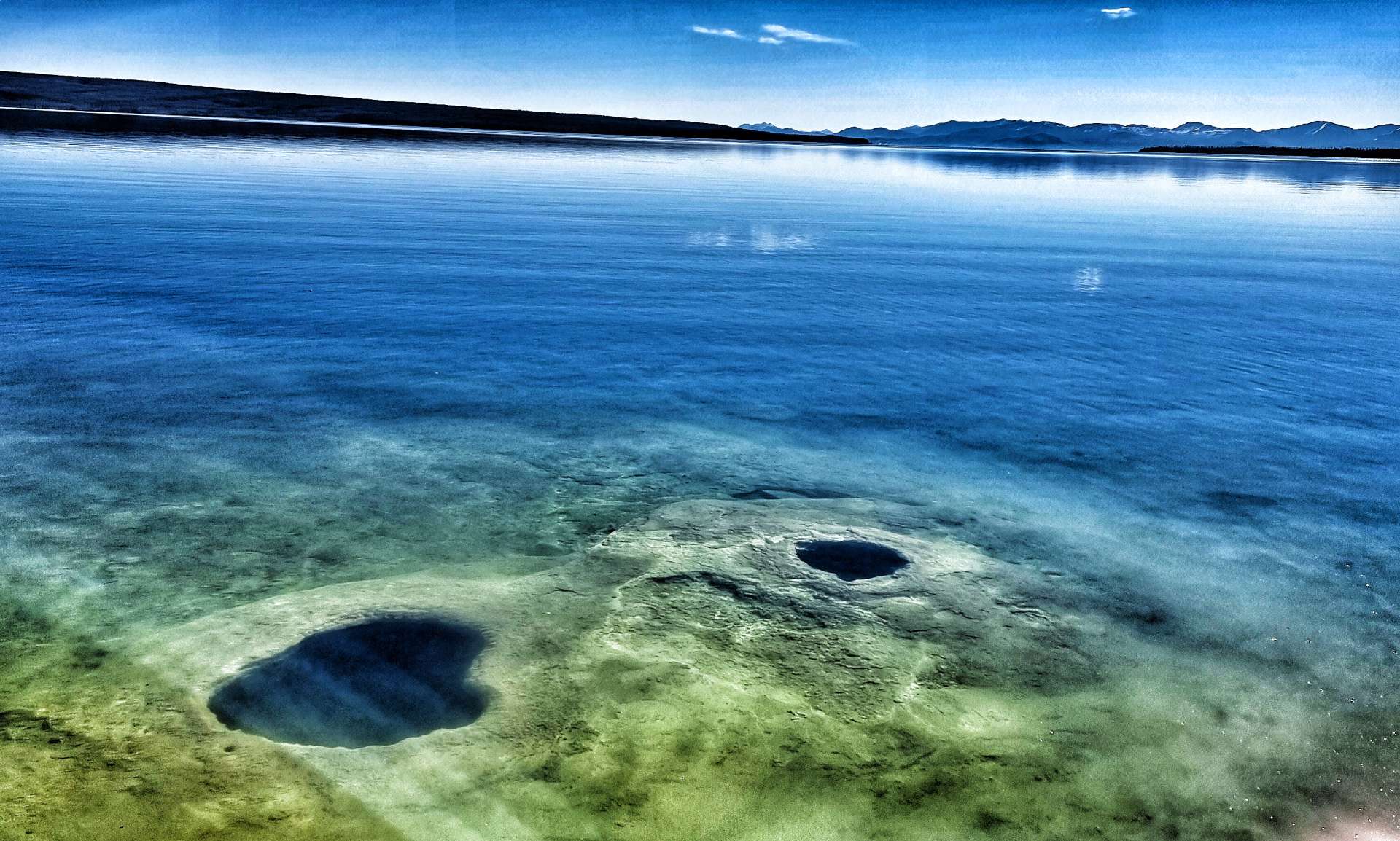
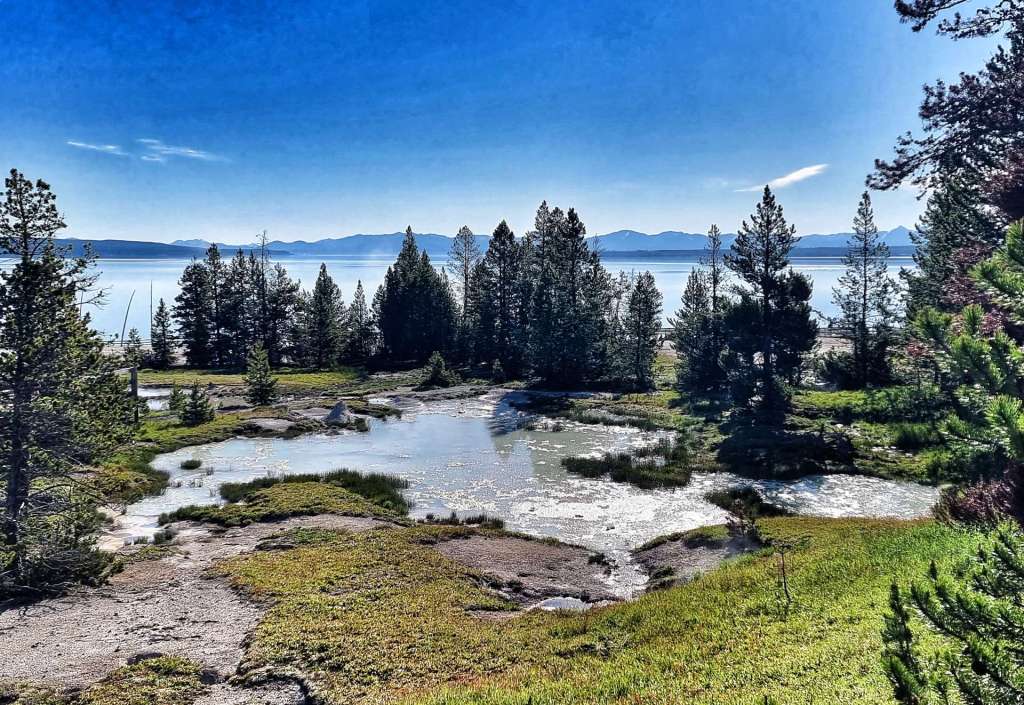
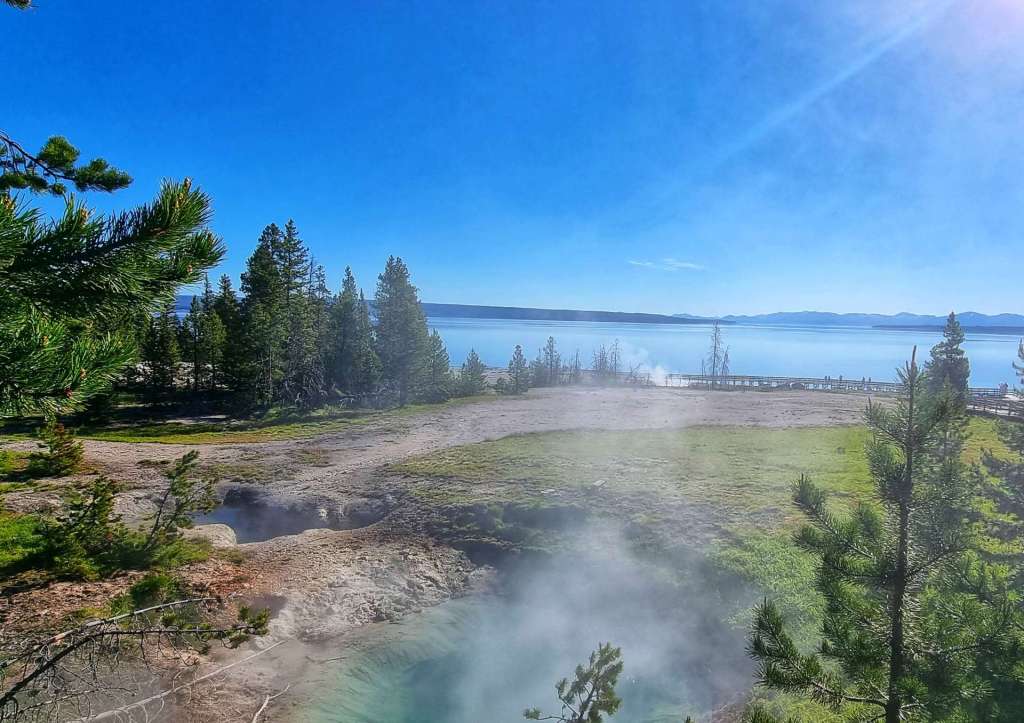
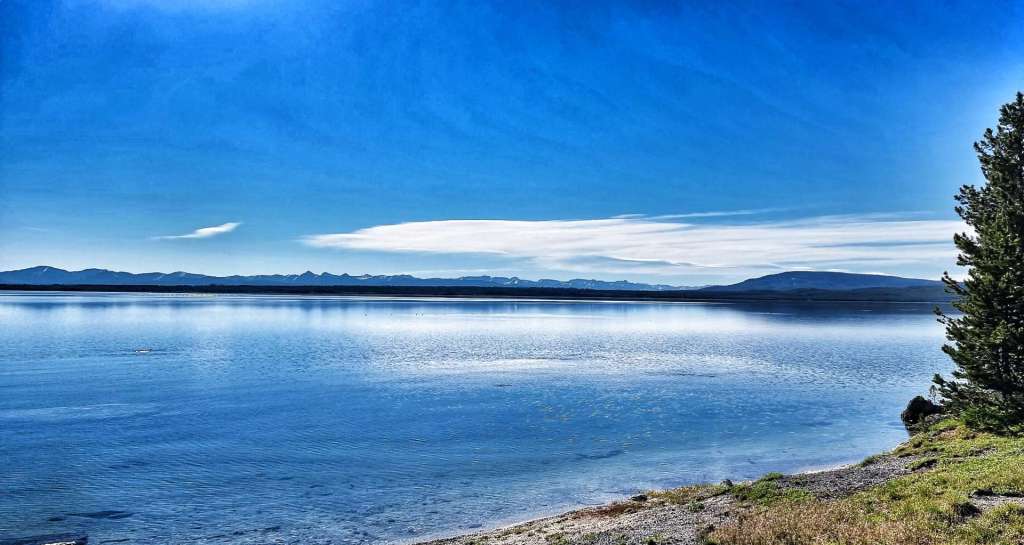
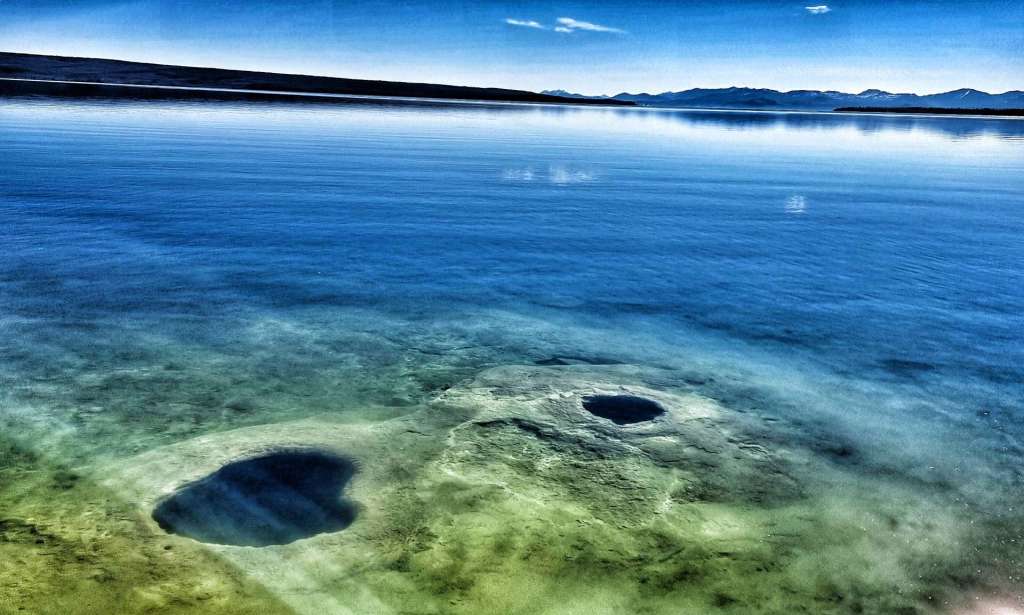
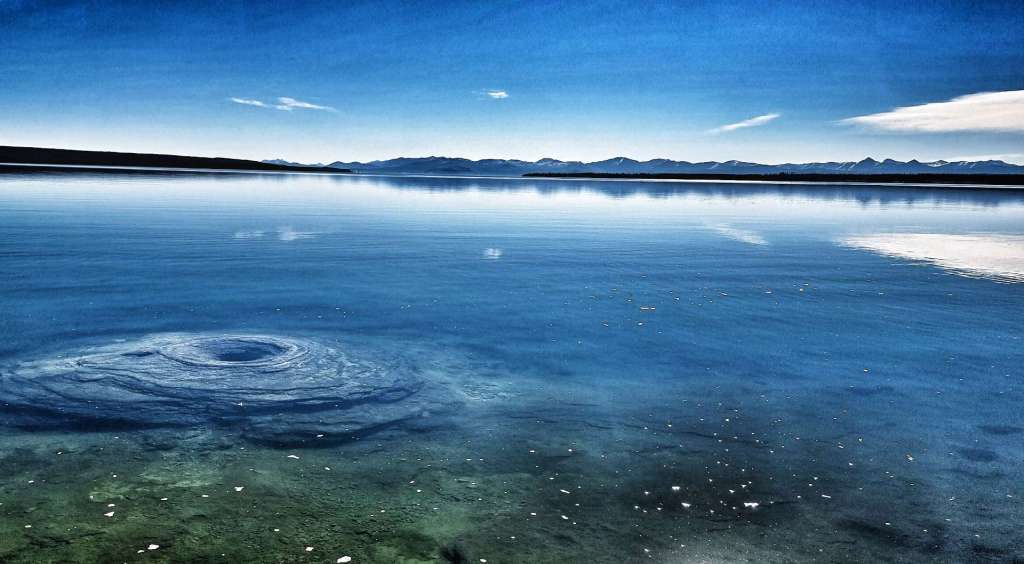
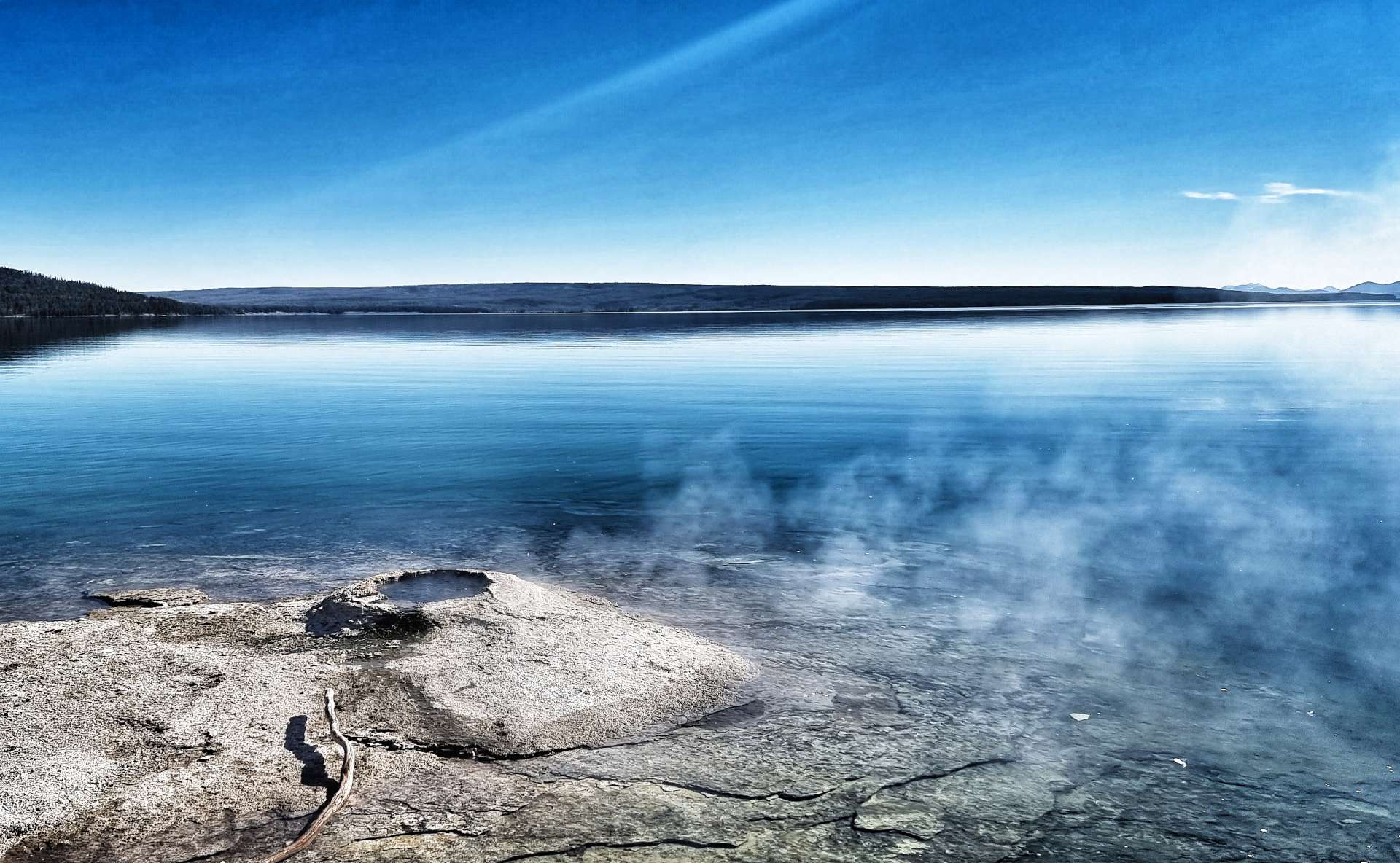
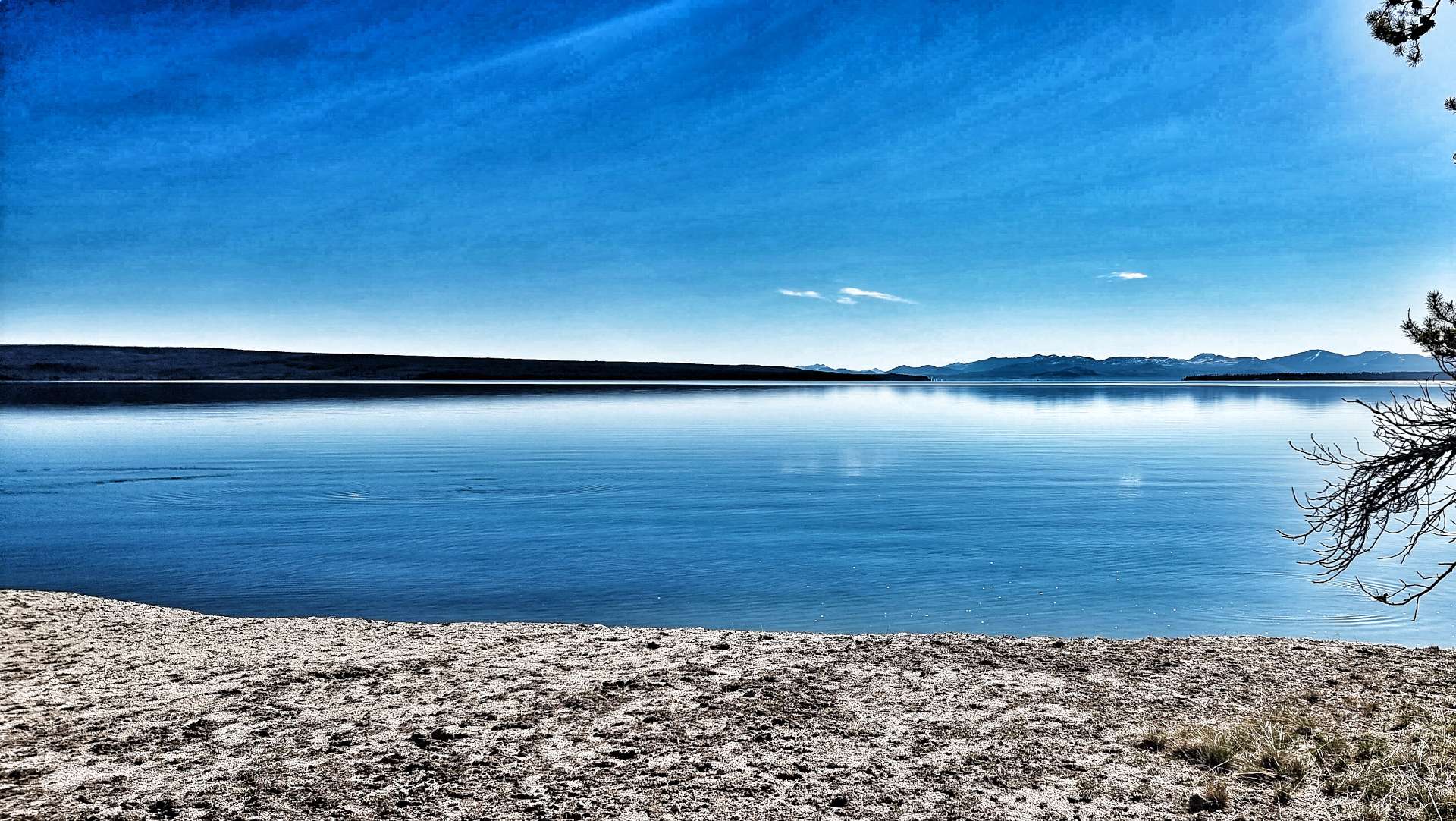
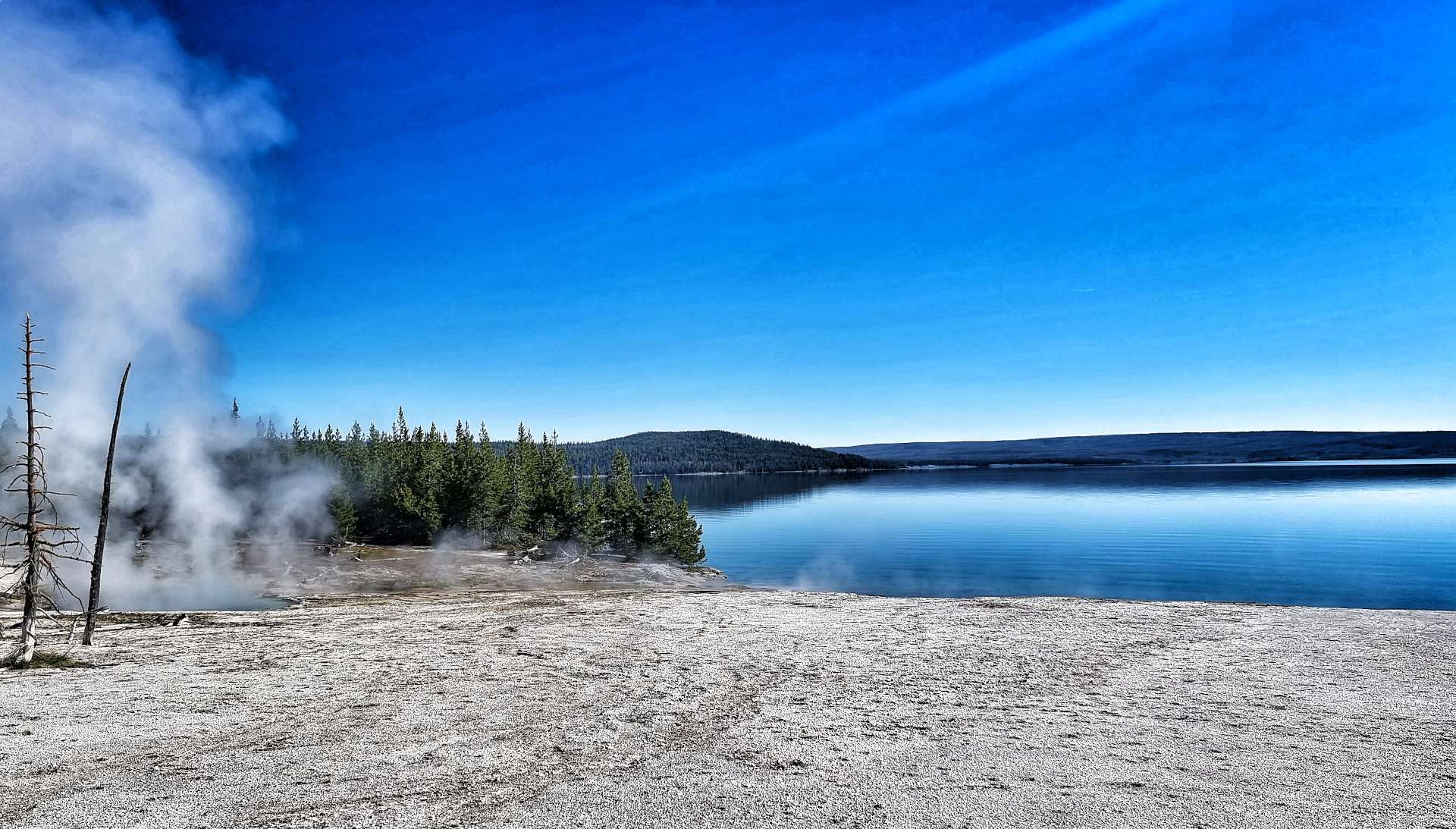
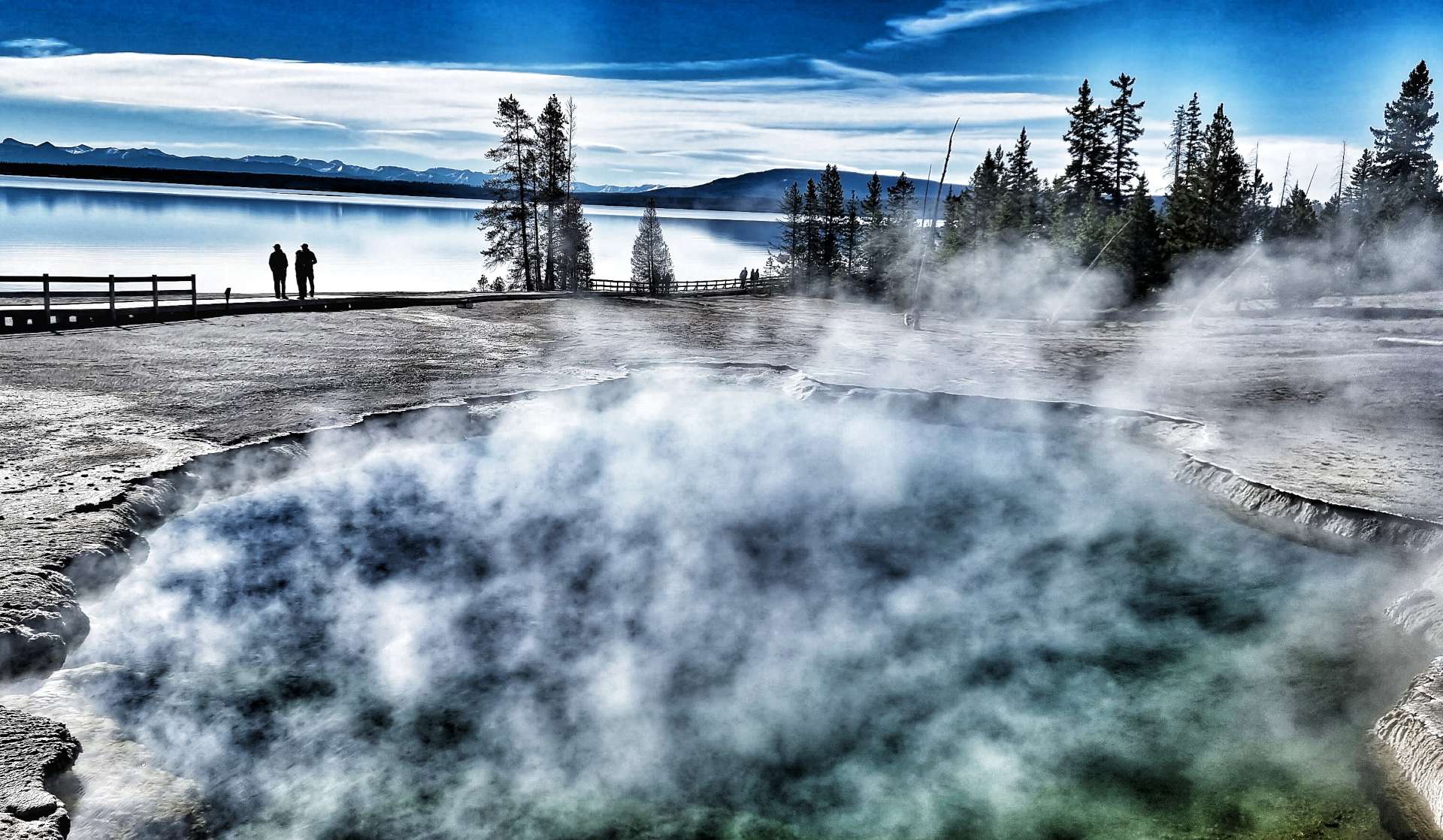
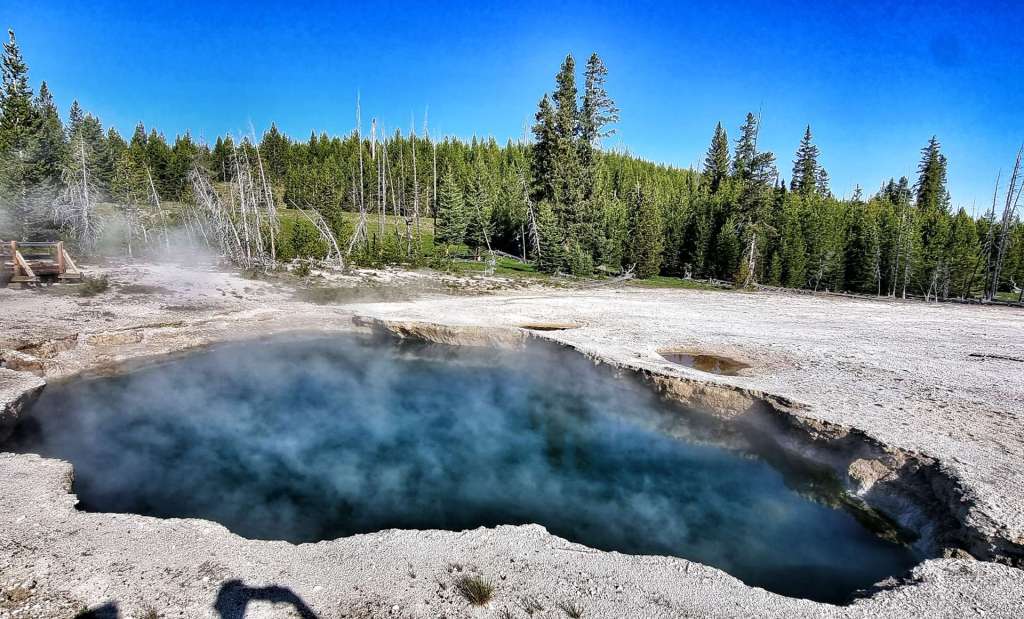
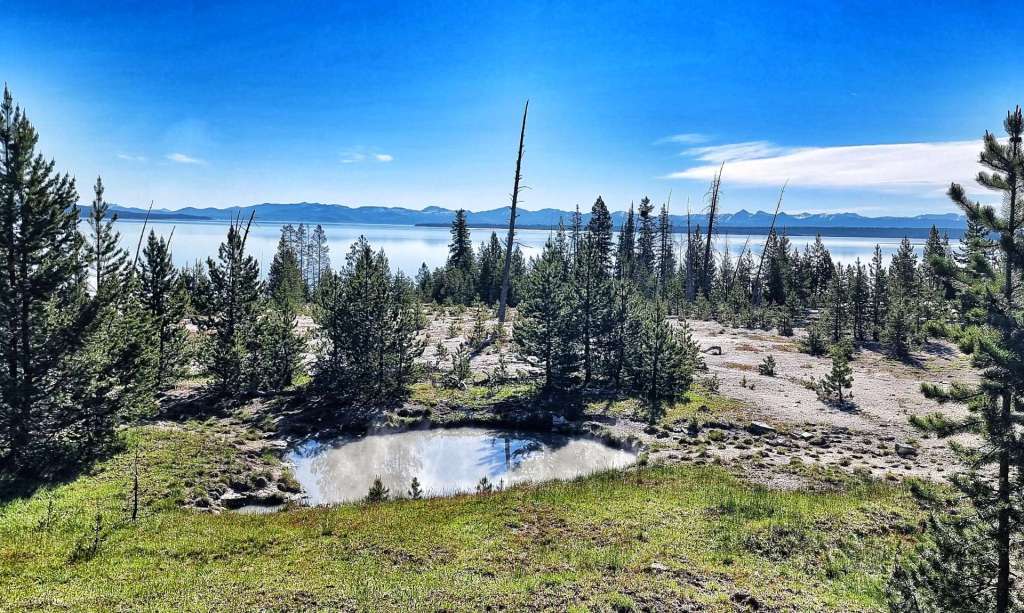
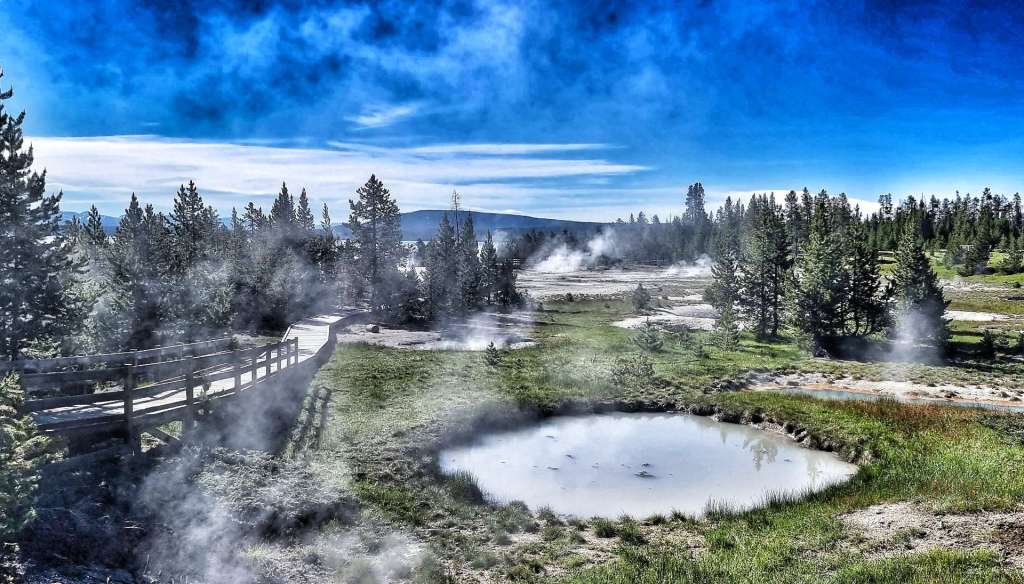
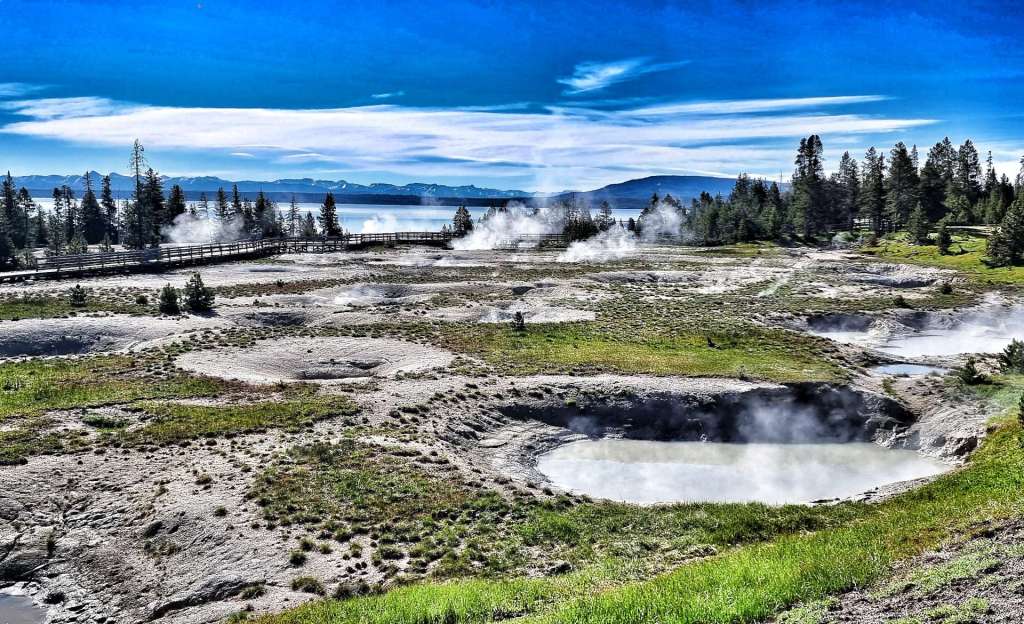
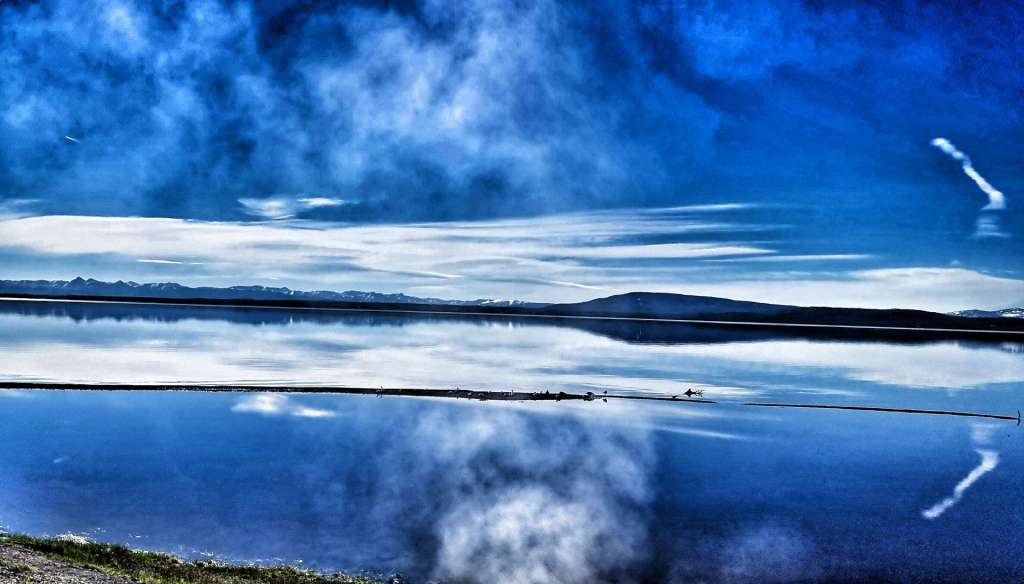
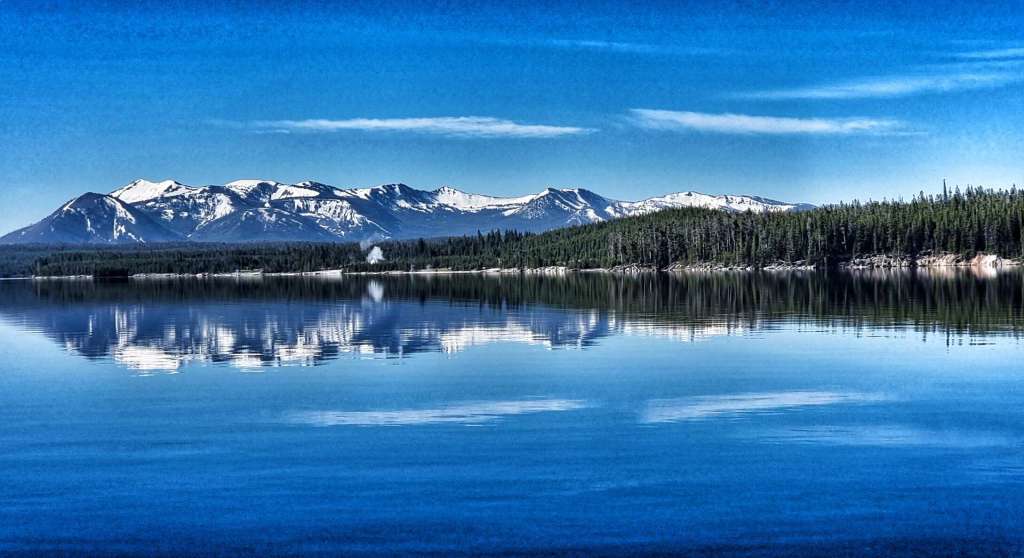
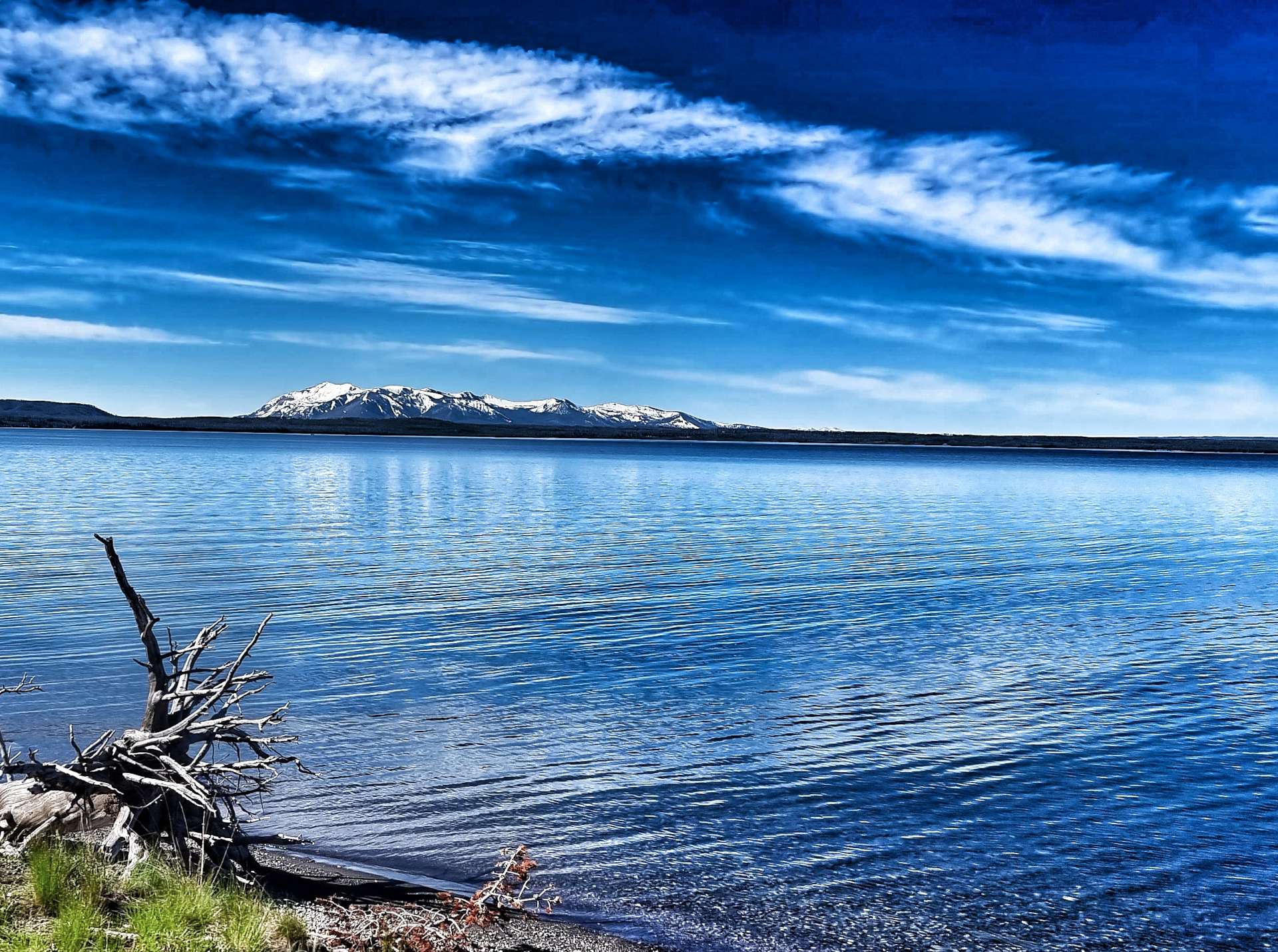
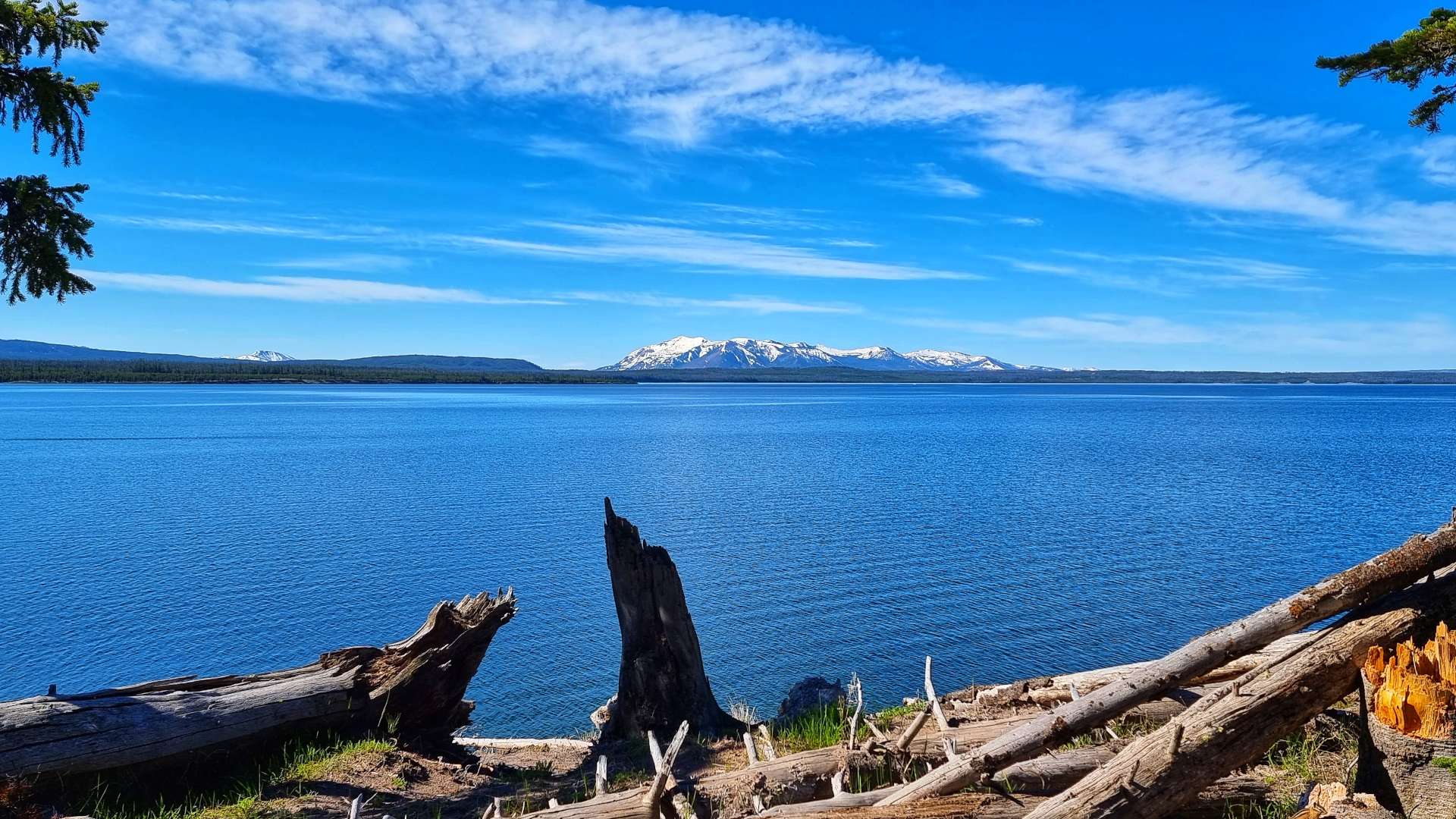
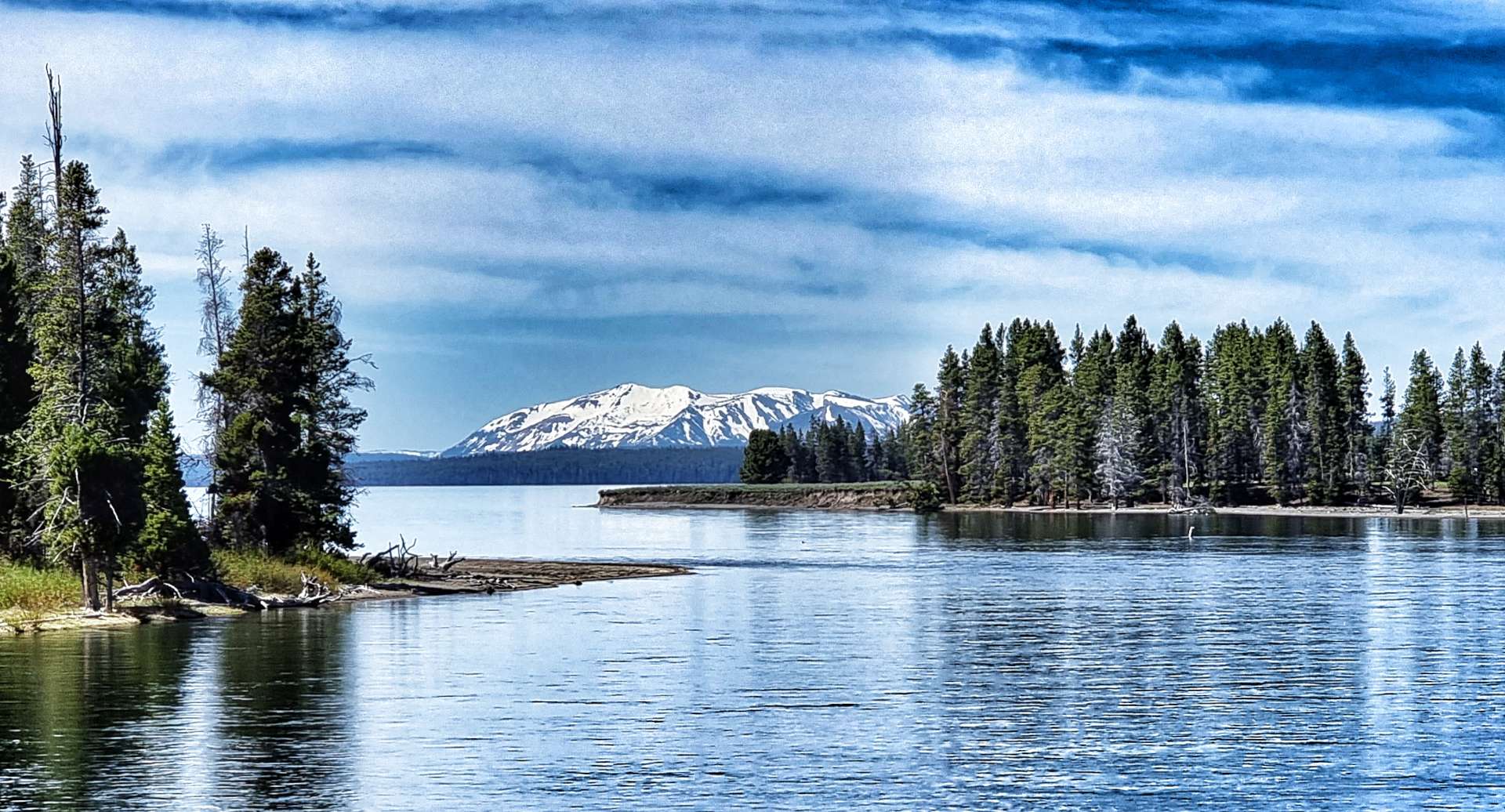
Being located on the shore of Yellowstone Lake, it’s one of the stand-out features on the Southern Loop, although it’s also one of the least visited sites. It doesn’t have the obvious thermal activity that some of the other hotspots can offer, but its views over the lake to the distant mountains are second to none. Yellowstone Lake is quite full at the moment, which resulted in a couple of the geysers either being completely or partly submerged which gave them an ethereal quality.
We followed the wooden walkway (see first photo) around the various geysers including the Thumb Paintpots, Seismograph Pool & Bluebell Pool.
As we continued to make our way towards the lake, we could look across the basin & make out the steam rising from the active geysers at the opposite end of the trail. Reaching the shoreline, we came face to face with the Winter Spring & Lakeshore Geysers, both of which were completely submerged.
Fishing Cone geyser was next, offering stunning views across the smooth lake, followed almost immediately by Big Cone & Hillside geysers. While the photos look good, they really aren’t a patch on the real thing!
The Black Pool & Abyss geysers led us on towards the Painted Pool & Thumb Paintpots – every time you thought there couldn’t be a more spectacular geyser, one appeared!!
There was an opportunity to get a long shot of the West Thumb basin, as well as a couple of shots looking across the lake, before finding ourselves back where we started. The geyser basin couldn’t be any more different to the forest of yesterday – Yellowstone has the ability to keep throwing different scenery & wildlife at you. We spent about an hour walking round the trail & it was worth every second!
While I know I’ve mentioned the correct geysers, I may have mixed up which photo is which, so please just enjoy them anyway.
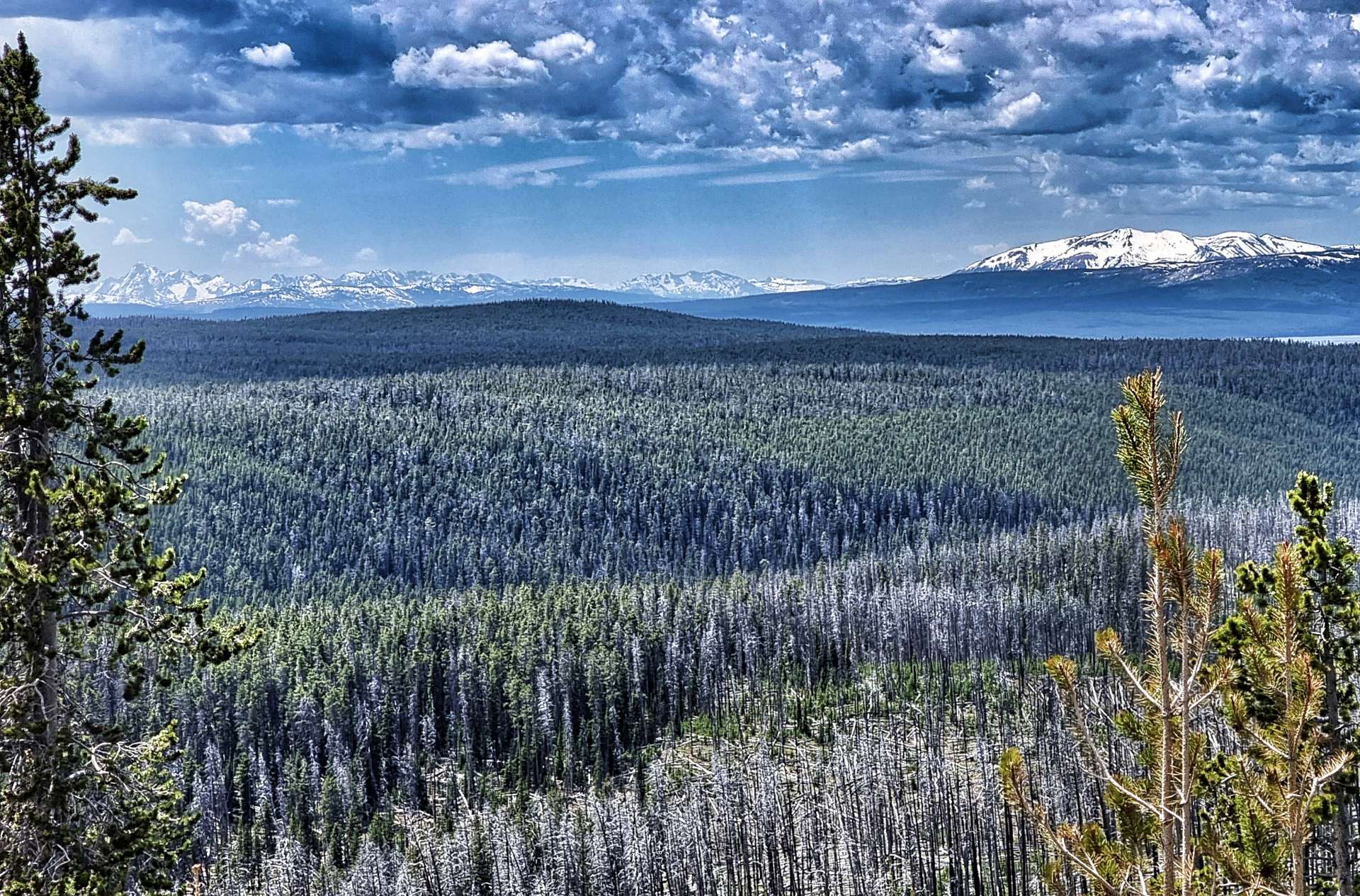
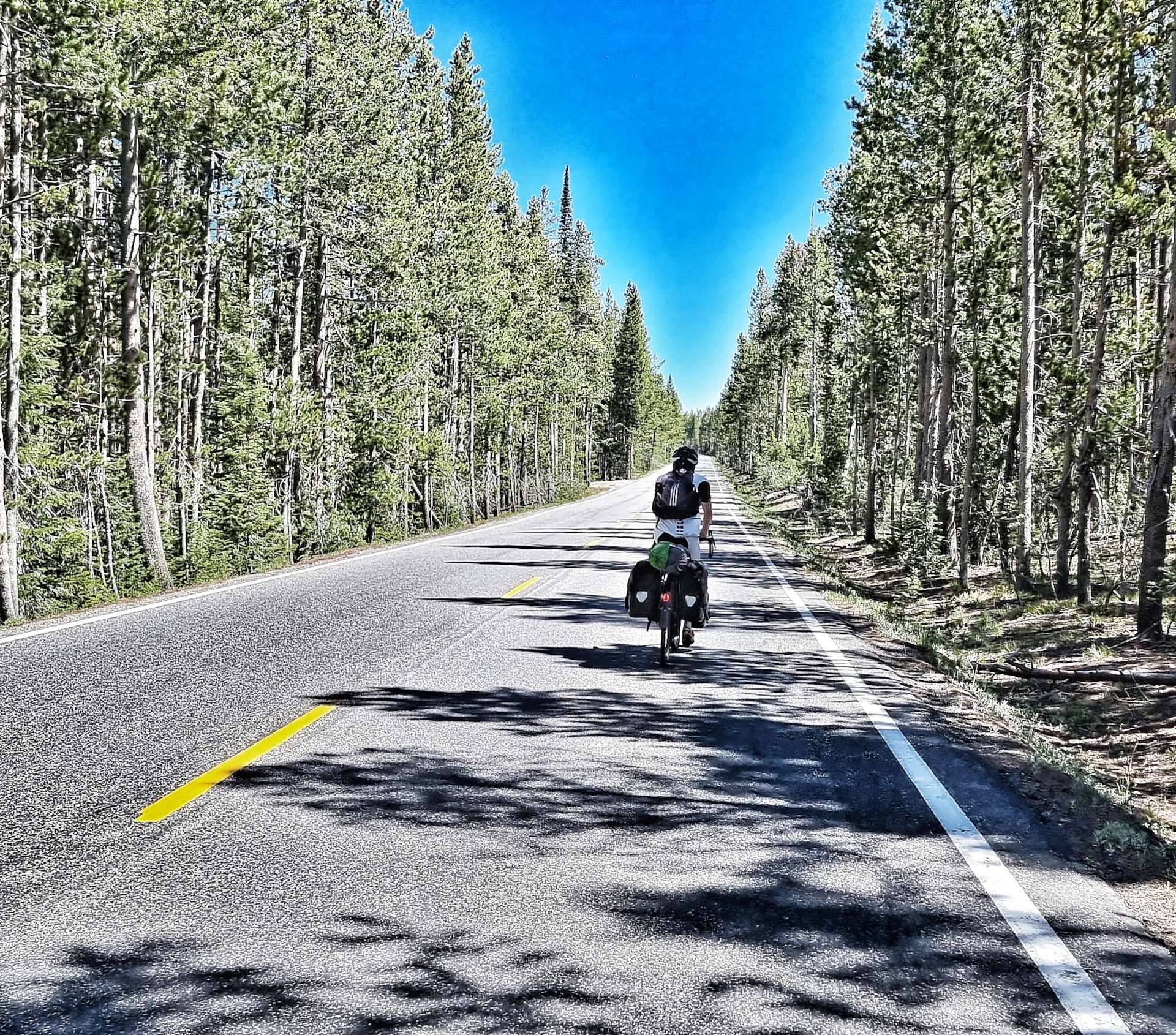
Forest covers about 80% of the park with lodgepole pine being one of the dominant species. It requires temperatures of between 104 to 122 centigrade for the cones to open & start the reproduction cycle. The trees themselves have thick bark which gives it the ability to resist low intensity fires.
There is a sub-plot taking place when lodgepole pine are absent – Subalpine fir & Engelman spruce battle for supremacy. This explains why some of the forest photos look so different to each other.
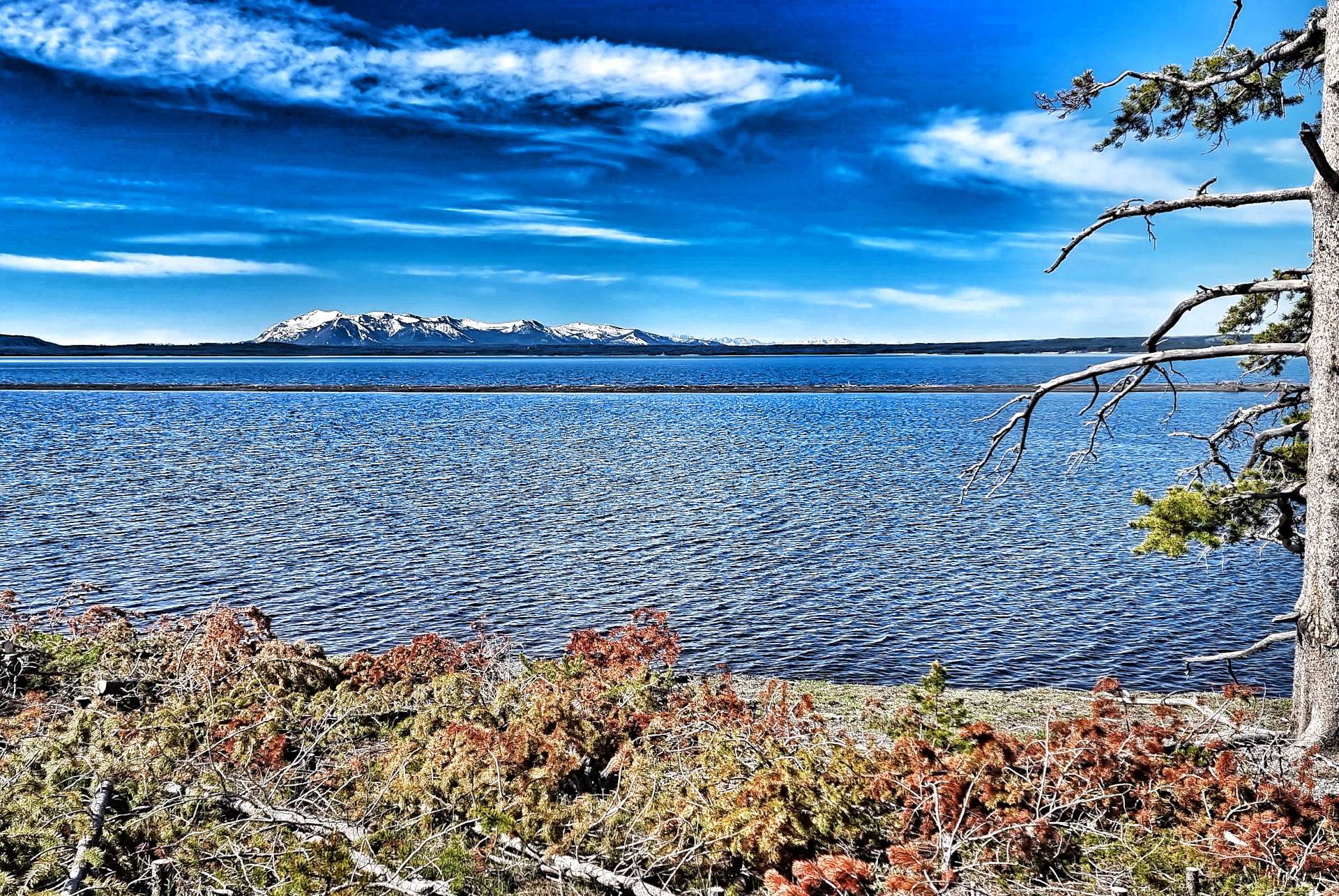
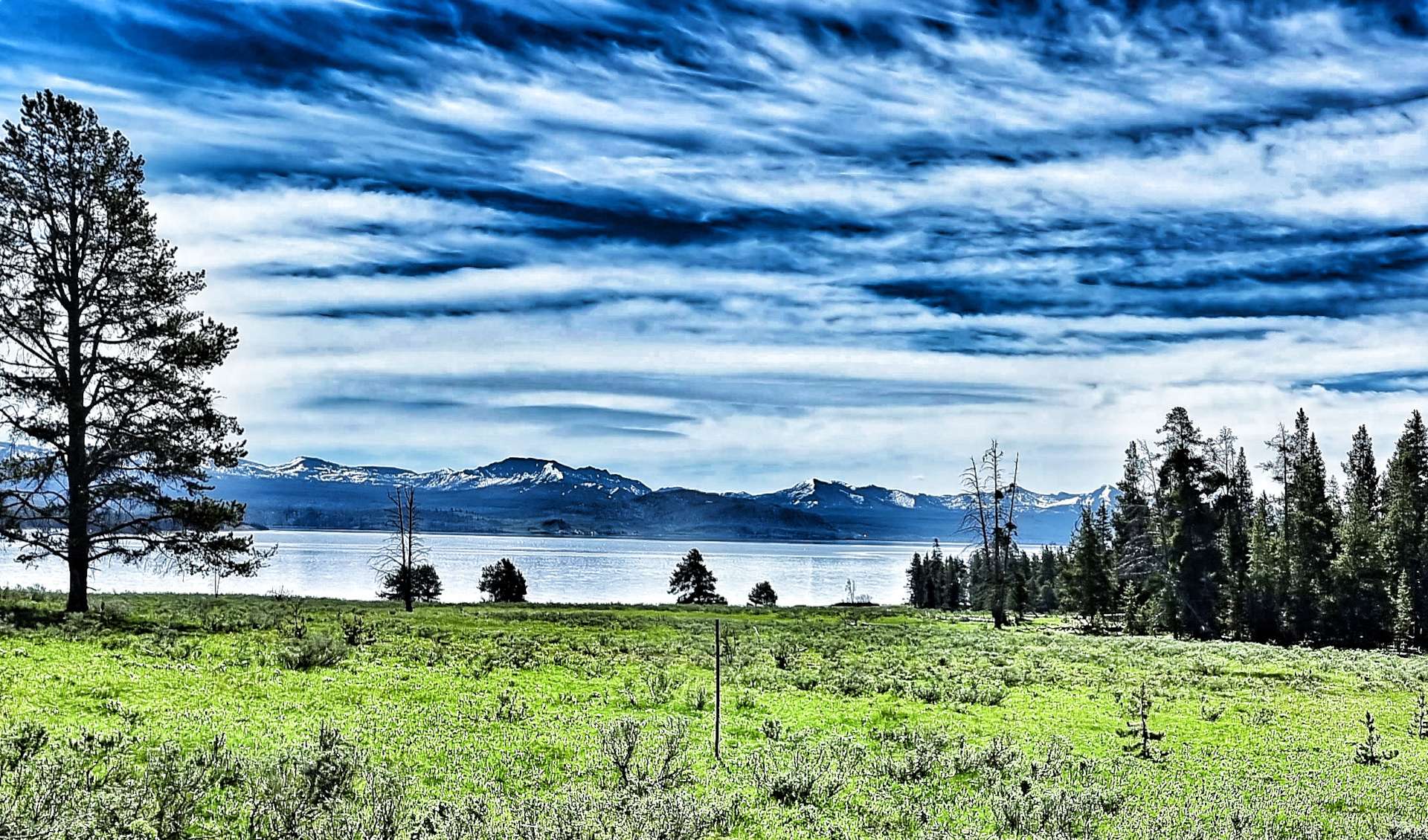
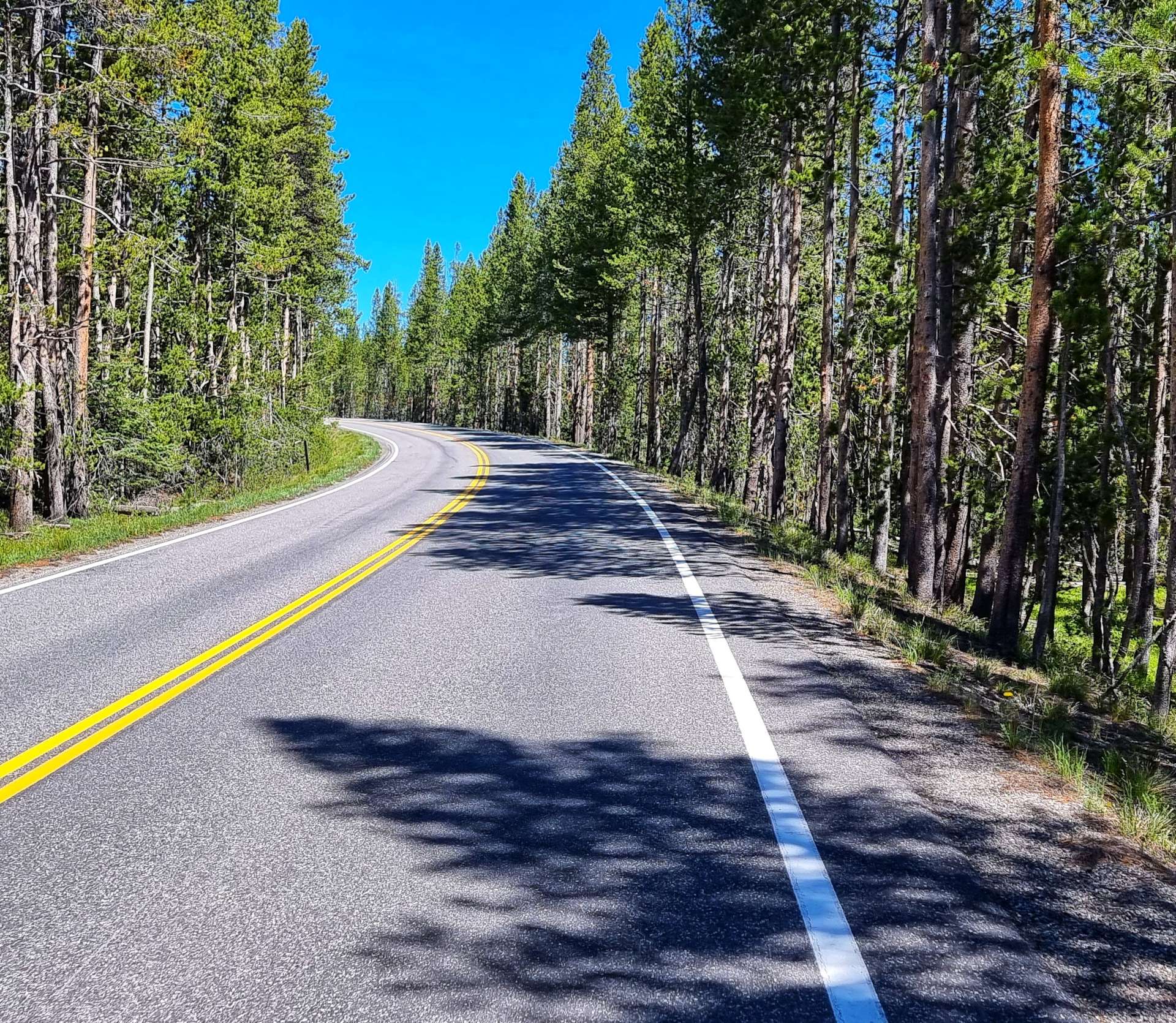
Every now & again there were lookouts & gaps in the treeline, allowing views across the lake to the Grand Tetons in the far distance.
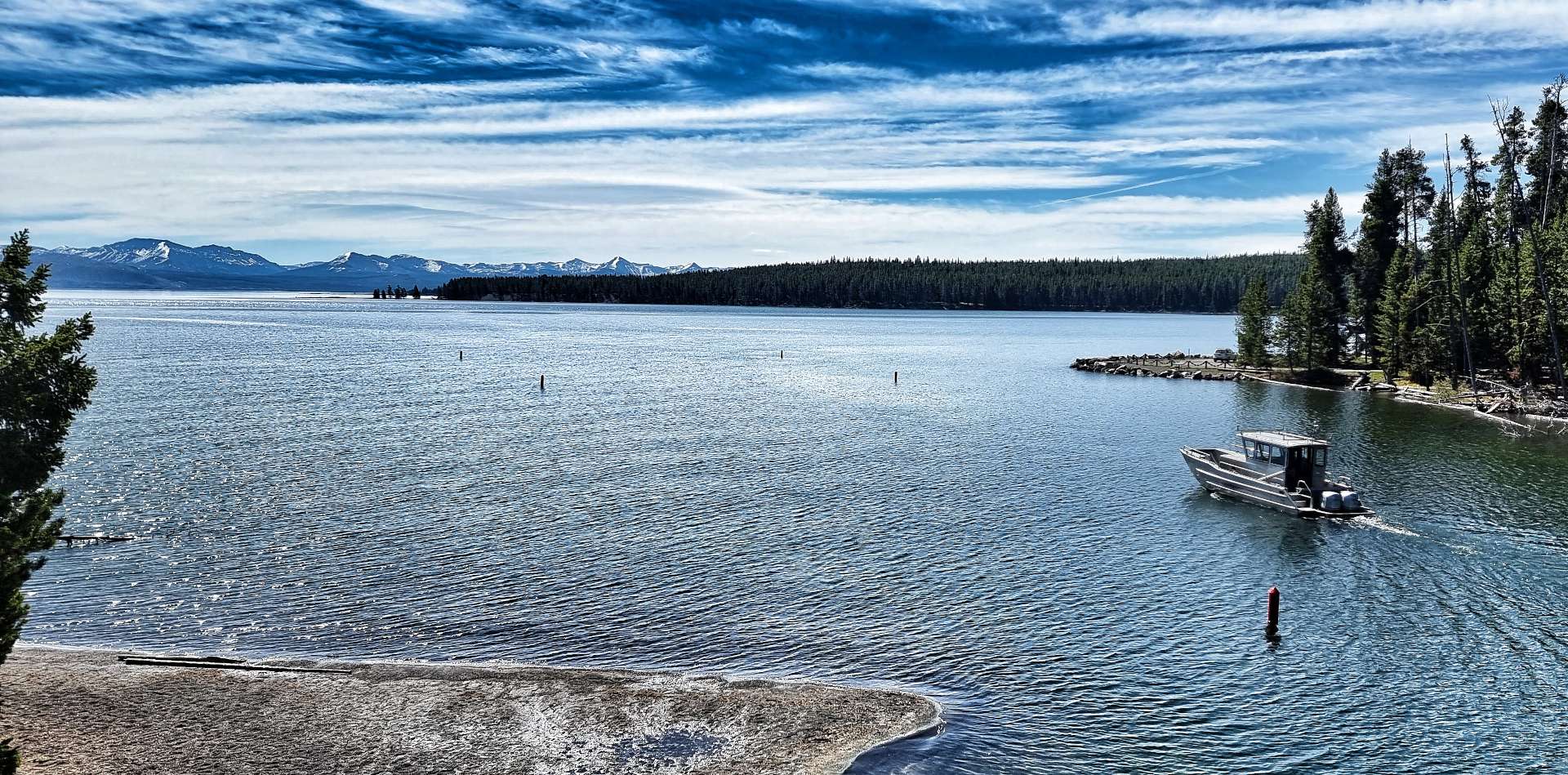
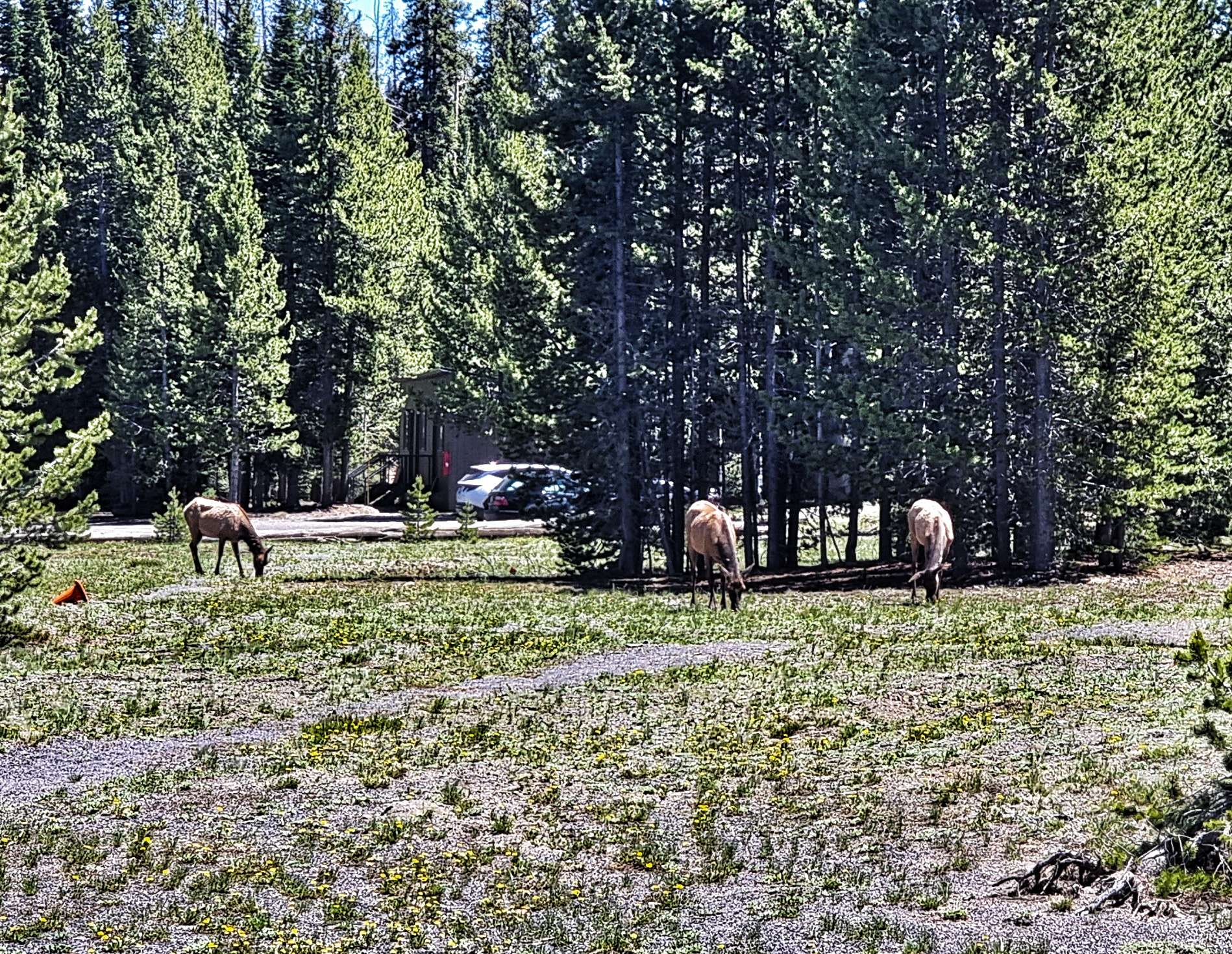
At Bridge Bay Marina a lone motor boat was setting off for a day on the lake, while a little further down the road we could see cars parked all over the road. This is a sure sign there are large animals in the area & on this occasion we met a gang of very docile elk – while they have fuzzy antlers they are less likely to attack anything, as their antlers are very sensitive. However, once their antlers have hardened, they are much more dangerous!
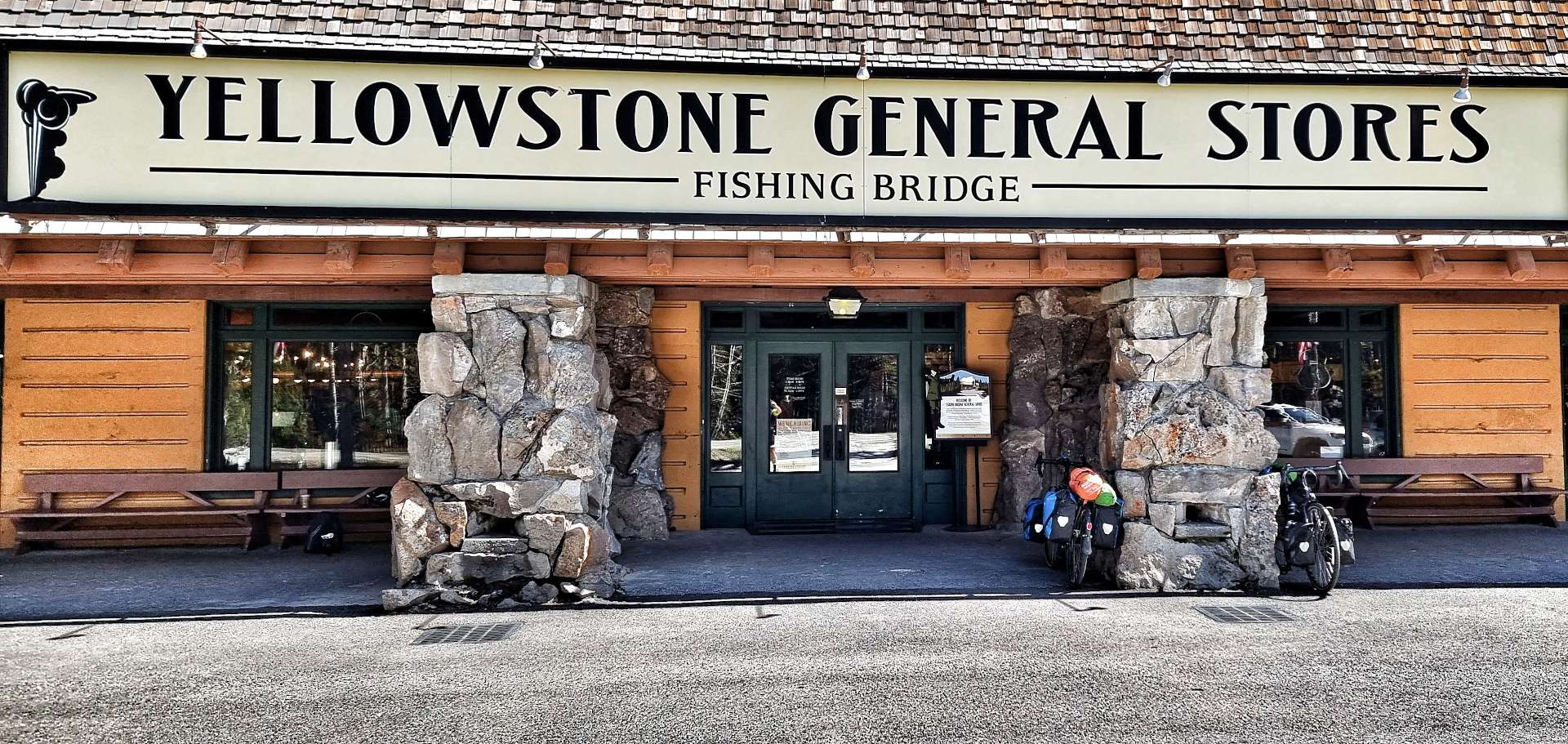
We took the right turn towards Fishing Bridge – I stopped for a couple of photos before we pulled in to the General Store for a coffee. Setting off again, we’d assumed that we’d had our last opportunity to spot some of the larger wildlife, when we saw what looked like large black boulders over to our left…..
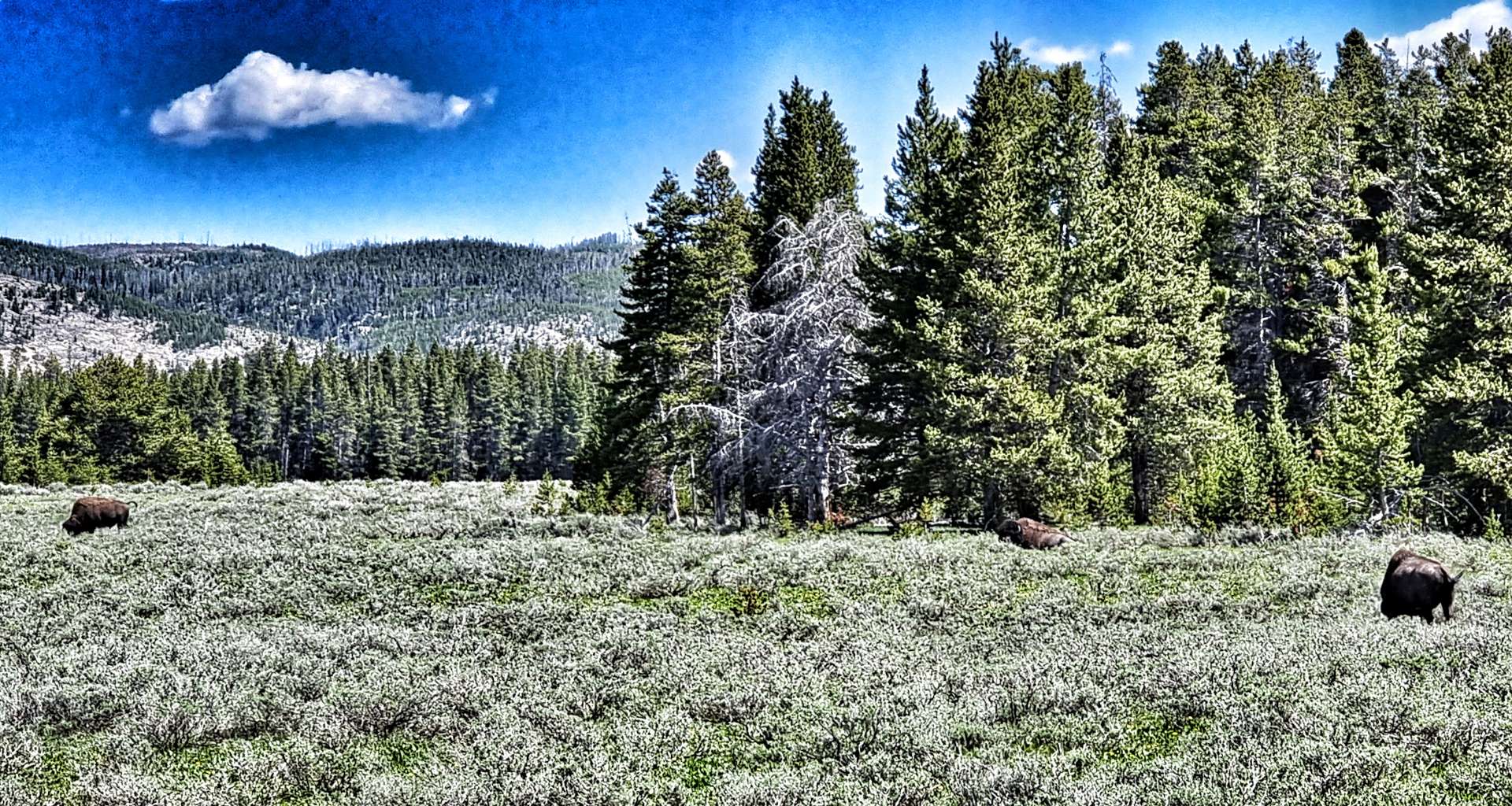
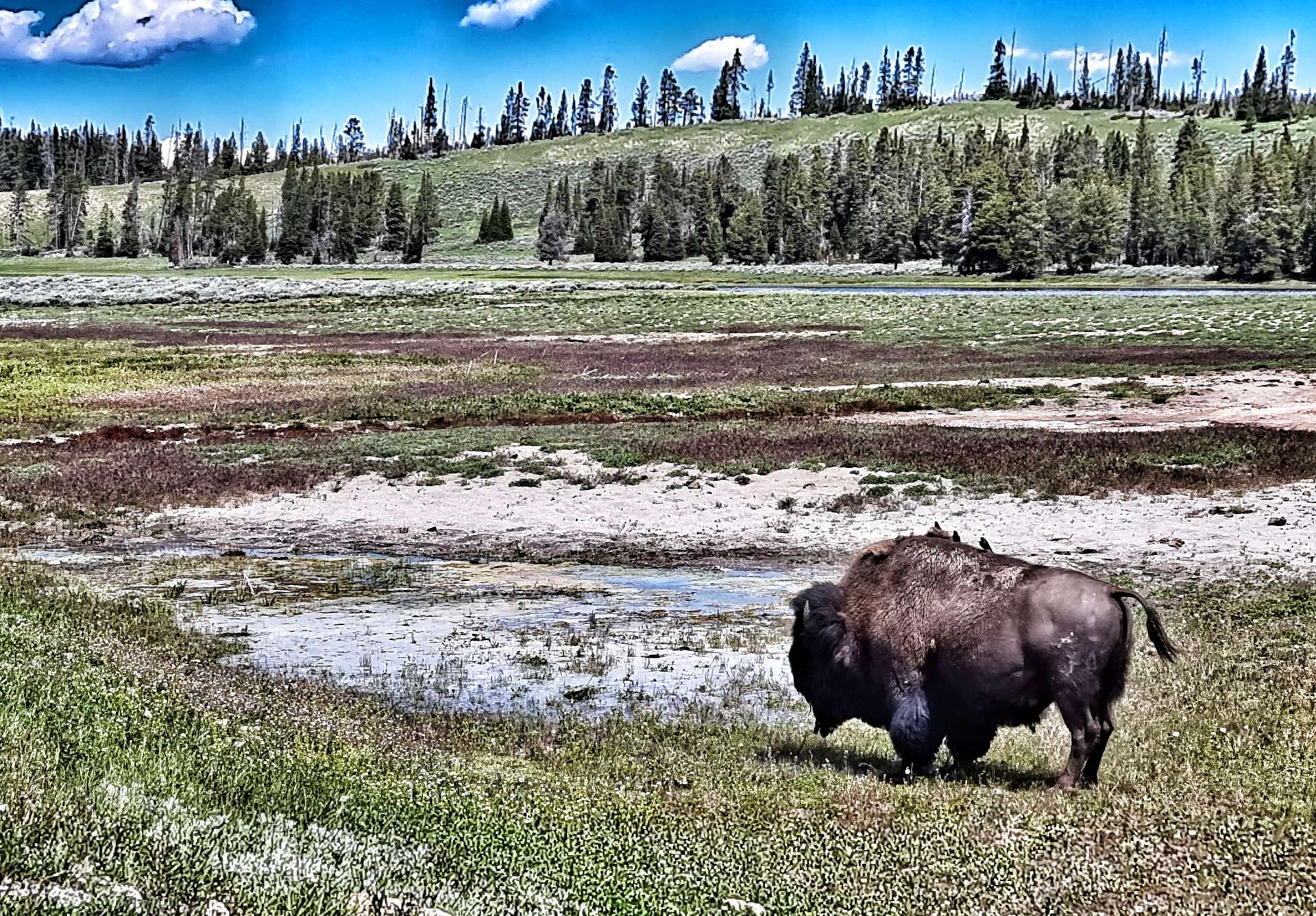
In the space of 5 minutes, we saw a small herd of 3 bison (they must have been a couple of hundred yards away), then a single bison grazing on the grass – I was about 30 yards away. I read that on 27th June, someone was gored by a bison when it became agitated because the man got too close (advice is never get closer than 25 yards to most wildlife, but keep 100 yards away from bears & wolves.
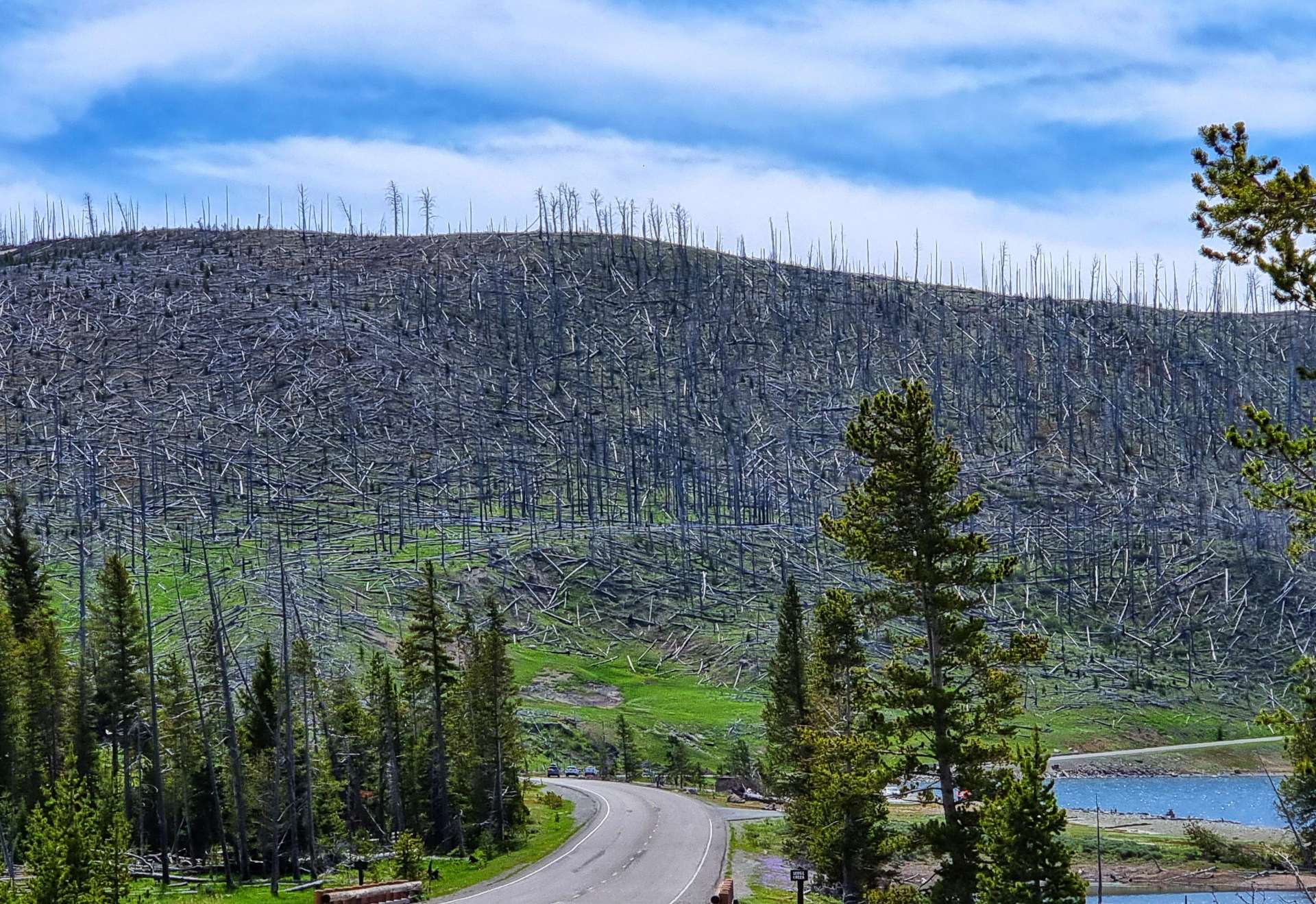
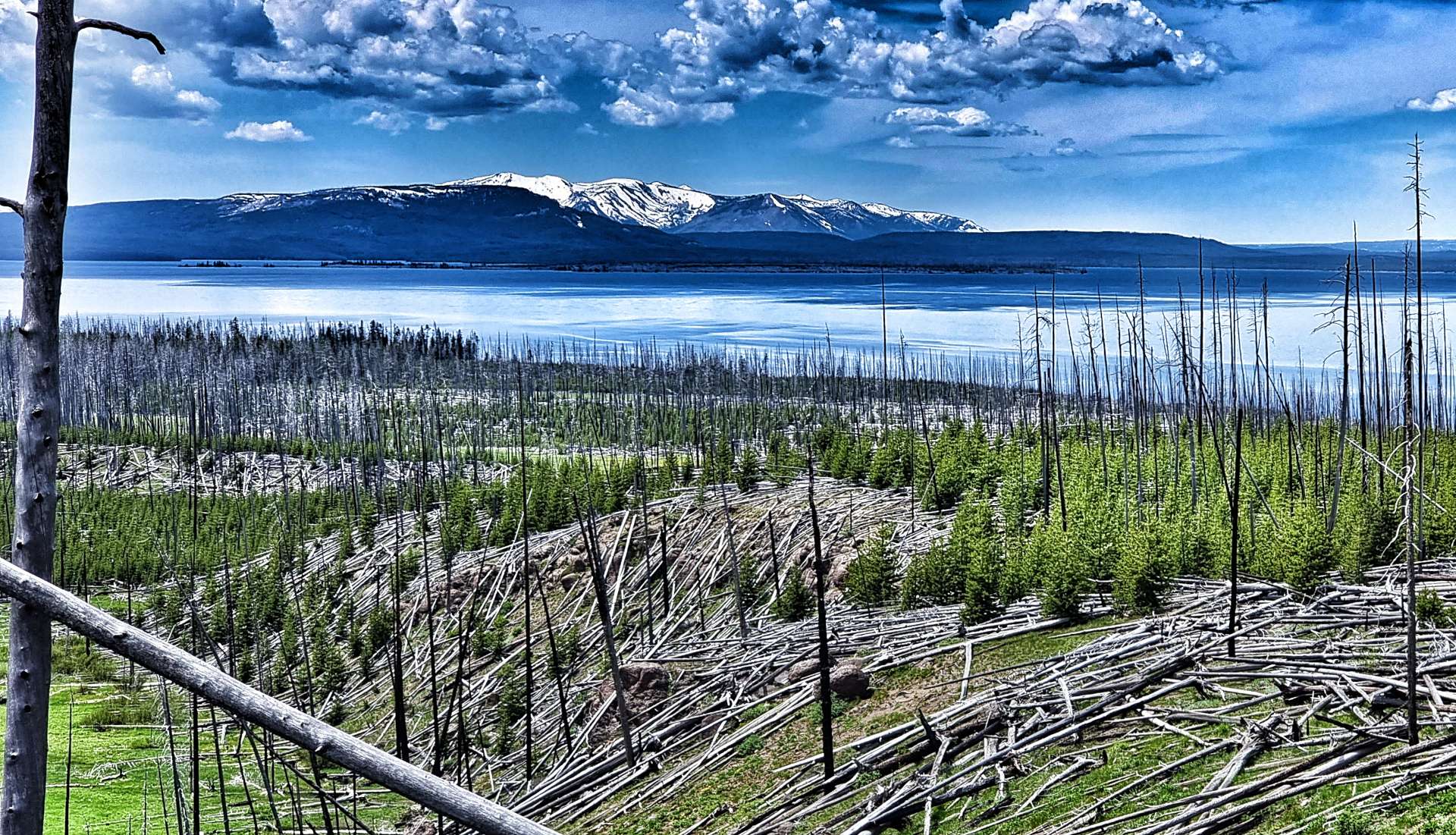
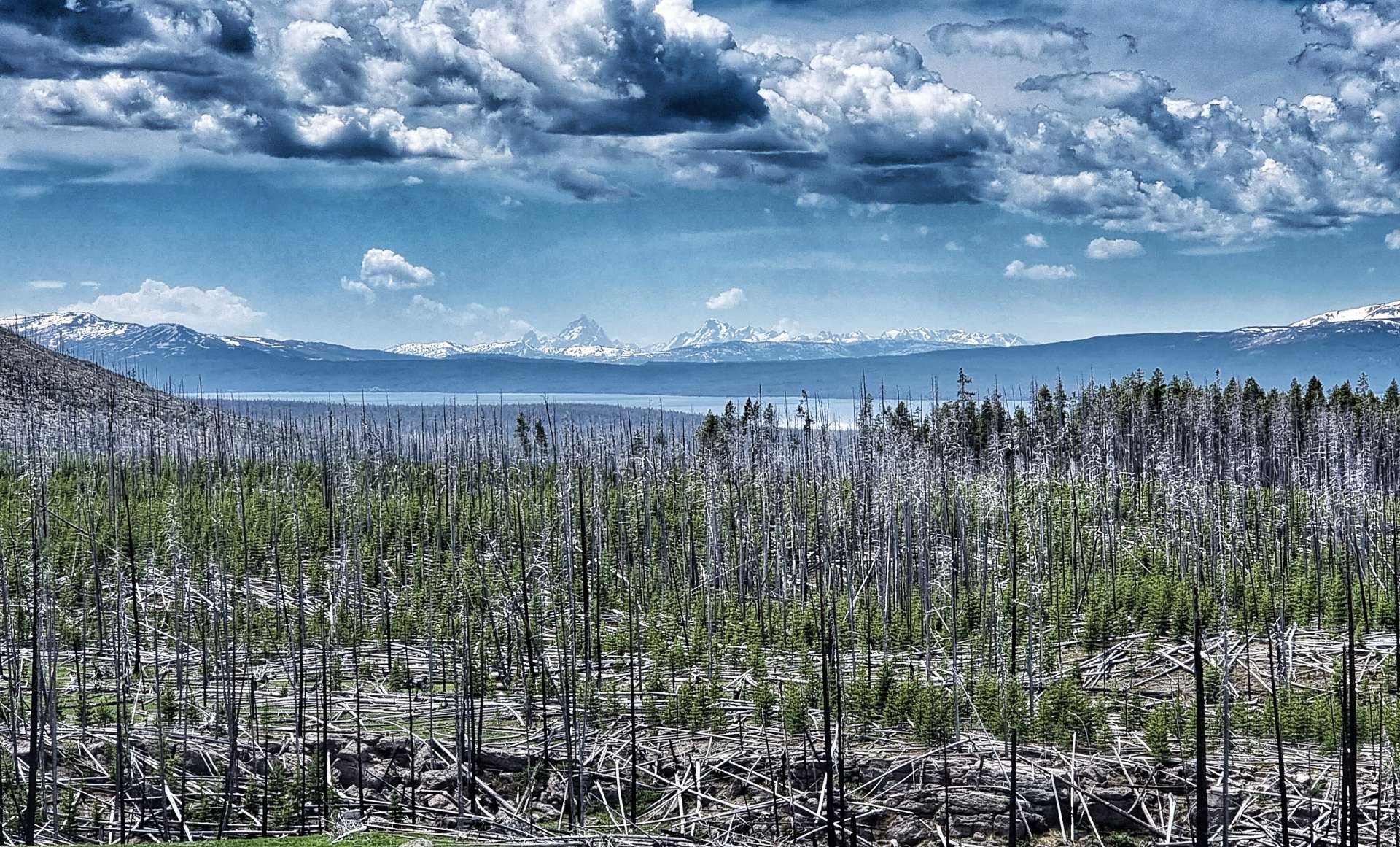
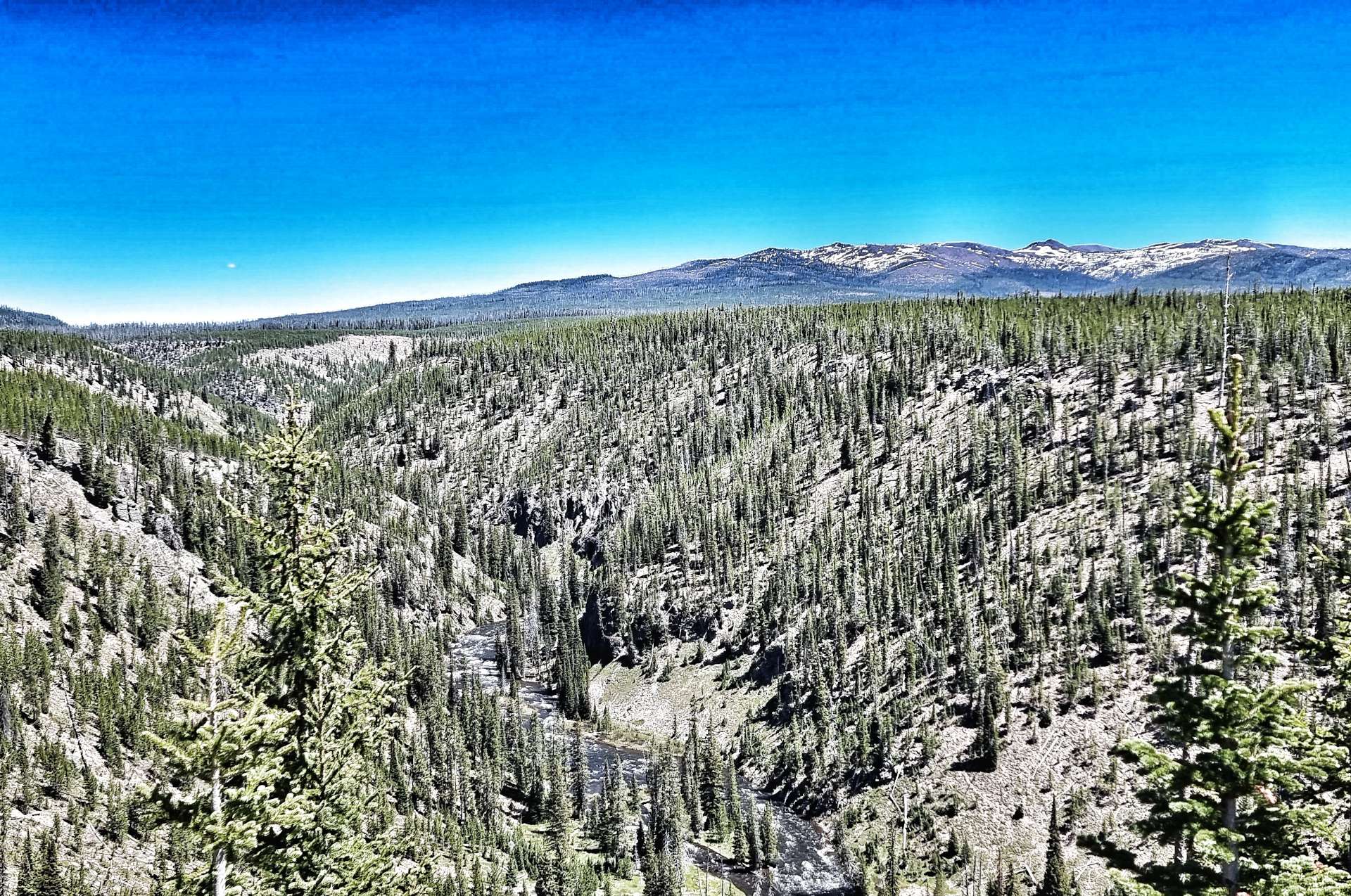
In 1988, wildfires caused damage to just over a third of Yellowstone – they burned for months & the entire park was closed for the first time in its history. Although the fires looked to have caused irreparable damage at the time, Yellowstone has recovered & new growth trees are now well established & some of the trees survived as only the ground vegetation was burned. As we cycled from Yellowstone Lake towards the East Entrance, we could see this at first hand.
We had th
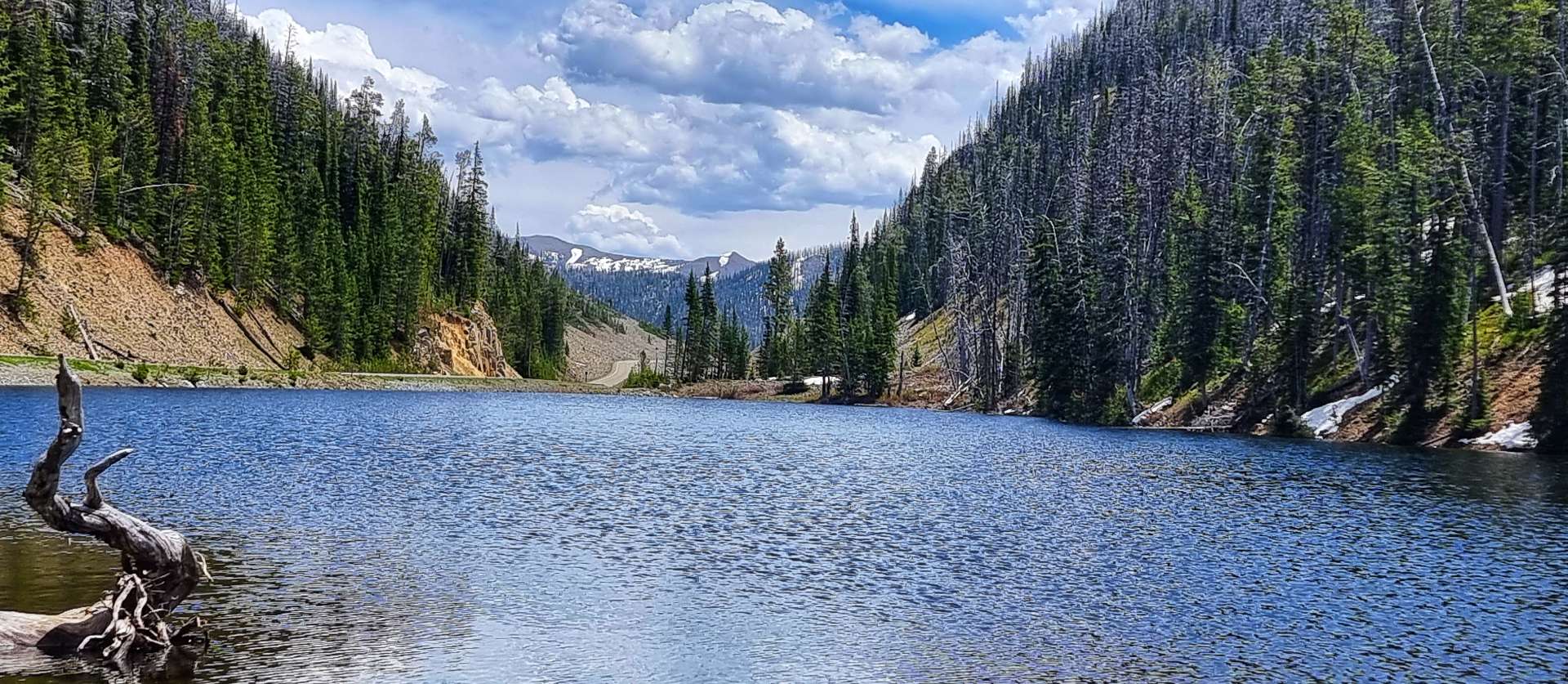
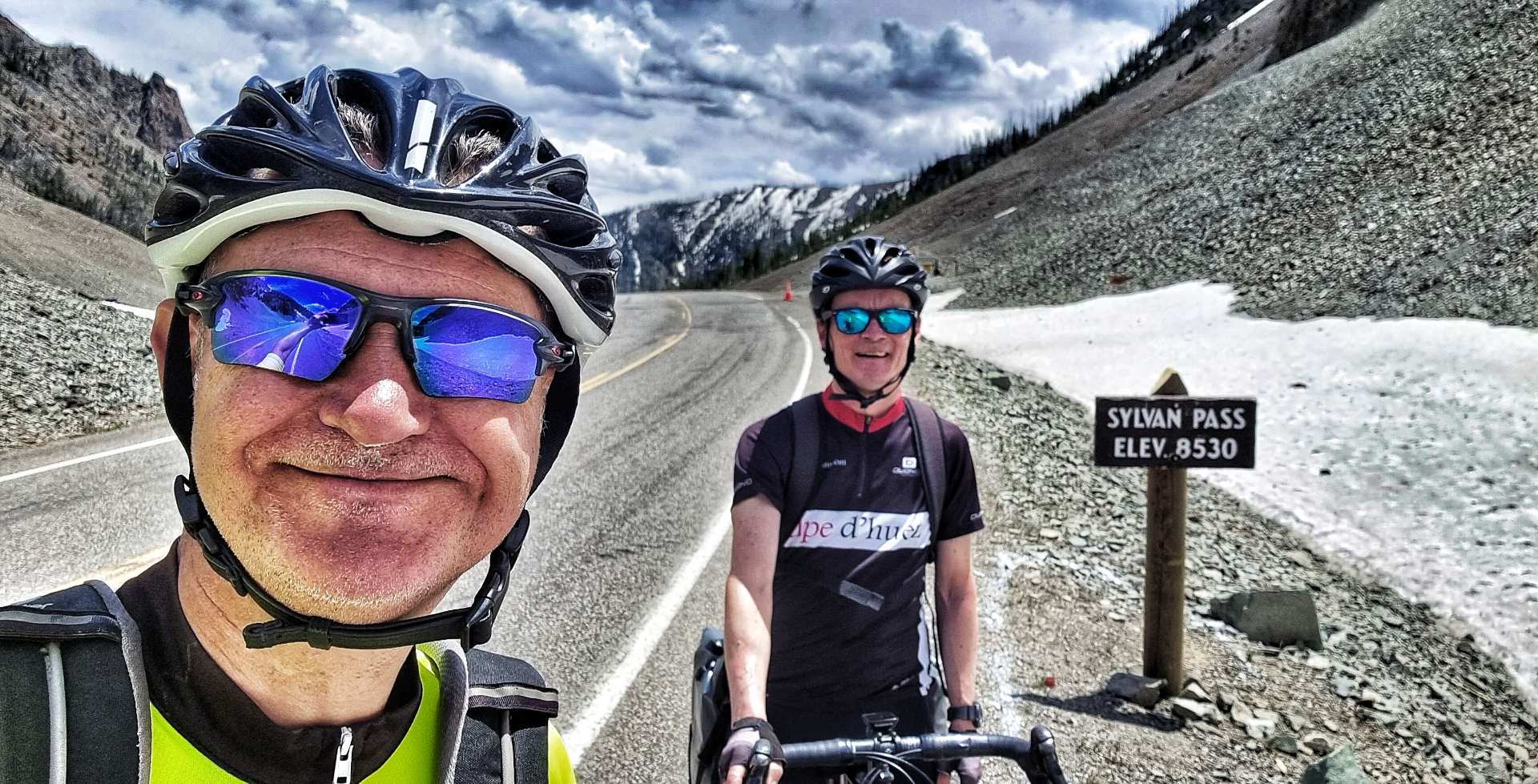
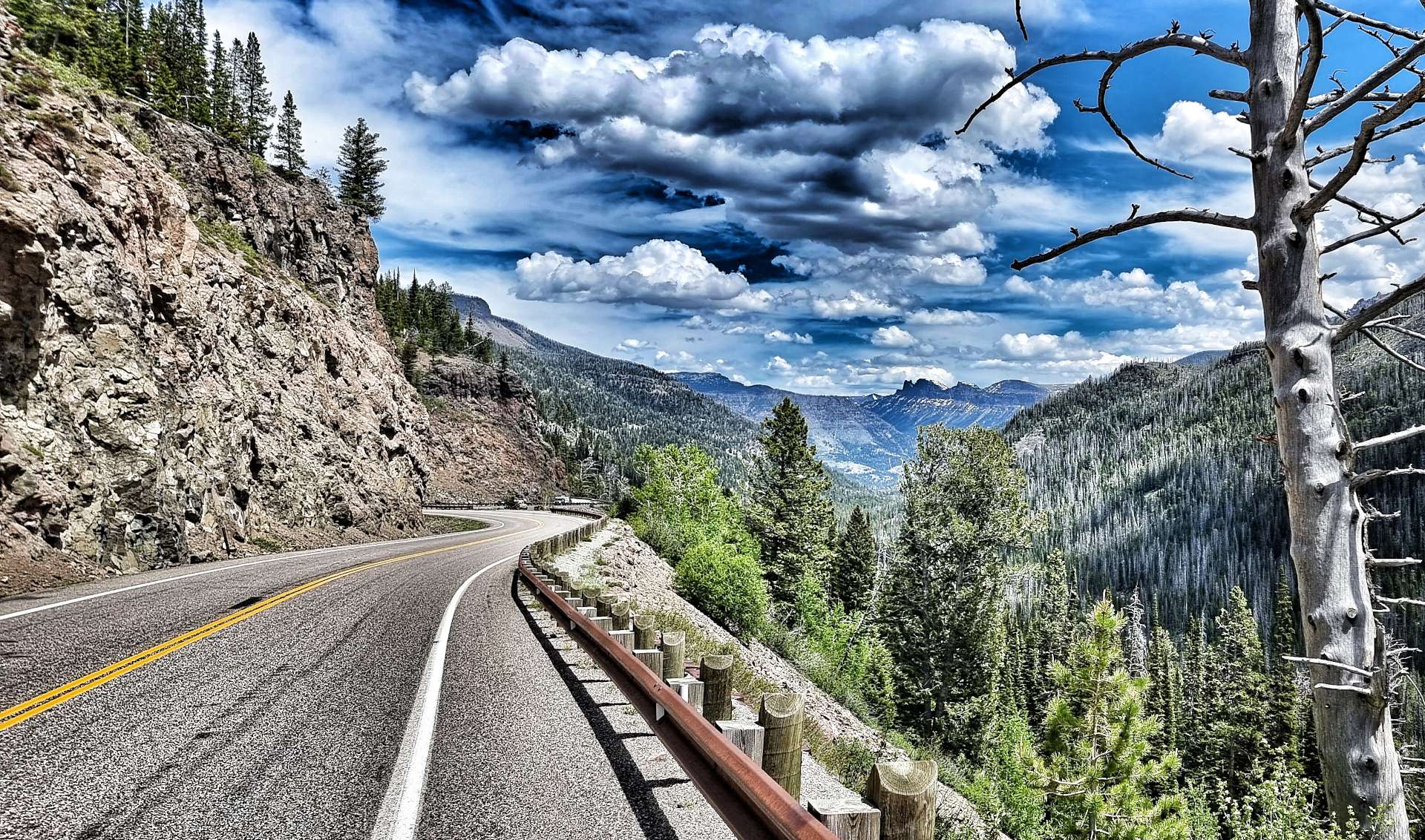
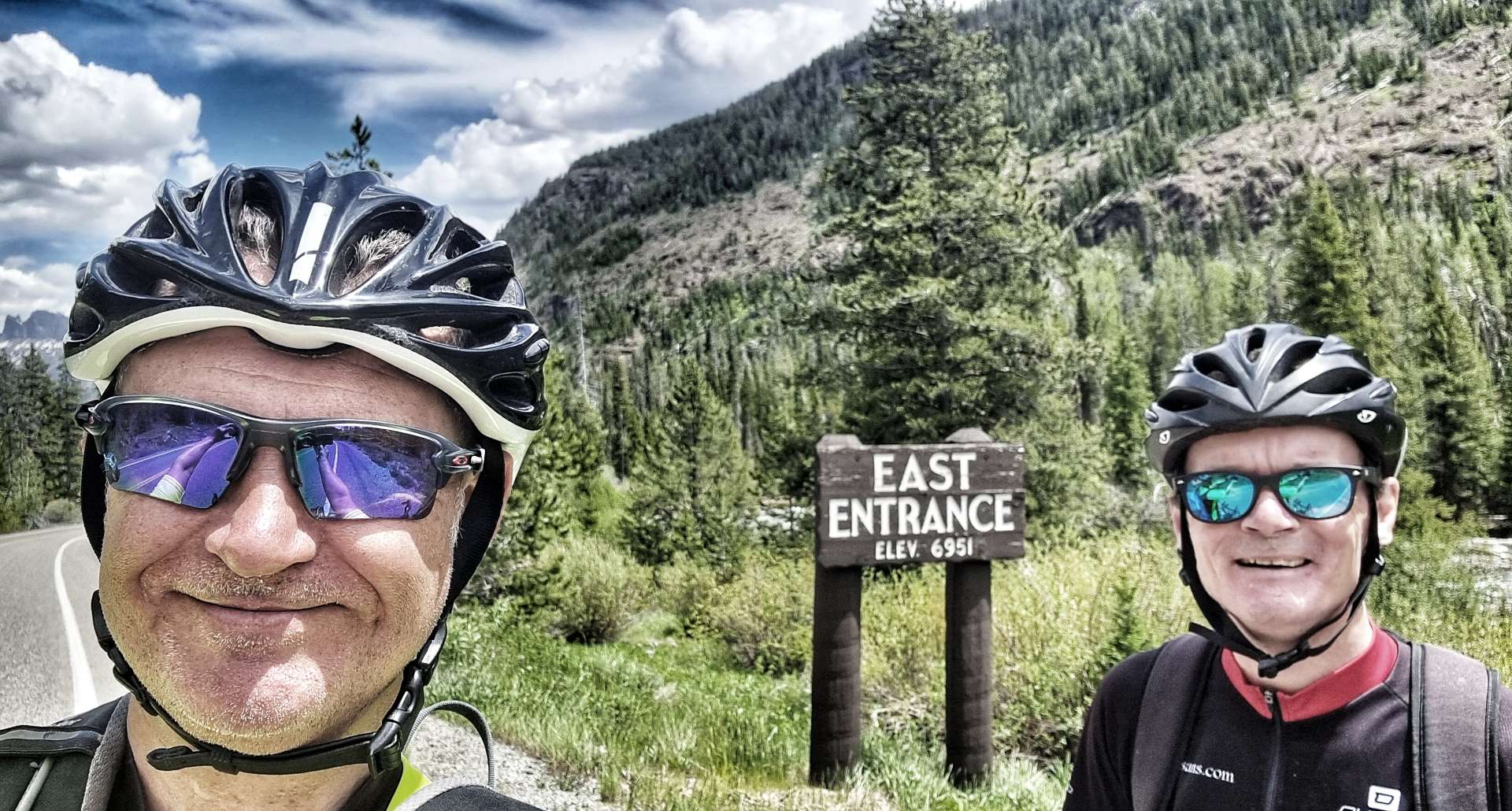
A couple of small alpine lakes added a European feel as we climbed up to Sylvan Pass (at 8,530 feet above sea level, it’s the highest pass in the park). We still had another 58 miles to cycle, but from here it would be mostly downhill! We descended 1,600 feet in the next 7 miles, which delivered us to the East Entrance Gate – time for a final photo from Yellowstone!
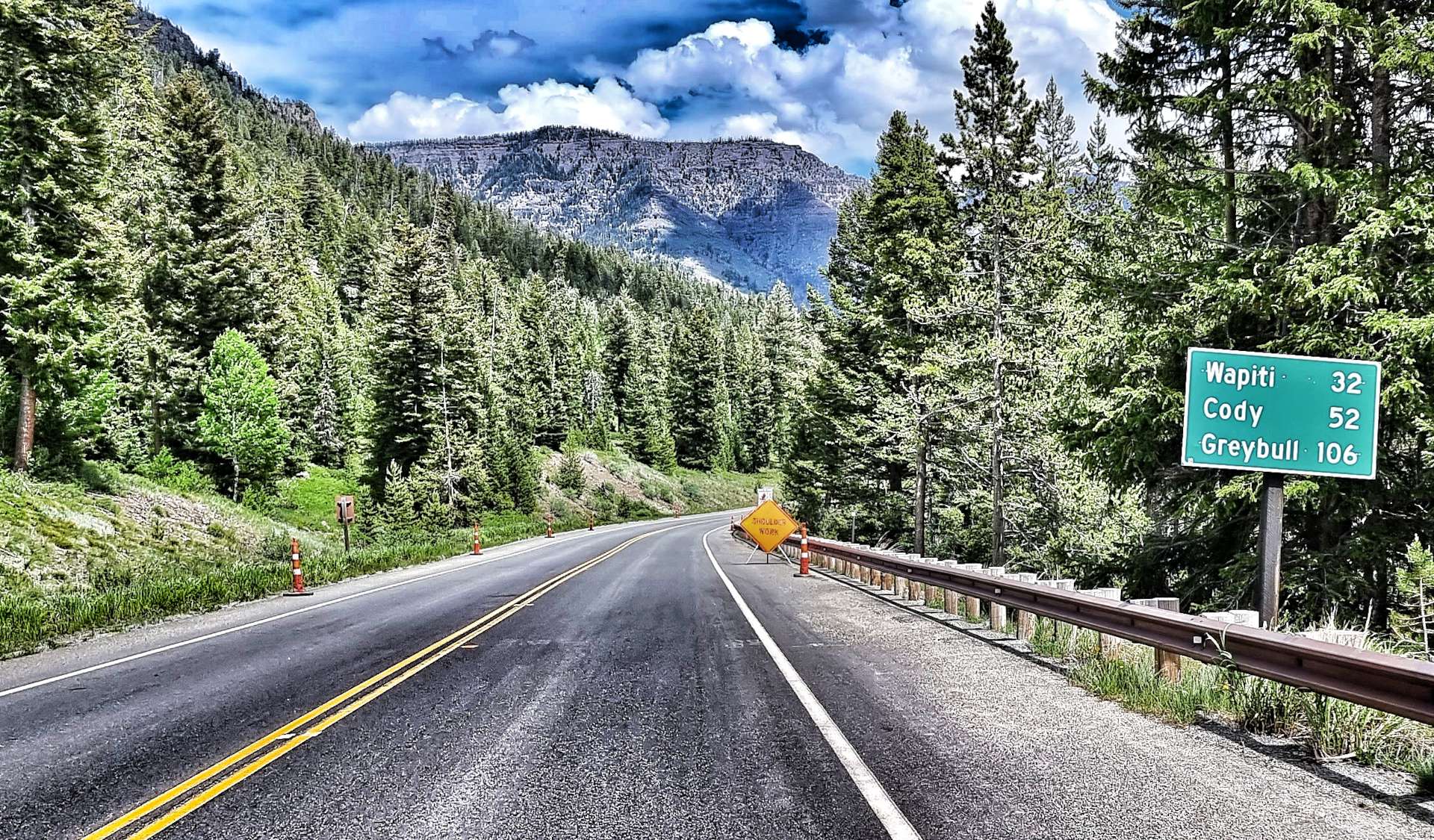
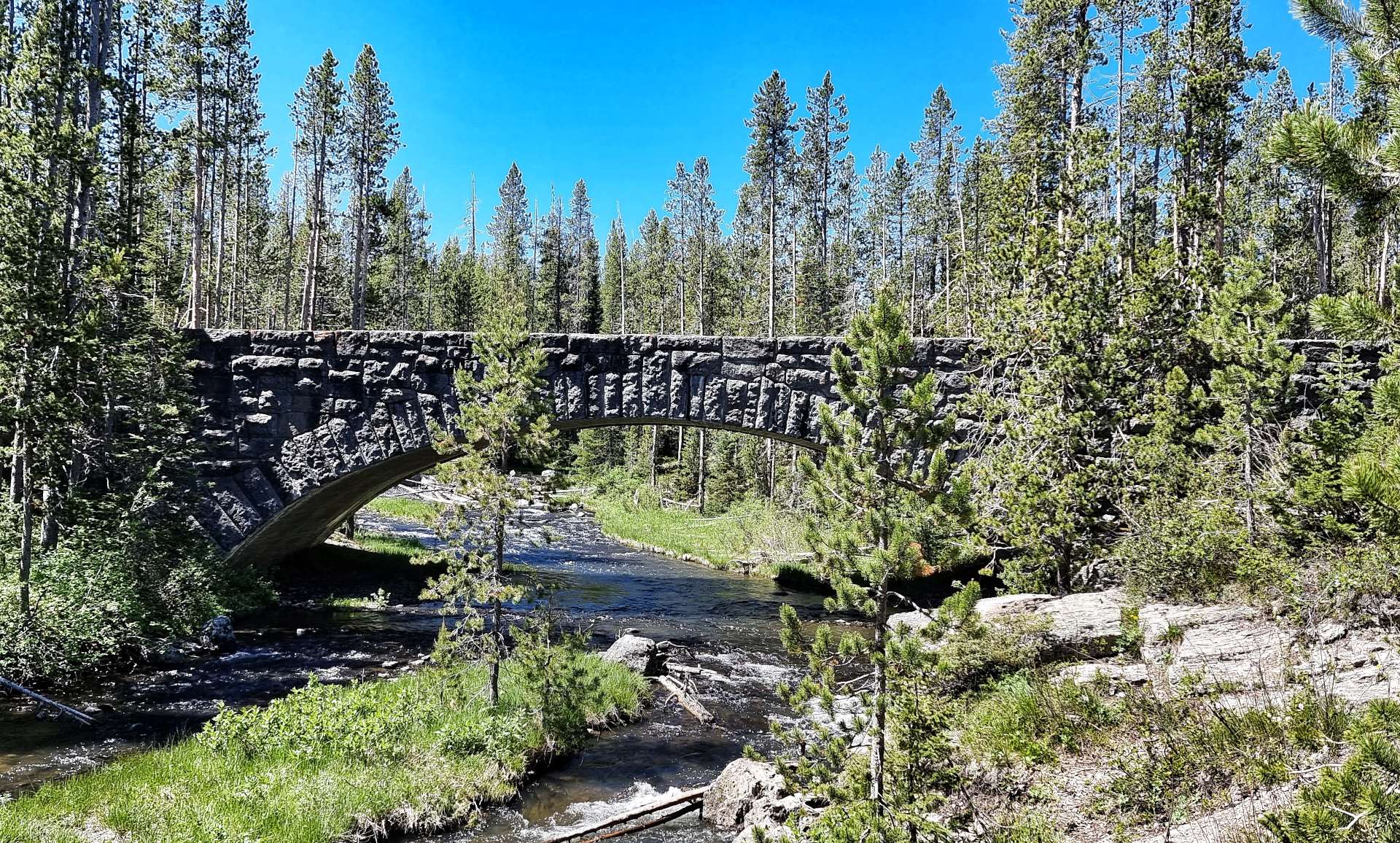
Leaving Yellowstone behind us, I was on a familiar road – in 2010 I rode the final 52 miles into Cody on a Cycling Adventures tour. As we descended, following the course of Middle Creek, we saw the last of the yellow volcanic rock.
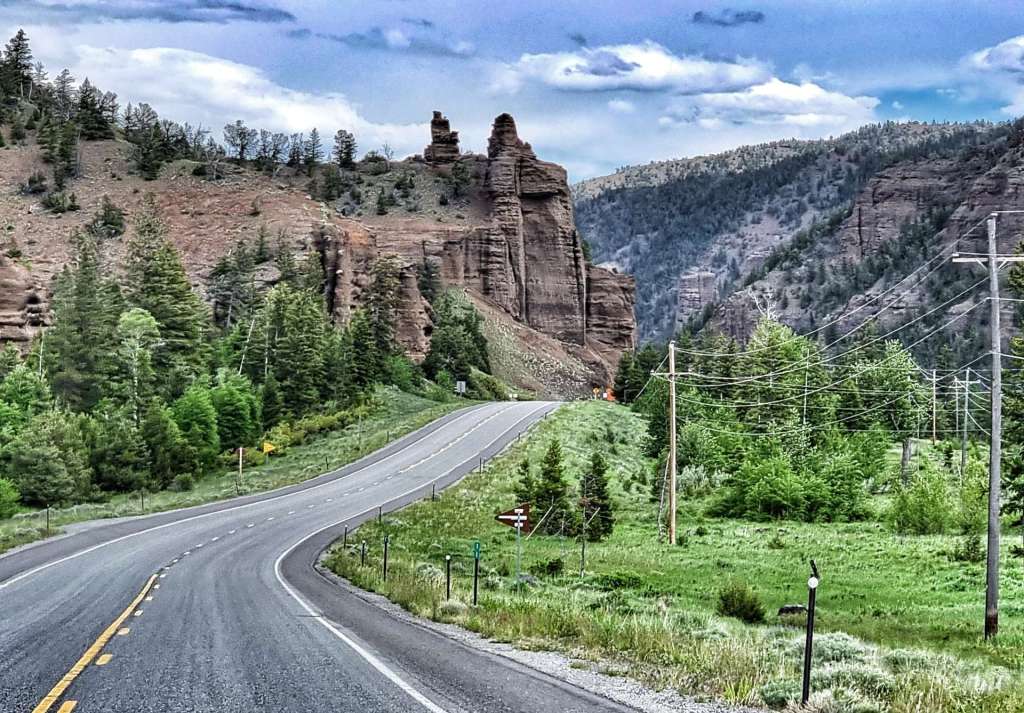
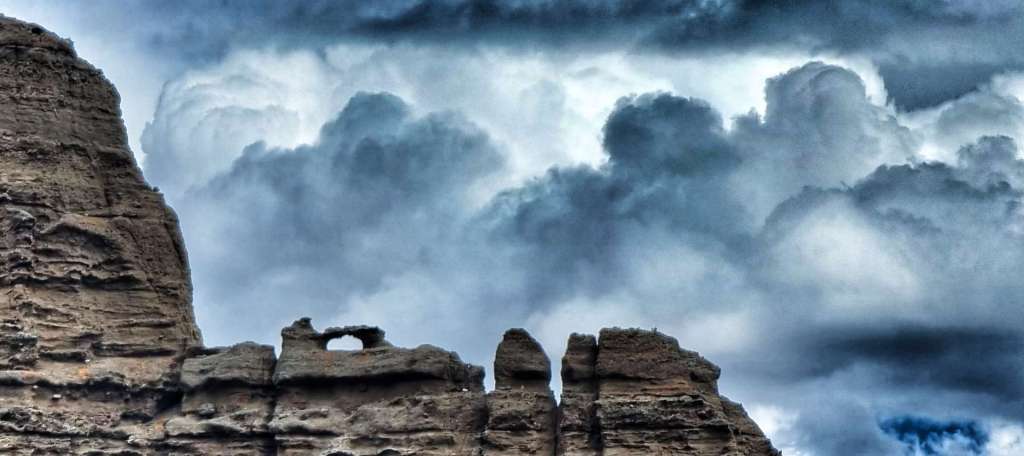
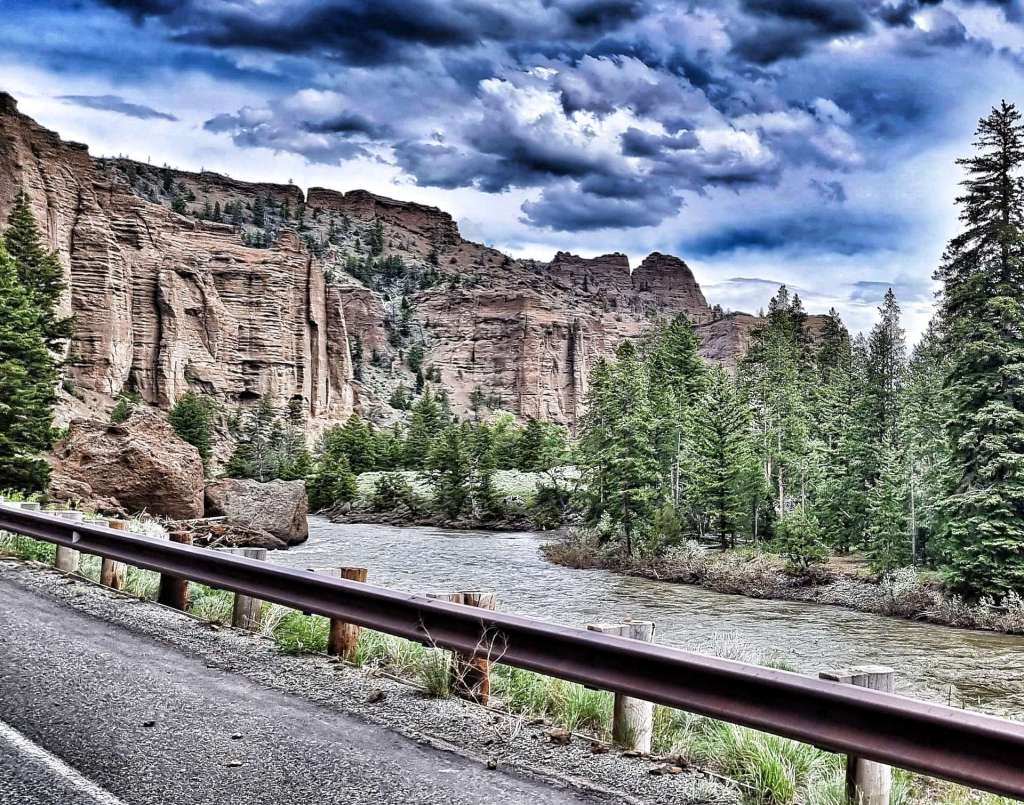
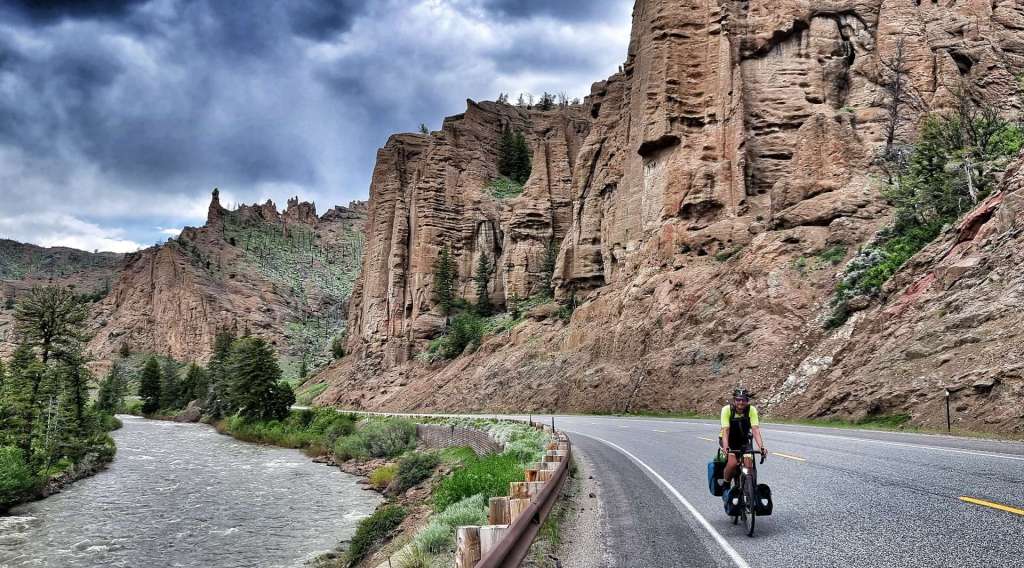
The cliffs became red sandstone & siltstone as we descended the Wapiti (Elk) Valley, now following the course of the Shoshone river. The rock formations reminded me of Utah (especially the areas around Bryce, Zion & Moab), with hoodoos & arches high up. We passed Buffalo Bill Cody’s hunting lodge at Pahaska Tepee (we stopped for a quick coffee) as a tailwind pushed us down the valley.
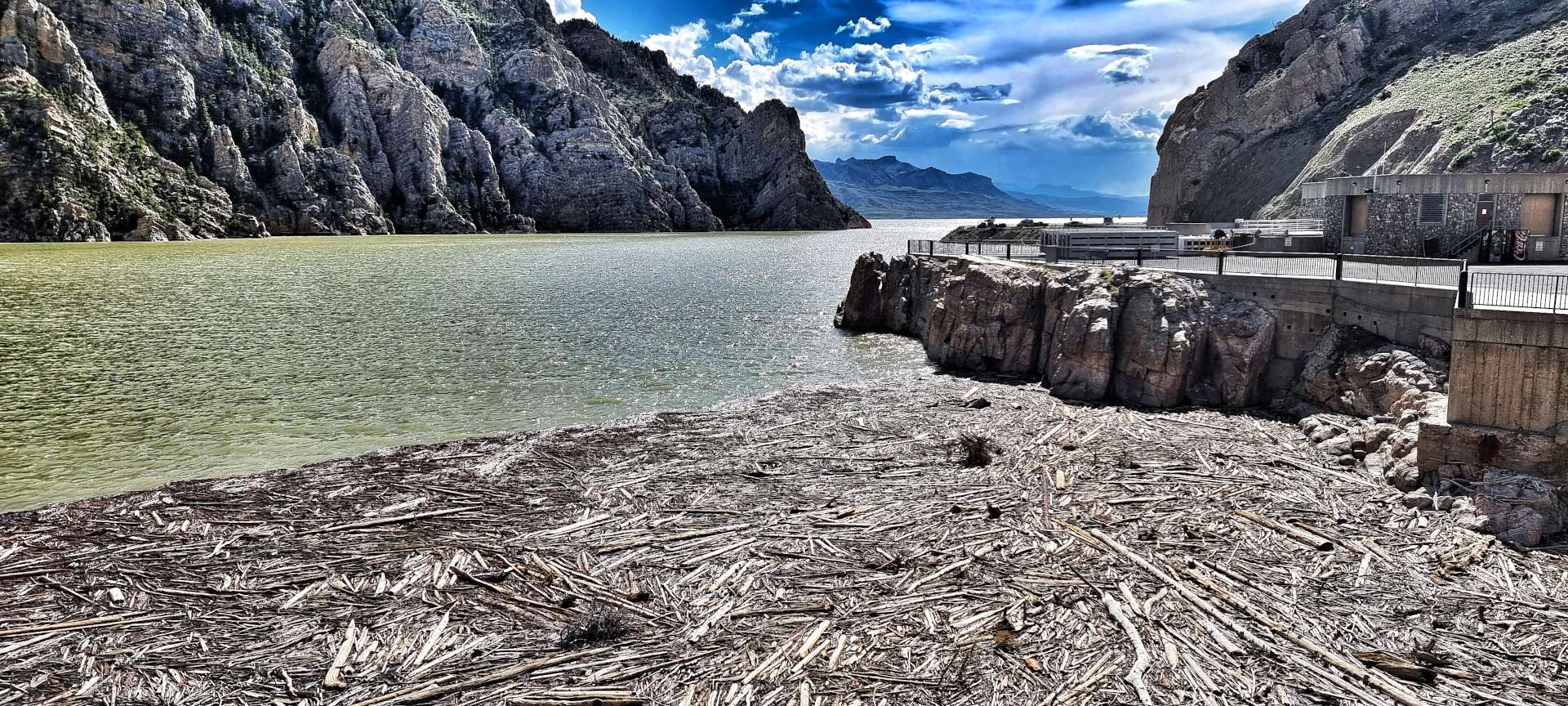
As the Wapiti Valley opened out, we got our first views of the Buffalo Bill Reservoir – constructed between 1905 & 1910, it was one of the first concrete dams built in the USA & at the time it was finished, it was the tallest dam in the world at 325 feet. The dam was raised an additional 25 feet when work was completed in 1993. Although I couldn’t find any information to explain why, you can see there is significant log debris near the dam.
The power of the water as it cascaded to the valley floor was breath-taking! I’ve included a small video clip.
The final 5 miles from the reservoir to our motel passed in a flash – this had been our longest day ever on the touring bikes by a significant margin (our previous longest ride was 86 miles & it almost broke us!). We’d had a truly special day that started with the Thumb Thermal Basin, we saw exceptional scenery & got to meet Yellowstone’s wildlife at close quarters. It was time to celebrate 3 glorious days in Grand Teton & Yellowstone National Parks!!
Stage Stats – 104 miles, 3,274 feet of climbing. A thermal basin, up close wildlife & stunning scenery, plus a climb over the highest pass (Sylvan Pass) in Yellowstone.
Friday 24th June – Rest Day.
A short update to say hello & thank you to a couple of people I met when I was getting my bike serviced at Joyvagen (which translates as “Path To Happiness”) in Cody.
Pam, it was lovely to meet you, I hope you get many hours of happiness from your new bike! Thanks for sharing your knowledge & thoughts on routes in Wyoming. As I write this, we’ve made it as far as Gillette!
Marshall – I can’t thank you enough for fixing my gears & brakes. It was great to spend some time chatting with you & I hope you got to enjoy the bike festival in Shell on the Saturday & that you all raised a huge amount for cancer. Your friendliness, professionalism & kindness was well above & beyond what you had to do – thank you so much!!!
Saturday 25th June – Cody to Greybull (Stage 44).
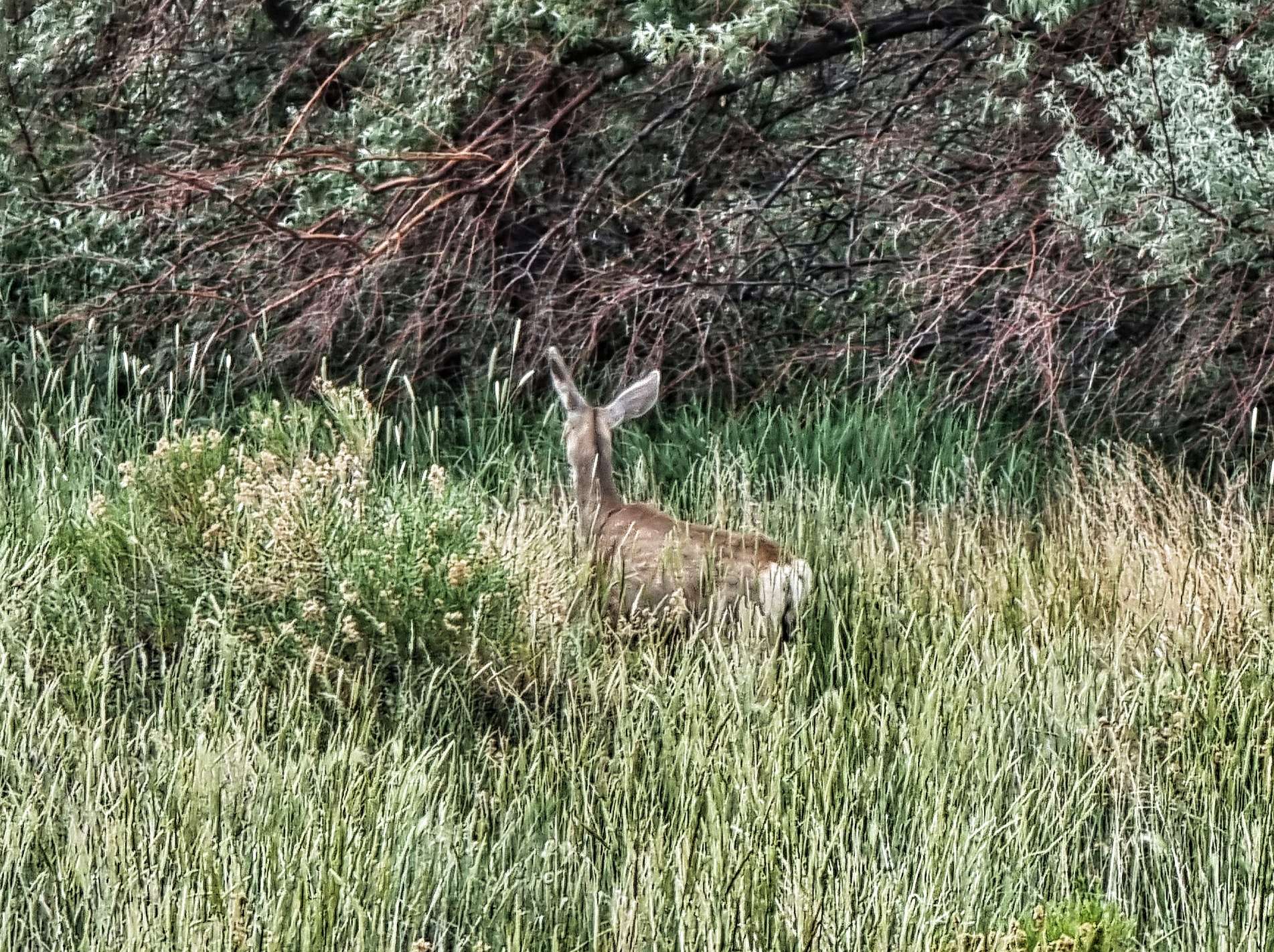
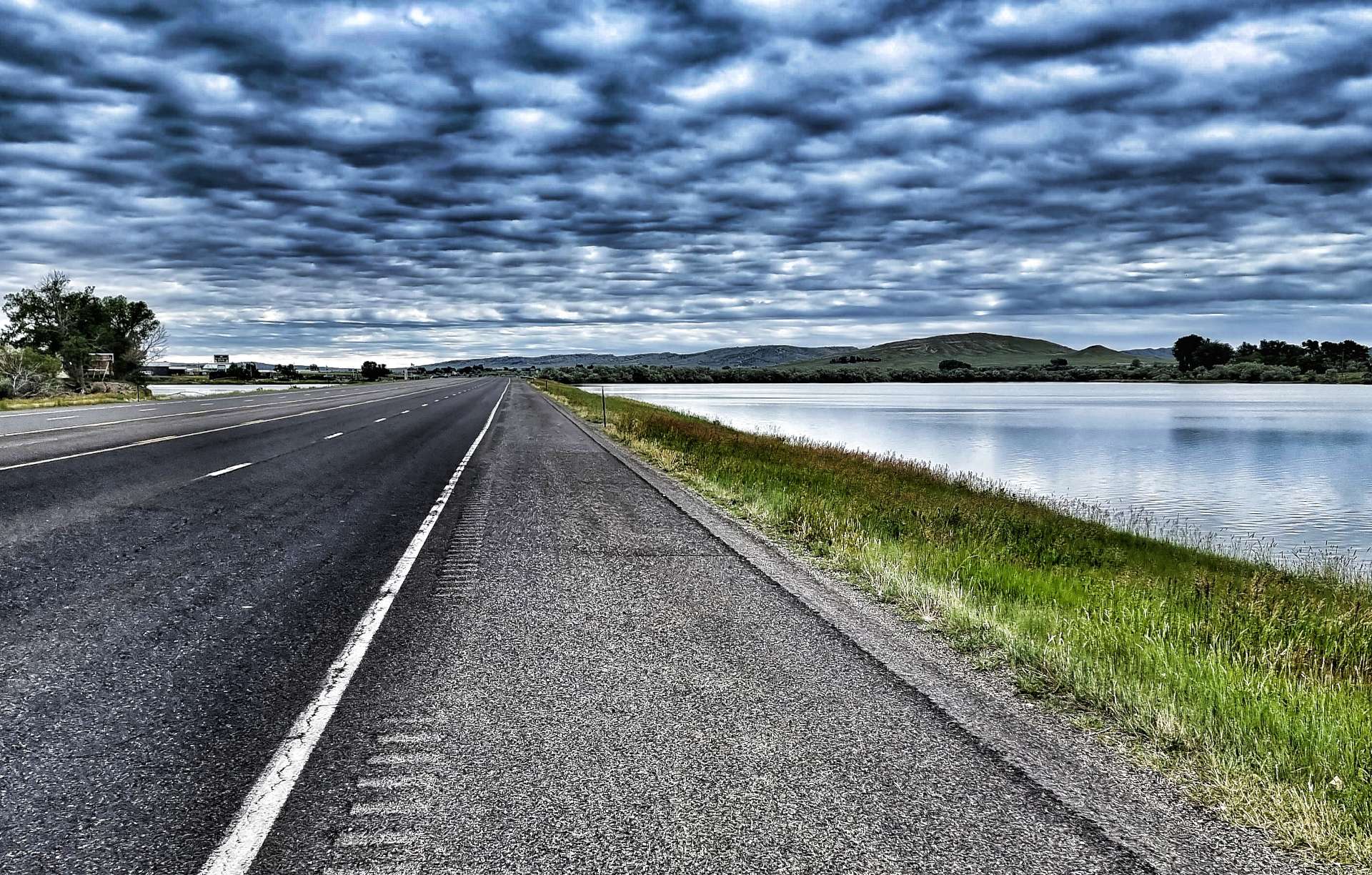
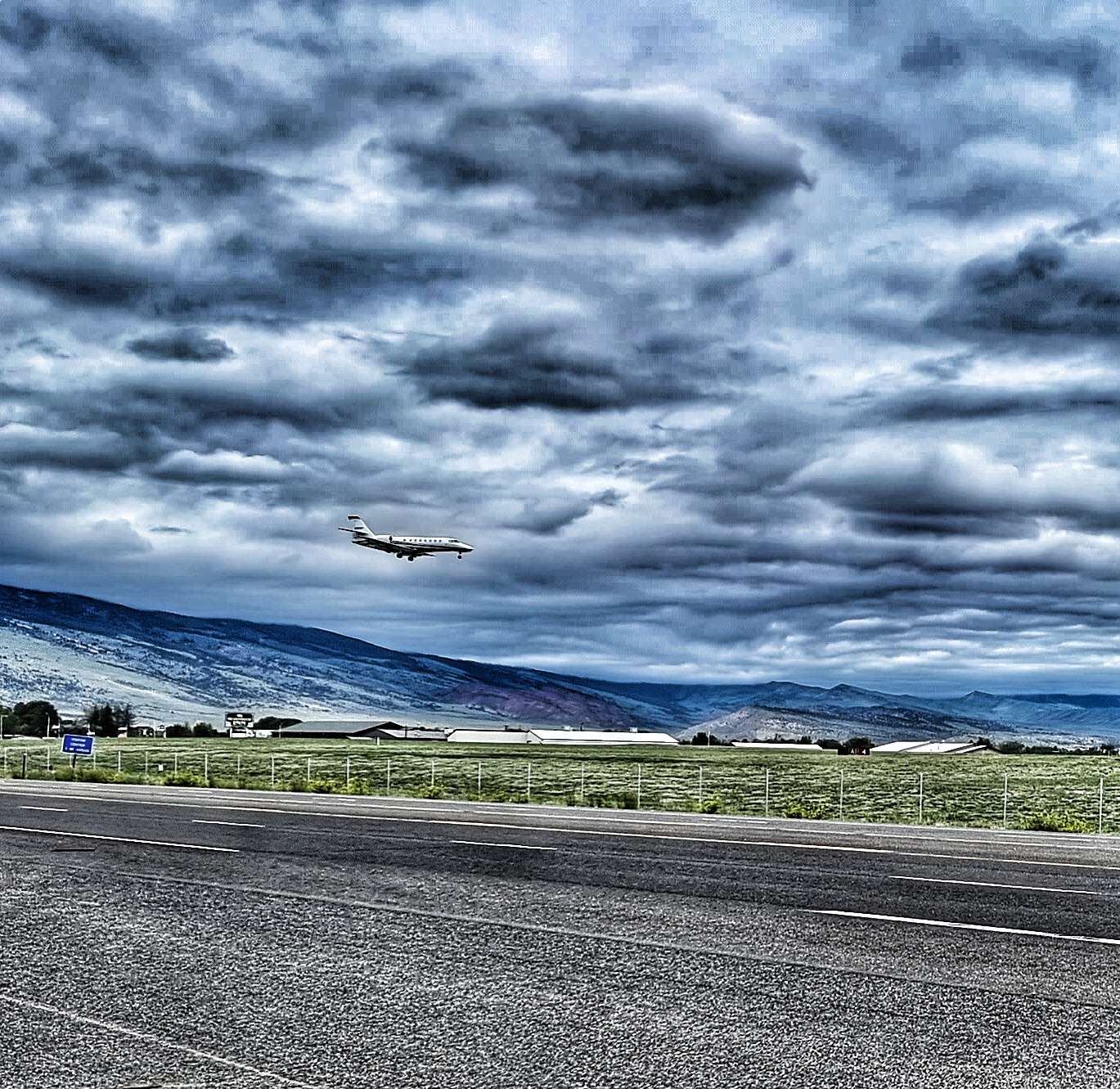
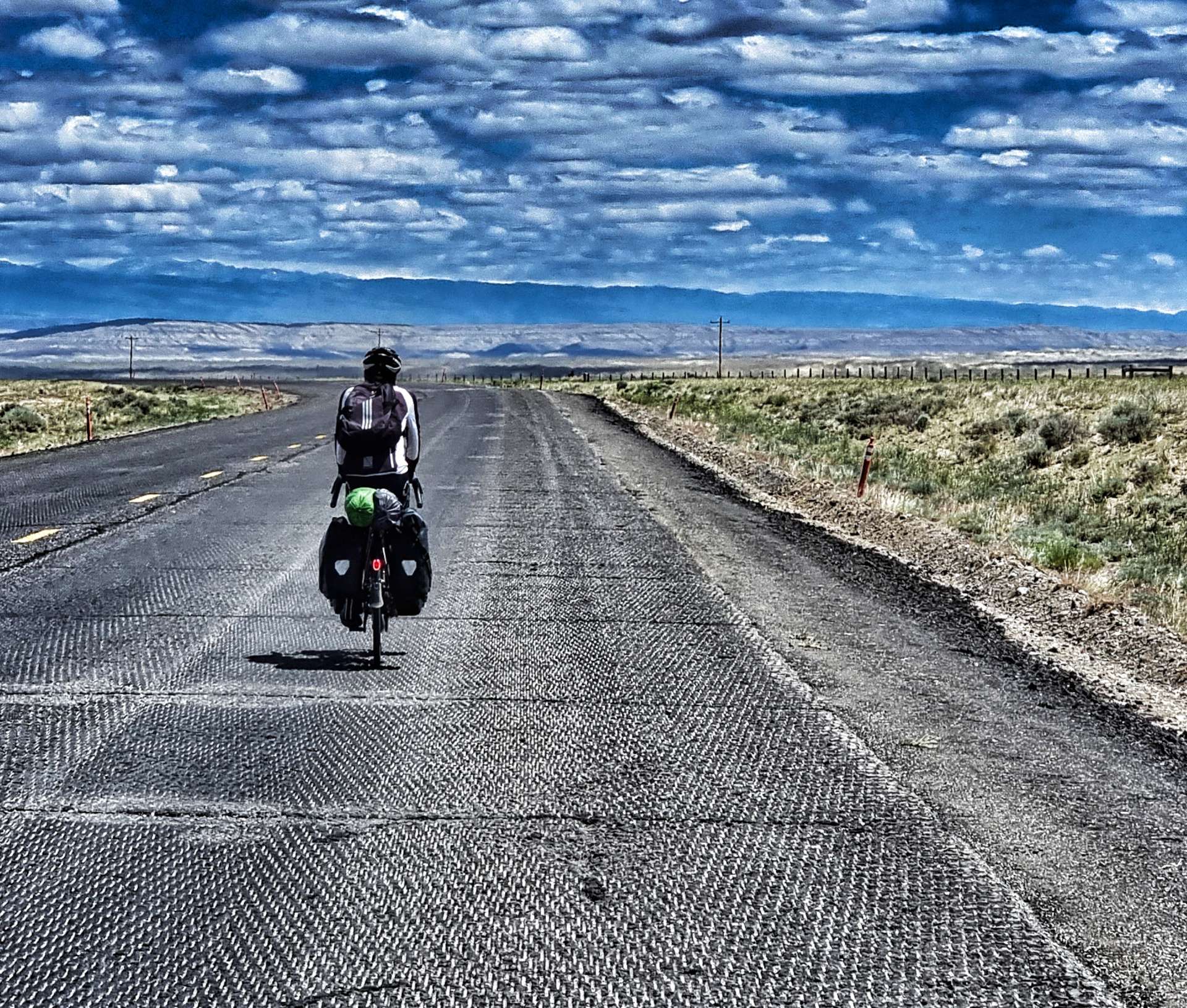
We woke to overcast skies, but warm temperatures. As it was a short ride we decided to have a slightly later start than normal – we were on the road just after 10am. As we left town, we spotted a mule deer almost immediately, quickly followed by some American Avocets at Alkali Lake. As if that wasn’t enough excitement for the first 10 minutes, we also watched a plane as it swooped over the road before landing at the nearby airport!
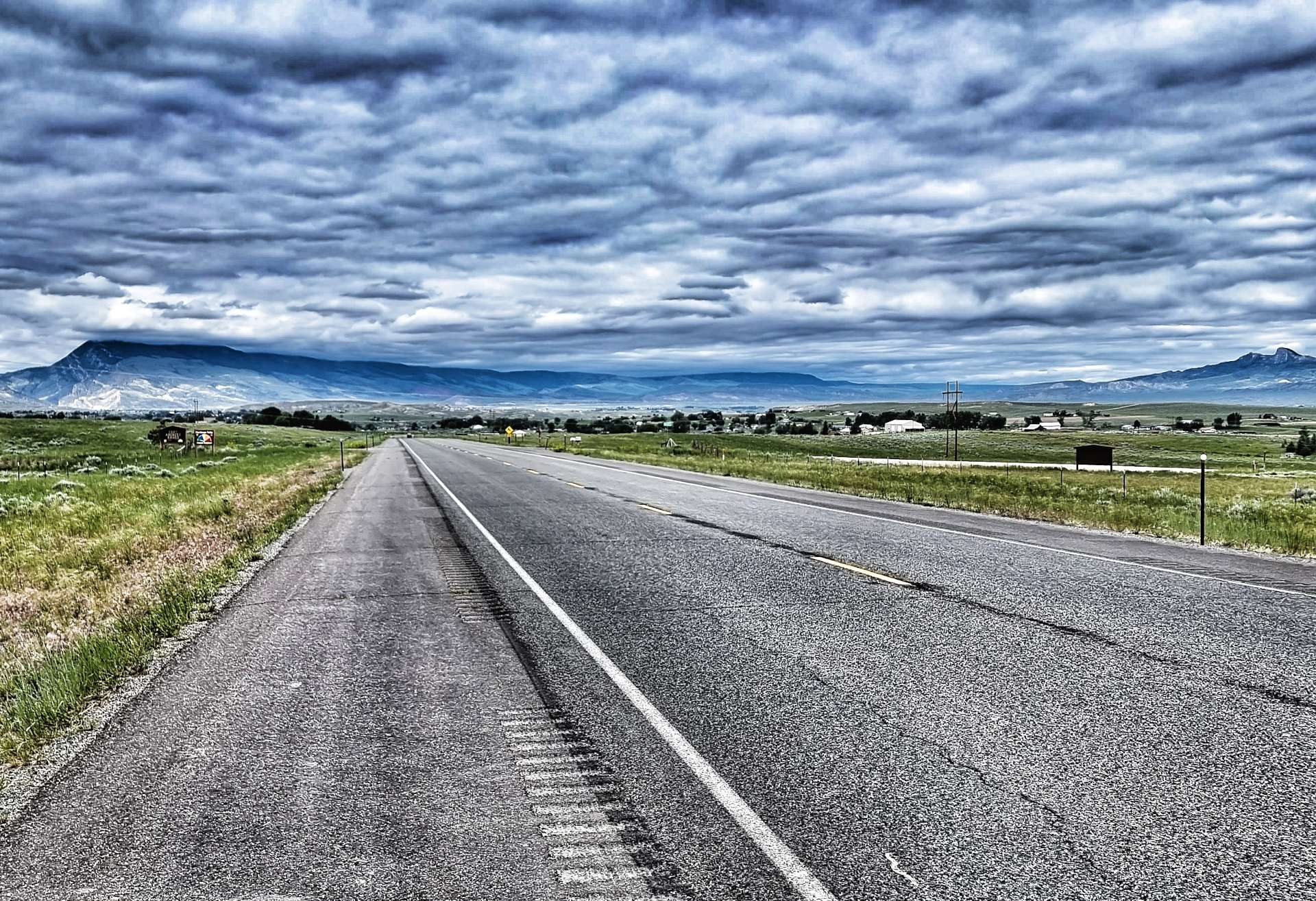
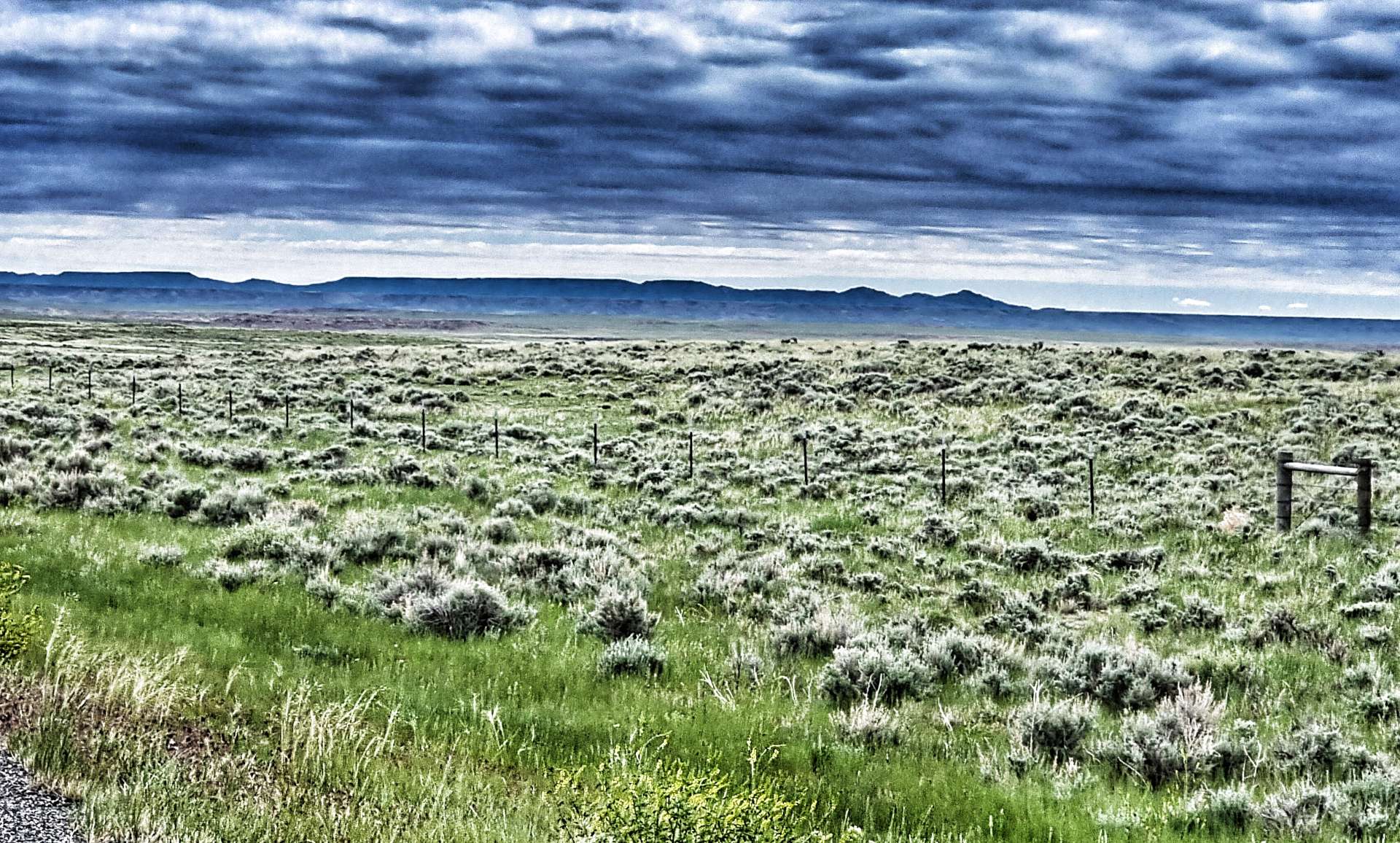
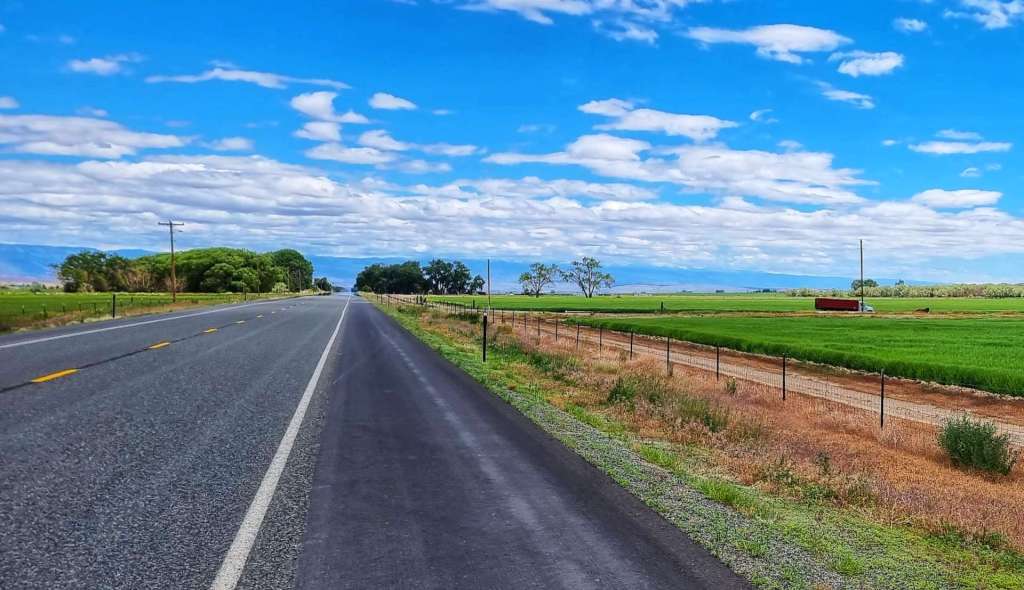
After 3 days of stunning views, today was always going to be a bit like the day after the Lord Mayor’s Show – being on long, straight roads with featureless vistas in all directions simply reinforced that feeling! However, as we chatted to each other we were reminded what an enormous privilege it is to be on the adventure of a lifetime. We’re exploring the best scenery, experiencing the best wildlife & meeting some of the kindest, friendliest people along the way.
We stopped at a couple of Points of Interest, where we learned about the McCullough Peaks wild horses. They’re more well known as Mustangs (derived from the Spanish word Mustengo – ownerless beast) & they live on 109,814 acres of land just outside Cody.
We also learned about the Bridger Trail – following the discovery of gold & silver in Montana, a faster route to the mining territories was required. The trail funnelled large numbers of emigrants into Montana.
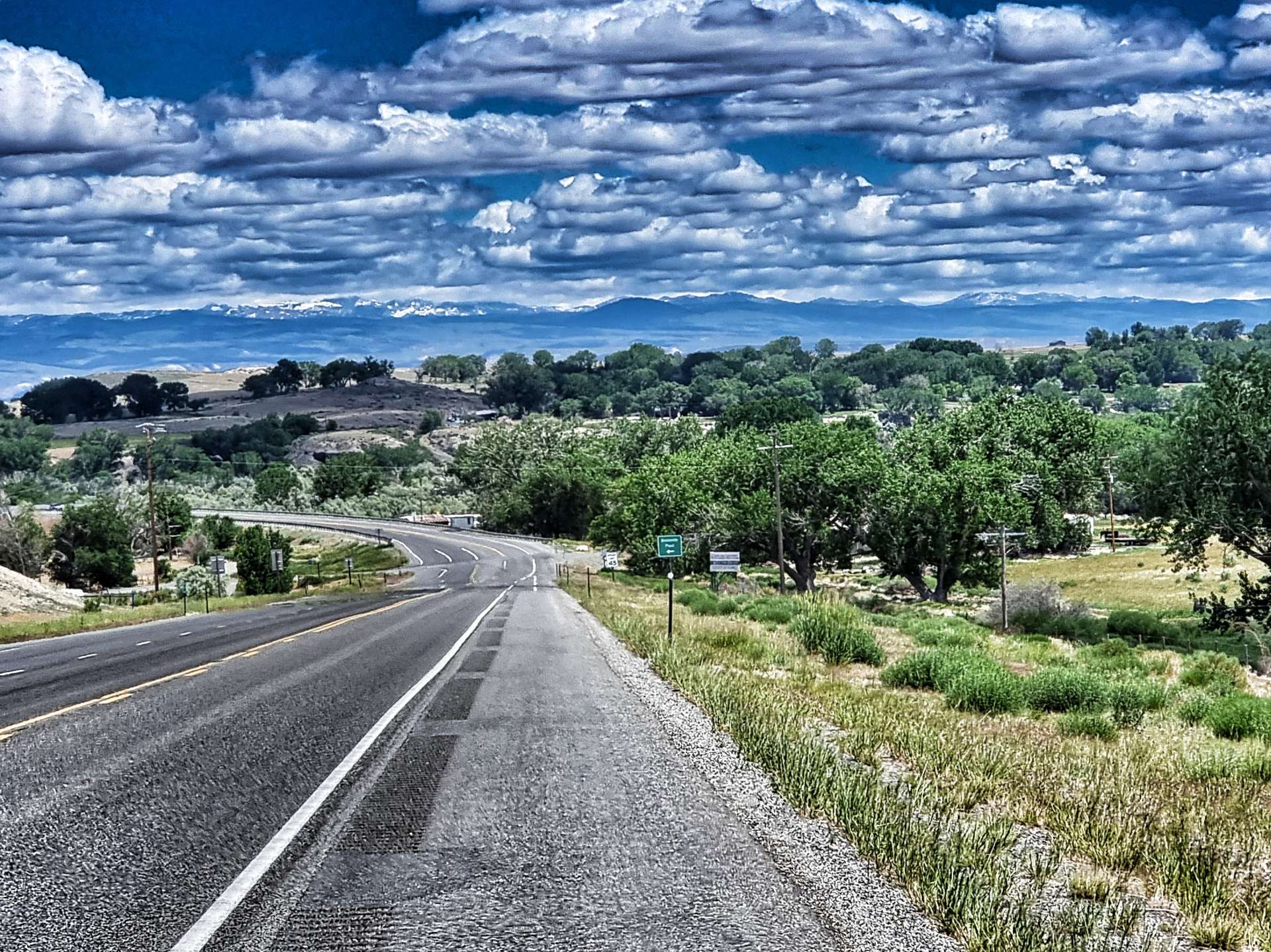
On a bike you get a better feel for how far places are apart & how desolate the landscape really is – we spoke to someone who said that Greybull was about 45 minutes away by car – it took us just over 3 1/2 hours in favourable conditions on the bike to cycle the 54 miles! It helps me to appreciate how adventurous the early pioneers really were.
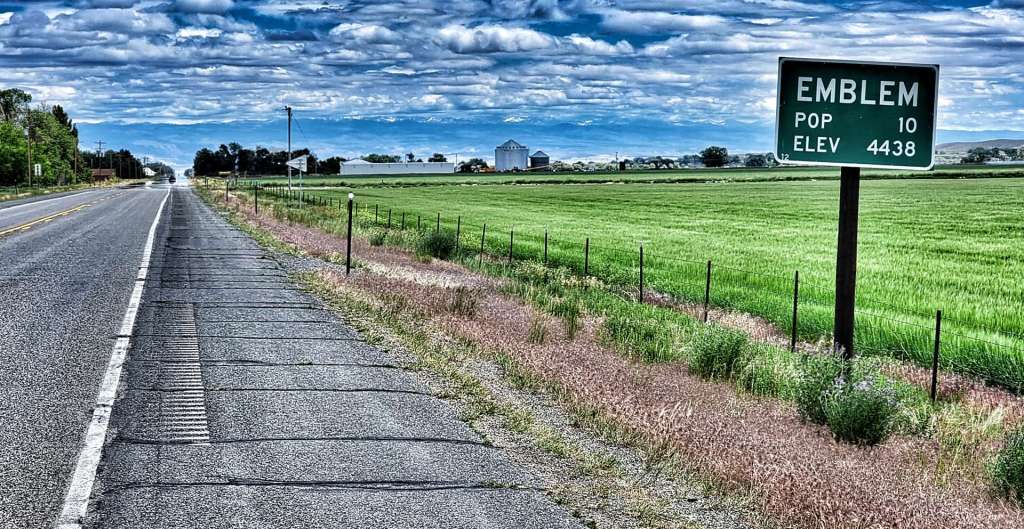
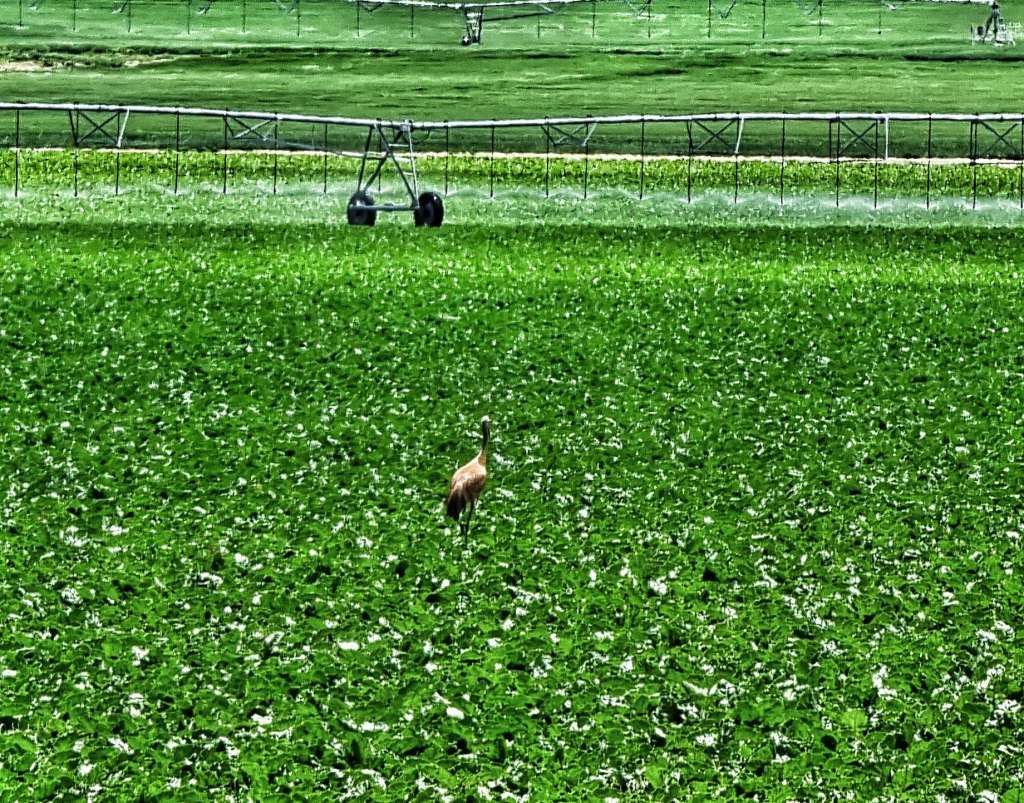
The only town on today’s route was Emblem – it had a declared population of 10! We’re expecting more of the same for the next few days, as we really are in the remote part of Wyoming. In fact we saw as many sand cranes on todays ride as the number of people we spoke to (2 of each)!!
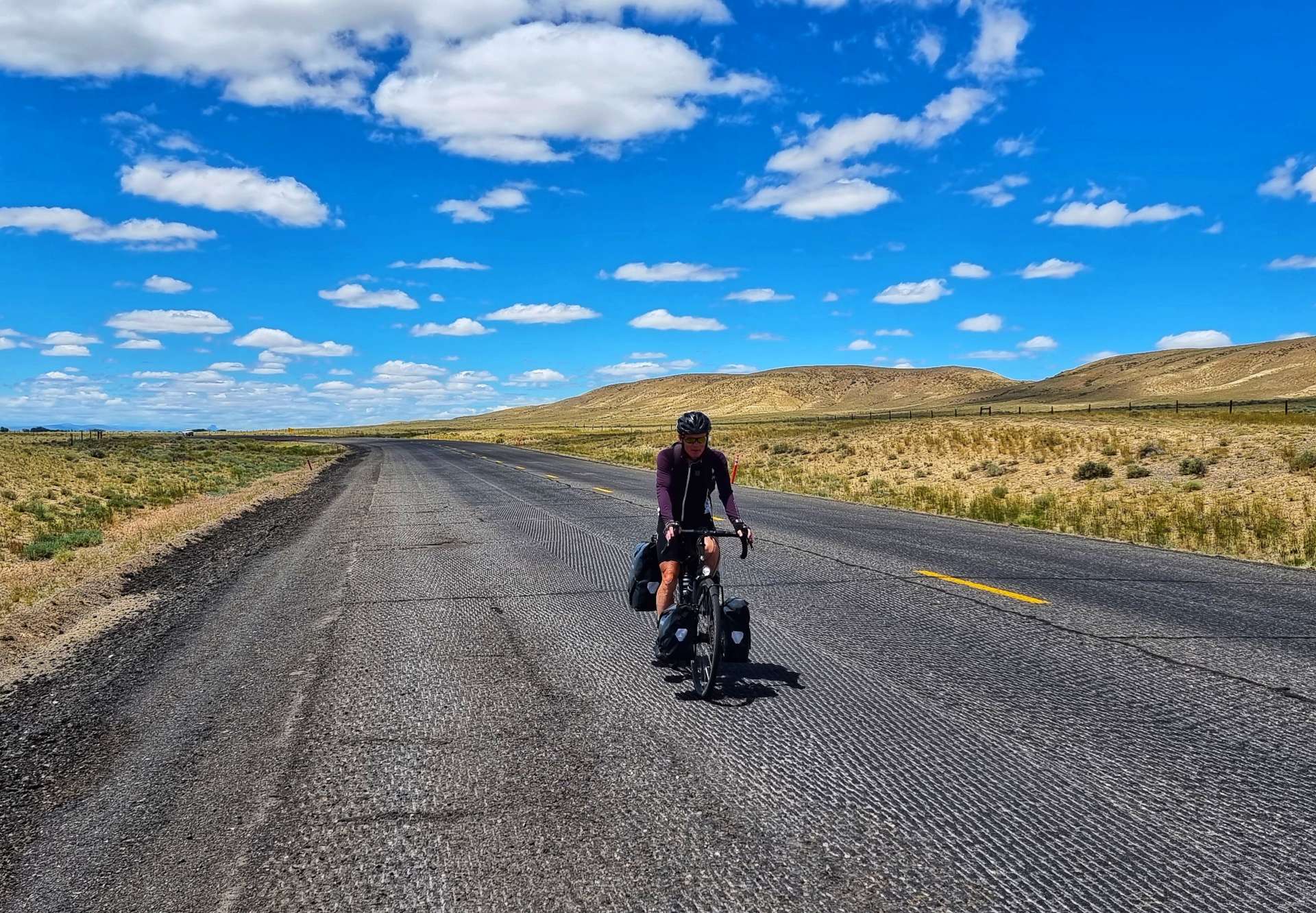
The one small drag of the day was made more of a challenge than it should have been, as the top layer of tarmac had been treated, resulting in a rough ride (imagine a road in the UK with the ironwork showing – this was the American equivalent).
As the day progressed, the sun burned away the lower cloud & the temperature rose into the high 80’s, our first experience of the hot sun. Luckily we were on a shorter day, so water wasn’t an issue, but it reminded us of the importance of topping up wherever the opportunity arises.
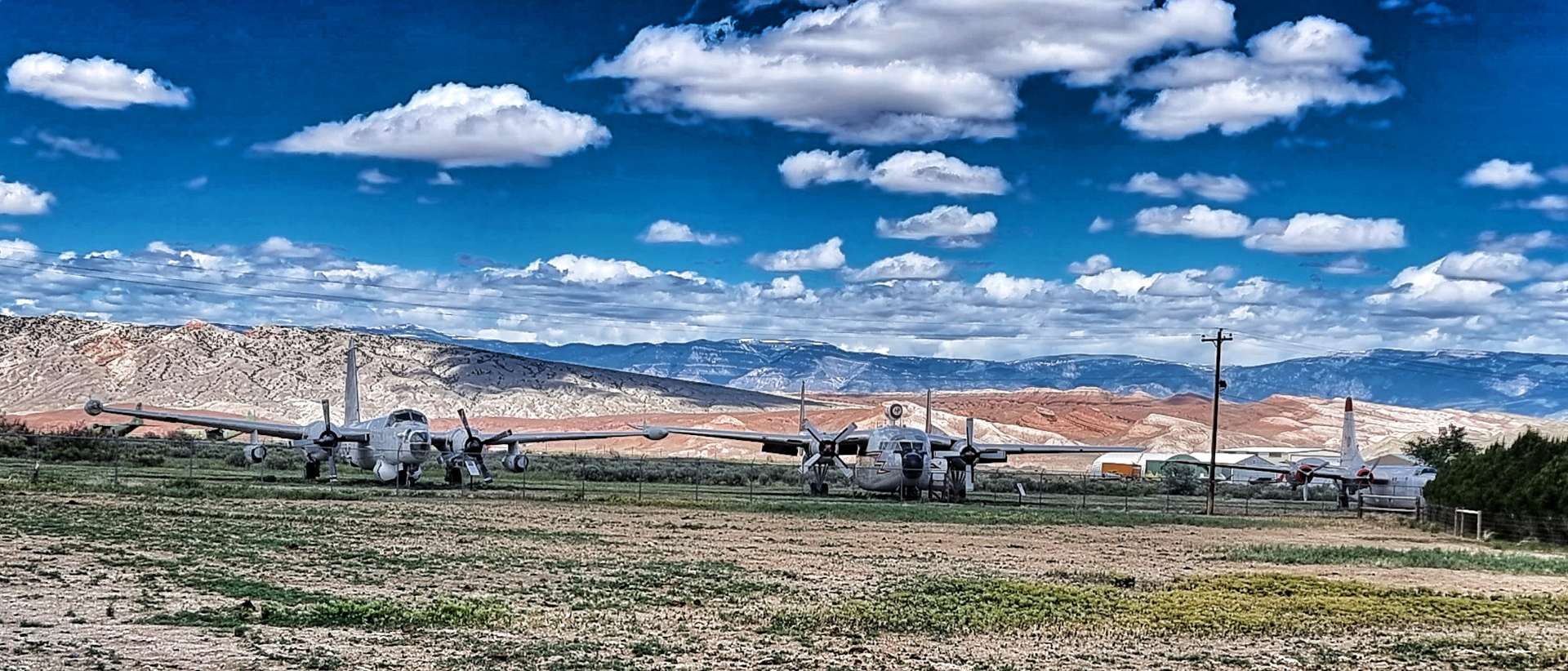
Just outside Greybull we passed the Museum for Flight & Aerial Firefighting, with exhibits of historic firefighting planes. Unfortunately, it appeared closed, as this was somewhere I would have really enjoyed exploring further – I definitely picked up Dad’s interest in planes.
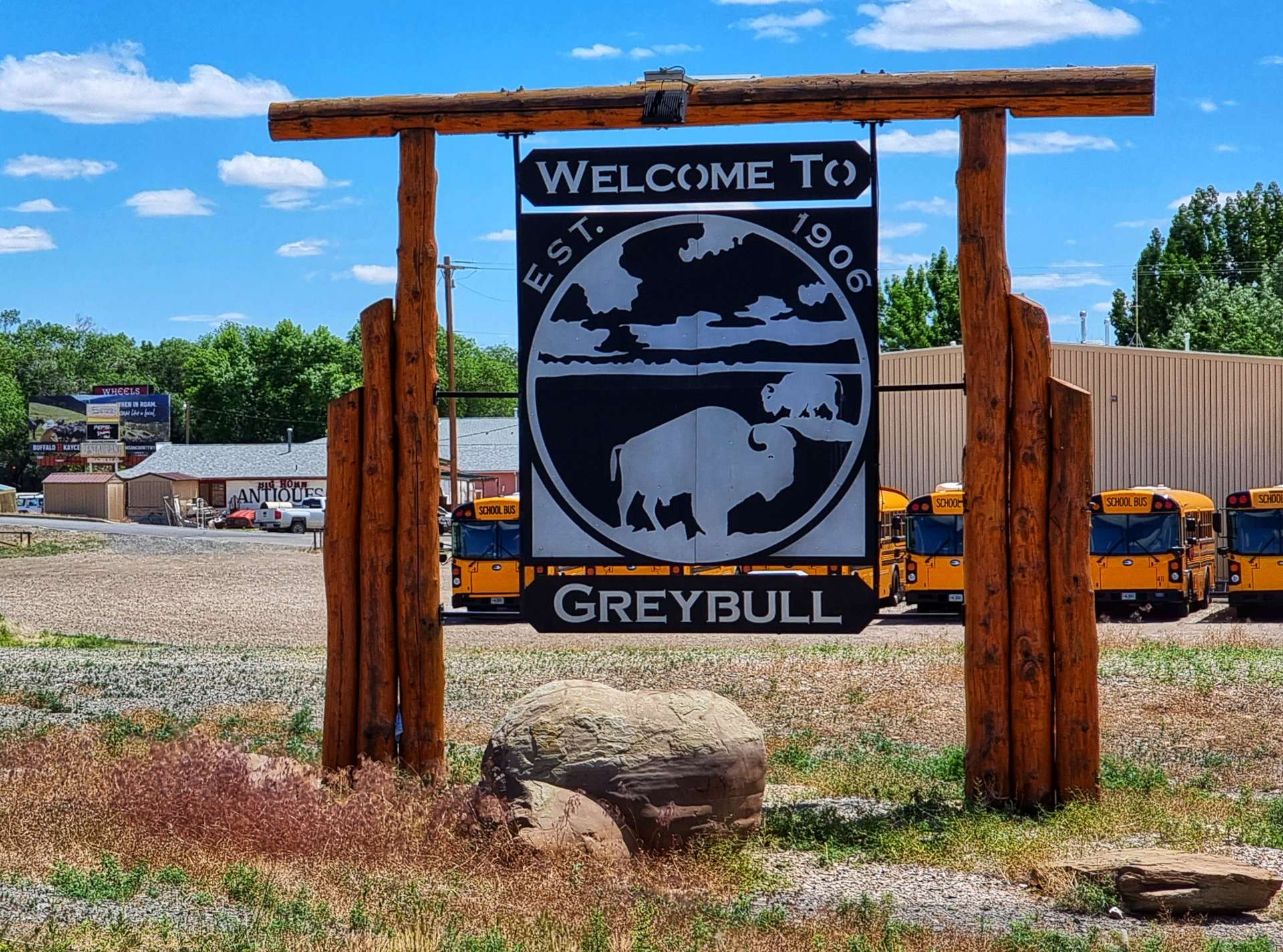
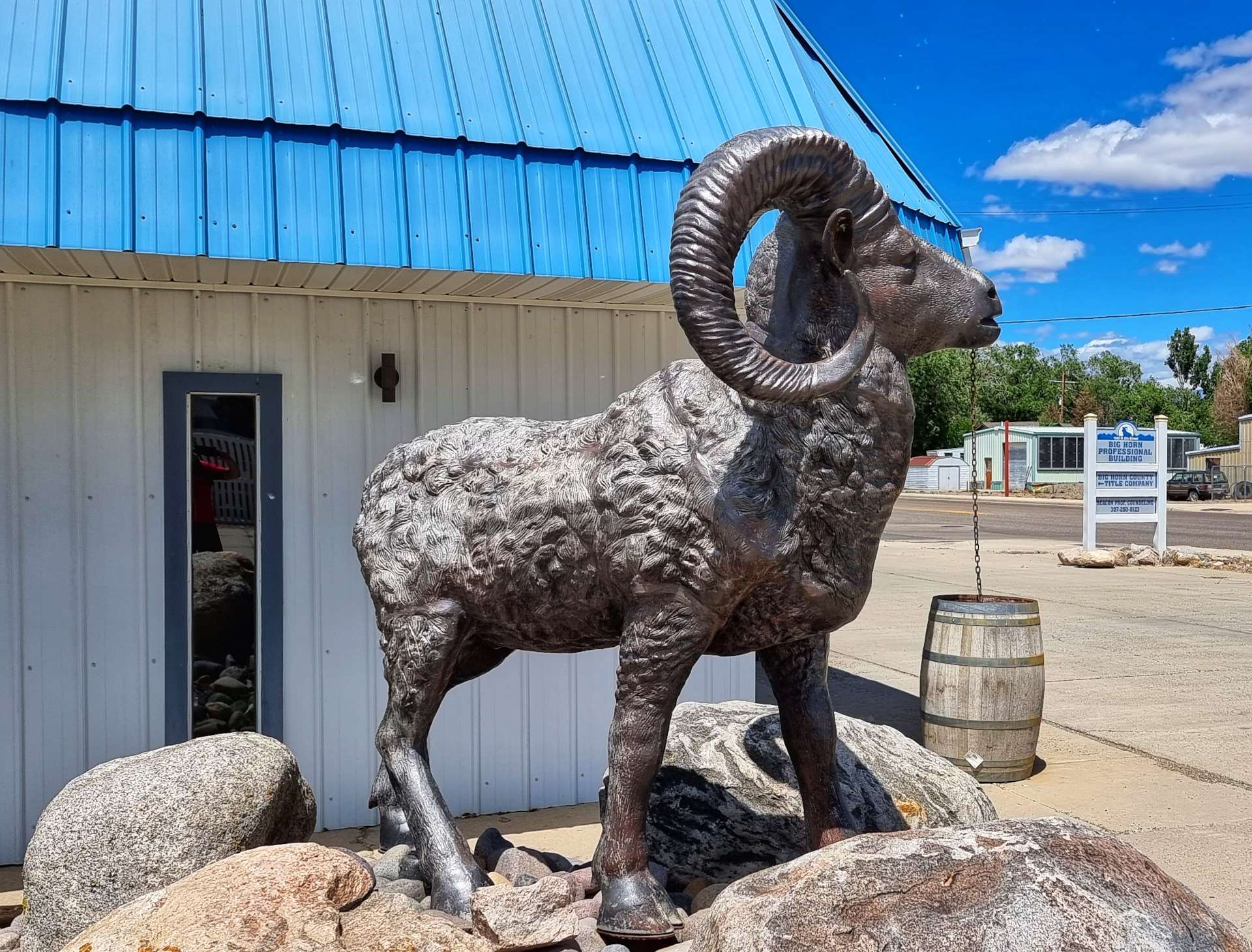
After a small descent, we hit the outskirts of town (another neat Welcome sign) & now we’re entering the Bighorn Mountains, we saw our first bighorn sheep – admittedly it was a sculpture!
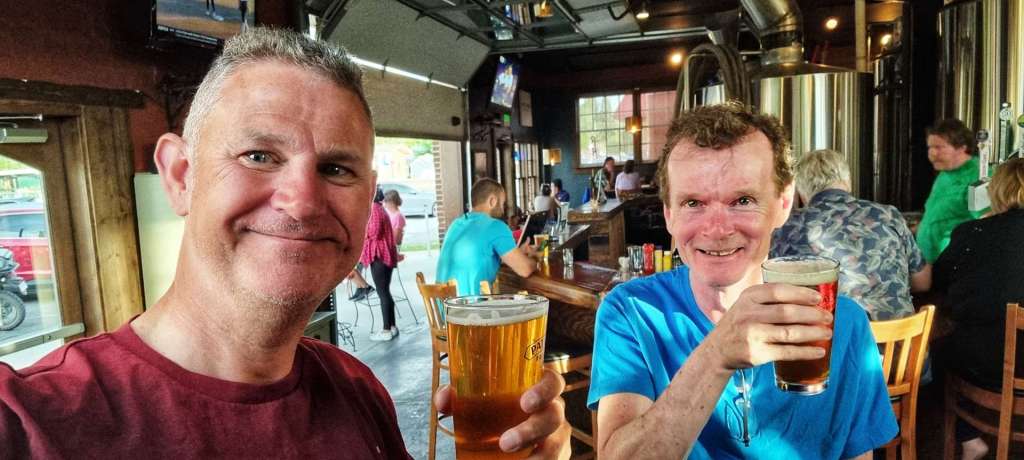
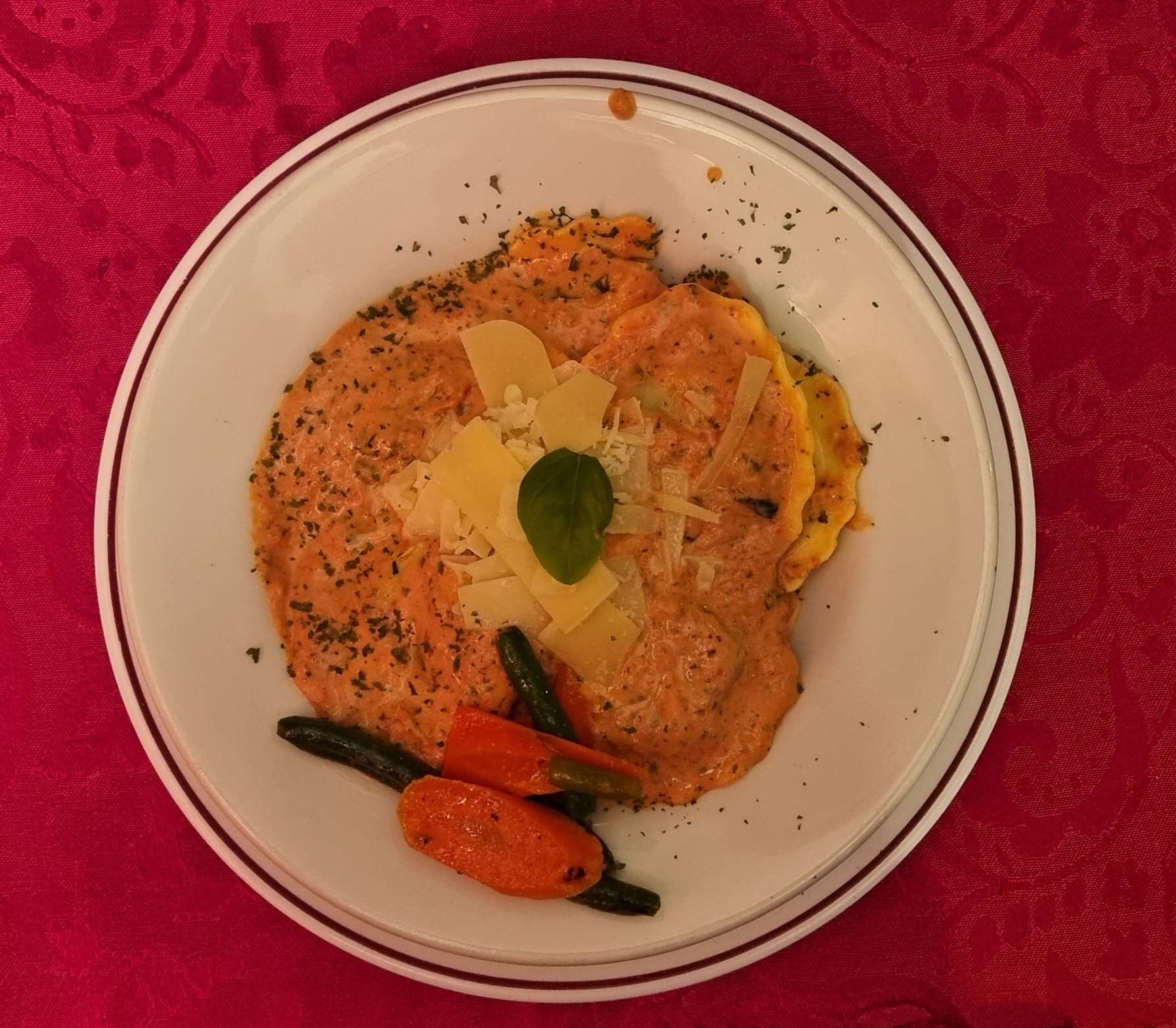
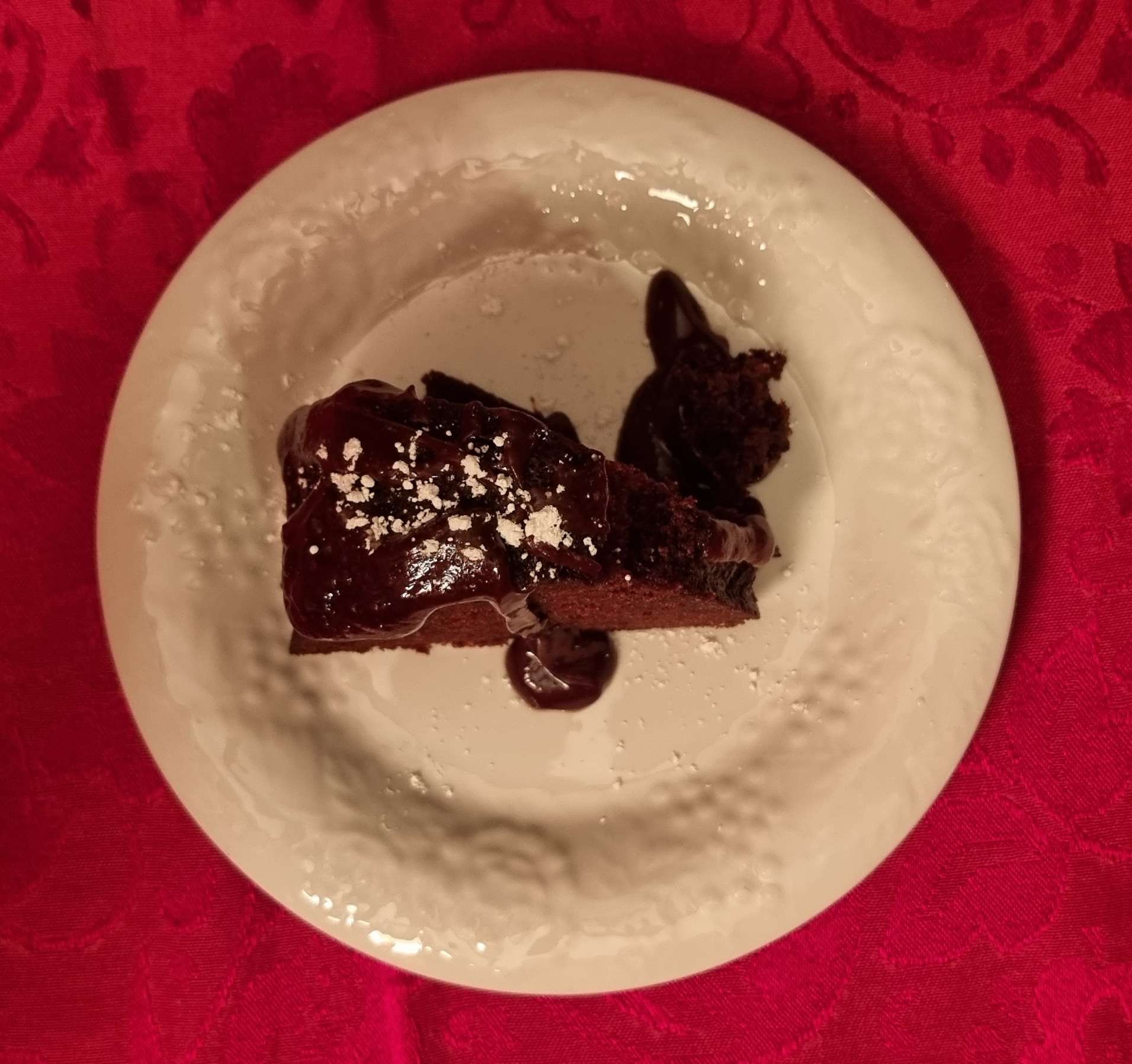
After checking in to our Motel for the evening (very nice it was too), we set off to the Historic Hotel Greybull & The Speakeasy restaurant, where we enjoyed cheese & spinach ravioli & chocolate fudge cake, washed down with a local IPA!
Stage Stats – 54 miles, 771 feet of climbing. Into a cross/headwind for most of the day.
The Long Way Round (Part Two) – Monday 20th to Wednesday 22nd June.
Monday 20th June – Driggs to Jackson (Stage 40).
Rain was forecast from 10am in both Driggs & Jackson, so we took the decision to get up a bit earlier & be ready to leave by 9am, so at least we would start riding in the dry. There was another long distance cyclist from the UK staying in our motel & we set off almost together, however, he was soon a long way up the road!
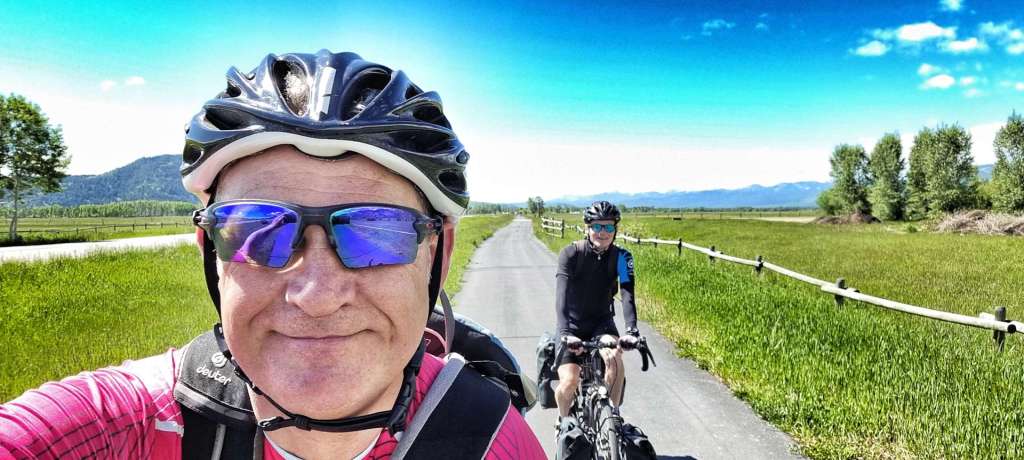
Leaving Driggs, we picked up a cycle track almost immediately that we’d be able to use for the first 9 miles until we reached Victor. We could see rain showers falling to either side of us, but somehow we remained dry – even one of the horses looked on in surprise! You may be able to see in the 2nd photo that Sean had taken most of his kit out of his rear left pannier, we were hoping that the reduced weight would increase the chance of the pannier surviving until Jackson.
When we reached Victor, two things happened; firstly, the cycle track ended so we were back on Highway 33. Secondly, the road started to gradually head uphill, as we joined the very early & easy slopes of the Teton Pass. As we passed Trail Creek Pond we spotted an eagle who had a fish dangling from its talons as it flew by – sadly it all happened too quickly to get a photo, but it was a great moment & the first time I’d ever seen this happen in real life!
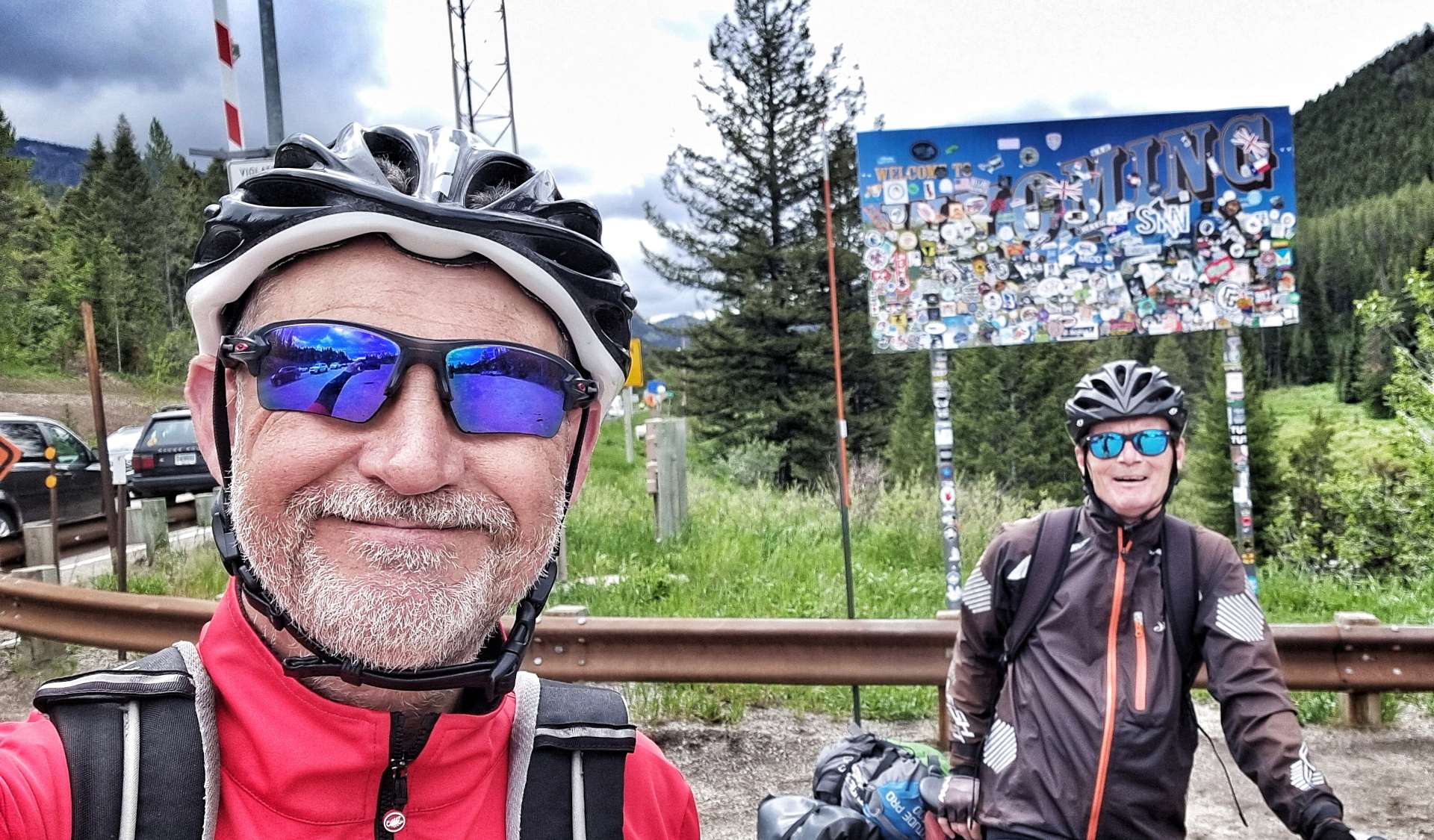
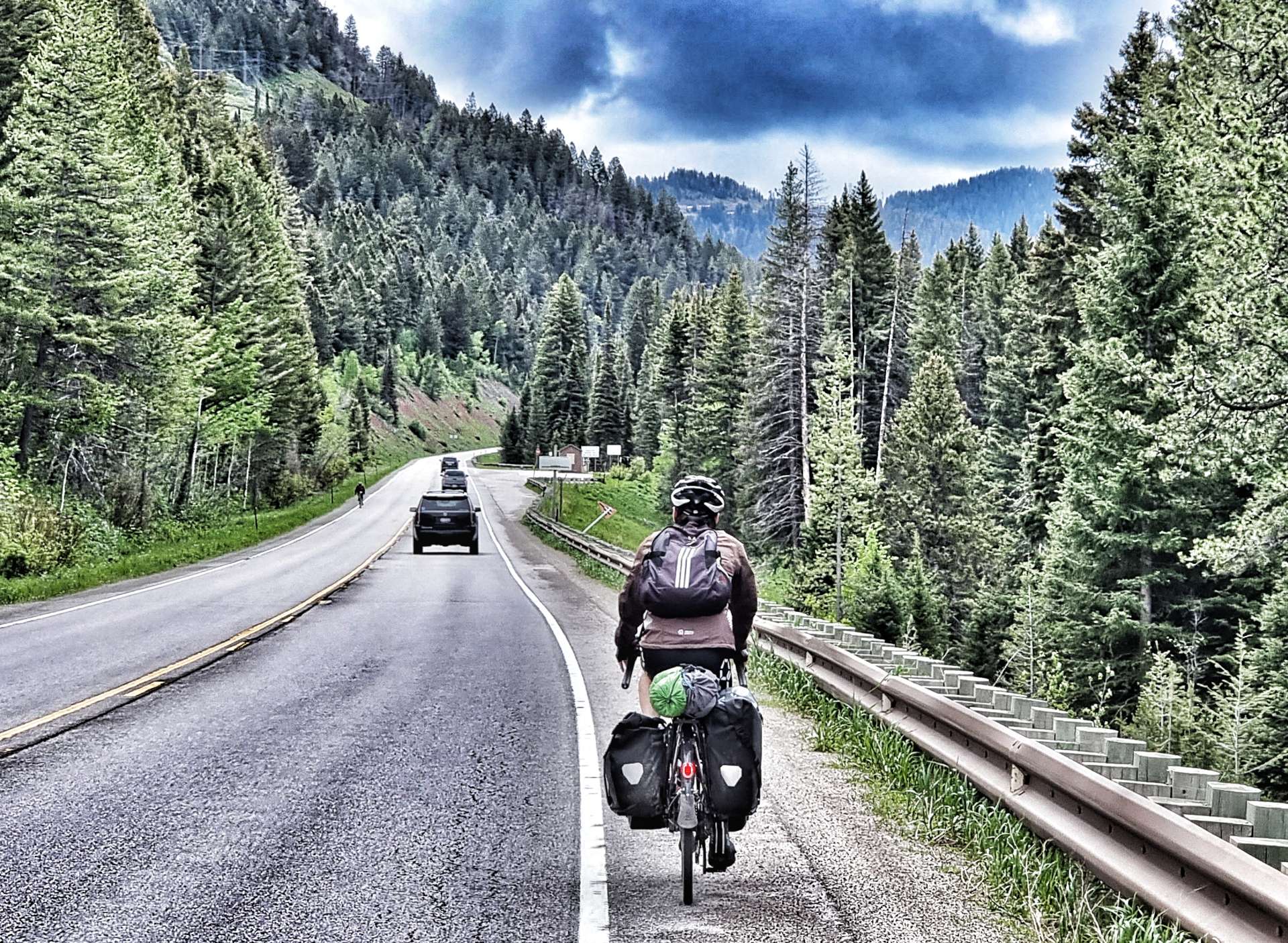
We followed the Trail Creek as it climbed the valley & after a couple of miles we reached the State Line crossing from Idaho into Wyoming (the Highway changed from ID 33 to WY 22). This also marked the point at which the gradient increased from about 2% to 4 – 5%, still very manageable, it just made for slower going.
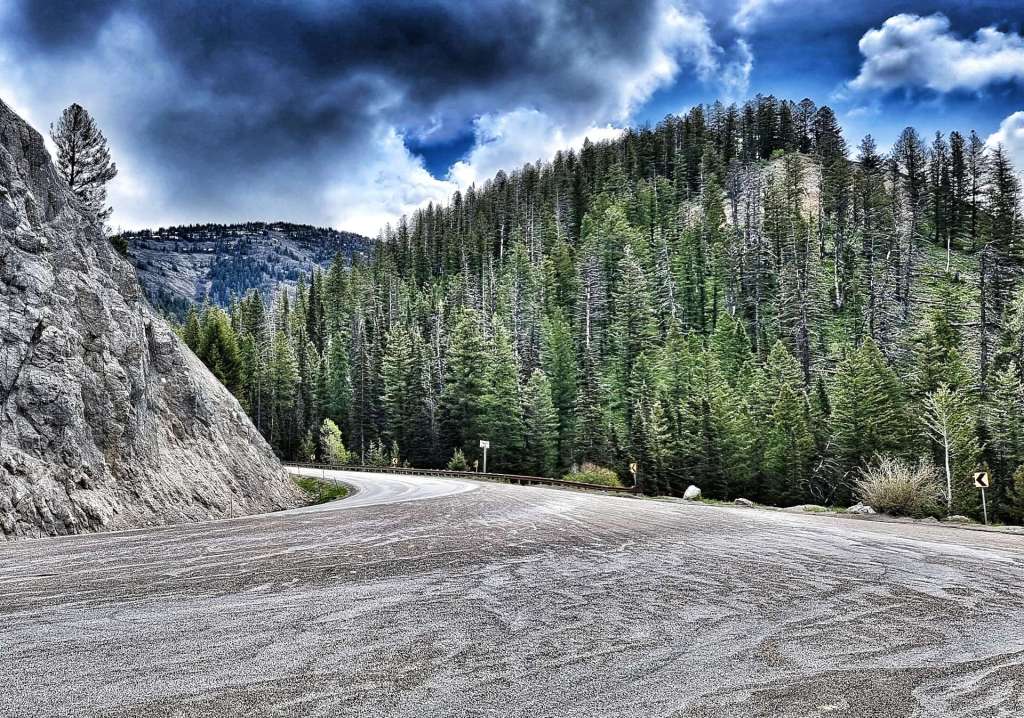
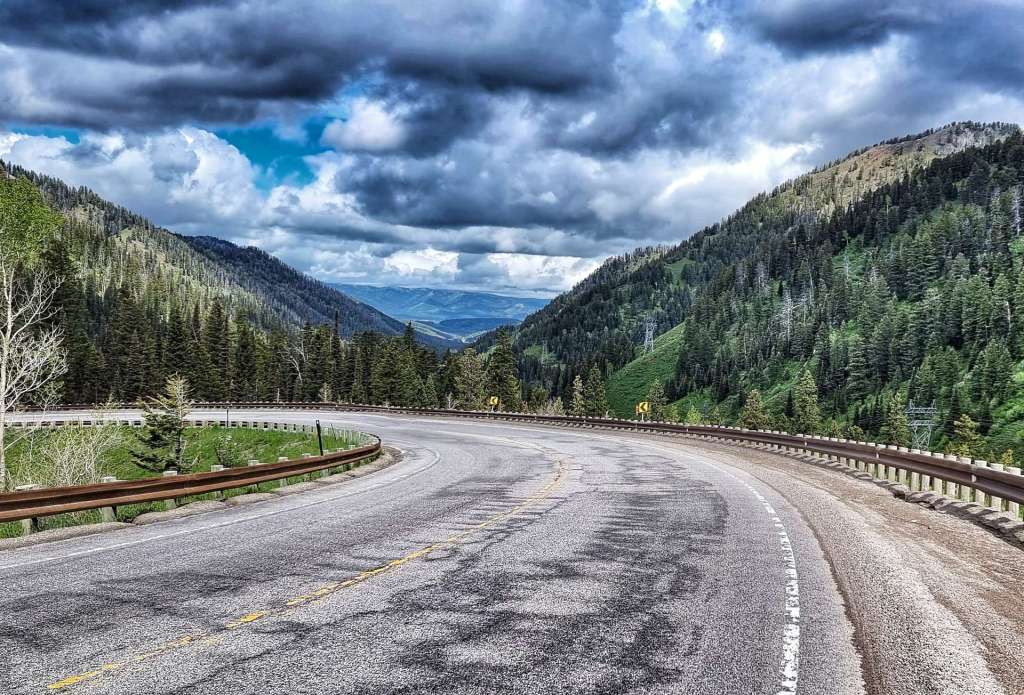
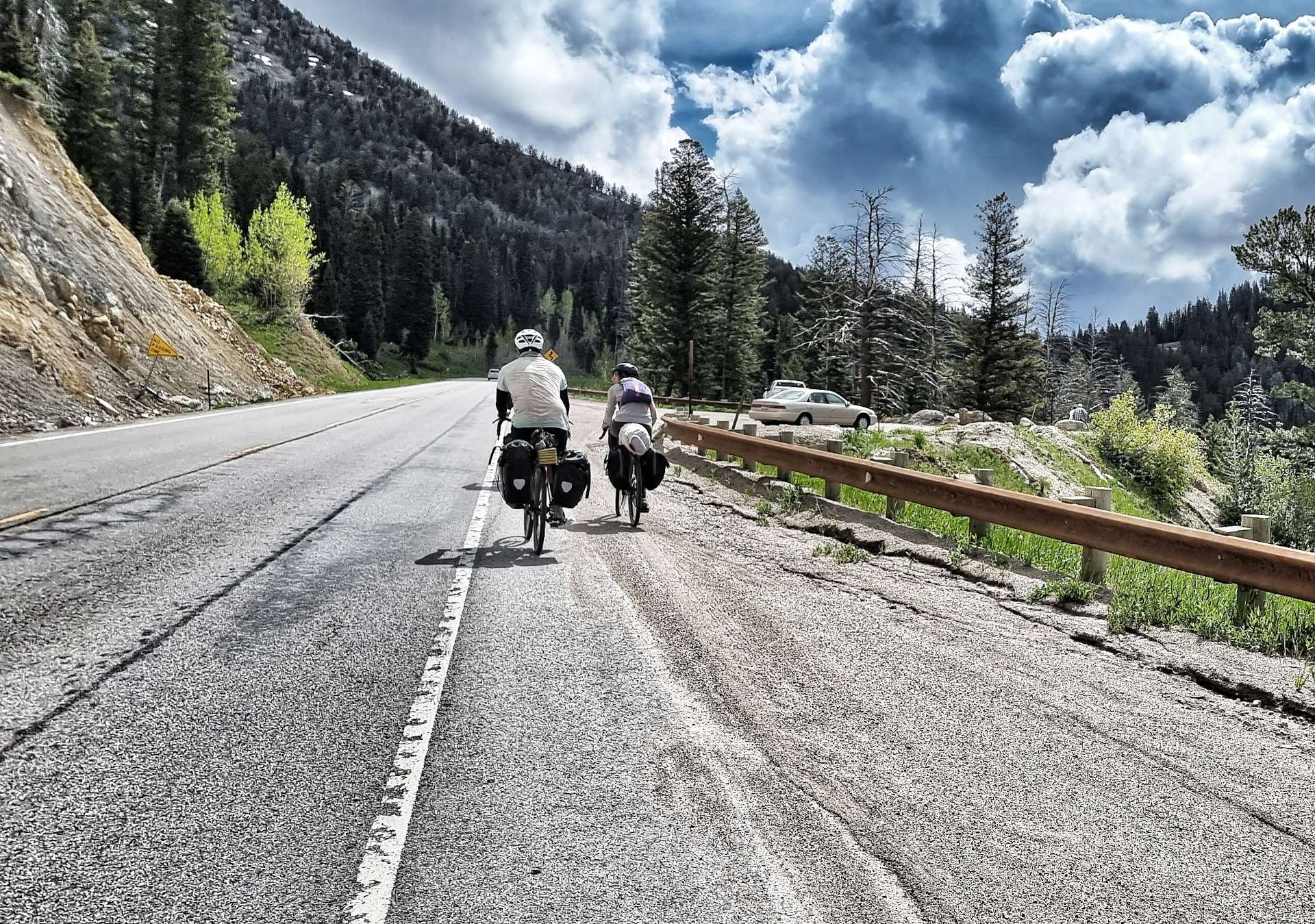
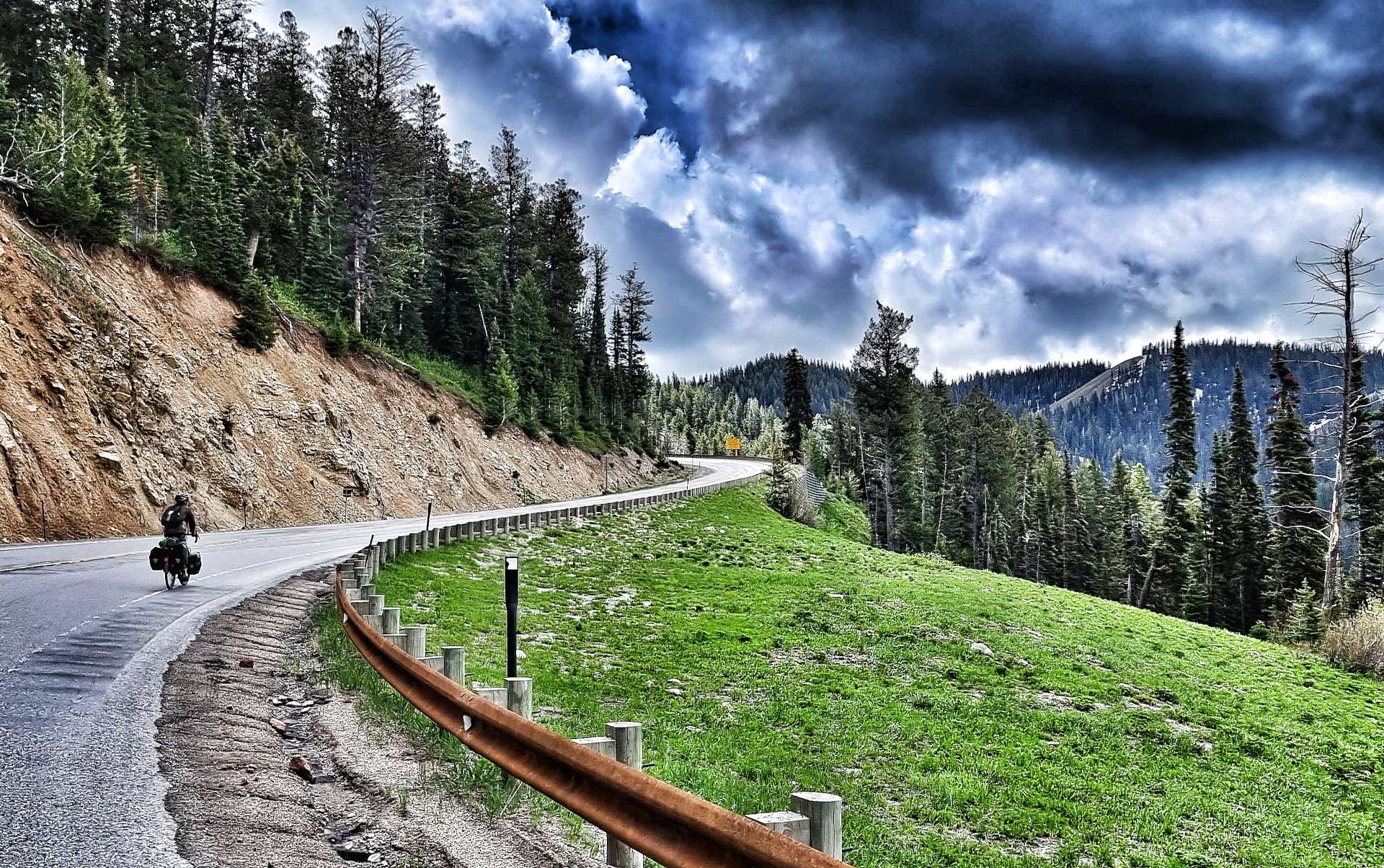
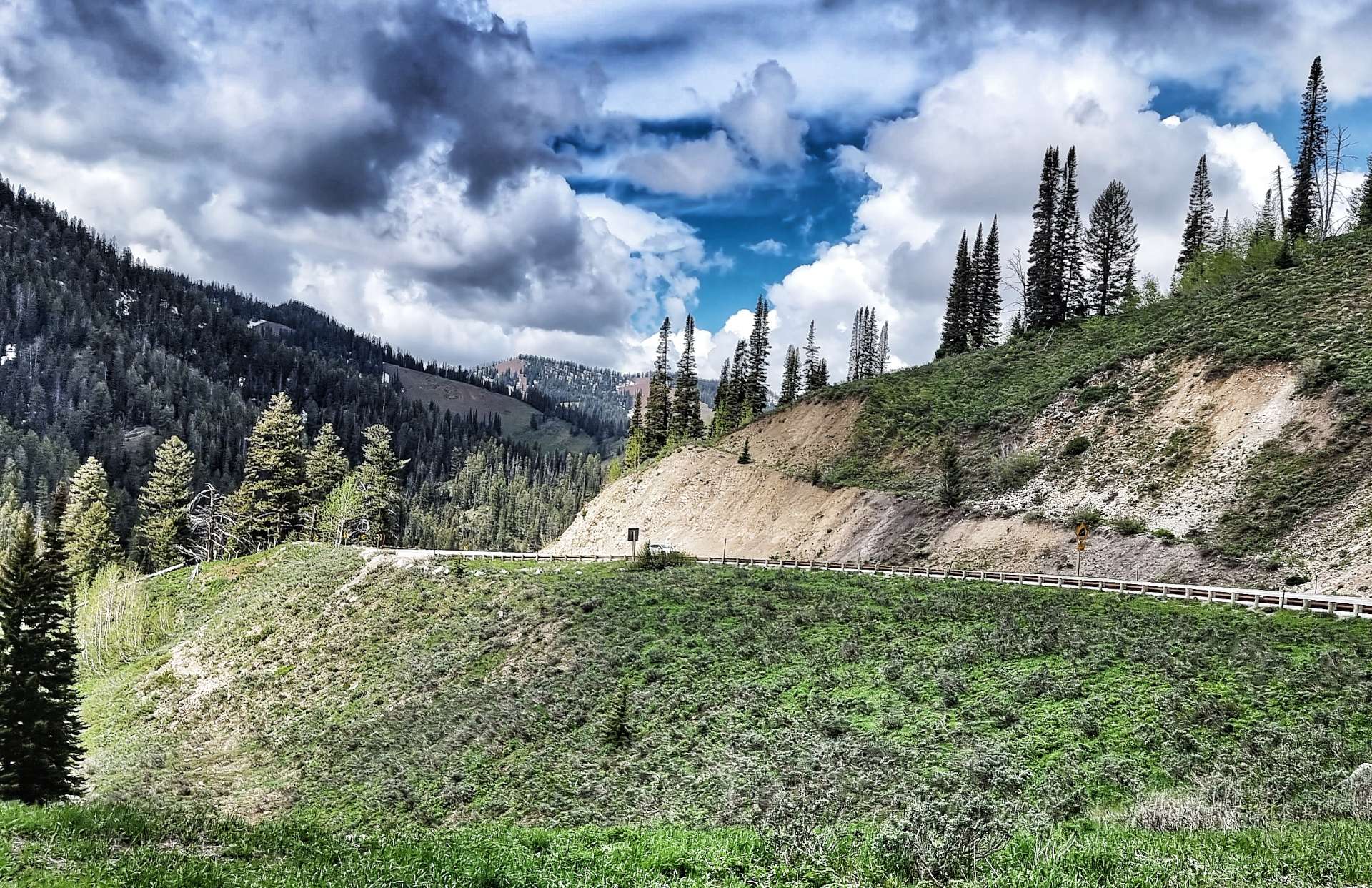
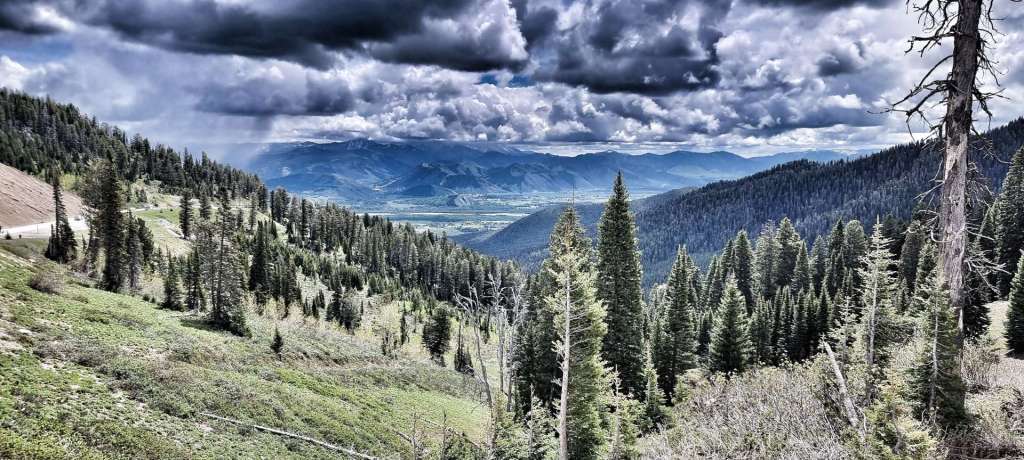
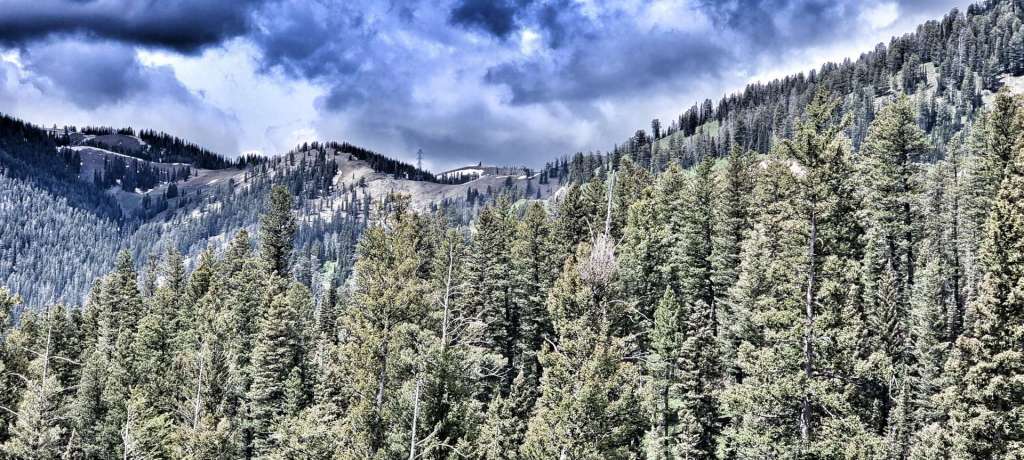
Because the summit of Teton Pass was over 8,000 feet above sea level, I’d researched the climb. This isn’t always a happy place to be, as I knew that from the next corner to the top (about 4 miles in total), the gradient wouldn’t dip below 9% & would max out at 13% – in the first photo you may be able to make out a thin line just to the left & above the treeline, this is the road. The second photo is taken from that spot looking back down the valley into Idaho.
In the video below I tried to downplay the steepness of the climb for my own confidence – as you’ll see, I was struggling to keep pedalling, breathing & talking at the same time!
As we climbed higher, we saw two more cyclists daft enough to be climbing the brutal Teton Pass & as we passed them very slowly, we gave them encouragement to keep at it & focus on the vast vistas around a few more corners. As we continued on our way, we could see the first indications that blue skies were coming our way! We’d avoided the rain all morning & couldn’t believe our luck – perhaps the price was having to tackle the steep slopes!!
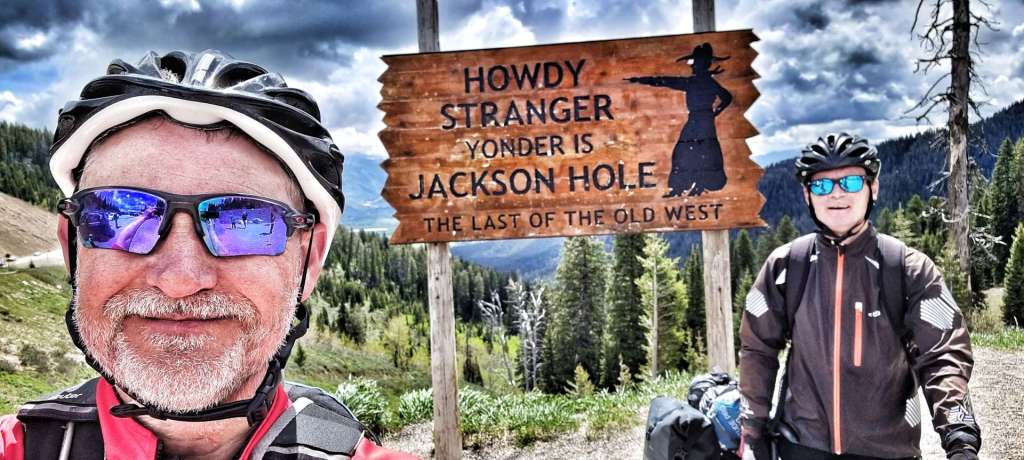
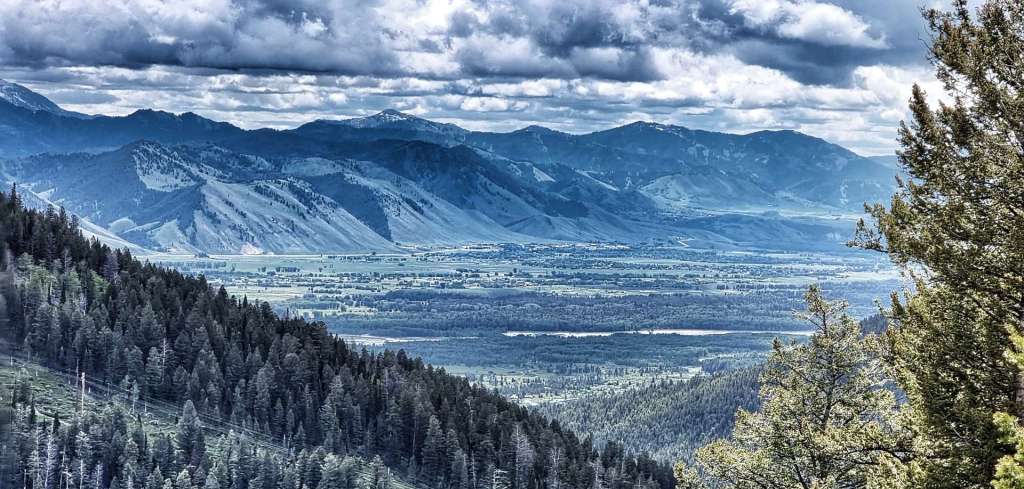
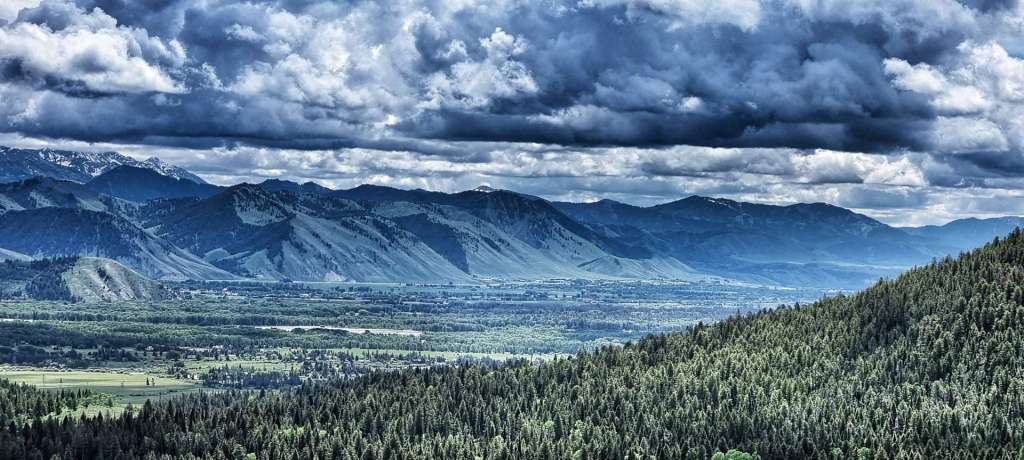
We finally made it to the summit at 8,432 feet (2,570 metres) above sea level & after taking a few moments to gather ourselves, we took a photo & then admired the spectacular views into the Jackson Hole valley from the lookout point.
I took a video of the first 30 seconds or so of the descent, but I picked up speed so quickly I had to put the camera away – LOOK AWAY NOW MUM!!! I hit 53mph in next to no time & decided that was fast enough for me. I’ve not been that fast on my carbon bike!!! I won’t lie, it was exhilarating, but I knew not to push my luck.
There are a couple of great turnout spots (layby to the Brits). At the first one I could see back to the lookout point a couple of miles away, while the second & third viewing spots gave huge views of the valley as it spread out below.
We regrouped at Wilson & agreed that we should continue on to Jackson, so Sean could try & get his pannier fixed. It was a short 5 mile ride along the valley floor – I’d done some research the night before, so knew that there was a bicycle shop next to our hotel that may be able to help. Within 15 minutes The Hub Bicycles had been able to repair Sean’s pannier – they were absolute legends & wouldn’t even accept any money for doing the work! On an adventure like our we’re totally reliant on the kindness & generosity of others to keep us on the road – The Hub Bicycles helped us out big time. Thanks guys! I’ve dropped them an email, so I’m hoping they may see how much it meant to us.
While we were waiting to check in to our motel, we met Owen & Cat, a couple of Brits who were also doing a long distance adventure. They’d started in Eugene & were following the Trans America route towards Virginia (via Colorado, Kansas, Missouri & Kentucky). We shared a really enjoyable 1/2 hour trading stories of our adventures so far.
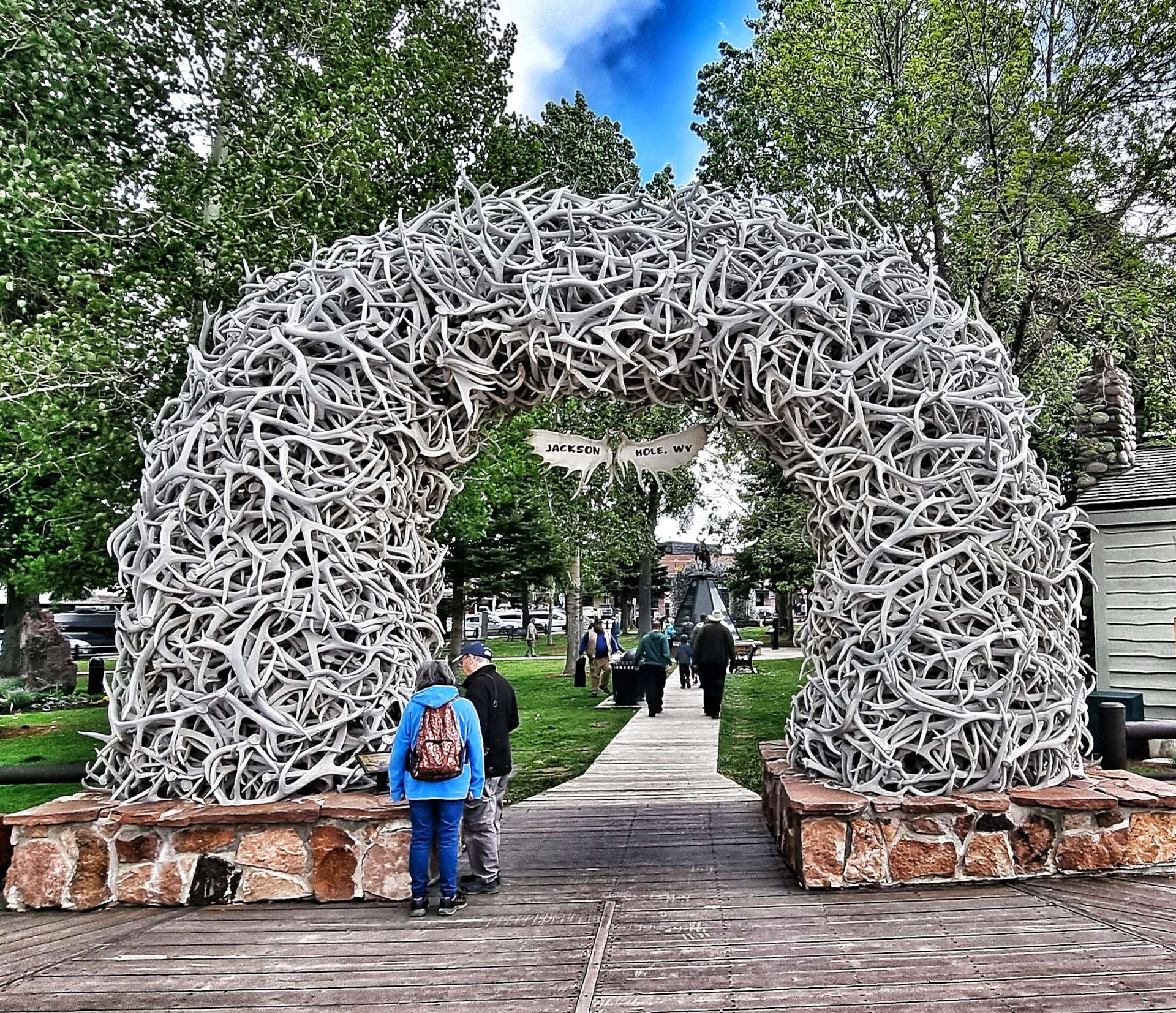
We also went for a quick stroll around the historic part of town. Jackson is famous for its iconic Elk Antler Arches at the four corners of the park. The first arch was erected by the Rotary Club in 1953. Additional arches were added to the other 3 corners of the park between 1966 & 1969.
Elk Antlers have a life span & they begin to decompose after 30 to 40 years, so the oldest arch was rebuilt in 2007, followed by the other 3 arches in 2009, 2011 & 2013. Each arch is in the region of 10,000 to 12,000 pounds in weight (a single antler weighs about 5 to 10 pounds ) & the antlers are are individually weaved into a steel frame.
Final fact – the local boy scouts go out in the Spring when the arches are due to be replaced & pick up the antlers that Bull Elk have shed following the winter.
Stage Stats – 33 miles, 2,431 feet of climbing. One big hors categorie climb taking us over 8,400 feet above sea level.
Tuesday 21st June – Jackson to Lizard Creek Campground, Teton National Park (Stage 41).
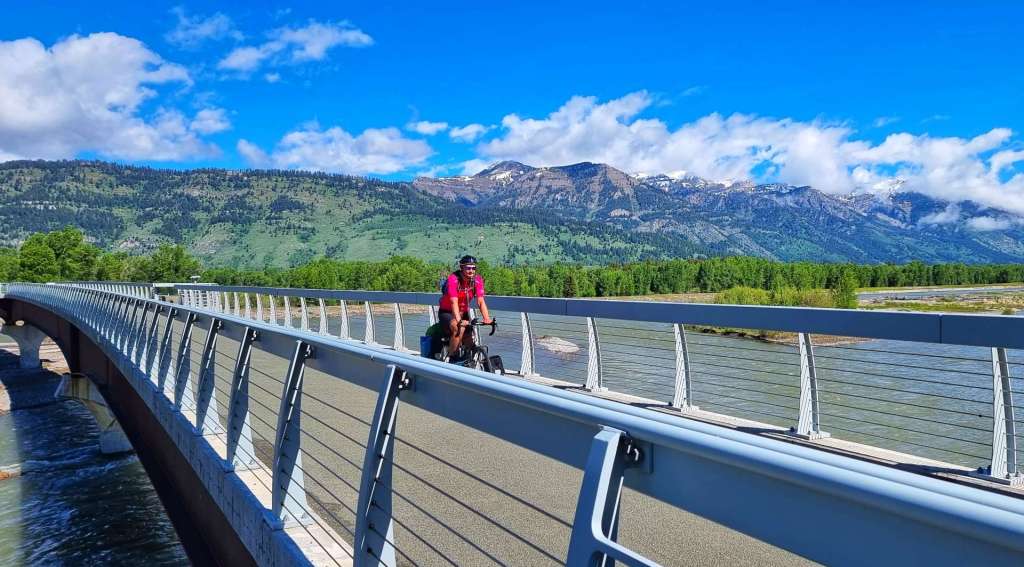
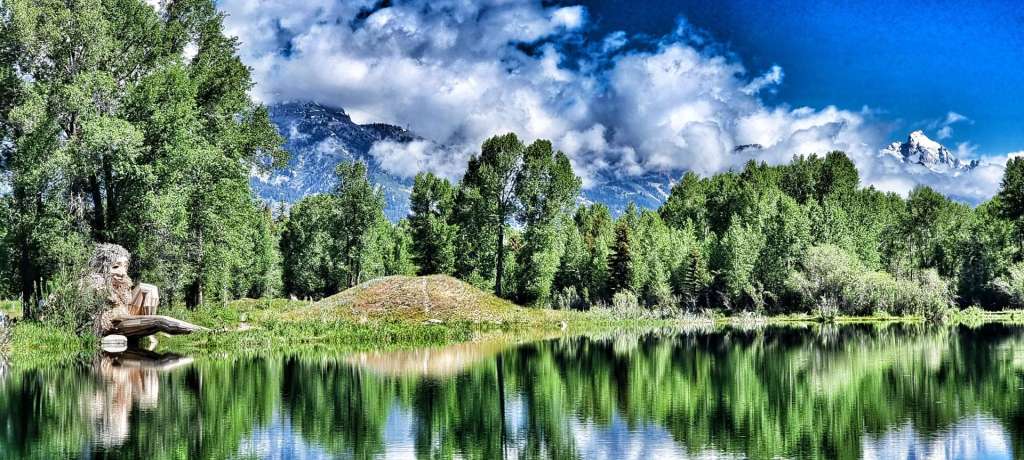
We were on the road for 9.45am & retraced the 5 miles back to Wilson, using the car-free bridge to cross the Snake river & ride through Rendezvous Park (spot the Giant in the 3rd photo!).
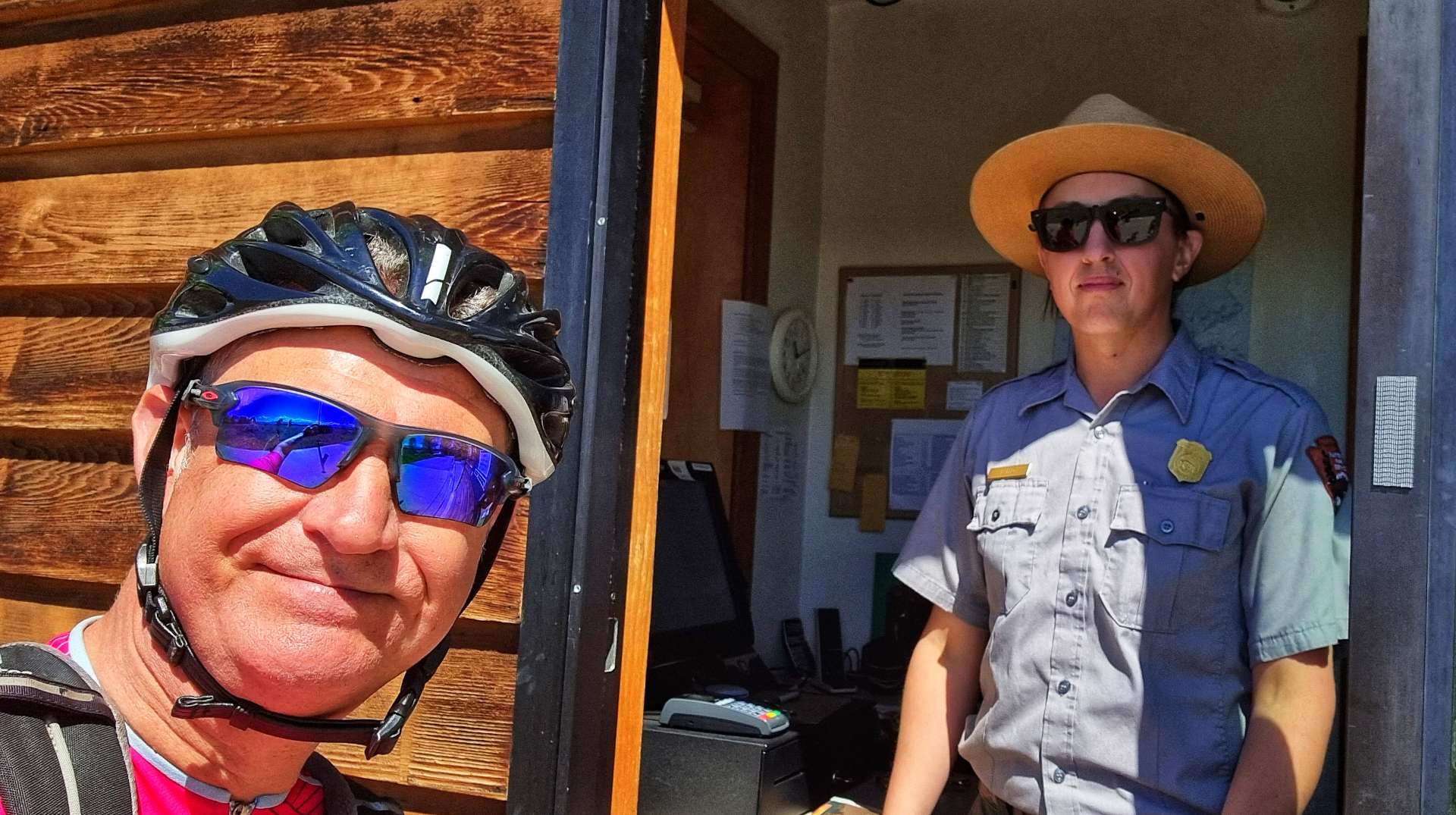
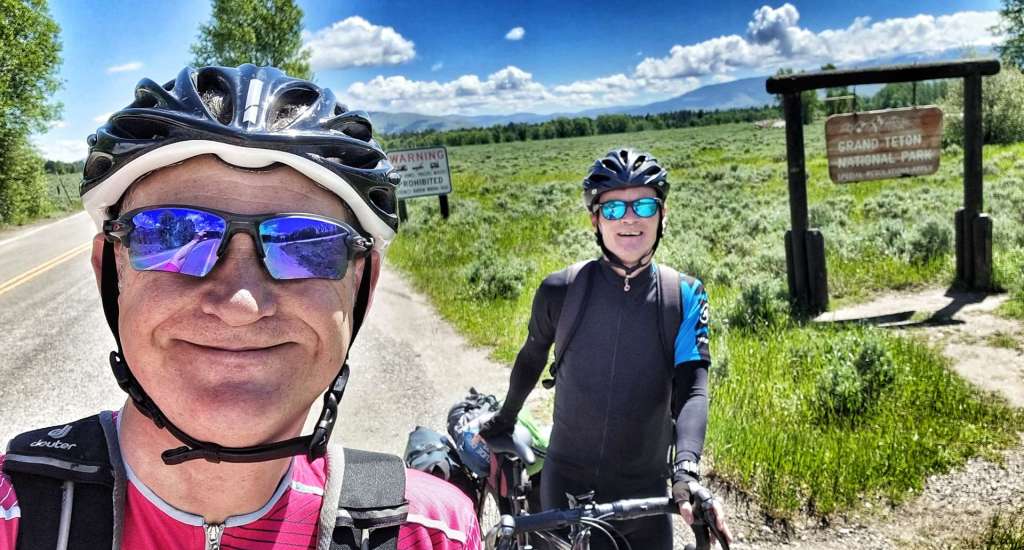
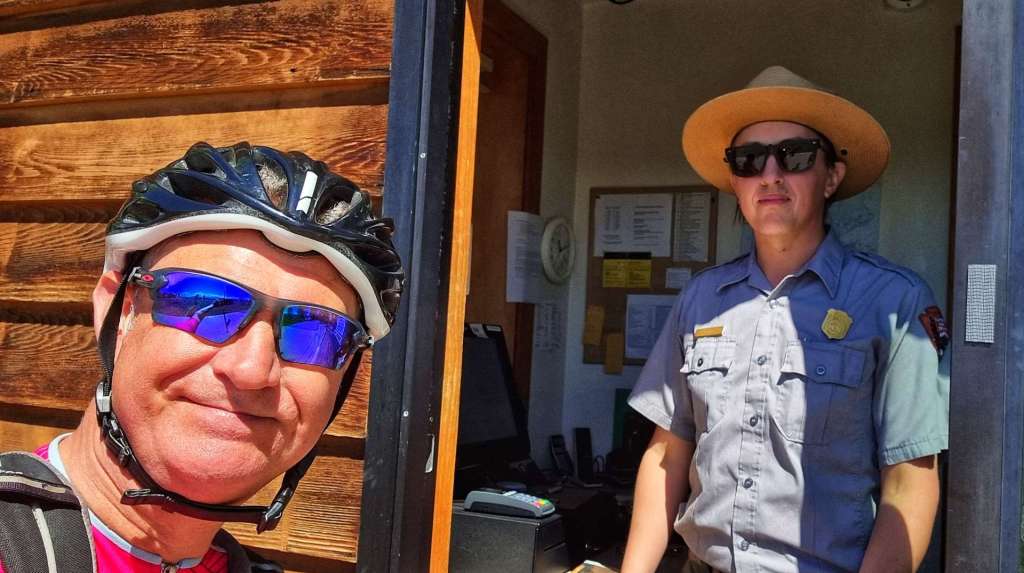
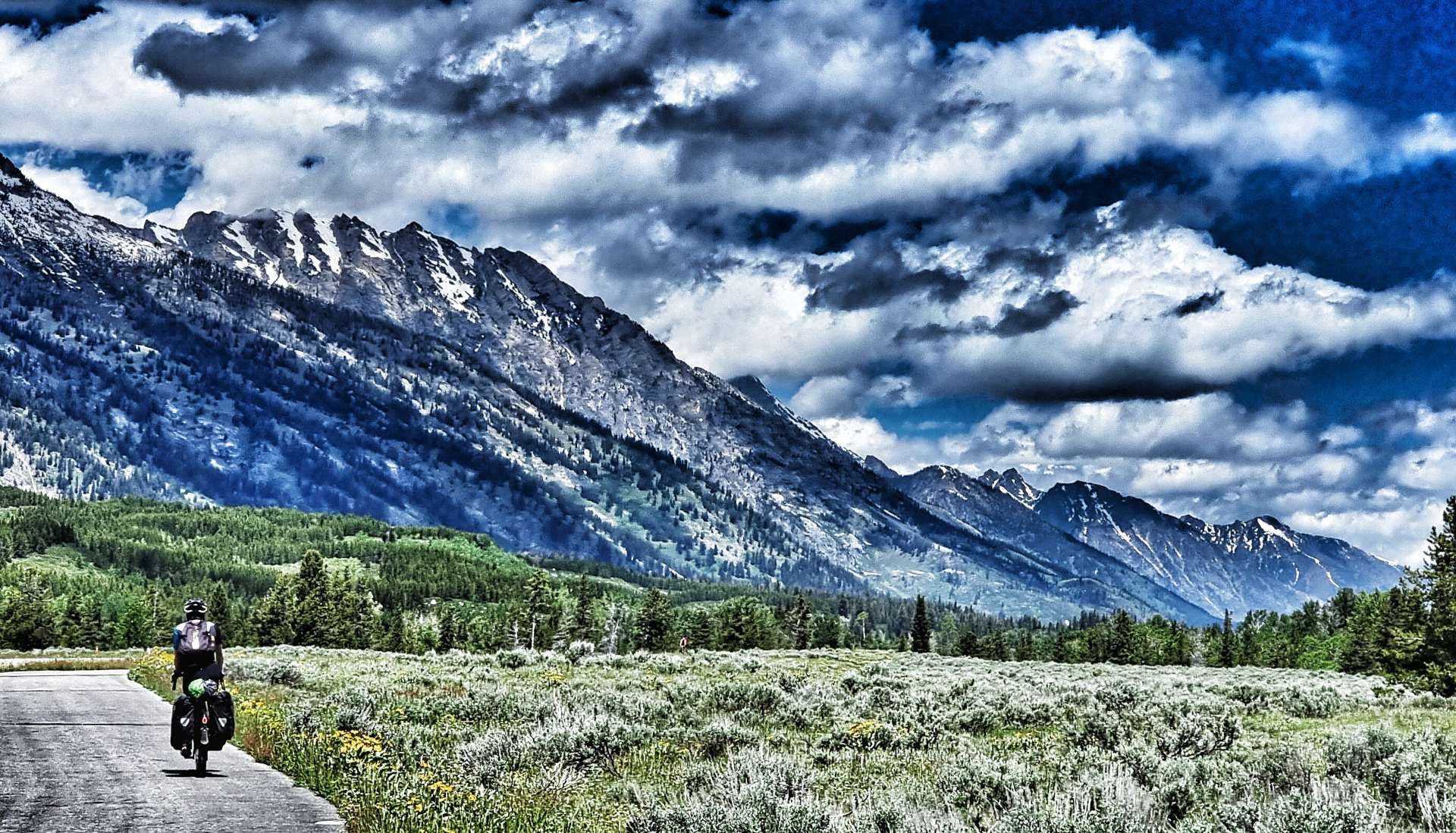
For the next 10 miles we had our own cycle path which ran close to the road, but made for very relaxing & enjoyable riding. We saw a couple of runners & 3 cyclists, so we could take in the mountain views all around us. Before we knew it, we’d passed Teton Village & arrived at the entrance to Grand Teton National Park – thank you to the Ranger on the gate who humoured me when I asked for a selfie!
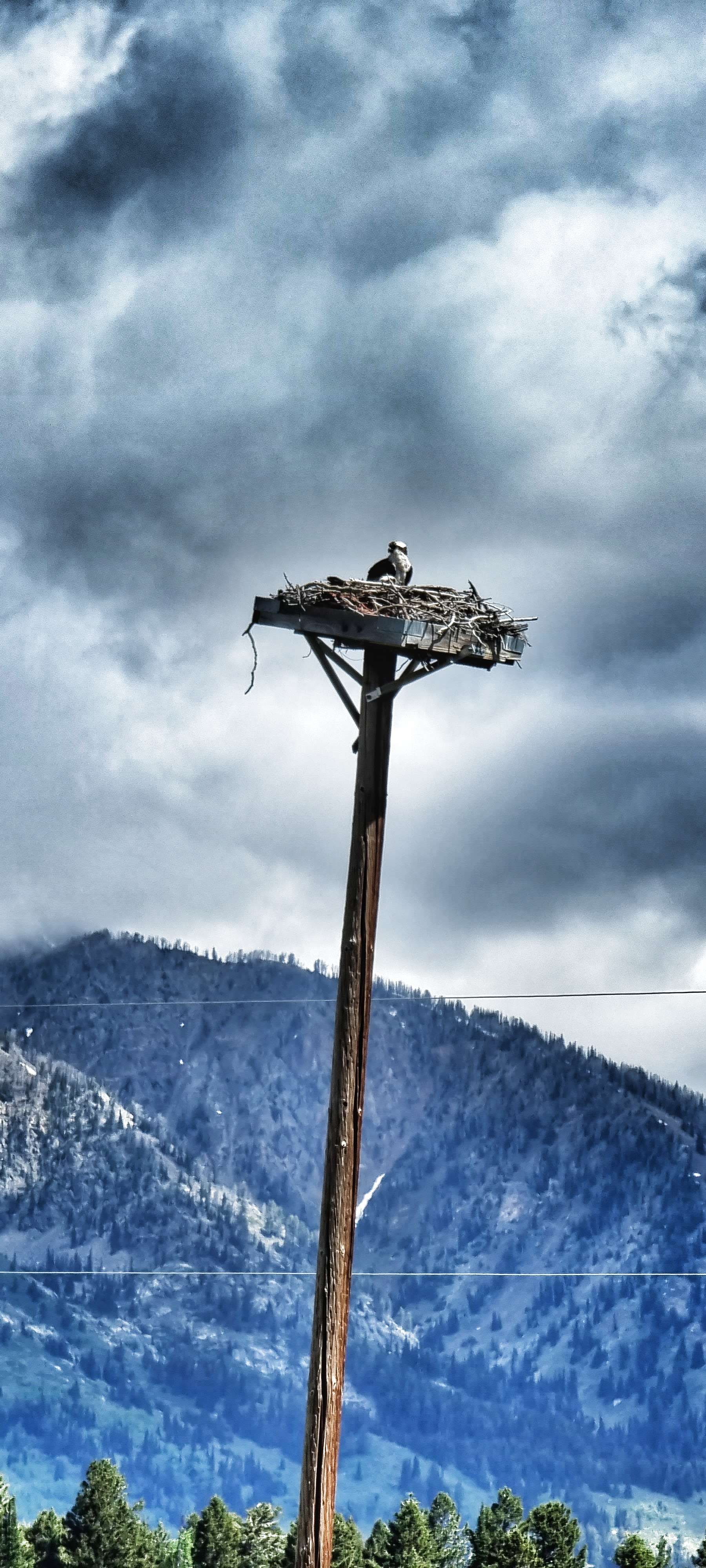
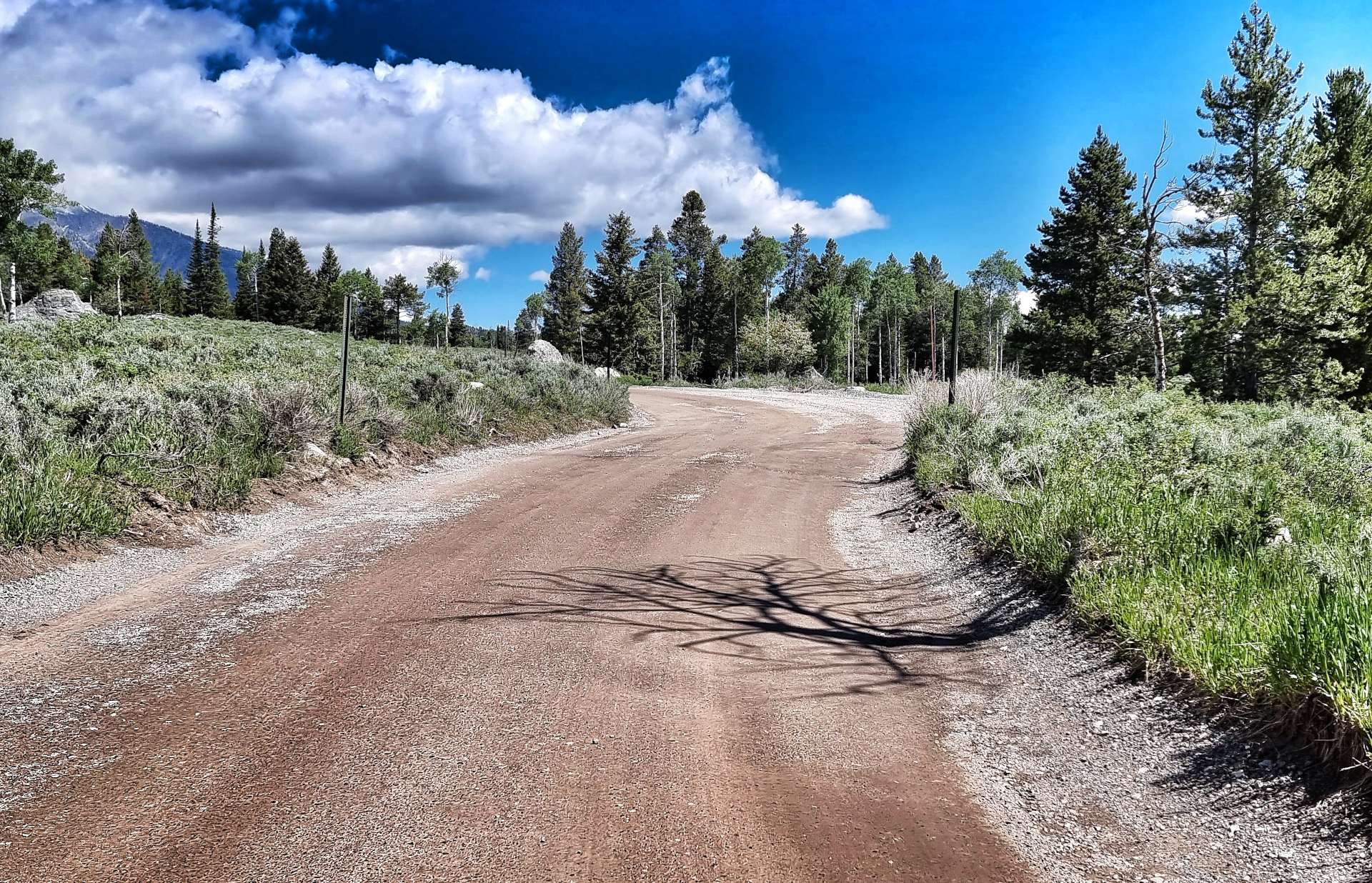
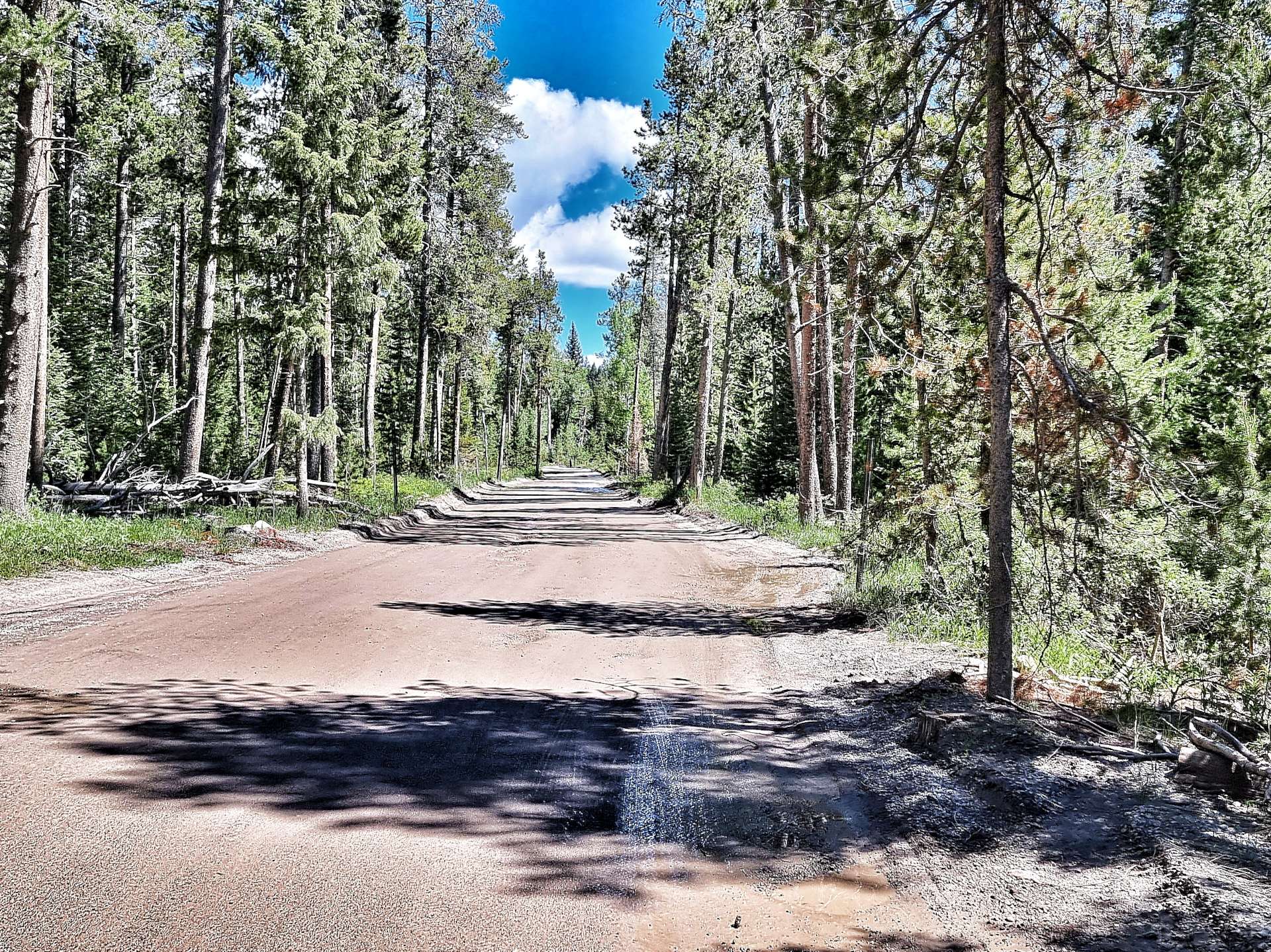
This isn’t a very popular entrance for cars, as the road quickly turns to rough gravel. The quieter roads increase the possibility of seeing wildlife & within 1/2 mile we’d spotted an eagle surveying the world from its eyrie. Tackling the 4 mile off-road section, it felt like we had the park to ourselves as we cycled through the forest. I’m writing this on 28th June & it’s a year ago to the day that I first went off-road on my touring bike – we were on Day One of a 5 day cycling trip to Wales & we did a mile or two of gravel on the Monmouth & Brecon canal towpath – how my adventures have grown!!!
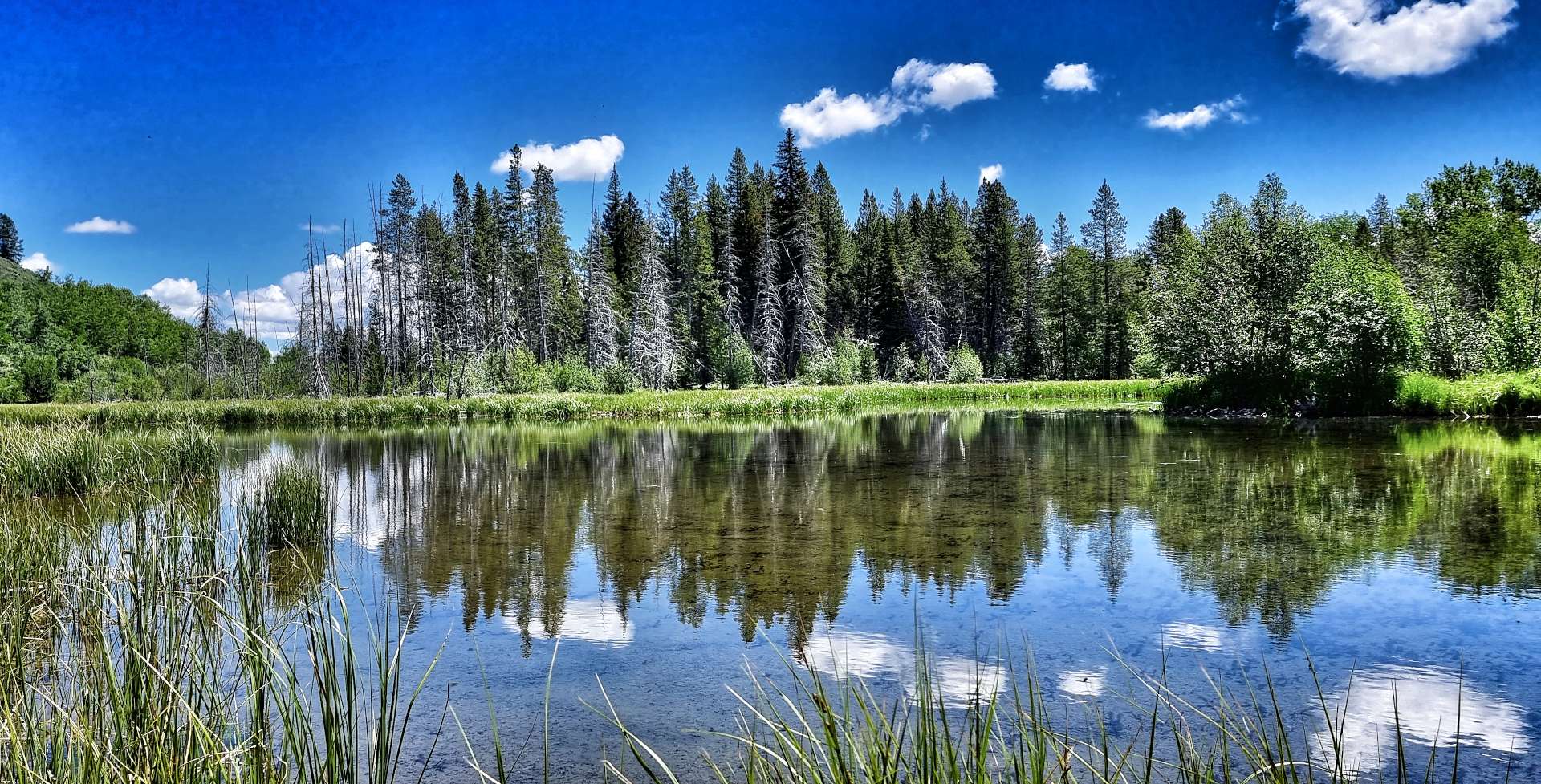
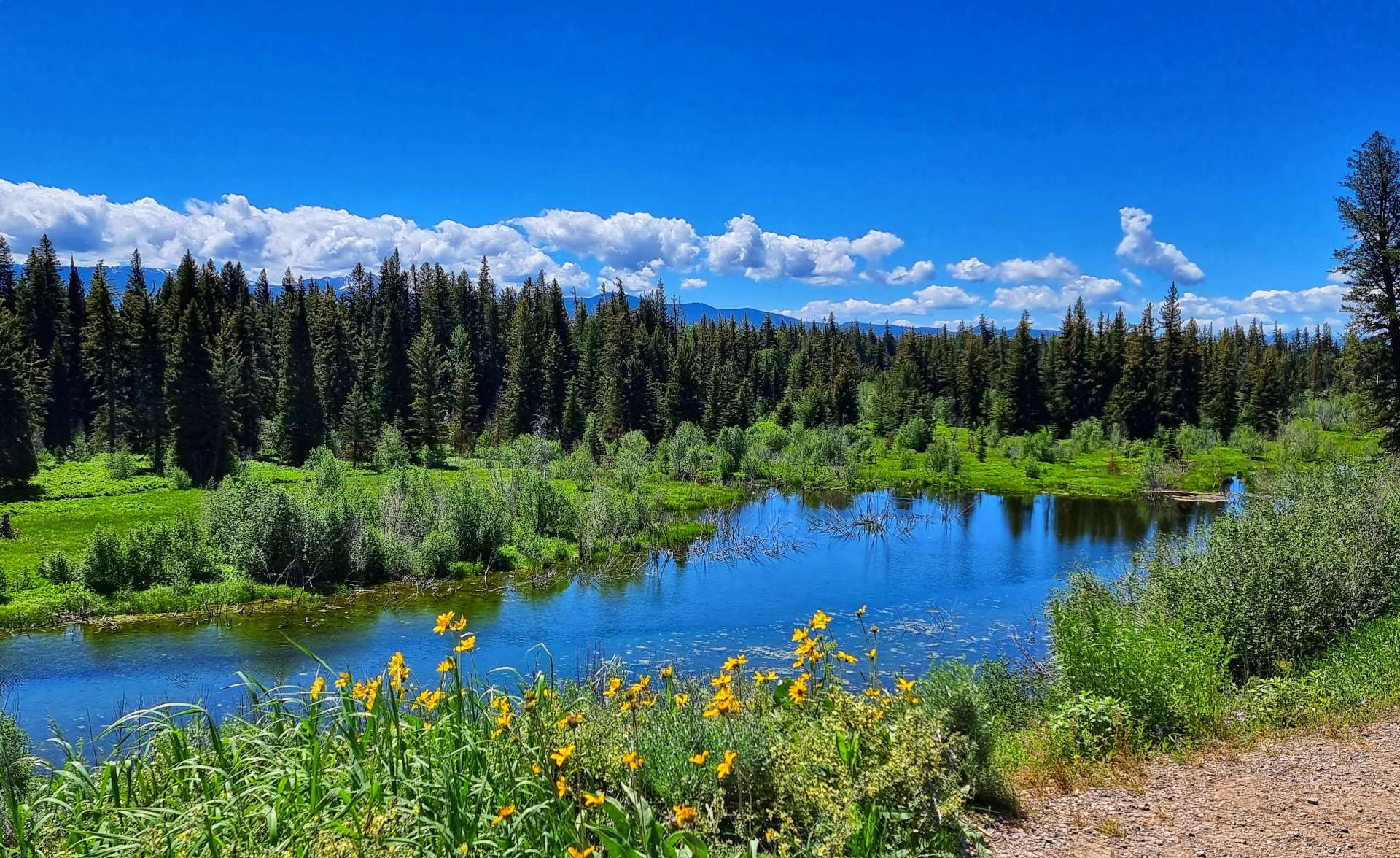
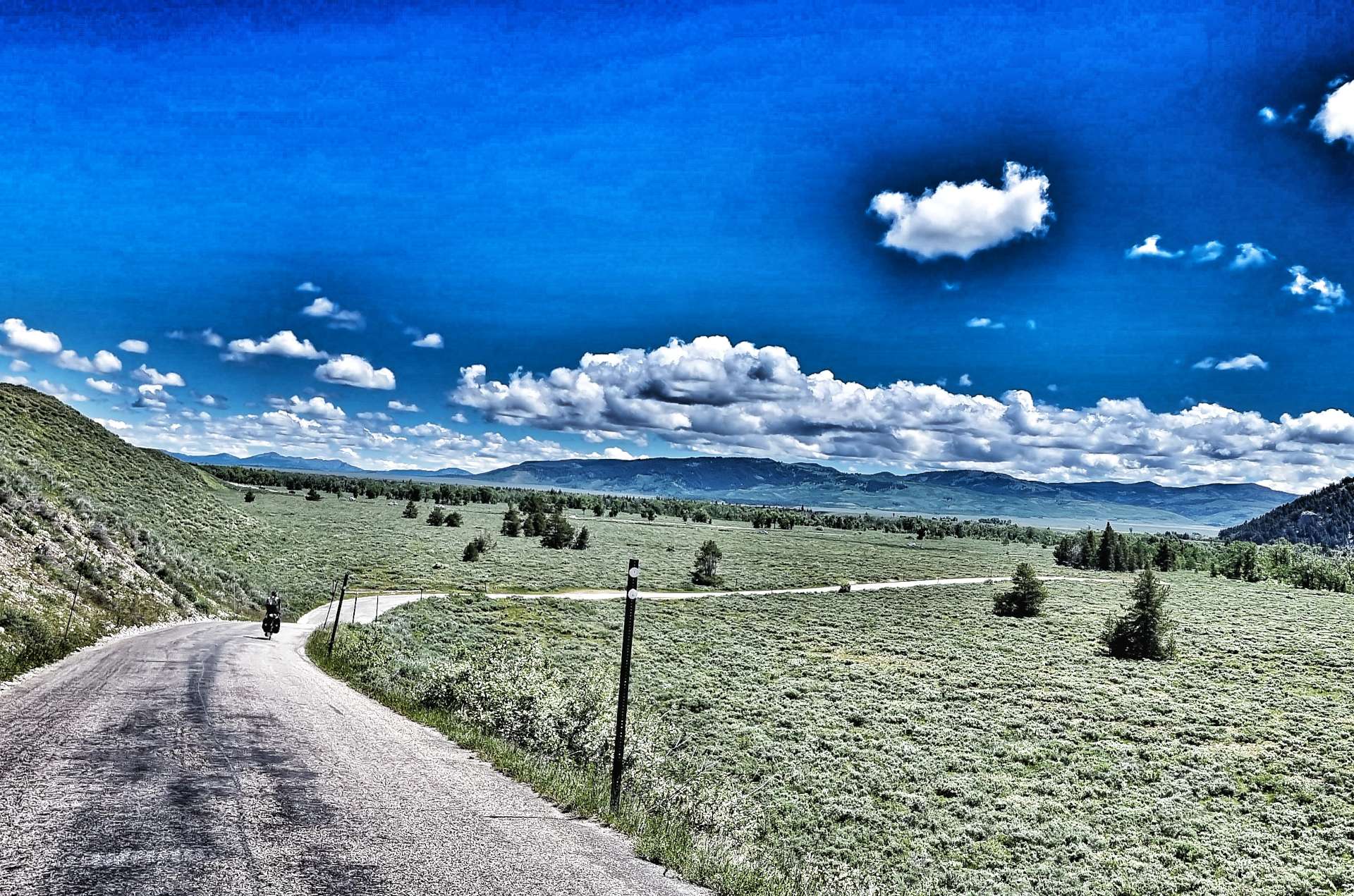
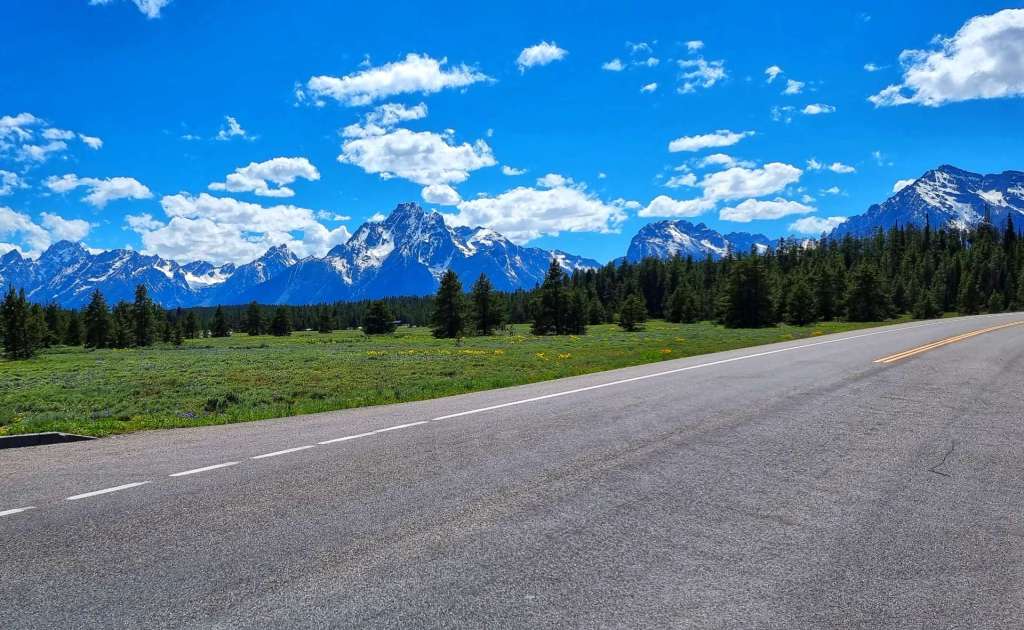
The quiet backroad took us past babbling brooks & creeks which led into or out of the many small lakes & ponds. Then as we turned a corner the forest was replaced by plains & prairie as far as the eye could see. This signalled that we were nearing the end of our remote riding on Moose Wilson Road, but there was plenty more stunning scenery ahead of us.
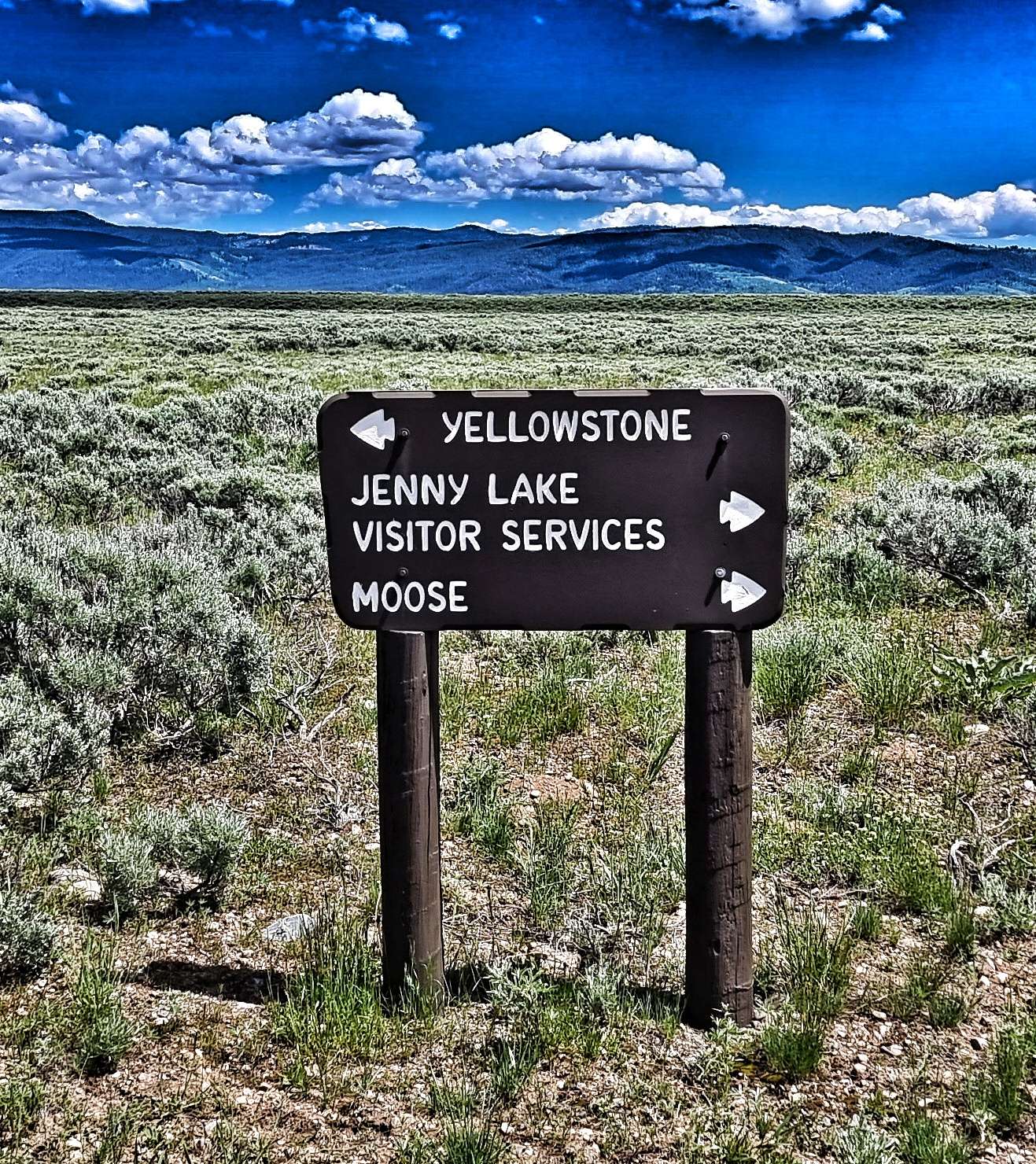
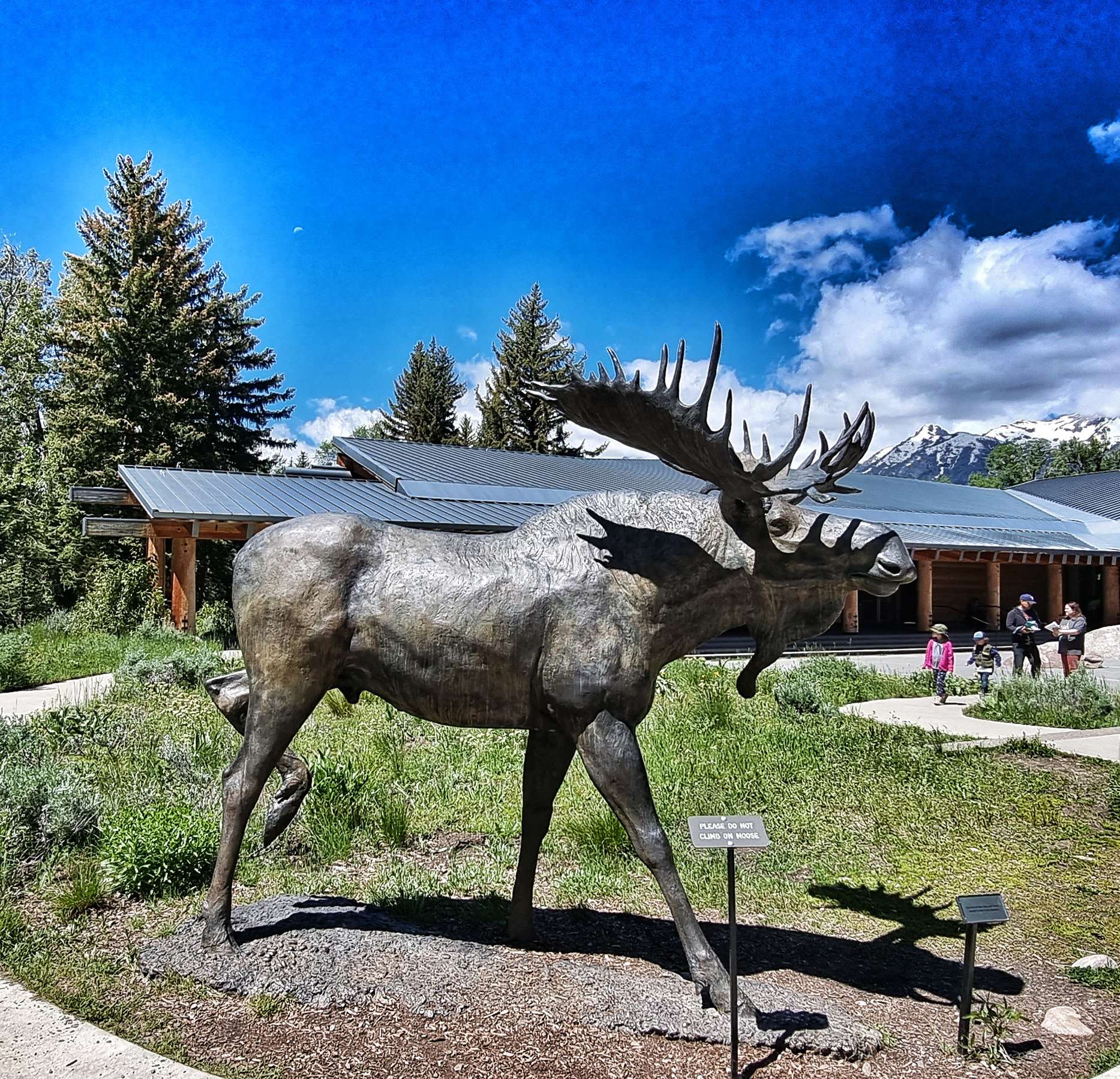
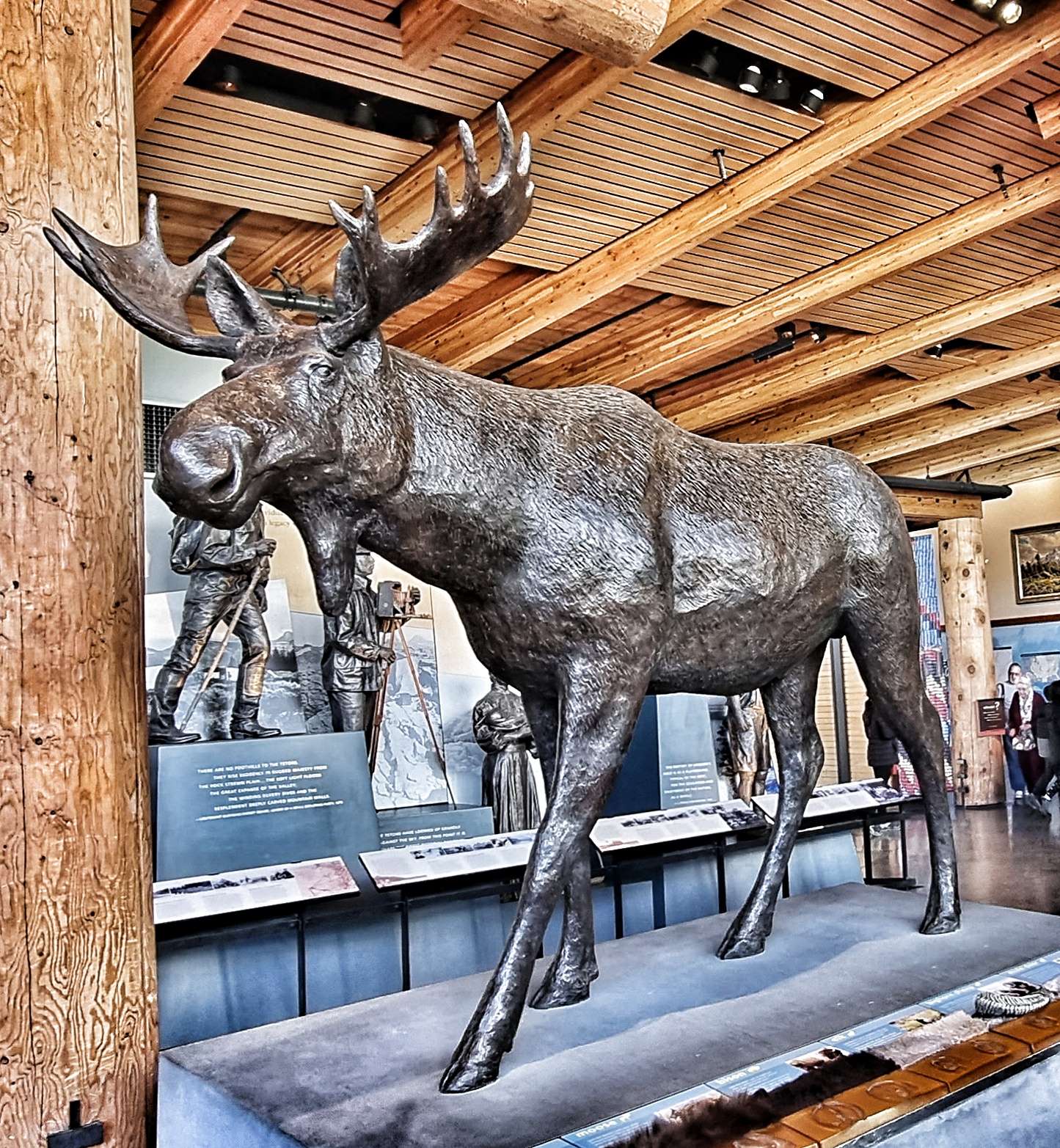
We joined Teton Park Road at Moose, stopping to see the Visitor Centre along the way – I have a few friends (Jo & Tazzer – this is for you both!!) who will appreciate this next set of photos as they’re into Moose. I’ve added my favourite mousse photo!!!
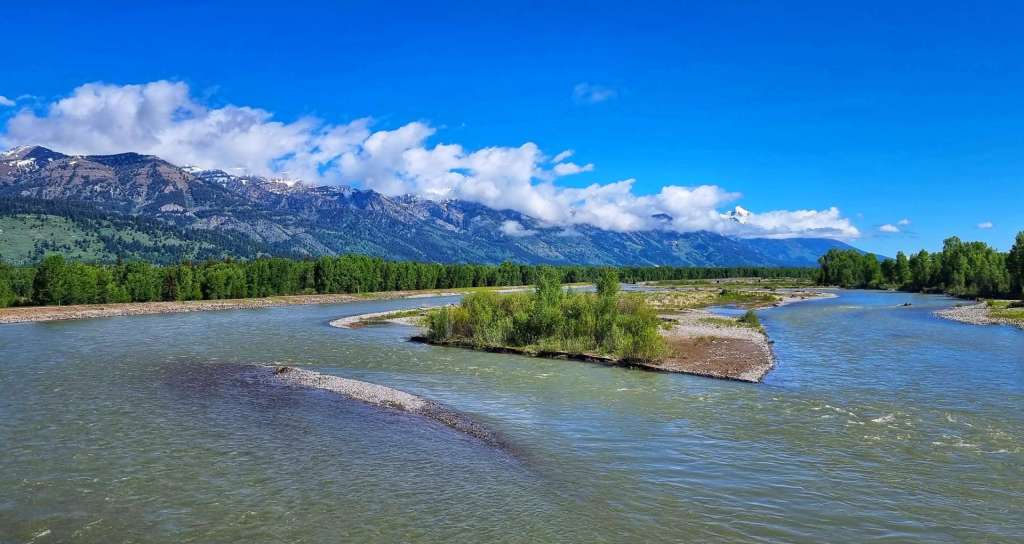
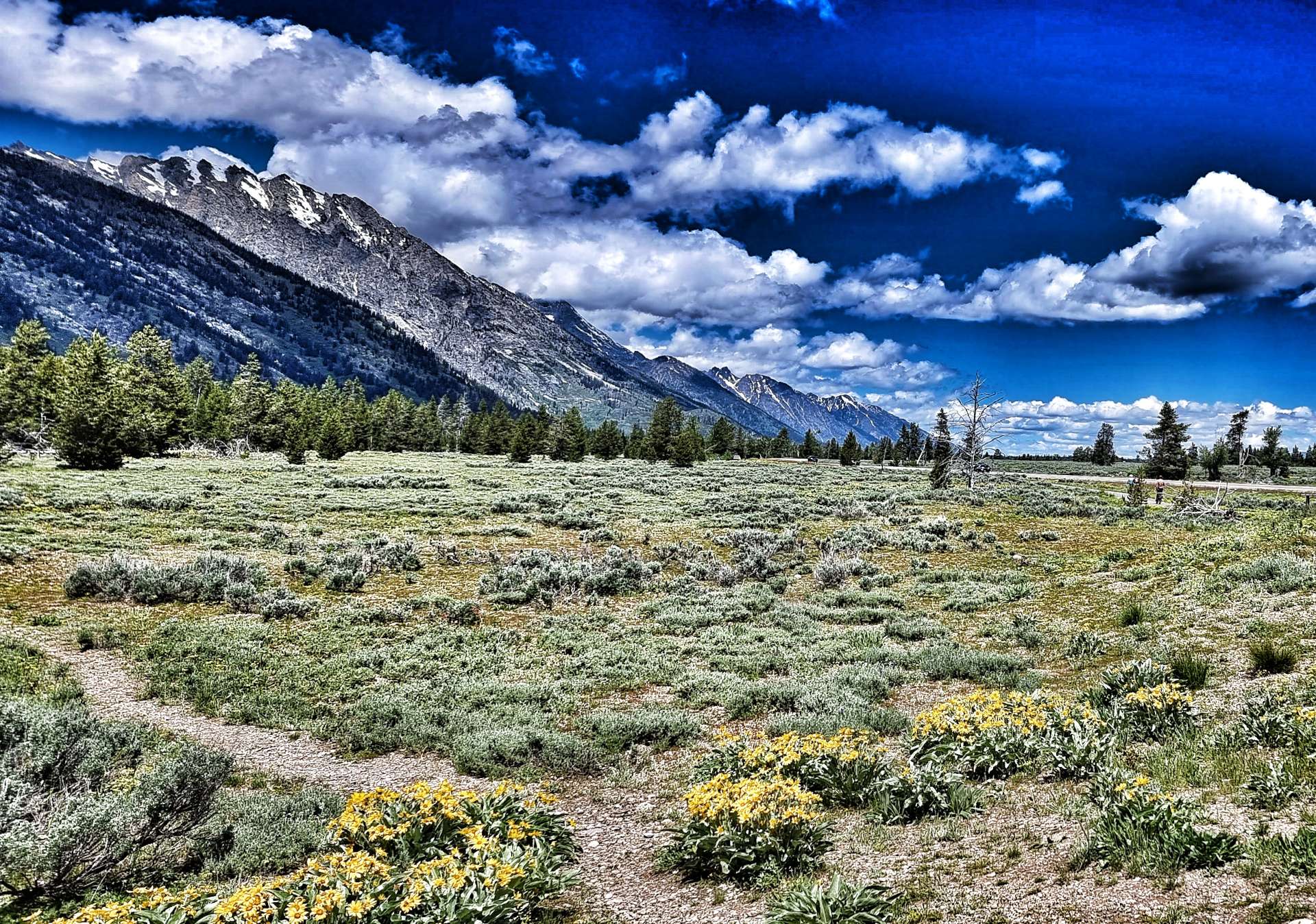
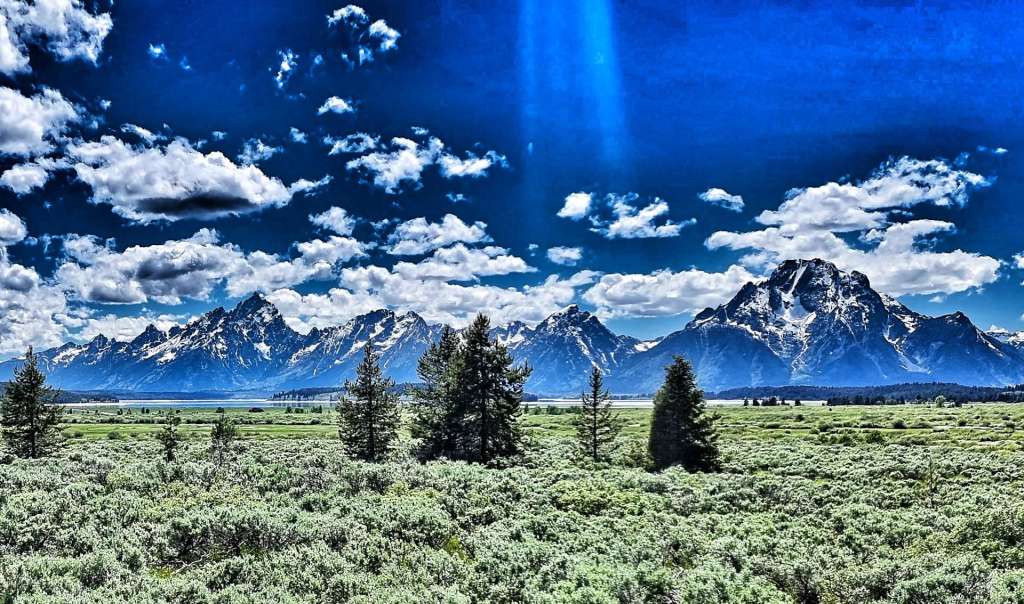
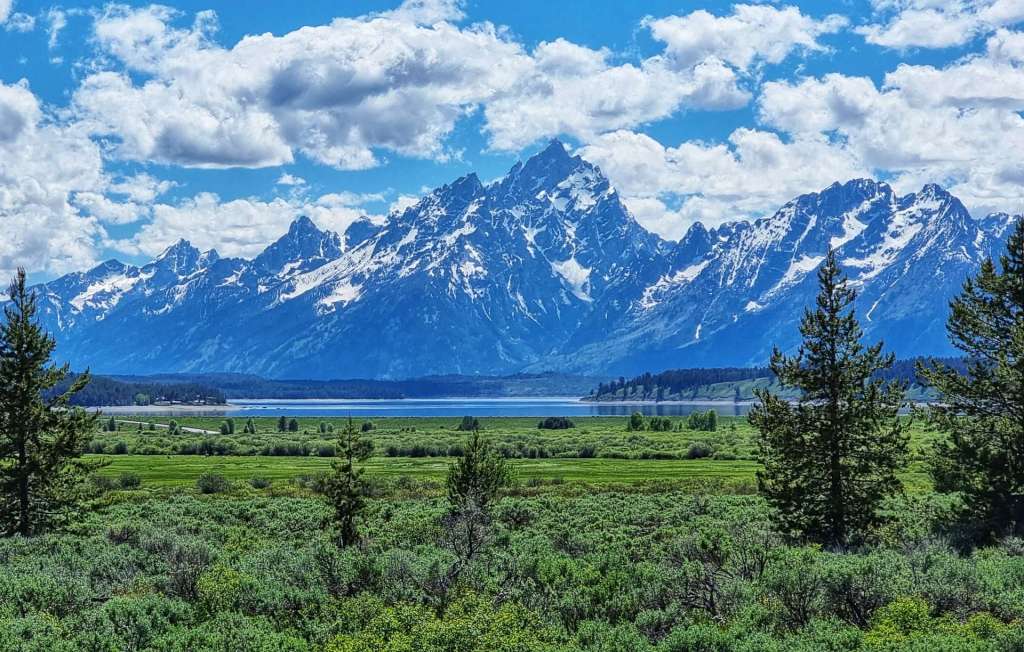
Grand Teton National Park has gone to great lengths to be cyclist & pedestrian friendly. From Moose to Jenny Lake (about 10 miles) we were once more on a separate cycle path. Over billions of years, natural forces including earthquakes, glaciers & erosion have shaped the Teton mountains. The gneiss that makes up much of the range was formed 2.7 billion years ago when the sea floor sediments & volcanic debris were buried up to 18 miles deep as two tectonic plates collided – similar to what is happening to the Himalayas today.
The Tetons are young in geological terms, the uplifting which created them only commenced 10 million years ago. The range continues to uplift one earthquake at a time along the 40 mile Teton fault, a north-south crack in the earth’s crust. As the region is stretched in an east-west direction, this causes stress which is released in the form of an earthquake, lifting the mountain block skywards, while dropping the valley floor.
On average, the fault moves 10 feet with each earthquake – the mountain block rises 2 to 4 feet up, as the valley floor drops 4 to 6 feet. Over 10 million years it’s estimated that the total offset is about 25,000 feet – the flathead sandstone on Mount Moran (to the west of the fault) is at 6,000 feet above the valley, while the same layer is buried 20,000 feet below the valley floor on the east side of the fault. Enough with the geology lesson, here’s some more jaw-dropping scenery!
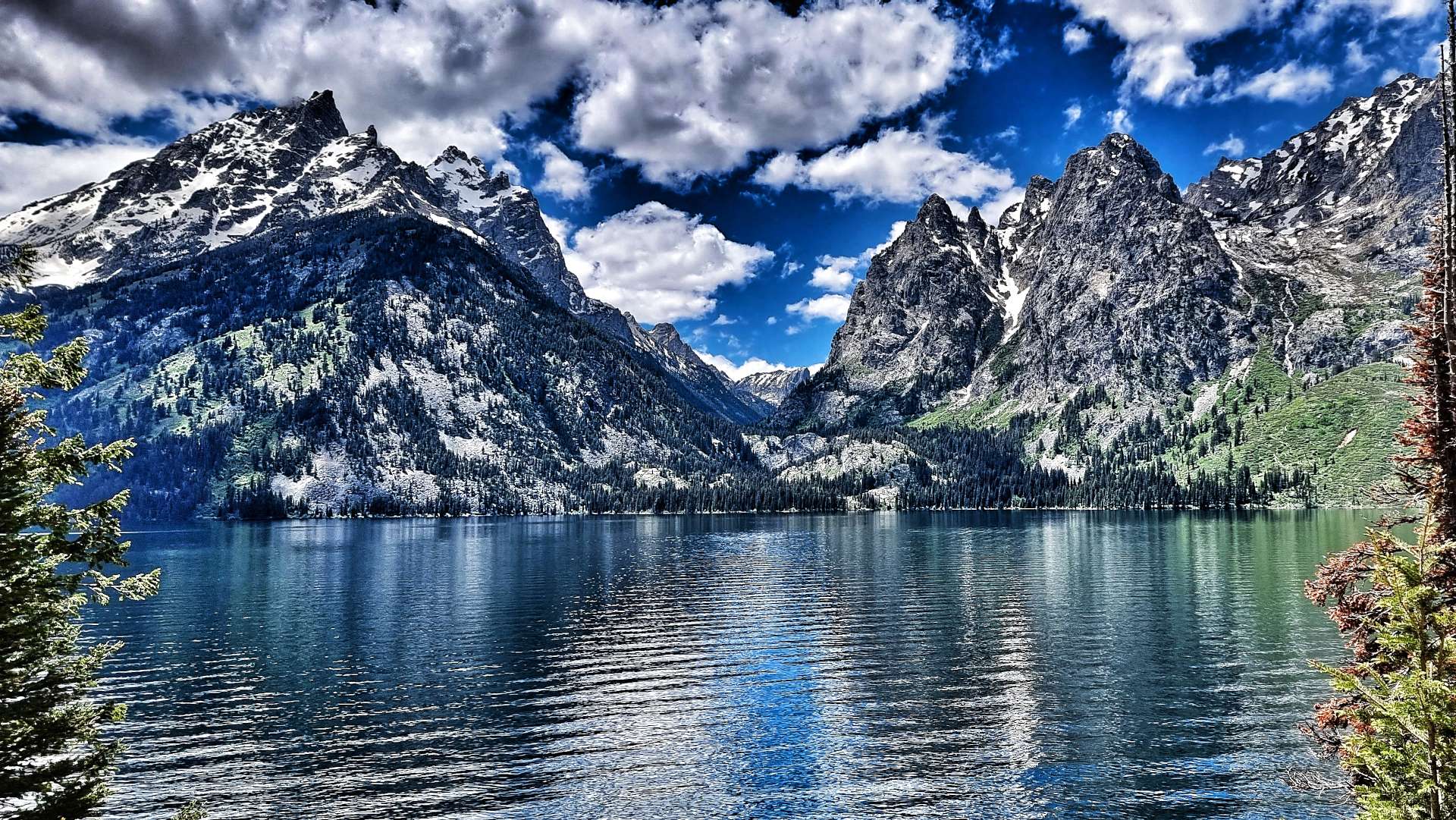
The Grand Teton National Park also has a number of alpine lakes, some natural & others man-made to manage water levels & to create hydro-electric power. When combined with the majestic backdrop of the mountains, the views are out of this world. Jenny Lake is the centre piece of the park, with views of Teewinot Mountain, Mount St John & Cascade Canyon (directly between Tweddle Dumb & Tweedle Dumber!) – you may be able to make out a rowing boat behind us too.
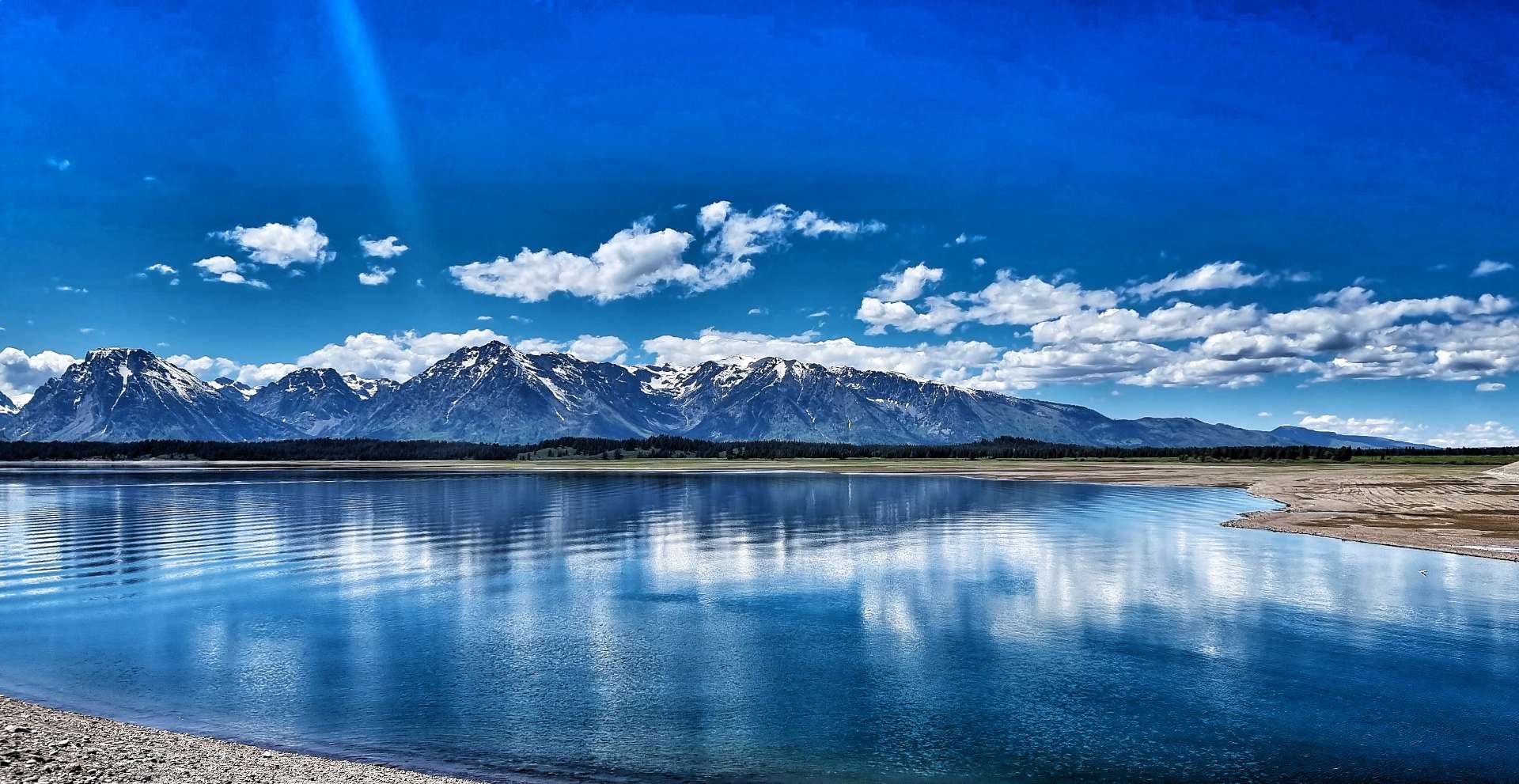
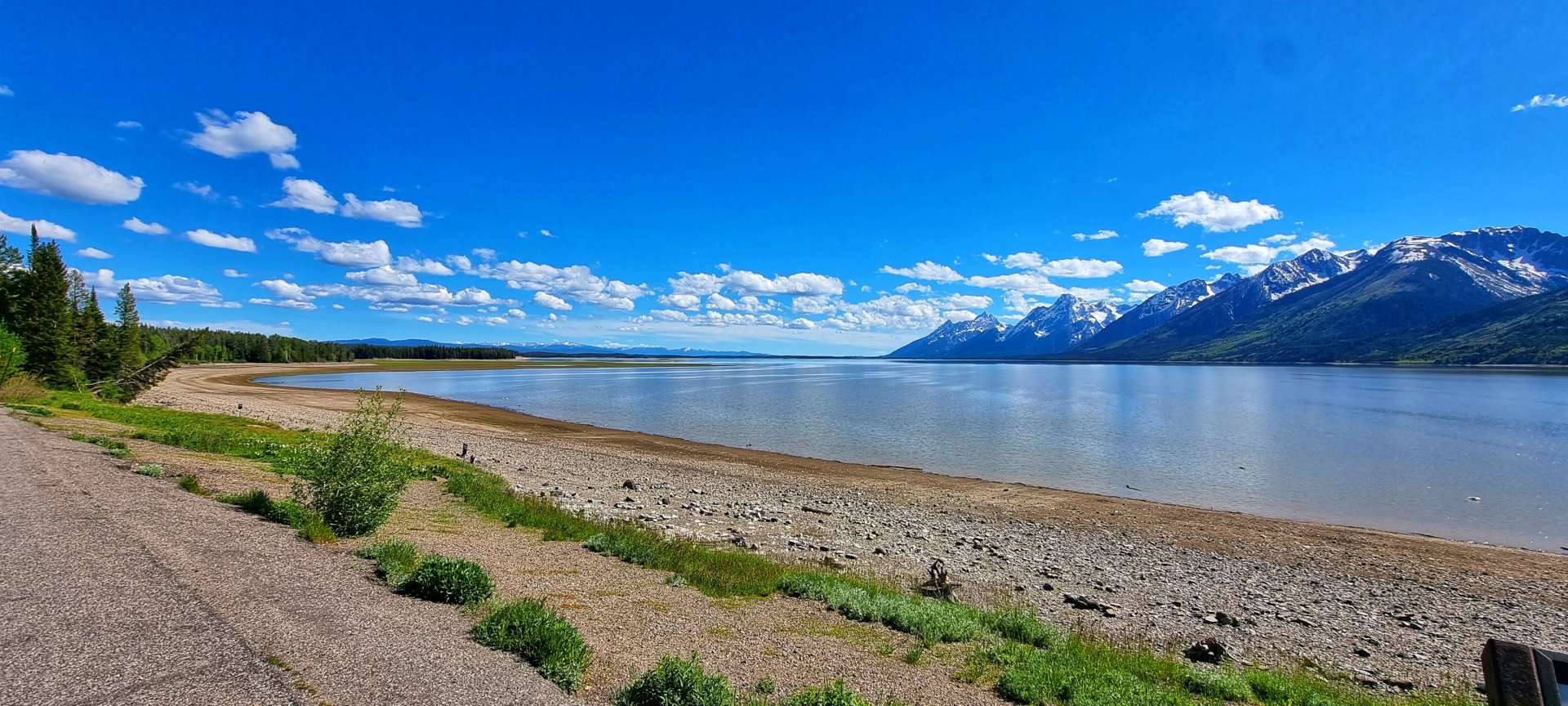
Further up the valley is Jackson Lake – it’s a 400 foot deep natural lake, that was modified in 1916 by the Bureau of Reclamation when they added a 39 foot dam to the lake & rebuilt it in 1989. The lake is a remnant of glacial gouging from the Teton mountain range to the west & the Yellowstone basin to the north. It extends 15 miles up & 7 miles across the valley & is one of the largest high altitude lakes in the USA.
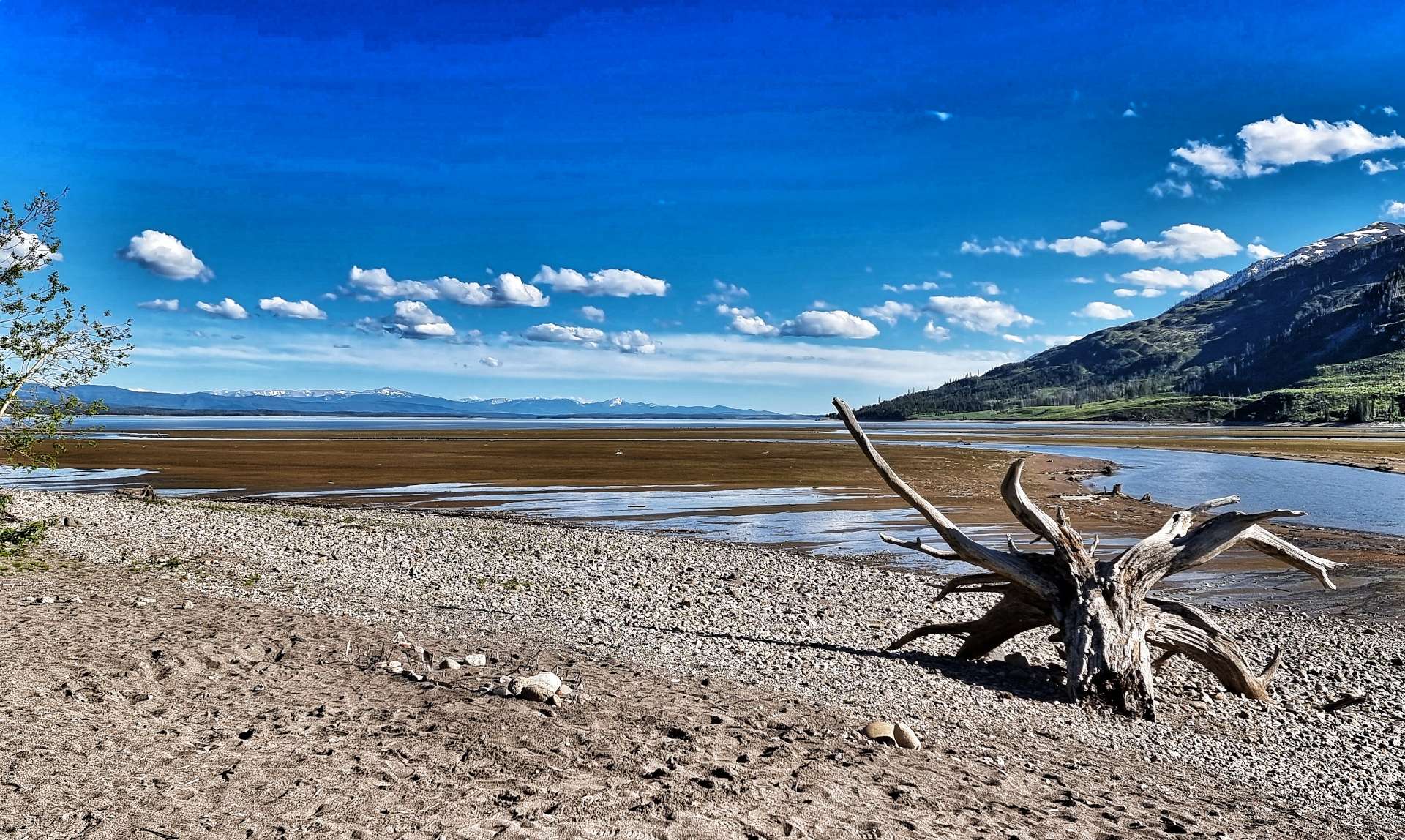
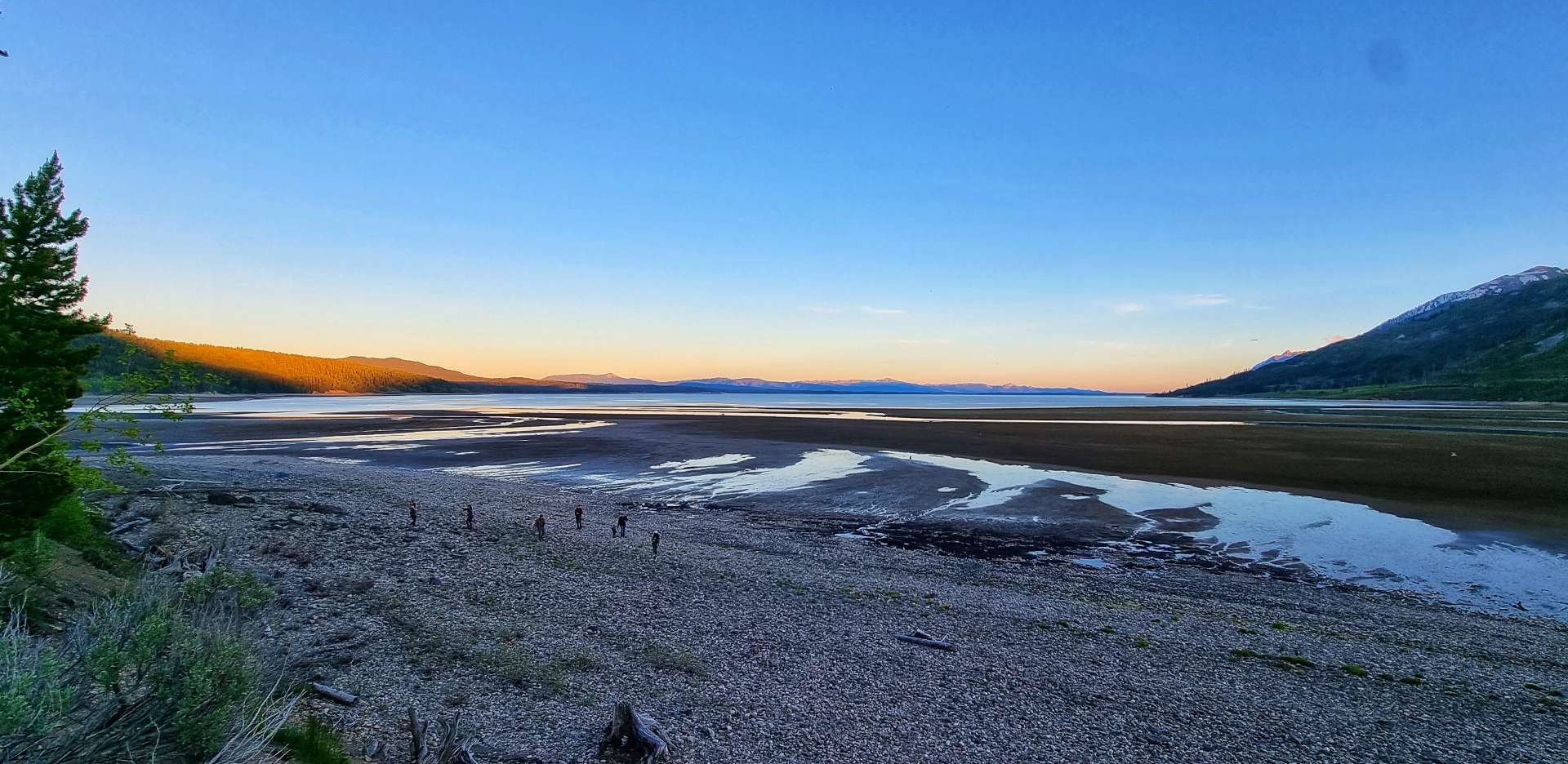
Continuing up the valley, it became more obvious that the water level in Jackson Lake is currently quite low, as more of the shoreline beach became visible. We stopped briefly at Colter Bay Village (a grand name for a gas station, if ever I heard one!) where we stocked up on sandwiches, crisps & fruit for our gourmet dinner later.
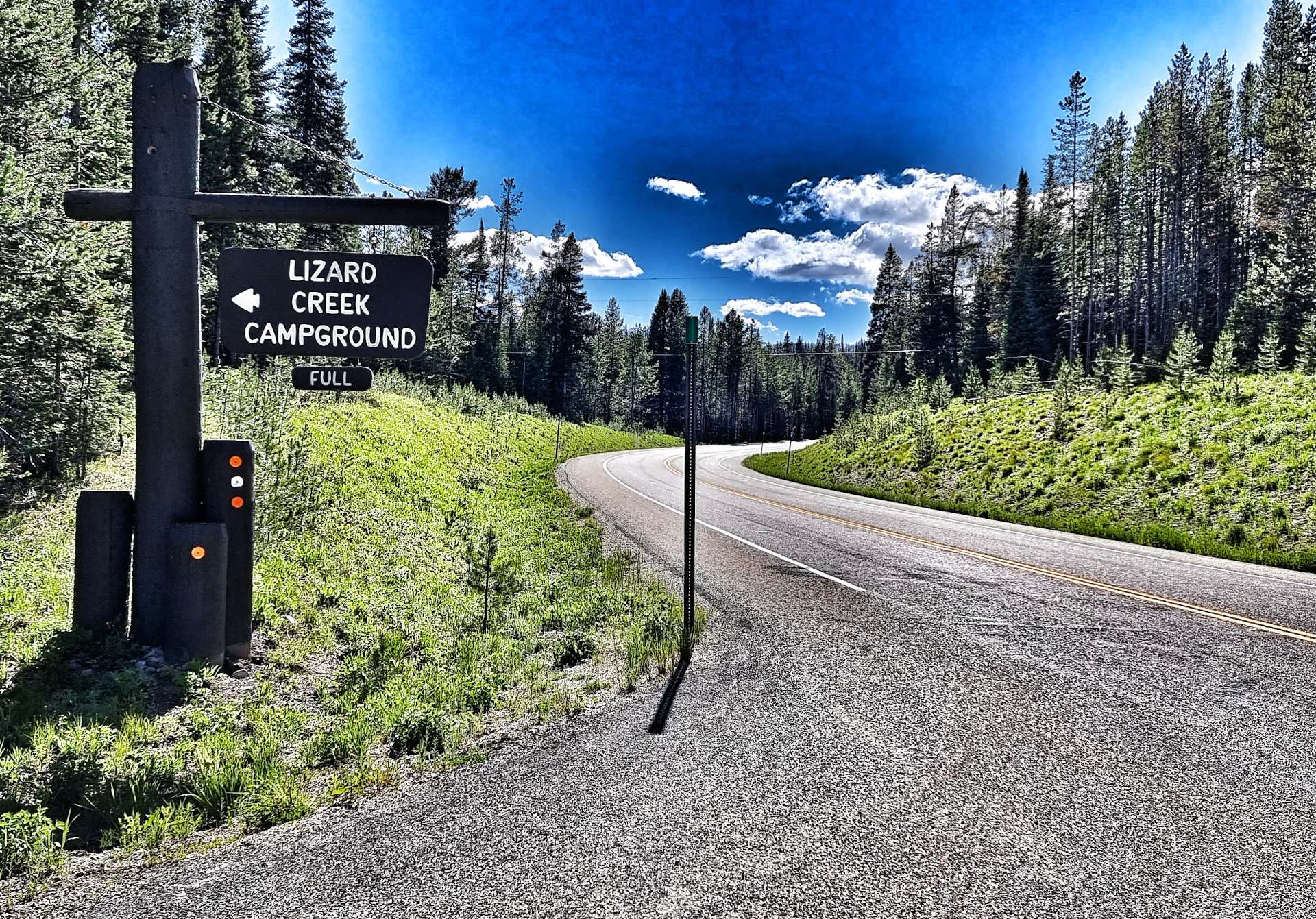
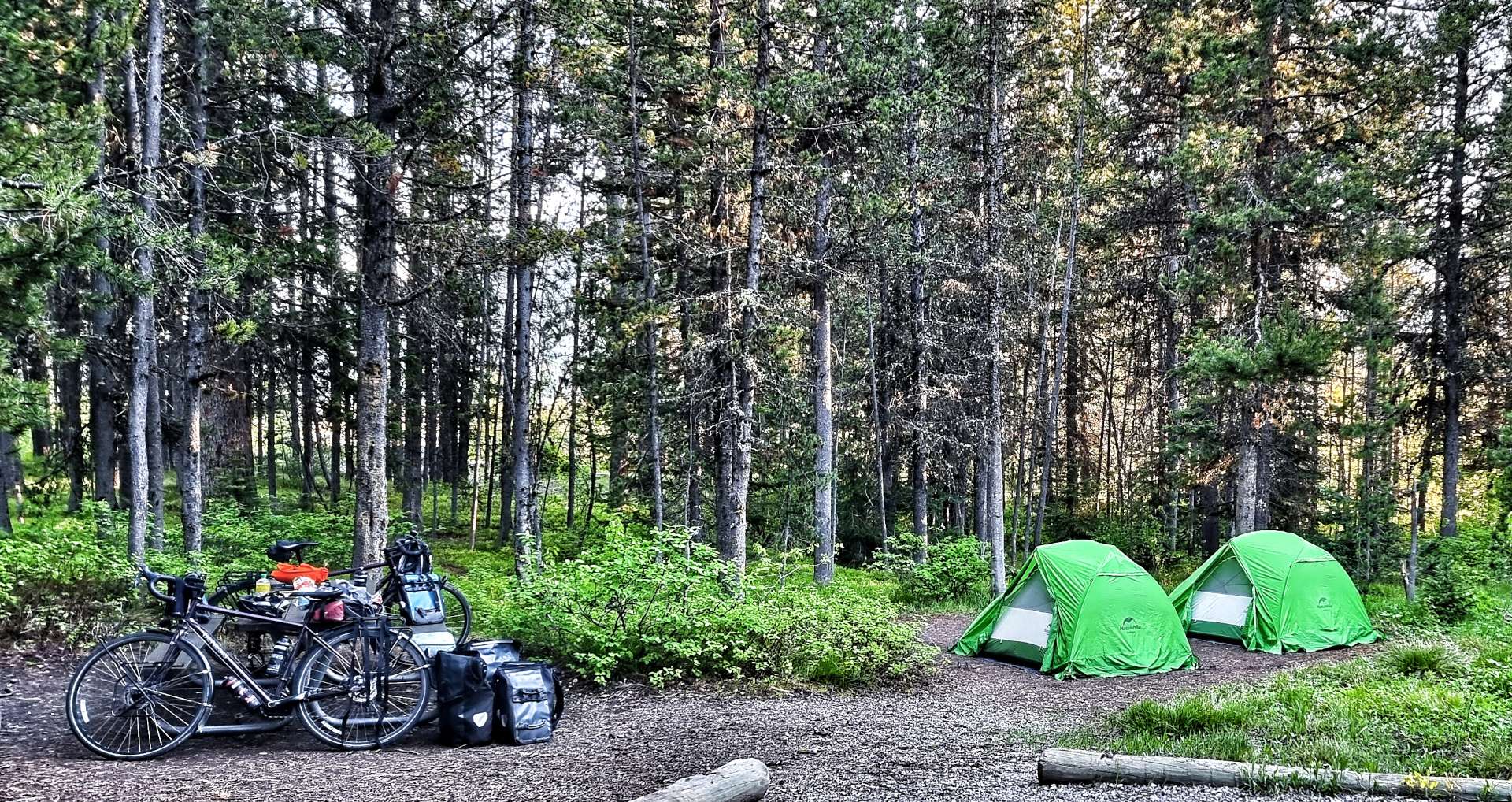
Lizard Creek Campground, where we’d be camping for the night was a mere 8 miles up the road. When we arrived, our friendly campground hostesses Marni & Mandy welcomed us & made sure we found our pitch for the evening.
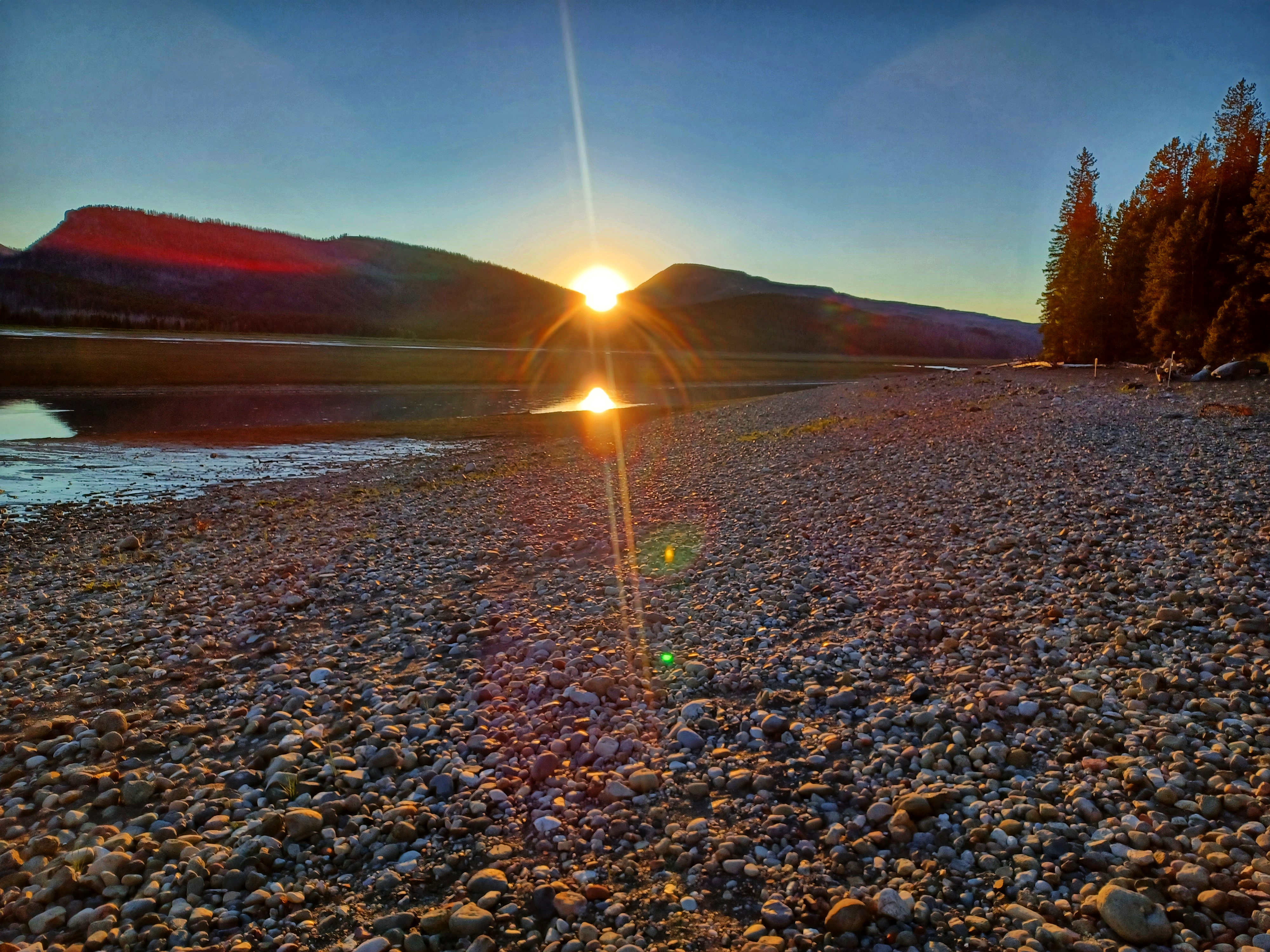
We set up camp, then ate our luxury dinner of ham & cheese sandwiches with either salt & vinegar or plain crisps. A little after 9pm we took a 2 minute stroll to the shoreline of Jackson Lake, where we watched the sun go down – huge thanks to Sean for sharing his sunset photo with me. The perfect end to the perfect day. Grand Teton National Park is a breathtakingly beautiful place & I’d encourage you to make time to visit if ever you’re in the region to see Yellowstone – you won’t be disappointed.
Stage Stats – 64 miles, 2,005 feet of climbing. Sunshine & blue skies all day as we explored a lesser known gem of a National Park.
Wednesday 22nd June – Lizard Creek Campground, Teton National Park to Grant Village, Yellowstone National Park (Stage 42).
It was bitterly cold overnight (below freezing) – I bought a beanie on 19th May in Sandpoint for just such an occasion & slept in it last night, along with long legged thermal bibs & a long sleeved jersey. We were on the road by about 10am & continued on a constantly rising road for 6 miles through a section of burned forest, before exiting Grand Teton National Park on the John D Rockefeller Jr Memorial Parkway as we headed towards Yellowstone.
John D Rockefeller was the only son of the founder of Standard Oil (now Exxon or Esso depending on which side of the Pond you’re from). He was a philanthropist & financier who donated $500 million to a wide range of causes, including Grand Teton, Acadia & the Great Smokie Mountain National Parks. Congress dedicated a parcel of 24,000 acres of land to recognise his contributions.
He was also involved in the Rockefeller Center (US Spelling), making him one of the largest real estate holders in New York City at one point. I’d encourage you to do your own research to better understand how he amassed his wealth so he could become a philanthropist. It’s not a simple or straightforward story so I’ll leave you to draw your own conclusion.
I’ll remember the stretch of road between Grand Teton & Yellowstone National Parks for two unrelated reasons.
Firstly, it’s where I experienced my first p*nct*re of the adventure – it took between 15 & 20 minutes to unload the bike, check the tyre, fit a new innertube & be on our way again. I’ll try & remember to take a photo next time!
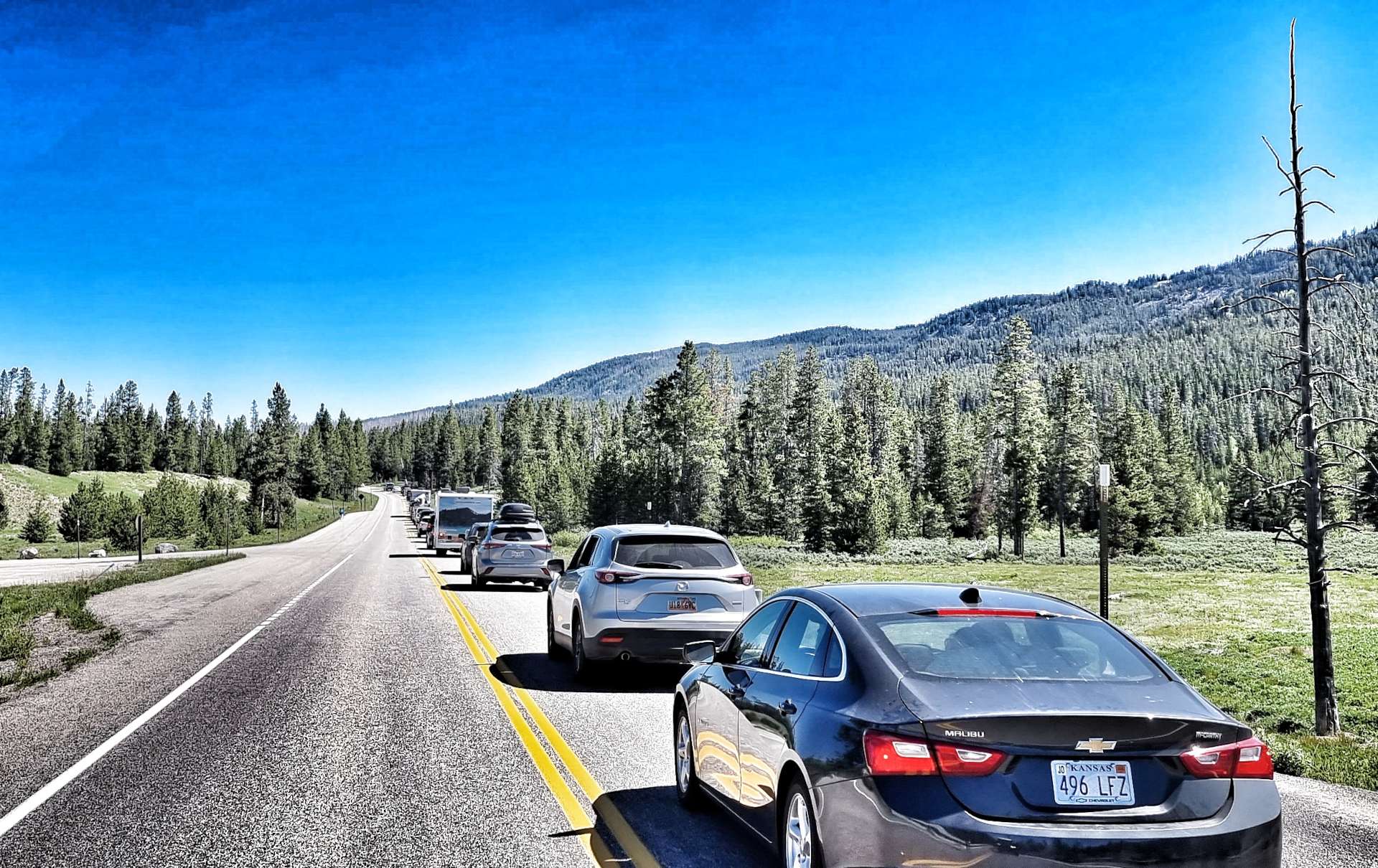
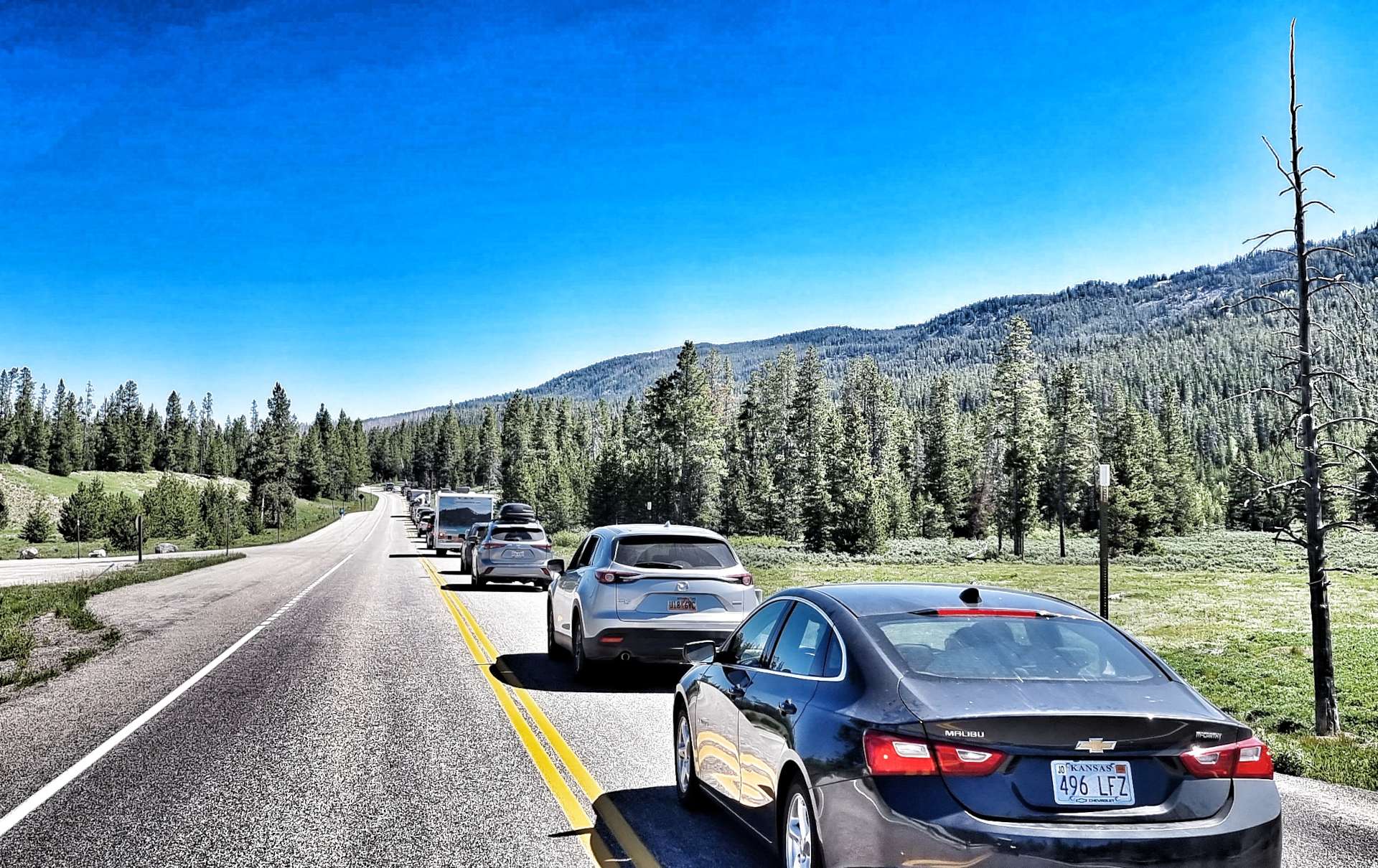
Secondly, we cycled down the hard shoulder, passing a 4 mile tailback of cars queueing to get in Yellowstone’s South Entrance. As an aside, when we stayed at West Yellowstone, we were less than 1/2 mile from the West Entrance Gate – we took a 227 mile detour to get into Yellowstone via the South Gate. But look at the unexpected adventures the last week has brought us!
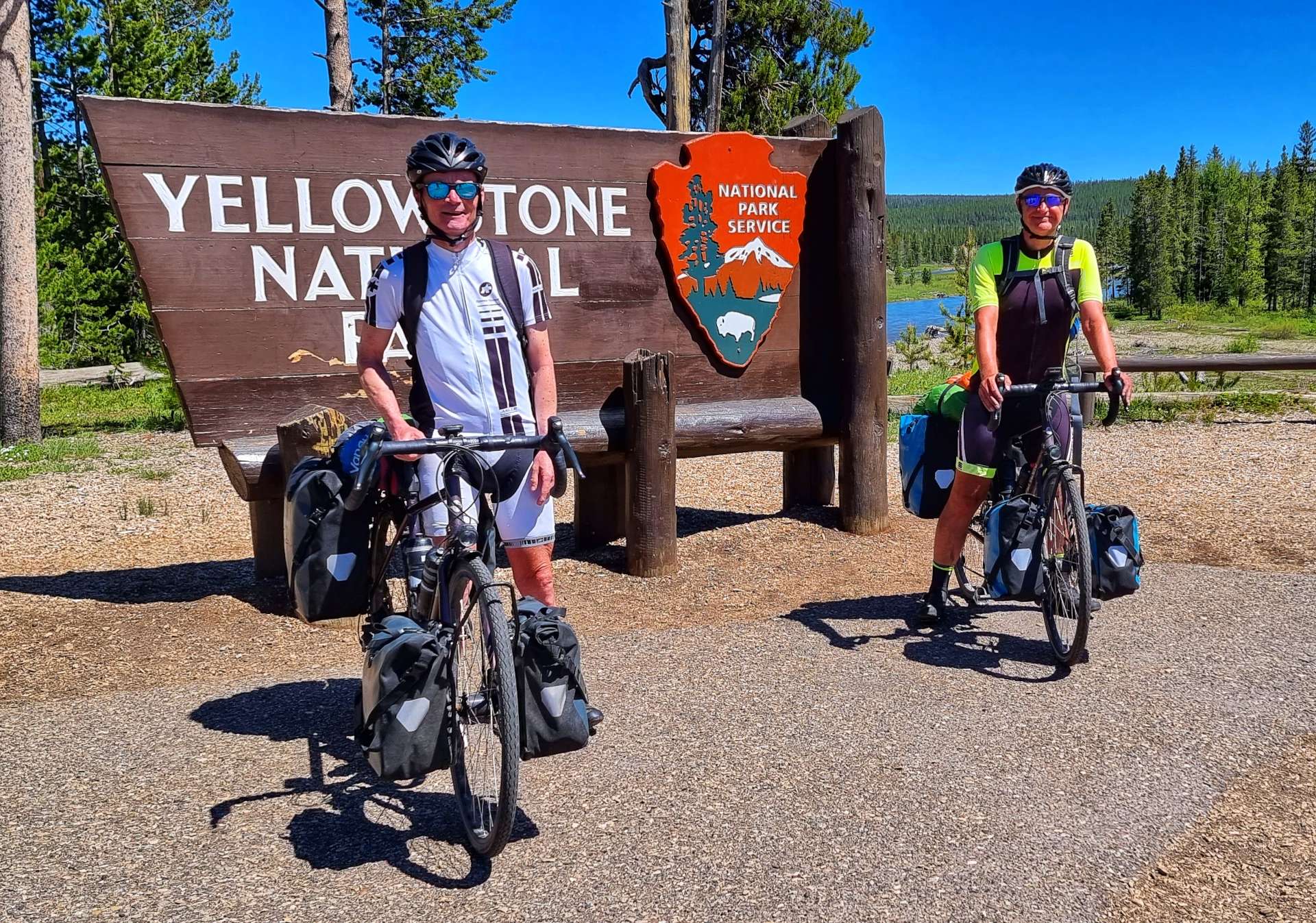
A friendly Ranger took a photo of us both by the Yellowstone sign, before we set off up the Snake River valley.
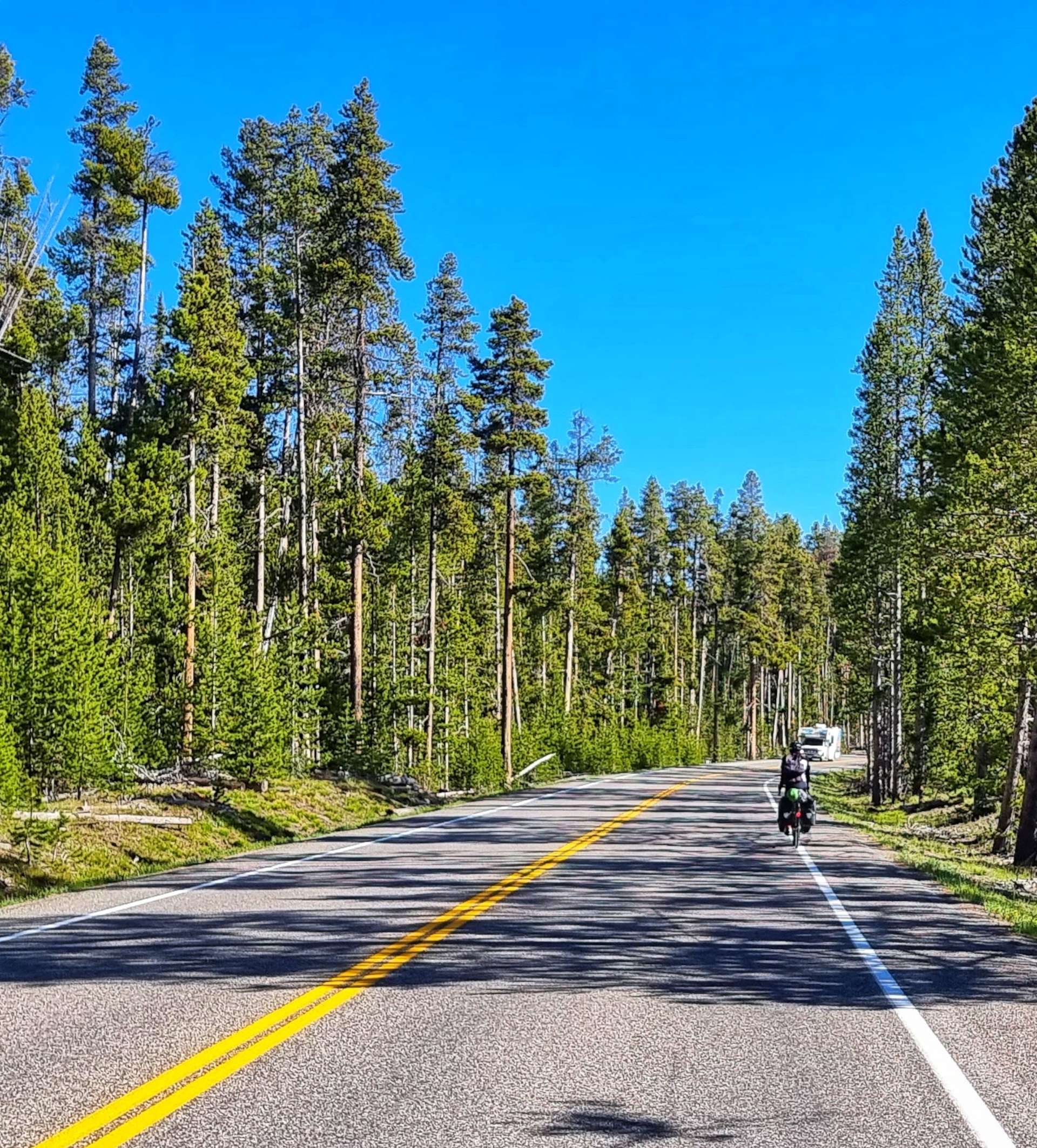
Yellowstone opened today for the first time in over a week – while this increased queues for cars trying to get into the park, the upside was no traffic was leaving the National Park, so traffic could overtake us safely whenever they wanted to. The climb up the Snake River valley was relentless – never steep, but also never ending as we threaded our way through the forest!
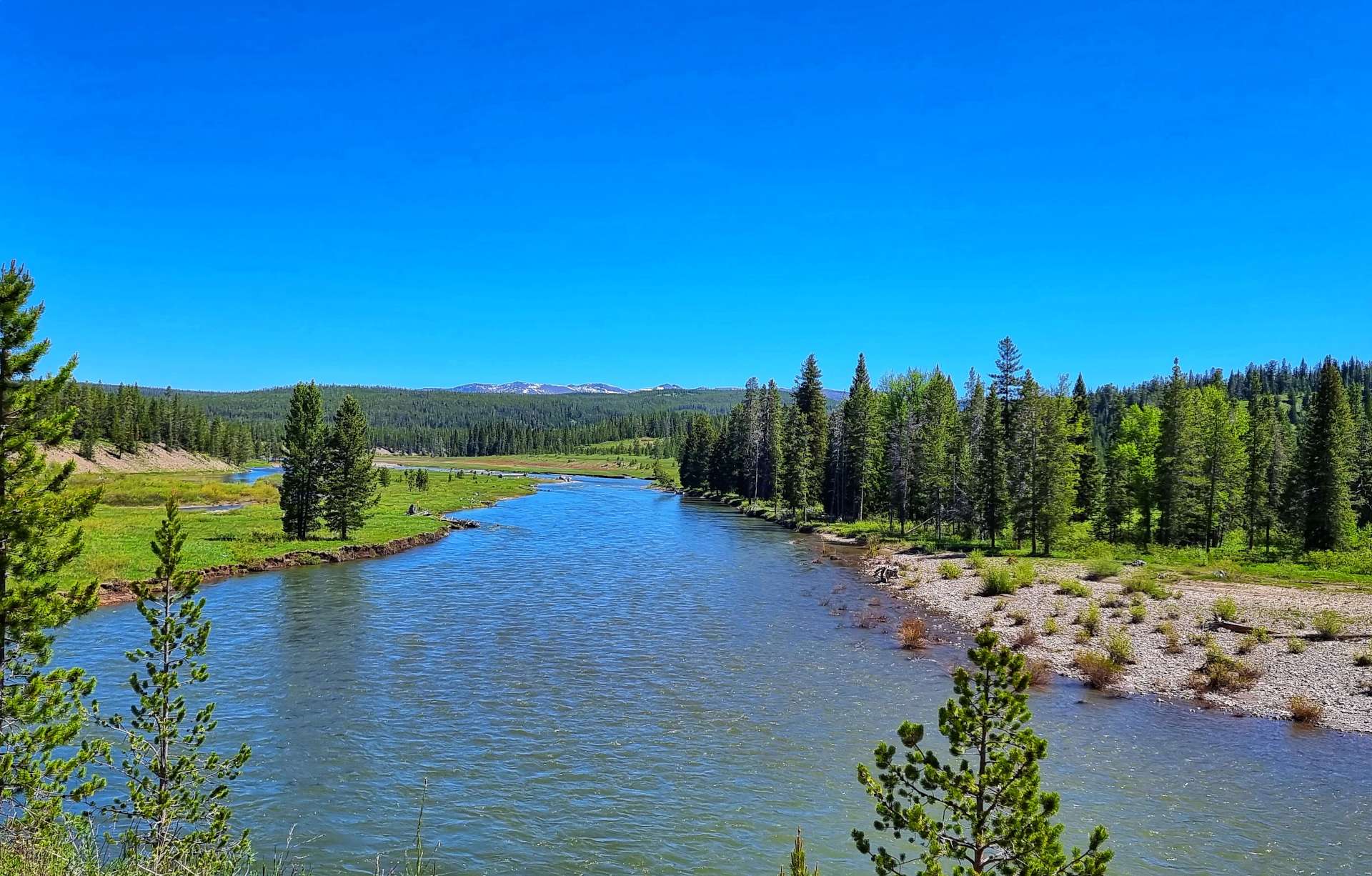
As we headed towards the rim of the canyon, views to the other side of the valley opened up, with occasional sightings of the river below.
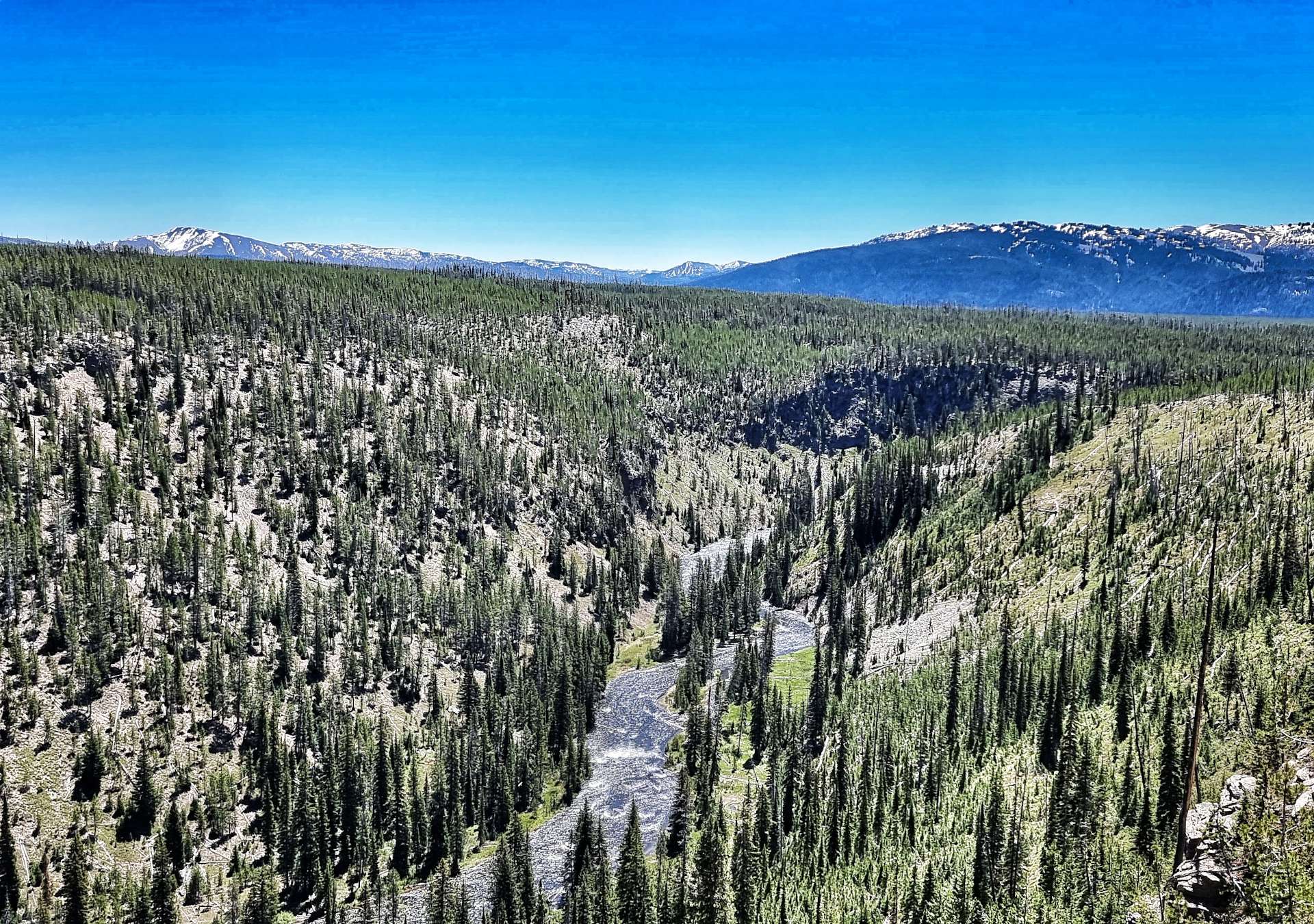
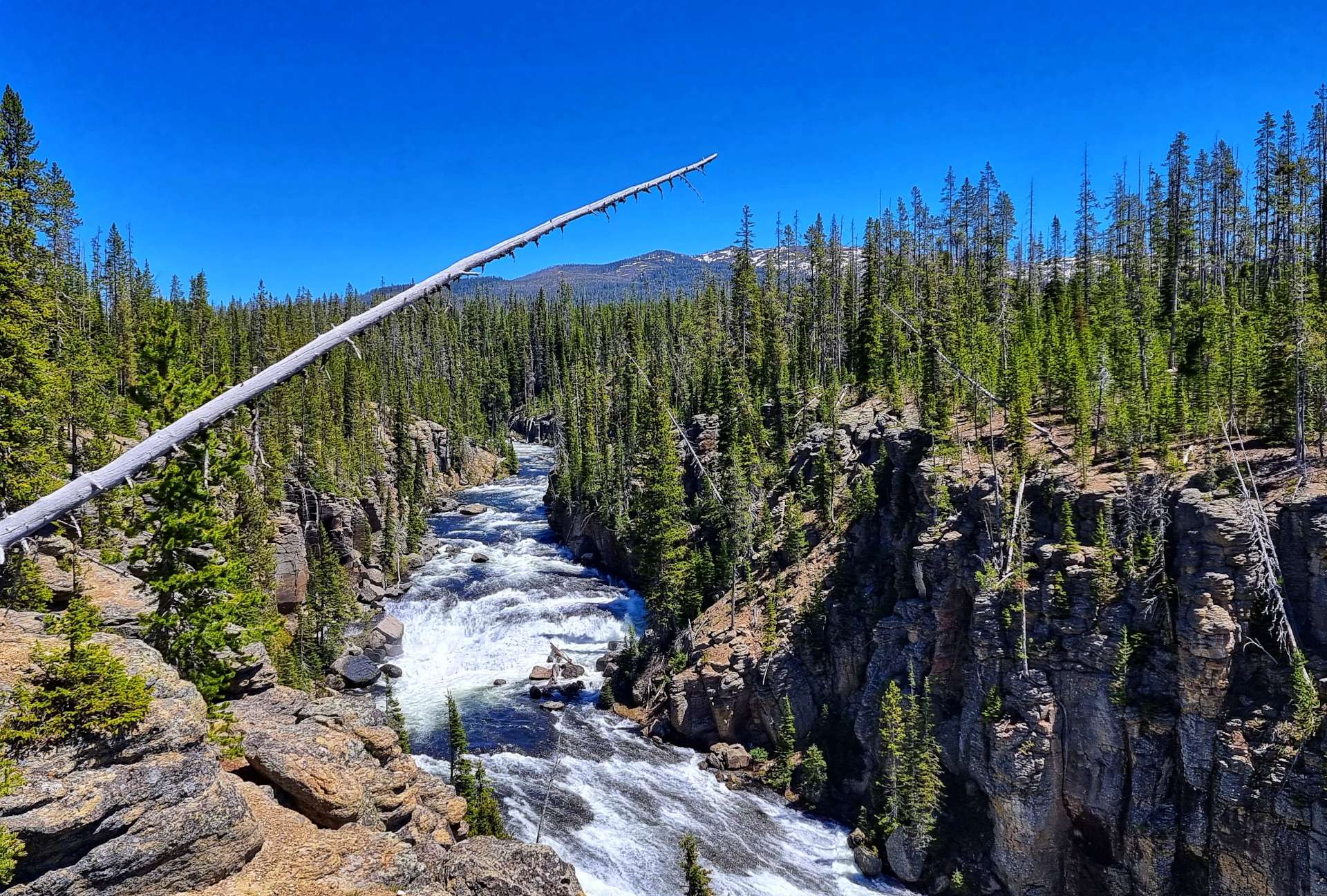
Then all of a sudden the Snake River revealed itself as it cascaded down the valley at Moose Falls & Lewis Canyon Falls – there was white water all the way, suggesting that the water was fast running & the river lost height quickly.
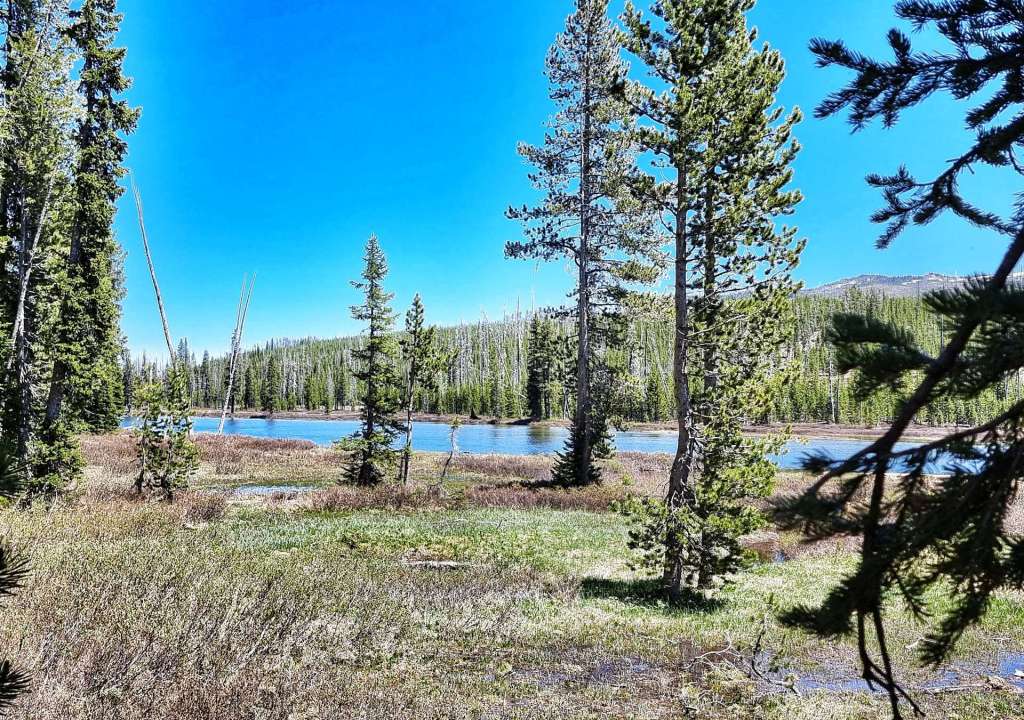
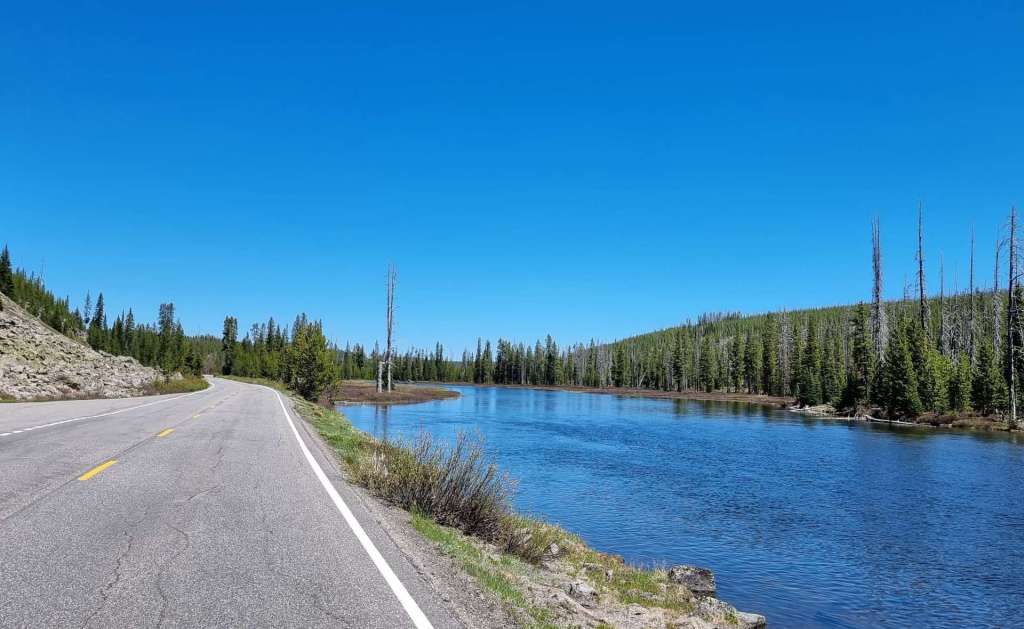
Although the climbing hadn’t quite finished for the day. we were now on much kinder gradients – instead of fast running rivers, we were surrounded by lakes that fed into the Lewis River. As we passed Lewis Lake itself, we knew the climbing was at end end & we had a reward waiting for us……
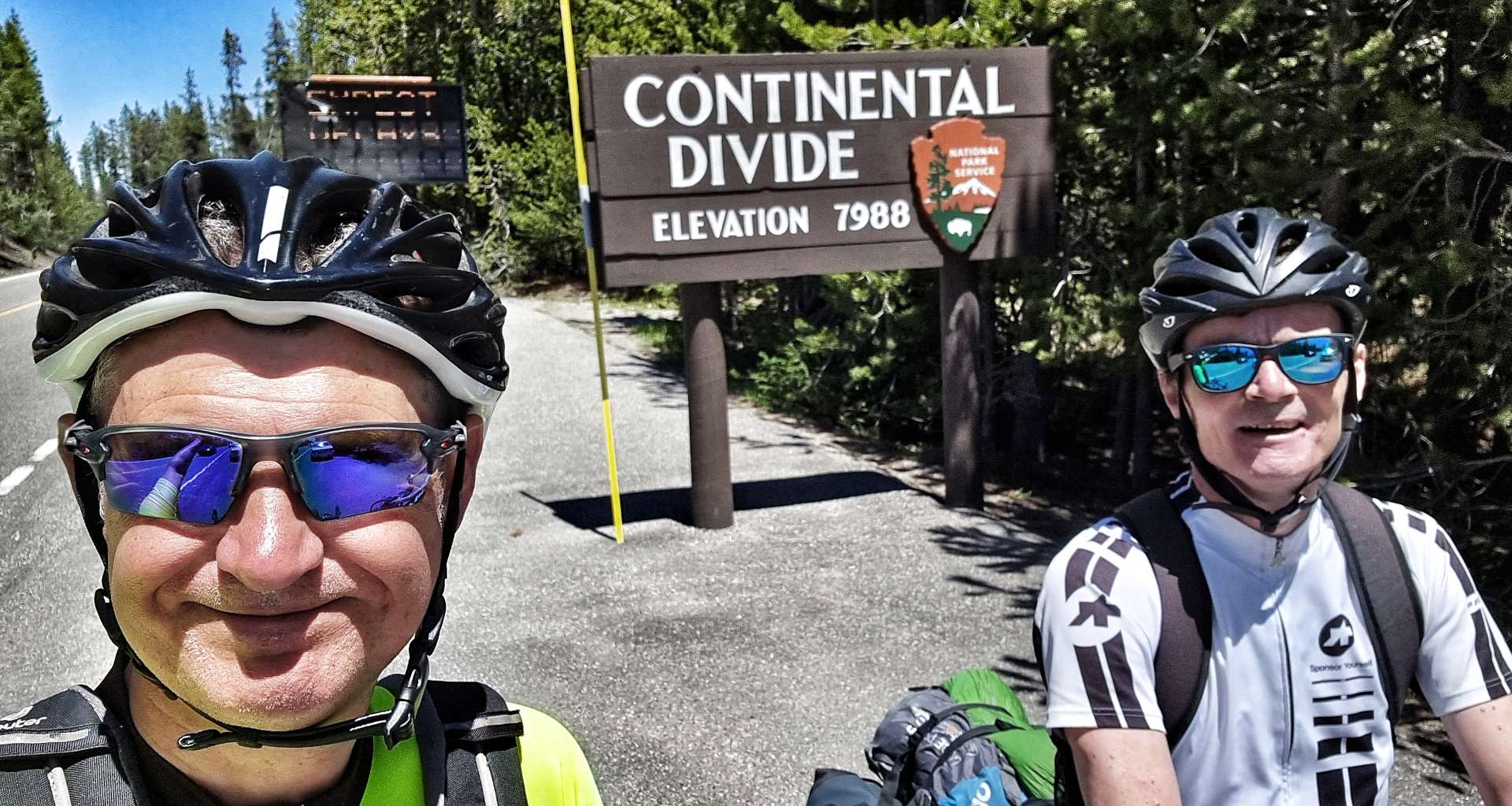
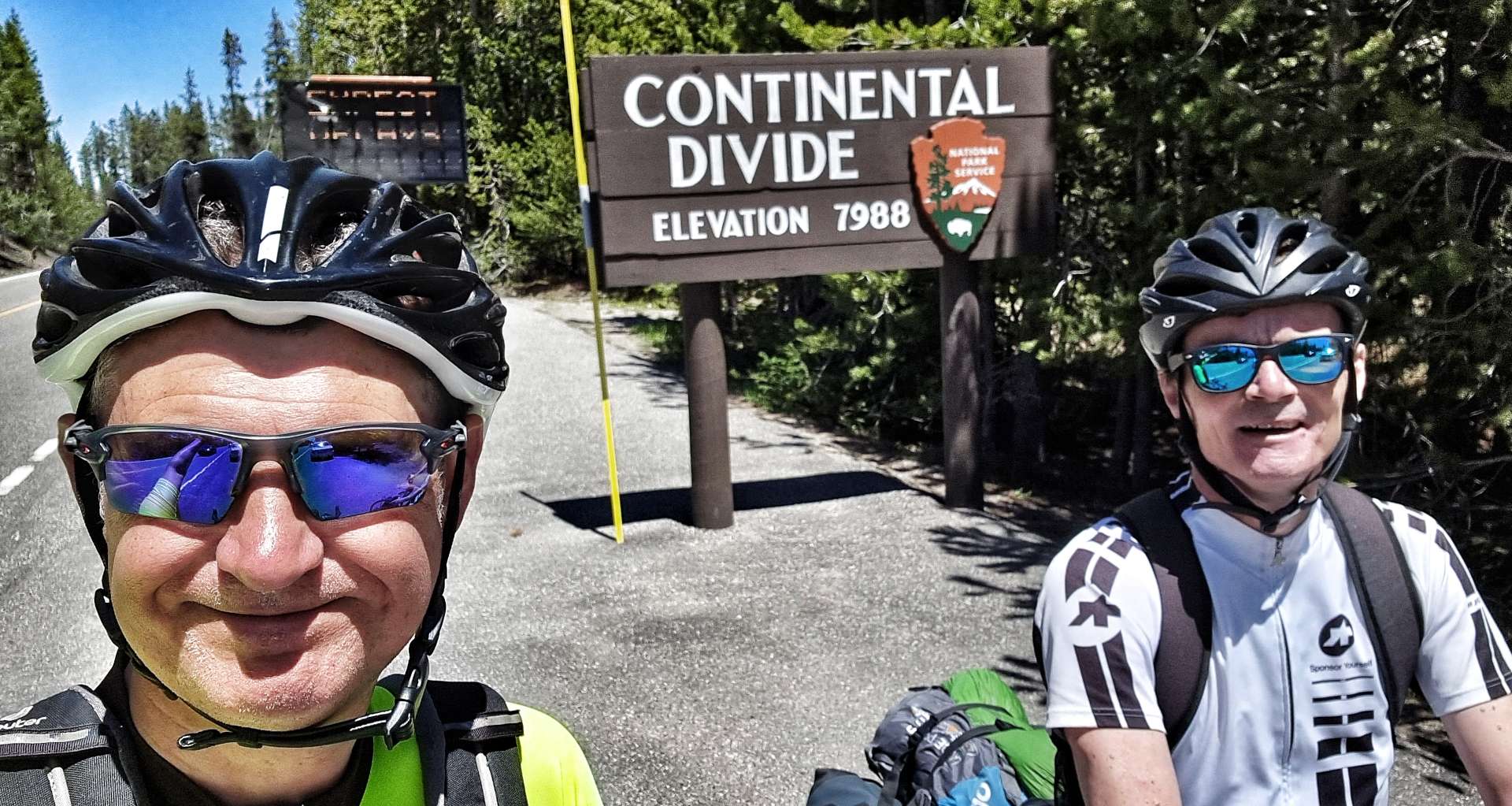
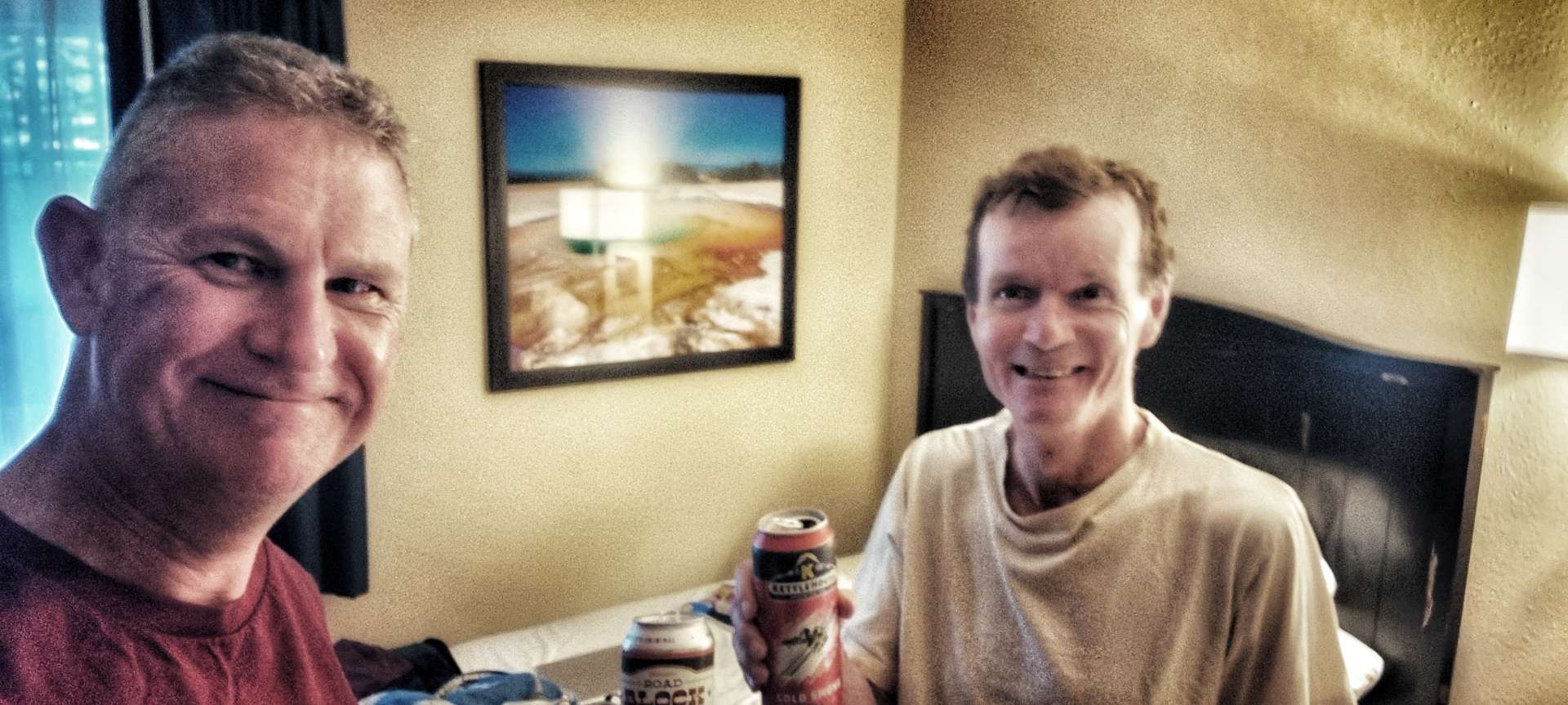
We were on the Continental Divide once more! After a quick selfie, we were on our way again for the gentle descent into Grant Village, where we’d managed to secure a non-air conditioned, no tv, flaky wifi room for the bargain price of $366 (including tax) between us. Luckily sandwiches were slightly cheaper than that at $8 each, but dinner in our room still cost $35 each, including a tinny to celebrate making it to Yellowstone in the first place!
Tomorrow our Yellowstone adventure continues!
Stage Stats – 31 miles, 2,251 feet of climbing. Sunshine & blue skies all day again as we said goodbye to Grand Teton National Park & hello to Yellowstone National Park.
Yogi, Booboo & Ranger Smith shut up shop, but then take pity on us.
As you’ll know by now if you’ve read my last update, substantial flooding, rockslides & rockslides on roads caused Yellowstone National Park to temporarily close all 5 entrance gates on 13th June & they currently remain closed. I’m pleased to report that no-one was injured by this devastating natural disaster.
When we left Helena on 12th June, our plan was to reach West Yellowstone on 14th, then head into the National Park via the West Gate. We would then look to camp for up to a week as we explored the North Loop (via Gardner & Cooke City) & the South Loop (Old Faithful, West Thumb & Yellowstone Lake), then exit via the East Gate to Cody.
This is no longer possible, so we’ve taken the decision to enjoy a couple of days of rest & relaxation in West Yellowstone, while we come up with an alternative plan. Full details of our alternative plan will be at the bottom of the post (assuming we have a plan by then!!).
Due to the late decision to stay longer in West Yellowstone, we spent 13th & 15th June in Dude & The Round Up, while on 14th we stayed in The Travelers Lodge.
Yellowstone National Park preserves the most important bison herd in the United States. It’s the only place in the USA where bison have lived continuously since prehistoric times & they are the largest herd on public land. They are able to roam over the expanse of Yellowstone & some nearby areas of Montana.
As a result they continue to exhibit wild behaviour just like their ancestors, congregating during breeding season to compete for mates, as well as migration & exploration. Less than a century ago, the bison population was on the verge of extinction, but by the end of 2021 there were in the region of 5,450 in Yellowstone.
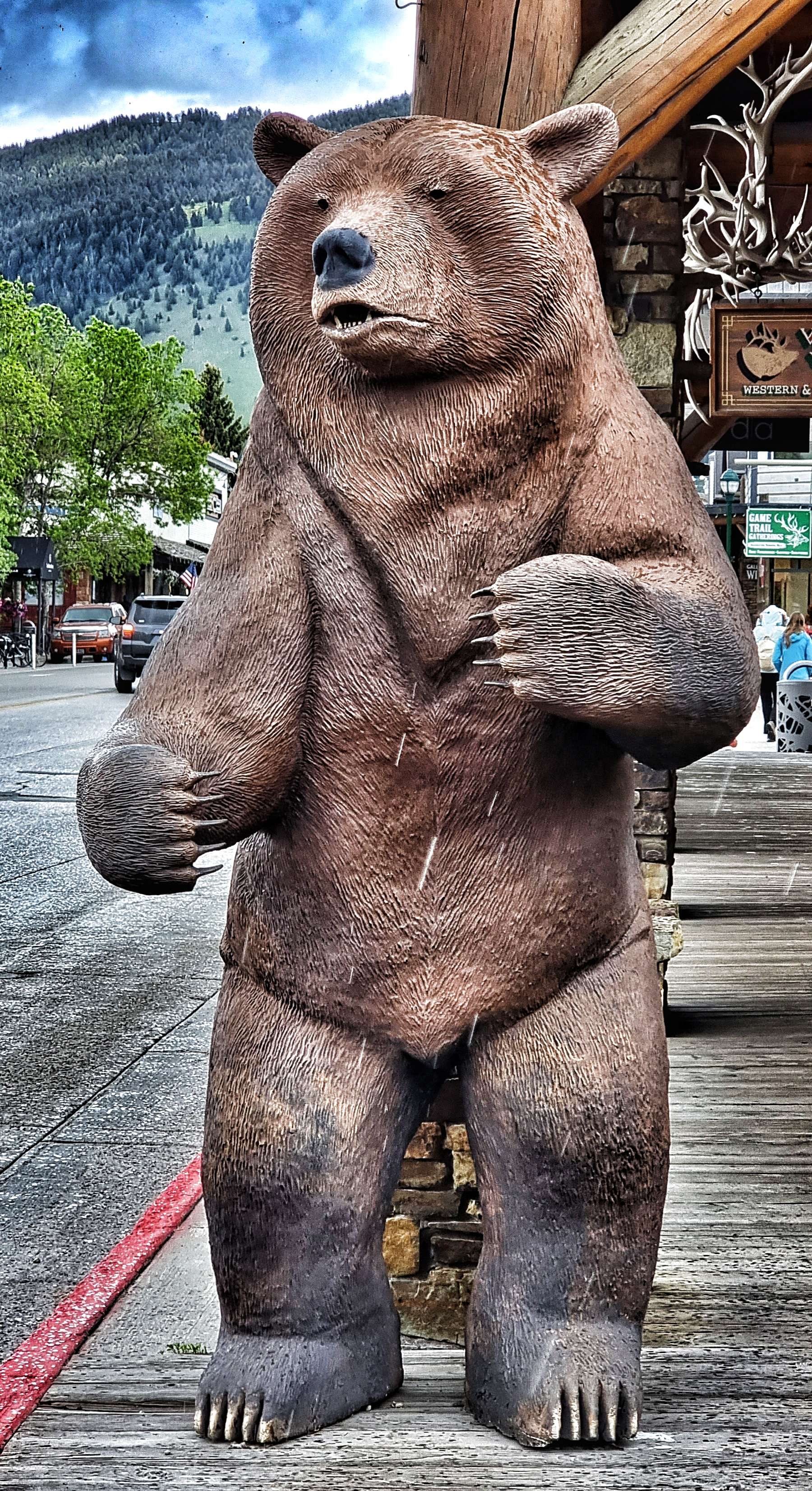
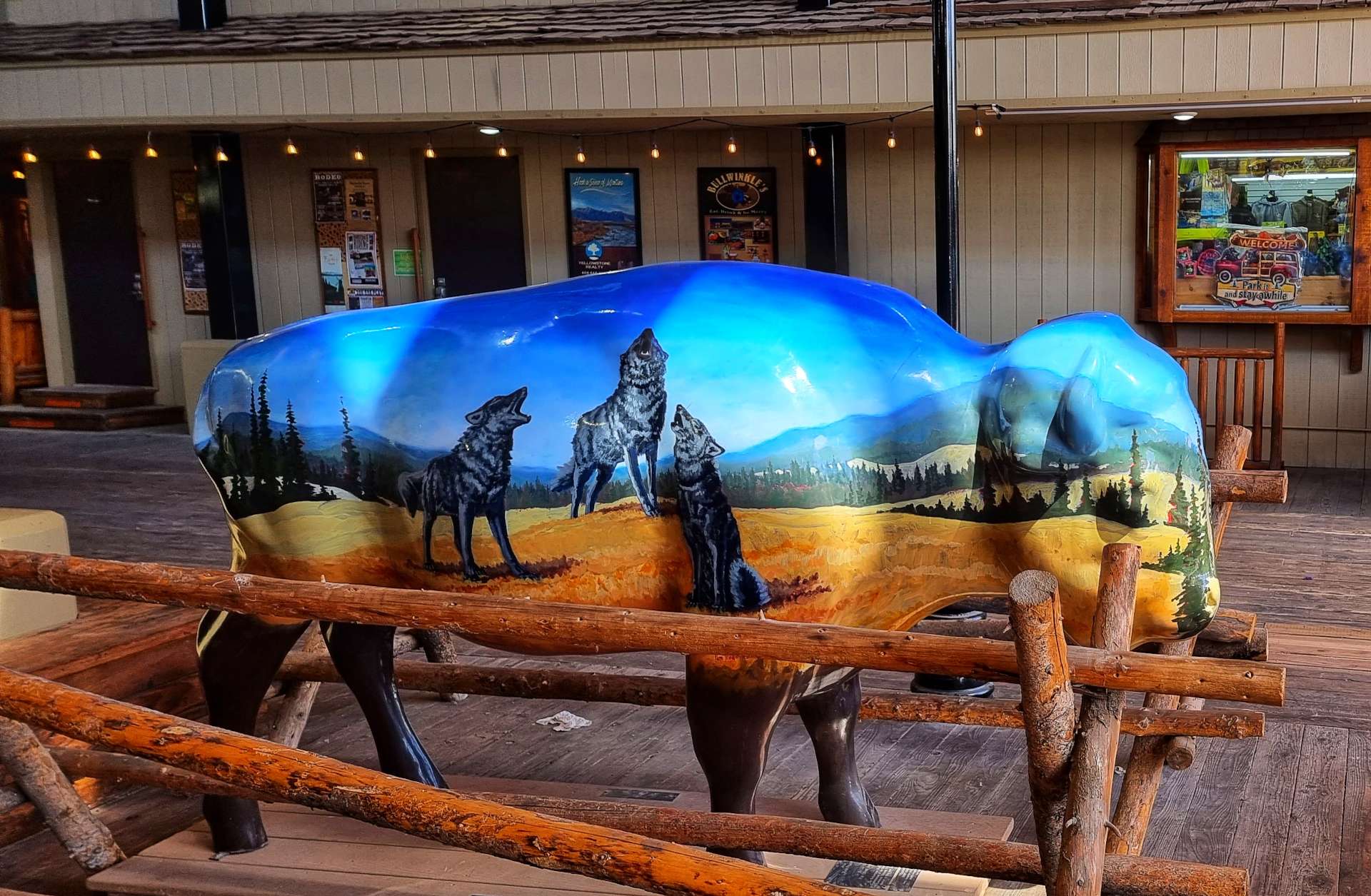
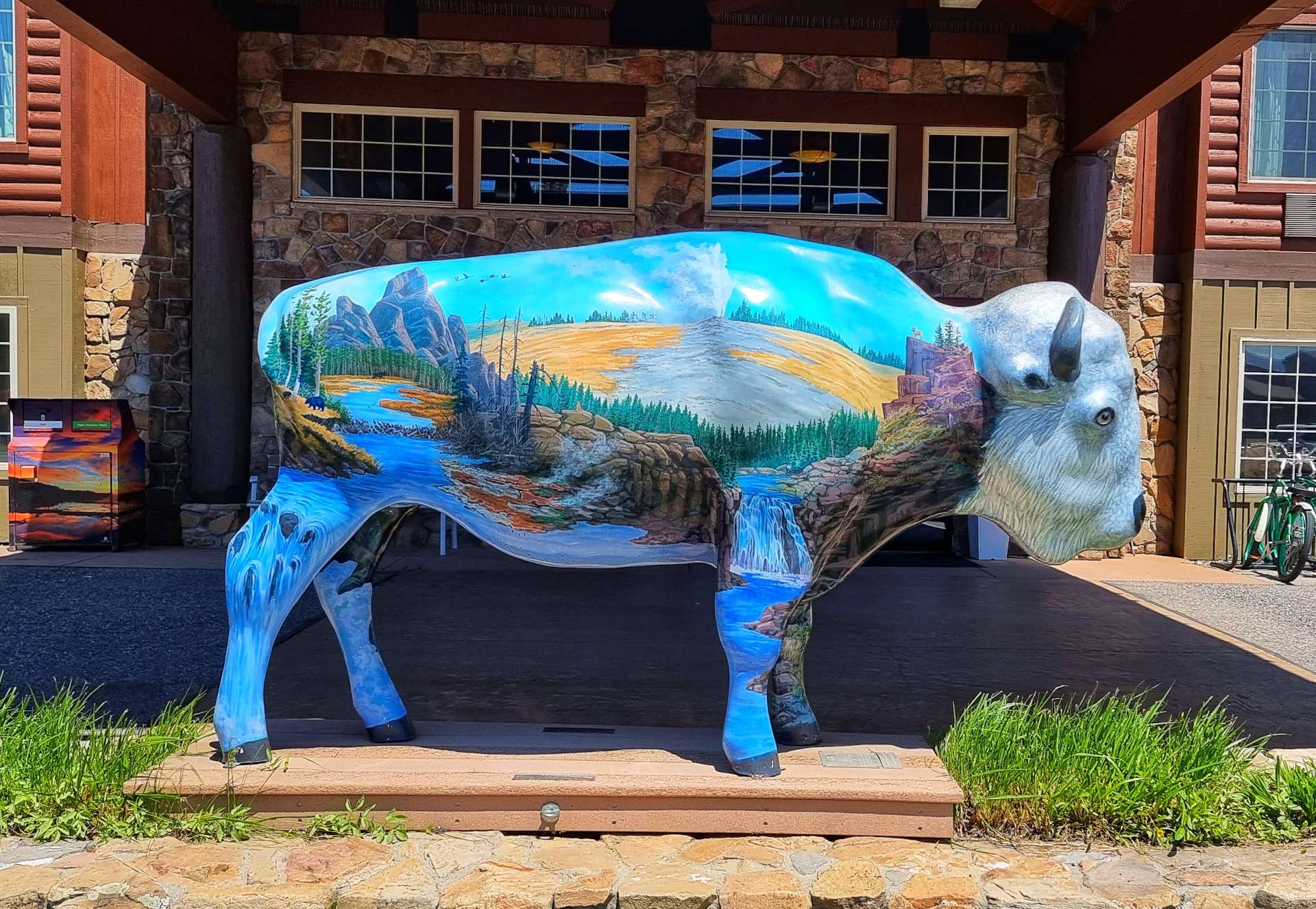
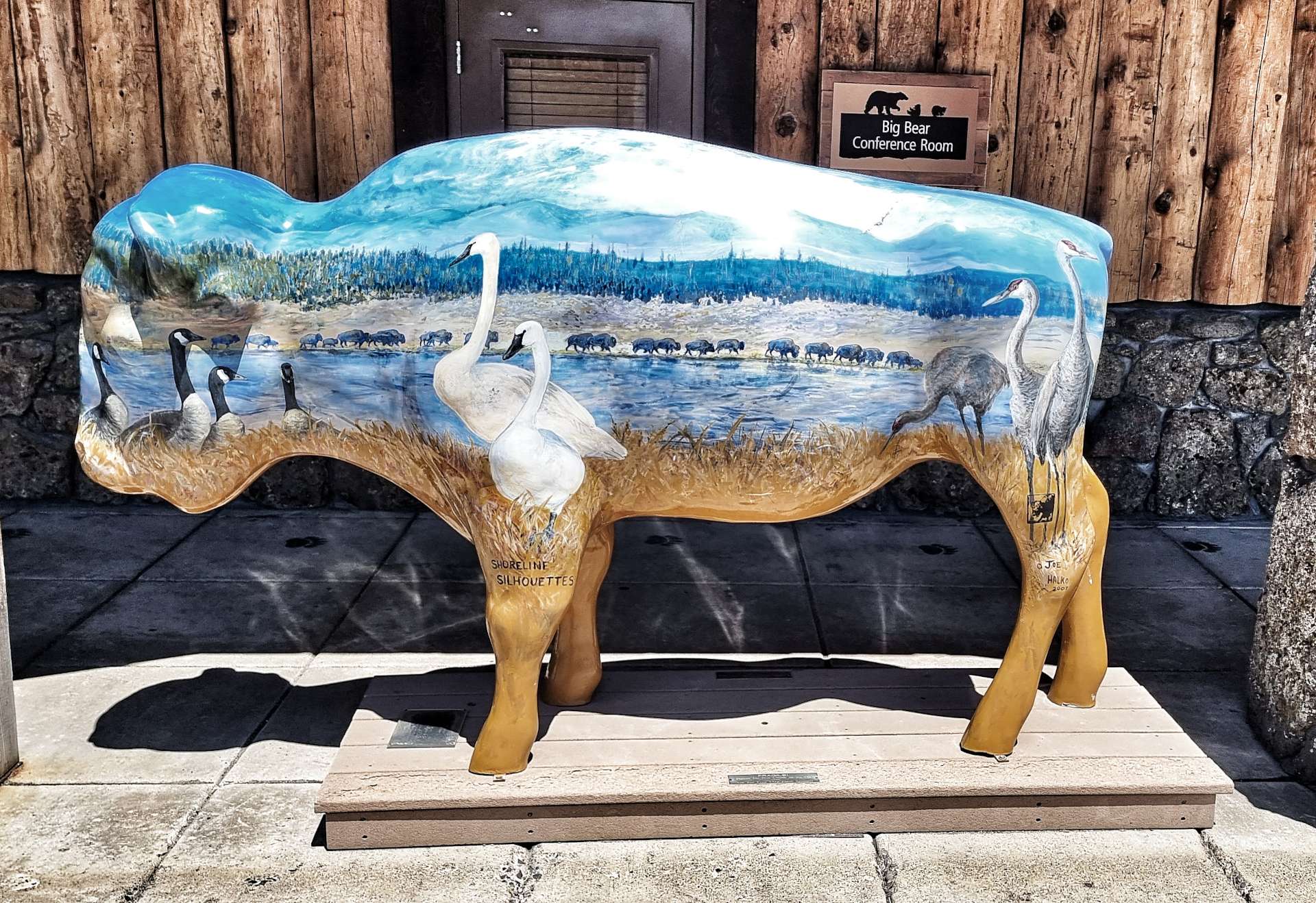
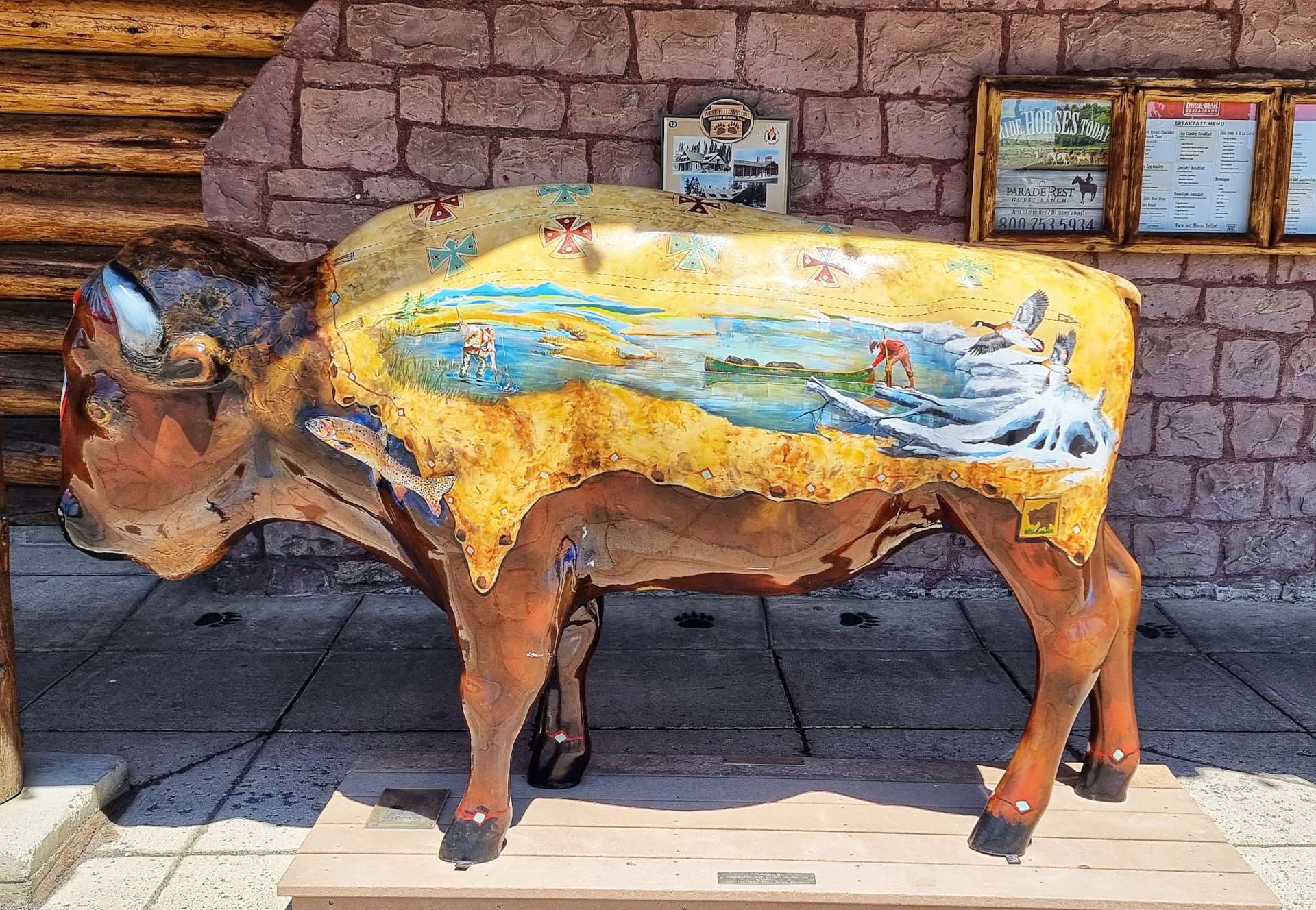
West Yellowstone has its own herd of bison sculptures – each individually painted.
West Yellowstone has had 5 names throughout its history. Before there was a town, stage coaches bringing passengers from Monida to Yellowstone National Park crossed the nearby park boundary. The location of that crossing & the surrounding area was known as Boundary.
Terminus applied to this location as the Union Pacific Railroad progressed to the soon-to-be town site. Riverside was the official name for the town’s first Post Office, opened in 1908. Many locals considered the name misleading, as the town was 2 miles away from the Madison river.
Early in 1910, the town’s name was officially changed to Yellowstone. This caused concern for the other 4 towns located at the entrances to the National Park (Gardner to the North, Cooke City to the North East, Cody to the East & Jackson / Teton to the South). It was felt that the name suggested this was the only entrance to the National Park.
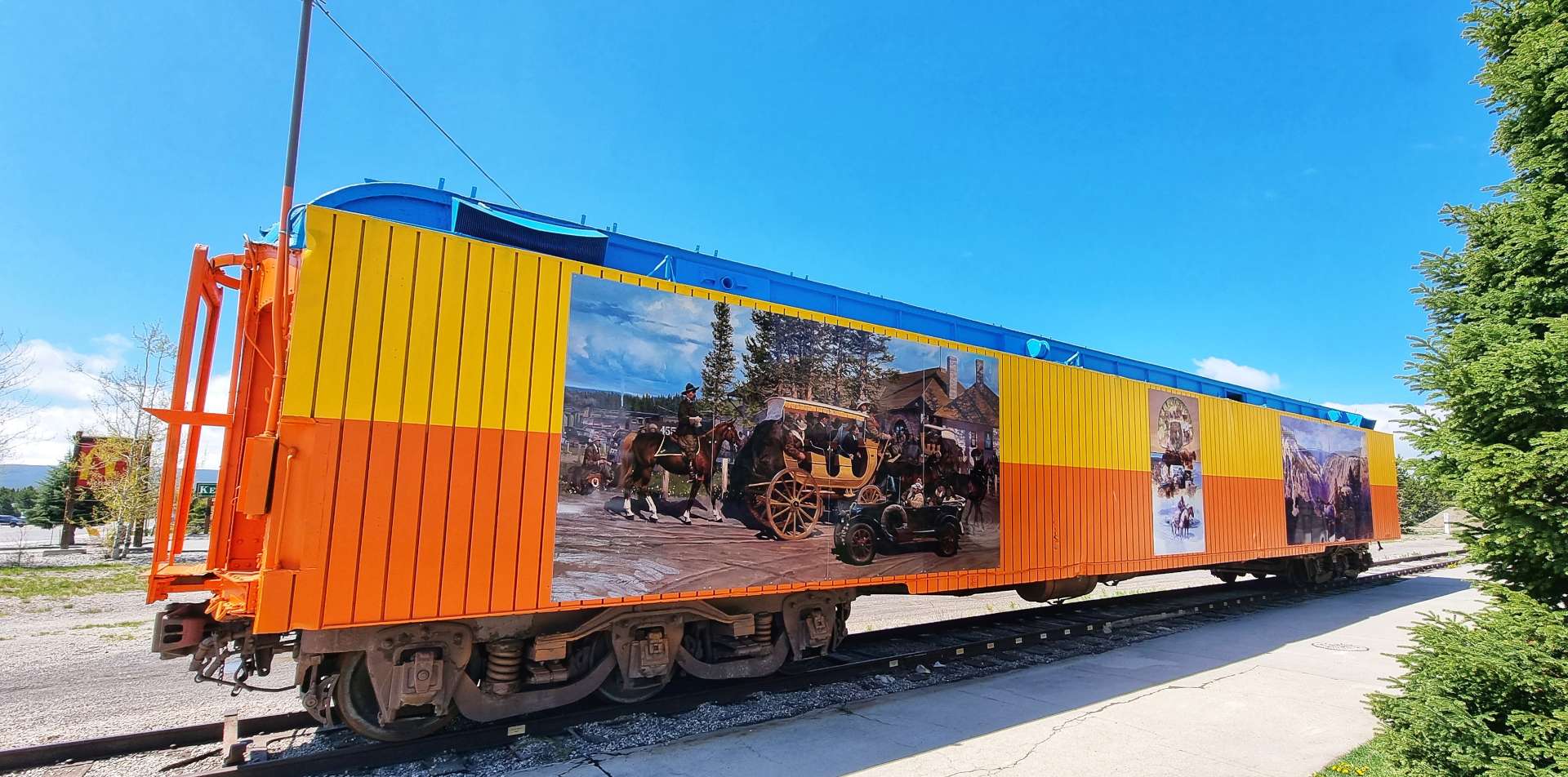
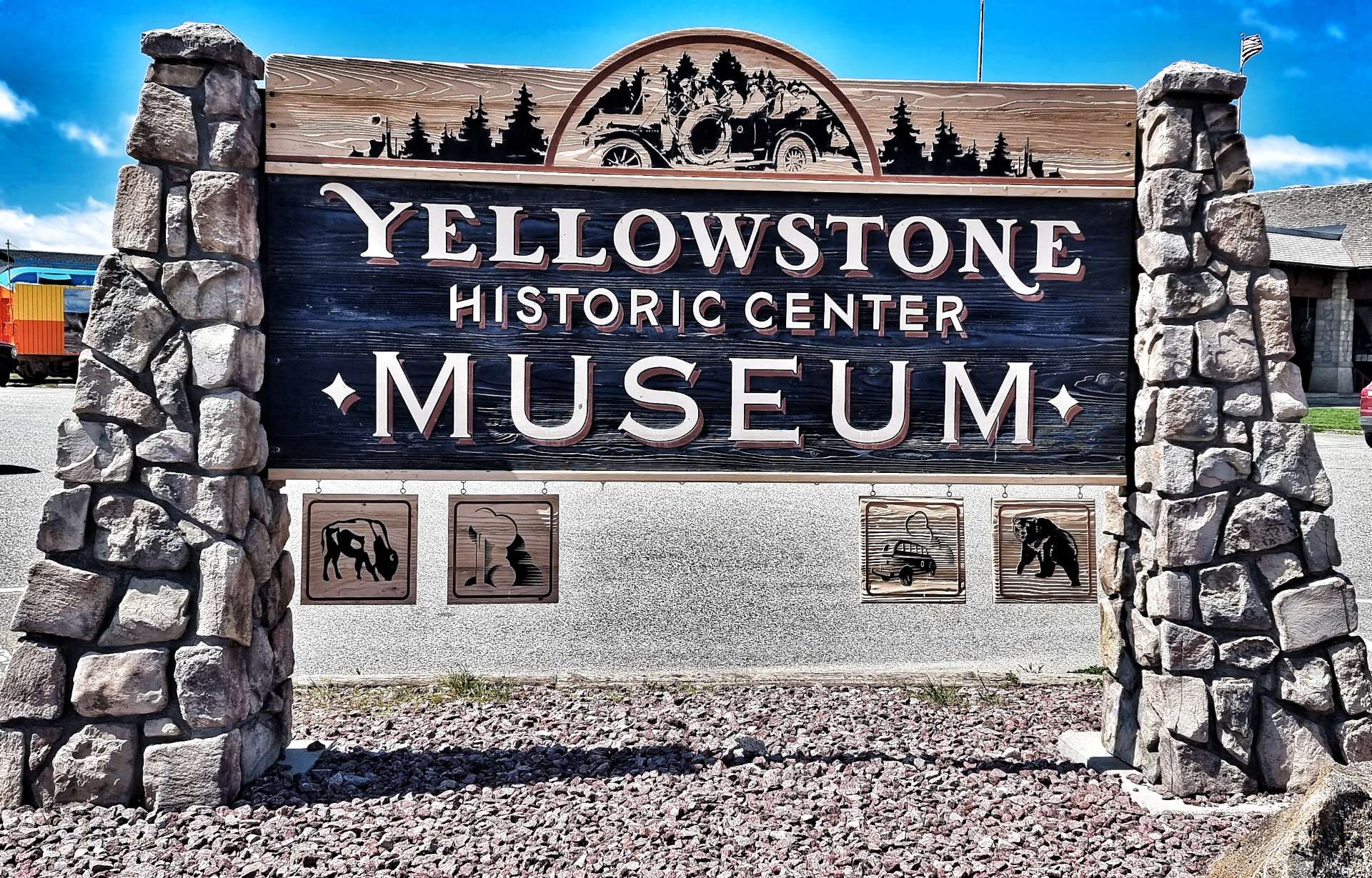
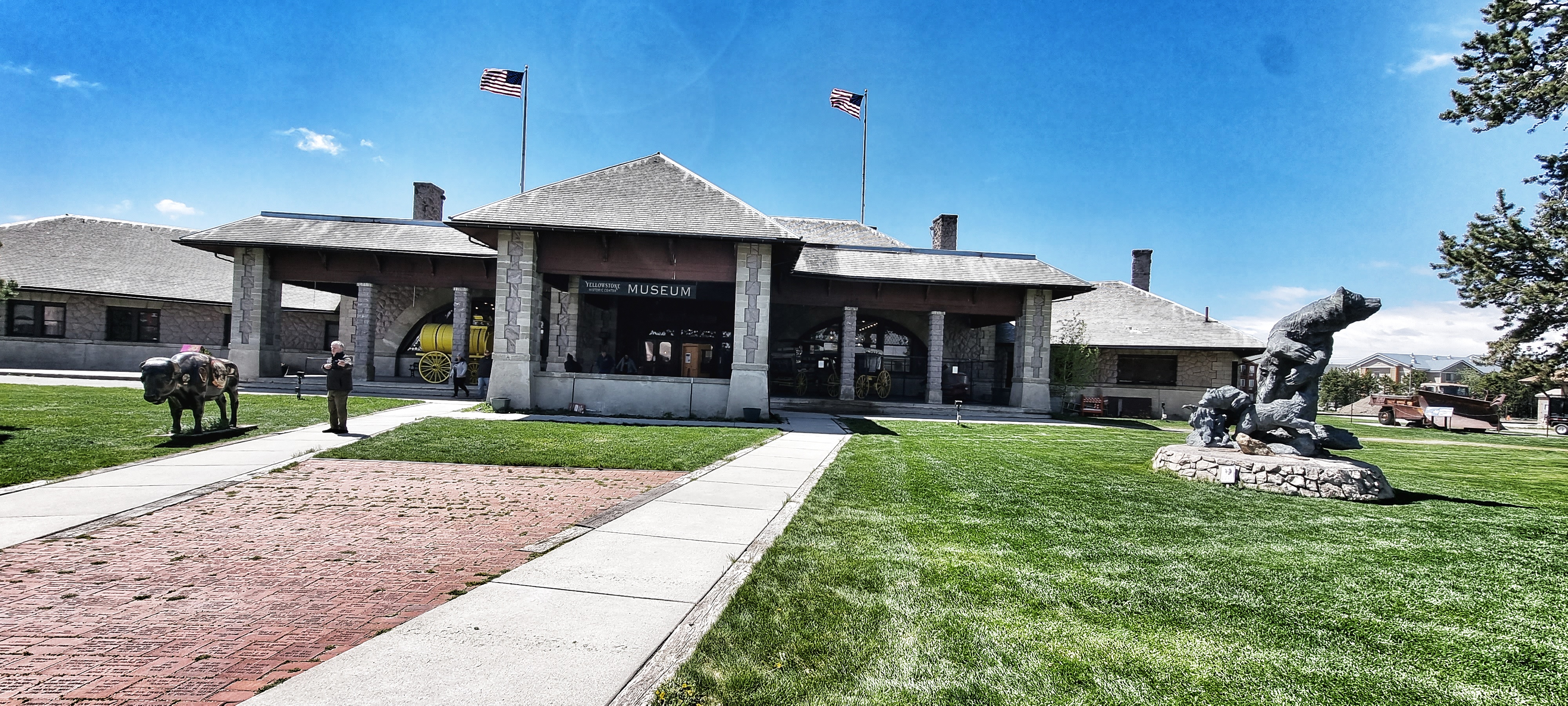
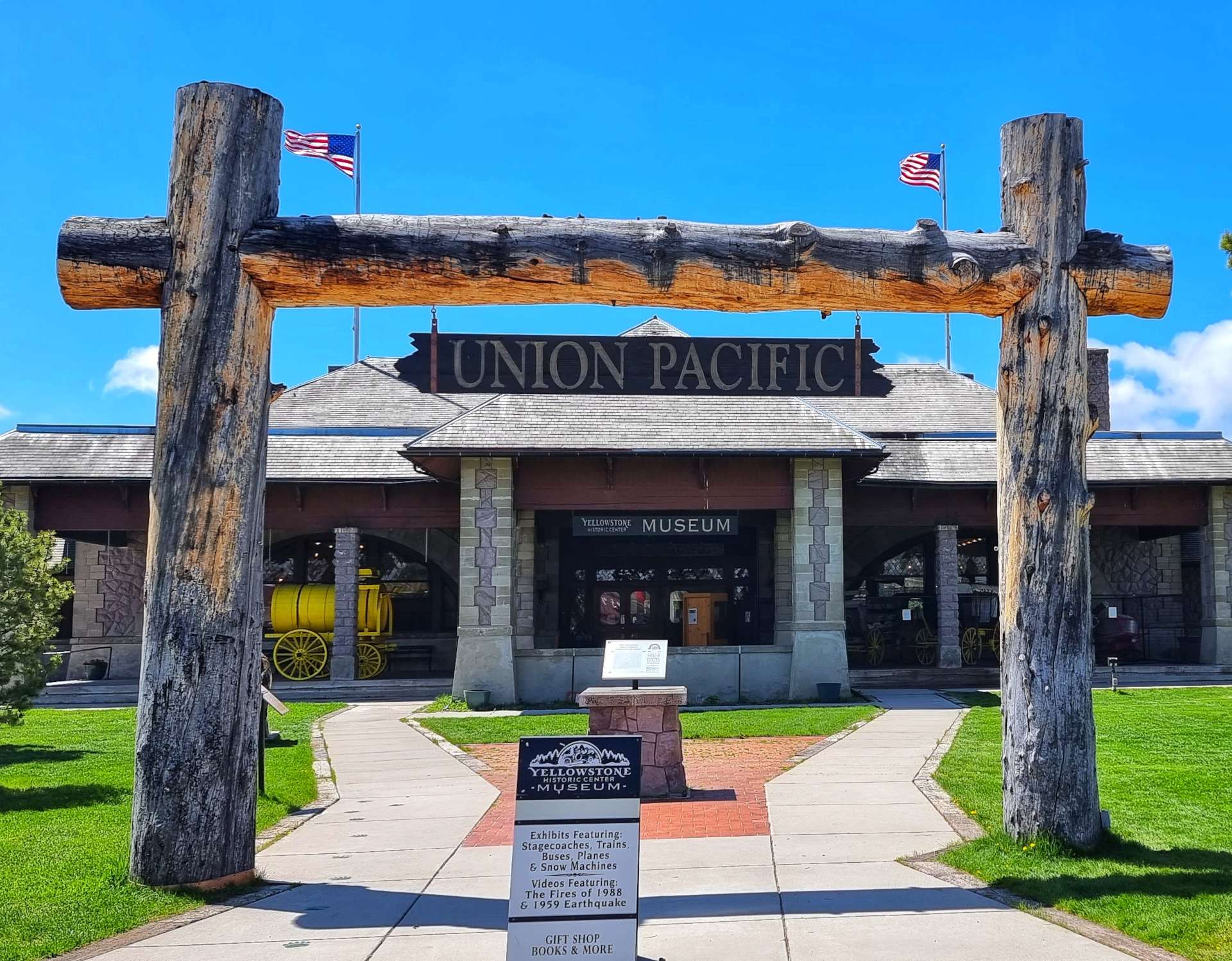
The descriptive name of West Yellowstone was given to the town in 1920 & it was formally incorporated in 1966. It has been the most popular entrance to the National Park since 1913 & regularly welcomes in excess of 4 million visitors per year. All this & more is described & explained in the Museum.
The IMAX cinema is another ‘must do’ activity – we watched an enthralling 45 minute film on the relationship between the animals & man. It was an uplifting story that encouraged us to take the 1 mile trip to the National Park gate & take a couple of photos. Normally this deserted stretch of road would be packed with cars trying to get into the National Park. After such an exciting afternoon, I needed an ice cream to cool myself down!
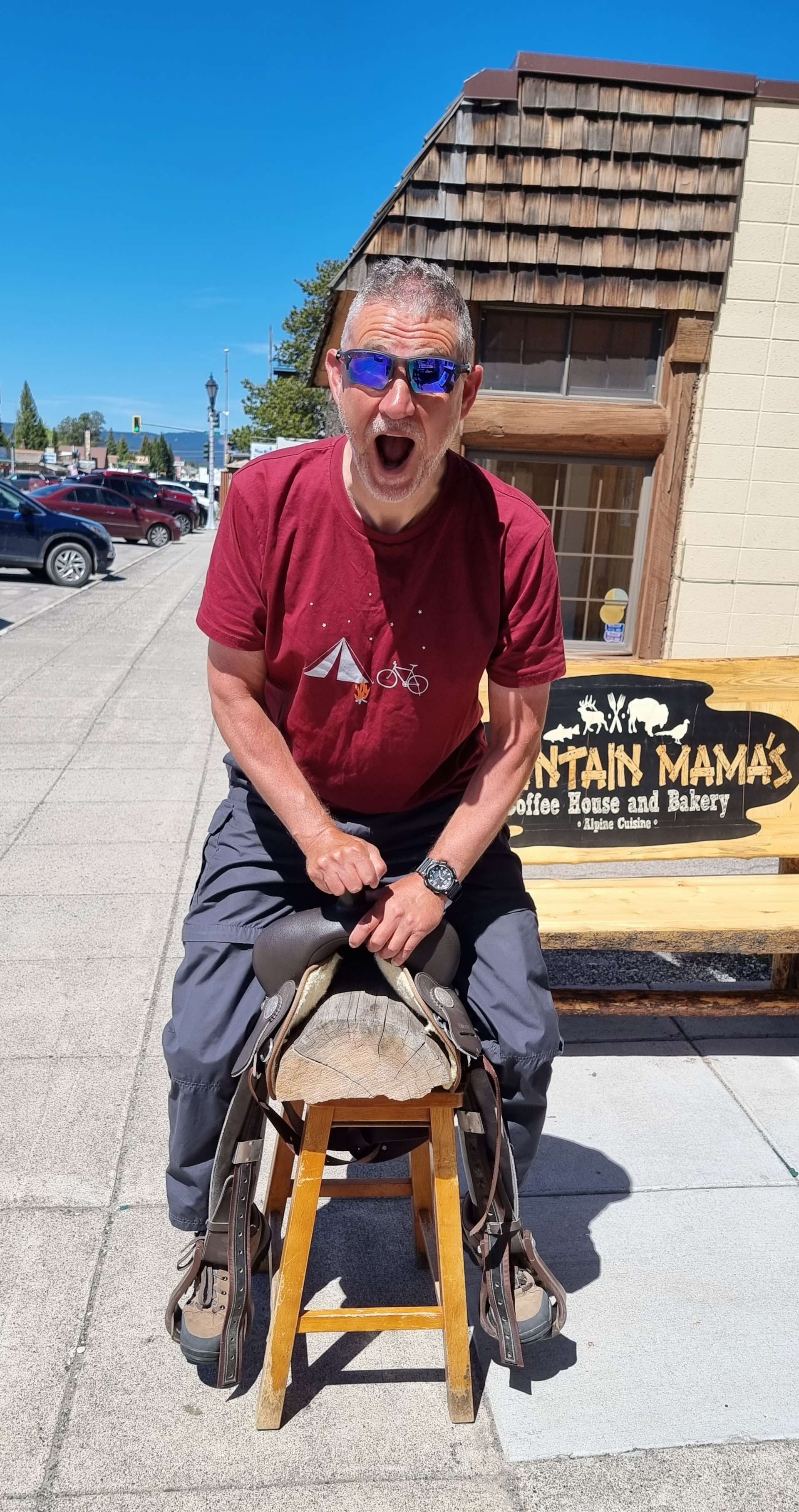
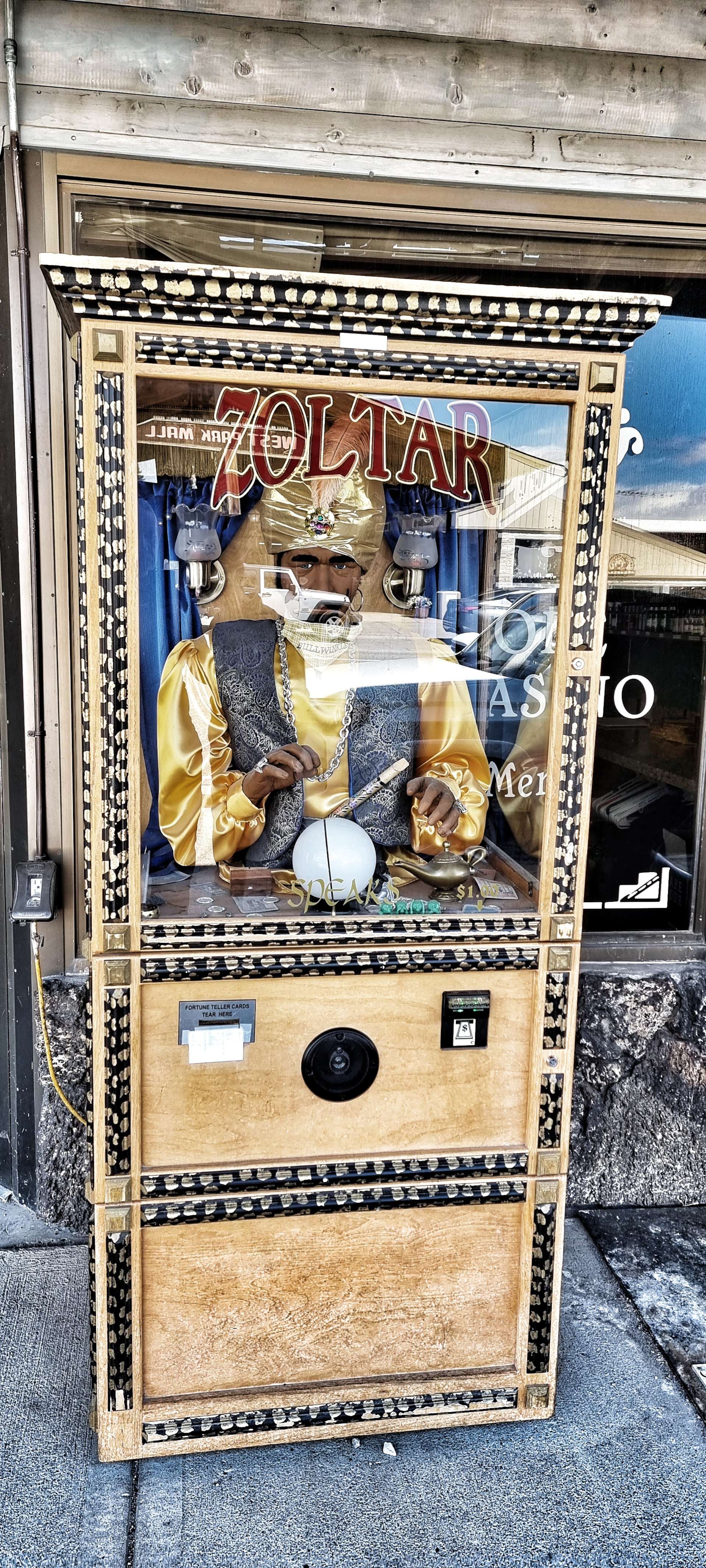
I visited West Yellowstone on a cycling tour in 2010, so had an idea of what to expect – I also wanted to revisit the Best Western to rekindle old memories – it isn’t a good photo, but it triggered some great memories. I also took the chance to catch up with Yogi Bear & Booboo, as well as practice riding another type of steed! I also asked Zoltar if he could predict whether Yellowstone would be open if we headed to a different Gate.
Although Zoltar didn’t provide an answer, we agreed that our best chance of seeing Yellowstone National Park would be to approach it from the South. We eventually worked out 4 short days that would get us to Jackson Hole for Monday 20th June. We could then take in Teton National Park on Tuesday 21st & then be reliant on the National Park opening by 22nd June. Alternatively, we would have to move on & pick up our original route further East.
As it’s now the 21st June, we know the National Park will open at 8am on 23rd. We have a campsite booked in Teton National Park on 22nd & have booked over-priced accommodation at Grant Village in Yellowstone on 23rd, but at least we’re now going to see the National Park!! I’ll post later in the week about what we did & how we got to Jackson – we had plenty of fun & a few adventures along the way!
Hey, Hey, Hey, we’re off to see Yogi at Yellowstone. Oh, no we’re not! Sunday 12th to Tuesday 14th June
Sunday 12th June – Helena to Three Forks
After a couple of rest days, we were looking forward to a 3 day block of riding which would take us to Yellowstone National Park to see Yogi Bear, Booboo & Ranger Smith. We were up & on the road under overcast skies by 9.15am, for what on paper looked to be a straightforward day – gradual climbing most of the day with a couple of small downhills.
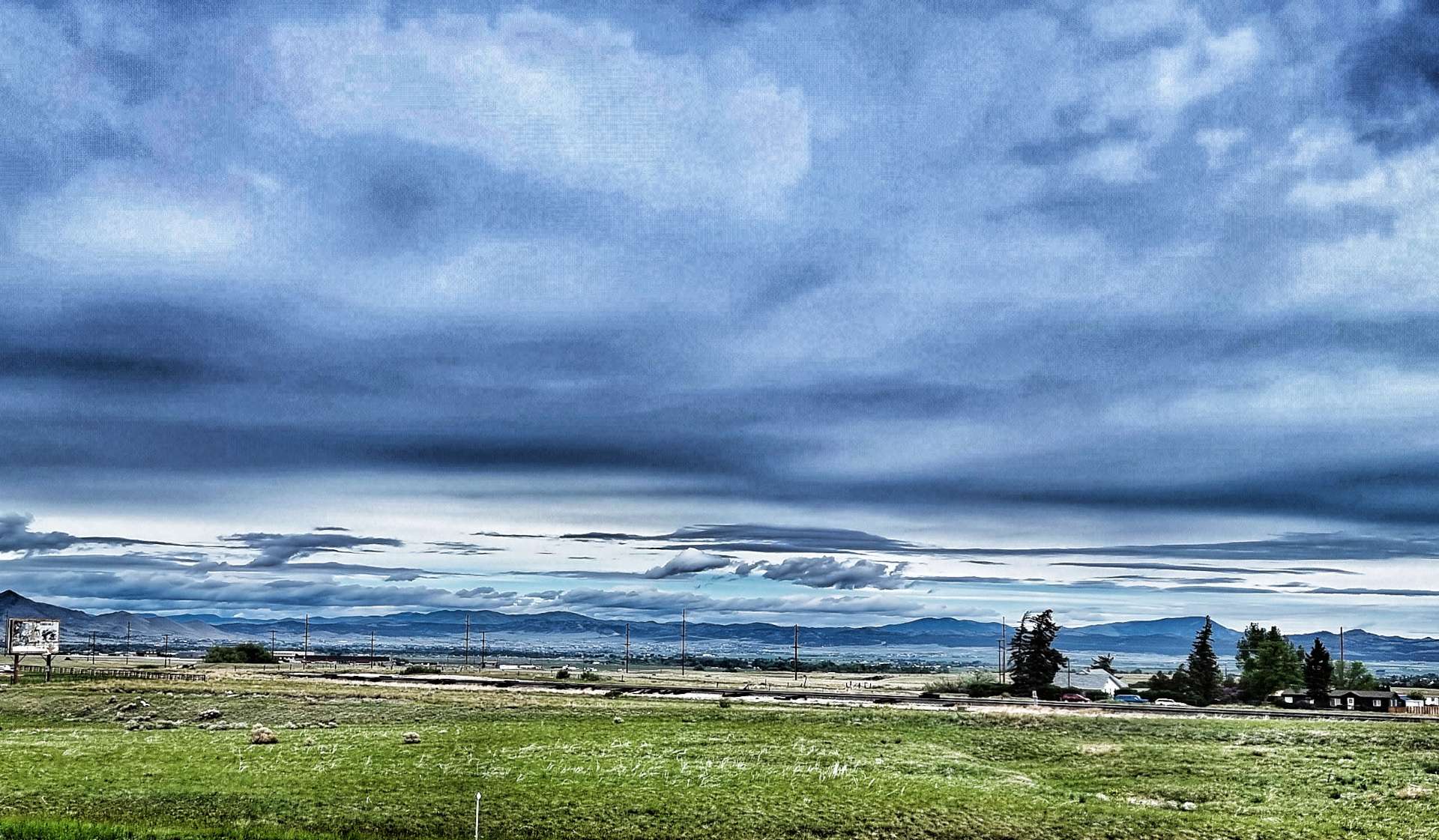
Before we’d even left town we passed a docile deer nibbling on a boundary hedge of a house – it can’t have been 5 yards away from us & to begin with I thought Sean was joking when he said “Deer Alert!” & as a result I missed my opportunity for another deer close-up. We soon picked up Highway 287, which was going to be our road for the next 3 days. We were surrounded by big mountains, with the railroad off to our right & big, cloudy skies overhead. There was also a wind that was beginning to pick up some momentum & it was blowing across us & into our faces!
A combination of cross-headwind & a small incline results in slow progress for me – I realised this when I deliberately let Sean ride off the front so I could get a photo, then had to work really hard to get back in his wheel! The road was quite busy with RV’s making their way towards Yellowstone & one poor deer found himself on the wrong side of the road. We watched vehicles speeding past until the deer spotted a gap & sprinted across the road, fleeing into the wide open spaces.
After about 10 miles we hit a 4 mile patch of rough gravel laid on mud, as the main carriageway was being resurfaced – we bumped & rattled along, making progress as fast we could, with cars & RV’s impatiently passing us.
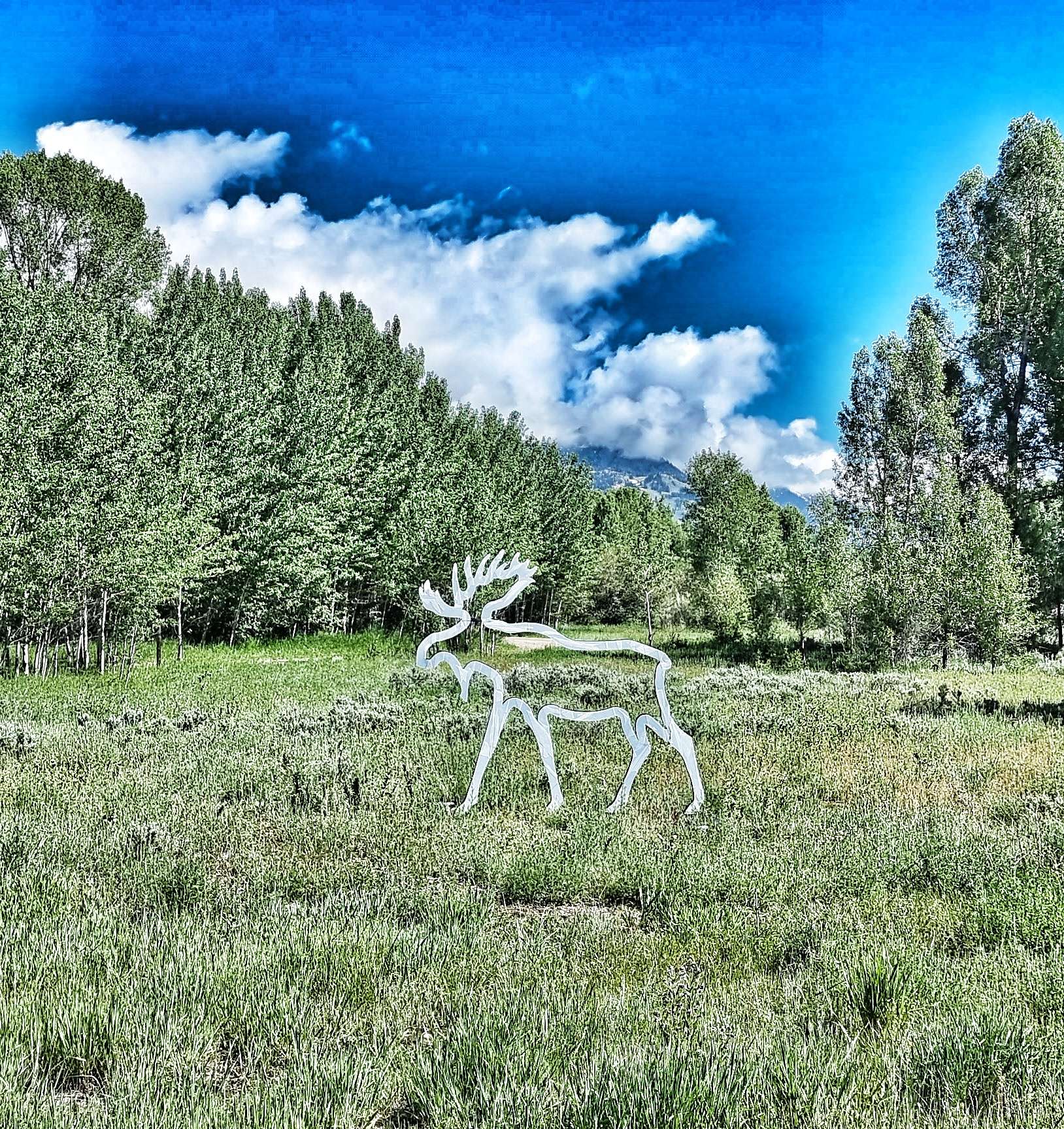
We were still very much in ranching & cattle country, as the long, straight road stretched into the distance. For about an hour the scenery hardly seemed to change at all (good practice for when we hit Mid-USA), until we stopped at a Historic Marker to learn about the town of Winston. It now has a population of less than 100, but in the 1860’s & 70’s it was big enough to have its own newspaper, as well as 7 saloons – this was at the height of the gold rush. Having topped up my knowledge banks, I grabbed a photo of the moose statue made of metal & wood!
We started a long, shallow descent & had to pedal, so we knew for certain that the wind was picking up & that we were going to be working hard for the remainder of the ride. As we descended, we could see Canyon Ferry Lake getting even nearer. The lake is the third largest body of water in Montana, with 76 miles of shoreline & was created when a hydro-electric dam was built between 1949 & 1954. It’s a popular recreation site, offering fishing, boating, hiking, camping & swimming opportunities as well as having a wetland & wildlife conservation area.
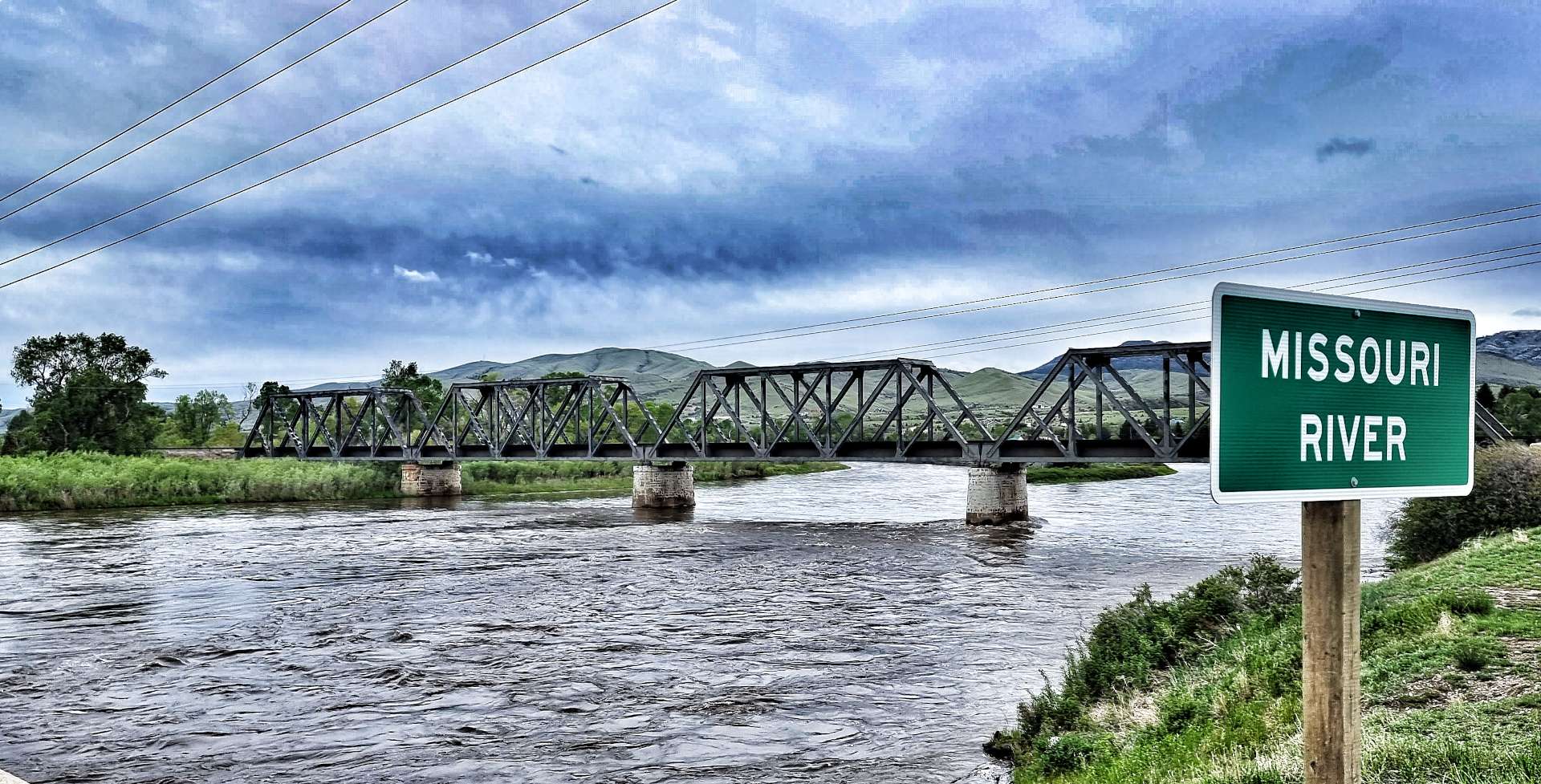
The Missouri river is the longest in the USA at 2,341 miles & the source of water for Canyon Ferry Lake. It’s considered the main artery for the Great Plains, supporting exploration, growing of food, trade & transportation – we hope to pass 2 of its 3 tributaries later in the week.
About 3 miles after crossing the Missouri, we spotted a Historical Site sign that took us about a mile down a gravel track & took us right to the riverbank. York was a black slave to William Clark & was integral to the success of the Corp of Discovery – we were looking across to York Islands, one of two places in Montana which were named after him. Clark spent 5 years trying to negotiate York’s freedom from slavery, but he remained a black man living in a world of segregation.
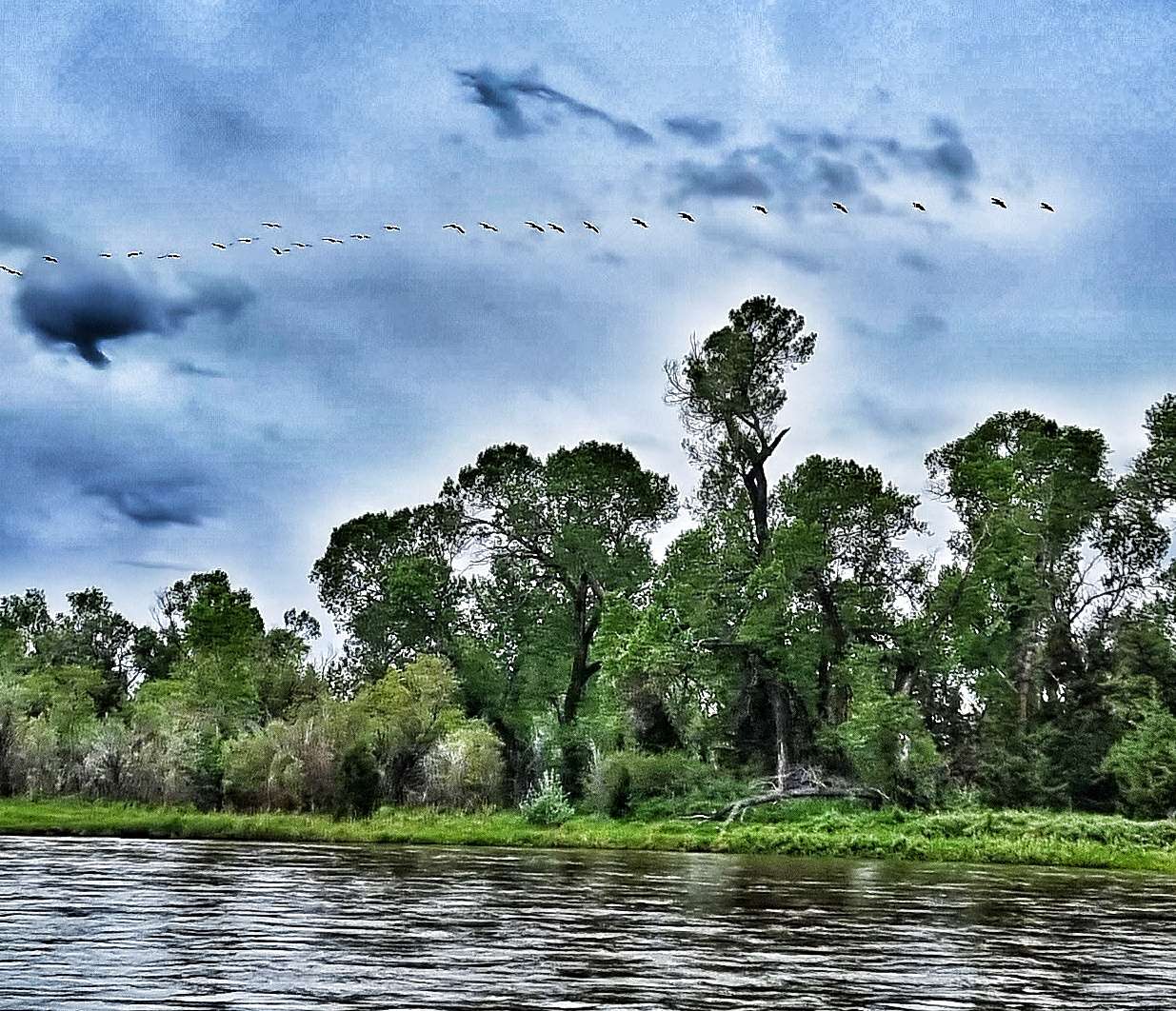
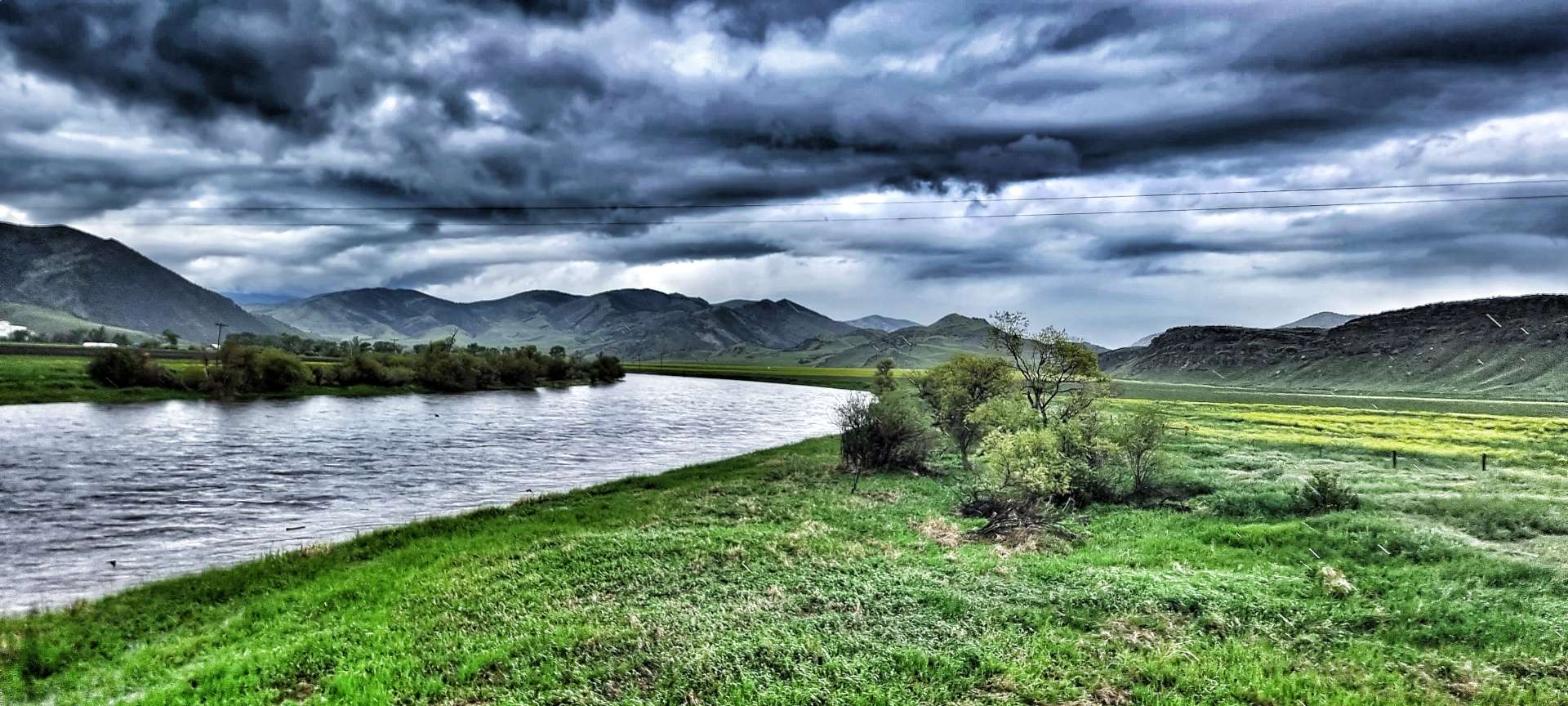
As we looked over to York Islands, above us a chevron of Canada Geese were practicing their aerobatic manoeuvres – they kept splitting into small strings, then re-forming into a long line again. After heavy rains & late snow melts in the Rocky Mountains, the Missouri was looking full to overflowing.
As we continued towards Townsend, we passed a small resort complex on our right, which offered wedding, christening & elopement ceremonies! Their post box at the end of their drive was an exact replica of their chapel. Our coffee stop today didn’t warrant a photo – lukewarm, stewed coffee & a processed muffin – not every day is gourmet cake day!!
Leaving Townsend behind, we continued on an arrow straight road with a gusting cross-headwind from the right – this wasn’t good news, because as we reached Toston it became a full on headwind. We struggled to maintain 10 mph on the flat & when the road gradually rose, our speed dropped correspondingly!!! I foolishly stopped to take a photo of Sean against a mountain backdrop & a combination of the headwind, gradual climb & tiredness meant it took me 3 miles to get onto his back wheel again!
As we crested the long drag, we could make out Three Forks way off in the distance, but at least it was downhill! You may be able to make out the headlights of the cars coming up the hill towards us – it was only about 4pm, but it was already getting murky & that’s when we both realised that although the headwind was tough, rain would have been way worse! This was the closest we could get to saying “What an epic day out!”. Tomorrow’s another day & hopefully the wind will have calmed down & it will still be dry.
Stage Stats – 66 miles, 1,667 feet of climbing. Gradually climbing all day into a character building headwind!
Monday 13th June – Three Forks to Ennis
We woke up to overcast skies & trees bending in all directions – another headwind had been delivered, but at least it wasn’t raining…….it waited until we’d had a Frosties breakfast & tasteless motel coffee before it turned up! If you’ve been taking part in my adventure for a while, my last sentence yesterday set up today’s weather!!!
Almost immediately we passed the turn-off for the town of Three Forks (we’d stayed at the Travelodge on the I-90 junction) & picked up the Jefferson river for a short while (one of the 3 tributaries to the Missouri). The early miles were rolling in nature, which combined with a headwind made getting into a rhythm more of a challenge than usual. However, it wasn’t all bad news, as we could see slightly less dark clouds in the distance & after 10 miles the rain stopped.
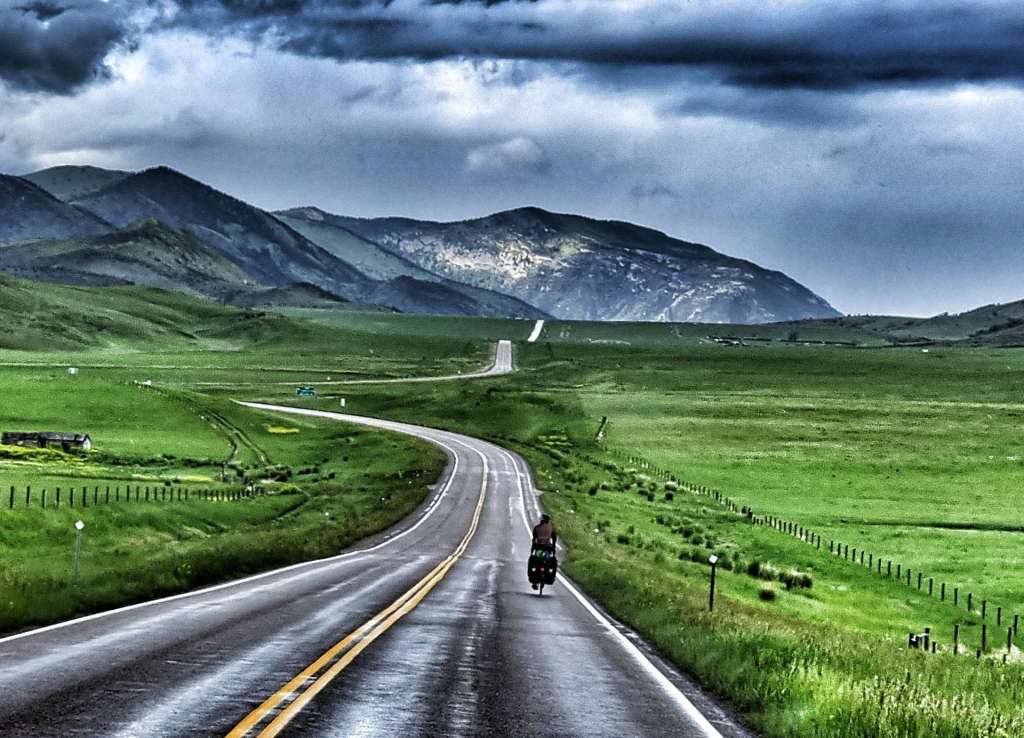
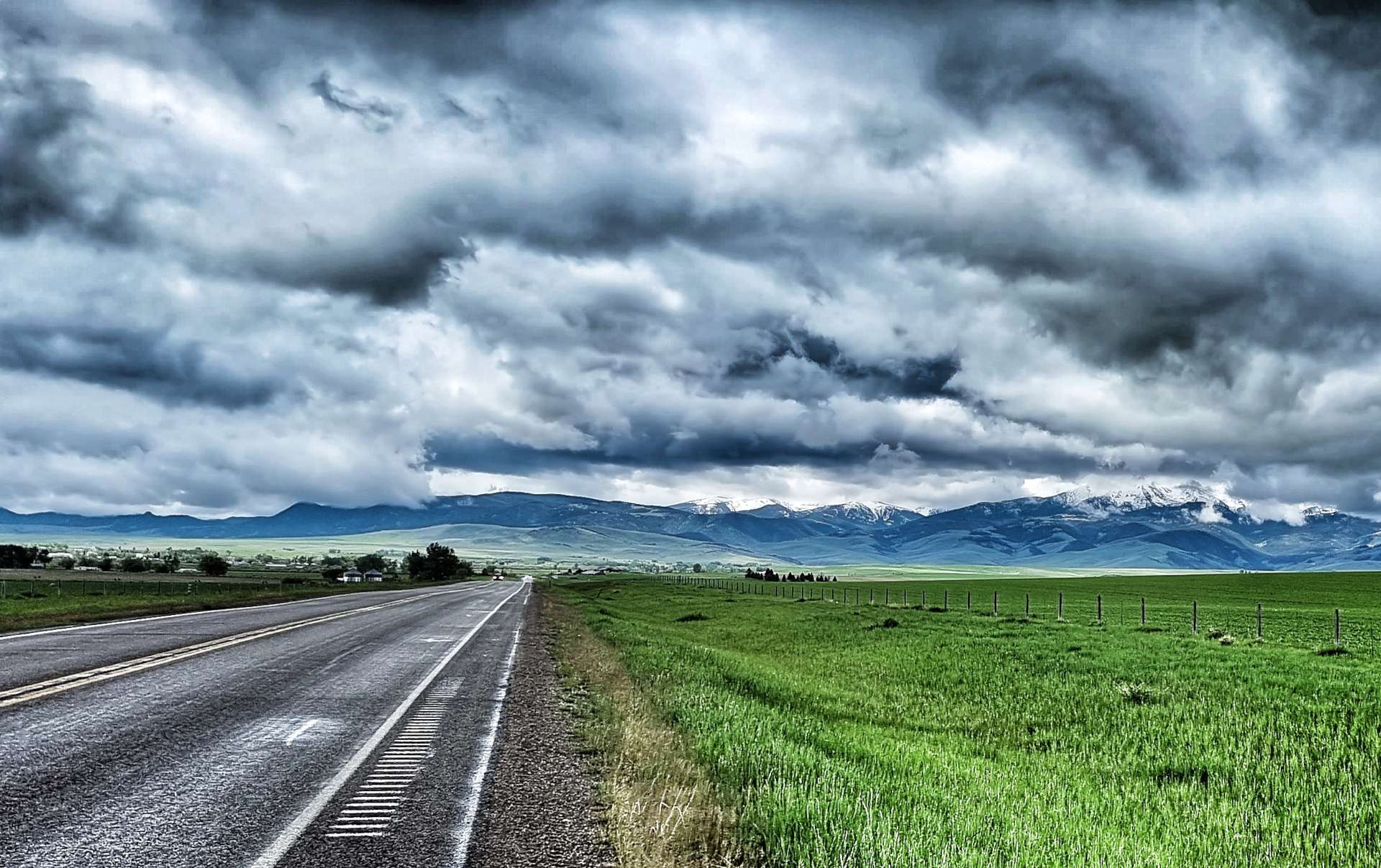
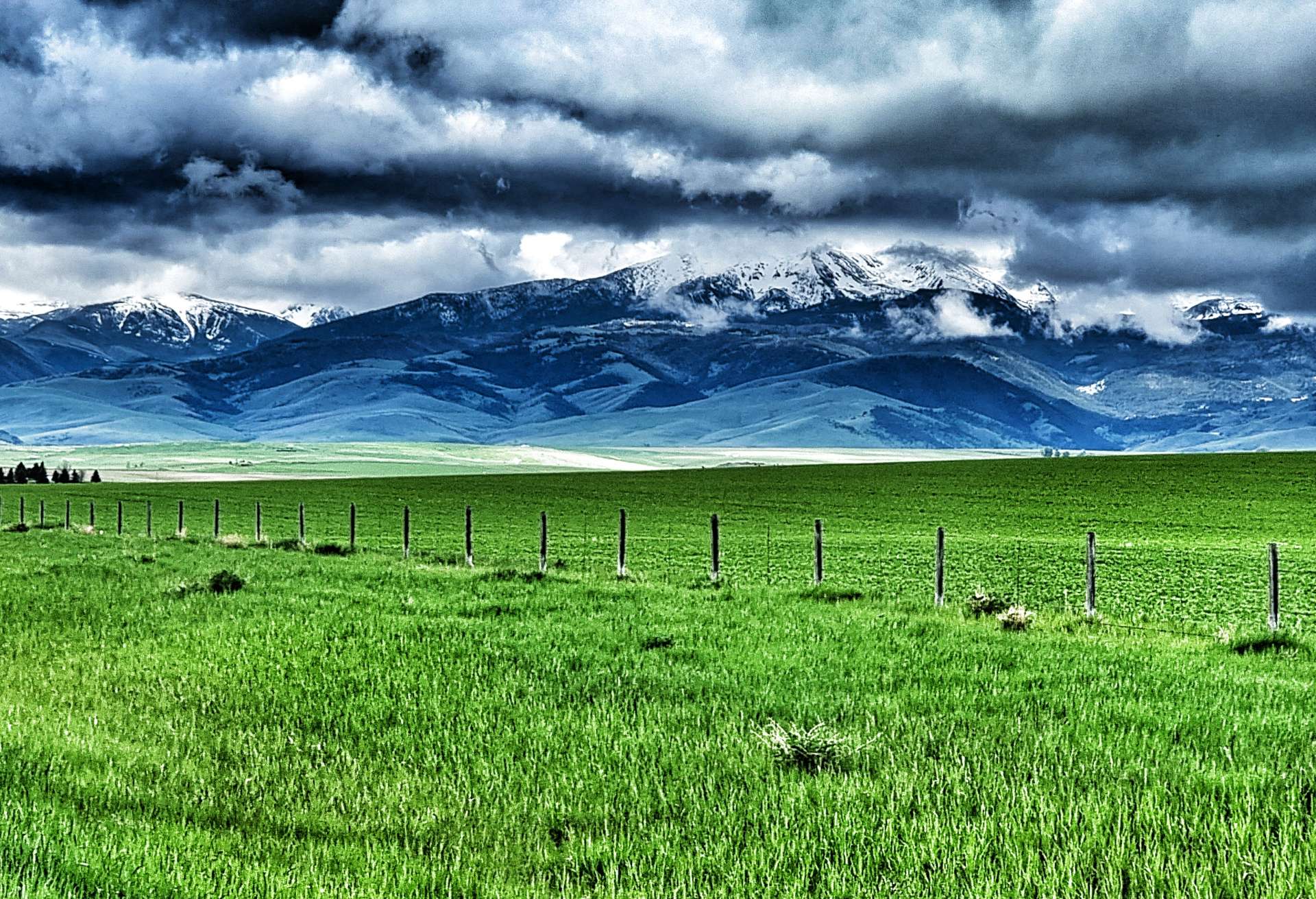
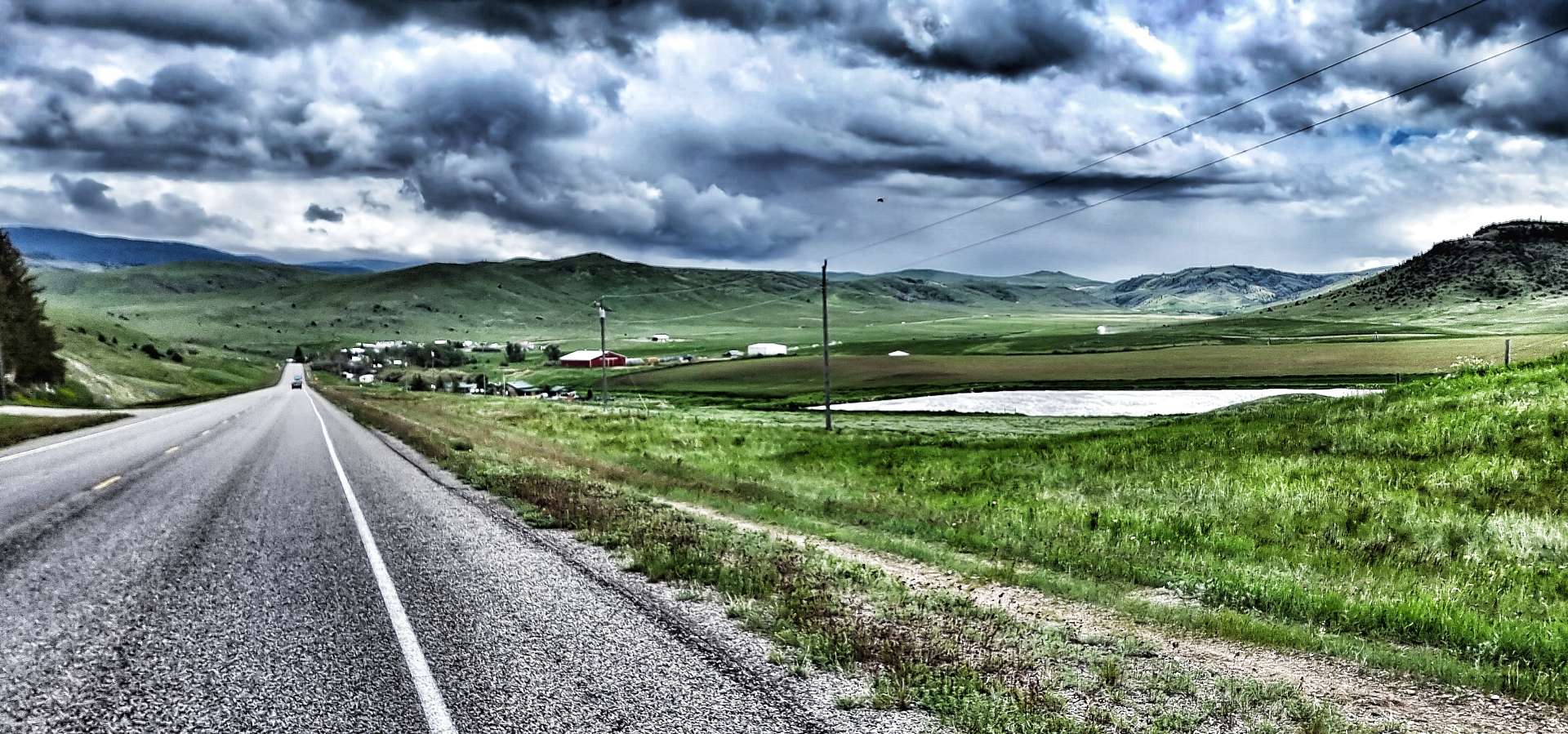
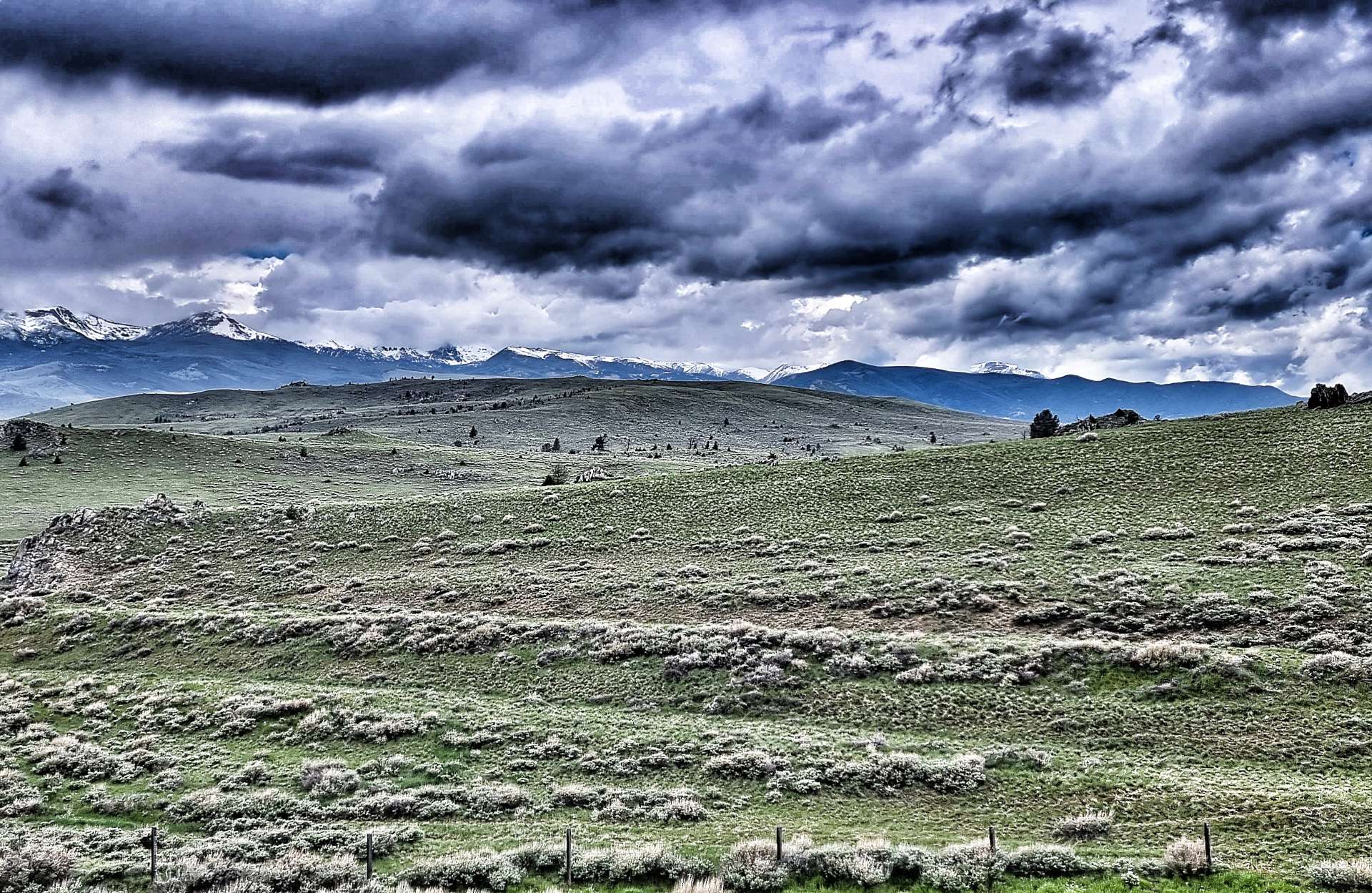
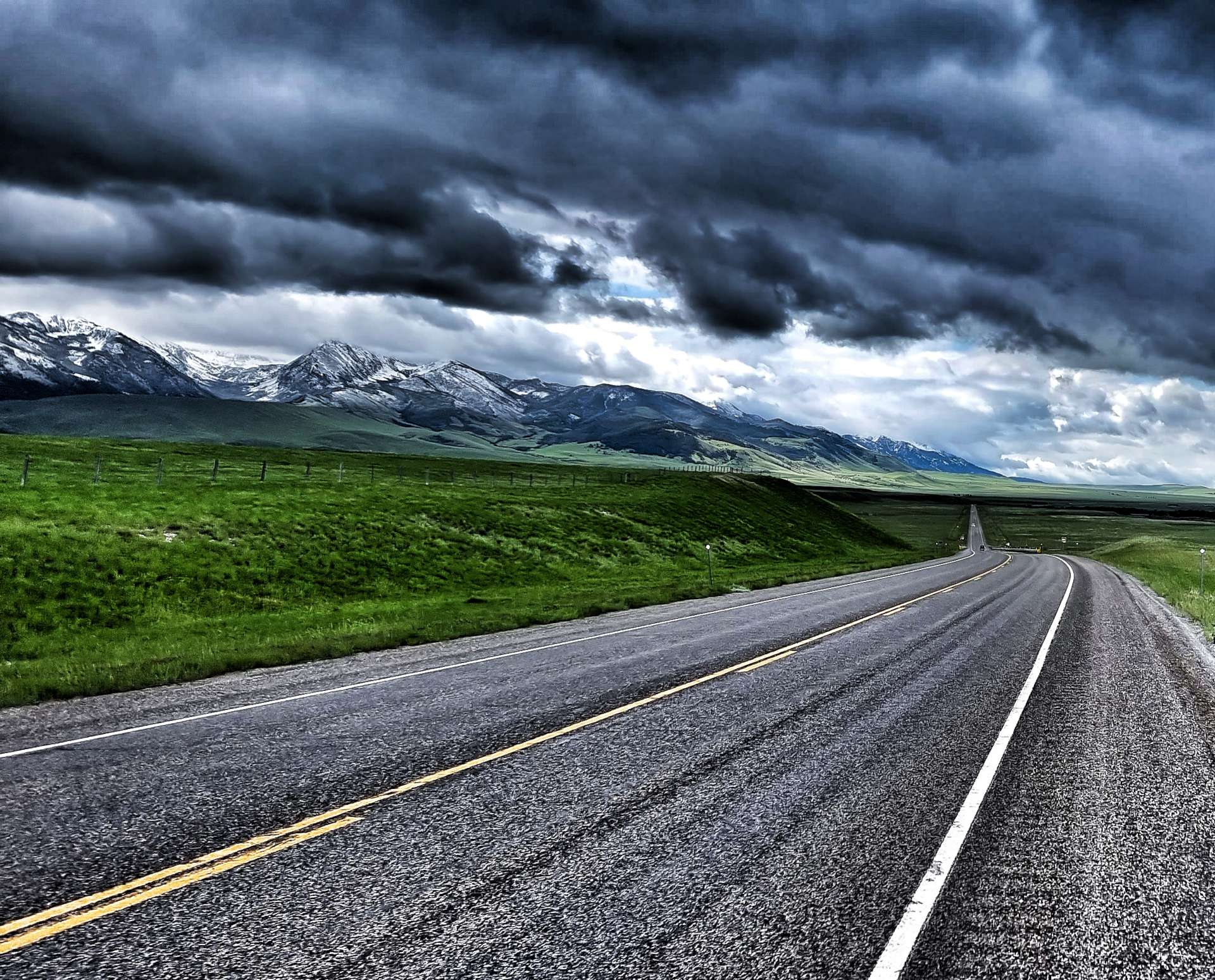
Within 5 minutes, mountains that had been hiding in the clouds suddenly started to show themselves. At the time we were riding, it felt like the wind was always in our faces, but looking back at a few of the photos, the road wasn’t ruler straight, although the general direction was always North to South into a Southerly wind. If I’m honest, I enjoy these days, I weigh enough to be able to push through the wind & the moody skies always look dramatic on photos – it’s the wet I dislike!
As we reached Sappington, we passed signs for the Lewis & Clark Caverns National Park, but unfortunately they were too far off our route to make a detour. We crossed the Jefferson river, which I now know begins at the confluence of the Beaverhead & Big Hole rivers near Twin Bridges (all of which we passed last week). This marked the start of the first climb of the day, a 4 mile ascent to a plateau with snow-covered peaks in all directions.
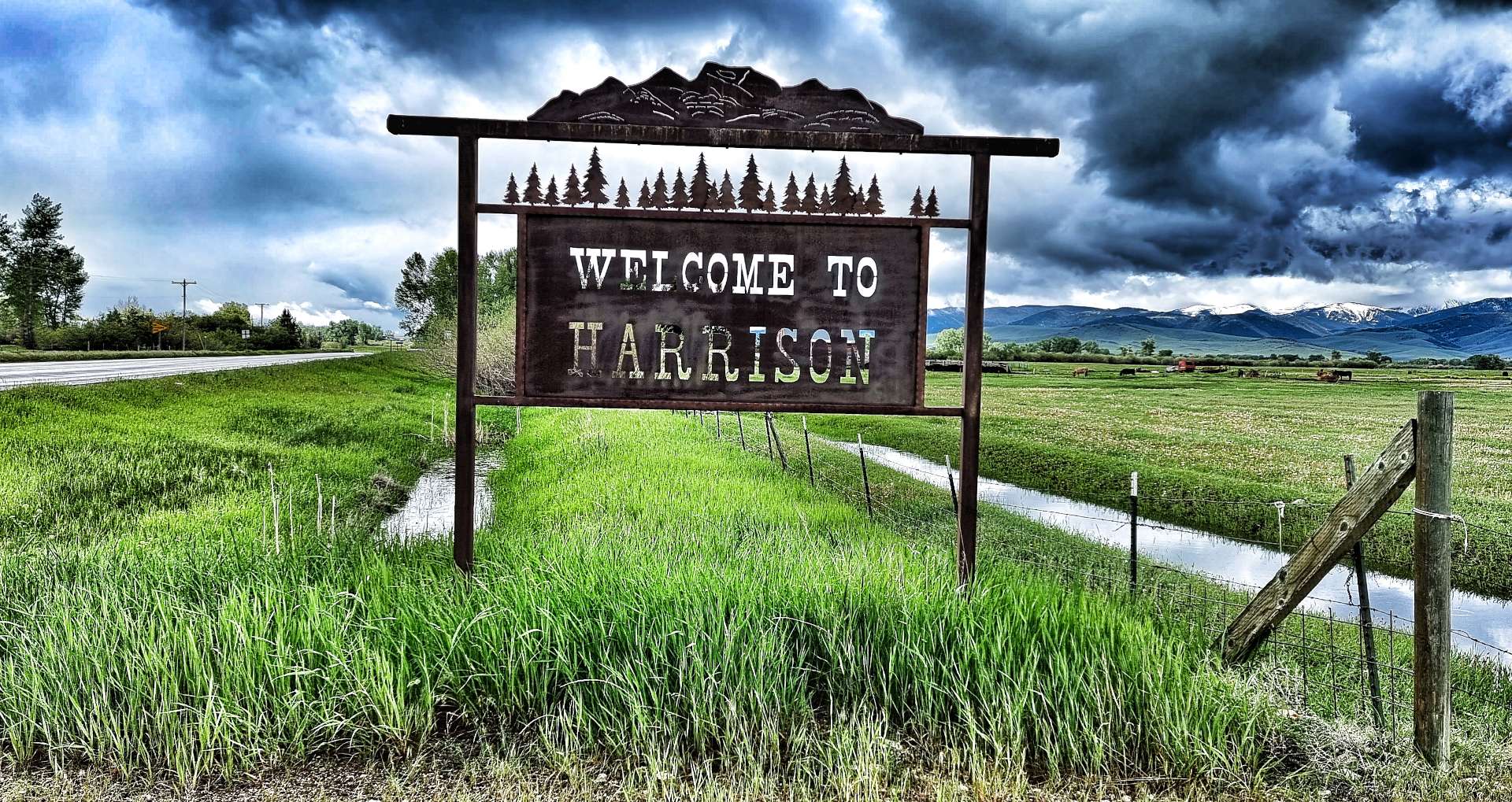
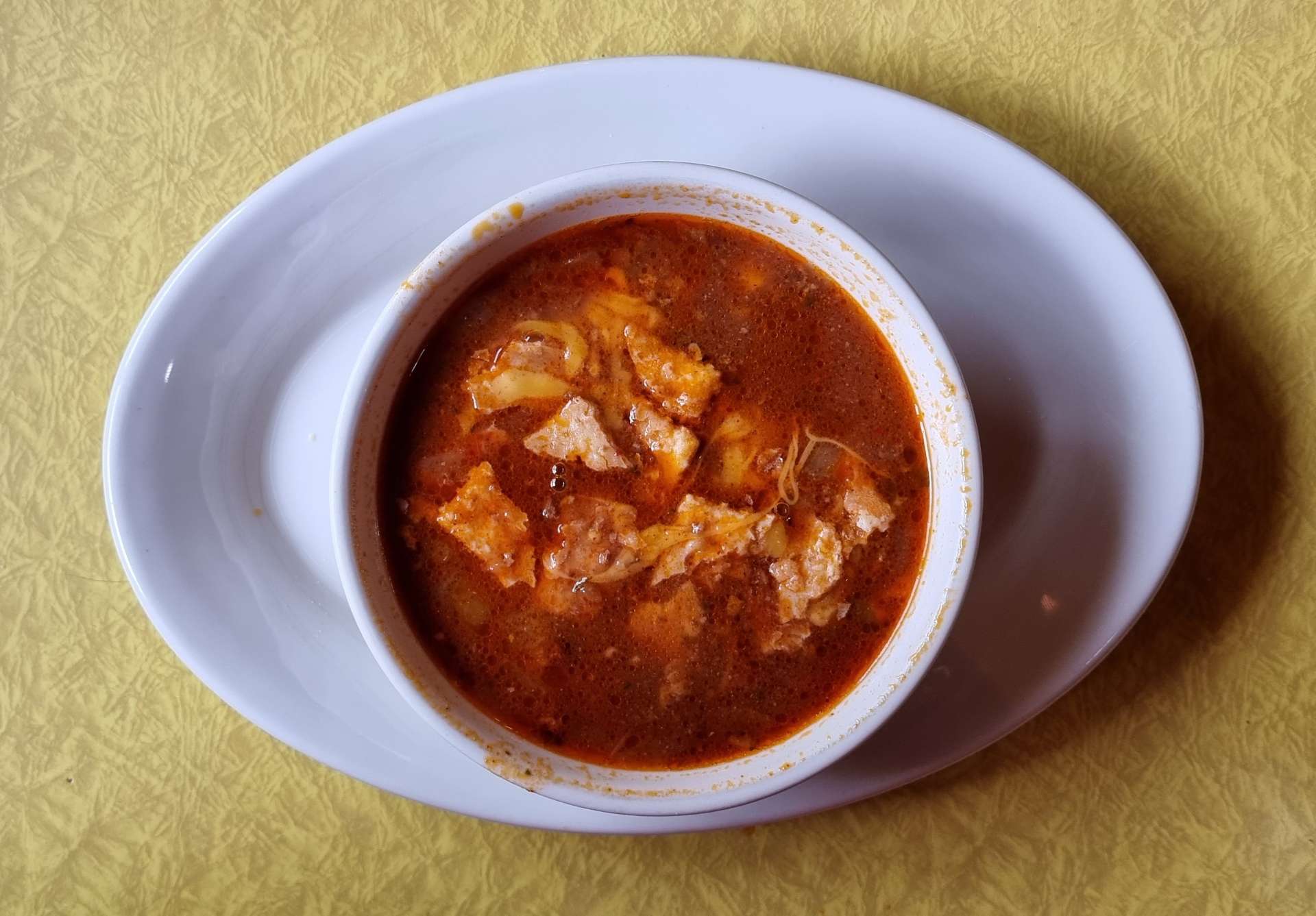
There was no protection from the wind, so we were both grateful when we reached the small town of Harrison (population, 137) & spotted the Town Haul Diner, where we stopped for soup & coffee – rain & headwind makes for a cold day in the saddle!! Within its Town Limits, Harrison only has buildings east of Highway 287, as a fire in the 1920’s destroyed everything to the west of the road.
We spoke briefly to a mountain biker who was 4 months into a 6 month adventure riding the Great Divide Mountain Bike route – he was leaving just as we arrived. We would see him again later, as he was on thick tyres, a heavy bike & carrying more kit than us. As we left town, I took one final look back to the Tobacco Root mountains behind us.
The next 10 miles were among the toughest of our adventure so far, making yesterday’s headwind feel like a minor inconvenience! We took it in turns to ride on the front for no more than 2 minutes & covering about 1/4 of a mile), then tucked in to recover (we would usually be happy doing 5 minutes each & covering about a mile in that time). As fellow cyclists know, headwinds start getting into your head in a bad way – I’ve had to learn how to accept anything & everything that comes our way on this adventure & my resilience has probably improved as a result. Anyway, enough psycho-analysis for now!!
As we dropped into Norris Hot Springs our second & final climb of the day was laid out in front of us.
At 5 miles long & 900 feet it took me about an hour to complete the climb of Norris Hill – we both set our own pace on these long climbs & as you can see, Sean was some way ahead of me! The road already existed in 1864, when it was used as an extension to the Bozeman Trail, which was a short cut to the Montana gold fields from Casper, Wyoming. We’re retracing history on a daily basis & as a result of the numerous Historic Point markers, we get to see what that history is.
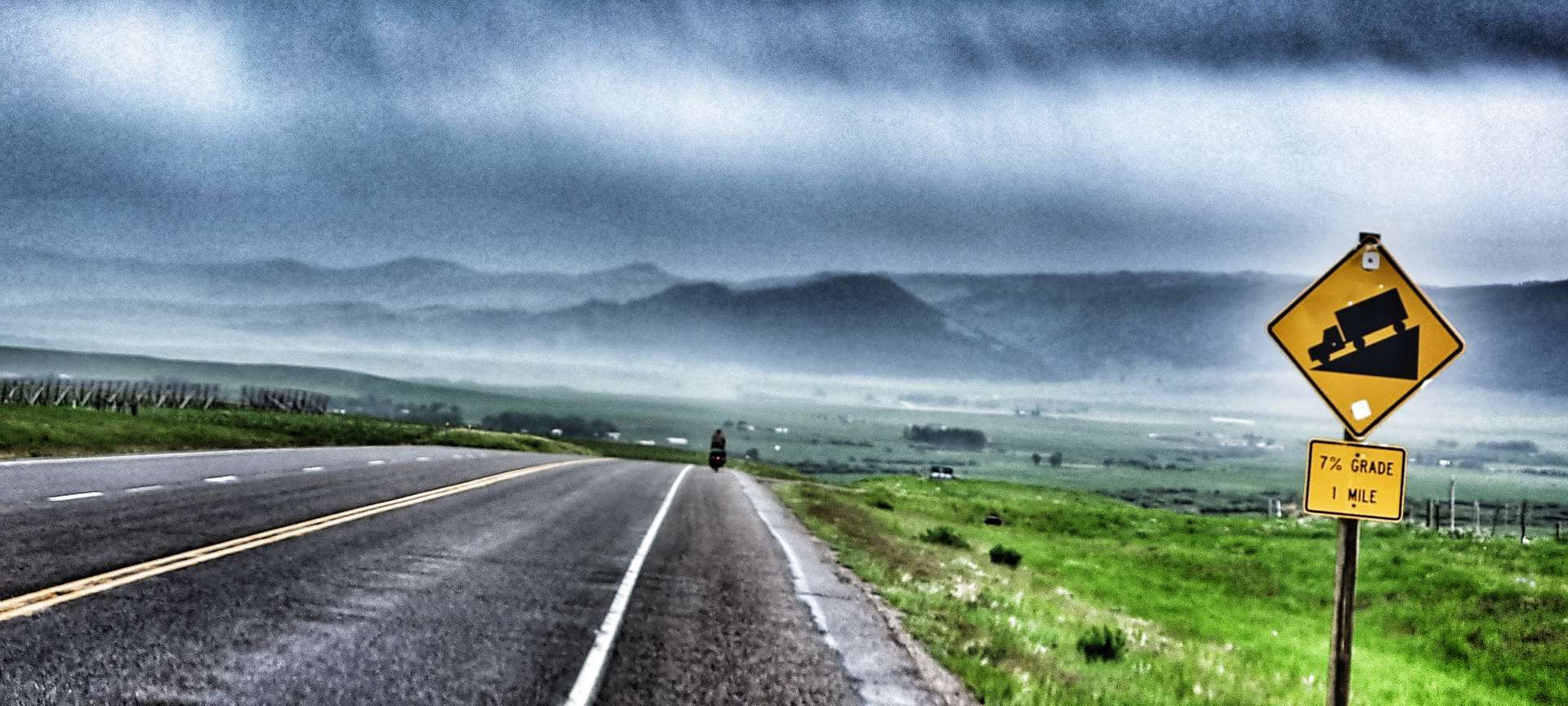
The view from the summit of Norris Hill was awe-inspiring (big views in all directions), exciting (a 7% descent for a mile) & disappointing (sheets of rain rolling in) all at the same time.
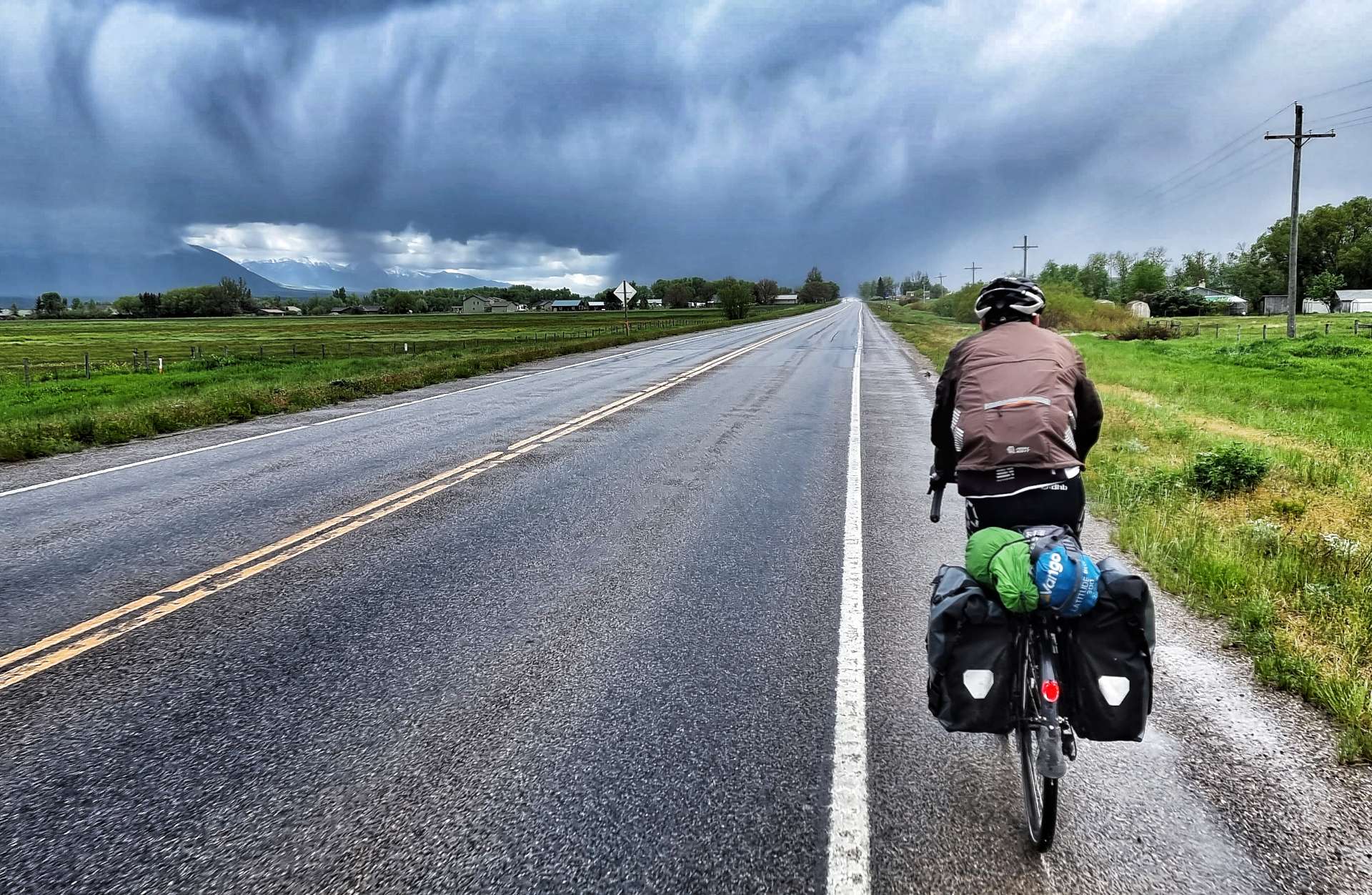
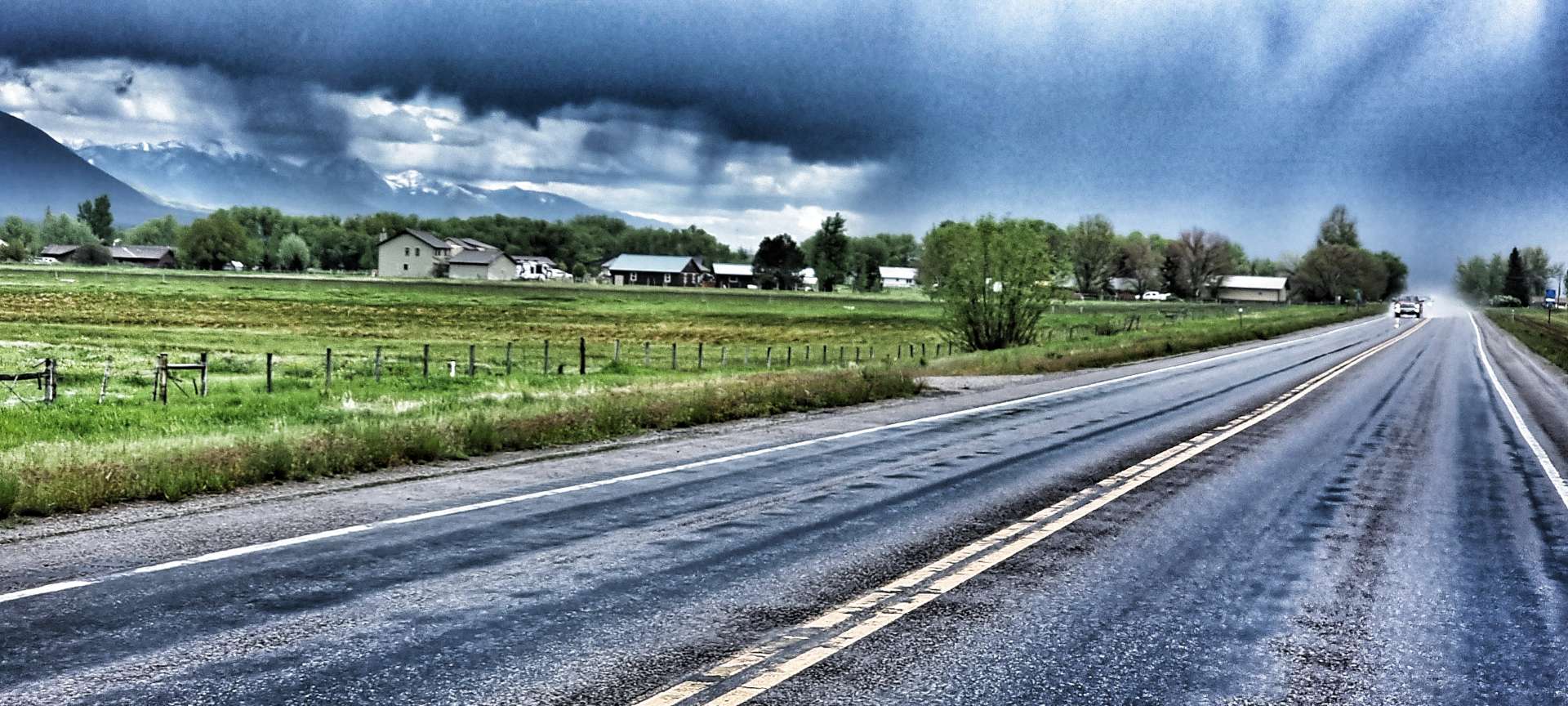
As we reached the valley floor, we got hit with the rain & it was heavy! Although we were only about 5 miles from Ennis Town Limits (pronounced EEEE-Niss), we got totally drenched & cold!
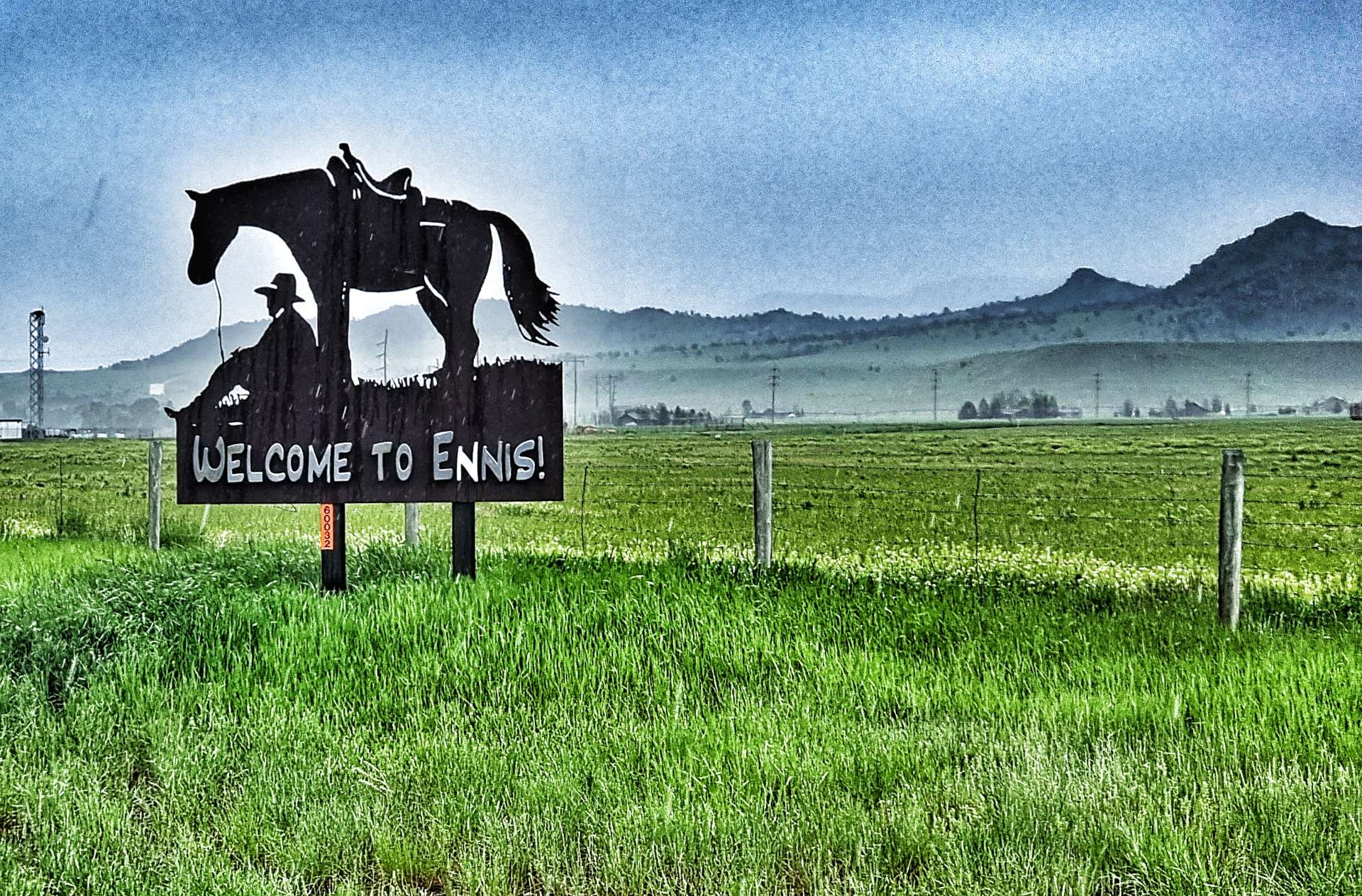
In spite of the rain I stopped to get a photo of the Ennis sign – this was an expensive mistake, as there were another 5 miles from here to our motel & I’d be riding them on my own. I hadn’t told Sean I was stopping & he’d carried on riding – a valuable lesson on the importance of communication, as it made the end of the ride more difficult for both of us.
Our motel turned out to be more of a cabin & we had our own room each, which enabled us to dry all of our kit overnight. However, of a shorter term priority was having some warm food (we both had a chicken focaccia sandwich & fries washed down with a Midas Crush IPA for me & a Devil’s Hump for Sean. Cheers everyone!
On a serious note, when we got back to out motel, we found out about the terrible flooding of the Northern Loop in Yellowstone National Park – I’m pleased to report there were no casualties, but there was huge damage to the roads. The National Park will be closed for the foreseeable future, so we will likely need a new plan for where we go when we get to West Yellowstone tomorrow evening.
Stage Stats – 47 miles, 3,825 feet of climbing. Going uphill most of the day with 2 proper climbs & a powerful, gusting headwind all day.
Tuesday 14th June – Ennis to West Yellowstone
We awoke to new footage of the chaos in Yellowstone National Park – large sections of the Northern Loop road have been washed away, a house tumbled into the river & the town of Gardner is under threat of flooding. I hope everyone stays safe – it’s a brutal reminder of how fast conditions can change in The Rockies.
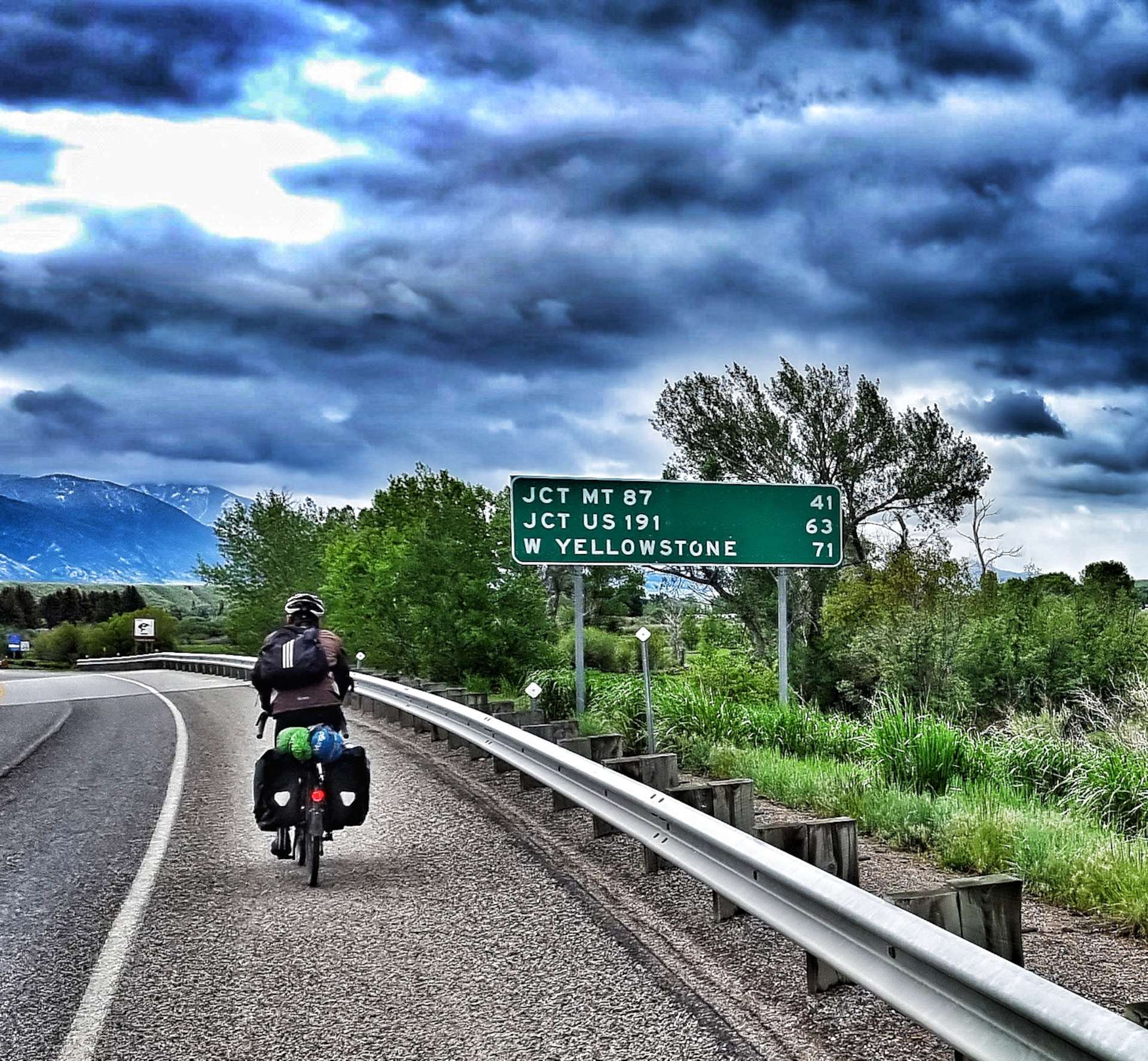
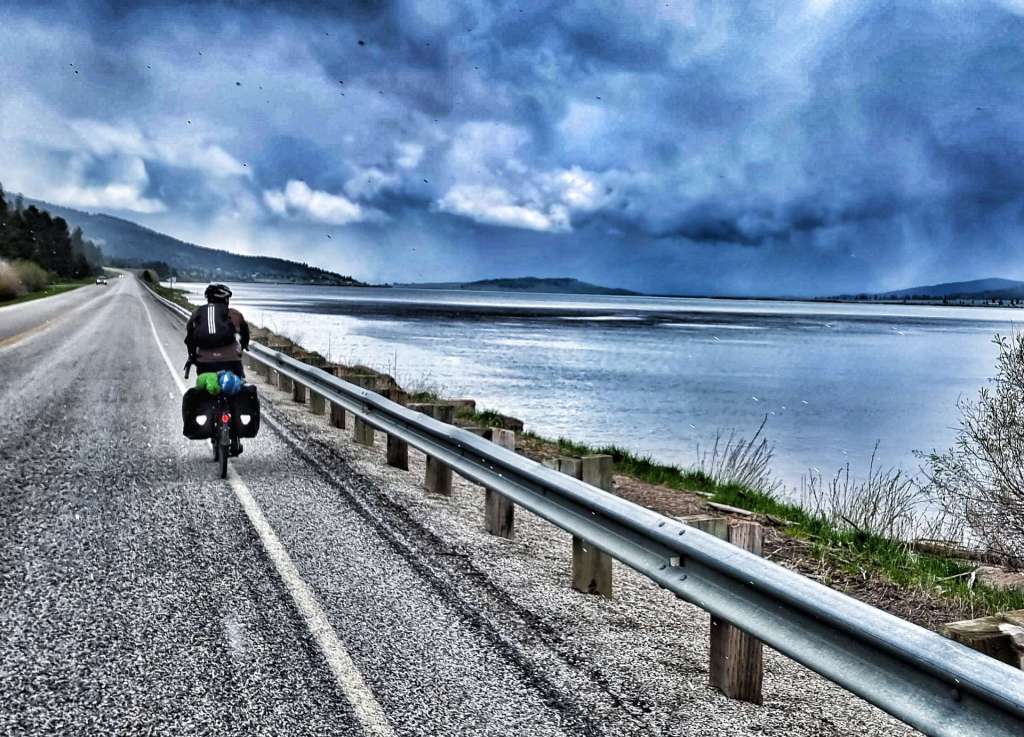
As we had a long day ahead of us, we were on the road by 8.15am. Leaving town there was still a headwind, but it was less powerful than yesterday’s battering & although overcast, it was dry. We immediately crossed the Madison river (the second of the Missouri river’s tributaries) & ahead of us could see rain showers on both sides of the valley, as well as how far we had to ride. We would need to be lucky to stay dry!
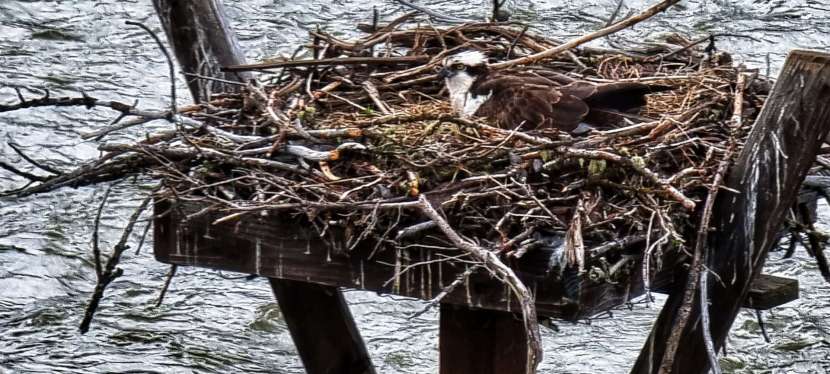
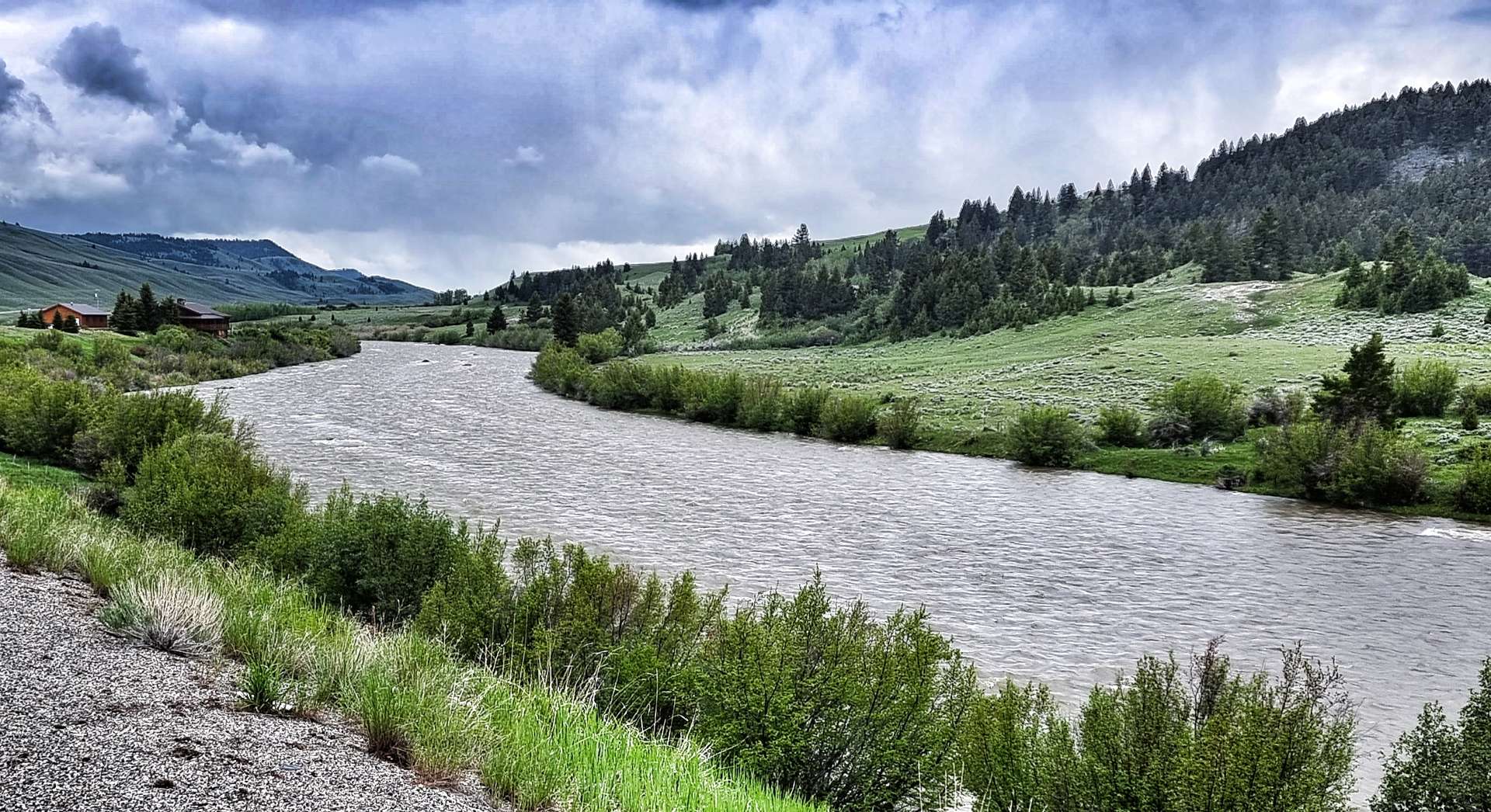
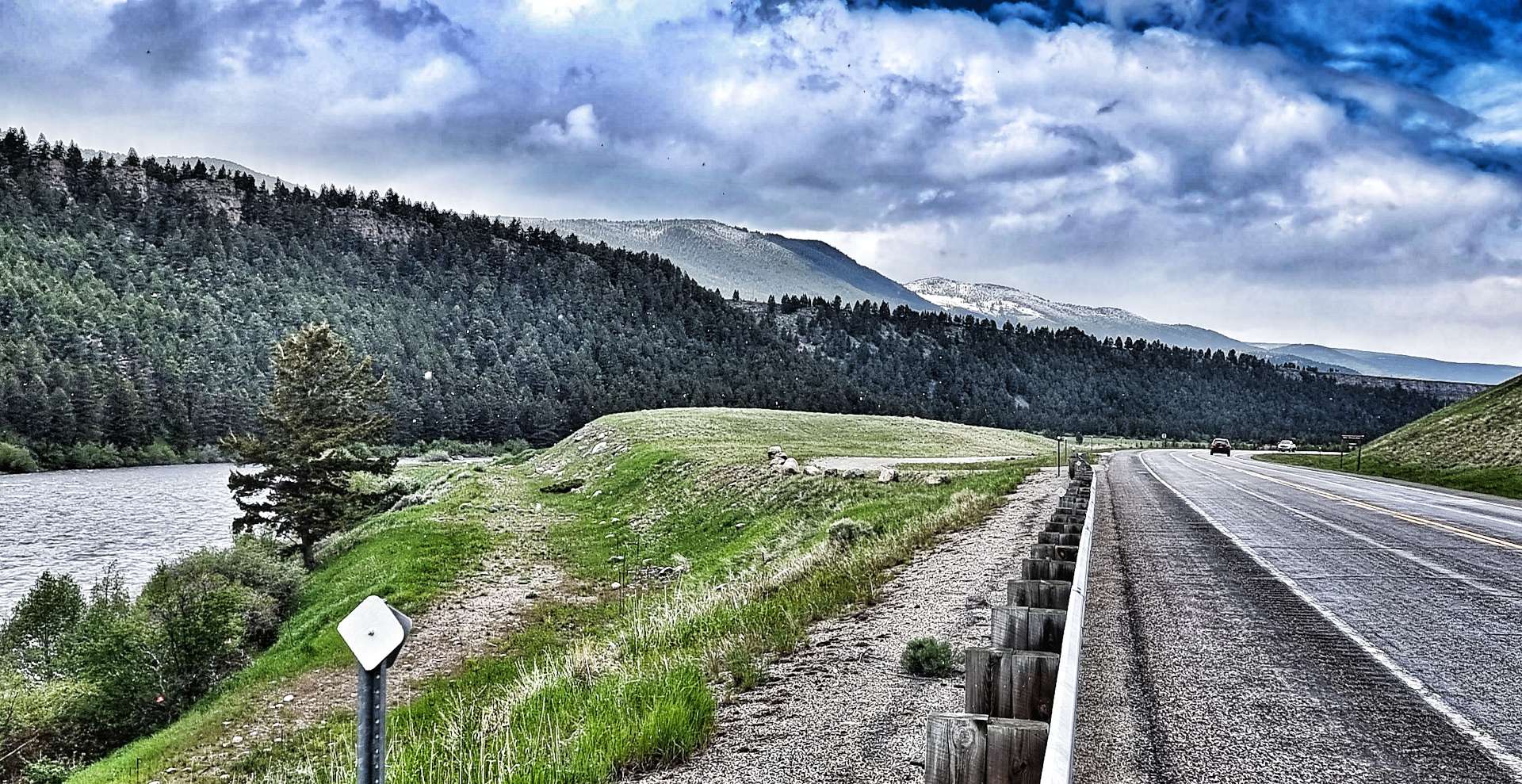
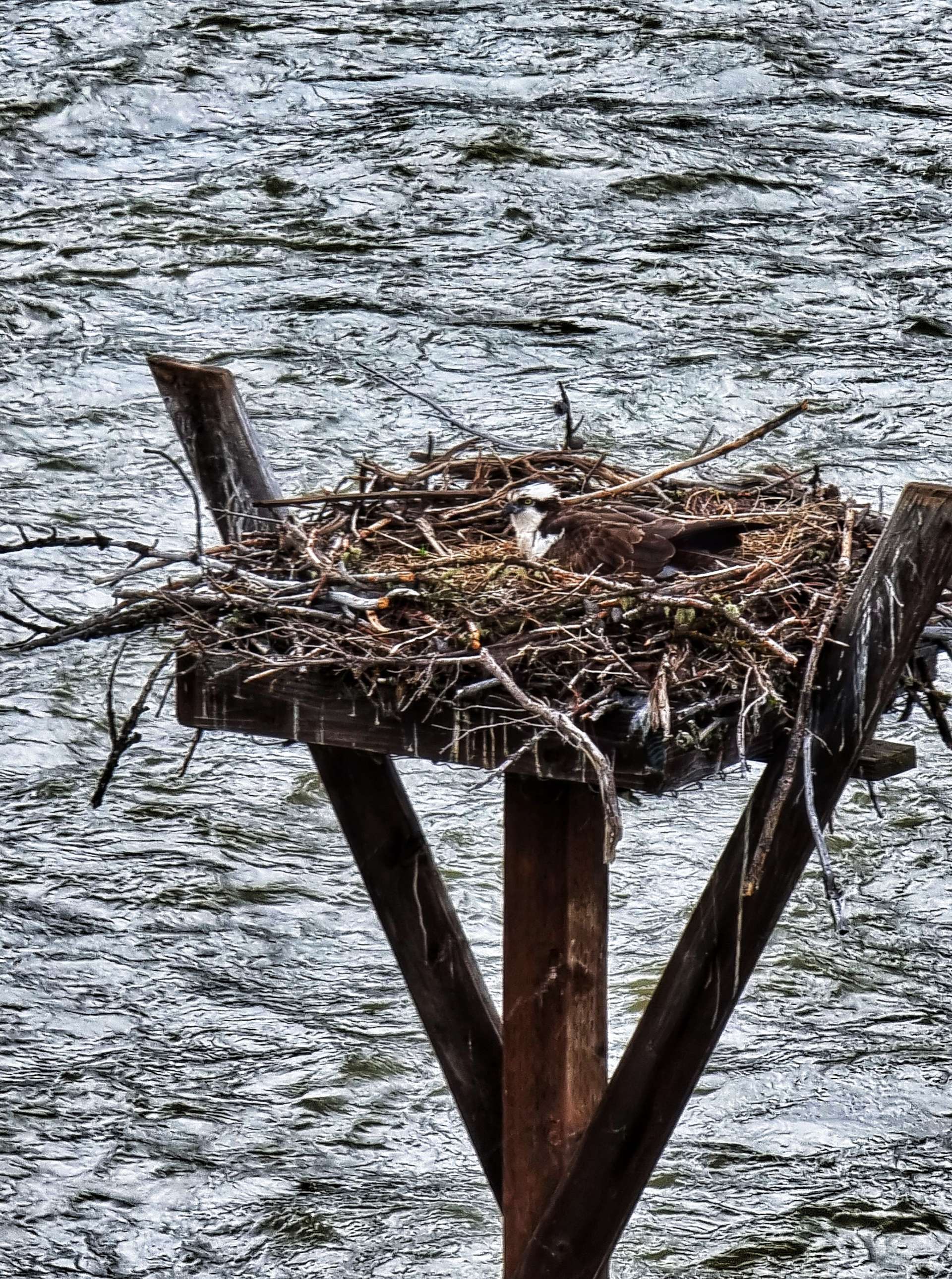
There were imposing mountains all around us as we continued up the Madison valley & after about 15 miles the river re-appeared from a gulch below us & with it an opportunity to look down on an eagle in its eyrie – the first time I’d actually seen the inside. We were taking it in turns to ride on the front, which resulted in the morning passing quickly as the miles ticked down.
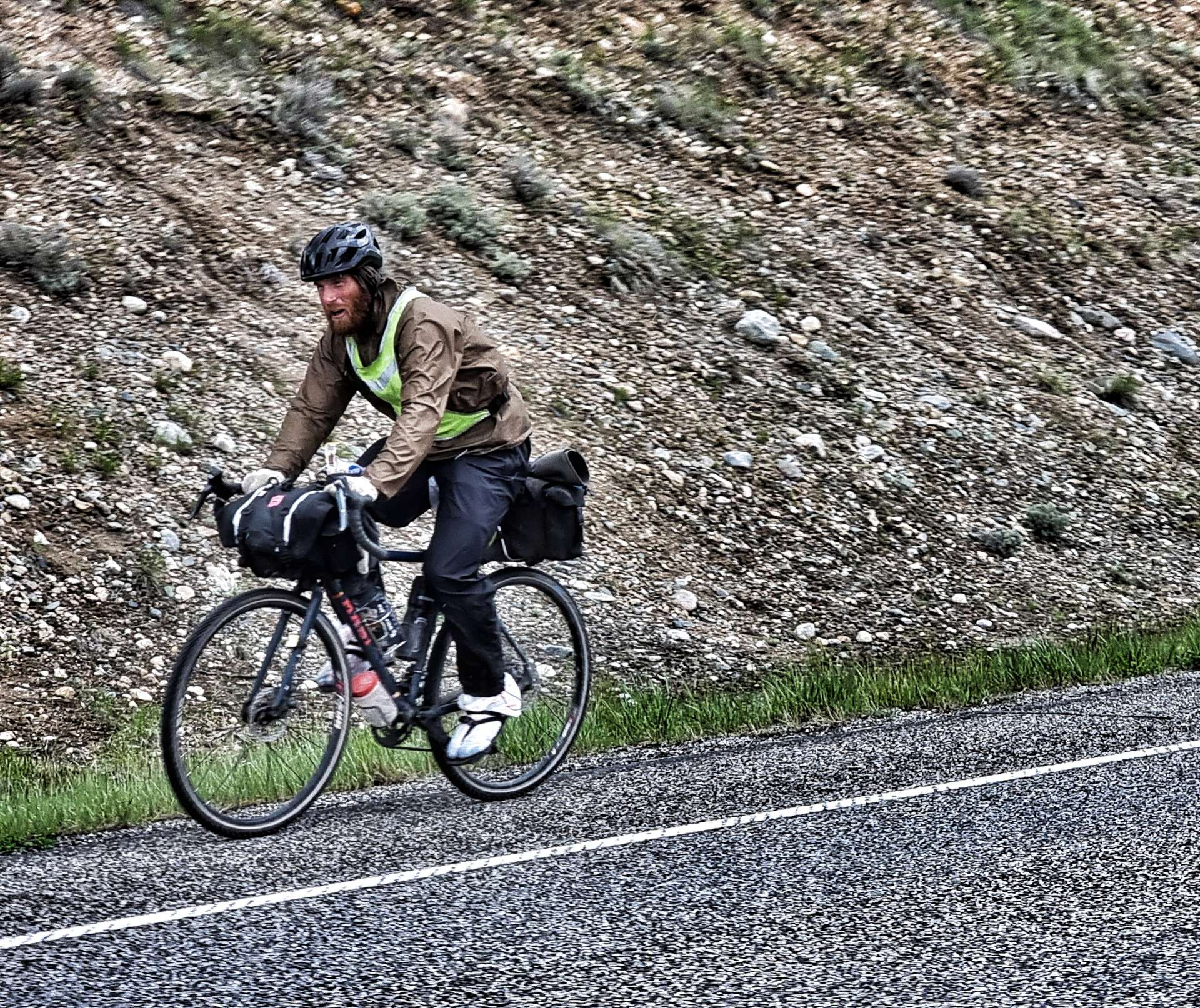
Over the next 10 miles we saw 4 long distance cyclists heading in the opposite direction (presumably previous Yellowstone plans had been scrapped). As we approached a fork in the road we could see heavy rain ahead of us, yet miraculously by the time we eventually reached the turning we were in glorious sunshine! The weather gods were clearly looking down on us!
Taking the left fork towards West Yellowstone, we were entering the Yellowstone Basin, one of the most active geological regions on the planet. In 1959 there was a huge earthquake that registered 7.5 on the Richter scale. At the time the quake was the 2nd largest in the continental USA.
We stopped at the Visitor Centre to learn more, but first a Park Ranger insisted on making us a cup of coffee, although the Visitor Centre is food & liquid free. We must have looked like a couple of very cold waifs & strays!
The quake caused an 80 million ton landslide, which formed a dam across the Madison river as it travelled down the side of Sheep Mountain at 100 miles an hour. The landslide killed 28 people who were camping along the shores of Hebgen Lake & further down the valley on the Madison river.
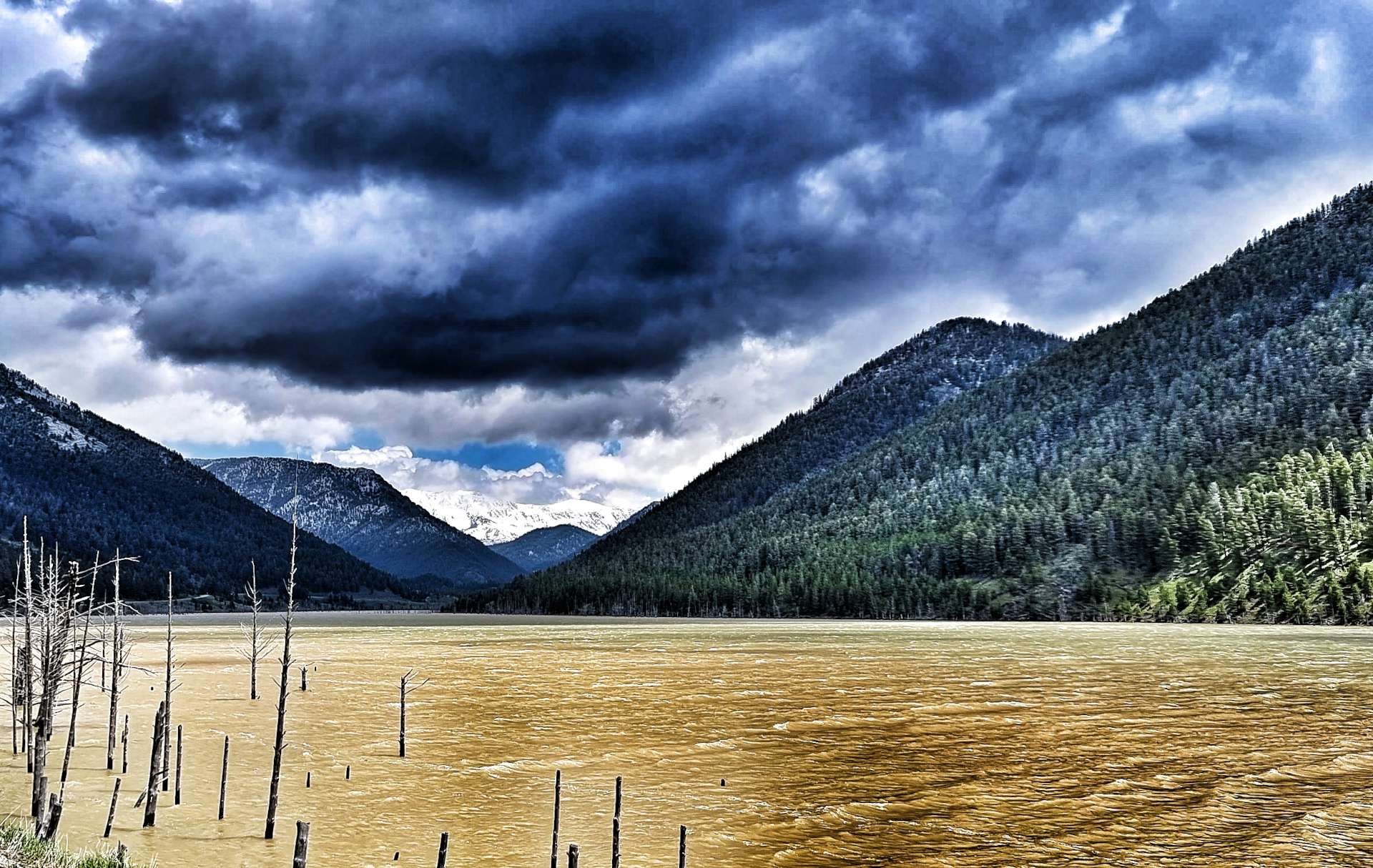
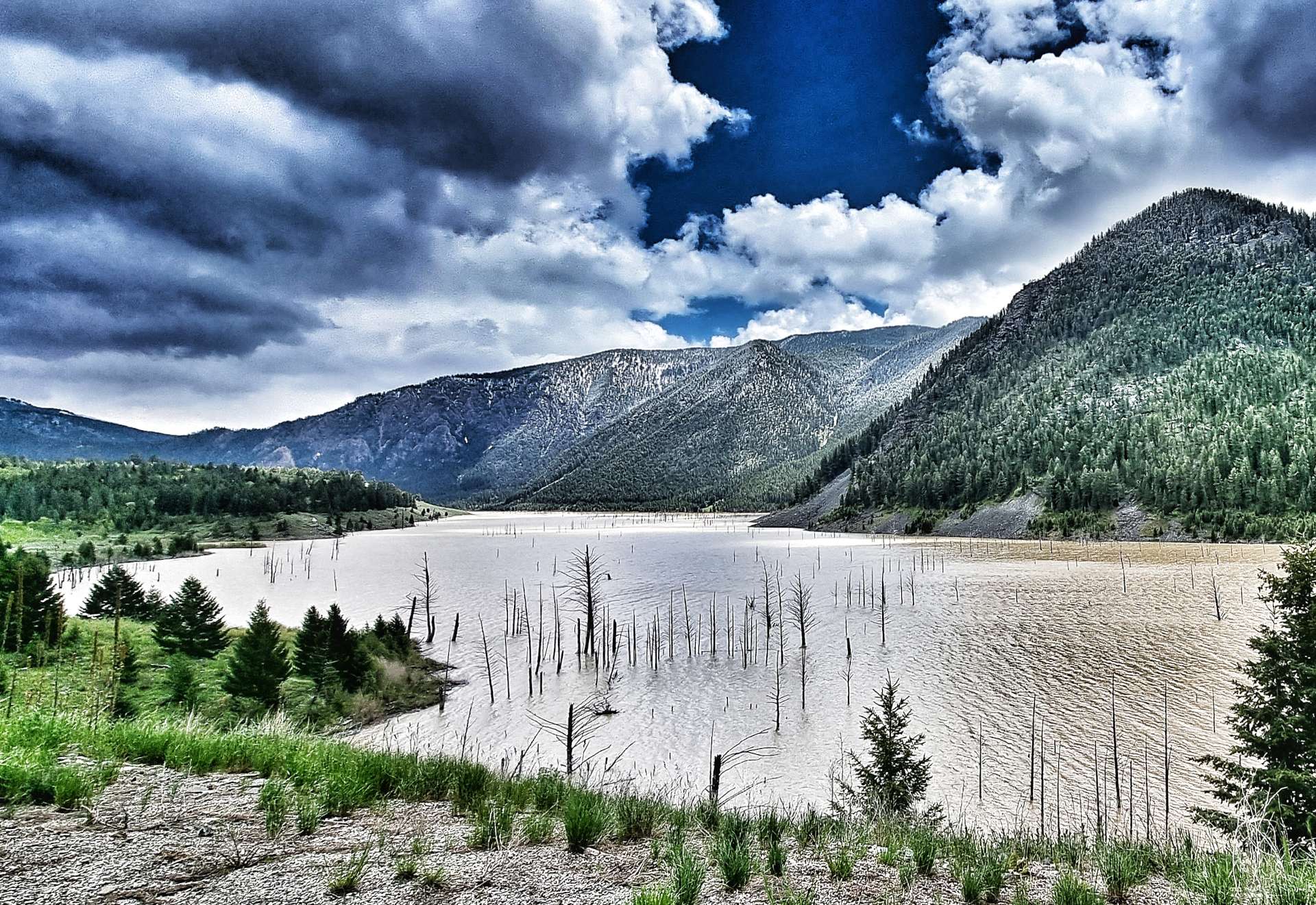
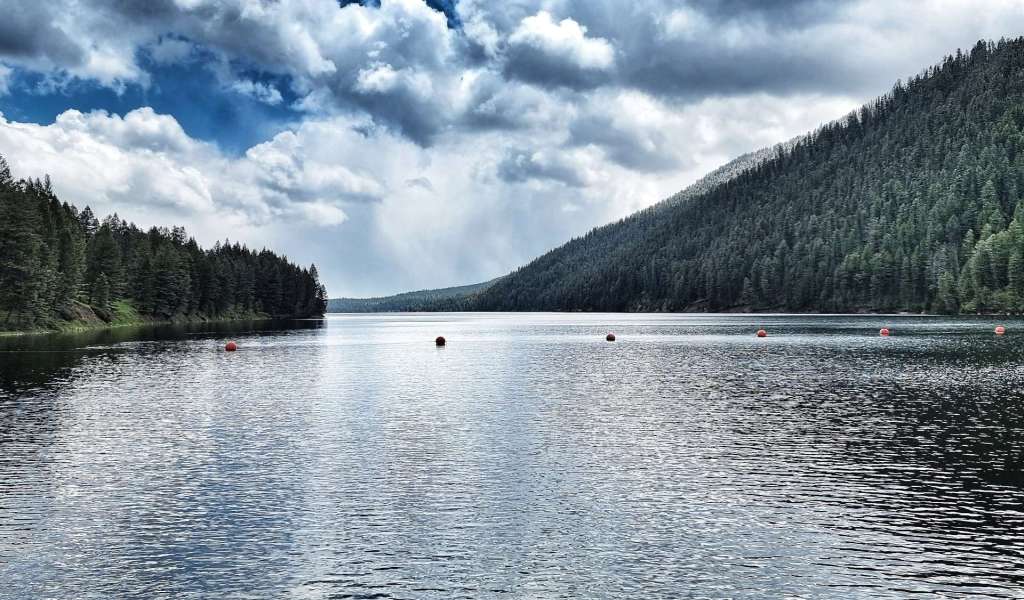
The earthquake caused the ground to subside by 20 feet & the fault line is visible to this day. We could see the tops of trees that had been submerged in Quake Lake more than 60 years ago. Prior to the 1959 earthquake the Madison river was cutting through the valley just like the 2 photos above – less than a month after the initial earthquake, Quake Lake extended 6 miles & had a maximum depth of 125 feet.
Upstream, the faulting caused by the earthquake forced the waters of Hebgen Lake to shift so violently that a wave crested over the dam, causing cracks & erosion. 32,000 acres of land around Hebgen Lake subsided by 10 feet – the impact of the earthquake was truly earth shattering & aftershocks of up to 6.5 on the Richter Scale were felt for several months afterwards.
The Hebgen Lake was created in 1917 by building a dam 85 feet tall & 721 feet in length across the Madison river. It stores & regulates water supplies for reservoirs further downstream, as well as generate hydro-electric power. The lake is a popular recreation destination, with fishing, boating, swimming, hiking & camping all taking place.
As Lake Hebgen receded behind us, we had almost reached our destination – just a right turn onto Highway 191 & the final 7 miles to go. You can almost see the excitement on our faces! We’d stayed dry all day – we later admitted that we’d been dreading the ride this morning as we were both convinced we were going to get soaked & then have to ride for 6 or 7 hours in the rain!
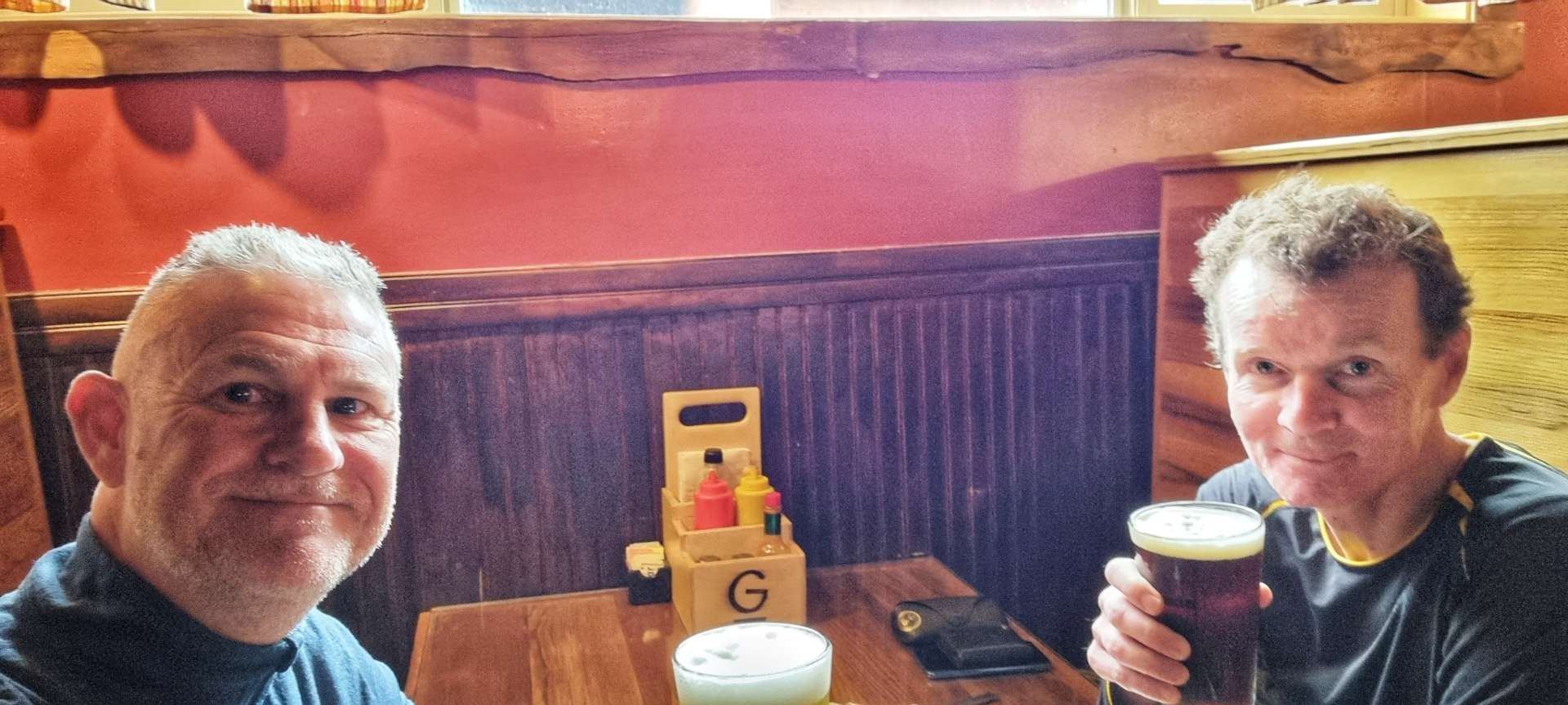
We checked-in to our room at the Dude & Round Up, then headed across the road to enjoy a huge portion of spaghetti marinara, washed down with a Hazy IPA. Tomorrow’s a rest day as we plan what to do next & where to go.
Stage Stats – 72 miles, 3,107 feet of climbing. Going uphill most of the day with 1 climb.
























































 Gav's Cycling Adventures